
Nash - ❤️🇲🇾 ❤️LiverpoolFC

5.9K posts

Nash - ❤️🇲🇾 ❤️LiverpoolFC banner
Nash - ❤️🇲🇾 ❤️LiverpoolFC

Nash - ❤️🇲🇾 ❤️LiverpoolFC

@nash_71

Dreams of a Malaysia with Freedom, Equality & Brotherhood amongst its people. Aspiring Farmer. Blessed Father to 3 great kids. 3rd Gen Malaysian.

Beautiful Malaysia Katılım Temmuz 2011
1.9K Takip Edilen141 Takipçiler
Nash - ❤️🇲🇾 ❤️LiverpoolFC
Malaysians must start to learn that UHT Milk is not wholesome milk as it shd be....Milk cannot last for 6 months on ambient temperature on the supermarket floor... #programsususekolah
Sama Hoole@SamaHoole

In 1946 the British government introduced free school milk for every child in the country. One third of a pint, every school day, from the age of five to the age of fifteen. The milk was whole. Full-fat. From British dairy herds. It was delivered to the school gate in small glass bottles with foil caps and left on the doorstep in metal crates, where it sat in the sun until morning break if the weather was warm and developed a slightly suspect taste that an entire generation of British adults can still describe with uncomfortable precision. The generation that grew up on school milk was, by every anthropometric measure, the healthiest generation of British children ever recorded. Average height increased. Bone density improved. Dental health, despite the sugar in everything else, improved. Iron deficiency rates among school-age children dropped. The growth charts that the Ministry of Health had been keeping since the war showed a consistent, measurable, year-on-year improvement that tracked precisely onto the introduction of the milk programme. In 1971 Margaret Thatcher, then Education Secretary, cut free school milk for children over seven. The tabloids called her Thatcher the Milk Snatcher. She was vilified. She kept the policy. The next generation of British children, the ones who grew up without the daily third of a pint, were measurably less healthy than the one before. The growth charts show it. The dental records show it. The conscription medicals, while they lasted, showed it. The thing the milk had been providing, the calcium, the vitamin D, the vitamin A, the complete amino acid profile, the conjugated linoleic acid, the fat-soluble nutrients that a growing skeleton requires in order to reach its genetic potential, was no longer arriving at morning break in a glass bottle with a foil cap. It was replaced, eventually, by nothing. Or by a carton of fruit juice. Or by a packet of crisps from the vending machine that appeared in the school corridor in the 1990s. The generation that drank the milk is now in its seventies and eighties. They are, on average, taller, stronger-boned, and longer-lived than the generation that came after them. The milk was not magic. The milk was milk. It was the thing the body needed, delivered at the time the body needed it, at a cost the government considered acceptable until it didn't. The cost of not providing it has been rather higher.


Kuala Lumpur, Wilayah Persekutuan Kuala Lumpur 🇲🇾 English
0
0
0
6
Nash - ❤️🇲🇾 ❤️LiverpoolFC retweetledi
Ignorance, the root and stem of all evil
🚨THE MAINSTREAM MEDIA DOESN’T WANT YOU TO KNOW THIS 🚨Zelensky UNMASKED 🚨Who is Zelensky? Banned Elections Pocketed Millions Attacked his own people. Banned Peace negotiations Imprisoned journalists Enforced conscription Banned the opposition Opressed the free Media Banned a language Banned a Church Prof. Jeffrey Sachs: Zelensky is a danger to the world. Candace Owens: “I think Zelensky is a criminal” George Galloway: I'd call him a thief, I'd call him a fraud, I'd say that he fooled the Ukrainian people, that he was going to make peace. Colonel Douglas Macgregor: Zelensky is a pathological liar. Zelensky tries to pull NATO in war with Russia Zelensky is a danger to the world. The only way for Volodymyr Zelensky to remain in power and avoid prison is to continue the war.
English
188
3.5K
5.5K
54.5K
Nash - ❤️🇲🇾 ❤️LiverpoolFC retweetledi
James Chin
James Chin@jameschin110·
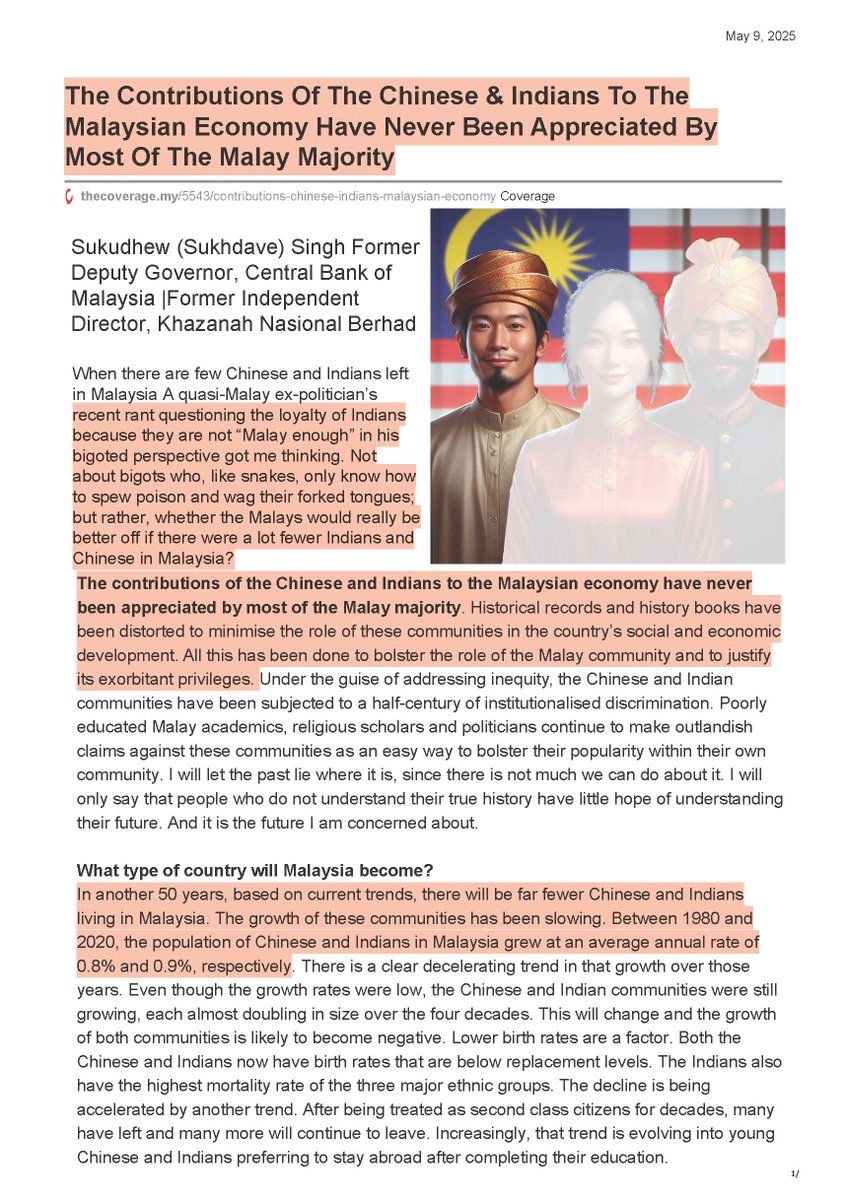
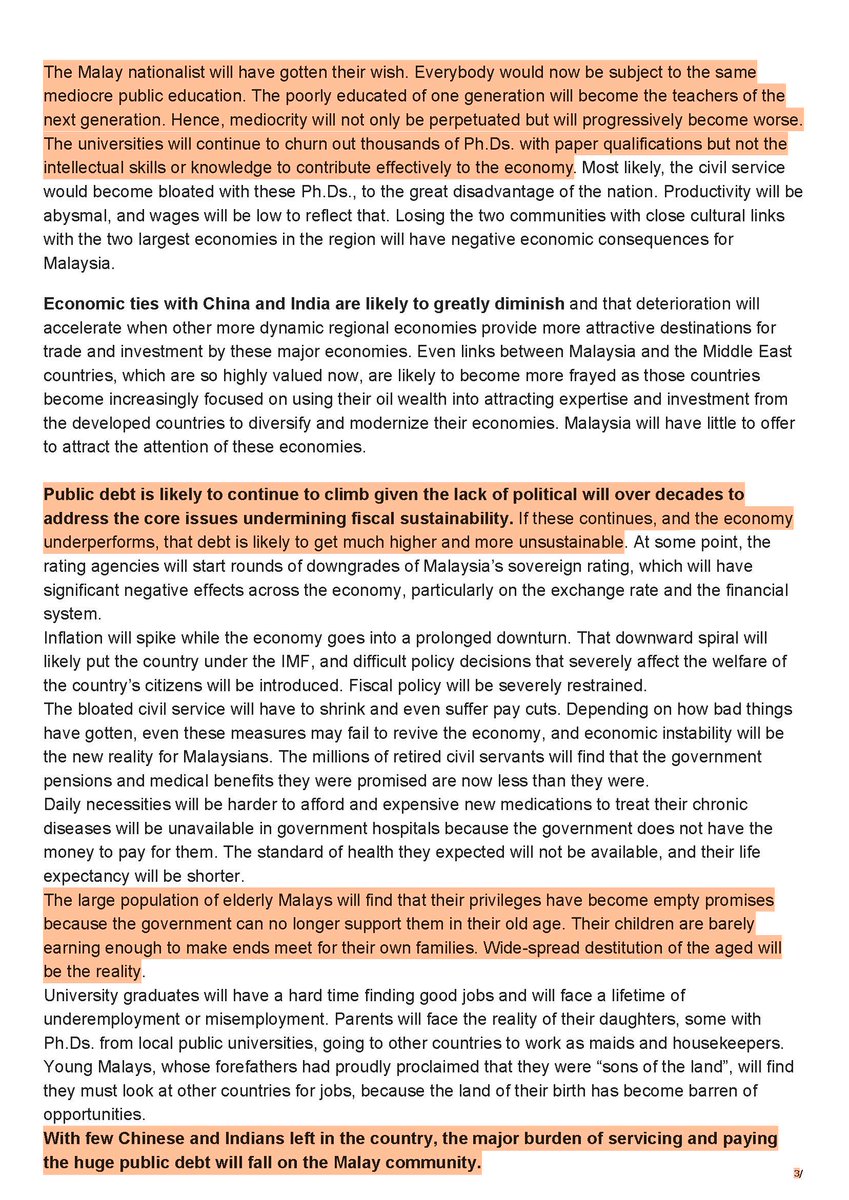
The future of the Chinese and Indian communities in Malaysia (applies to non-Muslim natives in Sabah/Sarawak as well). Written by an insider. I have nothing to add other than to be totally pessimistic for the future of the non-Malays in Malaysia. Yet, all of today's Malay leaders, and non-Malay political leaders, are totally okay with this scenario. I kid you not, all the non-Malay elected YB are okay with this scenario because they think they cannot push back against Malay hegemony. Even The Rocket is playing along, they just want to slow the process down .... Do you have any hope? #Malaysia #PoliticalIslam #Future #Chinese #Indian #KMI #GoingSouth thecoverage.my/5543/contribut…
James Chin tweet mediaJames Chin tweet mediaJames Chin tweet mediaJames Chin tweet media
English
52
68
259
21.6K
Nash - ❤️🇲🇾 ❤️LiverpoolFC retweetledi
Artur Nadolny
Artur Nadolny@ArturNadol7566·
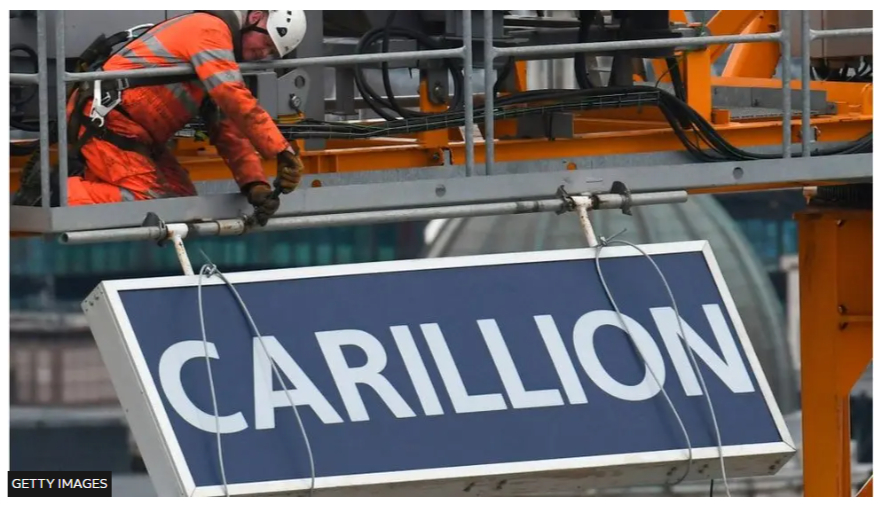
SHE REPORTED FRAUD AT ONE OF BRITAIN'S BIGGEST COMPANIES. NOBODY CARED. THEN IT ALL COLLAPSED. Emma Mercer started her new finance job at Carillion in early 2017. Six weeks in, she found something that made her stomach drop. The books were wrong. Costs were being hidden. Profits were being made to look bigger than they were. On projects worth hundreds of millions of pounds, the numbers simply did not match reality. She told her boss. He brushed her off. She told the CEO. Same response. She went to HR because she had run out of people willing to listen. A board member later described her in writing as a whistleblower who did not feel she was listened to. She was right about everything. Every single thing. But instead of launching an independent investigation, the board quietly scrapped the idea of outside scrutiny and handed the job back to @KPMG, the company's own auditors. The same firm that had been signing off Carillion's accounts as healthy for 19 consecutive years. The same firm collecting £29 million in fees from the very company it was supposed to be independently checking. MP Frank Field said it plainly in Parliament. KPMG were asked to mark their own homework. They gave it top marks. Eight months after Emma Mercer raised the alarm, Carillion collapsed. January 2018. The biggest compulsory liquidation in British history. Here is what that actually meant for real people: 3,000 workers lost their jobs overnight. 28,500 people in Carillion's pension schemes saw their retirement savings cut. A £2.6 billion pension black hole left ordinary workers worse off for years. Taxpayers handed over £150 million just to keep hospitals, schools and prisons running while the mess was cleaned up. Meanwhile, Carillion's former Finance Director Richard Adam sold every single share he owned on the day the 2016 annual report was published. He walked away with £750,000. The shares were worthless months later. It took the regulator five years to act. When it finally did, KPMG was fined £21 million, a record. Investigators also discovered KPMG staff had faked meeting minutes and altered spreadsheets to deceive the regulator during its inspection. The lead audit partner was banned from the profession for 10 years. The fine was less than what KPMG earned from Carillion. One woman told the truth in her first six weeks on the job. She was ignored, sidelined and described as a problem. The executives who ignored her kept their bonuses. The auditors who backed them up kept their fees. The workers who had nothing to do with any of it paid the price. This is how British corporate accountability works.
Artur Nadolny tweet media
English
84
1.7K
3.5K
164.4K
Nash - ❤️🇲🇾 ❤️LiverpoolFC retweetledi
Chay Bowes
Chay Bowes@BowesChay·
The next time the BBC or CNN tells you Russia is "Striking civillian infrastructure" Remember this scene, repeated all over the Dictatorship Ukrainian men grind lethal "Shrapnel" from steel rods for use in strike drones. Their workshop is a school.
English
106
1.9K
5.1K
134.5K
Nash - ❤️🇲🇾 ❤️LiverpoolFC retweetledi
Shanaka Anslem Perera ⚡
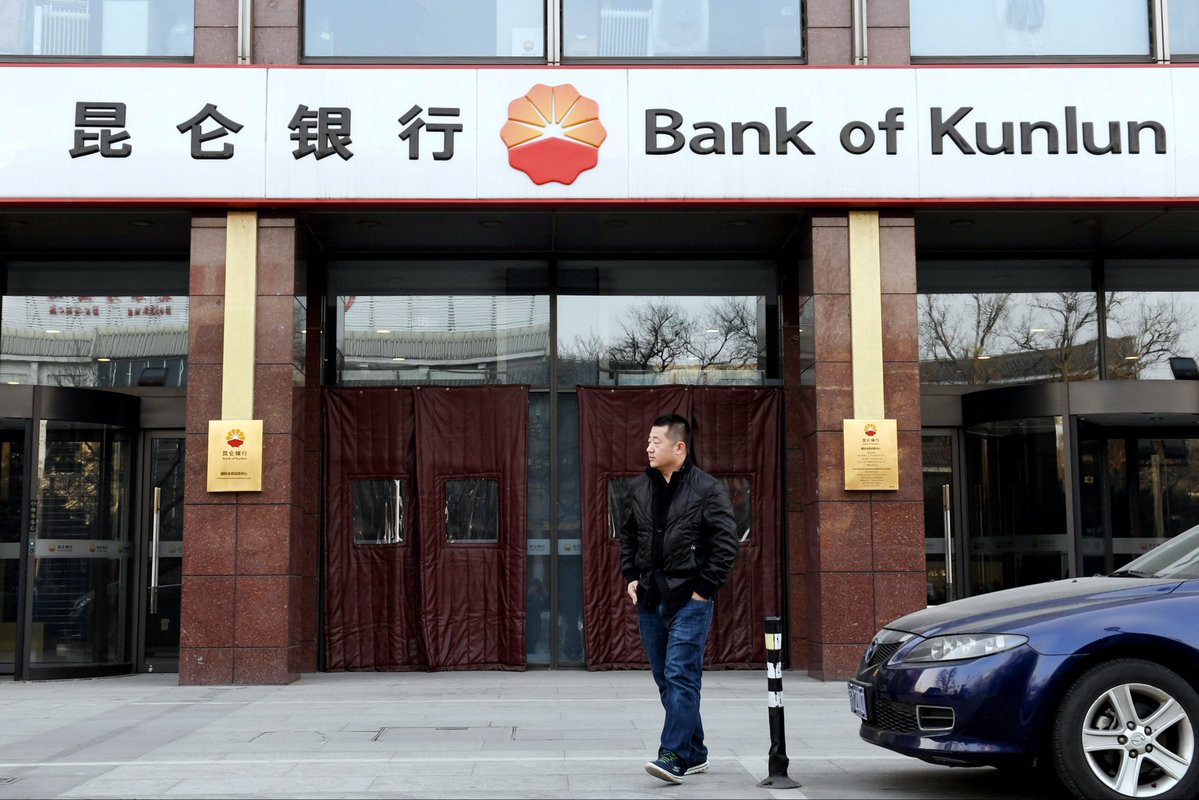
On July 31, 2012, the United States Treasury sanctioned a small Chinese city commercial bank called Bank of Kunlun for moving hundreds of millions of dollars through designated Iranian banks. Fourteen years later, that same bank is the clearing node for the first sovereign cryptocurrency toll system in modern history, collecting up to twenty million dollars a day from oil tankers transiting a chokepoint that carries one-fifth of the world’s seaborne oil. The 2012 sanctions created the 2026 toll booth. The sequence is forensically documented. Bank of Kunlun is not a private institution. It is wholly controlled by CNPC Capital, the financial arm of China National Petroleum Corporation, which is itself 100% owned by SASAC, the State Council body that manages China’s state enterprises. When Treasury sanctioned Kunlun in 2012 under press release tg1661 and cut it off from the American financial system, it did not kill the bank. It liberated it. Kunlun no longer had access to lose. It became China’s dedicated sanctions-resistant conduit for Iran trade, and when China launched the Cross-Border Interbank Payment System in 2015, Kunlun became CIPS’ natural anchor for Persian Gulf energy settlement outside SWIFT. Per the Wall Street Journal and TRM Labs reporting on April 9, 2026, Bank of Kunlun now receives Hormuz toll and protection payments via CIPS in Chinese yuan and, per TRM Labs, clears or accepts cryptocurrency transfers including Bitcoin and USDT for safe-passage guarantees issued by the Islamic Revolutionary Guard Corps. Ship operators submit vessel ownership, cargo, flag, and crew details to an IRGC-linked intermediary. Iran’s Hormozgan Provincial Command vets each submission against a nation-friendliness ranking. Approved vessels pay approximately one dollar per barrel. Settlement clears in seconds. A secret permit code is issued. An armed escort guides the vessel north of Larak Island. The irony is structural, not rhetorical. The United States sanctioned Kunlun to prevent it from servicing Iranian banks. That sanction forced China to build a parallel payment system. That parallel payment system now clears armed maritime extortion revenue for the IRGC in a currency mix that includes Bitcoin, an asset no American court order can freeze. The 2012 action did not contain the threat. It created the infrastructure that industrialised it. One additional detail that has received no analytical attention. COSCO Shipping Development holds a 3.74% stake in Bank of Kunlun per public filings. COSCO is China’s state shipping conglomerate. The bank that clears the maritime toll payments has a state shipping company as a shareholder. That is not a conflict of interest. That is vertical integration, engineered by a state that understood fourteen years ago where this architecture would eventually lead. Meanwhile, in Washington, the Guiding and Establishing National Innovation for United States Stablecoins Act, signed July 18, 2025, requires every regulated stablecoin issuer to maintain the technical capability to freeze tokens on lawful order. Tether has frozen approximately $3.3 billion of USDT across 7,268 blacklisted addresses. OFAC designated Kunlun’s preferred crypto exchange infrastructure, Zedcex and Zedxion, on January 30, 2026, targeting $94 billion in volume. Iran’s parliament responded exactly sixty days later by codifying the Hormuz Management Plan into law. The sanctions tighten. The alternative rails widen. The toll revenue flows. The loop is now fourteen years old and accelerating. Nobody in Washington appears to have mapped the causal chain from their own 2012 Treasury press release to the IRGC patrol boat issuing permit codes over VHF radio in April 2026. That is the gap where the alpha lives. Full institutional analysis below. open.substack.com/pub/shanakaans…
Shanaka Anslem Perera ⚡ tweet media
English
18
221
516
60.9K
Nash - ❤️🇲🇾 ❤️LiverpoolFC retweetledi
Stern Drew
Stern Drew@SternDrewCrypto·
‼️ THEY HAVE BEEN LYING TO YOU ABOUT OIL FOR 150 YEARS. 🛢️ Oil is not rare. It is not made from dead dinosaurs. It is the second most common liquid on Earth after water and it is literally the planet’s lifeblood. The entire “fossil fuel” scam was invented by the Rockefellers and the Smithsonian in the late 1800s to create artificial scarcity and jack up prices to insane levels. They fed you the biotic lie so you would believe oil is some finite dinosaur soup that is about to run dry. Total fabrication. Oil is abiotic. It is a liquid mineral cooked deep in the Earth’s mantle under crushing pressure and scorching heat. It is the natural lubricant for tectonic plates and the grease that keeps the planet’s massive gears turning smoothly. That is why wells drilled dry in the 1970s are filling back up again today. The Earth is pumping fresh oil from below and regenerating it nonstop. It does not run out. We are sucking the lubricant out of the planet’s engine and now the whole machine is starting to shake. More earthquakes. Creaking faults. Grinding plates. Coincidence? No. We are stripping the oil that keeps the Earth’s crust sliding properly and the system is literally seizing up. The so-called “fossil theory” is the greatest economic hack in human history. Real crude oil has almost zero biological markers. No nitrogen, no phosphorus, nothing that would survive if it came from dead organisms. It is pure polymeric hydrocarbons, primordial stuff from the Earth’s own formation. Thomas Gold tried to warn the world. He proved hydrocarbons like methane and oil rise from the deep mantle, not from ancient swamps. The establishment destroyed his reputation because the truth would collapse their entire control grid. If people knew oil is basically tap water for the planet, endlessly generated from below, the entire parasitic geopolitics of wars, sanctions, and price manipulation would evaporate overnight. They do not want you to know the Earth makes its own oil. They need you scared, dependent, and paying through the nose while they bleed the planet dry. Wake up. The dinosaurs had nothing to do with it. This is the biggest lie they ever sold us and it is killing the engine of the world.
English
1K
6.4K
18.6K
4.1M
Nash - ❤️🇲🇾 ❤️LiverpoolFC retweetledi
Afshin Rattansi
Afshin Rattansi@afshinrattansi·
On this day in 1961, 1400 CIA-trained Cuban exiles supported by the US Air Force land on the Bay of Pigs in Cuba🇨🇺 to begin a military operation to overthrow Fidel Castro and defeat the Cuban Revolution. While the CIA expected the exile army to receive popular support, the exact opposite happened with the Cuban population and the armed forces rallying around Fidel Castro. Cuba’s working class and soldiers mobilised, ready to defend the revolution they built, and defeat imperialist aggression. Cuban intelligence had already caught wind of the operation, and were waiting at Playa Girón. JFK was conflicted with providing overt US military assistance due to fears of global backlash, and scaled US air support back at the last minute. It took just 3 days for Castro’s forces to defeat the US-sponsored invasion, 100 men were killed and over a thousand were captured, resulting in humiliation for the United States and President Kennedy. Fidel Castro had been vindicated: the threat of the imperialist United States was real, and the genuine hatred of the US for the Cuban Revolution was an existential threat. Castro and the communists had broken the US’ economic control over the island nation and Washington never forgave the revolutionaries in Havana for it. In the aftermath, Cuba built closer ties with the Soviet Union both out of ideological alliance and security necessity, securing a superpower as its greatest ally. More embarrassingly, CIA declassified documents showed that the intelligence community itself assessed that Fidel Castro and the communist revolutionaries had broad support among the Cuban population, especially among the working class and rural populations. Their expectation of support for their army of exile mercenaries had been a lie to convince JFK to launch the Bay of Pigs operation. They never forgave JFK for pulling back on US air support. He was assassinated two years later.
English
6
150
286
12.1K
Nash - ❤️🇲🇾 ❤️LiverpoolFC retweetledi
Patrick Henningsen
This is absolutely brilliant. On point…
English
99
1.6K
5.5K
287.2K
Nash - ❤️🇲🇾 ❤️LiverpoolFC retweetledi
Apurva Sanghi
Apurva Sanghi@ApurvaSanghi·
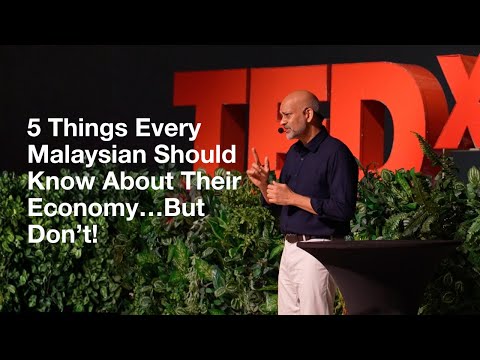
Dengan izin, post panjang sedikit hari ini 😅 Atas permintaan dan nasihat beberapa kawan, saya ingin kongsikan ucapan TEDx saya mengenai ekonomi Malaysia, tetapi kali ini dalam Bahasa Melayu! Ucapan ini antara top 10 ucapan TEDx di seluruh dunia pada bulan lepas (mengikut bilangan paparan) - maksudnya rakyat Malaysia memang menyambut baik idea² yang diutarakan! Oleh itu, saya pun rasa memang sesuailah jika saya terjemahkan kpd BM supaya lebih ramai rakyat Malaysia dapat menelitinya. Seperti biasa, komen² saudari-saudari amat dialu²kan 🙏 _______ 5 perkara semua rakyat Malaysia patut tahu tentang ekonomi mereka… tapi tak tahu! [Pautan ke video penuh: youtube.com/watch?v=12Hin1…] Orang selalu panggil saya “walking economy”. Tahu tak kenapa? Rambut saya sedang menguncup. Perut saya pula mangsa inflasi. Maka saya pun sedih sampai kemeseletan 😊 Mengenai ekonomi, saya rasa anda semua tahu dua ekonomi terbesar di dunia adalah China dan Amerika Syarikat. Selepas melaraskan harga — seperti bagaimana potongan rambut di Shanghai lebih murah daripada di San Francisco — China menyumbang kira-kira 19–20% kepada GDP dunia, dan Amerika sekitar 15%. Tapi pernah tak anda terfikir, berapa besar Malaysia? Jawapannya: 0.7%. Kurang daripada satu peratus! Itu pun lebih kecil daripada margin of errordalam ramalan ekonomi Bank Dunia! 😊 Tapi hakikatnya: Malaysia kecil dari segi saiz, tetapi besar dari segi jiwa dan cerita. Dan hari ini, saya nak kongsikan cerita itu dalam bentuk “5 perkara semua rakyat Malaysia patut tahu tentang ekonomi mereka… tapi tak tahu!” #1. Yang pertama: Walaupun Malaysia hanya sebahagian kecil daripada ekonomi global, negara ini telah berjaya mengangkat lebih 14 juta rakyat keluar daripada kancah kemiskinan. [Pautan ke Fakta #1: youtube.com/watch?v=12Hin1…] Itu bukan sekadar statistik; itu 14 juta hidup yang berubah… itu satu keajaiban di peringkat nasional. 10 tahun selepas merdeka, lebih kurang 50% — separuh daripada rakyat Malaysia — hidup dalam kemiskinan. Hari ini, hanya sekitar 5%. Apabila Malaysia dan Singapura berpisah, Malaysia mewarisi populasi yang lebih besar, lebih miskin dan lebih berpaksikan pertanian. Namun Malaysia tetap berjaya mengeluarkan jutaan rakyat daripada kemiskinan — dan ia dilakukan tanpa mewujudkan kawasan setinggan kekal. Setiap rakyat Malaysia patutlah bangga. Dan sejujurnya: Nasi lemak Malaysia juga lebih sedap daripada Singapura😊 Berita yang lebih baik lagi: sebahagian besar daripada kejayaan ini tertumpu dalam kalangan rakyat Bumiputera, yang dahulunya paling ketinggalan. Dua puluh tahun dahulu, Bumiputera 2–3 kali ganda lebih berisiko kekal miskin berbanding Kumpulan etnik lain. Hari ini, jurang itu telah dihapuskan. Kini, kemiskinan sebenarnya bukan lagi berpaksikan kaum atau etnik — tetapi kelas sosial. Cabaran hari ini? Menutup jurang dalam etnik, bukan antara etnik. #2. Perkara yang kedua: [Pautan ke Fakta #2: youtube.com/watch?v=12Hin1…] Anda mungkin tahu Malaysia masih belum menjadi negara berpendapatan tinggi. Tapi tahu tak berapa lama Malaysia tersangkut dalam middle‑income trap (perangkap negara berpendapatan sederhana)? Hampir empat dekad! Lamanya! Korea Selatan, Taiwan, Singapura — semua sudah melepasi perangkap itu, tapi Malaysia belum. Berkenaan itu, walaupun Malaysia tidak mempunyai pendapatan per kapita yang tinggi, tahu tak apa yang Malaysia ada? Pendapat per kapita yang tinggi! Berita yang baik: Malaysia boleh mencapai status berpendapatan tinggi dalam 5–7 tahun akan datang. Dan saya harap Michelle Yeoh boleh datang potong reben dan merasmikan mana-mana majlis meraikan kejayaan ini nanti😊 Berita yang buruk: Apabila itu berlaku, 6 daripada 10 rakyat Malaysia masih akan berada di bawah paras pendapatan tinggi. Ini menunjukkan betapa luasnya jurang antara golongan berada dan golongan rentan: Rakyat di KL lebih kaya daripada rakyat Portugal — sebuah negara berpendapatan tinggi. Tetapi rakyat di Kelantan hampir 7 kali lebih miskin daripada rakyat KL — dan setaraf Sri Lanka. Ini peta Malaysia yang kita kenal dan cinta: Dan ini pula peta Malaysia diubah mengikut tahap kekayaan setiap negeri: 📷 Jurang itu meletup, secara literal. Pengajarannya: anda tidak boleh menjadi negara berpendapatan tinggi atas bahu segelintir sahaja! Jika tidak, anda bakal dengar soalan: “Macam mana negara aku kaya tapi aku miskin?" ________ Setakat ini, saya telah berkongsi dua fakta: (1) Malaysia berjaya menaikkan lantai dan mengurangkan kemiskinan dengan ketara (2) Malaysia masih belum berjaya menaikkan siling pendapatan. Persoalannya, mengapa? ________ #3. Jadi mari kita tanyakan diri kita — apakah yang menggerakkan ekonomi Malaysia? [Pautan ke Fakta #3: youtube.com/watch?v=12Hin1…] Kita semua tahu apa yang menggerakkan rakyat Malaysia: tentunya Teh Tarik dan Roti Canai! 😊 Tetapi ekonomi? Dahulu, komoditi — termasuk getah, bijih timah, minyak, dan gas — menjadi penggerak ekonomi. Namun, sumbangannya semakin mengecil. Yang menggerakkan ekonomi Malaysia hari ini ialah semikonduktor. Malaysia antara 10 pengeksport semikonduktor terbesar dunia. Sebenarnya, semikonduktor bagi Malaysia umpama Angsa Bertelur Emas dalam cerita dongeng Aesop. Namun… angsa ini sudah semakin letih, dan semakin tua: Patutnya bermain badminton tapi sudah puas hati dengan bermain pickleball 😊 …pada hujung minggu 😊😊 Kenapa? Sebab angsa itu tidak berinovasi. Dunia kini berlumba dalam AI dan cip maju, tetapi Malaysia berisiko kekal di hujung rantaian nilai sahaja— hanya mengeluarkan cip melalui mass production tetap kurang terlibat dalam reka cipta, iaitu bidang yang paling membawa keuntungan. Fakta: Hanya 18% paten semikonduktor Malaysia dimiliki rakyat Malaysia. China? 40%. Taiwan? 60%! Ini bukan kerana orang Malaysia tak inovatif. Anda semua tahu benda ini [kad Touch ’n Go], Dan anda juga tahu situasinya: Anda kat tol, buka tingkap kereta, pusing tangan macam pakar yoga, cuba sehabis daya nak pastikan kad TnG bersentuh dengan sensor ajaib tu… tapi entah macam mana, tak boleh sampai juga 😊 Kemudian munculnya seorang genius Malaysia dan menyelesaikan masalah ini: voila… saksikanlah tongkat ajaib TnG! 😊 Saya harap ada genius yang boleh membaiki RFID pula — sebab di Malaysia, ada yang cakap RFID bermaksud: “Reverse Forward Insyallah Detect” 😊 Jadi masalahnya bukan rakyat tak inovatif, tetapi ekosistem inovasi yang lemah: Tahap pembiayaan jangka panjang yang rendah, toleransi terhadap kegagalan yang rendah, dan perbelanjaan R&D yang rendah Malaysia membelanjakan kurang daripada 1% KDNK untuk R&D. Singapura? Dua kali ganda; Korea Selatan? Empat kali ganda! “Middle‑income trap” (Perangkap negara berpendapatan sederhana) Malaysia sebenarnya ialah “Innovation trap” (Perangkap inovasi) ——- Ok, 3 sudah selesai dijelaskan, tinggal 2 lagi. Yang #4: Kadar pengangguran Malaysia rendah — cuma 3%. Tetapi di sebalik angka itu: 4 daripada 10 rakyat Malaysia bekerja di bawah tahap kemahiran mereka. Mereka dianggap “underemployed”. [Pautan ke Fakta #4: youtube.com/watch?v=12Hin1…] Saya selalu teringat Izwan, pemandu Grab saya dulu… dia pernah menjadi kontraktor bergaji tinggi di Petronas. Saya teringat guru matematik anak saya… yang mengurus beberapa kerja sambilan. Saya teringat jutaan rakyat Malaysia yang bekerja di bawah tahap kemahiran, berusaha untuk menampung kehidupan. Malah, hampir separuh daripada semua pekerja di Malaysia mendapat gaji kurang daripada RM3,000 – ataupun kira-kira $700 USD – sebulan. Jumlah itu pun tidak cukup untuk membayar cukai Angka “brain-drain” jelas menggambarkan hal ini. Pada 1990, hanya 350,000 rakyat Malaysia duduk di Singapura. Hari ini? Lebih 1.5 juta, belum termasuk yang ulang-alik secara harian. Itu hampir satu suku daripada populasi Singapura! Ramai juga yang kini sudah menjadi warganegara Singapura. Jelas sekali, rakyat Malaysia tidak kekurangan semangat; yang kurang hanyalah peluang. Ini membawa saya kepada sesuatu perkara… biar saya tanya: apakah sumber boleh diperbaharui paling berharga di Malaysia? Ia bukannya balak, solar atau hidro. Ia adalah generasi muda. Anak muda Malaysia sangat mempunya daya inovasi dan jati dari yang tinggat tinggi. Tetapi mereka jugalah yang paling susah nak mencari pekerjaan, dengan kadar pengangguran tiga kali lebih tinggi dalam golongan belia berbanding yang lain. Mengapa? Pertama, mereka sudah ketinggalan sejak usia muda: 40% kanak-kanak Malaysia pada umur 10 tahun masih belum mampu membaca atau memahami teks yang sesuai dengan usia mereka. Pelajar menghabiskan 12.5 tahun di sekolah, tetapi pembelajaran sebenar mereka bersamaan sembilan tahun di negara lain. Itu bermakna kira-kira tiga setengah tahun persekolahan terbuang begitu sahaja. Tidak hairanlah apabila mereka memasuki alam pekerjaan, mereka sudah pun ketinggalan. Jadi, memang penting untuk membetulkan keadaan ini. Namun, tanpa mewujudkan pekerjaan yang lebih baik, hanya bermakna kita melatih bakat untuk lebih banyak yang dieksport. Jadi, inilah soalan bernilai US$420 bilion — dan sekarang anda sudah tahu KDNK Malaysia, nampaknya makin bijak! — mengapa pekerjaan berkualiti tinggi masih kurang? Salah satu sebabnya ialah peranan kerajaan yang terlalu dominan dalam ekonomi sehingga mengekang dan mengehadkan sektor swasta, manakala satu lagi ialah kerenah birokrasi yang menyekat inisiatif. Contohnya: satu kementerian mengawal selia penjagaan kanak-kanak, manakala kementerian lain mengawal prasekolah. Jadi, jika anda sebuah perniagaan swasta yang ingin menawarkan perkhidmatan penjagaan dan prasekolah secara bersama — seperti yang diminta oleh para ibu bapa zaman sekarang— anda perlu mendapatkan dua lesen berasingan daripada dua kementerian berbeza. Bukan itu sahaja, anda juga perlu mempunyai premis yang berasingan, lengkap dengan pintu masuk masing-masing. Hasilnya? Anda sudah boleh beragak: ramai penyedia swasta memilih untuk beroperasi secara tidak sah. Justeru, kita perlu mengembalikan semula ‘mojo’ sektor swasta. Dan kita juga perlu menangani kemiskinan pembelajaran dari akar umbi. Mana-mana jumlah bantuan tunai, AI atau latihan di peringkat kemudian pun tidak akan mampu menampung kelemahan asas ini. Ini kerana anda tidak boleh membina negara berpendapatan tinggi berasaskan kemahiran rendah dan sektor swasta yang lemah! #5. Dompet kerajaan semakin ringan [Pautan ke Fakta #5: youtube.com/watch?v=12Hin1…] Tahukah anda: · 80% cukai pendapatan individu Malaysia dibayar oleh hanya 7% pekerja. · Hasil cukai Malaysia sebagai peratusan KDNK kurang daripada 13% … jauh lebih rendah berbanding 12 tahun lalu, dan jauh ketinggalan daripada negara yang bercita-cita menjadi negara berpendapatan tinggi. Dompet yang ringan ini memberi Kesan negative kepada pembinaan infrastruktur penting seperti hospital, Sekolah, dan jalan. Faedah hutang sahaja pun sudah makin membebankan. Ya, walaupun mengurangkan subsidi dan membanteras rasuah akan membantu — itu tidak mencukupi. Malaysia mesti memperluas asas hasil negaranya. Anda tidak boleh membina negara berpendapatan tinggi dengan sumber yang rendah! ____ [Pautan ke Penutup: youtube.com/watch?v=12Hin1…] Itulah lima fakta saya. Persoalannya: apa yang boleh anda lakukan? Sebenarnya banyak, dan anda boleh mulakan dengan memperluaskan pengetahuan. Dan saya benar-benar berharap perkongsian saya hari ini membantu. Berkenaan dengan maklumat, apabila saya tiba di Malaysia empat tahun lalu, saya agak terkejut bahawa sebuah demokrasi seperti ini belum mempunyai Akta Kebebasan Maklumat. Sekarang, satu akta sedang diusahakan dan berpotensi mengubah budaya semasa Malaysia daripada ‘rahsia kecuali diterbitkan’ kepada ‘terbuka kecuali dirahsiakan.’ Satu perubahan yang besar! Namun, semua Kerajaan di mana-mana pun memang terkenal dengan pelbagai silat untuk mengelak daripada menerbitkan maklumat: dengan melengah-lengahkan permohonan, mengenakan bayaran untuk maklumat, atau menggunakan alasan keselamatan negara. Anda tahu, ramai orang ingat Kerajaan berkuasa sebab mengeluarkan wang. Salah. Khazanah Kerajaan yang sebenar adalah kepercayaan. Dan tiada apa yang lebih cepat menurunkan mata wang kepercayaan selain menyembunyikan maklumat atau menyebarkan maklumat salah. Jadi, sebagai rakyat Malaysia yang prihatin, anda boleh memastikan Malaysia meluluskan — dan melaksanakan — Akta Kebebasan Maklumat terbaik di dunia ___ Saya pernah tinggal di Rusia selama lima tahun sebelum berpindah ke Kuala Lumpur. Pada 2017, di Moscow, sepanjang bulan Disember, kami menerima ada enam minit cahaya matahari. Enam minit… untuk 31 hari. Itu kurang daripada 12 saat cahaya matahari sehari. Ini kurang daripada masa yang anda layan TikTok pada waktu pagi! Tetapi setiap pagi apabila saya membuka langsir di Kuala Lumpur, saya hampir pasti disambut dengan cahaya matahari yang indah dan keemasan. Malaysia mungkin ekonomi yang kecil di persada dunia. Tetapi jiwa, semangat, harapan dan cita-cita Malaysia adalah setinggi langit. Malaysia memanglah luar biasa. Terima kasih 🙏
YouTube video
YouTube
Indonesia
3
96
191
12.9K
Nash - ❤️🇲🇾 ❤️LiverpoolFC retweetledi
Josh Hunt
Josh Hunt@iAmJoshHunt·
My last tweet was about PFI. How the government bought hospitals and schools on hire purchase and is still paying five times what they're worth. Billions draining out of NHS trust budgets every year in interest and service charges. But PFI isn't the only hidden liability buried in the government's accounts. There's another one that almost nobody knows about. And while the number is smaller, what it represents is arguably more disturbing. Because this one isn't about buildings. It's about people. It's roughly £60 billion. The second largest provision on the entire government balance sheet, after nuclear decommissioning. And it is the estimated future liability for NHS clinical negligence in England. To be clear about what that means. This isn't a pot of cash sitting in an account. It's an accounting provision. The government's best estimate of what it will cost to settle compensation claims arising from patient harm that has already occurred. Some of those claims have been filed. Many haven't yet. Almost 40% of the total, roughly £24 billion, is an actuarial estimate of claims that are expected to come but haven't been reported. Harm that has already happened. Claims that are still forming. Twenty years ago, that provision stood at £14.4 billion in real terms. It has roughly quadrupled. And it's still growing. The annual cost of settling these claims has more than tripled, from £1.1 billion in 2006 to £3.6 billion in 2024-25. NHS Resolution and the Government Actuary's Department project it will reach £4.1 billion a year by 2030. That's real money being taken out of the health budget every year. Money that could be funding doctors, nurses, beds, and equipment. Instead it funds compensation for harm the system caused. And the structure of these costs is extraordinary. Just 2% of claims by volume account for 68% of total costs. These are the catastrophic cases. Mostly brain injuries suffered during birth. Babies who should have been delivered safely but weren't. The average settlement for an obstetrics claim involving cerebral palsy or brain damage is £11.2 million. Each case takes an average of 11 to 12 years to resolve. Families waiting over a decade while caring for a profoundly disabled child. In 2024-25, brain injury at birth cases alone cost the NHS £1.5 billion. One category. One type of harm. A billion and a half pounds. Then there's the legal cost. Claimant legal fees on successful claims have risen from £148 million to £538 million in under two decades. And for low-value claims, those under £25,000, the legal costs are 3.7 times higher than the damages paid to the patient. The lawyers receive nearly four times what the injured person gets. Three quarters of all claims fall into this category. Overall, claimant legal costs alone now represent roughly 20% of total clinical scheme payments. One pound in every five goes not to the person who was harmed, but to the legal process of proving the harm happened. Behind all of this is a patient safety system that the government's own Public Accounts Committee describes as overwhelmed. The NHS reports around 2.4 million patient safety incidents a year. About 70% cause no harm. But roughly 0.5% result in severe harm or death, implying around 12,000 cases every year. The PAC's verdict, published in January, was damning. It said the Department of Health and Social Care "cannot provide reassurance that it has taken any meaningful action to address clinical negligence to date." That same warning was made in 2002. Again in 2017. Again in 2024. Three times in two decades. Nothing changed. The bill kept growing. And there's a detail that makes it worse. There is a risk that the taxpayer pays twice for the same harm. Claims are settled on the assumption that the patient will fund their future care privately. But some of those patients then go on to use the NHS or publicly funded social care. So the state pays the compensation and then pays again for the treatment. The government does not know how often this happens. Now step back and think about what this means for the system. The same hospital trusts paying billions in PFI repayments are also paying billions in clinical negligence settlements. The budget that's supposed to fund safe staffing, functioning equipment, and adequate care is being drained from both sides. PFI taking money out. Negligence claims taking money out. And patient care trapped in the middle. This is a doom loop. An overstretched system makes more mistakes because it's overstretched. Those mistakes generate claims. Those claims drain money from the budget. The reduced budget means fewer staff, more pressure, longer waits, more exhaustion. Which leads to more mistakes. Which generates more claims. The system for dealing with this is adversarial, blame-based, slow, and expensive. The Health and Social Care Committee called it "not fit for purpose." Instead of learning from errors, the system incentivises defensiveness. Clinicians are afraid to admit mistakes because admissions become evidence in legal proceedings. So the same errors repeat. The same harms recur. The same compensation gets paid. Year after year. Other countries handle this differently. New Zealand has a no-fault compensation scheme that is faster, less adversarial, and more focused on learning from what went wrong rather than proving who was to blame. The BMA has recommended the UK explore a similar model. The government has asked David Lock KC to review the system but has not committed to any specific reform. I want to be clear about something. This is not an attack on NHS staff. The overwhelming majority of clinicians and nurses go to work every day and deliver extraordinary care under impossible pressure. They are not the problem. They are working inside a system that sets them up to fail, and then punishes them when they do. And this is absolutely not an argument against patients receiving compensation. When a baby suffers a brain injury because of a preventable error, that family deserves every penny of support. The question isn't whether they should be compensated. It's why the system keeps producing the same avoidable harm, decade after decade, and why three parliamentary warnings have changed nothing. £60 billion. Second largest provision on the government's books. Quadrupled in two decades. And nobody has done anything about it. The money is the measure of the failure. But the failure is human.
Josh Hunt@iAmJoshHunt

This one will require a stiff drink. In the early 1990s, the government came up with a clever idea. Instead of borrowing money cheaply to build hospitals, schools, and roads, it would get the private sector to build them and then pay the private sector back over 25 to 30 years. The Private Finance Initiative. PFI. The attraction was obvious. You got a shiny new hospital today. The bill didn't show up on the government's books. The cost was deferred into the future. Politicians got ribbon-cutting ceremonies without the awkward conversation about borrowing. It was, in effect, the nation's credit card. Buy now, pay later. Except the interest rate was extraordinary. The total capital value of everything built under PFI was around £50 billion. As of March 2024, there were 665 PFI contracts still running across the UK, with roughly £136 billion in remaining payments stretching out to the early 2050s. These are payments public bodies are contractually locked into. Hospitals, schools, councils, government departments. Paying for buildings that in many cases were constructed twenty or thirty years ago. And the terms are extraordinary. PFI contracts were structured so the private sector would not just build the facility but manage its services. Cleaning. Maintenance. Catering. Portering. These services are bundled into long-term contracts with built-in inflation increases that the public sector cannot renegotiate, cannot exit without paying massive penalties, and often cannot even fully scrutinise because of commercial confidentiality clauses. In one case raised in Parliament, a hospital was charged £333 to change a lightbulb. That isn't an urban myth. It was cited in Hansard. The NHS has been hit hardest. According to parliamentary analysis, the capital cost of NHS PFI projects was around £13 billion. The total repayments are estimated at around £80 billion. And the peak of NHS PFI annual repayments isn't even here yet. It arrives in 2029. The bills are still going up. In 2020-21, NHS trusts paid £457 million purely in interest charges on PFI contracts. Not services. Not maintenance. Interest. In the last five years, NHS trusts have handed over more than £1.8 billion in PFI interest alone. We Own It calculates that money would have covered the starting salaries of over 50,000 new doctors. One NHS trust, Essex Partnership, has reportedly paid back 27 times what was originally borrowed. Some hospitals are spending more on PFI repayments than on medicines for patients. And remember, these repayments come out of the same NHS budget that's supposed to fund patient care, staff, and equipment. Scotland got it just as badly. Audit Scotland reported that Scottish taxpayers will pay a cumulative £40 billion for PFI assets worth just £9 billion. North Ayrshire Council will have paid £440 million by 2038 for four schools that cost £83 million to build. Now here's what makes this worse. Many of these contracts are starting to expire. The buildings are being handed back to the public sector. And the NAO has warned of significant risks around the handback process, including cases where public bodies were dissatisfied with the condition of assets being returned to them. Decades of payments. And some of these buildings may come back needing significant further investment. So what actually happened? The government could have borrowed money at significantly lower rates to build these hospitals and schools itself. Sovereign borrowing has always been cheaper than private finance. Instead, it paid the private sector to borrow at a premium and passed the inflated cost on to the taxpayer. The private sector took the profit. The taxpayer took the risk. The buildings are now ageing. The debts are still being paid. And the services that were supposed to benefit are being squeezed partly because so much of their budget is locked into contractual obligations they cannot escape. PFI wasn't investment. It was an accounting trick. A way for governments to build things without the borrowing showing up in the national debt figures. It made politicians look fiscally responsible while loading future generations with obligations they had no say in and no ability to renegotiate. Both parties did this. The Conservatives created PFI in 1992. Labour massively expanded it after 1997. More than 700 projects were signed. The coalition eventually wound it down. The current government scrapped the latest version. But the contracts remain. The payments continue. And the damage is already done. This is what it looks like when a country chooses to buy its infrastructure on hire purchase instead of investing properly. You lock in above-market rates for decades. You lose control of the assets. You tie the hands of future governments. And when the bill keeps coming due, you're told there's no money for doctors, teachers, or social care. There was always money. It just went somewhere else.

English
19
188
336
13.4K
Nash - ❤️🇲🇾 ❤️LiverpoolFC retweetledi
Bitcoin Malaya
Bitcoin Malaya@bitcoinmalaya·
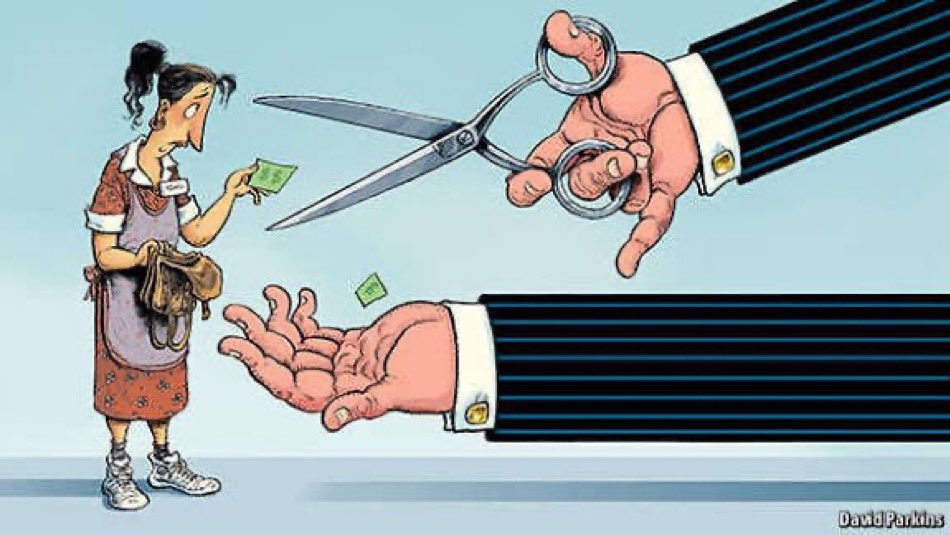
It is expensive to be poor. Very expensive Because when you are poor, everything costs more: • You can’t buy in bulk, so you pay higher unit prices • You can’t afford quality, so cheap things break faster and need replacing • You can’t access good credit, so you pay higher interest • You can’t invest early, so you lose years of compounding • You can’t take risks, so you stay stuck in low-paying paths and fear • You can’t afford nutrition, so your health deteriorates • You can’t afford events or conferences, so you don’t get exposed to high-value network or opportunities • One emergency can wipe out everything Poverty isn’t just a lack of money. It is a tax on the poor that keeps them poor
Bitcoin Malaya tweet media
English
8
182
366
33.1K
ksampoh@MyOwn Inc
ksampoh@MyOwn Inc@ksampoh·
Good breakdown by Josh Hunt. The UK PFI story is not unique - Malaysia has been running a similar model under PPP, concessions & SPV structures for years. We didn’t call it one thing. But the mechanics are the same. Build now, push the cost forward. Instead of the govt borrowing cheaply at around 3–4% via MGS, projects are often structured through private vehicles with higher financing cost. Over 20–30 years, that difference alone turns into billions in extra payments. Malaysia’s PFI-style obligations are already estimated in the RM50–60 billion range across Syarikat PFI, rail infrastructure & long-term leaseback arrangements. Not always reflected cleanly as "debt", but these are contractual payments the govt cannot walk away from. Look at highways. Billions in toll revenue yearly, yet some structures still show weak returns or losses due to legacy debt & financing terms. The cash flow is there - but the structure eats it. Look at rail. Projects are often kept off-balance sheet at the start, but operating losses & repayment obligations eventually fall back to the govt. Same outcome - Rakyat pays. The issue is not infrastructure. Malaysia needs it. The issue is cost of money & how the deal is structured. Government borrowing is always cheaper. When you insert a private financing layer, you are effectively paying a premium for the same asset, over decades. The UK is now seeing the full impact - £50 billion of assets turning into more than £130 billion in obligations. Malaysia is still in the middle of that cycle. The liabilities exist, just spread out & less visible. Here’s where Malaysia carries a bigger risk. UK’s problem was expensive contracts. Malaysia’s risk is expensive contracts plus governance gaps - direct awards, limited transparency in some deals, & politically-linked structures. That’s where leakages multiply. End of the day, this was never "free infrastructure". It’s deferred liability with interest. Sooner or later, it shows up - through tolls, subsidies, or tighter budgets. The question is not whether we pay. It’s how much extra we chose to pay for the same asset.
English
1
1
1
23
Nash - ❤️🇲🇾 ❤️LiverpoolFC
@ksampoh wld be fun to hv a Malaysian perspective.....
Josh Hunt@iAmJoshHunt

This one will require a stiff drink. In the early 1990s, the government came up with a clever idea. Instead of borrowing money cheaply to build hospitals, schools, and roads, it would get the private sector to build them and then pay the private sector back over 25 to 30 years. The Private Finance Initiative. PFI. The attraction was obvious. You got a shiny new hospital today. The bill didn't show up on the government's books. The cost was deferred into the future. Politicians got ribbon-cutting ceremonies without the awkward conversation about borrowing. It was, in effect, the nation's credit card. Buy now, pay later. Except the interest rate was extraordinary. The total capital value of everything built under PFI was around £50 billion. As of March 2024, there were 665 PFI contracts still running across the UK, with roughly £136 billion in remaining payments stretching out to the early 2050s. These are payments public bodies are contractually locked into. Hospitals, schools, councils, government departments. Paying for buildings that in many cases were constructed twenty or thirty years ago. And the terms are extraordinary. PFI contracts were structured so the private sector would not just build the facility but manage its services. Cleaning. Maintenance. Catering. Portering. These services are bundled into long-term contracts with built-in inflation increases that the public sector cannot renegotiate, cannot exit without paying massive penalties, and often cannot even fully scrutinise because of commercial confidentiality clauses. In one case raised in Parliament, a hospital was charged £333 to change a lightbulb. That isn't an urban myth. It was cited in Hansard. The NHS has been hit hardest. According to parliamentary analysis, the capital cost of NHS PFI projects was around £13 billion. The total repayments are estimated at around £80 billion. And the peak of NHS PFI annual repayments isn't even here yet. It arrives in 2029. The bills are still going up. In 2020-21, NHS trusts paid £457 million purely in interest charges on PFI contracts. Not services. Not maintenance. Interest. In the last five years, NHS trusts have handed over more than £1.8 billion in PFI interest alone. We Own It calculates that money would have covered the starting salaries of over 50,000 new doctors. One NHS trust, Essex Partnership, has reportedly paid back 27 times what was originally borrowed. Some hospitals are spending more on PFI repayments than on medicines for patients. And remember, these repayments come out of the same NHS budget that's supposed to fund patient care, staff, and equipment. Scotland got it just as badly. Audit Scotland reported that Scottish taxpayers will pay a cumulative £40 billion for PFI assets worth just £9 billion. North Ayrshire Council will have paid £440 million by 2038 for four schools that cost £83 million to build. Now here's what makes this worse. Many of these contracts are starting to expire. The buildings are being handed back to the public sector. And the NAO has warned of significant risks around the handback process, including cases where public bodies were dissatisfied with the condition of assets being returned to them. Decades of payments. And some of these buildings may come back needing significant further investment. So what actually happened? The government could have borrowed money at significantly lower rates to build these hospitals and schools itself. Sovereign borrowing has always been cheaper than private finance. Instead, it paid the private sector to borrow at a premium and passed the inflated cost on to the taxpayer. The private sector took the profit. The taxpayer took the risk. The buildings are now ageing. The debts are still being paid. And the services that were supposed to benefit are being squeezed partly because so much of their budget is locked into contractual obligations they cannot escape. PFI wasn't investment. It was an accounting trick. A way for governments to build things without the borrowing showing up in the national debt figures. It made politicians look fiscally responsible while loading future generations with obligations they had no say in and no ability to renegotiate. Both parties did this. The Conservatives created PFI in 1992. Labour massively expanded it after 1997. More than 700 projects were signed. The coalition eventually wound it down. The current government scrapped the latest version. But the contracts remain. The payments continue. And the damage is already done. This is what it looks like when a country chooses to buy its infrastructure on hire purchase instead of investing properly. You lock in above-market rates for decades. You lose control of the assets. You tie the hands of future governments. And when the bill keeps coming due, you're told there's no money for doctors, teachers, or social care. There was always money. It just went somewhere else.

Kampar, Perak 🇲🇾 English
1
0
0
9
Nash - ❤️🇲🇾 ❤️LiverpoolFC retweetledi
David Miller
David Miller@Tracking_Power·
Coming soon, new article by me on MI6 and British intelligence subversion of the Islamic Republic of Iran - and collaboration with the Mossad. In 2023 I travelled to Iran and filmed a documentary about what I saw on my travels. In Tehran, I visited the Museum of Holy Defense which is devoted to telling the story of what we, in the West, call the Iran-Iraq war. In the museum there was a display of the actual cars in which Iranian nuclear scientists had been assassinated by the Mossad, complete with bullet holes, the effects of the explosions and, of course, blood stains. I discovered that MI6 had had a hand in some of those assassinations as well as in exfiltrating an Iranian Mossad collaborator - who ultimately reached the UK on a rubber dinghy via the English Channel, in the company of unsuspecting fellow Iranian refugees. MI6 were apparently involved with the Mossad in the murder of Mohsen Fakrizadeh, riddled with bullets from a remote control gun smuggled into the country over many months. I saw his car at the Museum and later visited his grave in central Tehran. Here is a clip from the film showing the bullet-ridden and bomb damaged cars. It's a taster for a major article I am working on about the role of MI6 in subverting the Islamic Republic of Iran which is out soon.
English
30
1.2K
2.3K
45.4K