NickBunker

11.4K posts

NickBunker banner
NickBunker

NickBunker

@nbunkerauthor

Pulitzer finalist. Author of EMPIRE ON THE EDGE, YOUNG BENJAMIN FRANKLIN & IN THE SHADOW OF FEAR. @UKLabour. Former chair, Freud Museum. Francophile globalist.

Lincoln, England Katılım Mayıs 2018
1.4K Takip Edilen1.4K Takipçiler
Sabitlenmiş Tweet
NickBunker
NickBunker@nbunkerauthor·
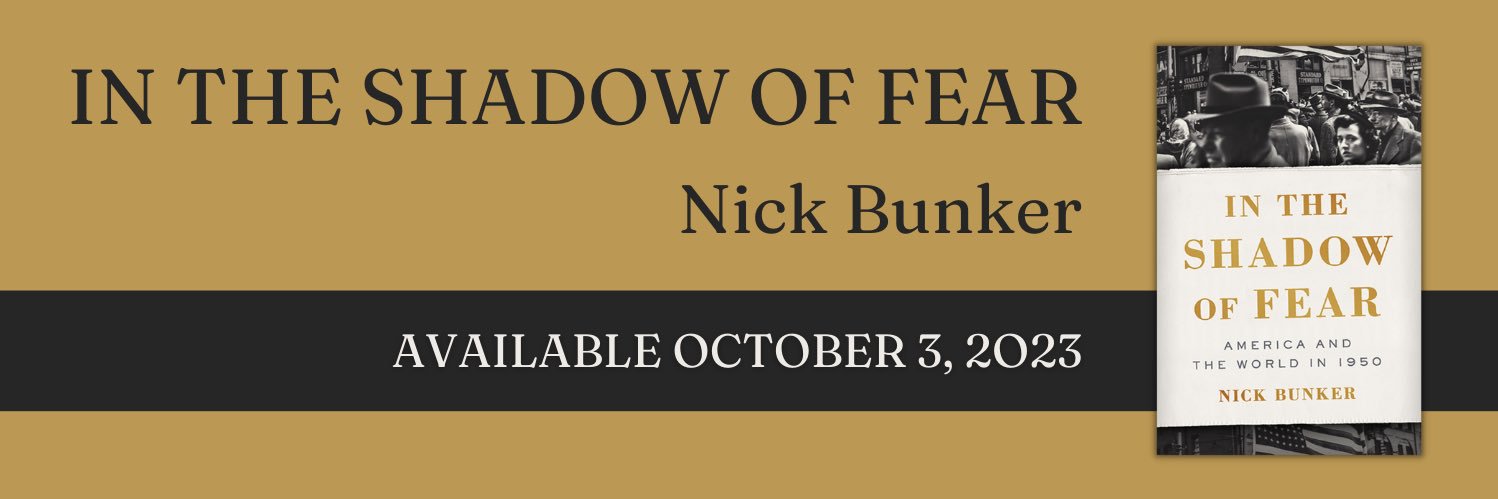
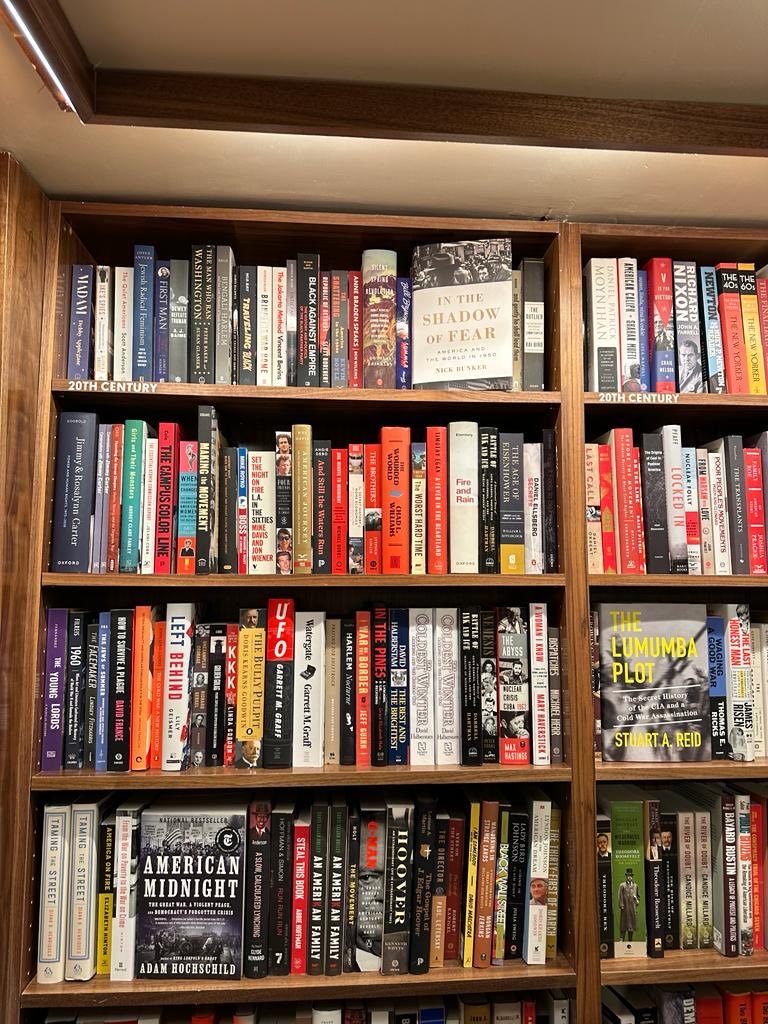
With Christmas approaching, here’s my new ⁦book ⁩ « In the Shadow of Fear » on the top shelf at one of my favourite NYC locations: the ⁦@mcnallyjackson⁩ store on Prince Street in SoHo. From ⁦@BasicBooks⁩ & for more info see nickbunker.org
NickBunker tweet media
English
1
3
21
9.7K
NickBunker
NickBunker@nbunkerauthor·
@KaiserKuo Perhaps I might recommend to @KaiserKuo the first book I ever read as a child? A collection of stirring tales of World War 1 aviation which is, in its own way, quite as spiritually edifying as “Gilead.” The book left an indelible mark on my generation of British schoolboys.
NickBunker tweet media
English
0
0
0
59
Kaiser Kuo
Kaiser Kuo@KaiserKuo·
Looking for book recommendations. I've just come off John Williams's "Stoner," and am deep into Marilynne Robinson's "Gilead," and want more of this exquisite-at- sentence-level writing that makes you want to copy out quotes and makes you a better person. Recs?
English
24
0
47
11K
NickBunker
NickBunker@nbunkerauthor·
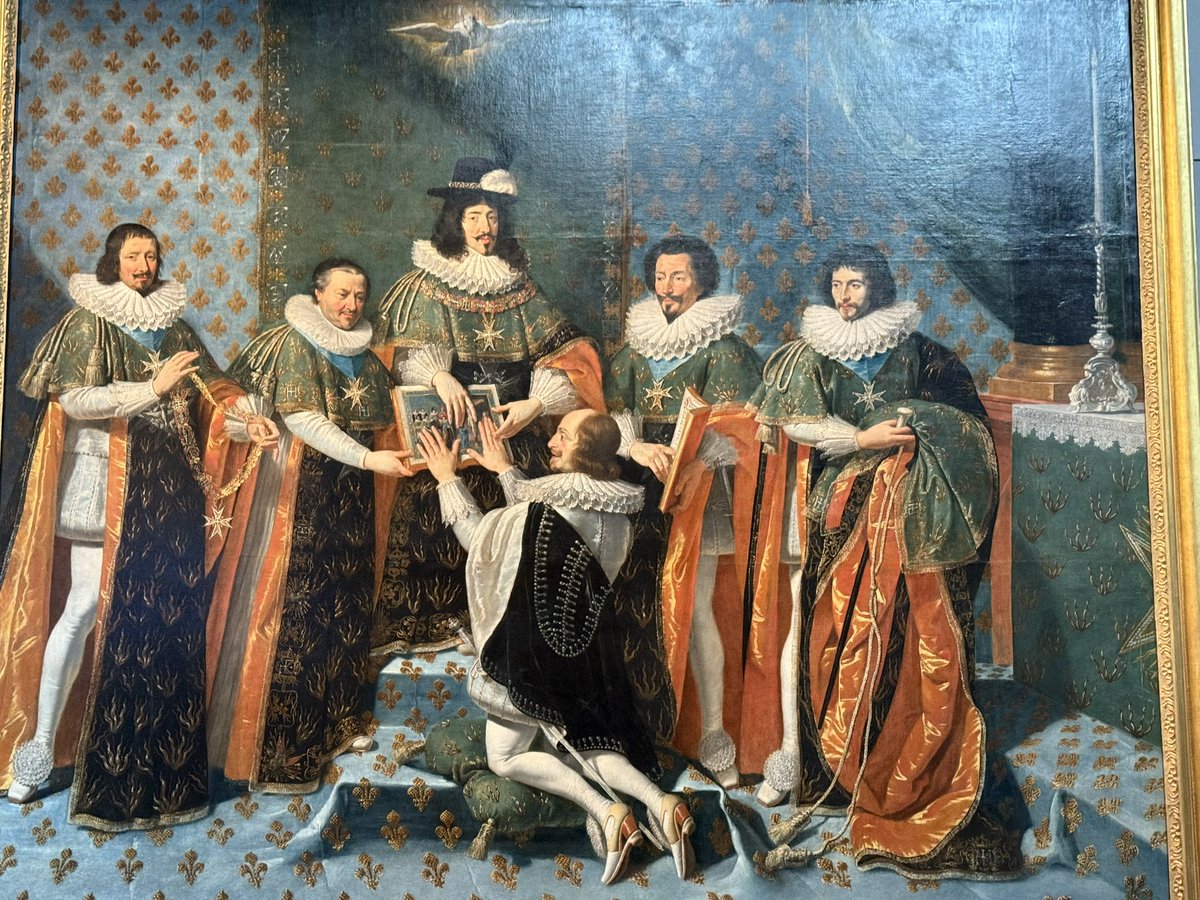
@MilovanCavor Philippe de Champaigne - quel peintre sublime…! Ici, pour exemple, à Troyes et au Port-Royal-des-Champs…
NickBunker tweet mediaNickBunker tweet media
Llandrillo, Wales 🇬🇧 Français
0
0
2
69
Nicolas Milovanovic
Nicolas Milovanovic@MilovanCavor·
Savez-vous que Philippe de Champaigne a peint un paysage pour Poussin alors qu’ils étaient tous deux jeunes, ambitieux et encore inconnus ? On aimerait bien le retrouver…. 👉 youtu.be/UK7VtEa0YrE?is…
YouTube video
YouTube
Nicolas Milovanovic tweet mediaNicolas Milovanovic tweet media
Français
2
23
112
2.7K
NickBunker
NickBunker@nbunkerauthor·
I’d like to watch England v Norway but my dog Jupiter insists I play soccer with him…
NickBunker tweet mediaNickBunker tweet mediaNickBunker tweet mediaNickBunker tweet media
Llandrillo, Wales 🇬🇧 English
0
0
2
77
NickBunker
NickBunker@nbunkerauthor·
@RahmEmanuel has thought harder & more deeply about Israel and Palestine than has any British politician or pundit. His forthright critique of Netanyahu ought to be the starting point for any discussion within @UKLabour or @10DowningStreet about British policy in this field.
Rahm Emanuel@RahmEmanuel

David Ben-Gurion wanted Israel to be a nation among nations. Today it's a pariah, and its alliance with the United States is at a tipping point. Watch my full interview with @LeviYonit on Israel’s @N12News here:

English
0
0
1
90
NickBunker
NickBunker@nbunkerauthor·
@RahmEmanuel @LeviYonit @N12News Ought to be required viewing (along with Mr Emanuel’s Tel Aviv University speech) at all points of the political spectrum here in the UK.
English
1
0
1
264
Rahm Emanuel
Rahm Emanuel@RahmEmanuel·
David Ben-Gurion wanted Israel to be a nation among nations. Today it's a pariah, and its alliance with the United States is at a tipping point. Watch my full interview with @LeviYonit on Israel’s @N12News here:
English
497
94
395
136.1K
NickBunker
NickBunker@nbunkerauthor·
@ZhaiXiang5 My pleasure! And here’s another example of an American woman reporting from Yan’an - Anna Louise Strong. Some pictures I took there in May - all to do with Mao’s phrase “paper tiger”:
NickBunker tweet mediaNickBunker tweet mediaNickBunker tweet media
English
1
0
2
68
Zhai Xiang
Zhai Xiang@ZhaiXiang5·
@nbunkerauthor Absolutely! Helen Foster Snow deserves far more recognition. Her reporting, writing, and firsthand witness to that era were extraordinary. And when I was at Hoover, I worked a bit on her papers collected there too. Thank you for bringing her back into the story.
English
1
1
10
202
Zhai Xiang
Zhai Xiang@ZhaiXiang5·
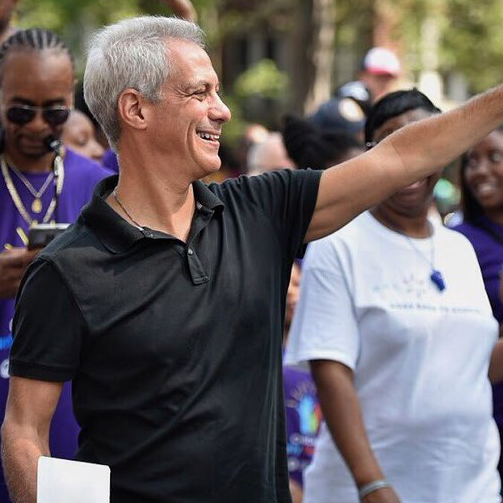
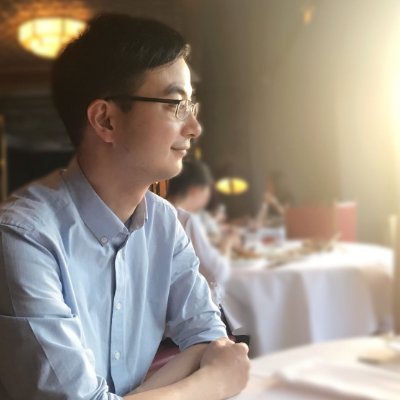
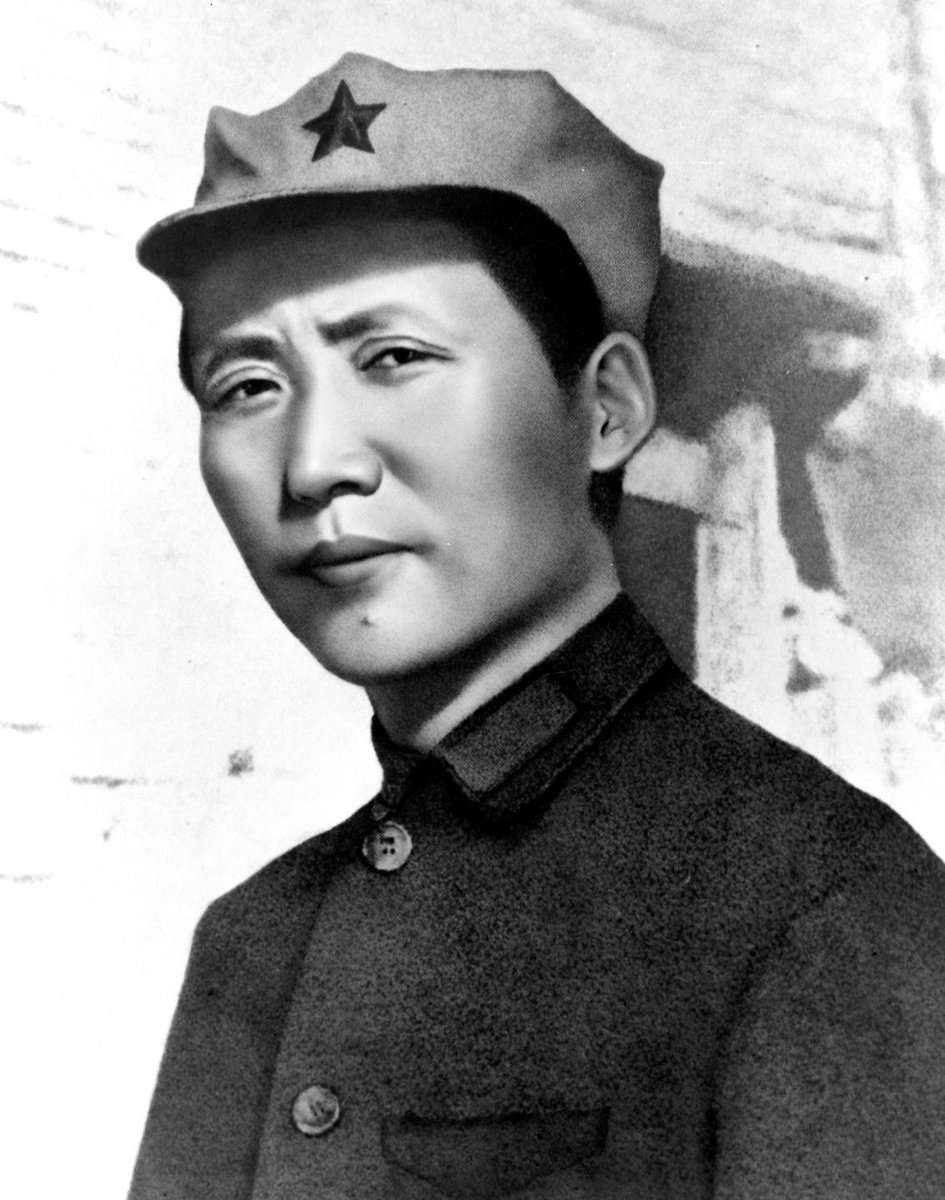
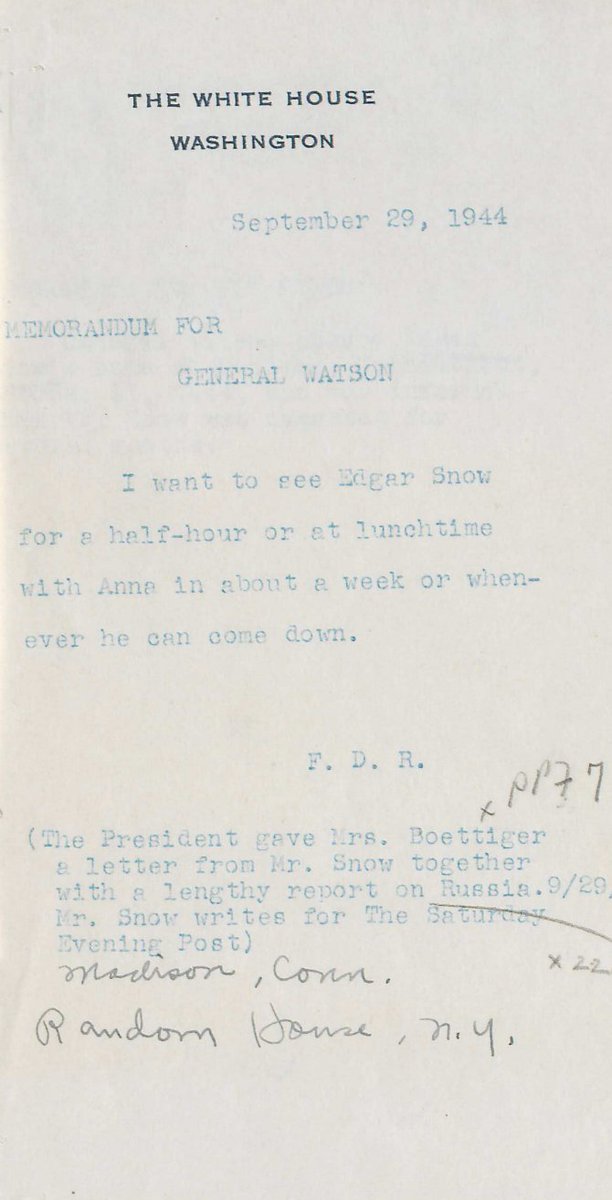
On July 13, 1936, yes, around this time 90 years ago, a young American journalist, introduced by Soong Ching-ling (宋庆龄), widow of Sun Yat-sen who founded the Republic of China, defied enormous political pressure from Chiang Kai-shek (蒋介石)'s government and broke through layer after layer of obstruction to reach a small place in northern Shaanxi called Bao'an (保安), now the County of Zhidan (志丹) under Yan'an (延安). He had come to interview a group Chiang Kai-shek had branded as "bandits"-people outsiders were warned they might not come back alive from meeting. That same day, he met Mao Zedong (毛泽东). To him, Mao looked like Lincoln. In the days that followed, the young American, Edgar Snow, interviewed Mao and other Chinese Communist leaders again and again. He and Mao talked deep into the night, many times, inside a cave dwelling that was far from spacious. The next year, Snow published Red Star Over China. It was not just a book of reportage. It was one of the first works to introduce Mao Zedong, the Chinese Communists, and their ideas to the outside world in a serious, direct, and vivid way. The book caused a sensation around the world. More importantly, it changed the way many people outside China understood the Chinese Communists. He insisted on photographing Mao Zedong, and asked him to put on a Red Army cap (top left). But Mao's own cap was old, soft, and collapsed out of shape. So Snow took off the brand-new military cap from his own head and placed it on Mao's. It fit perfectly. Snow kept that cap for the rest of his life. After his death, his family donated it to the National Museum of China. In 1937, when Snow's wife went to Yan'an for interviews, she brought the photograph to Mao. Looking at it, Mao laughed and said: "I never imagined that someone as untidy as me could look this good in a photograph. Thank you, Comrade Snow." That photograph would later become one of the most iconic images of Chairman Mao, known in almost every Chinese household. Yet most people still do not know it was taken by an American. Red Star Over China did not merely record history. It changed history. Snow mattered not because he sympathized with the Chinese revolution, but because he entered northern Shaanxi as a true journalist-curious, skeptical, and professionally alert. For so many readers, the most convincing thing was never that "he liked China." It was that he saw China, and was willing to tell the world honestly what he had seen. At the beginning of 1941, Chiang Kai-shek was not only fighting the Japanese. He turned his guns on his nominal allies-the Communist-led forces. Snow reported the truth in the New York Herald Tribune. Chiang got furious. Snow's press credentials were revoked. In February, he was forced to leave China and return to the United States. Chiang's sister-in-law, Soong Ching-ling personally came to the airport to see him off. "You will come back. We think of you as a younger brother. You belong to China." Snow replied that his body was leaving, but his heart remained in China. On February 24, shortly after Snow returned to the United States, he was received by President Franklin D. Roosevelt at the White House. FDR greeted him with humor: I came to know you by reading Red Star Over China. You must be quite a China hand by now. Today, I'd like to be the reporter and interview you. How does that sound?” Snow was disarmed by the president's warmth and ease. Roosevelt asked what was really happening in China and how did the Chinese people think of Americans. Snow answered that Chiang Kai-shek was a dictator-intelligent, but incapable. Chiang did not understand what the Chinese people truly needed, nor did he know how to govern for them. In this, Snow said, Chiang was very different from Mao Zedong. China was an agricultural country. Peasants made up the overwhelming majority of its people. A man who did not understand the peasants could not govern China. As for the Communist-led army, Snow told Roosevelt he had never seen a more heroic force: Their morale remained high. From generals to ordinary soldiers, they were confident of victory. Compared with the US military, their material conditions were almost nothing. But they had their own strategy and tactics. Their guerrilla warfare left the Japanese constantly on edge. Roosevelt listened closely, and agreed. In May 1944, during his second meeting with Edgar Snow, Roosevelt told him that promoting reconciliation between the Nationalists and the Communists had become an established policy of the United States. Washington, FDR said, would also send a military observer mission to Yan'an. On September 29 that same year, Roosevelt told his aides that he hoped to meet Snow again, or have lunch with him soon (top right). On October 11, the White House called Snow's home, only to learn that he was abroad. In early March 1945, Roosevelt met Snow for a third time. He told Snow that the United States intended to elevate China's international status, placing it alongside the United States, Britain, and the Soviet Union, because China was too important, and America could not afford to lose China. He also told Snow that the American observer mission in Yan'an had been treated with courtesy and respect, and that Washington was considering direct assistance to the Chinese Communists. A little more than a month later, Roosevelt died suddenly. As I have written before, FDR had a remarkably favorable impression of the Chinese Communists. He had even corresponded with Mao Zedong. His conversations with Snow also reveal a little-known but strikingly perceptive judgment about China. Had Roosevelt lived longer, the history of China-US relations might have taken a very different path. Then came Truman, and he messed it all up. MacArthur would later discover that he, too, could be Trumaned. The Chinese never forget an old friend. In 1951, just two years after the CPC came to power in China, the Chinese government wrote to Edgar Snow, inviting him to visit and offering to cover his travel expenses. Snow declined. He believed that accepting money might compromise the objectivity of his reporting. In 1960, Snow finally returned to China for a visit that lasted nearly five months. On October 1, the National Day, he stood atop Tiananmen. When he met Mao Zedong again, Mao greeted him: "Long time no see." Snow replied: "Twenty-one years." Then he joked: since then, your cave dwelling has expanded quite a bit. Mao answered: "But you and I have not changed." Snow looked around and said: "But China has changed completely." On October 22, Mao invited Snow to his home at Zhongnanhai (中南海) for dinner (bottom left). The two men ate together and talked for nine hours. Mao told him this was the first time since 1949 that he had spoken with an American. China was going through a period of great hardship at the time. Snow noticed that Mao left the meat for his guests, while eating none himself. But during that trip, what struck Snow most was not Mao. Not Tiananmen. It was an ordinary Chinese college student. Her surname was Jiang. She asked Snow: The United States has 200 military bases overseas. Why do young Americans tolerate this? Snow's response was to prevent Communist invasion. The young woman looked at him and asked, word by word: "Have the Communists occupied Hawaii?" "Have Chinese planes flown over American skies?" "Have Chinese troops marched into Canada or Mexico?" Snow fell silent. More than sixty years later, those three questions still hit hard. In 1964, Snow visited China again. On January 9 the following year, Mao Zedong invited him to dinner at the Great Hall of the People. History has a funny way of rhyming: President Trump also came to China this May, and both Zhongnanhai and the Great Hall of the People were once again part of the story. By then, China-US relations were already extremely tense. But Mao told Snow that he regretted the historical forces that had cut off contact between the Chinese and American peoples. But Mao did not believe the two countries would ultimately go to war, which Mao defined as one of the greatest tragedies in history. Mao also told him that there was still hope for improving relations between the two countries. But it would take time. In the summer of 1970, Snow came to China for the last time. This time, he returned to Yan'an and revisited the cave dwelling where he had first met Mao. That was also where their friendship began. On October 1, 1970, Mao reviewed the National Day parade from Tiananmen Gate. Snow not only stood on the tower. He stood right beside Mao (bottom right). Close to two months later, the photograph appeared on the front page of People's Daily, on the day before Mao's birthday. At a time when China and the United States were locked in Cold War rivalry, yet quietly searching for rapprochement, this was a signal. A signal sent to one man far away in Washington: Richard Nixon. Most of the world did not understand it. Kissinger did. On December 18, Mao and Snow met for the last time. They had breakfast together and talked for five hours. Mao told him this was not an interview. It was a conversation between old friends. He said he had read Snow's reports, including those with which he disagreed. But he did not expect everyone to agree with him on everything. "You have the right to keep your own views," Mao told him, "and to make your own independent judgments." That was what made Snow different from many foreign observers. He neither demonized China nor romanticized it. What he tried to do was understand why China had become what it was. He was not a foreign friend who only praised China. He had his own judgment. He kept his right to criticize. China respected him not because he always agreed with China, but because he endeavored honestly to understand it. During that meeting, Mao also revealed to Snow that he was prepared to invite Nixon to Beijing. At that moment, only four months remained before Ping-Pong diplomacy would break the ice between China and the United States. Only one year and two months remained before Nixon would set foot in Beijing. And only one year and two months remained before Edgar Snow would leave this world. In 1971, Edgar Snow was diagnosed with pancreatic cancer in Switzerland. Mao Zedong invited him to come to China for treatment, promising that he would receive the country's best medical care available. China even prepared a carefully arranged hospital room for him, along with first-class plane tickets for his entire family. Snow declined the invitation. But China still sent a medical team to Switzerland to care for him. They did more than treat his illness. They prepared a special diet for him, cooked the Chinese food he loved, and sat with him in conversation, doing everything they could to bring this old friend a little less pain, and a little more warmth, in the final days of his life. On February 15, 1972, Edgar Snow passed away. Less than a week later, Nixon arrived in China. Snow did not live to see the ice between China and the United States finally break. But in truth, he had already helped break it. From Roosevelt to Nixon, Snow stood in one of the most difficult and most necessary places in the world: between China and the United States. His life proved that history is not changed only by presidents, generals, and diplomats. It is also changed by those willing to cross through prejudice, enter unfamiliar lands, and tell the truth about what they see. He helped the world see China more honestly. And he helped China remember an American who truly wanted to understand her.
Zhai Xiang tweet mediaZhai Xiang tweet mediaZhai Xiang tweet mediaZhai Xiang tweet media
English
17
104
310
72.8K
NickBunker
NickBunker@nbunkerauthor·
@ruima I owe my Beijing Atour experience to - Donald Trump. Because of his state visit in May I had to switch from my usual hotel (very close to Zhongnanhai) to this Atour nr the Beijingnan HSR. I paid $100 too, service cool also, & room similar to French Ibis budget business hotels.
NickBunker tweet media
English
1
0
4
274
Rui Ma
Rui Ma@ruima·
Finally stayed at an Atour hotel, the simple business lodging everyone raves about. I don’t know how I could have gotten a smaller room, I can probably jump from the toilet onto the bed lol. This room is about $100 in downtown Beijing. It’s basically a much nicer JI Hotel (the founder used to work there). The service is great though, more proactive than many high end hotels.
Rui Ma tweet media
English
22
1
86
14.9K
NickBunker
NickBunker@nbunkerauthor·
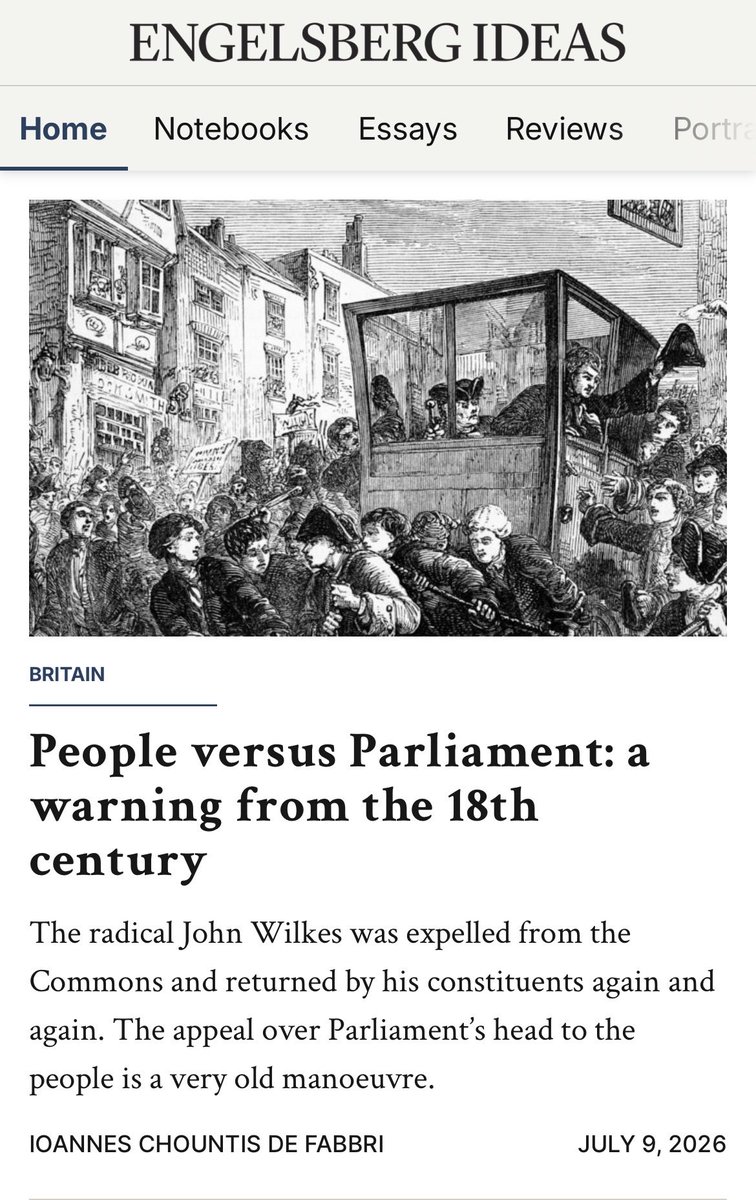
Where you say “radical,” I would say “unprincipled & egotistical anti-Catholic bigot.” Here’s what Benjamin Franklin had to say about Wilkes in May 1768: “Since my last, a long one of March 13, nothing has been talked or thought of here but elections. There have been amazing contests all over the kingdom, £20 or 30,000 of a side spent in several places, and inconceivable mischief done by debauching the people and making them idle, besides the immediate actual mischief done by drunken mad mobs to houses, windows, &c. The scenes have been horrible. London was illuminated two nights running at the command of the mob for the success of Wilkes in the Middlesex election; the second night exceeded any thing of the kind ever seen here on the greatest occasions of rejoicing, as even the small cross streets, lanes, courts, and other out-of-the-way places were all in a blaze with lights, and the principal streets all night long, as the mobs went round again after two o’clock, and obliged people who had extinguished their candles to light them again. Those who refused had all their windows destroyed. The damage done and the expence of candles has been computed at £50,000. It must have been great, though probably not so much. The ferment is not yet over, for he has promised to surrender himself to the Court next Wednesday, and another tumult is then expected; and what the upshot will be no one can yet foresee. Tis really an extraordinary event, to see an outlaw and exile, of bad personal character, not worth a farthing, come over from France, set himself up as candidate for the capital of the kingdom, miss his election only by being too late in his application, and immediately carrying it for the principal county. The mob, (spirited up by numbers of different ballads sung or roared in every street) requiring gentlemen and ladies of all ranks as they passed in their carriages to shout for Wilkesand liberty, marking the same words on all their coaches with chalk, and No. 45 on every door; which extends a vast way along the roads into the country. I went last week to Winchester, and observed that for fifteen miles out of town, there was scarce a door or window shutter next the road unmarked; and this continued here and there quite to Winchester, which is 64 miles.”
English
0
0
0
75
NickBunker
NickBunker@nbunkerauthor·
@HistorianZhang Ah - but does the archive refer to the Buchanan-Jardine family’s greatest achievement? Back home in SW Scotland (where they & the Keswicks were gentry) their China-sourced wealth created ca 1890 a magnificent breed of dogs, the Dumfries-shire Otterhound. I have owned 3 of them…
NickBunker tweet mediaNickBunker tweet mediaNickBunker tweet media
English
1
0
2
64
NickBunker
NickBunker@nbunkerauthor·
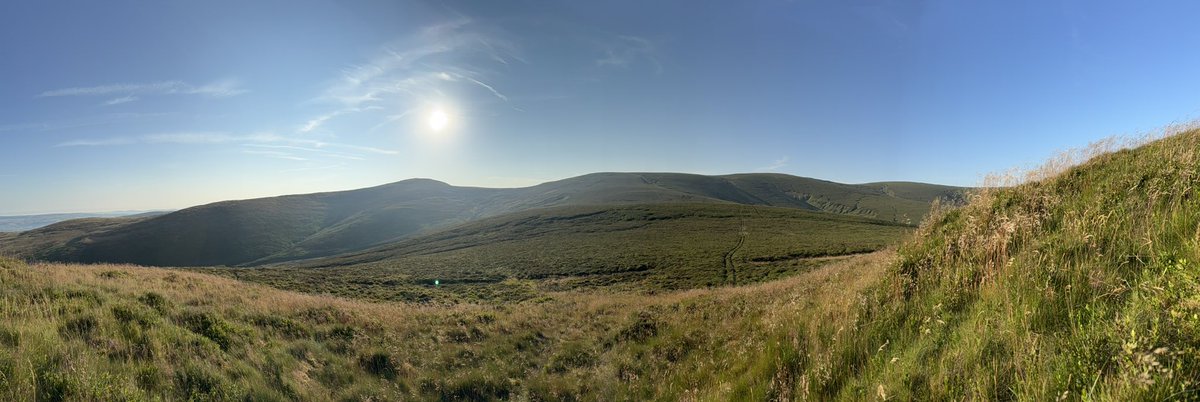
I’ve walked to the top of Cadair Berwyn in mid-Wales 5 or 6x since the late 1990s and each time the severe impact of climate change in shrinking peat bogs becomes more visible. Here for example - the grassy bank used to be a steep cliff of black peat & now it’s dry & dwindled.
NickBunker tweet mediaNickBunker tweet mediaNickBunker tweet media
Llandrillo, Wales 🇬🇧 English
0
0
0
94
NickBunker
NickBunker@nbunkerauthor·
The only problem with getting to the top of Cadair Berwyn this morning is that in the far distance I can see the far more challenging ex-volcanic peak of Cadair Idris & now I feel I ought to be up there instead.
NickBunker tweet mediaNickBunker tweet media
Llangynog, Wales 🇬🇧 English
1
0
2
100
NickBunker retweetledi
Yadu
Yadu@Yaduvam·
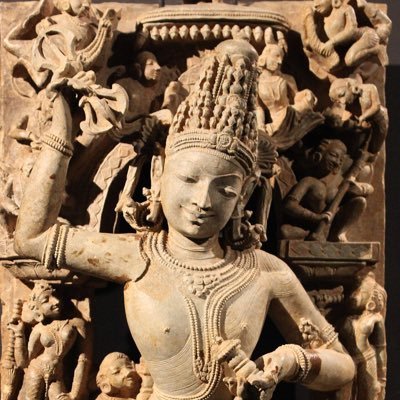
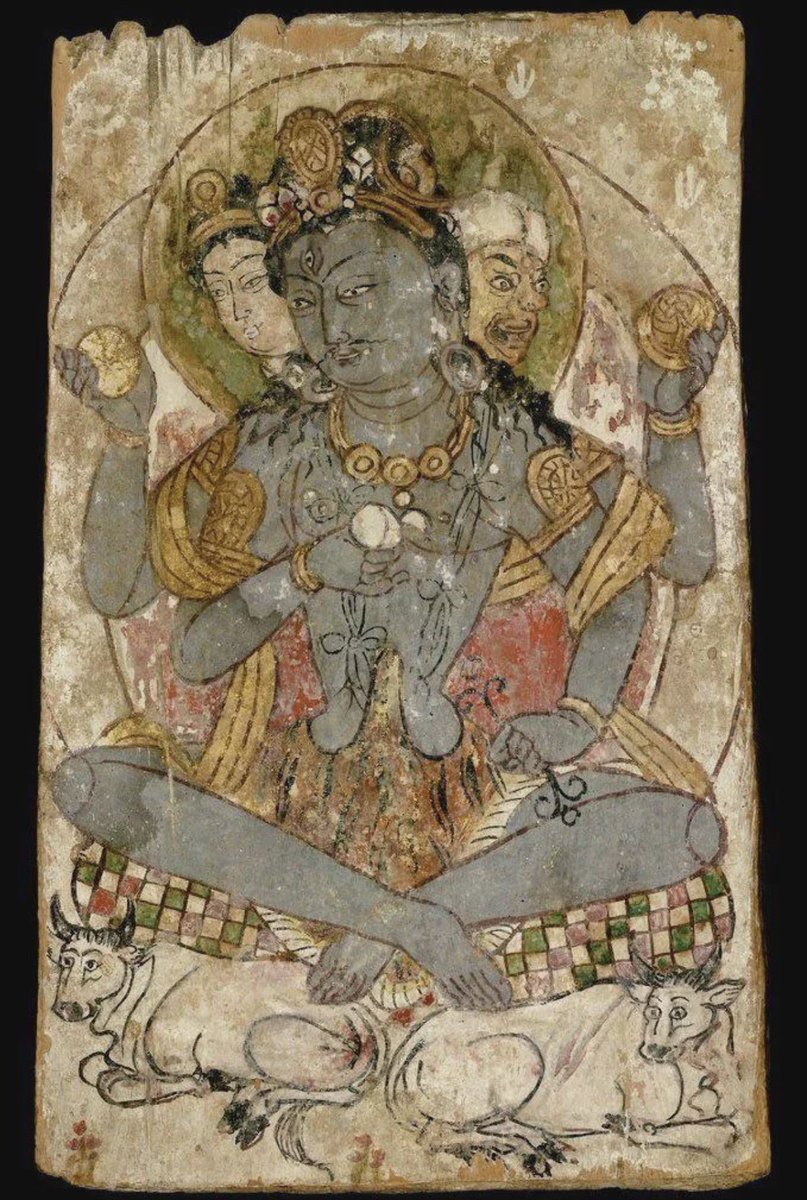
Shiva-Maheshwara, from Khotan in Xinjiang, China. Painted by Visha Irasanga, Khotanese Saka painter in the court of the T'ang dynasty of China in the mid 7th century CE.
Yadu tweet media
English
7
138
782
10K
NickBunker
NickBunker@nbunkerauthor·
The one comment I would make is that one surely has to bring the Communist Party into this: to what extent is the “platform state” a conscious creation (@KaiserKuo touched briefly on this) & would, for example, Wang Huning openly endorse the term ideologically? 2/
English
0
0
0
57
NickBunker
NickBunker@nbunkerauthor·
So far while climbing up Cadair Berwyn this morning I’ve listened to 2/3 of this fascinating @AngelaZhangHK & @AlexSYang pod abt the PRC as a “platform state” & I think this concept has more explanatory power & subtlety than the Dan Wang/Breakneck “engineering state” notion…1/
NickBunker tweet media
Kaiser Kuo@KaiserKuo

What if the Chinese state is best understood as a platform company — building the architecture, setting the standards, and letting private firms fight it out? @AngelaZhangLA and @AlexSYang join @SinicaPodcast from @wef Summer Davos in Dalian to make the case. 🎧 👇

Llandrillo, Wales 🇬🇧 English
1
0
1
154
NickBunker
NickBunker@nbunkerauthor·
@NakedKeynes among historians but one should not exaggerate its explanatory power. One might try a counterfactual: if, hypothetically, GB and France had been at peace from 1713 to 1815, would GB’s Industrial Revolution have been delayed or derailed? Surely not. 3/
English
1
0
0
55
NickBunker
NickBunker@nbunkerauthor·
@NakedKeynes if one looks at the Broadberry/Crafts GDP estimates, the true acceleration in factory & steampower led industrial productivity growth didn’t occur until post 1830 & it’s hard to see how this was a consequence of Brewer’s FMS. Brewer’s book has (rightly) been highly influential 2/
English
1
0
0
43
Matías Vernengo
Matías Vernengo@NakedKeynes·
I wrote a short post on the fiscal-military state a concept that has not received enough attention from economists. Brewer’s ‘The Sinews of Power: War, Money and the English State, 1688-1783’ is often neglected by economists /1
Matías Vernengo tweet media
English
1
25
181
14.1K