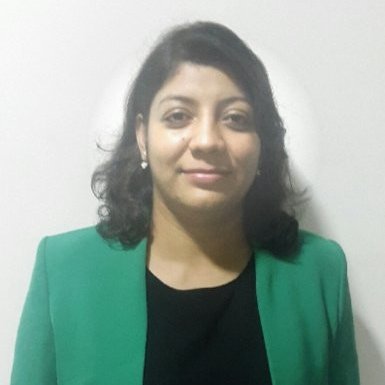
Neha Dave, CFA

2.1K posts

Neha Dave, CFA banner
Neha Dave, CFA

Neha Dave, CFA

@nehadave01

I think, therefore I am. Moneycontrol Research, Network 18. Previously with Credit Suisse, ING Mutual Fund. Views mine. RTs are not endorsement

Mumbai, India Katılım Nisan 2018
1.7K Takip Edilen5.5K Takipçiler
Neha Dave, CFA retweetledi

Moneycontrol
Moneycontrol@moneycontrolcom·
#MCPRO | ICICI Lombard delivers industry-leading Q4 growth led by retail health and motor recovery. Strong underwriting discipline and investment income support earnings, justifying rich valuations. @nehadave01 with more details👇 moneycontrol.com/news/business/…
English
0
1
7
1.3K
Neha Dave, CFA retweetledi
Dr. AK 🇮🇳
Dr. AK 🇮🇳@docakx·
India's first fully indigenous 1.5T helium-free MRI scanner was unveiled on December 25, 2025. VoxelGrids Innovations, a Bengaluru-based medtech startup founded by Arjun Arunachalam (ex-GE Global Research and IIT Bombay), has developed India's first fully indigenous 1.5T helium-free MRI scanner after ~12 years of R&D. Backed by Zoho Corporation and grants from BIRAC/Tata Trusts, the system uses a proprietary "dry magnet" conduction-cooled design, eliminating scarce/expensive liquid helium. Key advantages: ~30-40% lower manufacturing and operational costs (priced around $400,000 vs. imported equivalents), reduced power consumption, lighter/compact footprint (suited for Indian infrastructure and unstable grids), and AI-enhanced imaging. It is not a copy of foreign systems but features bottom-up innovations in hardware, software, pulse sequences, and integration. On December 25, 2025, the scanner was officially unveiled and deployed at Chandrapur Cancer Care Foundation near Nagpur, Maharashtra, where it became clinically operational, scanning real patients for cancer diagnostics. As of March 2026, it remains active in real-world use. The Bengaluru facility has capacity for 20-25 units/year. A full commercial launch was targeted by end of FY26 (March 2026), with growing order interest from hospitals linked to Tata Trusts and others. Plans include a mobile/containerized version for rural/tier-2-3 access. Amid global helium shortages (exacerbated by Middle East issues), this positions VoxelGrids as a cost-disruptive, Atmanirbhar Bharat milestone in high-end medtech, aiming to democratize advanced imaging.
Dr. AK 🇮🇳 tweet media
Hyderabadi Chicha 2.0@HyderabadiChic3

Had MRI for the first time. Enquired to doctor, why MRIs is so costly. He replied, machine cost plus setup requires 10cr+. Need to pay 16-19% duty on machines as well. Come out with two questions in mind. First, why does the Government impose such duties on equipment used for essential and emergency medical treatment. Secondly, I wondered why, even in 2026, we still need to import such machines instead of manufacturing it in India.

English
33
785
3.1K
188.4K
Neha Dave, CFA retweetledi
Moneycontrol
Moneycontrol@moneycontrolcom·
#MCPro | HDFC Bank’s sharp fall after the chairman’s exit looks sentiment-driven, not structural. While near-term uncertainty may linger, improving growth, margin tailwinds, and cheap valuations make it a compelling long-term opportunity @nehadave01 with more details⏬ moneycontrol.com/news/business/…
Moneycontrol tweet media
English
0
1
11
1.7K
Neha Dave, CFA
Neha Dave, CFA@nehadave01·
#MCPro Why is #BSE down today The RBI barring banks from financing proprietary trading by brokers will likely hit the ADTO of exchanges as prop traders are big market participants along with FIIs, DIIs, and retail investors. Read: bit.ly/46KfLTV @moneycontrolcom
Neha Dave, CFA tweet media
English
0
0
2
617
Neha Dave, CFA retweetledi
Civil Learning
Civil Learning@CivilLearning1·
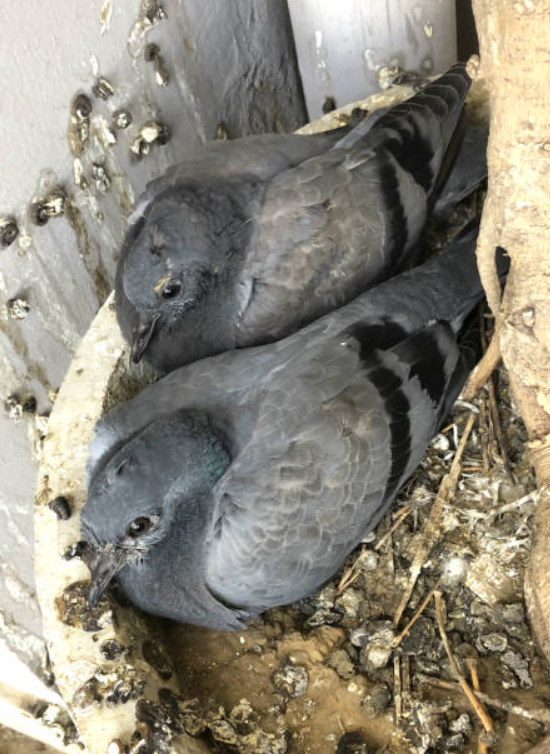
The pigeon is that type of bird; wherever it goes, it eliminates all other birds. It completely destroys the entire ecosystem. The pigeon is the only bird that has adapted itself to urban life. Pigeons have stopped being afraid of humans. They lay eggs anywhere. Pigeons lay eggs in large numbers and gradually increase their population to such an extent that all other birds begin to disappear. Since the birds that prey on pigeons in the ecosystem, such as hawks and eagles, have become very few or almost non-existent, pigeons are multiplying rapidly. While other birds are becoming extremely rare or even extinct due to the terror and menace of pigeons. Moreover, pigeons have spread several dangerous diseases to humans and animals. Recently, a person died in Surat and Ahmedabad, Gujarat, and when the investigation revealed that the death was caused by a pigeon, everyone was shocked. Several diseases can be spread by pigeons, including histoplasmosis, cryptococcosis, psittacosis, and hypersensitivity pneumonitis. Incidentally, the pigeon is not a native Indian bird; it came to India from Africa and has completely taken over, driving other birds to extinction. The Jain community, which has been campaigning for years to feed pigeons in Mumbai, needs to understand that it is more important to save thousands of native Indian birds like cuckoos, sparrows, mynas, bulbuls, parrots, kingfishers, and lapwings, which are disappearing from cities and towns.
Civil Learning tweet media
English
336
1.2K
3.8K
259.7K
Neha Dave, CFA retweetledi
Manish Bhandari
Manish Bhandari@TweetManishbh·
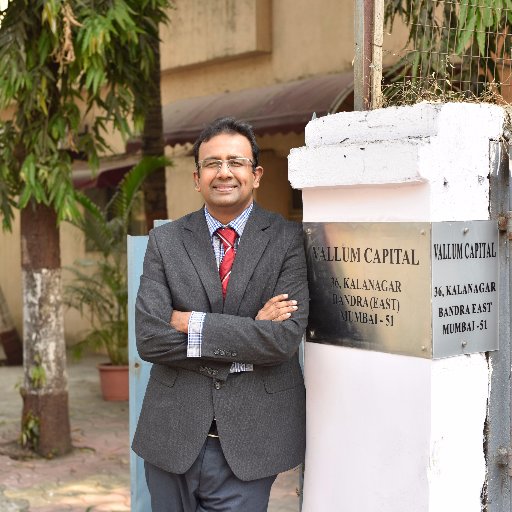
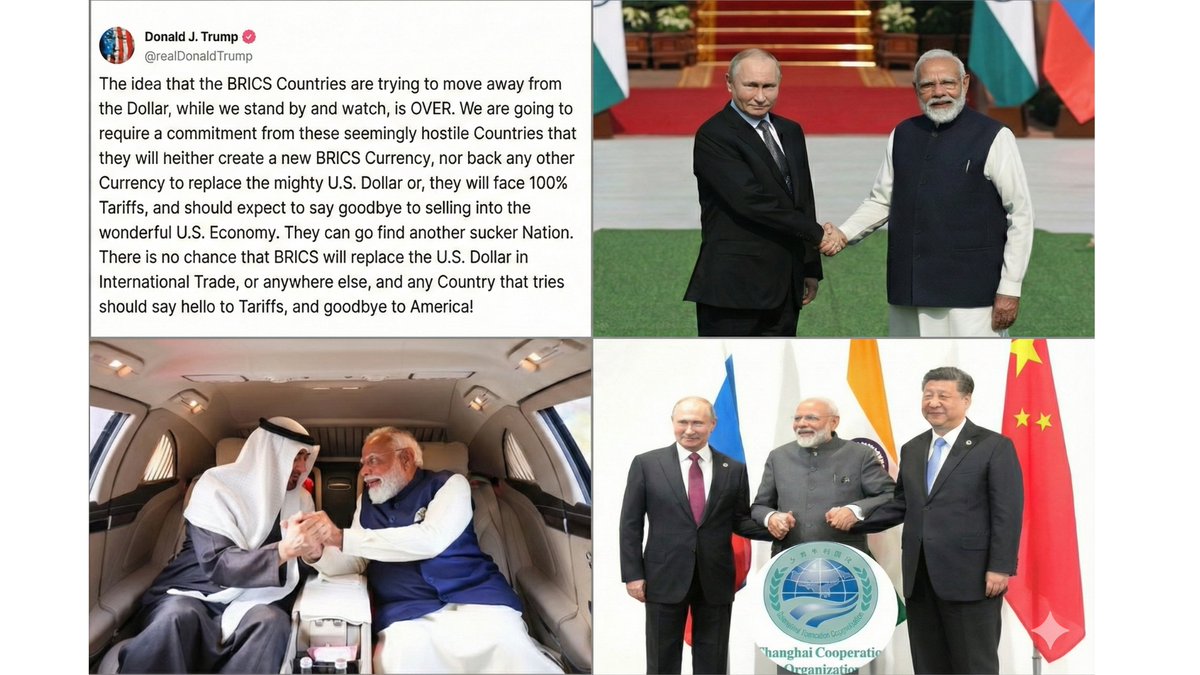
In the high-stakes theatre of international diplomacy, silence is rarely just silence. When U.S. Commerce Secretary Howard Lutnick announced this January that a landmark trade deal with India had stalled because Prime Minister Narendra Modi "did not call" President Trump to finalize the terms, the explanation was as convenient as it was implausible. To the casual observer, it painted a picture of bureaucratic hesitation. But to those watching the flow of global capital, the silence on the phone line masked a thunderous shift in the global economic order. While Washington focused on tariffs and trade deficits, New Delhi quietly engineered a financial mechanism that the United States has historically treated as a red line: the ability to buy oil without the dollar. A rigorous analysis of regulatory filings, central bank data, and geopolitical signalling reveals that the trade impasse of early 2026 is not about almonds or steel. It is the first major casualty of the "Petro-Rupee," a strategy that has placed the world’s oldest democracy and its largest democracy on a collision course over the future of financial sovereignty. The "Red Line" and the Greenback To understand the gravity of the rift, one must look past the current headlines to the foundation of American power. Since 1974, when the Nixon administration struck a pact with Saudi Arabia, the global oil trade has been denominated effectively exclusively in U.S. dollars. This "Petrodollar" system forces nations to hold vast dollar reserves, which are recycled back into U.S. Treasury bonds, financing American deficits and cementing the dollar's global supremacy.   History has been unkind to those who challenge this arrangement. When Saddam Hussein switched Iraqi oil sales to the Euro in 2000, or when Muammar Gaddafi proposed a gold-backed African currency in 2011, the geopolitical consequences were severe. As former Federal Reserve Chairman Alan Greenspan candidly noted in his memoirs, the Iraq war was "largely about oil"—a resource inseparable from the currency used to buy it.  So is the case with Venenzula and Iran today, which are pricing their oil outside the US dollar system. For decades, this was a line no ally would cross. But in the shifting landscape of 2026, India has done just that. The Smoking Gun: August 2025 Picture tells thousand words. The deterioration of economic relations can be traced precisely to mid-2025. While public attention was fixed on diplomatic pleasantries, the Reserve Bank of India (RBI) was dismantling the "Rupee Trap" that had hindered its trade with Russia in Rupee. For months, Moscow had been accumulating billions in Indian Rupees from oil sales that it couldn't spend. Then, on August 12, 2025, the RBI issued a quiet but revolutionary circular. It authorized foreign holders of "Special Rupee Vostro Accounts" (SRVAs) to invest their surplus balances into Indian Government Securities and Treasury Bills.   In a move that alarmed U.S. strategists even more, India and the UAE—two key American partners—began operationalizing a Local Currency Settlement system. The Indian Oil Corporation paid for a million barrels of Abu Dhabi crude in rupees, proving the concept worked. By 2025, this corridor had deepened, with the UAE pumping $22.84 billion in foreign direct investment into India to balance the currency flows, and the Abu Dhabi Investment Authority setting up shop in Gujarat's GIFT City. This was the smoking gun. By allowing Russia to recycle its oil revenue directly into Indian sovereign debt, New Delhi created a closed-loop financial system. Russian oil profits were no longer chasing U.S. Treasuries; they were funding Indian infrastructure. The reaction from Washington was swift. Within weeks, the U.S. imposed tariffs of up to 50 percent on select Indian goods—a punitive strike that signal the partnership was in jeopardy. By late 2025, this alternative financial architecture had expanded far beyond a wartime necessity for Russian oil. The RBI had permitted 123 correspondent banks from 30 countries—including the United Kingdom, Germany, Israel, and Singapore—to open 156 Special Rupee accounts. The Last Straw: India Takes the Wheel at BRICS While the "Petro-Rupee" laid the kindling, the spark that finally burned the bridge was India’s bold assumption of leadership within the BRICS currency project. As the host of the 2026 BRICS Summit, New Delhi has moved beyond passive participation to active architecture. The Reserve Bank of India has formally proposed linking the Central Bank Digital Currencies (CBDCs) of member nations—a project dubbed the "BRICS Bridge." Building on the 2025 Rio de Janeiro declaration, India is pushing for a proprietary, interoperable payment rail that would allow Russia, China, India, other BRICS members to settle trade instantly in digital local currencies, completely bypassing the U.S. banking system. This is not merely a theoretical exercise; with the RBI actively pilot-testing the e-Rupee’s cross-border capabilities, India is effectively building a "digital SWIFT" immune to Western sanctions. For the Trump administration, this was the final provocation. It wasn't just evasion; it was replacement. Conclusion: A Monetary Mutiny This aggressive push for a parallel financial system became the veritable last straw on the camel's back for the stalled trade deal. In December 2024, President-elect Trump issued a blunt ultimatum: any move by BRICS nations to create a new currency or back an alternative to the dollar would be met with 100 percent tariffs. Washington views India’s 2026 agenda not as economic modernization, but as a "monetary mutiny." The sages who studied the rise and fall of kingdoms would chuckle today, for the lesson is ancient: money is the hard-earned fruit of labor, while currency is merely the paper promise that it still tastes good. Money—like gold and silver—is the crystallized effort of real work. Currency, however, is its excitable younger cousin: useful for trade, but spoiled the moment rulers discover the printing press. India has chosen to bear the cost of tariffs rather than surrender the sovereignty of its "crystallized effort." The trade deal may be officially "stalled" due to a missed phone call, but in reality, it lies buried under the foundation of the new BRICS financial architecture—a foundation India is now actively pouring concrete for better future. Manish Bhandari, CIIA, founder of Vallum Capital Advisors, a Portfolio Management firm managing equity investments Based in Mumbai. Full Article & Research Document Available Below economictimes.indiatimes.com/markets/us-sto… #Geopolitics #Macroeconomics #USIndiaTrade #BRICS2026 #GlobalEconomy #ForeignPolicy #TradeWar #DeDollarization #InternationalRelations
Manish Bhandari tweet media
English
117
582
1.8K
277.3K
Neha Dave, CFA retweetledi
Cliff Pickover
Cliff Pickover@pickover·
"It is a poorly-kept secret that the grandfathers of quantum mechanics, Bohr, Oppenheimer, Heisenberg, Einstein, de Broglie, Jeans, but in particular Schrödinger were fascinated and inspired by Vedic cosmology." ~ J. Peter Burgess in Science Blurring its Edges into Spirit: The Quantum Path to Ātma. Millennium Journal, 2018. Image: tinyurl.com/4rze4fft
Cliff Pickover tweet media
English
40
711
2.5K
302.3K
Neha Dave, CFA retweetledi
Moneycontrol
Moneycontrol@moneycontrolcom·
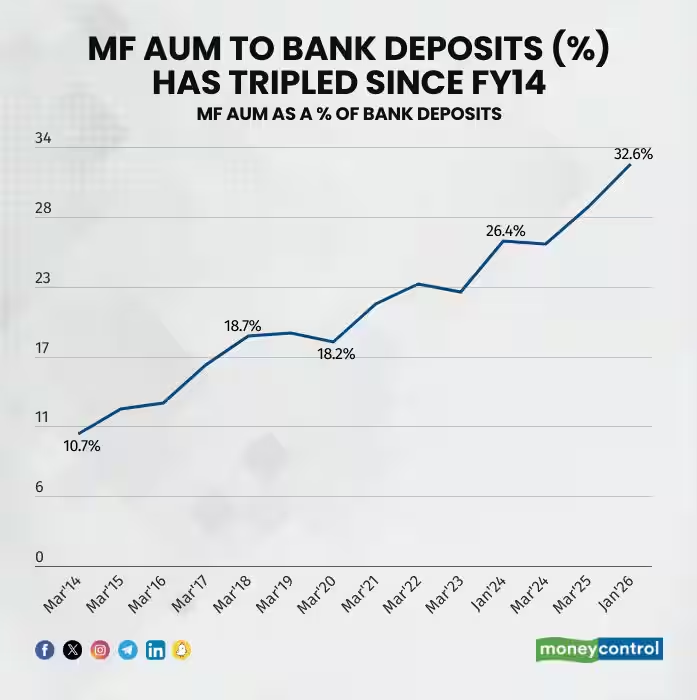
#MCPro | ICICI Pru AMC’s faster AUM growth, steady market share gains, and superior core profitability are driving a clear valuation premium over HDFC AMC—despite HDFC’s stronger equity mix. @nehadave01 with more details⏬ moneycontrol.com/news/business/…
Moneycontrol tweet mediaMoneycontrol tweet media
English
0
1
10
1.8K
Neha Dave, CFA retweetledi
Moneycontrol
Moneycontrol@moneycontrolcom·
#MCPro | 🚨A defence spending supercycle is in the works, even as other megatrends from EV to AI are reshaping the global economy. 📊India's defence sector is brimming with promise! Follow the thread to know more about Moneycontrol's "Defence Basket: A strategic bet for long-term investors" @nehadave01 @Jitendra1929 @TejalParab1386
English
2
4
4
1.8K
Neha Dave, CFA retweetledi
Moneycontrol
Moneycontrol@moneycontrolcom·
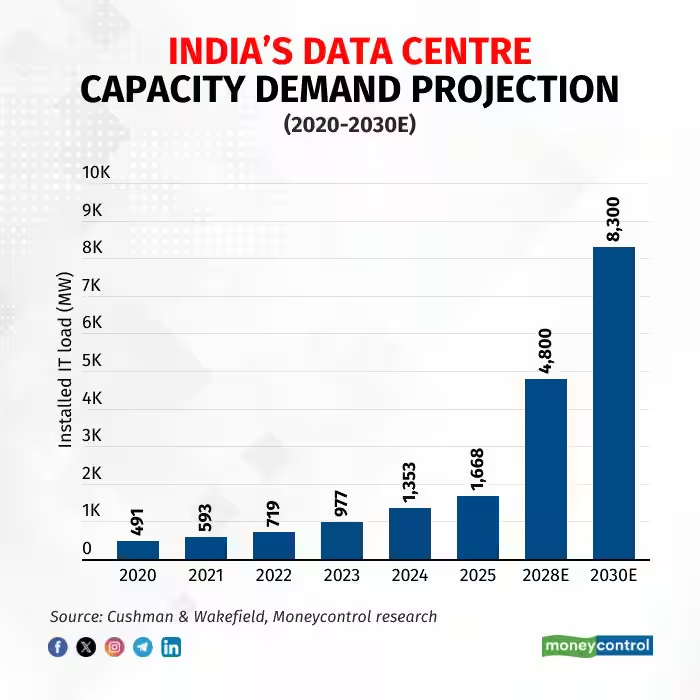
#MCPro | 🚨While pure-play data centre stocks are limited, MC Pro's research team has identified 17 proxy and surrogate plays spanning power, telecom, digital infrastructure, battery chemicals, and cooling solutions such as refrigerant gases. As data becomes the new oil, our curated list captures key beneficiaries (both direct and indirect) of this structural shift. @nehadave01 @anubhavsays @ravi_ananth #AI #StockMarket #AIStocks
Moneycontrol tweet media
English
1
3
5
1.6K
Neha Dave, CFA retweetledi
Moneycontrol
Moneycontrol@moneycontrolcom·
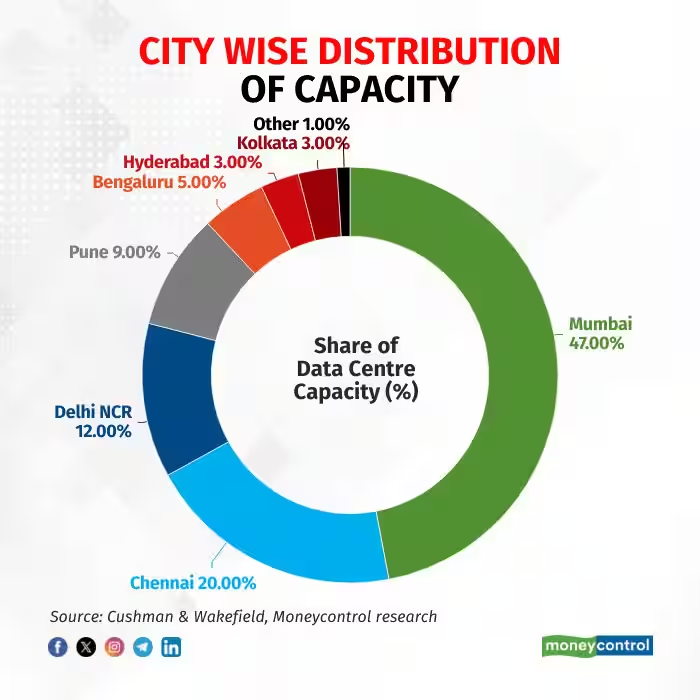
Capacity is geographically concentrated, with Mumbai accounting for 45-50% and Chennai 18-20% of installed capacity. Delhi-NCR, Pune, Bengaluru, and Hyderabad form the next growth cluster, with gradual expansion into select Tier-2 cities over time.
Moneycontrol tweet media
English
1
2
3
513
Neha Dave, CFA retweetledi
Moneycontrol
Moneycontrol@moneycontrolcom·
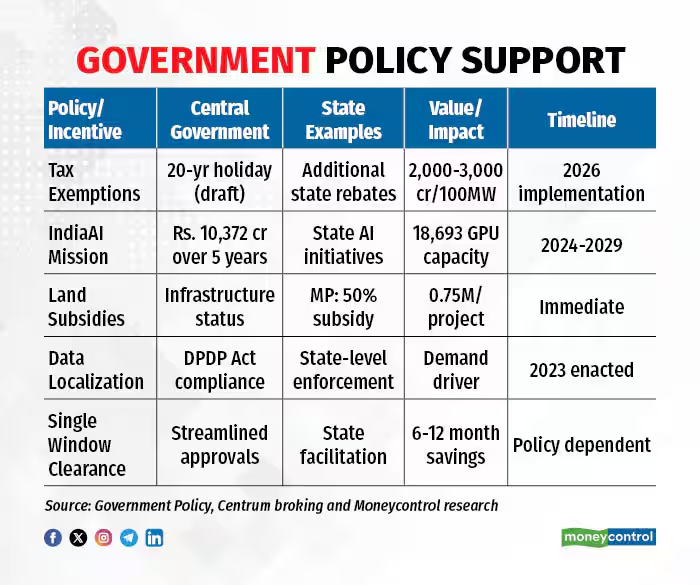
IndiaAI Mission has allocated over Rs 10,000 crore for GPU (graphics processing unit) infrastructure, creating a strong catalyst for AI-ready data centres which will host these high-power GPUs. Here are some some Government policy incentives:
Moneycontrol tweet media
English
1
1
4
341