Sabitlenmiş Tweet
4FIRE
2.2K posts



✅ 생전 처음보는 황태국 😅
집에와서 아내가 황태국 끓여주고 있는데,
ㅋㅋㅋㅋㅋㅋㅋㅋㅋㅋㅋㅋㅋㅋㅋㅋㅋㅋㅋ
살다살다 이런건 또 처음 봅니다. ㅋㅋㅋㅋㅋㅋㅋ
이름좀 지어주세요.
한국어

@TechInnovationz "Sharing is caring"🤣👌
blog.naver.com/4-fire/2242962…
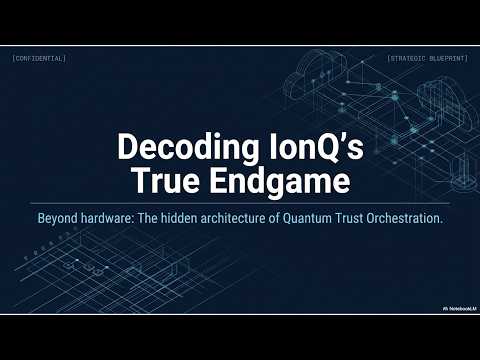
IonQ’s Emerging Quantum Security Strategy:
From QKD to a “Quantum Trust Operating System”
Anyone who has followed the quantum computing industry for years may have sensed something unusual in IonQ’s recent moves.
For a long time, IonQ focused heavily on:
trapped-ion quantum computers
quantum networking
photonic interconnects
QKD
QRNG
The acquisition of ID Quantique (IDQ) was especially symbolic, because IDQ is not just a QRNG company — it is one of the world’s best-known QKD providers.
Yet something felt strange.
The broader industry has increasingly shifted toward PQC (Post-Quantum Cryptography), not QKD.
Google accelerated its PQC migration timeline.
Samsung and SealSQ began competing in PQC security chipsets.
Major players like Cisco, IBM, Cloudflare, and QuSecure already moved aggressively into the space.
So why was IonQ relatively quiet about PQC until recently?
That question became much more interesting during Quantum Day, when Niccolo de Masi introduced a three-layer structure:
QKD
PQC
Cloud Virtual Quantum Key Management
At first glance, this looked like a simple security expansion.
But the more pieces started connecting, the more it appeared that IonQ might be aiming at something far larger than just quantum computing.
One key realization is this:
The future value of PQC may not come from the algorithms themselves.
Kyber, Dilithium, and other PQC standards are already moving toward:
NIST standardization
open-source ecosystems
OpenSSL integration
large vendor adoption
Over time, PQC itself could become commoditized, much like TLS or AES.
And in cybersecurity, commoditized cryptography usually shifts the real value upward:
toward orchestration, lifecycle management, policy control, and trust architecture.
That is where the concept of “Cloud Virtual Quantum Key Management” suddenly becomes extremely important.
This is likely not just another KMS product.
Instead, it resembles a quantum-era orchestration layer capable of managing:
PQC
QKD
hybrid cryptographic environments
satellite optical links
AI agent identities
government-grade infrastructure
across large-scale distributed networks.
Interestingly, this mirrors how today’s cloud KMS market already works.
AWS KMS, Azure Key Vault, and Google Cloud KMS are no longer simply “key storage” products.
Their real strength lies in:
identity management
policy enforcement
orchestration
lifecycle management
audit and compliance integration
The competition has already shifted from:
“What encryption algorithm do you use?”
to:
“How do you orchestrate trust across infrastructure?”
IonQ’s partnership ecosystem also starts making more sense under this lens.
IDQ and Cisco recently demonstrated a hybrid PQC/QKD quantum-safe network using:
Cisco SKIP
IDQ Solteris Q-KMS
hybrid key orchestration
integrated directly into MACsec/IPsec infrastructure.
Meanwhile, IonQ’s collaboration with ARLIS on Zero Trust quantum security research suggests the company may be thinking beyond encryption itself — toward how future quantum infrastructure should be governed, authenticated, and continuously verified.
The arrival of AI Agents makes this even more important.
In the future, security systems may need to manage not only humans, but also:
AI agents
autonomous systems
quantum networks
distributed cloud infrastructure
inside a unified trust architecture.
This is why the NVIDIA analogy becomes interesting.
When ChatGPT popularized generative AI, the real explosion happened not only in AI models, but in the infrastructure required to operate them:
GPUs
orchestration layers
hyperscale datacenters
acceleration platforms
Similarly, the quantum era may not be won simply by whoever creates PQC algorithms.
Instead, the real strategic layer could become:
key orchestration
trust management
policy-based security
quantum-safe infrastructure control
And that may explain why IonQ suddenly began talking about qKMS.
Because perhaps the company is not merely trying to become a “quantum computer company.”
Perhaps it is trying to become something much larger:
A trust operating system for the quantum era.
Toward Quantum Security Lock-In
Good work Team @IonQ_Inc and @NiccoloDeMasi


English
$IONQ
Why IonQ suddenly started talking about PQC. The frame that finally makes every move of the last six months click.
@netcreat picked up this morning's Arrington PQC memo and built the read around it.
The Pivot:
→ FROM a quantum computer and QKD hardware vendor.
→ TO an infrastructure trust architecture for the post-quantum era.
The core argument: PQC algorithms become commodity infrastructure - the way TCP/IP, TLS, AES did. The moat is not the algorithm. The moat is orchestrating trust above it.
The NVIDIA analogy lands. When ChatGPT popularized AI, the explosion was not in the models. It was in the infrastructure required to run them.
PQC follows the same shape.
The line to keep, from @netcreat:
"The PQC algorithm itself will not create a strategic moat or vendor lock-in."
Full piece on his Naver blog below. Bravo @netcreat. Brilliant work.
🔗 m.blog.naver.com/PostView.naver…
👇🧵
#IonQ #PQC #QuantumSecurity
4FIRE@netcreat
@TechInnovationz "Sharing is caring"🤣👌 blog.naver.com/4-fire/2242962… IonQ’s Emerging Quantum Security Strategy: From QKD to a “Quantum Trust Operating System” Anyone who has followed the quantum computing industry for years may have sensed something unusual in IonQ’s recent moves. For a long time, IonQ focused heavily on: trapped-ion quantum computers quantum networking photonic interconnects QKD QRNG The acquisition of ID Quantique (IDQ) was especially symbolic, because IDQ is not just a QRNG company — it is one of the world’s best-known QKD providers. Yet something felt strange. The broader industry has increasingly shifted toward PQC (Post-Quantum Cryptography), not QKD. Google accelerated its PQC migration timeline. Samsung and SealSQ began competing in PQC security chipsets. Major players like Cisco, IBM, Cloudflare, and QuSecure already moved aggressively into the space. So why was IonQ relatively quiet about PQC until recently? That question became much more interesting during Quantum Day, when Niccolo de Masi introduced a three-layer structure: QKD PQC Cloud Virtual Quantum Key Management At first glance, this looked like a simple security expansion. But the more pieces started connecting, the more it appeared that IonQ might be aiming at something far larger than just quantum computing. One key realization is this: The future value of PQC may not come from the algorithms themselves. Kyber, Dilithium, and other PQC standards are already moving toward: NIST standardization open-source ecosystems OpenSSL integration large vendor adoption Over time, PQC itself could become commoditized, much like TLS or AES. And in cybersecurity, commoditized cryptography usually shifts the real value upward: toward orchestration, lifecycle management, policy control, and trust architecture. That is where the concept of “Cloud Virtual Quantum Key Management” suddenly becomes extremely important. This is likely not just another KMS product. Instead, it resembles a quantum-era orchestration layer capable of managing: PQC QKD hybrid cryptographic environments satellite optical links AI agent identities government-grade infrastructure across large-scale distributed networks. Interestingly, this mirrors how today’s cloud KMS market already works. AWS KMS, Azure Key Vault, and Google Cloud KMS are no longer simply “key storage” products. Their real strength lies in: identity management policy enforcement orchestration lifecycle management audit and compliance integration The competition has already shifted from: “What encryption algorithm do you use?” to: “How do you orchestrate trust across infrastructure?” IonQ’s partnership ecosystem also starts making more sense under this lens. IDQ and Cisco recently demonstrated a hybrid PQC/QKD quantum-safe network using: Cisco SKIP IDQ Solteris Q-KMS hybrid key orchestration integrated directly into MACsec/IPsec infrastructure. Meanwhile, IonQ’s collaboration with ARLIS on Zero Trust quantum security research suggests the company may be thinking beyond encryption itself — toward how future quantum infrastructure should be governed, authenticated, and continuously verified. The arrival of AI Agents makes this even more important. In the future, security systems may need to manage not only humans, but also: AI agents autonomous systems quantum networks distributed cloud infrastructure inside a unified trust architecture. This is why the NVIDIA analogy becomes interesting. When ChatGPT popularized generative AI, the real explosion happened not only in AI models, but in the infrastructure required to operate them: GPUs orchestration layers hyperscale datacenters acceleration platforms Similarly, the quantum era may not be won simply by whoever creates PQC algorithms. Instead, the real strategic layer could become: key orchestration trust management policy-based security quantum-safe infrastructure control And that may explain why IonQ suddenly began talking about qKMS. Because perhaps the company is not merely trying to become a “quantum computer company.” Perhaps it is trying to become something much larger: A trust operating system for the quantum era. Toward Quantum Security Lock-In Good work Team @IonQ_Inc and @NiccoloDeMasi
English
@netcreat Hello my friend, thank you for your message. I eagerly await your report. 💛
English
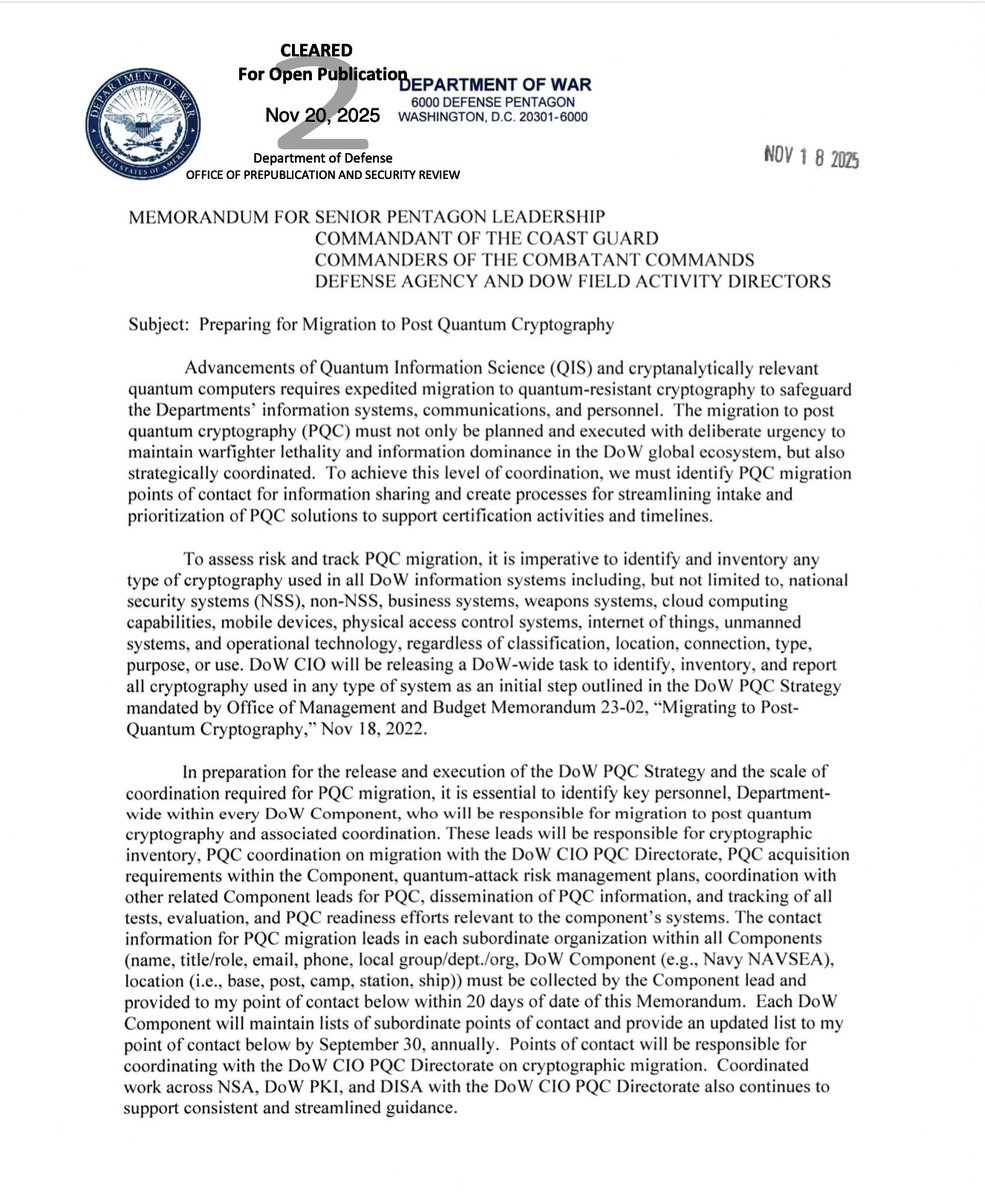
$IONQ 🔐 The document Katie Arrington signed before crossing over to IonQ.
Nov 18, 2025. Three years to the day after OMB Memorandum 23-02 first mandated federal PQC migration.
Pentagon memo: "Preparing for Migration to Post Quantum Cryptography." Signed by Arrington as Performing the Duties of the Chief Information Officer of the Department of War. Cleared for open publication Nov 20, 2025.
What it does:
→ Mandates PQC migration across EVERY DoW system. National security systems, non-NSS, weapons systems, cloud, mobile devices, physical access control, internet of things, unmanned systems, operational technology. "Regardless of classification, location, connection, type, purpose, or use."
→ Requires inventory of ALL cryptography currently in use across the Department, with mandatory reporting.
→ Sets hard phase-out deadlines: PSK-based solutions and symmetric key establishment protocols out by December 31, 2030. NSA CSfC-registered solutions by December 31, 2031.
→ Bans procurement of commercial PSK-based and symmetric key solutions for quantum resistance, effective immediately.
→ Replaces them with NIST-approved asymmetric PQC algorithms. CNSA 2.0-listed for National Security Systems.
→ Creates a new gatekeeper office: the DoW CIO PQC Directorate. Every Component must obtain intake approval AND deployment approval from this office before testing, piloting, using, or acquiring any PQC-related technology.
→ Names Dr. Britta Hale as DoW lead for PQC.
The legal stack it sits on: OMB Memorandum 23-02 (Nov 2022). CNSS Policy #15 (Dec 2024). Chairman of Joint Chiefs of Staff Instruction 6510.02 (Aug 2022).
Eight weeks after signing this memo, on January 14, 2026, IonQ announced Arrington as Chief Information Officer. She started January 19.
She wasn't alone. Bill Dunlap was Acting Principal Deputy CIO at the Department of War during the same Oct 2025 to Mar 2026 window. The number two of the office that issued this memo. On April 1, 2026, he joined IonQ as SVP Global Architecture, reporting to Arrington.
The official who signed the federal PQC migration mandate, and her deputy from the same office, are now both inside IonQ.
Thanks to @InvestifyDaily flagging the memo. @InvestifyDaily
🔗dowcio.war.gov/Portals/0/Docu…
$IONQ @IonQ_Inc #IonQ #PQC #QuantumComputing
English


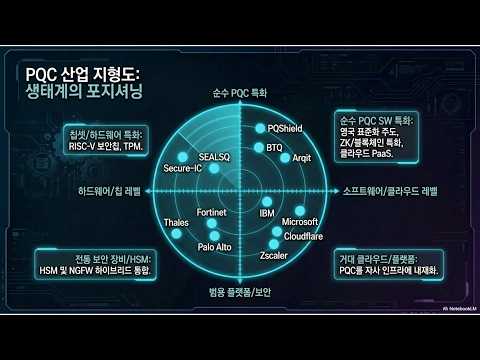
PQC(양자내성암호)의 완성 : 표준화, 수학적 증명, 그리고 시장의 미래
youtu.be/xJeqviajoSA?si…
얼마전 "왜 업계는 QKD보다 PQC 중심으로 움직이는가"라는 주제의 콘텐츠를 올렸는데, 오늘 Apple에서 PQC 관련된 내용을 발표해서, 이를 계기로 작년에 포스팅했던 PQC의 알고리즘 소개와 PQC 업체 동향을 살펴봤습니다.
security.apple.com/blog/formal-ve…
YouTube
한국어