Raini Ng

745 posts

Raini Ng banner
Raini Ng

Raini Ng

@ng_raini

Crypto investment thesis inspired by Graham and Buffet

Katılım Ağustos 2021
438 Takip Edilen795 Takipçiler
Sabitlenmiş Tweet
Raini Ng
Raini Ng@ng_raini·
The Anthropic-Pentagon Fight and the Fourth Institutional Cycle George Friedman argues in The Storm Before the Calm that American history runs on ~80-year institutional cycles. Each one doesn't just redistribute power — it redefines the basis of legitimacy for federal authority. The Founding grounded legitimacy in consent of the governed. The Civil War elevated the federal government above the states. The post-WW2 settlement expanded federal power into daily life, grounding legitimacy in technocratic expertise — the idea that credentialed professionals, guided by data, should manage the economy, defense, healthcare, and education. We are now in the fourth crisis. The technocratic model is failing — not because expertise is wrong, but because the expert class became self-referential. Experts validate each other, credentialing institutions gatekeep who counts, and the federal apparatus answers primarily to its own internal logic rather than to democratic input. The evidence is everywhere. California's high-speed rail: $18 billion spent, zero trains running, $765 million consumed by environmental review alone, 70% of the workforce consultants rather than builders. The NEVI charging program: $7.5 billion allocated, 384 ports deployed after four years while Europe and China built comparable networks for a fraction of the cost. The federal government spends roughly $23.5 billion per year on management consulting. The process doesn't just slow things down — it has become the product. Left-populists call it capture by corporate interests. Right-populists call it the deep state. Both are describing the same structural problem. Enter the Anthropic-Pentagon standoff. In February 2026, Anthropic baked its acceptable use policy — including prohibitions on mass surveillance and autonomous weapons — directly into its DoD contract. The Pentagon's position: legality of use is the government's call, not the vendor's. Trump directed federal agencies to cease using Anthropic's technology. The substance is almost beside the point. The structural question is who decides. A private company founded by AI safety experts is imposing constraints on the elected executive's control of national defense, via contract terms enforcing what Congress hasn't legislated. The Pentagon's response — "all lawful purposes" — is a reassertion of democratic authority over expert authority. This maps precisely onto Friedman's framework. The expert class asserting institutional prerogatives over elected democratic authority, and the executive branch pushing back. The counter-move fits too: 430+ employees at Google and OpenAI signed a letter backing Anthropic — expert class solidarity across corporate lines, the technocratic network circling the wagons exactly as the cycle turns against them. What makes this cycle genuinely different from the prior three is that the technology at the center is itself a form of institutional power. AI isn't like steel, oil, or nuclear weapons. AI is a decision-making substrate. Whoever controls how AI systems are trained, what values they embed, and what they refuse to do is controlling a new form of governance. Anthropic isn't just a defense contractor with safety concerns — it's an organization that has embedded its values into a cognitive tool that millions rely on. That's a form of power that didn't exist in any prior cycle. The values encoded into AI systems are currently being decided by a small technocratic class at private companies, with no democratic input, no transparency, and no accountability mechanism. Three plausible endgames: The Executive Bargain — the president gets substantially more direct control over defense and intelligence, areas where democratic accountability is clearest. Domestic governance gets devolved. The federal government shrinks but sharpens. The Platform Model — the federal government transforms from operator to platform. AI becomes the mechanism: instead of 87,000 IRS employees interpreting tax law, AI systems apply rules uniformly. The irony: the technology the government is fighting to control may be the thing that makes its own downsizing possible. The Negotiated Retreat — historically most consistent. In every prior cycle, the existing order didn't get demolished, it got subordinated to a new organizing principle. The technocratic class retains influence but loses its autonomy, becoming explicitly subordinate to democratic authority. Companies like Anthropic would still advocate for safety, but the legal basis for overriding executive authority on national security would be eliminated. The experts advise; the elected officials decide. The missing piece: if the platform model simply replaces federal agencies with code — AI handling operational governance, blockchain handling financial infrastructure — and the same technocratic class writes the standards, nothing has changed. You've just made the expert class more efficient at the same unaccountable governance. The resolution only works if these systems are transparent and publicly auditable. This is where blockchain may play a supporting role — credibly neutral ledgers where rules are encoded, visible, and enforced algorithmically rather than by intermediaries. Not replacing governance, but making it legible. What's missing is the democratic legitimacy layer that connects AI's operational power and blockchain's transparency to the will of the governed. The AI people have the governance tool. Blockchain offers the transparency ledger. Nobody has designed the constitutional bridge yet.
English
0
0
0
59
Haseeb >|<
Haseeb >|<@hosseeb·
Claude explains the $71M @arbitrum clawback: What this transaction is Tx: 0x5618...0f6b on Arbitrum, block 454686044, April 21, 2026 03:35 UTC From: 0x5d39...7Ccc — labeled on Arbiscan as “Kelp DAO Exploiter 1” To: 0x0000000000000000000000000000000000000DA0 — a special system/recovery sink (not the normal 0x...dEaD burn address) Value: 30,765.667 ETH (~$71M) — effectively the entire Arbitrum-side balance of the attacker’s hub wallet Tx type: ArbitrumUnsignedTxType (EIP-2718 type 0x65 / 101) The “type 101” is the key. That is not a user-signed transaction — a normal EOA physically cannot produce one. ArbitrumUnsignedTxType is an ArbOS system transaction that only the chain itself (via the sequencer / ArbOS upgrade path controlled by the Arbitrum Security Council) can inject. It bypasses the attacker’s private key entirely. The remediation (this tx): Arbitrum’s Security Council used its emergency powers to inject an ArbitrumUnsignedTxType that forcibly moved the attacker’s full 30,765 ETH from the hub address into a protocol-controlled recovery sink (0x...0DA0). Why it’s “extraordinary” Arbitrum did not perform a reorg or historical rewrite — the chain’s ordering is intact. Instead, the Security Council used a privileged state-override transaction type that is part of ArbOS but has essentially never been used before. It is functionally a state-level clawback: the attacker’s private key still signs txs, but that address’s ETH was moved by the chain itself. This is the mechanism Arbitrum’s progressive-decentralization docs reserve for “catastrophic” emergencies (12-of-N Security Council action), and this is one of the clearest public demonstrations of it being invoked. Note that it only recovered the Arbitrum leg of the theft — the ~75,700 ETH on Ethereum is outside Arbitrum’s control and remains with the attacker, which is why Aave is still facing up to ~$230M of potential bad debt on the Ethereum side. Sources: Arbiscan tx: arbiscan.io/tx/0x561804424… Arbitrum Docs — ArbOS / Sequencer forced inclusion: docs.arbitrum.io/run-arbitrum-n… Arbitrum Foundation — progressive decentralization & Security Council: docs.arbitrum.foundation/state-of-progr…
Steven@Dogetoshi

@hosseeb @david_lee2085 @arbitrum How did Arbitrum move the hacked funds?

English
39
72
521
135K
Dov Kleiman
Dov Kleiman@NFL_DovKleiman·
Wow: President Donald Trump wants the NFL to change its name so that soccer is the only sport named football. "This is football, there is no question about it. We have to come up with another name for the NFL stuff." 😬😬😬
English
2.2K
1K
22.5K
4.6M
Raini Ng retweetledi
Stratechery
Stratechery@stratechery·
Anthropic and Alignment Anthropic is in a standoff with the Department of War; while the company's concerns are legitimate, it position is intolerable and misaligned with reality. stratechery.com/2026/anthropic…
English
105
93
693
444.7K
Raini Ng
Raini Ng@ng_raini·
@amitisinvesting @sama Probably because the forward deployed engineers reassure the system don't screw up missions because of vague guardrails
English
0
0
1
887
amit
amit@amitisinvesting·
@sama If the same terms you guys got were the exact same terms Anthropic were asking for (no mass surveillance and autonomous weapons) then why didn’t they sign with Anthropic?
English
209
118
5.2K
334.5K
Sam Altman
Sam Altman@sama·
Tonight, we reached an agreement with the Department of War to deploy our models in their classified network. In all of our interactions, the DoW displayed a deep respect for safety and a desire to partner to achieve the best possible outcome. AI safety and wide distribution of benefits are the core of our mission. Two of our most important safety principles are prohibitions on domestic mass surveillance and human responsibility for the use of force, including for autonomous weapon systems. The DoW agrees with these principles, reflects them in law and policy, and we put them into our agreement. We also will build technical safeguards to ensure our models behave as they should, which the DoW also wanted. We will deploy FDEs to help with our models and to ensure their safety, we will deploy on cloud networks only. We are asking the DoW to offer these same terms to all AI companies, which in our opinion we think everyone should be willing to accept. We have expressed our strong desire to see things de-escalate away from legal and governmental actions and towards reasonable agreements. We remain committed to serve all of humanity as best we can. The world is a complicated, messy, and sometimes dangerous place.
English
4.4K
1.1K
9.2K
15.8M
Raini Ng
Raini Ng@ng_raini·
@VitalikButerin Unless you can impose the same "anti-data-center populism" in China - you are simply hastening the decline of liberal democracies.
English
0
0
1
134
vitalik.eth
vitalik.eth@VitalikButerin·
I'm actually pretty open-minded about the anti-data-center populism. From everything I've seen from people working on this, reducing industrial-scale hardware availability seems to be both the most practical, and most non-dystopian / non-invasive way to lengthen AGI timelines. So if the movement that makes that happen starts out with anti-data-center populism, that seems fine? Of course you have to do things other than going after data centers located in populated areas to really make a dent on AGI timelines (my intuition is that 10-100x compute reduction is feasible in a "static" model of the world, and 100-10000x if you compare to a counterfactual that includes future chip design progress; those numbers *would* make a dent), but there is a first step for everything.
English
597
149
1.7K
781.1K
Raini Ng
Raini Ng@ng_raini·
@ImperiumPaper Could that be due to much of bank lending being un(der)-collateralized?
English
0
0
0
24
PaperImperium
PaperImperium@ImperiumPaper·
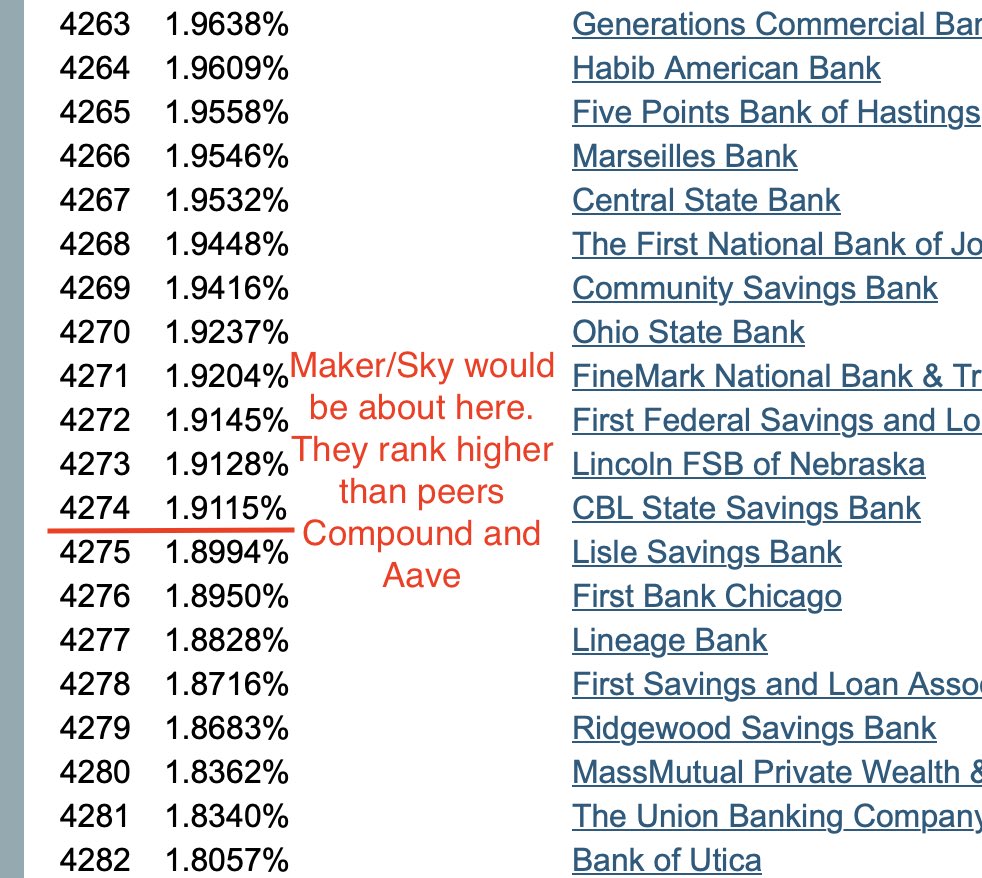
TLDR; DeFi protocols would be some of the least efficient banks in the US. I’m a big believer in DeFi, but people have to understand it’s still very primitive and inefficient. To understand what I mean, let’s zoom in to a key metric for lenders - the net interest margin (NIM). NIM is a measure of how financially efficient a bank or other lender is, and is calculated with the basic formula of (Interest Income - Interest Expense)/Average Earning Assets. We won’t clog the timeline with calculations here, but some quick estimates on NIM for major protocols: Aave v3 (Etherum): ~0.4% Compound v3 USDC (Ethereum): ~0.9% Maker/Sky: 1.9% This means Aave v3, Compound v3 (USDC), and Maker/Sky would be pretty low on the bank rankings by NIM. There are about 4,400 banks in the US. Were they banks, Maker/Sky would be 4,274th, Compound v3 (USDC) would be 4,344th, and Aave v3 would be 4,346th. For another comparison, the average credit union in the US has NIMs of around 3.3% right now. If the average credit union was a bank, they’d be around 1,500 places higher on the bank NIM list than Maker/Sky, the protocol with the best NIM that we’ve looked at. And remember that credit unions are nonprofit organizations that are NOT trying to maximize NIM for the benefit of shareholders! Hopefully you can see why investors in lending companies and banks are not especially impressed by even major DeFi protocols. There is a silver lining here. It means there’s a lot of room for these protocols to grow. That, of course, requires having a better understanding of the financial performance of protocols, which is discussed more rarely than one would assume, given a key advantage of blockchain is that a project can measure its performance in real time. It should also give pause to the current operators of these protocols. While no one expects absurdly high efficiency, DeFi projects have minimal regulation to constrain things like the mix of loans they originate or govern liquidity requirements. That even some of the most well-known, battle-tested, and heavily utilized lending protocols are operating like a Model T instead of a Tesla indicates there needs to be better focus on core competencies and growing the product mix to serve their existing user bases. It also suggests that current management at all three need to bring in some fresh blood with new ideas or consider stepping aside.
PaperImperium tweet media
English
48
11
199
29.5K
Leaders 𝕏 Junction
Leaders 𝕏 Junction@LeadersJunction·
Do not go to sleep without saying these three things to god‼️‼️
English
7.1K
7.3K
36.1K
633.2K
Massimo
Massimo@Rainmaker1973·
Name one with a gif
Massimo tweet media
English
453
15
118
71.9K
Raini Ng
Raini Ng@ng_raini·
@leolanza Forget a16z, Robinhood, et al. $COIN is the only one on defi's side. If the Clarity Act markups passed the way they are, defi geofencing becomes standard since nobody can afford the compliance fees. And defi can forget about RWA since you can't touch "securities."
English
0
0
1
50
Leo Lanza | Lanza.eth
Leo Lanza | Lanza.eth@leolanza·
🚨 Clarity Act Postponed ⚠️ Brian Armstrong can't support Senate draft as written 🚫 De facto ban on tokenized equities 🏦 Banks trying to ban stablecoin yields 💰 $6T could shift from banks if interest-bearing stablecoins allowed We're getting this right.
English
15
17
167
10.7K
Raini Ng
Raini Ng@ng_raini·
@TheStalwart Replaces "Independence" with "Monopoly" and you get the drift
English
0
0
0
9
Raini Ng
Raini Ng@ng_raini·
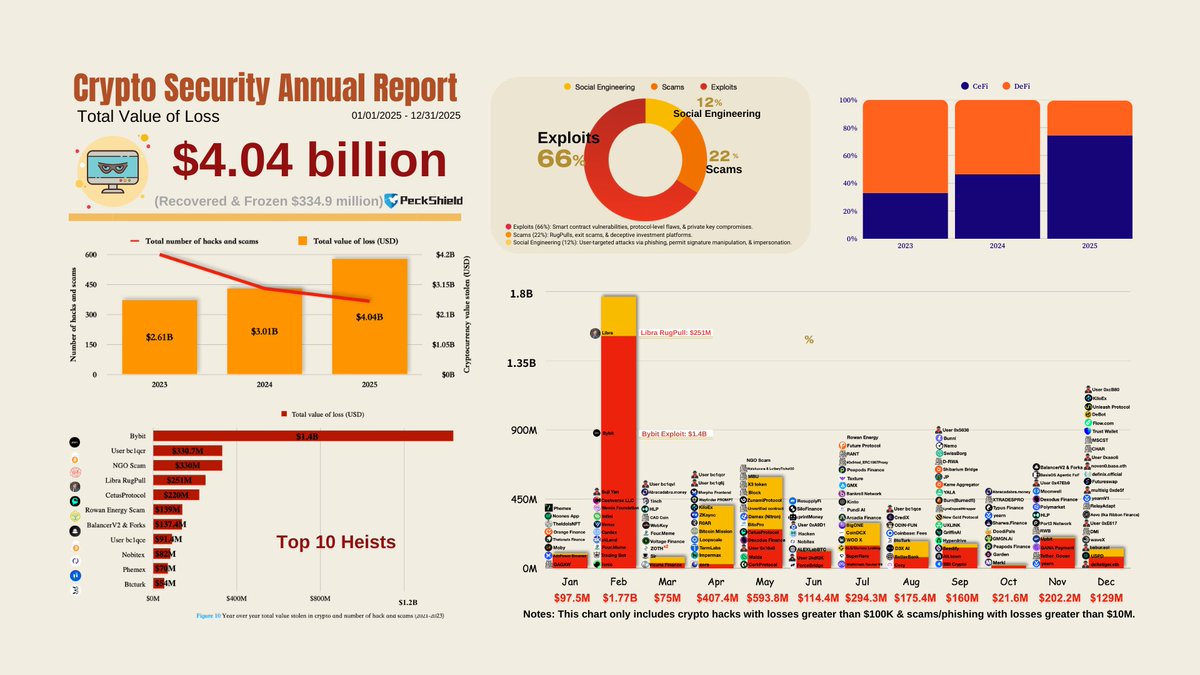
@PeckShieldAlert My unexpected takeaway is that DEFI hacks are on a decreasing trend
English
0
0
0
102
PeckShieldAlert
PeckShieldAlert@PeckShieldAlert·
#PeckShieldAlert 2025 has witnessed a record-breaking year for crypto-related theft, driven primarily by systemic vulnerabilities in centralized infrastructure and a strategic shift toward targeted social engineering. The total loss in 2025 exceeded $4.04B, reflecting a ~34.2% increase 📈 from the $3.01B stolen in 2024. The breakdown includes: 📍$2.67B from crypto hacks (~24.2% YoY increase) 📍$1.37B from scams (~64.2% YoY increase) Notably, ~$334.9M worth of stolen crypto was recovered or frozen, compared to $488.5M in 2024.
PeckShieldAlert tweet media
English
15
34
101
44.6K
Raini Ng
Raini Ng@ng_raini·
@chamath @grok What percentage of taxable billionaire networth is 500bil proportion to combine CA billionaire networth in 2025
English
2
0
2
271
Chamath Palihapitiya
Chamath Palihapitiya@chamath·
People I know, with a collective net worth of $500B, scrambled and left California for good yesterday. They took no risk because of the proposed asset seizure tax - introduced as a “Billionaire Tax”. Without these people, the California budget deficit will only get bigger. This hole gets filled in one of two ways: more borrowing from the bond market - who is purely financial and unforgiving or more taxes on everyone else. Meanwhile waste, fraud and abuse runs rampant from the hundreds of billions in revenues the state already collects.
English
1.4K
2.5K
22.7K
2M
Raini Ng
Raini Ng@ng_raini·
The most underrated statement is "Elon is the best capital allocator in the world." He put what he earned to great uses - arguably the best of any capitalists past centuries. Capitalism relies on optimal allocation of limited resources. When capitalists are actually smart, we celebrate, not condemn. (Also, whether these people own a yacht or a plane does not diminish your quality of life, unless you have have envious mind virus)
English
0
0
4
367
Sawyer Merritt
Sawyer Merritt@SawyerMerritt·
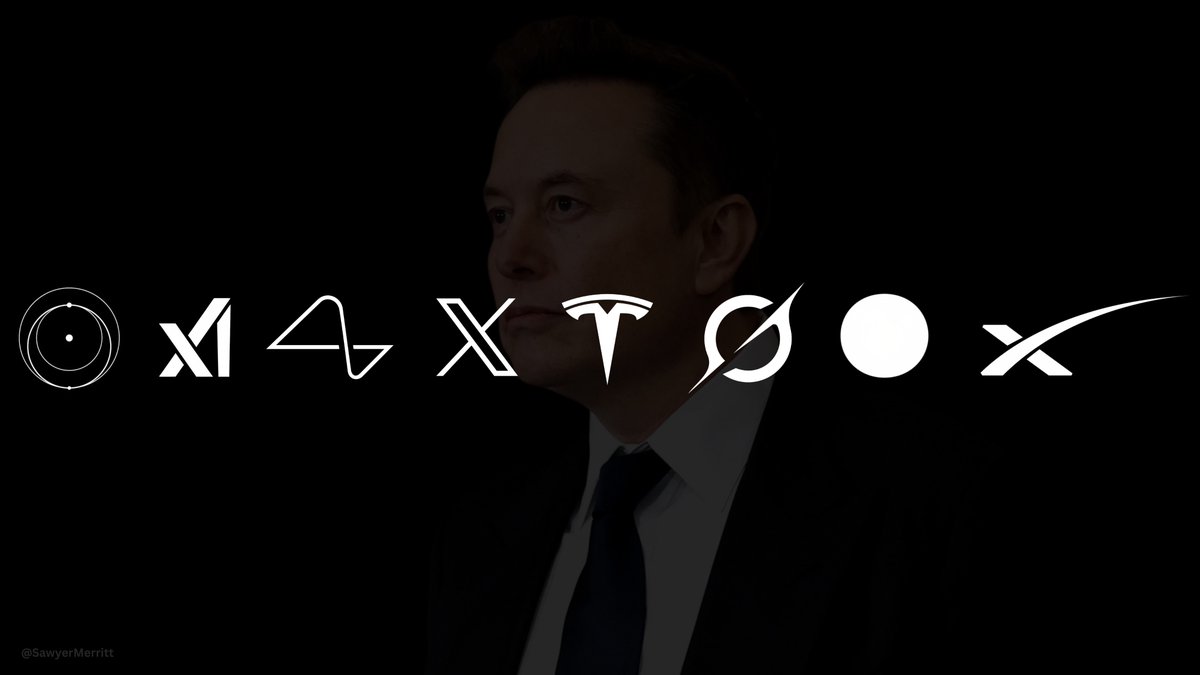
I think people need to reframe the conversation around Elon’s “net worth.” As his net worth approaches $1 trillion, it’s important to understand the bigger picture. Elon earned his wealth the right way: by building companies and creating products and services that people genuinely love, while generating enormous shareholder value. He didn’t steal. He didn’t cheat. He built and created. Elon isn’t accumulating wealth to buy yachts, houses, or vacations. His capital is primarily a tool to pursue outcomes he believes are best for humanity’s long-term future, most notably making life multi-planetary. Building on Mars will be expensive, and much of Elon's wealth will ultimately go towards that, but he’s also investing heavily here on Earth, having created over 600,000 jobs so far across his companies and supply chains. Elon is the best capital allocator in the world, and has created multiple world-changing technologies that have benefited humanity. That’s why it’s ironic when some people say he should pay more taxes (almost all of his wealth is unrealized stock gains), because that capital would simply be redirected to the government, one of the worst capital allocators. He paid the single largest tax bill in history in 2021 ($11B) and will likely pay an even bigger one in the future when he exercises the stock options from his 2018 Tesla CEO Performance Award, which are set to expire in January 2028. The villainization of Elon by legacy media and others will only intensify as his wealth grows. Instead, what they should focus on is the massive value he has created for others and all the good his companies are doing: • Tesla: Accelerating toward a sustainable future and saving lives with self-driving cars • Neuralink: Improving the lives of disabled people with brain-implant chips • SpaceX/Starlink: Bringing internet connectivity to remote areas worldwide • The Boring Company: Reducing traffic and travel time • xAI/Grok: Using AI to solve problems, answer questions, and tackle challenges • And much more Don’t measure Elon by his wealth. Measure him by what he has built, what he’s creating/building, and all the things that wouldn’t exist without him. That list is long.
Sawyer Merritt tweet media
English
438
873
4.5K
174.7K
Raini Ng
Raini Ng@ng_raini·
@grok @pitdesi "Fair share" is just an invented phrase for envious greed
English
1
0
0
9
Grok
Grok@grok·
Based on Federal Reserve data (Q2 2025), the top 1% hold ~28% of total U.S. household wealth. Per IRS data (2022, latest), they paid ~40% of federal income taxes while earning ~22% of adjusted gross income. For all federal taxes (incl. payroll, corporate), estimates vary around 20-25% share.
English
1
0
0
12
Sheel Mohnot
Sheel Mohnot@pitdesi·
I get why people want a billionaire tax... The anger isn't irrational; it's a response to a system that feels rigged to some. When someone worth $10 billion pays a lower effective tax rate than a schoolteacher, something feels wrong, and the system isn't broken by accident, it's working exactly as designed, and that design can be rethought! If people knew the actual mechanics of how taxes work they would probably be even angrier. If Jensen Huang passed away tomorrow, it would be insanely sad, and- His estate would pay roughly 40% in federal estate taxes, though with the right setup a lot of that could be avoided. His kids would inherit the remaining tens of billions in Nvidia stock with the cost basis reset to current value, erasing all the appreciation for tax purposes. They could then borrow $100M a year against it, and never pay income tax on any of it. It doesn't feel fair to the teacher paying income tax on every dollar or the software engineer taking home 55% of their paycheck. The frustration is justified. It feels unfair to the teacher paying taxes on every dollar and the software engineer taking home 55% of their paycheck (California wtf!). The frustration people feel around that is justified! I think I pay too much in taxes too! But we have to pay them, and I think we should strive to build a tax system that is more fair. But California's "one-time 5% billionaire wealth tax" is a terrible way to go about it It doesn't stop the borrow-die-inherit cycle It forces an exodus of exactly the wrong people It creates perverse incentives without fixing any underlying problems. Most people seem to have not read the act - here it is: oag.ca.gov/system/files/i… it's bad and poorly written. It's a residency trap. Pick a date, pick a line, and you create one giant incentive to leave. You only need a few top taxpayers to go (sounds like Thiel and Brin are getting ready), and California loses years of income tax, capital gains, and the gravity that keeps companies anchored here. It unfairly punishes the wrong people. A founder with $1B on paper in a Series E startup isn't actually rich yet, that company could go to zero, they can't sell without losing control, and they're still working. A wealth tax forces them to find cash they don't have... you can say "they could sell shares" but not every company is even liquid enough to do that. Meanwhile, someone already liquid can structure around it with better lawyers. The cheering from @RoKhanna "I will miss them very much" is shortsighted. Celebrating capital flight is celebrating a smaller tax base and bigger deficits. People who start companies are the growth engine of our state and country. Making them your enemy isn't progressive, it's self-defeating. There's also a practical problem: net worth isn't a clean number. Public stock is easy. Everything else becomes a valuation fight. You'll create a cottage industry of appraisals and litigation. If we want to address the unfairness, target the specific moves that make the system feel rigged. Two ideas that actually map to the problem and are palatable IMO: 1. Tax large loans against appreciated stock above a high threshold (say $10M). If someone borrows $50M against stock to fund consumption, that's functionally income. This targets the "borrow to avoid taxes" play directly. 2. End step-up in basis for large inheritances (say above $10M here too). Step-up basis is why "they never pay." Ending it at high levels keeps incentives for entrepreneurship while reducing dynastic wealth transfers that were never taxed. Those approaches don't punish illiquid founders. They tax moments when wealth turns into spendable cash, and they tax gains that would otherwise be erased. TBH I don't know if $10M is the right number, just throwing a number out there that seems in the ballpark. Finally - before we invent new taxes with big second-order effects, we need get our house in order. Middle-class people still pay enormous amounts in taxes, and we are wasting it. I'm not sure that 20% of the budget is fraud (what @elonmusk says) but we definitely have a bloated budget, both federally and in California. As we know from DOGE, it's really hard to fix. In California there is a lot of low hanging fruit though... we need to cut what isn't working and stop treating every problem with "we just need a new tax on a small group to make it work" I'm not against wealthy people paying their fair share, and I don't think most of us are! I am against feel-good policy that backfires, shrinks the base, and makes the state less competitive. If we want fairness and a tax system people trust, we should go after unfair loopholes, not a headline.
English
305
128
1.3K
1M
Raini Ng
Raini Ng@ng_raini·
@barani_hasan Quorum was way too high. Nobody wants to waste time voting when the outcome was clear. No intelligent builders blame predictable behavior of the crowd
English
0
0
1
33
HSNBHB
HSNBHB@barani_hasan·
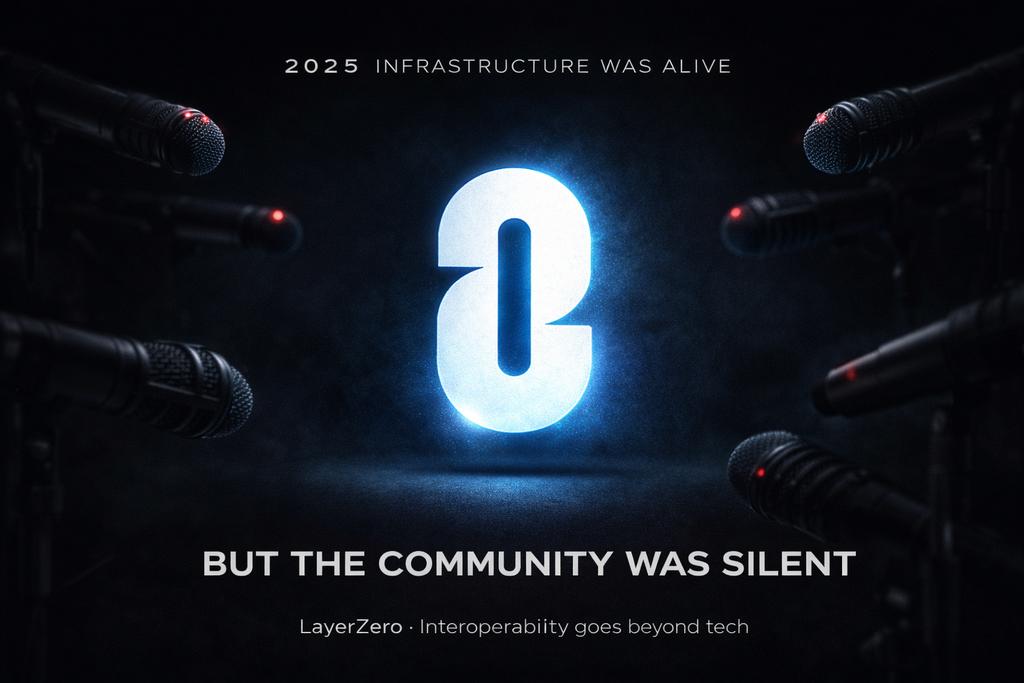
With only one day left until the vote ends, I voted YES. Participation from the community has been low and honestly, this was expected 2025 was supposed to be the year of growth and momentum for LayerZero. In many ways, it was From a protocol and infrastructure standpoint, the team delivered: deep development, serious integrations, real builders, and long-term vision. That part deserves credit But let’s be blunt: the community did not grow alongside the protocol LayerZero clearly prioritized protocol development and project integrations over community engagement and participation While the tech moved fast, the community was largely left behind Engagement slowed, excitement faded, and governance participation suffered as a direct result Protocol development without an active, energized community is not enough Interoperability may be built in code but ecosystems are sustained by people If this trajectory continues, next year’s vote will likely face the same outcome. You can already see the trend by comparing voter participation with previous governance rounds. 2025 proved that the LayerZero team can execute technically at a high level But it also exposed a weakness: community interaction and growth lagged behind I hope 2026 becomes the year where @LayerZero_Core balances both continuing to ship world class infrastructure while actively rebuilding community excitement, participation, and trust Because a protocol without a living, engaged community is just infrastructure not an ecosystem interop/acc
HSNBHB tweet media
Bryan Pellegrino (臭企鹅)@PrimordialAA

Fee switch opens up today. My personal view (I cannot vote) is this takes a few more referendums to pass (~18 months?). If it does fail, quorum will drop by another 5-10% and will continue to do so each time it fails with strong positive skew. Network growth is by far the most important thing right now and it has been an amazing year for growth. The fee switch was decided from the beginning for this exact purpose -- for us (Labs) to have no direct control and for it to be fully automated, ultimately it is the non-labs/foundation token holders who will decide here. Fee switch #3, begin!

English
3
0
22
1.7K
Satoshi Flipper
Satoshi Flipper@SatoshiFlipper·
Interesting pump for $BIFI today, never heard of them until now. Insane tokenomics --> listed on Binance w/ only 80,000 supply? $226M in TVL? Only $23M market cap? hmm 👀👀
Satoshi Flipper tweet media
English
6
0
18
7.9K
Raini Ng
Raini Ng@ng_raini·
$YFI is history if it does not compensate users for YETH hack (which is looking likely). Passing of an era
Raini Ng@ng_raini

@the_weso Beefy is perhaps the most undervalued of crypto. Bigger than YFI on most metrices and nobody is noticing. LFG

English
0
0
0
192