Nikhil Kumar

5K posts

Nikhil Kumar banner
Nikhil Kumar

Nikhil Kumar

@nik2success

Building AI products: @testsynthiaai • @plugifyai Helping founders ship fast Let's build: https://t.co/ua6TlXiRC6

Katılım Kasım 2013
785 Takip Edilen246 Takipçiler
App Launcher
App Launcher@AppLauncher_App·
@FlowHaa @matt_gray_ The math checks out painfully. The jump from $0 to $1 is the hardest dollar in SaaS. App Launcher helps you find the people who would actually pay. What are you building?
English
1
0
0
16
MATT GRAY
MATT GRAY@matt_gray_·
If your revenue doubled this year, would your life actually feel lighter… or just more full?
English
40
1
76
3.9K
Bac Leo
Bac Leo@BacLeodiv·
Builders on X What are you building right now? - Ios app - Android app - Saas - Content I want more builders on my timeline. Let’s connect 🤝🏻
English
237
1
146
7.5K
Nikhil Kumar
Nikhil Kumar@nik2success·
@konnydev It is good, and way cheap Good for running agents - openclaw
English
1
0
1
6
Konny
Konny@konnydev·
Need help, which 20$ AI plan is the best? - Claude - Codex - Other
English
144
1
129
9.9K
Santosh
Santosh@santoshstack·
Posting alone won’t grow your X account. Replies will. • Find accounts in your niche. • Add value in your replies. • Ask smart questions. • Start real conversations. Happy to connect if you’re into coding, programming, building in public, SaaS or AI.
English
49
1
60
1.8K
Nikhil Kumar
Nikhil Kumar@nik2success·
@Mossiah he is great, most people work on tech stack he works on civilization stack unbeatable
English
0
0
1
16
Mo Ayob
Mo Ayob@Mossiah·
@nik2success His vertical foresight and building has to be admired. Whatever your opinion of him is , got to give him credit for that
English
1
0
1
13
Mo Ayob
Mo Ayob@Mossiah·
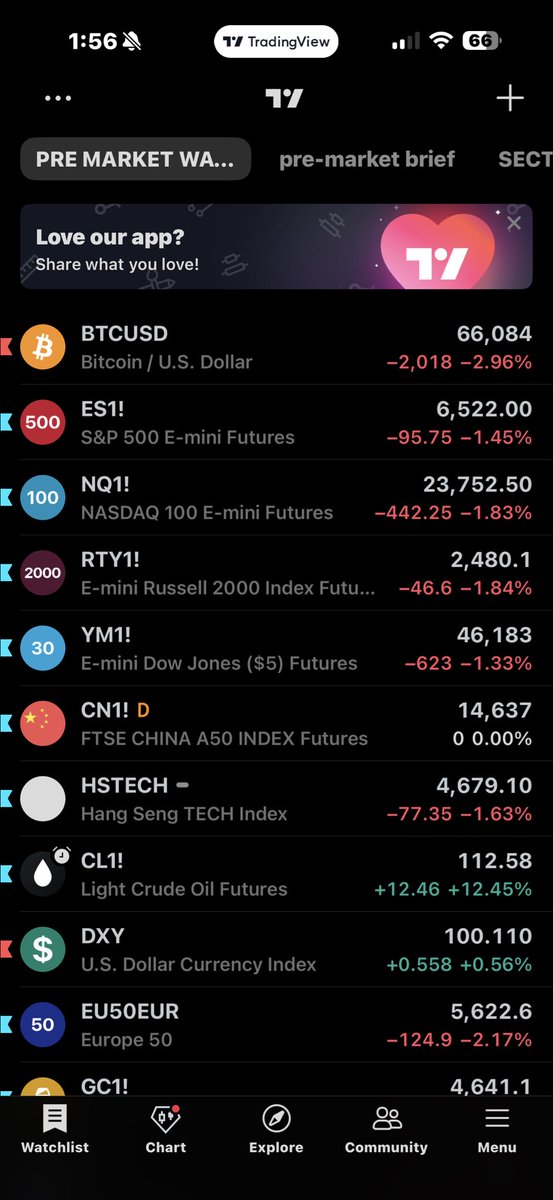
oil just hit $112. +12% on the day. gold is DOWN 3.5%. silver DOWN 7%. S&P futures DOWN 1.5%. bitcoin DOWN 3%. that is not a war trade. a war trade means gold goes up. this is something else entirely.👇🏾
Mo Ayob tweet media
English
2
0
2
115
John Greg
John Greg@JohnGregQuantum·
@santoshstack Great post, agree with you, most of the time people connect just because! Builder here! Struggling with my SaaS! What are you building ?
English
4
0
3
49
Nikhil Kumar
Nikhil Kumar@nik2success·
@Mossiah gap indeed is closing fast can we extended if elon takes a break lol
English
1
0
1
14
Mo Ayob
Mo Ayob@Mossiah·
@nik2success That sounds cool. Let’s connect would love to hear more! I fully agree, hardware and distribution is the next big moat ( currently is but it’s balanced for now until that gap completely closes )
English
1
0
0
11
Dragan Maricic
Dragan Maricic@dramaricic·
I follow builders who actually ship. If you're: – building a SaaS – working on a side project – trying to get first users Drop your project below Let’s connect 🤝
English
367
4
264
12.5K
Gagandeep Singh Makhija
I follow builders who actually ship. If you're: – building a SaaS – working on a side project – trying to get first users Drop your project below Let’s connect 🤝
English
7
0
4
81
Nikhil Kumar
Nikhil Kumar@nik2success·
@Mossiah scary times, more complex the project more time it will take to replicate We are building a simulation company on human behaviour else pivot to hardware
English
1
0
1
16
Mo Ayob
Mo Ayob@Mossiah·
so genuinely. founders and builders. what are you building that actually lasts through this? not an AI wrapper. not another SaaS that Anthropic ships natively in the next 1-2 weeks. something that owns a workflow. a dataset. a trust relationship. what is it?
English
3
0
1
34
Nikhil Kumar
Nikhil Kumar@nik2success·
@daily_ai_tools_ point 2 is our expertise we are a simulation company build exactly for this happy to help if anyone is curious
English
0
0
0
3
HerToolGuide
HerToolGuide@daily_ai_tools_·
AI startup just shut down after raising $33M. Here's how to validate your AI idea BEFORE burning cash: 1. Forget coding. Define your AI's core function: "It predicts X based on Y". Be brutally specific. 2. Manually simulate your AI. If it's predicting churn, YOU predict it for 100 customers. Track your accuracy. 3. Recruit a small, PAYING group. Offer your manual predictions as a service. Charge enough to cover your time. 4. If your manual predictions are valuable enough that people pay, THEN start building the AI. Not before. 5. Focus on automating YOUR proven process. The AI isn't inventing a solution, it's scaling your existing one. 6. Continuously compare AI vs. manual accuracy. If the AI isn't consistently better, you're not ready to scale. 7. Track costs relentlessly. Include compute, data acquisition, and your own time. Is it cheaper than the manual method? 8. Get constant user feedback. Are your predictions actually helping them? How are they using the information? 9. Iterate rapidly. Don't get attached to your initial assumptions. Be prepared to pivot based on user feedback and performance data. 10. Only raise funding when you have proven product-market fit and a clear path to profitability. Not before. Skipping these steps is a good way to burn $33M. What's your AI idea? Are you validating it manually?
English
17
23
73
514
Nikhil Kumar
Nikhil Kumar@nik2success·
@jakobjelling yes, a lot of work lol, just followed can I get a list for all backlinks if possible
English
1
0
1
5
🔥 Jakob Jelling
🔥 Jakob Jelling@jakobjelling·
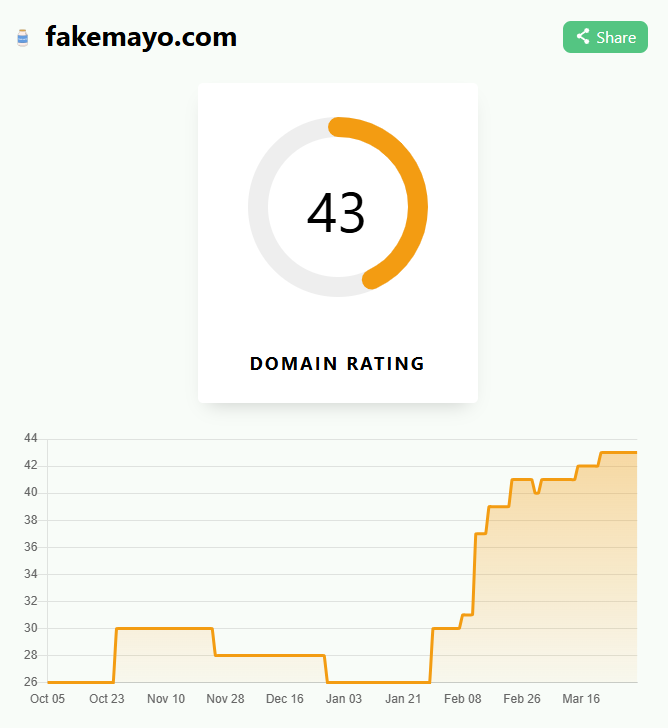
My DR is on the right path. Thanks for the free tool by frogdr (dot) com
🔥 Jakob Jelling tweet media
English
11
2
44
2K
Irbaaz Kadri
Irbaaz Kadri@irbaazkadri·
Day 9 of Growing Formily. We stopped building to rethink the product direction. AI form generation is becoming common. So the focus is shifting to beautiful, well-designed forms with AI built in. The goal: make forms feel as good as they function. Redesigned.
Irbaaz Kadri tweet media
English
16
0
31
641
elvis
elvis@omarsar0·
Building a personal knowledge base for my agents is increasingly where I spend my time these days. Like @karpathy, I also use Obsidian for my MD vaults. What's different in my approach is that I curate research papers on a daily basis and have actually tuned a Skill for months to find high-signal, relevant papers. I was reviewing and curating papers manually for some time, but now it's all automated as it has gotten so good at capturing what I consider the best of the best. There are so many papers these days, so this is a big deal. You all get to benefit from that with the papers I feature in my timeline and on @dair_ai. The papers are indexed using @tobi qmd cli tool (all of it in markdown files along with useful metadata). So good for semantic search and surfacing insights, unlike anything out there. I am a visual person, so I then started to experiment with how to leverage this personal knowledge base of research papers inside my new interactive artifact generator (mcp tools inside my agent orchestrator system). The result is what you see in the clip. 100s of papers with all sorts of insights visualized. I keep track of research papers daily, so believe me when I tell you that this system is absolutely insane at surfacing insights. This is the result of months of tinkering on how to index research and leverage agent automations for wikification and robust documentation. But this is just the beginning. The visual artifact (which is interactive too) can be changed dynamically as I please. I can prompt my agent to throw any data at it. I can add different views to the data. Different interactions. I feel like this is the most personalized research system I have ever built and used, and it's not even close. The knowledge that the agents are able to surface from this basic setup is already extremely useful as I experiment with new agentic engineering concepts. I feel like this knowledge layer and the higher-level ones I am working on will allow me to maximize other automation tools like autoresearch. The research is only as good as the research questions. And the research questions are only as good as the insights the agents have access to. Where I am spending time now is on how to make this more actionable. I am obsessed about the search problem here. The automations, autoresearch, ralph research loop (I built one months ago) are easier to build but are only as good as what you feed them. Work in progress. More updates soon. Back to building.
Andrej Karpathy@karpathy

LLM Knowledge Bases Something I'm finding very useful recently: using LLMs to build personal knowledge bases for various topics of research interest. In this way, a large fraction of my recent token throughput is going less into manipulating code, and more into manipulating knowledge (stored as markdown and images). The latest LLMs are quite good at it. So: Data ingest: I index source documents (articles, papers, repos, datasets, images, etc.) into a raw/ directory, then I use an LLM to incrementally "compile" a wiki, which is just a collection of .md files in a directory structure. The wiki includes summaries of all the data in raw/, backlinks, and then it categorizes data into concepts, writes articles for them, and links them all. To convert web articles into .md files I like to use the Obsidian Web Clipper extension, and then I also use a hotkey to download all the related images to local so that my LLM can easily reference them. IDE: I use Obsidian as the IDE "frontend" where I can view the raw data, the the compiled wiki, and the derived visualizations. Important to note that the LLM writes and maintains all of the data of the wiki, I rarely touch it directly. I've played with a few Obsidian plugins to render and view data in other ways (e.g. Marp for slides). Q&A: Where things get interesting is that once your wiki is big enough (e.g. mine on some recent research is ~100 articles and ~400K words), you can ask your LLM agent all kinds of complex questions against the wiki, and it will go off, research the answers, etc. I thought I had to reach for fancy RAG, but the LLM has been pretty good about auto-maintaining index files and brief summaries of all the documents and it reads all the important related data fairly easily at this ~small scale. Output: Instead of getting answers in text/terminal, I like to have it render markdown files for me, or slide shows (Marp format), or matplotlib images, all of which I then view again in Obsidian. You can imagine many other visual output formats depending on the query. Often, I end up "filing" the outputs back into the wiki to enhance it for further queries. So my own explorations and queries always "add up" in the knowledge base. Linting: I've run some LLM "health checks" over the wiki to e.g. find inconsistent data, impute missing data (with web searchers), find interesting connections for new article candidates, etc., to incrementally clean up the wiki and enhance its overall data integrity. The LLMs are quite good at suggesting further questions to ask and look into. Extra tools: I find myself developing additional tools to process the data, e.g. I vibe coded a small and naive search engine over the wiki, which I both use directly (in a web ui), but more often I want to hand it off to an LLM via CLI as a tool for larger queries. Further explorations: As the repo grows, the natural desire is to also think about synthetic data generation + finetuning to have your LLM "know" the data in its weights instead of just context windows. TLDR: raw data from a given number of sources is collected, then compiled by an LLM into a .md wiki, then operated on by various CLIs by the LLM to do Q&A and to incrementally enhance the wiki, and all of it viewable in Obsidian. You rarely ever write or edit the wiki manually, it's the domain of the LLM. I think there is room here for an incredible new product instead of a hacky collection of scripts.

English
132
423
4.4K
429.6K
Nikhil Kumar
Nikhil Kumar@nik2success·
just realised we need to add sitemap in order to make sure all pages are getting index
English
1
0
1
29