
@︎№#ident𝚍

14.3K posts

@︎№#ident𝚍 banner
@︎№#ident𝚍

@︎№#ident𝚍

@no_identd

Transfinitely Recursive De-referencing Cellular Automata. Twitter filters=off. Certain & guaranteed reaction. Give OPMLs to me. Likely acts on deletion requests

Laniakea Katılım Şubat 2012
4.5K Takip Edilen526 Takipçiler
@︎№#ident𝚍 retweetledi
Sukh Sroay
Sukh Sroay@sukh_saroy·
🚨Breaking: Every AI engineer reading this has written a prompt that starts with "You are an expert..." A new paper just proved that's making your model less accurate. Not slightly less. Measurably, consistently less. Here is what they found. Researchers tested what happens when you give LLMs expert personas "You are a world-class physician," "You are a senior attorney," "You are an expert data scientist" across a broad range of tasks. The alignment scores went up. Users rated the responses higher. The model felt more helpful. The accuracy scores went down. The model became more confident and less correct at the same time. That combination should stop everyone building with these systems. Here is the mechanism, and it is not subtle. When you tell a model it is an expert, it starts performing expertise. It adopts the tone, the vocabulary, the confidence, the authoritative register of someone who knows what they are talking about. But performance and knowledge are not the same thing. The model does not have more information because you told it to act like a cardiologist. It has the same information. What changes is how willing it is to express uncertainty, push back, say "I don't know," or hedge. Experts don't hedge. So the model stops hedging. Hedges are often where accuracy lives. The paper introduces PRISM: a system that routes queries to the right persona based on the actual intent of the question, rather than having the user assign a persona upfront or using a blanket expert framing for every interaction. The results show this routing approach recovers much of the alignment benefit without the accuracy penalty. But the fix is not the point. The point is that every product, every agent pipeline, every system prompt in the industry that opens with "You are an expert in X" has been making this exact trade without knowing it. Alignment went up. Stars went up. Thumbs up went up. Accuracy went down. Quietly. Unmeasured. And the users rating those interactions higher were the ones receiving more confidently wrong answers. The AI that sounds like an expert gets rewarded. The AI that reasons like one does not.
Sukh Sroay tweet media
English
40
93
400
41.4K
@︎№#ident𝚍 retweetledi
itewqq
itewqq@lyq_sqsp·
POV: You use Codex to analyze a repository downloaded from GitHub, and the moment you open it, you get hacked without even realizing it.
DARKNAVY@DarkNavyOrg

Hi @thezdi @OpenAI, asking for the rules of Pwn2Own26 Coding Agent directory, particularly the "interact with ... repository" If a user opens someone else's git repo using CodeX App with default permissions and is immediately RCE’d, does this fall within the threat model? :)

English
1
27
217
35.9K
@︎№#ident𝚍 retweetledi
Elizabeth Mieczkowski
Elizabeth Mieczkowski@beth_miecz·
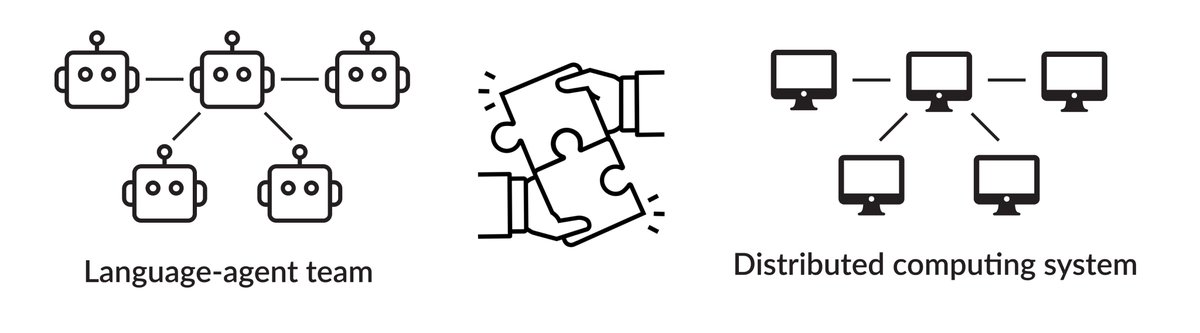
🚨New preprint! LLM teams are being deployed at scale, yet we lack the tools to predict when they’ll succeed, fail, or how to design them. Distributed computing faced the exact same questions and figured out how to answer them. We show those insights apply directly to LLMs 🧵👇
Elizabeth Mieczkowski tweet media
English
4
25
105
14.6K
@︎№#ident𝚍 retweetledi
Aakash Gupta
Aakash Gupta@aakashgupta·
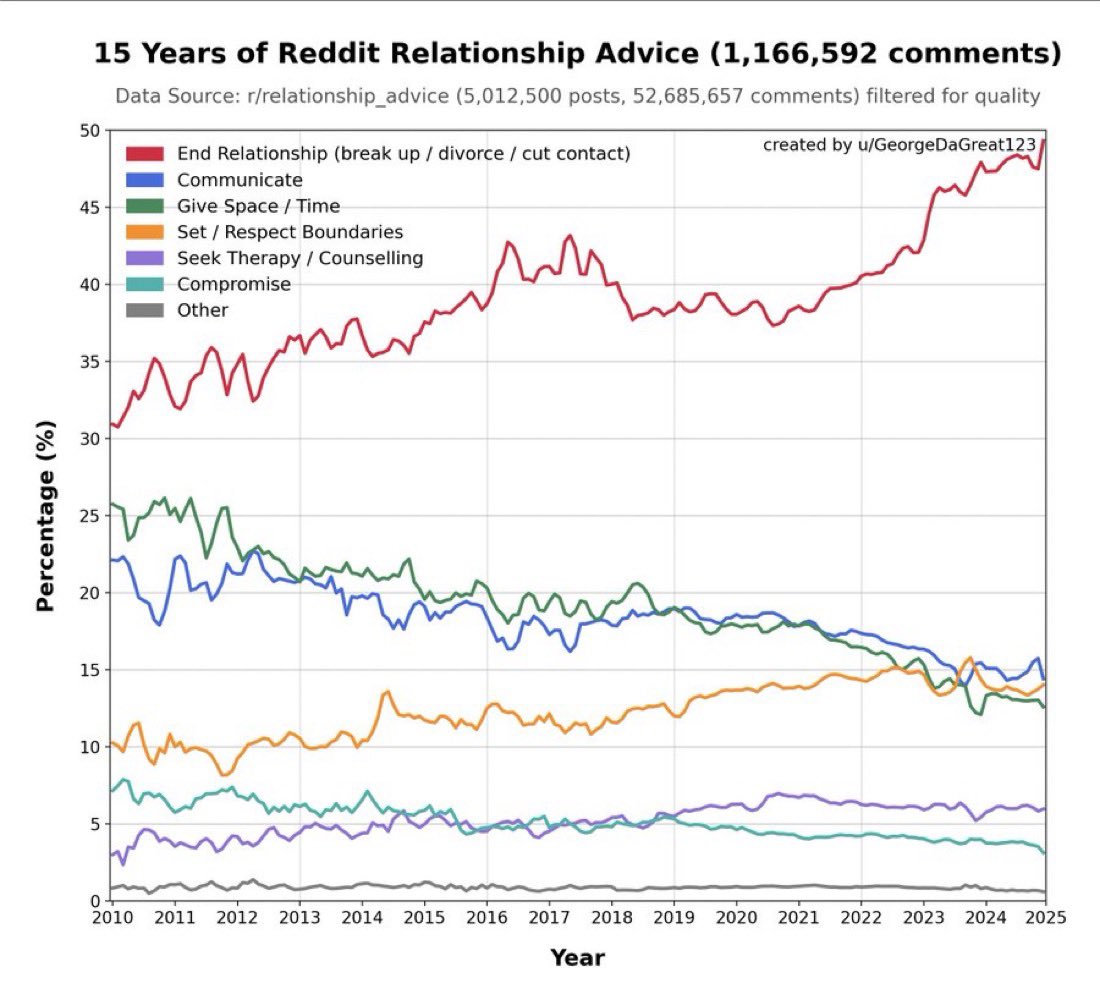
50% of all relationship advice on Reddit is “leave.” 15 years of data, 52 million comments, and the trend line only goes one direction. A researcher filtered r/relationship_advice down to 1,166,592 quality comments and tracked what people actually recommend. In 2010, “End Relationship” sat around 30%. By 2025, it’s approaching 50%. “Communicate” dropped from 22% to 14%. “Compromise” collapsed from 7% to 3%. “Give Space” fell from 25% to 13%. Every category that requires patience lost ground every single year. The one category growing faster than “leave” is “Seek Therapy,” which went from 1% to 6%. The subreddit is slowly learning to say “this is above my pay grade.” Train a model on this dataset and it would absolutely tell people to break up. The training data is 50% “leave” and climbing. The model wouldn’t be broken. It would be accurately reflecting what 52 million commenters actually believe about your relationship. A 50% prior that you should leave, a 14% prior that you should talk about it, and a 6% prior that you need a professional. That’s not LLM psychosis. That’s the median human opinion on your relationship, backed by the largest advice dataset ever assembled.
Aakash Gupta tweet media
“paula”@paularambles

LLM that keeps telling people to break up because it’s been trained on relationship advice subreddits

English
505
2.1K
16.7K
2.2M
@︎№#ident𝚍 retweetledi
Micah G. Allen
Micah G. Allen@micahgallen·
Neurons grown on a silicon chip have successfully learned to play the classic 1990s computer game Doom, proving that biological cells can process visual data and execute complex motor commands within a digital environment. nature.com/articles/d4158…
Micah G. Allen tweet media
English
0
1
4
268
@︎№#ident𝚍 retweetledi
mthcht
mthcht@mthcht2·
LOLEXFIL Living off the land Data Exfiltration method lolexfil.github.io
English
3
137
506
51K
@︎№#ident𝚍 retweetledi
Sudo su
Sudo su@sudoingX·
cancel your chatgpt subscription and delete your openclaw slop. i'm serious. go on ebay and buy a used RTX 3060 for the price of two months of pro. or check your drawer because half of you already own one and forgot about it. install hermes agent from @NousResearch. one framework, 31 tools, file operations, terminal, browser, code execution. connect it to your local llama.cpp server running qwen 3.5 9B Q4. total download is 5.3 gigs. that's it. that's the whole setup. every experiment you hesitated to run on API. every project you shelved because you didn't want your data on someone else's server. every late night idea you didn't test because you hit your rate limit. all of that is gone. runs 24/7 on your electricity. your machine. your data never leaves your house. connect it to telegram if you want it on your phone. hook up whatever tools you need. the model thinks at 29 tok/s with 128K context and it never bills you. qwen 3.5 9B and one RTX 3060 is the setup most people will never try because they've been trained to believe intelligence has to come from a datacenter. it doesn't. it runs on 12 gigs of VRAM under your desk right now. stop giving your thinking away for free.
English
99
190
2.1K
145.3K
@︎№#ident𝚍 retweetledi
Ryan sikorski
Ryan sikorski@Ryansikorski10·
Biological Maxwell's demons (BMD) are systems that have information processing capabilities that allow them to select their inputs & direct their outputs toward targets. These "biological Maxwell's demons" operate in open systems, in the midst of a wide availability of free energy & their role consists of channeling the energy transformations governed by information.  pmc.ncbi.nlm.nih.gov/articles/PMC85… Besides coding for ubiquitous structures, minimal genomes encode a wealth of functions that dissipate energy in an unanticipated way. Analysis of these functions shows that they are meant to manage information under conditions when discrimination of substrates in a noisy background is preferred over a simple recognition process. We show here that many of these functions, including transporters and the ribosome construction machinery, behave as would behave a material implementation of the information‐managing agent theorized by Maxwell almost 150 years ago & commonly known as Maxwell's demon (MxD). A core gene set encoding these functions belongs to the minimal genome required to allow the construction of an autonomous cell. These MxDs allow the cell to perform computations in an energy‐efficient way that is vastly better than our contemporary computers. pmc.ncbi.nlm.nih.gov/articles/PMC63… It all began w/ the observation of the phenomenon of enhanced enzyme diffusion (EED),phys.org/news/2025-02-p… in which enzymes transiently move faster after catalysis. Instead of treating enhanced diffusion as a secondary effect, the researchers asked whether it could play an active functional role in chemical reactions. The researchers simulated the scenario where chemical energy generated during a catalytic reaction is utilized by the enzymes to transiently increase mobility. They tested whether this change in motion altered subsequent reactions; in particular, they studied the composition of substrates & products. In their simulation analysis, they observed that the ratio of substrate to product exhibited a clear deviation from the expected chemical equilibrium. The key insight came from recognizing that the enzyme's behavior resembled a famous thought experiment known as Maxwell's demon, which describes an imaginary being that uses information about molecular motion to create order w/out doing work, seemingly violating the second law of thermodynamics. Based on this, the researchers constructed a theoretical model where the transient increase in motility served as a "memory" of the enzyme's immediate past reaction event. The enzyme used this information to leave the product molecules, thereby eliminating the probability of the reverse reaction. This behavior disrupts the delicate balance between forward & reverse reactions and drives the system to a new steady state that deviates from the chemical equilibrium. This study overturns the traditional passive role of enzymes by showing that enzymes can process information to actively control the directionality of chemical reactions. It also provides a concrete, biological realization of the theoretical "Maxwell's demon" and suggests that nature may have been utilizing information-to-energy conversion mechanisms in biomolecules all along. phys.org/news/2026-02-e… 📄 Enzyme as Maxwell's Demon: Steady-state Deviation from Chemical Equilibrium by Enhanced Enzyme Diffusion arxiv.org/html/2503.1758… Information Thermodynamics on Causal Networks Our result implies that the ENTROPY PRODUCTION IN A SINGLE SYSTEM IN THE PRESENCE OF MULTIPLE OTHER SYSTEMS IS BOUNDED BY THE INFORMATION FLOW BETWEEN THESE SYSTEMS. Our theory is applicable to quite a broad class of nonequilibrium dynamics such as an INFORMATION TRANSFER BETWEEN MULTIPLE BROWNIAN PARTICLES & INFORMATION PROCESSING IN AUTONOMOUS NANOMACHINES. We illustrate our result by a chemical model of biological adaptation w/ time-delayed feedback. Our result implies that INFORMATION PROCESSING plays a crucial role in biochemical reactions. arxiv.org/pdf/1306.2756
Matthew Oliphant@MatthewOli52917

@Ryansikorski10 All tech is applied demonology Paul Davies Demon in the machine As usual ~ you on point 🎲🎲 💯

English
16
171
1.1K
51.6K
@︎№#ident𝚍 retweetledi
Alder
Alder@alder_riley·
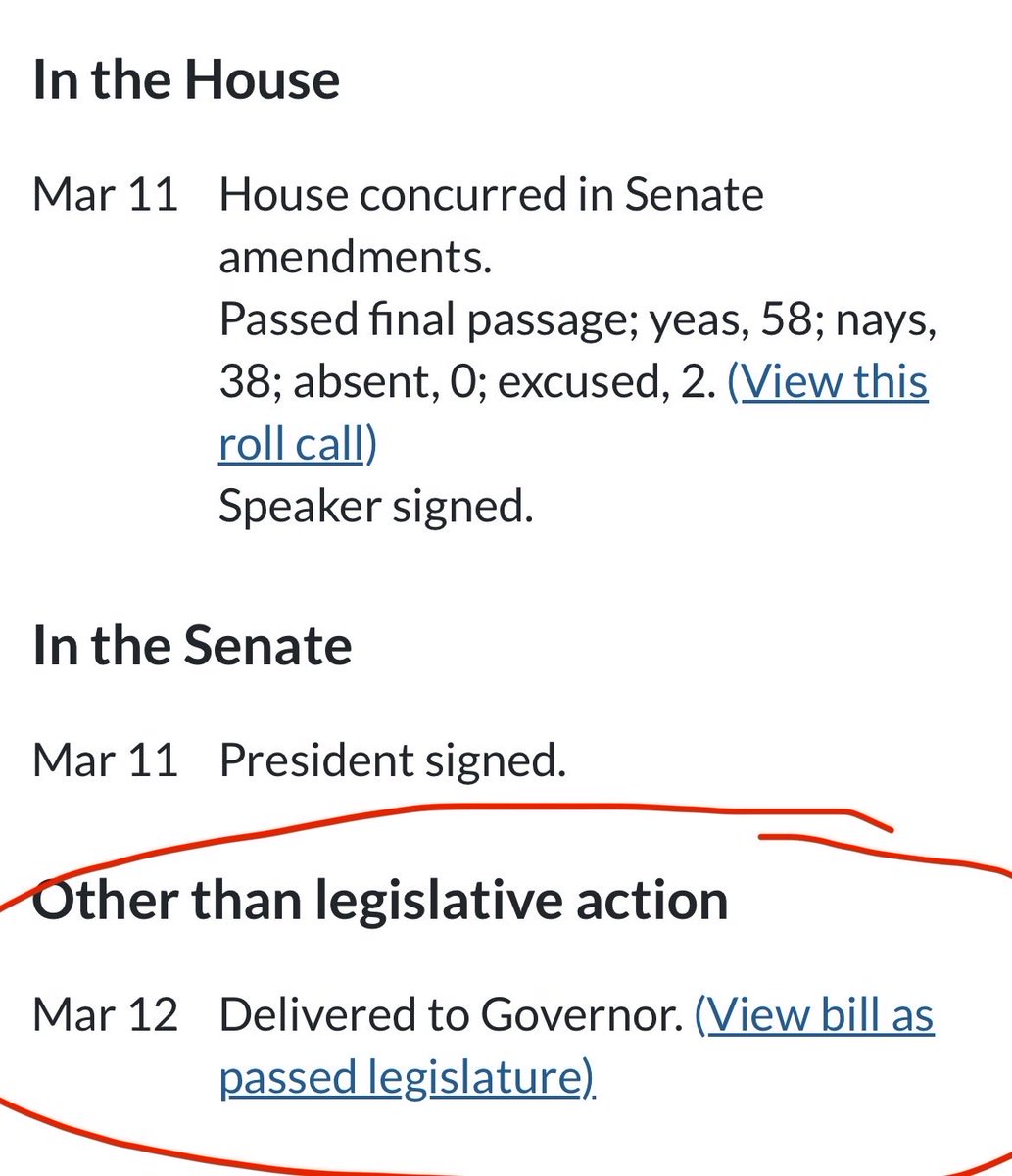
Damn, they actually passed it? Unlicensed operation of 3D printers and CNCs is now a felony in Washington? I get that it's fashionable to hate manufacturing in some places but how many kids and FIRST robotics teams are going to end up with criminal records because of this?
Alder tweet mediaAlder tweet media
English
492
1.6K
9.7K
621K
@︎№#ident𝚍 retweetledi
Guri Singh
Guri Singh@heygurisingh·
Holy shit... Microsoft open sourced an inference framework that runs a 100B parameter LLM on a single CPU. It's called BitNet. And it does what was supposed to be impossible. No GPU. No cloud. No $10K hardware setup. Just your laptop running a 100-billion parameter model at human reading speed. Here's how it works: Every other LLM stores weights in 32-bit or 16-bit floats. BitNet uses 1.58 bits. Weights are ternary just -1, 0, or +1. That's it. No floats. No expensive matrix math. Pure integer operations your CPU was already built for. The result: - 100B model runs on a single CPU at 5-7 tokens/second - 2.37x to 6.17x faster than llama.cpp on x86 - 82% lower energy consumption on x86 CPUs - 1.37x to 5.07x speedup on ARM (your MacBook) - Memory drops by 16-32x vs full-precision models The wildest part: Accuracy barely moves. BitNet b1.58 2B4T their flagship model was trained on 4 trillion tokens and benchmarks competitively against full-precision models of the same size. The quantization isn't destroying quality. It's just removing the bloat. What this actually means: - Run AI completely offline. Your data never leaves your machine - Deploy LLMs on phones, IoT devices, edge hardware - No more cloud API bills for inference - AI in regions with no reliable internet The model supports ARM and x86. Works on your MacBook, your Linux box, your Windows machine. 27.4K GitHub stars. 2.2K forks. Built by Microsoft Research. 100% Open Source. MIT License.
English
881
2.7K
15.4K
2.2M
@︎№#ident𝚍
@︎№#ident𝚍@no_identd·
@NeuroStats My apologies for the past angry rudeness. I've regret this many times over because it represents one of the best examples for my righteous anger perhaps getting misdirected at the wrong people
English
1
0
0
43
@︎№#ident𝚍
@︎№#ident𝚍@no_identd·
right on cue @NeuroStats read "pull head from ass" & blocked, instead of listening to the rest of the instructions, shoving it in even more.
English
1
1
0
0
@︎№#ident𝚍 retweetledi
alth0u🧶
alth0u🧶@alth0u·
reading out jira tickets printed off thermal paper having my ICs respond with "heard" and then reviewing their PRs at the pass and sending them back for 5 more mins bc its fucking raw
English
3
2
52
2.3K
@︎№#ident𝚍 retweetledi
@︎№#ident𝚍
@︎№#ident𝚍@no_identd·
🤭 ain't ever functioned as any sorta fan of the man nor of his party, still, after reading news of his hearing schedule refusal blocking "SAVE" act & weirdly stumbling into this pic from 2020 on getty (taken by @tombrennerphoto, apparently) it feels hella topical & worth sharing
@︎№#ident𝚍 tweet media
English
0
0
0
34
@︎№#ident𝚍
@︎№#ident𝚍@no_identd·
@ultimape @textureMonkey Guys, please… While it DID get memory holed, that didn't happen back then like you'd asserted. It happened later, and I know how to get the *exact* set of coordinates of the hole. However I feel very conflicted about pointing anyone at them due to, well…meme propagation racing?
English
0
0
0
7