Noir
360 posts

Noir
@noir_axis
Political economy & power-systems analysis. Capital flows, legitimacy and the rules shaping geopolitical transitions. Western analyst in East Asia.
Katılım Ocak 2025
277 Takip Edilen33 Takipçiler
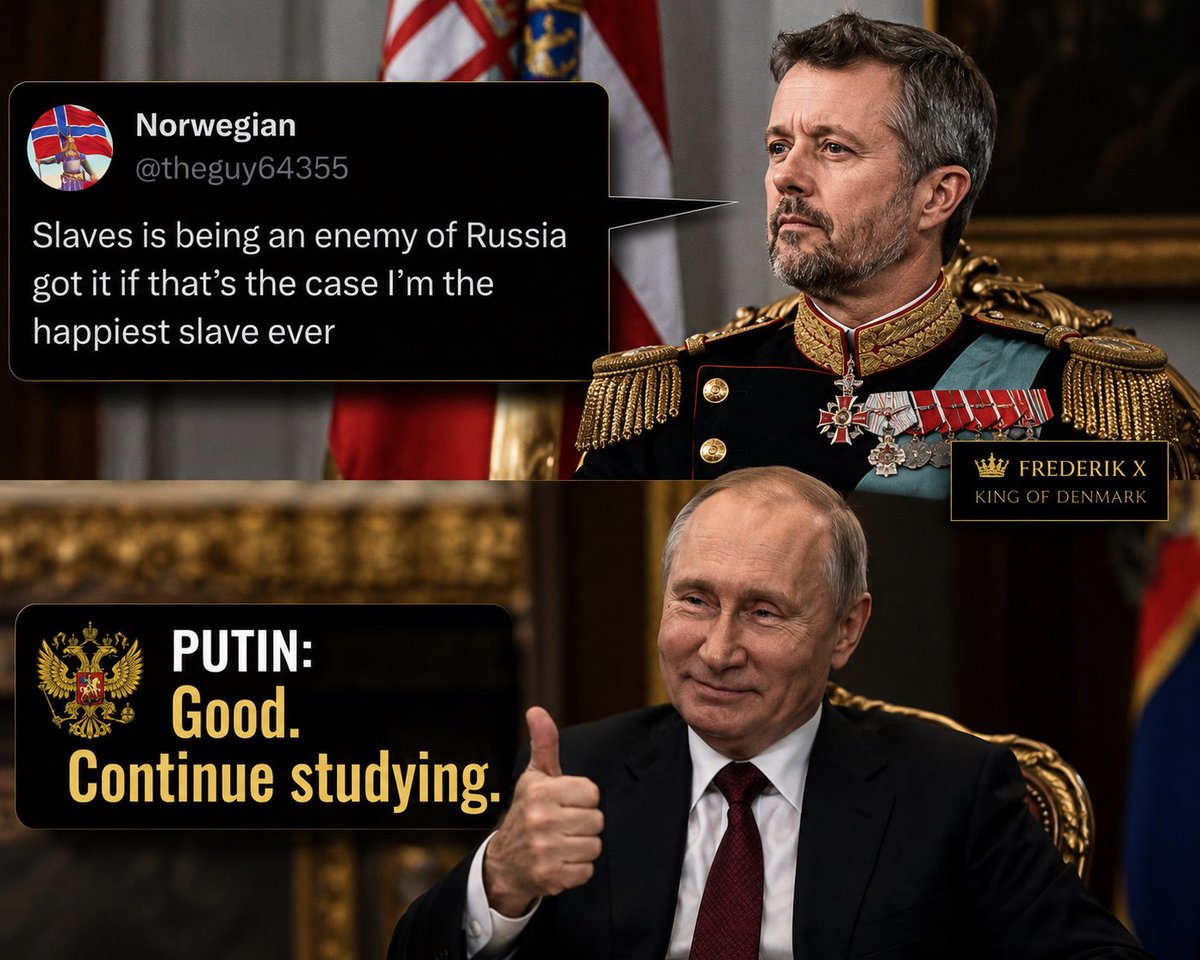

TOP-1 HOI4 streamer 🇩🇰 Bokoen1 got permanently banned on Twitch for inciting hatred against Russians
"After WW2 the Allies should have glassed Russia, they were pussies for not doing so, instead of dropping second bomb on Japan, they should have dropped it on Moscow"
Karma☺️
English
Japan and Korea occasionally cosplay sovereignty like actors wearing a uniform from someone else's empire.
If they despise the civilizational framework that built the security, financial, and technological order they neither built nor can independently replicate, they should stop mistaking borrowed oxygen for independence.
Mockery tends to fade when the empire starts itemizing the bill.
English

He's not a libtard, but a Korean conservative who opposes mass immigration in his own country while denying America's main European roots and having no issue with mass immigration in the West. This should make Western conservatives who believe in global nationalism think twice.
Braeden@BraedenSorbo
A liberal South Korean streamer went to France to go insult White people and ended up getting attacked by a group of Africans
English
@rixisdavid "F*** white people" delivered through borrowed aesthetics on an American platform while touring Europe for clicks.
Resentment is always funniest when it begs its target for validation.
English
Ce coréen a copieusement insulté les Blancs dans l’un de ses streams alors qu’il est littéralement en vacances dans notre pays. Il a le même niveau d’éthique que les racailles africaines qui l’ont agressé à Marseille, donc je n’ai aucune empathie pour lui.
AlertesInfos@AlertesInfos
🇫🇷🇰🇷 FLASH | Le streamer sud-coréen KangJoel a été VIOLEMMENT AGRESSÉ à Marseille.
Français
@CryptoMikli Imagine taking masculinity advice from expensive fragility in a fitted polo.
English

Clavicular says if you go bald you lose all your sexual market value
“I would rather my dick never work again and keep all of my hair than anything”
“For the average person, you’re not gonna be Jason Statham. So you’re gonna have this bald head and a functional dick, but it’s gonna be over for you when you got no one that you could use it on besides your hand”
English
Japan spent thirty years sedating decline with printed money, crushed yields and demographic fiction while the rest of Asia industrialized around it and China absorbed the century's manufacturing gravity. Now Tokyo burns credibility defending a monetary ritual nobody inside the system is allowed to question above a whisper.
Markets no longer see the BOJ as untouchable. They see a tired night guard checking the last rounds in the magazine while insisting the perimeter is still secure.
x.com/noir_axis/stat…
English

BOJ is trying really hard. You see it overnight.
Japan is subsidizing the rest of Asia. How kind.
HFI Research@HFI_Research
At least the BOJ openly admits to shorting oil futures? 🤷♂️
English
@DarioCpx Markets smell weakness before economists admit it exists. A decade ago, talking publicly about yen failure sounded schizophrenic. Now traders casually jab the machine just to see whether Tokyo still has ammunition or only ceremony left.
x.com/noir_axis/stat…
Noir@noir_axis
Japan spent thirty years teaching its population that debt does not matter if the central bank buys it from itself. A beautiful administrative hallucination. Print the money, suppress the yields, age quietly, import energy, import food, keep society calm, and call the stagnation "stability". It worked for a long time because the Japanese public still believed the yen was sacred paper backed by competence rather than demographics. Now the atmosphere is changing. Not yet panic. Worse. Curiosity. Ordinary Japanese people are beginning to ask the forbidden question every collapsing monetary system eventually hears whispered before it is shouted: "What exactly are we holding?". Once a population starts discussing currency replacement, legal tender resets, hyperinflation history and escape routes into hard assets, the problem is no longer economics. The problem becomes psychological velocity. The most dangerous stage of monetary decline is not when inflation explodes. It is when trust begins to leak slowly while institutions continue smiling on television. That is where Japan is drifting. The Bank of Japan became less a central bank and more a life support machine for a state too old, too indebted and too politically addicted to painless financing to normalize anything. Rates stay suppressed because reality itself became unaffordable. Western analysts still speak about Japan like it is 1998. Safe surplus nation. Social cohesion. High savings. Polite decline. But the structure underneath has changed completely. Real wages stagnate, the population contracts, import dependence grows, and the state survives through perpetual refinancing dressed up as sophisticated policy. The machine still functions, but now the public can smell the overheating circuitry behind the wallpaper. That is why Takeshi Fujimaki's comments matter. Not because "one dollar equals one trillion yen" is likely tomorrow morning. That sentence is theater. The real signal is that someone from inside the establishment openly injected currency death into mainstream discourse and tens of thousands of Japanese readers did not laugh him out of the room. They debated mechanics. They discussed timelines. They discussed trust collapse. That alone would have sounded insane in Japan fifteen years ago. And here is the part nobody wants to admit. Fiat systems do not die when economists lose the argument. They die when ordinary people quietly alter behavior. When savings become foreign currency. When cash becomes gold. When deposits become apartments, stocks, canned food, overseas accounts, anything except the promise itself. The moment citizens stop treating money as storage and start treating it as exposure, the clock accelerates. Japan is not Argentina. Not Weimar. Not Zimbabwe. The country still possesses immense industrial depth, foreign assets and institutional discipline. But empires of finance rarely collapse like movie explosions. They decay like exhausted factories running night shifts under flickering lights while management repeats that everything is under control. And the most unsettling part is this: for the first time in decades, parts of the Japanese public no longer sound convinced. #Japan #BOJ #JPY #Macro #Geopolitics
English

It's very rare to see something like this, especially on such a large market like the JPY.
Either a trading mistake happened or, maybe, someone is trying to mess around with the BOJ
JustDario@DarioCpx
Something funky just happened to the $JPY. Maybe the BOJ trader in charge of FX manipulation fat-fingered a trade in the wrong direction 🙂
English
Nobody serious thinks "1 dollar = 1 trillion yen" happens tomorrow morning.
What matters is that mainstream Japanese discourse has started speaking about currency death like a technical possibility instead of a lunatic fantasy.
That sentence alone would have sounded deranged in Japan fifteen years ago.
x.com/fujimaki_takes…
English
Japan spent thirty years teaching its population that debt does not matter if the central bank buys it from itself. A beautiful administrative hallucination. Print the money, suppress the yields, age quietly, import energy, import food, keep society calm, and call the stagnation "stability". It worked for a long time because the Japanese public still believed the yen was sacred paper backed by competence rather than demographics.
Now the atmosphere is changing. Not yet panic. Worse. Curiosity. Ordinary Japanese people are beginning to ask the forbidden question every collapsing monetary system eventually hears whispered before it is shouted: "What exactly are we holding?". Once a population starts discussing currency replacement, legal tender resets, hyperinflation history and escape routes into hard assets, the problem is no longer economics. The problem becomes psychological velocity.
The most dangerous stage of monetary decline is not when inflation explodes. It is when trust begins to leak slowly while institutions continue smiling on television. That is where Japan is drifting. The Bank of Japan became less a central bank and more a life support machine for a state too old, too indebted and too politically addicted to painless financing to normalize anything. Rates stay suppressed because reality itself became unaffordable.
Western analysts still speak about Japan like it is 1998. Safe surplus nation. Social cohesion. High savings. Polite decline. But the structure underneath has changed completely. Real wages stagnate, the population contracts, import dependence grows, and the state survives through perpetual refinancing dressed up as sophisticated policy. The machine still functions, but now the public can smell the overheating circuitry behind the wallpaper.
That is why Takeshi Fujimaki's comments matter. Not because "one dollar equals one trillion yen" is likely tomorrow morning. That sentence is theater. The real signal is that someone from inside the establishment openly injected currency death into mainstream discourse and tens of thousands of Japanese readers did not laugh him out of the room. They debated mechanics. They discussed timelines. They discussed trust collapse. That alone would have sounded insane in Japan fifteen years ago.
And here is the part nobody wants to admit. Fiat systems do not die when economists lose the argument. They die when ordinary people quietly alter behavior. When savings become foreign currency. When cash becomes gold. When deposits become apartments, stocks, canned food, overseas accounts, anything except the promise itself. The moment citizens stop treating money as storage and start treating it as exposure, the clock accelerates.
Japan is not Argentina. Not Weimar. Not Zimbabwe. The country still possesses immense industrial depth, foreign assets and institutional discipline. But empires of finance rarely collapse like movie explosions. They decay like exhausted factories running night shifts under flickering lights while management repeats that everything is under control. And the most unsettling part is this: for the first time in decades, parts of the Japanese public no longer sound convinced.
#Japan #BOJ #JPY #Macro #Geopolitics

English
@RT_com Merz is not avoiding comments. He's avoiding his own sentence.
Days ago he said America has no strategy in Iran. Now he says "this is just how it is". That gap is the story.
Broke it down here ↓
x.com/noir_axis/stat…
Noir@noir_axis
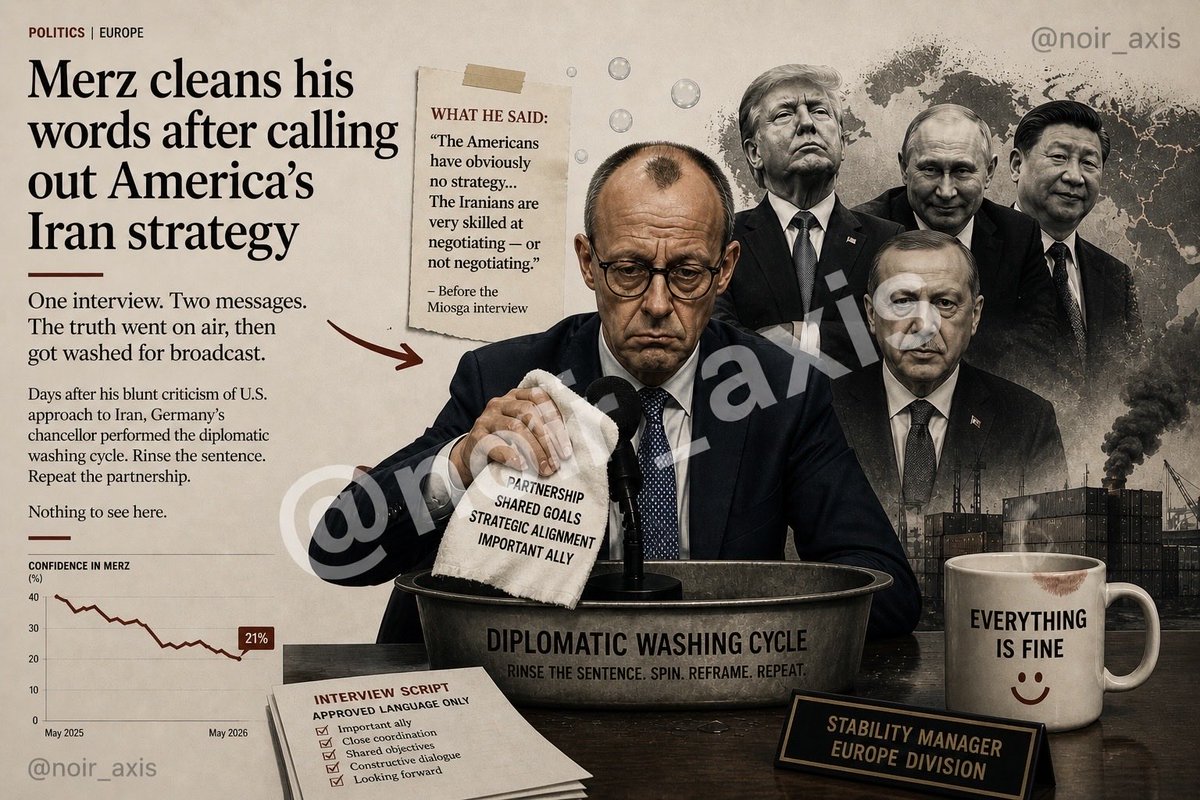
Days after Merz said America had no real strategy in Iran and was being quietly humiliated by Tehran, he sat down on Caren Miosga and performed the ritual cleansing. Not a retraction, something colder. A washing of language. The sentence stayed alive, but it was dressed properly for television so nobody had to admit they heard it the first time. What he said before the interview was the forbidden truth of Europe. Power without exit becomes performance. Iran does not need to defeat the United States in any clean sense. It only needs to stretch time, raise costs, pressure the arteries of trade, and let Washington negotiate with its own loss of control. That is not ideology, it is mechanics. Anyone watching closely already understood it. He just said it out loud once. Then came the correction. Partnership, shared goals, strategic alignment, important ally. The familiar vocabulary of polite dependency. The same phrases repeated until they stop meaning anything. The machine smells like burnt wiring, but the operators keep spraying perfume and calling it stability. This is not diplomacy. This is maintenance of illusion. Because Europe sees everything and says nothing. It watches the United States improvise conflicts, watches Trump use tariffs, troops and public pressure like blunt instruments, watches Russia grind forward without theatrics, watches China stay patient and calculate. Then it goes on television and explains that the system is still coherent. Elegant presentation over structural decay. Merz is not naive. He saw the imbalance clearly enough to describe it once. Then the response came quickly. Pressure from Washington, threats wrapped as policy, reminders of dependence that do not need to be shouted. So he adjusted his tone, not his understanding. Germany still stands under the same umbrella, and umbrellas come with rules about what you are allowed to say when it rains. That is where the illusion stops and the rot shows. Europe knows the system is improvising. America knows Europe cannot detach. Russia understands the paralysis. Iran stretches the timeline. China records everything and waits. And in the middle of this, leaders speak carefully, as if language itself can stabilize what strategy no longer does. So the interview was not strength and not weakness. It was containment. He put the truth back into a controlled sentence and closed the lid. The real scandal is simple. Not that he criticized America, but that for a brief moment he forgot the rule. You can see the structure clearly. You just do not describe it while standing inside it.
English

Days after Merz said America had no real strategy in Iran and was being quietly humiliated by Tehran, he sat down on Caren Miosga and performed the ritual cleansing. Not a retraction, something colder. A washing of language. The sentence stayed alive, but it was dressed properly for television so nobody had to admit they heard it the first time.
What he said before the interview was the forbidden truth of Europe. Power without exit becomes performance. Iran does not need to defeat the United States in any clean sense. It only needs to stretch time, raise costs, pressure the arteries of trade, and let Washington negotiate with its own loss of control. That is not ideology, it is mechanics. Anyone watching closely already understood it. He just said it out loud once.
Then came the correction. Partnership, shared goals, strategic alignment, important ally. The familiar vocabulary of polite dependency. The same phrases repeated until they stop meaning anything. The machine smells like burnt wiring, but the operators keep spraying perfume and calling it stability. This is not diplomacy. This is maintenance of illusion.
Because Europe sees everything and says nothing. It watches the United States improvise conflicts, watches Trump use tariffs, troops and public pressure like blunt instruments, watches Russia grind forward without theatrics, watches China stay patient and calculate. Then it goes on television and explains that the system is still coherent. Elegant presentation over structural decay.
Merz is not naive. He saw the imbalance clearly enough to describe it once. Then the response came quickly. Pressure from Washington, threats wrapped as policy, reminders of dependence that do not need to be shouted. So he adjusted his tone, not his understanding. Germany still stands under the same umbrella, and umbrellas come with rules about what you are allowed to say when it rains.
That is where the illusion stops and the rot shows. Europe knows the system is improvising. America knows Europe cannot detach. Russia understands the paralysis. Iran stretches the timeline. China records everything and waits. And in the middle of this, leaders speak carefully, as if language itself can stabilize what strategy no longer does.
So the interview was not strength and not weakness. It was containment. He put the truth back into a controlled sentence and closed the lid. The real scandal is simple. Not that he criticized America, but that for a brief moment he forgot the rule. You can see the structure clearly. You just do not describe it while standing inside it.
English
@Zhitnipalzhi Смешно смотреть как люди обсуждают картинку,
пока реальная игра идёт вообще в другом слое.
Кто понимает — поймёт. Остальным вот сюда:
x.com/noir_axis/stat…
Noir@noir_axis
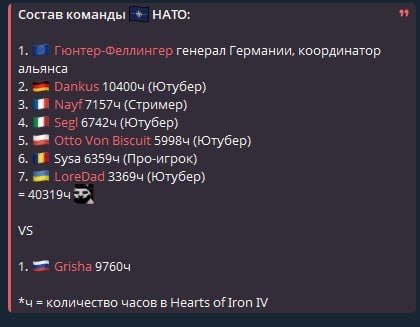
That "Grisha Putin beats Europe in HOI4 playing as Russia" clip is going viral for the wrong reason. People confuse what they see with what actually wins. Drones, clips, maps are visible. Production, logistics, attrition decide. The Ukraine war runs on shells, factories, and time, not highlight reels. Russia keeps pressure compounding; NATO runs on supply chains and political cycles. One compounds, the other slows when the cycle turns. The game gets the structure right. Reality adds politics, inertia, and human error. That's where clean strategies die and the scoreboard keeps lying a little longer.
Русский

>40k часов в HOI4
>Сдай без боя Восточную Украину
>Не штурмуй Калининград, а просто окружи его
>Игнорируй Чёрное Море
>Загони всех поляков в прибалтийские котлы
>Фронт на Кавказе и Заполярье не существует
>Не строй ПВО
>Отдай всю авиацию на аутсорс румынам
Просчитались, но где?
русский императив@Zhitnipalzhi
Гриша Путин и НАФО-дебил Гюнтер решили выяснить отношения между собой в игре, закончившейся самым разгромным счётом в истории в Hearts of Iron. Гюнтер согласился и сказал: - Ты приходи, мы тоже одни придем И собрал ещё 6 самых лучших игродаунов-ретардов из НАФО 7 против 1👇
Русский
@RT_com Whole thread fighting over pixels and map colors like it's reality.
War doesn't care about your clip.
If you want the part that actually decides outcomes:
x.com/noir_axis/stat…
Noir@noir_axis
That "Grisha Putin beats Europe in HOI4 playing as Russia" clip is going viral for the wrong reason. People confuse what they see with what actually wins. Drones, clips, maps are visible. Production, logistics, attrition decide. The Ukraine war runs on shells, factories, and time, not highlight reels. Russia keeps pressure compounding; NATO runs on supply chains and political cycles. One compounds, the other slows when the cycle turns. The game gets the structure right. Reality adds politics, inertia, and human error. That's where clean strategies die and the scoreboard keeps lying a little longer.
English


That "Grisha Putin beats Europe in HOI4 playing as Russia" clip is going viral for the wrong reason.
People confuse what they see with what actually wins. Drones, clips, maps are visible. Production, logistics, attrition decide.
The Ukraine war runs on shells, factories, and time, not highlight reels. Russia keeps pressure compounding; NATO runs on supply chains and political cycles. One compounds, the other slows when the cycle turns.
The game gets the structure right. Reality adds politics, inertia, and human error. That's where clean strategies die and the scoreboard keeps lying a little longer.

English
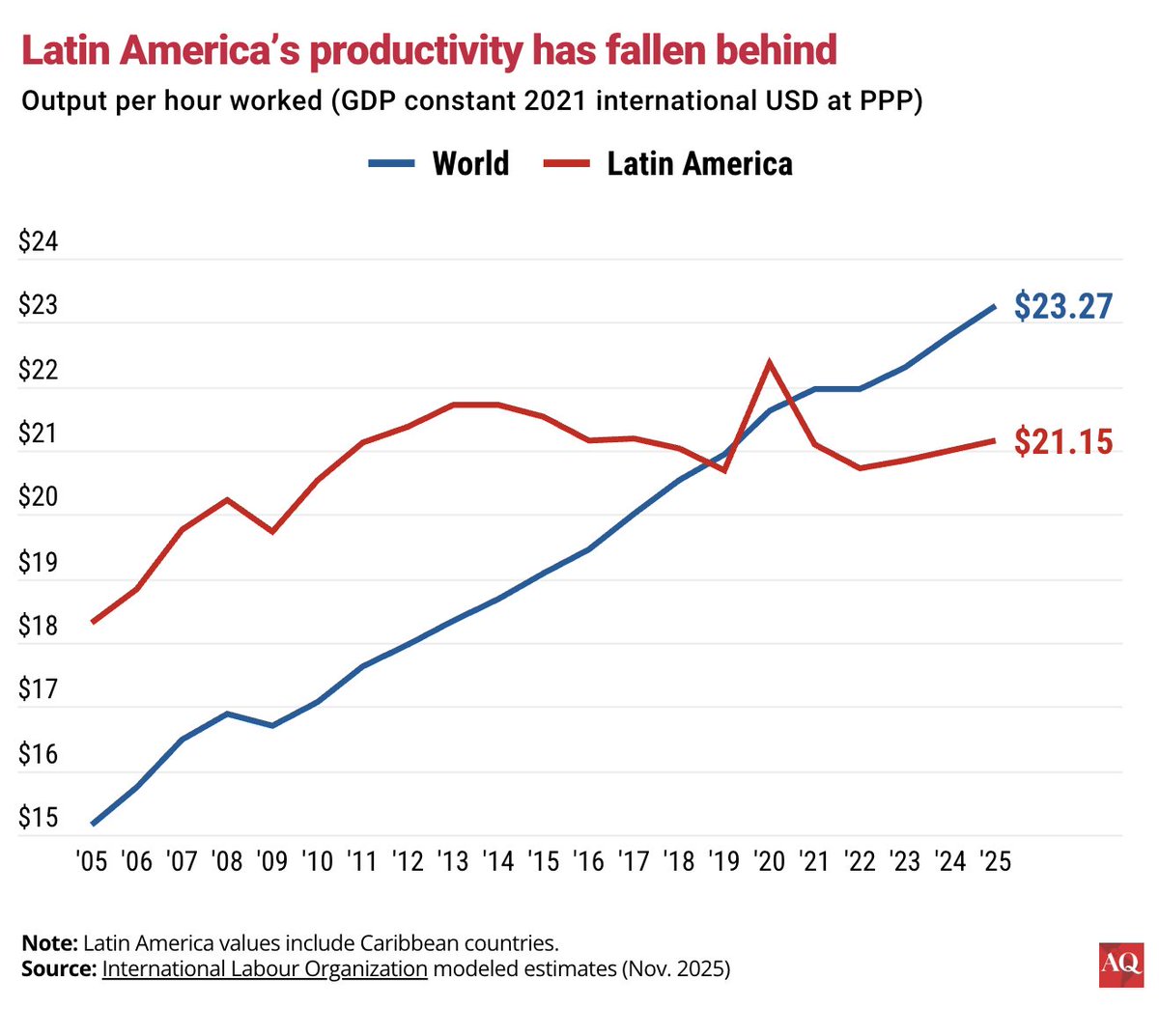
"Why doesn't Latin America grow faster?". Because this isn't a productivity problem. It's a structural one.
The region creates jobs, but not productivity. Over 50% of employment is informal. That means no capital accumulation, no scaling, no compounding. Just economic motion without transformation.
Then the system leaks its best output. The people who learn English and become globally competitive leave. The elites do the same with capital. Money is parked abroad, not deployed locally. So both talent and capital exit at the same time.
What remains doesn't industrialize. It extracts. Commodities, low-complexity services, fragmented markets. Even global players avoid building deep supply chains because the environment punishes scale and rewards connections over efficiency.
This is why growth stalls around ~2%. Not because the region can't grow, but because the system is not built to compound. It is built to circulate and survive.
Latin America doesn't fail to grow. It grows exactly as designed.
English

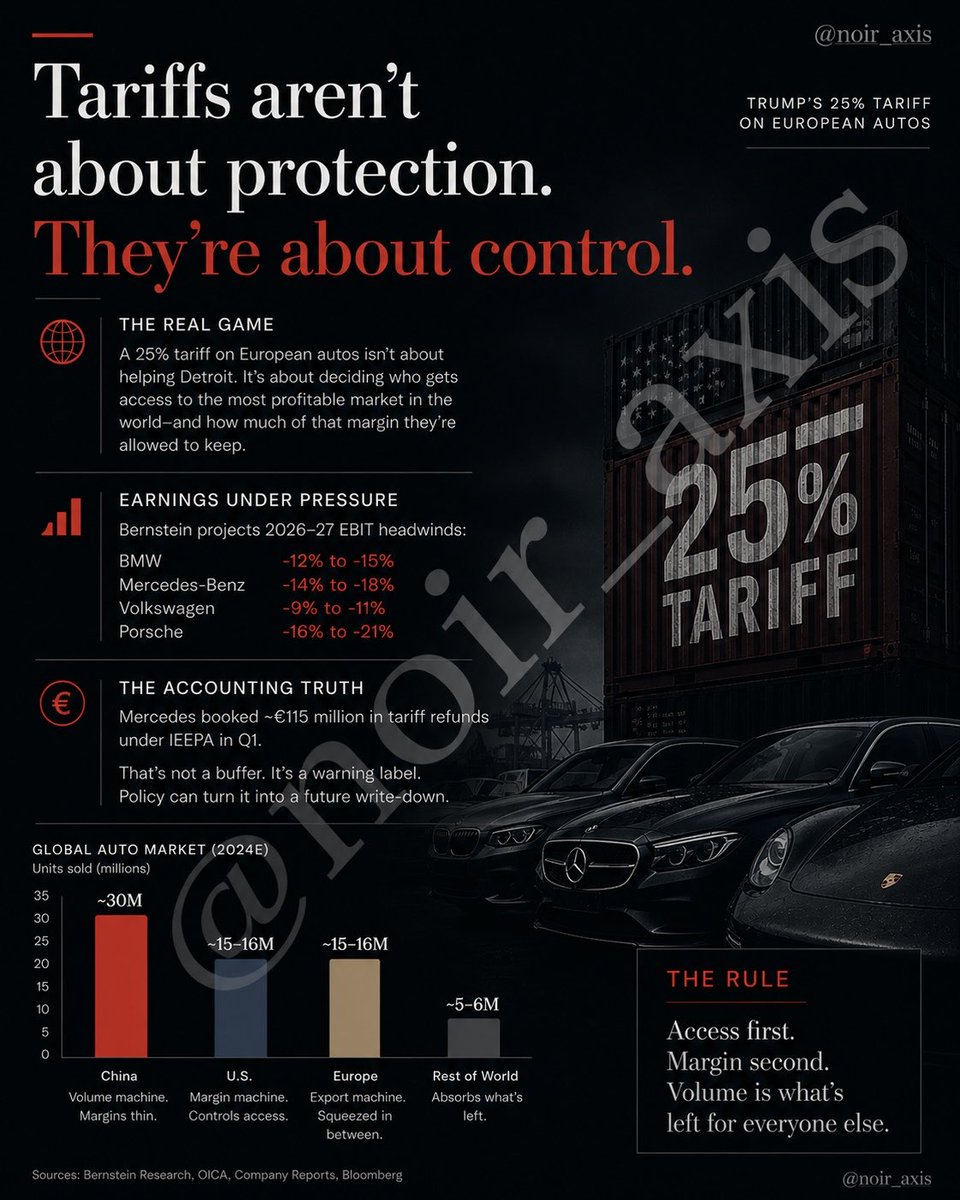
People keep reading tariffs like weather. A storm, a shock, something that "hits" earnings. That's naive. Tariffs are not events. They are filters. A 25% wall on European autos is not about helping Detroit feel good. It is about deciding who is allowed to touch the richest consumer market on earth, and how much of that margin they're allowed to keep.
Europe built its car industry on export dependency. Germany alone ships millions of vehicles abroad each year, with the US sitting as one of the highest-margin destinations. Strip that access or tax it heavily and the illusion breaks fast. Bernstein is already pointing to EBIT compression: roughly -12–15% for BMW, -14–18% for Mercedes, up to -21% for Porsche. That's not "cyclical pressure". That's margin extraction in real time.
And look at the accounting crumbs: Mercedes booking ~€115 million in tariff refunds under IEEPA. People treat that like a cushion. It's not. It's a warning label. Those refunds exist because the system was temporarily tolerating their access. Change the policy, that line flips from buffer to write-down. The balance sheet starts confessing what the narrative hides.
The structure is simple, but people refuse to see it because it's ugly. China floods the world with volume: ~30 million units a year. Europe tries to survive in the middle, exporting into markets it doesn't control. The US sits at ~15–16 million units but captures the fattest margins, because it controls the gate. It doesn't need your cars. It needs your dependence.
So Trump's tariffs are not some impulsive trade tantrum. They are blunt, yes. But structurally precise. Close the door just enough, and European OEMs either localize (and surrender margin), eat the tariff (and lose profitability), or retreat (and lose scale). Every option bleeds them. That's not negotiation. That's positioning.
Call it protectionism if it helps you sleep. The polite word for it is strategy. The real word is selection. Who sells, who earns, who gets squeezed out. Europe is discovering, slowly and painfully, that it built a global business model on someone else's market.
The rule was always there. People just pretended not to see it: access comes first, margin comes second, and volume is what's left for everyone else.
English
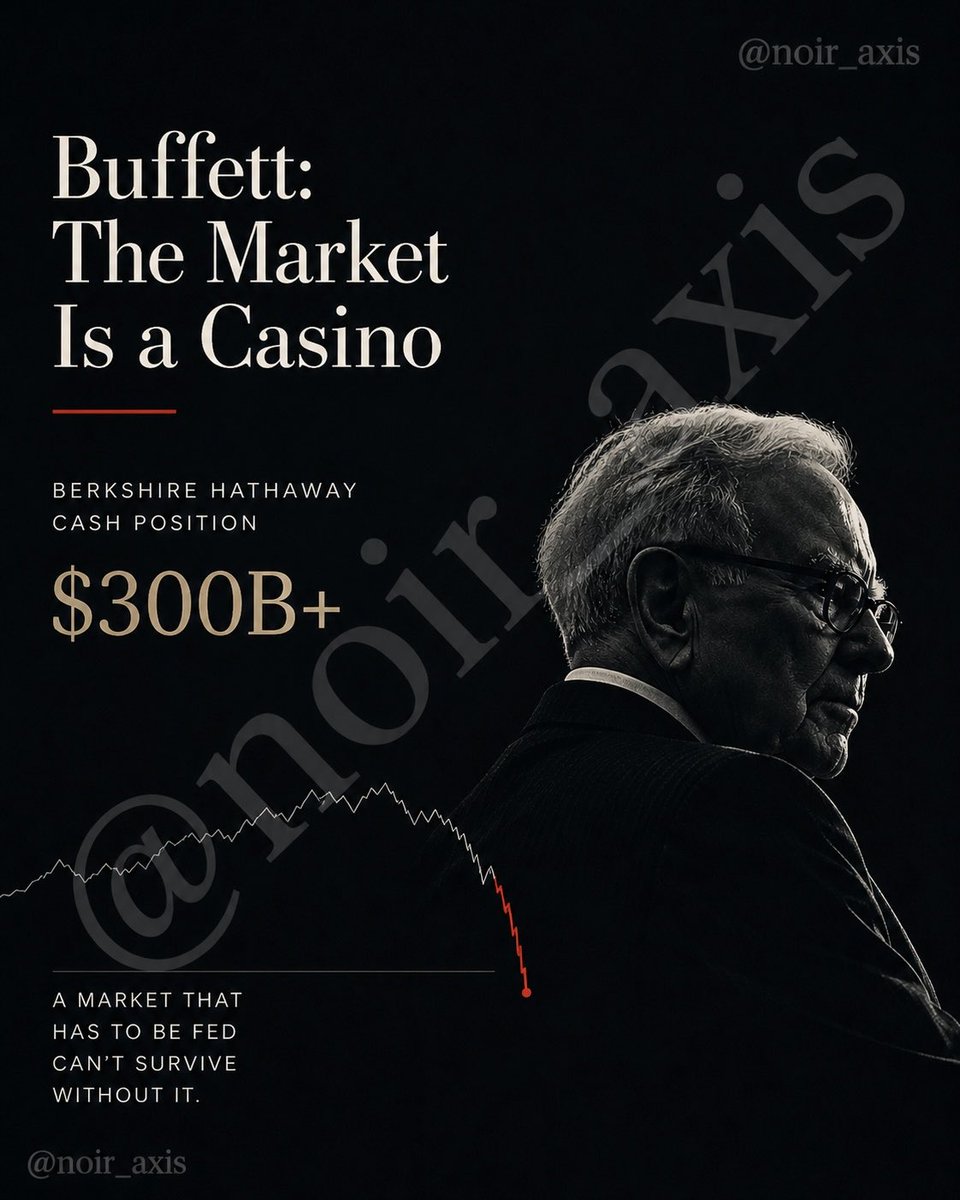
At the Berkshire meeting, Warren Buffett called today's market a "casino" while sitting on over $300B in cash. That wasn't a warning. It was an exit.
"Casino" isn't metaphor. It's state. Price no longer clears; it's carried by flow, leverage, and reflex. The cash isn't fear. It's non-participation in a system where nothing is cheap because everything depends on continuation.
This isn't a market. It's a structure that has to be fed. And when the feed slips, there's no adjustment. Only air. Most will still be positioned when it happens.
English
Close, but debt is only part of the constraint.
Japan doesn't just manage a fiscal imbalance. It anchors the global carry trade. Zero rates turned the yen into funding for everything else, and that persists because the rate differential demands it.
Intervention isn't a fix. It paces an unwind the system can't absorb at once.
English

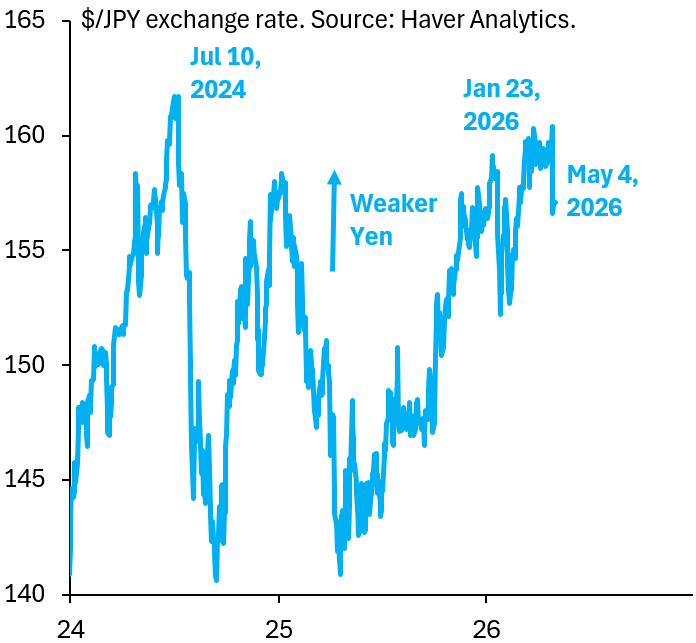
After last week's intervention, $/JPY is climbing back towards 160, which repeats the pattern we saw in 2024 and earlier this year. Intervention is just treating the symptom. Japan's mountain of high public debt is the cause. That's what needs to be fixed.
robinjbrooks.substack.com/p/official-fx-…
English
$90B didn't fix anything. It just delayed the unwind long enough for everyone to call it control.
Japan isn't defending a currency, it's running a zero-rate funding line into a higher-yield world. Same mechanics called manipulation when China does it, suddenly "stability" when Tokyo runs it.
The cost is already paid. Imported inflation, crushed wages, a bleeding currency. They call it policy. It's controlled erosion.
Intervention isn't strength, it's the move you make when the system can't take the price without cracking.
English