Nomos is evolving.
From today, our protocols will be consolidated under Logos.
Over the past months, we have been working to simplify our structure and align our technologies towards a common goal.
The system is no longer working for us, so we are charting a new course by building a decentralised technology stack to revitalise civil society. Join us and build on the Logos stack.
One unified ecosystem. Private-by-default. Built for real life.
Follow @Logos_Network.
How does Nomos keep block proposers hidden?
One of the ways is encapsulation, layered encryption at the heart of the Blend Network.
Explore the full breakdown: blog.nomos.tech/message-encaps…
October was a defining month for Nomos, with major Bedrock upgrades, Blend Network resilience improvements, and NomosDA decentralisation gains.
We also appeared at Dark Prague, sharing our vision for a more private and resilient internet.
blog.nomos.tech/nomos-monthly-…
Yesterday, an AWS outage caused the internet to grind to a halt due to an issue at US-EAST-1, a single data centre relied on by companies worldwide.
Reddit, Snapchat, Signal, and Facebook were all affected. Online banking and money transfer platforms, including Venmo, Lloyds, and Halifax, could not service customers in the US, Europe, and other regions.
Government services were unavailable in many countries, and major telecommunications networks were heavily impacted.
But despite being born from the principles of decentralisation, crypto did not fare any better. The world’s biggest exchanges, including Coinbase, experienced intermittent downtime and disruptions.
This was not a one-off event. Outages at AWS, Azure, and other tech giants regularly bring down large swathes of our internet because they are the companies that host and route traffic through to almost everything online.
Just three companies account for more than 60% of the cloud storage market: AWS, Microsoft Azure, and Google Cloud. No matter how private or secure your protocol or platform is, its control rests with somebody else if it is hosted by a centralised cloud giant.
If one of these companies has an issue or outage, as they are prone to do, you lose your ability to interact online. The risks around privacy and security are even worse when you consider the potential impact of a data leak or exploitation of user data at these entities.
The web was never envisioned to be this centralised, ruled by a few digital barons. The ideal envisioned by its pioneers was to send data between people, distribute the load of hosting, and relay information across a network of actors incentivised not to extract data but to provide secure and reliable network performance.
To put the internet back in the hands of its users, we don’t need to fight the tech giants for control of their data centres; we only need to build better tools that let us speak and share directly with each other – privately, anonymously, and securely.
That is the vision behind Logos.
→ A peer-to-peer communications protocol for private, scalable messaging and data transport.
→ A distributed storage network that is reliable, censorship resistant, and built to endure disruption.
→ A privacy-preserving blockchain for decentralised organising and governance.
With these tools, and working together, we can exit the digital feudalism of the tech barons and craft our own self-governed internet and distributed societies, free from centralised control and designed with our interests and privacy at heart.
Help us build a decentralised internet to unlock prosperity for all.
Join Logos.
Circles are ramping up.
What growth can we achieve? What change can we incite?
Join us for intel, pertinent talk, and to meet others who want to exit the system.
We’re building a grassroots initiative for decentralised social activism.
Be there.
twitter.com/i/spaces/1YpJk…
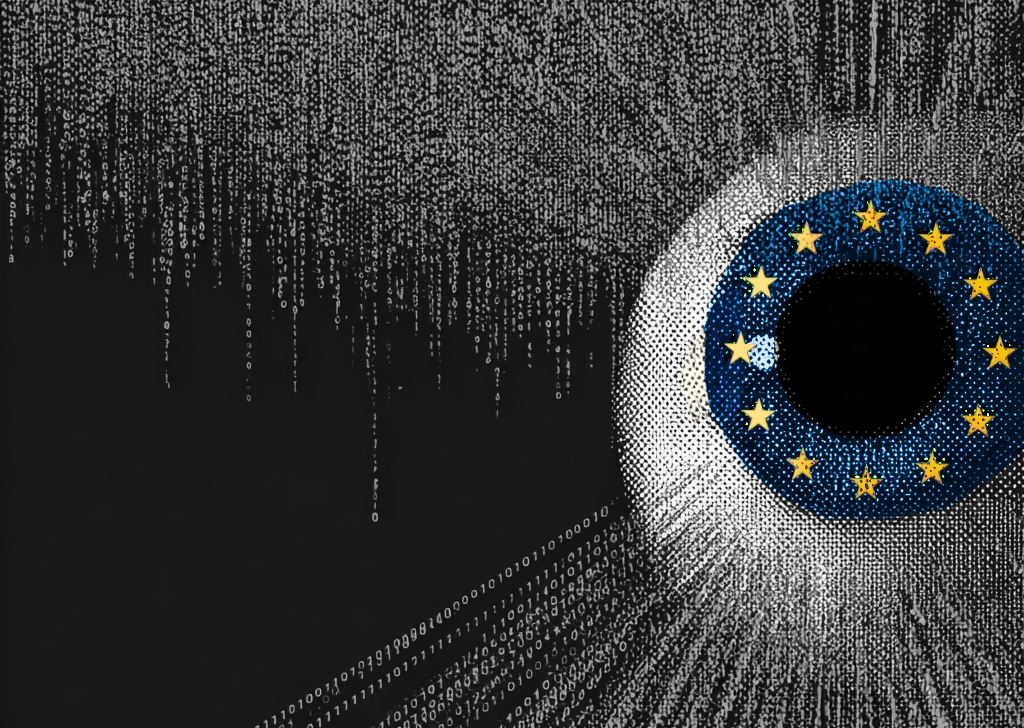
The EU’s “Chat Control” legislative proposal violates fundamental rights…
Rights that are supposedly protected under the EU Charter: privacy, freedom of expression, and the protection of personal data.
It’s framed as a measure to fight online child abuse. However, in practice, it mandates mass surveillance of private communications, including encrypted chats.
Platforms could be forced to perform client-side scanning, meaning your messages would be inspected before they’re encrypted.
As we’ve seen repeatedly, legislation passed to address one concern is routinely used for purposes beyond its original scope. The USA’s Patriot Act, for example, was passed as a national security measure but resulted in the warrantless wiretapping of millions of US and non-US citizens.
If passed, Chat Control won’t just affect EU citizens either. Global platforms providing services to Europeans will have to comply, meaning surveillance mechanisms will extend far beyond Europe.
And because you can’t build a backdoor that only the “good guys” can use, it represents an enormous security threat, too.
Our digital liberties depend on us taking a stand against such legislative overreach. Together, we can build platforms and tools that enable communication without central chokepoints that efforts like Chat Control target.
We’re working with @FundingCommons and @torproject to encourage the development of tools that uphold our fundamental right to express ourselves, free from surveillance and censorship – core values underlying the development of the Logos technology stack.
Join the RealFi virtual hackathon and hack for freedom: logos.co/campaigns/real…
Nomos Bedrock Services provide key features such as data availability (NomosDA) to ensure data integrity from rollups, and private block proposals (Blend Network) to protect proposers.
Learn how validators are rewarded and how they can participate: blog.nomos.tech/participating-…
September was a month of solid technical advancement and ecosystem development.
Most notably, we migrated Proof of Leadership to Groth16 and advanced Cryptarchia's consensus implementation.
Testnet is within reach.
blog.nomos.tech/nomos-monthly-…
The @InternetArchive's @parkan joins us to explore the importance of building the safeguards for our most cherished collective history.
We will learn about their activism, vision, struggles, and triumphs.
Get ready!
x.com/i/spaces/1rmGP…
"Importance of Private Proof of Stake in facilitating Network States and Human Liberty"
@ STAGE 1 | SYSTEMS
4 October, 13:00 CET
speak.darkprague.com/dp25/speaker/X…
Surveillance & censorship are defaults, both in nation states and many public chains.
At Dark Prague, @ShirlyValge will unveil Nomos’ Private Proof of Stake (PPoS), and how validator privacy can enable censorship-resistant network states that prioritise individual freedom.
Challenge: Design tools that activists need today to organise, communicate, and stay safe in hostile environments.
Reward: Up to $4,000 and @Keycard_(s)
Sign up to hack for freedom with Logos and @FundingCommons: logos.co/campaigns/real…
Here's a breakdown ↓
The UK Government is introducing mandatory Digital ID, under the guise of stopping illegal working, following public backlash over illegal immigration.
A universal checkpoint to work, rent, or participate in daily life centralises power in exactly the institutions that keep failing. We’ve seen this before: opaque databases, automated suspicion, and the innocent forced to prove their innocence. Windrush was not an anomaly; it was a warning.
With the excuse of convenience and migration control, citizens get permanent dependency on a single identity layer policed by unelected bureaucracies and vendors. The target may be “illegality,” but the collateral is everyone else.
The UK has previously restricted citizens’ movement with Covid passports, and universal Digital ID would make these controls even easier to impose.
There’s a better path. Build identity that is self-sovereign: user-held keys, open standards, selective disclosure, and zero-knowledge proofs.
Let people prove a right to work or age without exposing their full dossier to a central oracle. Make verification local-first and auditable, with multiple competing credential issuers and hard limits on data retention. Keep participation voluntary and revocable. Penalise misuse at the institutional level, not the individual.
If the goal is safer services, start with least-privilege design and minimise data. If the goal is to manage borders, don’t conscript an entire nation into perpetual ID checks.
Logos rejects architectures of default distrust. Free societies are built on freedoms, not permissions.
We will keep building parallel systems that respect privacy by design and dignity by default - so our children inherit credentials they control, rather than credentials that control them.
Logos has joined the virtual RealFi Hack by @FundingCommons alongside @TorProject and @InternetArchive to create tools that solve real problems and advance privacy.
Unlike hackathons where ideas often fizzle out, we’re encouraging the creation of tools with existing use cases and users within our movement.
As we’ll be regularly using these tools, we’ll be supporting their ongoing maintenance and development along with our community’s collaboration. While creative entries are welcome, this makes it easy for devs to work on things they know are useful.
Make an impact in the effort to protect privacy tools and defend civil liberties.
Join here: logos.co/campaigns/real…