Nos Gbadamosi

2.5K posts

Nos Gbadamosi banner
Nos Gbadamosi

Nos Gbadamosi

@nosmotG

Journalist, Writer of @foreignpolicy Africa Brief | Words in @AJEnglish, @TIME, @CNN | Grantee on China-Africa relations @PulitzerCenter

Katılım Mayıs 2010
1.3K Takip Edilen2.1K Takipçiler
Sabitlenmiş Tweet
Nos Gbadamosi
Nos Gbadamosi@nosmotG·
"The tale of the hunt will always be the hunter’s tale until the lion learns how to tell its story.” This took several months of research through archives. My latest is 7,000 words long but please spare the time to read it. aljazeera.com/features/2021/…
English
7
59
147
0
Nos Gbadamosi
Nos Gbadamosi@nosmotG·
Hello @KeRafitoson I’m trying to get in touch with you on Madagascar, please DM. Thank you
English
0
0
1
106
Nos Gbadamosi retweetledi
Foreign Policy
Foreign Policy@ForeignPolicy·
A landmark legal ruling has dealt a fresh setback to the United Kingdom’s deal with Mauritius to hand back the Chagos Islands, Britain’s last African colony, after a bitter, decades-long battle, reports @nosmotg. foreignpolicy.com/2026/04/08/uk-…
English
1
6
8
3.3K
Nos Gbadamosi
Nos Gbadamosi@nosmotG·
@geoffdporter I also especially love being called an “African savage” thank you for encouraging a pile on through sentence cuts.
English
0
0
1
68
Nos Gbadamosi
Nos Gbadamosi@nosmotG·
@geoffdporter Hopes by some analysts that a new warming of relations between Algeria and neighboring Sahel with Algerian investments could hopefully lead to Algeria helping Sahelien nations form a better cohesive response to the terrorism they face.
English
1
0
1
109
Nos Gbadamosi retweetledi
Foreign Policy
Foreign Policy@ForeignPolicy·
Although U.S. officials have described Africa as “peripheral” to Washington’s interests, African engagement is necessary for the White House’s efforts to counter China’s grip on critical minerals. foreignpolicy.com/2026/02/04/us-…
English
4
5
15
3.3K
Nos Gbadamosi retweetledi
The EastAfrican
The EastAfrican@The_EastAfrican·
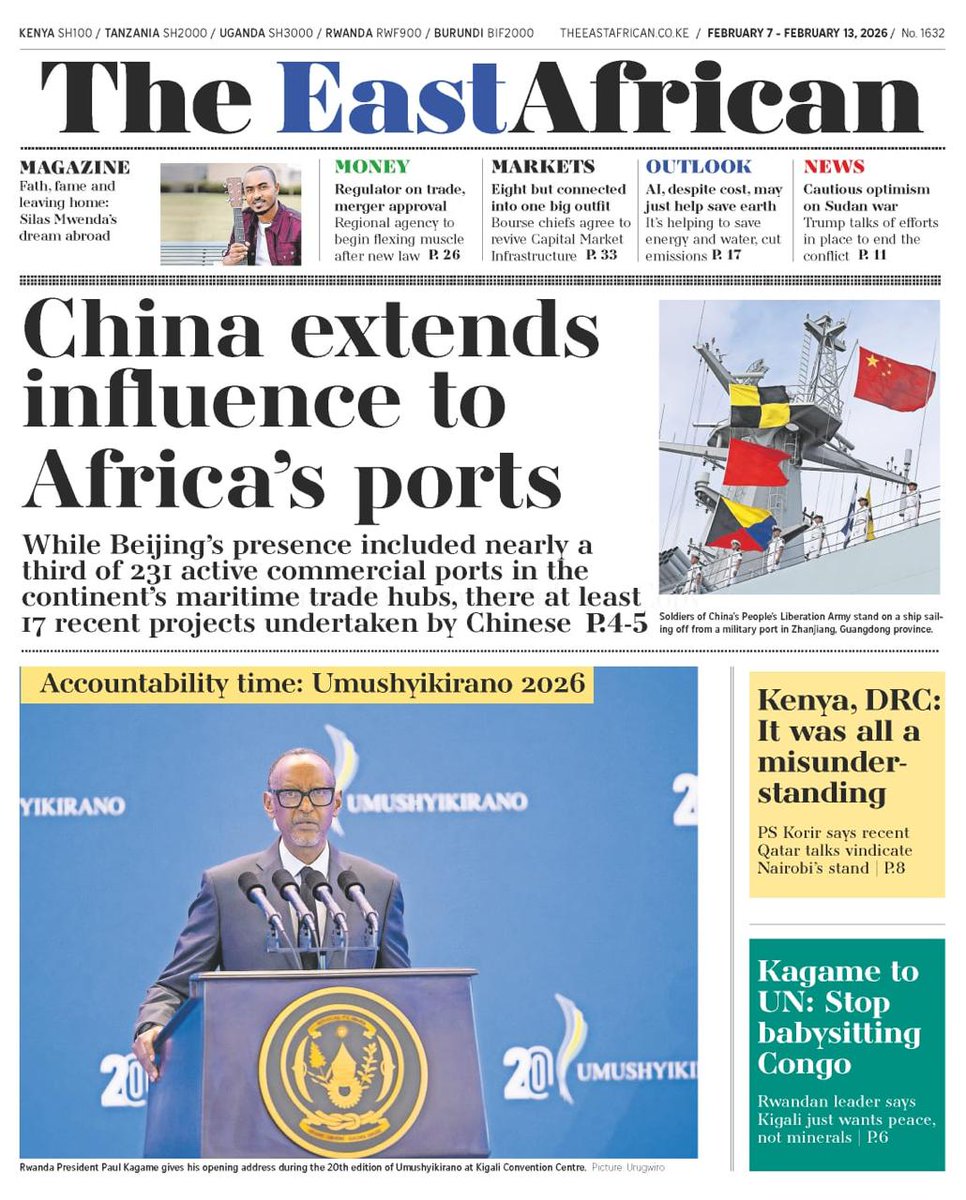
China’s growing footprint across Africa’s ports is reshaping trade, security, and regional influence and raising critical questions about who controls the continent’s gateways to global commerce. Dive into the full analysis in The EastAfrican. Get your copy from your nearest vendor or read the full edition on the ePaper 👉 epaper.nation.africa#TheEastAfrican #RegionalAffairs #AfricaInFocus #GlobalTrade
The EastAfrican tweet media
English
7
18
27
5.7K
Nos Gbadamosi retweetledi
Foreign Policy
Foreign Policy@ForeignPolicy·
Recent reports suggest that hundreds of Africans have been lured to Russia under false job promises and subsequently sent to the front line in Ukraine after receiving only a few days of basic training. foreignpolicy.com/2026/01/21/rus…
English
0
5
6
2.9K
Nos Gbadamosi retweetledi
Foreign Policy
Foreign Policy@ForeignPolicy·
Middle powers rise, some democracies prevail, and great powers spur a scramble for infrastructure. Here’s Africa Brief’s year in review: foreignpolicy.com/2024/12/18/lob…
English
0
3
9
6.7K
Nos Gbadamosi retweetledi
Foreign Policy
Foreign Policy@ForeignPolicy·
Across much of Africa, young people have campaigned to expel old-guard governments that fail to provide jobs for them. Botswana’s shocking election result last week has given many of those young Africans hope, @nosmotg writes. foreignpolicy.com/2024/11/06/you…
English
2
8
26
11.2K
Nos Gbadamosi retweetledi
350 Africa
350 Africa@350Africa·
Victory for the Congo Basin! 🙌 Hear from our Regional Organiser, @christroi10, how years of campaigning for a #FossilFreeDRC helped stop the bidding of 30 oil & gas blocks. The fight isn’t over—we must keep pushing against future oil and gas exploitation in the DRC. But today, we celebrate!🎉
English
0
8
16
2.1K
Nos Gbadamosi retweetledi
Raphael Obonyo
Raphael Obonyo@RaphaelObonyo·
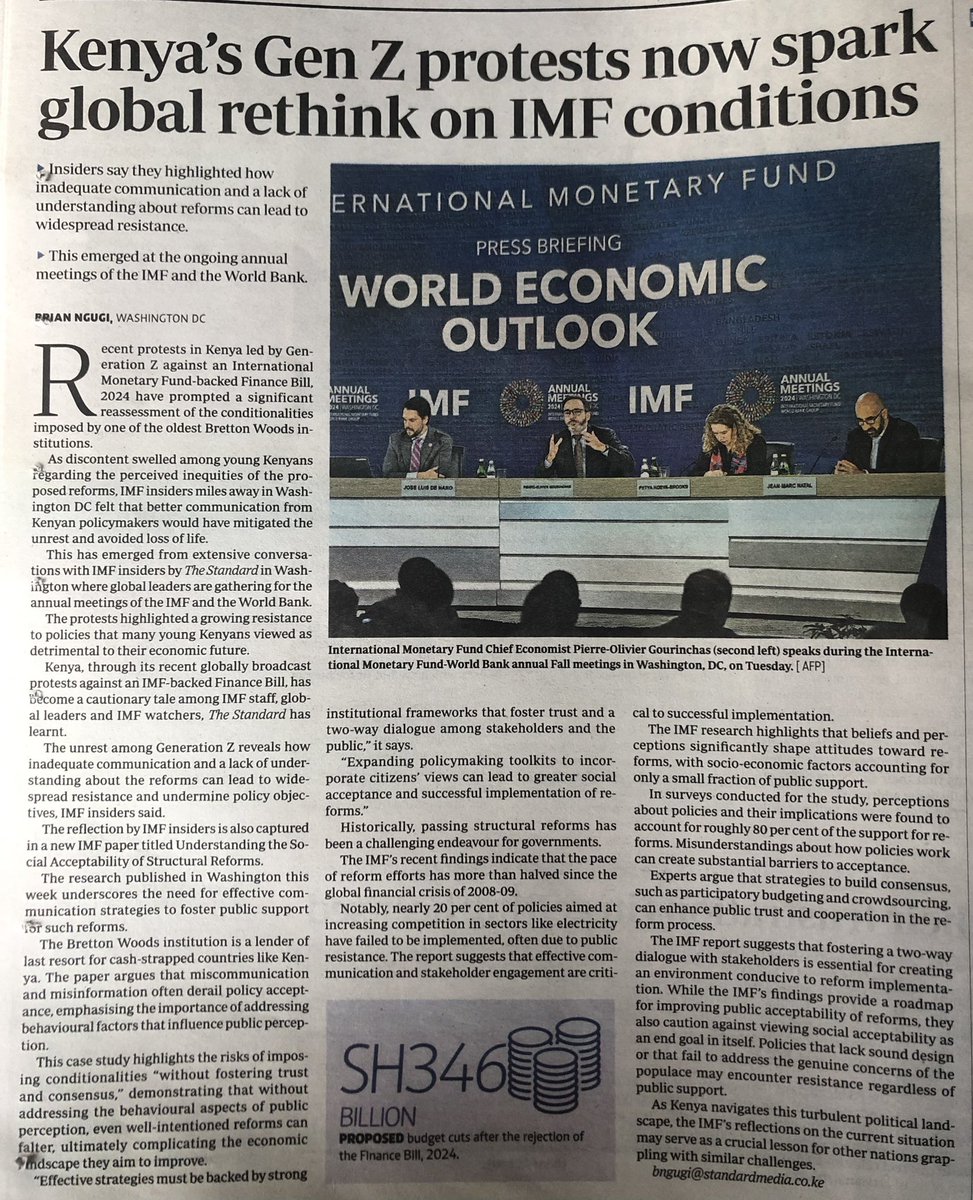
Kenya’s Gen Z protest now spark global rethink on IMF conditions
Raphael Obonyo tweet media
English
174
2.7K
5.5K
319.9K
Nos Gbadamosi retweetledi
Foreign Policy
Foreign Policy@ForeignPolicy·
The United Kingdom will transfer sovereignty of the Chagos Islands to Mauritius, ending its last African colony and a decades-long acrimonious legal battle, @nosmotg writes. foreignpolicy.com/2024/10/09/uk-…
English
0
4
11
8.2K
Nos Gbadamosi retweetledi
Foreign Policy
Foreign Policy@ForeignPolicy·
Tunisia holds a presidential election on Oct. 6 that is expected to be the final nail in the coffin of the first democracy to emerge from the 2011 Arab Spring protests, @nosmotg reports. foreignpolicy.com/2024/10/02/tun…
English
1
3
6
6.2K
Nos Gbadamosi retweetledi
The China-Global South Project
The China-Global South Project@ChinaGSProject·
The Chinese-backed TAZARA project is advancing, but what does it mean for U.S. influence in Africa? 🇨🇳📊 With only one company using the Lobito Corridor, could this challenge U.S. projects?🌍💼 Should African nations capitalize more on these initiatives beyond raw exports?
English
3
7
14
2K
Nos Gbadamosi retweetledi
Foreign Policy
Foreign Policy@ForeignPolicy·
Viktor Orban argues that sending troops to Chad will slow migration, but he seems to be seeking security partnerships in exchange for lucrative minerals, @nosmotg writes. foreignpolicy.com/2024/09/18/vik…
English
1
13
26
11.3K
Nos Gbadamosi retweetledi
Martin Kimani
Martin Kimani@AmbMKimani·
Many African leaders will call for permanent Security Council seats and the veto for Africa at the UN General Assembly High Level Debate in 2 weeks. But have they assessed the implications? A permanent seat won't be a charitable donation. With power comes responsibility. There are few, if any, African countries with the financial resources and a strong enough argument to convince their citizens that it's good value for the money. Let's do a back-of-the-envelope calculation. In time, @NYUCIC will publish a policy paper on this subject so please treat this post as an initial foray that contributes to the spirited reception to yesterday's speech by @USAmbUN Linda Thomas-Greenfield at @CFR_org. Reflecting their special responsibility, the P5 pay more than half of the UN's peacekeeping budget, which in 2023-24 is $6.1 billion. The US pays 26.94%; China: 18.68%; the UK: 5.35%; France: 5.28%; and Russia: 2.28%. To match Russia's share would cost almost $140 million. It doesn't stop there. To wield the veto is to be a global diplomatic player. The P5 each have over 250 diplomatic representations worldwide, including embassies, high commissions, and consulates. Egypt and South Africa have Africa's largest diplomatic footprints, but their numbers are less than half of those of the P5. Suffice it to say, an African permanent member would need to at least double and probably to quadruple its diplomatic service. For the East African country I know best, this would require a budget of at least $600 million annually. Don't forget the intelligence efforts required. The veto power applies globally, not just to your neighbors. The intelligence used to make decisions as a permanent member cannot be found solely on the evening news. It would require the collection of signals and human intelligence far beyond what any African country is doing at present. As a yardstick, France and the UK spend the least among the P5. Public records, which likely undercount the amount, show that the more parsimonious of them spends at least $1 billion a year on their external intelligence arm. Paying for the responsibility does not stop there. You cannot be a permanent member with veto power while receiving food aid — especially not from your counterparts! Today, a fair number of the citizens of 33 African countries survive on aid. The African member would need to be completely food self-sufficient, meaning that economic transformation is essential. It would also require the member to resolve the major political divides that increase its risk of major civil unrest or insurgency. Otherwise, the wrong vetos could lead to regime change operations from the global or regional power whose toes you are stepping on. In other words, almost every African country will need major political reengineering to be ready to step up to the plate. Simply put, to occupy a permanent seat as a country, unanchored from regional integration, the new member must be a true power; otherwise, it will be a mere proxy of other members, constantly under threat and displaying to the world its lack of autonomy. It would start off as a strutting peacock before steadily declining into a plucked chicken! So far, we are talking about a minimum of $1.5 billion annually, and probably closer to double or triple that figure. For what? What exactly would be the return on this investment domestically? While the costs are enormous, the potential for reshaping global power dynamics in favor of African interests justifies the investment. But it would only be doable as part of a regional project, which would demand bold realignments and reforms of the @_AfricaUnion. The changes would need to be far-reaching enough for the majority of countries on the continent to anticipate clear benefits. President @PaulKagame's proposal for a permanent chair for the AU, along with one that rotates among countries, is a great starting point for the conversation. His delivery of the @AfCFTA has given the continent the opportunity to develop the economic leverage needed for greater empowerment. Geopolitics is driven by geo-economics, and vice versa. What is needed now, to make this a truly world-changing project, is a Pan-Africanist political vision, connected through a series of sequenced steps toward the realization of a continental free trade area. For example, political seniority regarding the continent's first representative as a permanent Security Council member could be determined by a country’s level of economic integration with the rest of Africa. This would build on Agenda 2063, implemented with deliberate and innovative action. The AU Commission has a critical role in supporting the emergence of these strategies and tactics. Choosing the next chairperson wisely is essential. Otherwise, the continent could face 10 wasted years of dithering and misdirection. Practice runs can start soon, with African heads of state and government deciding that one of Africa’s 3 current positions on the UNSC will be subject to the decisions of the AU Peace and Security Council, requiring countries vying for election to commit. The seat would revolve every two years and, while lacking veto power, would hold immense moral authority as the embodiment of AU decisions. The permanent representative can come from the elected country, while the delegation's staff would be seconded from the AU Commission via the @AfricanUnionUN. The Committee of Ten (C-10) Heads of State and Government on the reform of the @UN Security Council plus other leaders need to be equal to the task: @PresidentBio @KagutaMuseveni @CyrilRamaphosa @officialABAT @AlsisiOfficial @HHichilema @WilliamsRuto @DrNangoloMbumba
English
43
237
412
67.3K