Notmvb
209 posts



Backdoor Roth is the greatest loophole for high income earners.
I'm giving away a 30-page guide showing exactly how to do it, report on your taxes and file Form 8606
• Like and bookmark
• Comment "Backdoor"
& I'll DM it
•Must follow. 24 hours only.
English
Notmvb retweetledi

🌟 #euro2024 COMPETITION TIME 🌟
WIN A PLAYER-NAMED NATIONAL JERSEY OF EITHER THE NETHERLANDS 🇳🇱 OR ENGLAND 🏴
To enter:
- Like
- RT
- Follow us
Winner picked after tonight's game... GO 👇
#NEDEND #NetherlandsEngland #England

English

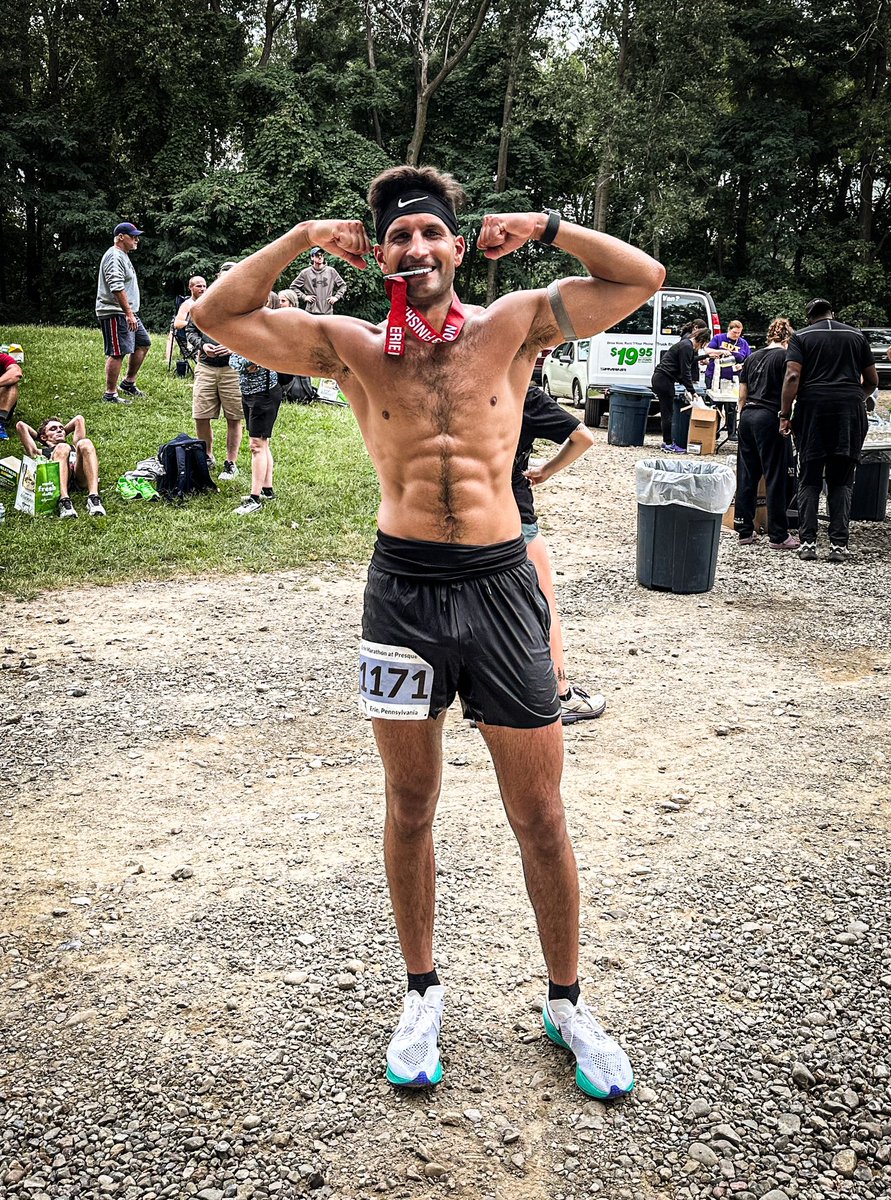
I just ran 2:57:31 in my first marathon 6 months after I started running.
The goal was to run a sub 3-hour marathon without sacrificing strength or muscle mass.
Here was the training plan I followed:
Note: this is a long post, so you may want to bookmark it for future reference.
I’ll split this plan into four main areas:
1. Running
2. Lifting
3. Nutrition
4. Recovery
Let’s walk through each area…
1. Running
The basic weekly structure involved 6 runs:
- 3 easy runs
- 1 track speed workout
- 1 tempo run
- 1 long run
Easy runs ranged from 2 to 10 miles and were all done to maintain HR under 150 (ideally in 125-145 range). These build the base of your engine and avoid injury from overuse because they are low intensity and easier on the body.
Track speed workouts generally involved a 1 to 2 mile warmup jog followed by 4 to 8 miles of track work (starting on the low end of that and building up over time). Track work was usually a combination of 800s (two laps around a standard track) or 400s (one lap), though occasionally included 1200s or 1600s as well. Rest periods between the work sets were typically 1 to 3 minutes. A standard track workout was 8 x 800m with a 400m slow jog to recover between rounds. Another standard track workout was 8 x 400m and 4 x 800 with a 400m slow jog between each round.
Tempo runs were hard middle distance (6 to 12 mile) road runs done at or near anaerobic threshold HR. Usually a 1 to 2 mile warm up and then the rest of the miles at hard effort (at or better than goal marathon pace). These build the top end effort and are generally representative of the HR exertion level on race day.
Long runs ranged from 8 to 22 miles and generally incorporated easy miles (low HR, low intensity) and tempo miles (high HR, high intensity). As I built closer to the marathon, these long runs were 18 to 22 miles with at least half of the miles done at or faster than my goal marathon race pace.
So a standard week at the start of my training might have looked like this:
- Monday: 2 mile easy run
- Tuesday: 5 mile track speed workout
- Wednesday: 2 mile easy run
- Thursday: 2 mile easy run
- Friday: 5 mile tempo run
- Saturday: Off
- Sunday: 8 mile long run
By the peak of my training, the weeks had built to something like this:
- Monday: 7 mile easy run
- Tuesday: 10 mile track speed workout
- Wednesday: 5 mile easy run
- Thursday: 7 mile easy run
- Friday: 12 mile tempo run
- Saturday: Off
- Sunday: 22 mile long run
My rough idea was to increase overall mileage load by about 5-10% each week, assuming I felt good and healthy (more on that in the recovery section).
If I had been training for a shorter race (like a half marathon or 10k), I would have replaced the long run with a shorter tempo interval run (example: 3 rounds of 1 mile easy, 2 miles hard).
2. Lifting
My biggest concern when I started adding the running was that I would lose a lot of weight and muscle mass. I’m 6’2” 180Ibs and wanted to make sure I stayed above 175. In other words, I wanted to be a great runner, but never look like a great runner.
My weekly lifting plan matched this desire:
- 4 mandatory weekly lifts
- Upper/lower split
- 1 optional show lift (arms, abs)
The main lifts all followed the same format:
- Compound movement - 4 sets x 3-8 reps
- Secondary movement 3 x 8-12
- Accessory work superset 3 x 10
- Core work superset 3 x 15
Lower body compound movements were a squat variation or a deadlift variation. Upper body compound movements were a bench press variation or a row variation.
Lower body secondary movements included lunges, split squats, Romanian deadlifts, and glute bridges. Upper body secondary movements included dumbbell bench press, shoulder presses, dumbbell rows, and pull-ups.
Lower body accessory movements included hamstring curls, calf raises, side lunges, and step-ups. Upper body accessory movements included pushups, bicep curls, tricep presses, dips, shoulder raises, and shrugs.
Core work included hanging leg raises, reverse crunches, stability ball stir-the-pots, side planks, ab wheel rollouts, and more.
Note: Superset means two movements done back-to-back before resting. So for core work, it could be a hanging leg raise done for 15 reps followed by a reverse crunch for 15 reps. That is 1 set.
Here’s an example lower body day:
- Barbell Front Squat 4 sets x 5 reps
- Dumbell Reverse Lunges 3 x 8
- Alternating Side Lunges + Calf Raises 3 x 10
- Hanging Leg Raises + Ab Wheel Rollouts 3 x 15
Here’s an example upper body day:
- Barbell Bench Press 4 sets x 5 reps
- 1-Arm Dumbbell Rows 3 x 8
- Dumbell Curls + Tricep Extension 3 x 10
- Ab Wheel Rollouts + Reverse Crunches 3 x 15
They usually took about ~45 minutes if I was focused and stayed on task. I rest more between sets of the primary compound movement because it was done with heavier weight.
The typical week of lifting and running looked something like this:
- Monday: Easy Run
- Tuesday: Track Workout + Lower Body 1
- Wednesday: Easy Run + Upper Body 1
- Thursday: Easy Run
- Friday: Tempo Run + Lower Body 2
- Saturday: Upper Body 2
- Sunday: Long Run + Show Lift
Note: I always did my run before lifting on days where I had to do both. My logic was that my primary goal was a running goal, so doing that first, while fresh and focused, was essential. There were days where I really had to grind through the lift (long track day followed by a lower body lift), but I always got the work in, even if I had to reduce the intensity level.
Depending on schedule, I had to vary the times when I did these workouts based on their length and my other work and family commitments. I generally tried to do them in the mid-late morning, but weekends were always very early (5am) and some weekdays would end up being early or late if I had other things going on. The longest weekday workouts took about ~2 hours (long track day plus a lower body lift), which started to feel like a drag by the end of training. You can scale up or down this plan to meet your time availability, but full marathon training while maintaining strength and muscle mass is probably not for those who are ultra-strapped for time.
3. Nutrition
I established daily macronutrient targets to use as a guide at the start:
- Protein: 215g (~1.2g per lb of bodyweight)
- Carbs: 200g
- Fats: 125g
- Total Calories: 2,785
I was most concerned with losing a lot of weight and muscle mass as the running miles (and caloric burn) increased during training. To fight this, I gradually increased calories during the course of my training plan.
By the peak of my training, it looked more like this:
- Protein: 215g
- Carbs: 300g
- Fats: 125g
- Total Calories: 3,185
I wasn’t concerned with every last calorie being dialed (I wasn’t training for a bodybuilding competition and I didn’t need to be 5% BF), so I just tried to hit within ~10% of the daily macro targets I established.
Note: The protein and fats stayed constant, but the carbs increased. This was intentional, as my training load increased and my body was responding well to the fast fuel from carbs.
The important thing is to figure out your current baseline and build from there. Track your macros for a few days and see where they end up. If your weight has been constant, you’re eating to a good baseline at your current training level. If you are losing or gaining weight, you’re eating to a deficit or surplus at your current training level. If you’re going to be training hard, getting 1-1.2g of protein per pound of bodyweight is a good baseline. You can fill in carbs and fats behind that based on personal preferences and goals related to bodyweight.
Typical protein sources included beef, chicken, turkey, fish, shrimp, greek yogurt, whey.
Typical carb sources included quick oats, jasmine rice, sourdough bread, sweet potatoes, red potatoes, raw honey, fruit.
Typical fat sources included olive oil, avocado, grass fed butter, nuts.
As for supplements, I kept it pretty simple:
- Fish oil
- Vitamin D
- Creatine (5g daily)
- AG1 + LMNT
- Whey protein
For my nutrition on longer runs, I used the Maurten Gel 100s (25g of carbs each) and would take one every ~6-8 miles if I was running over 90 minutes. On my longest training runs (and for the race), I also took a Maurten 320 Drink Mix prior to the start and mixed in 2-4 packets of LMNT to sodium load a bit to avoid cramping.
4. Recovery
Given the training volume, I needed a very deliberate focus on recovery to prevent injury and keep my body feeling strong.
The pillars of my recovery routine:
- Daily recovery work
- Daily mobility work
- Morning cold plunge (3-5 minutes)
- Evening sauna (20 minutes)
Daily recovery work included foam rolling on the legs and back, lacrosse ball rolling on the feet, and massage gun on any tight areas. This was about ~5-10 minutes.
Daily mobility work was a ~10-15 minute mobility circuit I would do before my training that served a hybrid purpose as a warm-up. It usually included about ~5-7 movements that I would go through 2-3 times. Movements included squat-to-stands, dead-bugs, spidermans, bowler squats, couch stretch, yoga pushups, 90/90 hip stretch, reverse lunge with reach, and more. If you search “Best Mobility Exercises for Runners” you’ll find a bunch of good options and routines with explanations. Doing this work daily is essential for avoiding injury.
Morning cold plunge was 3-5 minutes in 39 degrees right when I woke up. Evening sauna was 20 minutes in 200 degrees right before bed. Obviously, most people won’t have access to this stuff, but you can do the morning cold in the shower if you don’t have a cold plunge and a hot shower before bed if you don’t have a sauna.
Closing Thoughts
This was the training plan I followed that allowed me to run a 2:57:31 in my first marathon just 6 months after starting to run. I did it while maintaining strength (400+ pound deadlift) and muscle mass (lost about ~5 pounds during the whole process).
It took a lot of time and effort, but the payoff was there.
The plan isn’t for everyone (probably not even for most people), and you should definitely consult with experts (doctors, trainers, nutritionists) before making any dramatic changes to your routine. The basic building blocks of the above can definitely be adapted to your life and routines regardless of your goals.
As I see it, the basic building blocks are as follows:
1. Running: Half of your runs should be low intensity/easy. The other half should be a combination of speed, tempo, and longer duration.
2. Lifting: Split across lower and upper days. Start every workout with a simple compound movement for strength. Follow it with a secondary movement and a superset of accessory movements. Finish with core.
3. Nutrition: If training hard, aim for 1-1.2g of protein per pound of bodyweight. Fill in carbs and fats based on what suits your goals and body.
4. Recovery: Aim for 10-15 minutes of daily recovery work (foam rolling, lacrosse ball foot rolling, mobility work).
If you build your own plan based on those principles, you’ll make progress and feel great.
Ok, that took a long time to pull together. I hope it helps. Follow me @SahilBloom for more in future.
English

GM!
Introducing Fall: my new print collaboration with @avant_arte launching June 27! Part of the on-going series Northeast, exploring archetypal suburban scenes and a glimpse into everyday life.
Link to register below!
1/

English
@RikOostenbroek Pumped to have picked one up! Any thoughts on what kind of printing would be best to have this one up on a wall?
English





”Snowflake” allowlist mint is LIVE!🔥 24h to mint or once it’s sold out. Thank you for sharing this journey with me frens.🙏❄️
noblegallery.com/drops/snowflak…
@noble_gallery

English



English



excited to have applied to be an artist on @SuperRare !
wish me luck! 😁🤞
English
didn't expect the gas war at all!! love all whoever did follow your commitment through the GAS!!!!
I understand all of people on the AL still waiting!
will give 1hr more, and it will open to everyone!
love to see a winner for " Red Sails in the sunset" tonight!!!
babylon.art/listing/30

English

English

gm #nftfam
just woke up to see a secondary sale of "Ranchin'" for 2 $WETH on @opensea 🫡
big thank you to both @msbwy_eth and @NVR2L8_eth 🫶

English
@0xBabylon @gelo_arch Is there a specific link for this mint? Or just go to Babylon website? Need this edition!
@0xBabylon
English

Steer clear of clichés this Valentine’s Day.
Feb 14 | 15:00 EST / 20:00 GMT | Babylon.art
Our Founding Artist @gelo_arch drops:
🔻“Red Sails in the sun” edition /150 (0.35 ETH)
🔺“Red Sails in the sunset” 1/1 (raffle)
Restrictions apply. What you need to know👇

English