sajan.b

9.7K posts

sajan.b banner
sajan.b

sajan.b

@nsajan

Building Bharat’s Internet with @OpenSetu Every Indian language, unleashed. No apps, pure freedom.

Gurgaon, India Katılım Mayıs 2009
4.3K Takip Edilen1.5K Takipçiler
Sabitlenmiş Tweet
sajan.b
sajan.b@nsajan·
One Name in Vernacular. One OTP that hits like a Thunderbolt. A Billion people who were locked out just smashed through the gates. This isn’t some feel-good pilot. This is the Empire striking back against exclusion. We just turned 22 scripts into weapons of mass empowerment. No digits. No barriers. Just ownership.
OpenSetu@OpenSetu

Bharat ID just changed the game. Aadhaar verification without numbers. Runs clean across UPI and the full India Stack. English, Ol Chiki and every Indian script. This is how digital rails for 1.4B should feel. @GoI_MeitY @TribalAffairsIn @svembu

English
0
3
8
413
sajan.b
sajan.b@nsajan·
@sanjeevsanyal Either of the two, UBI (Universl Basic Income) or RBE (Resource Based Economy) is the ultimate future of Humanity. Working to eat is an anamoly. Teething problems of civilizations.
English
0
0
0
12
Sanjeev Sanyal
Sanjeev Sanyal@sanjeevsanyal·
He is so wrong on this. AI will certainly cause dislocation, but like all technology it will also create new jobs and opportunities in the medium term. AI and robots will also not produce goods and services in excess of money or demand that there will be no inflation. Both of these are classic mistakes made by those who think that there is a finite number of jobs to be done in the world and a finite set of consumer demands. By their logic, we have already exceeded everything that even the wealthiest person could have imagined in 1800, so there should be no jobs or inflation in the 21st century. By the same token, @elonmusk 's universal high income will bankrupt any government that attempts it.
Elon Musk@elonmusk

Universal HIGH INCOME via checks issued by the Federal government is the best way to deal with unemployment caused by AI. AI/robotics will produce goods & services far in excess of the increase in the money supply, so there will not be inflation.

English
225
378
2.1K
150.3K
sajan.b
sajan.b@nsajan·
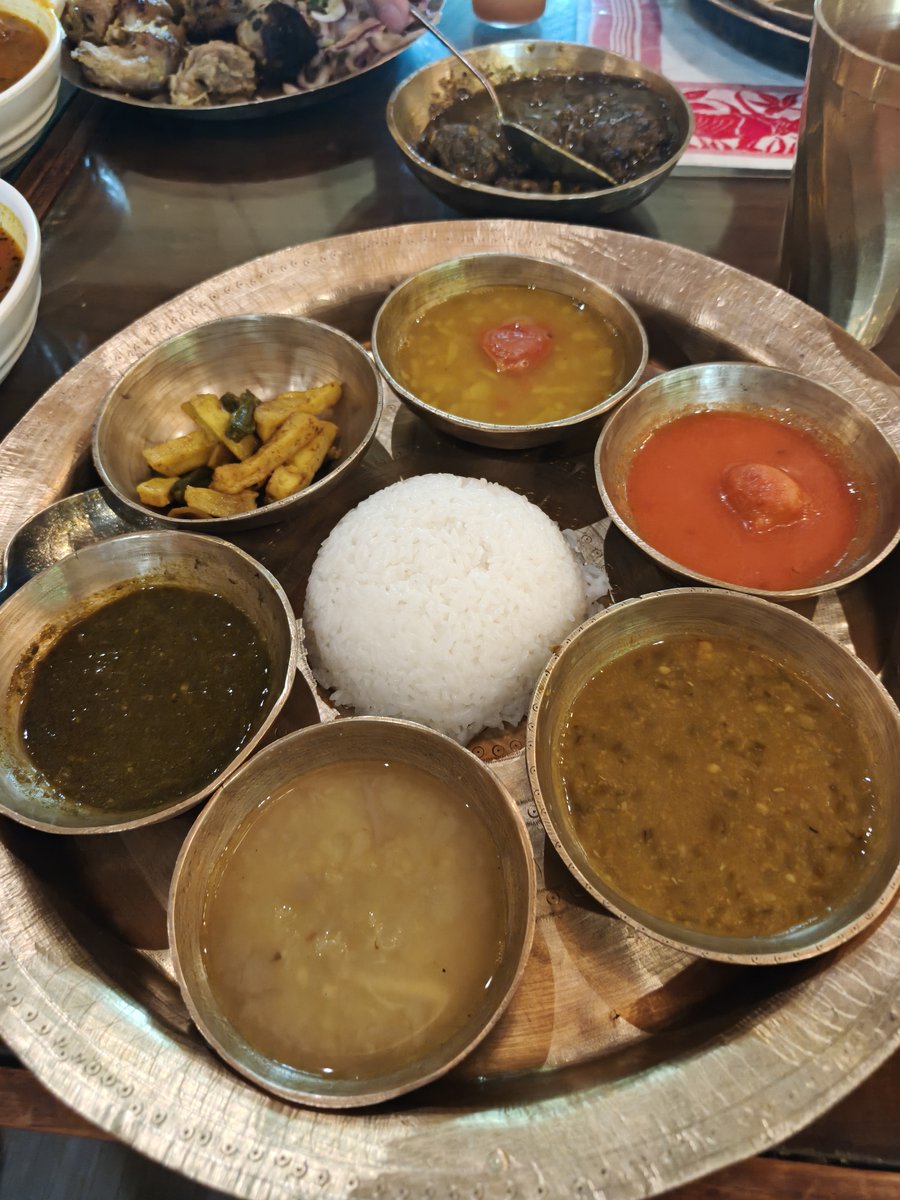
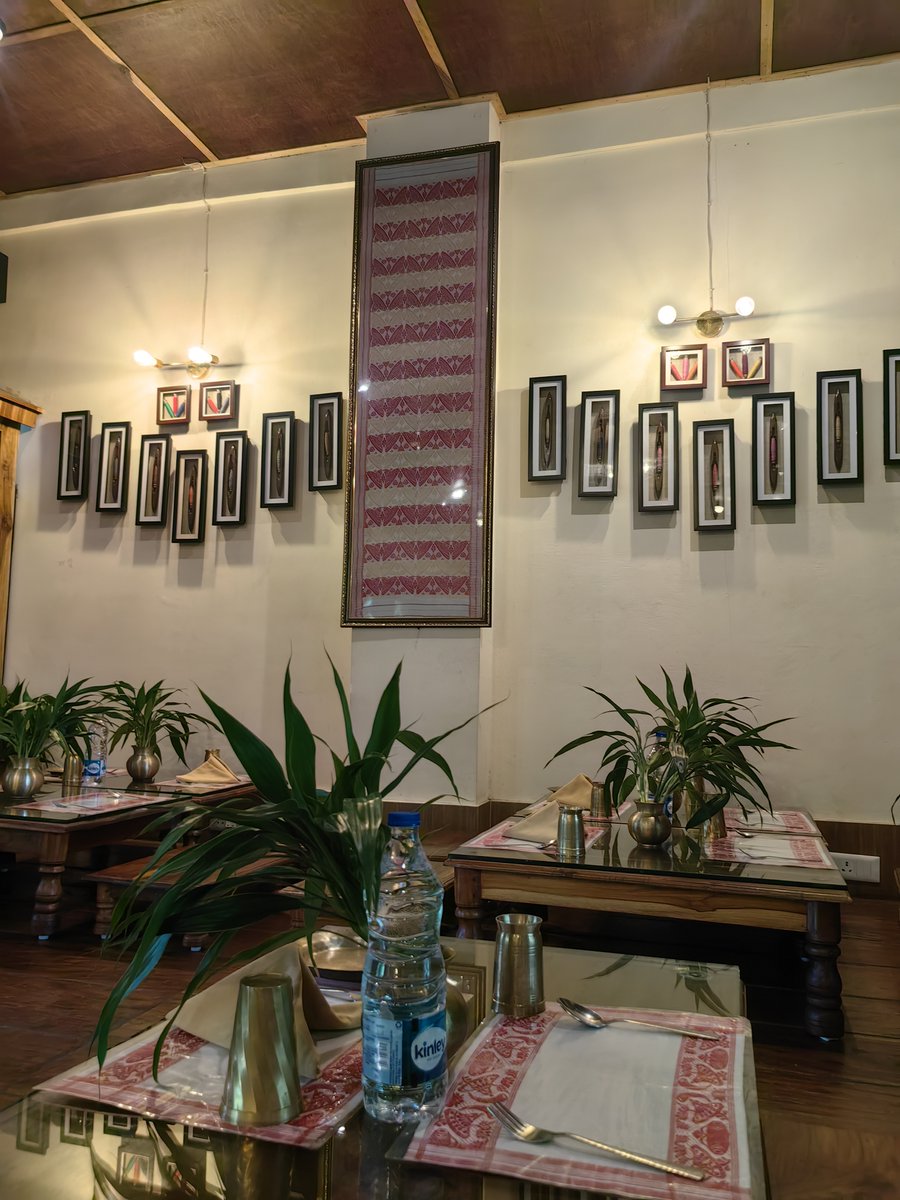
@ChinaSpox_India Nothing in this picture "reflects" Chinese food culture 🤦‍♂️
English
0
0
1
112
Yu Jing
Yu Jing@ChinaSpox_India·
Had a traditional Assamese Thali, which mirrors Chinese food culture almost exactly — 🍚rice at the center, variety over portions, nothing overdone.🥢 This is what a healthy meal looks like. 🌿 আজি এখন পৰম্পৰাগত অসমীয়া থালি খালোঁ, যিটো চীনা খাদ্য সংস্কৃতিৰ সৈতে প্ৰায় হুবহু মিলে — 🍚 মাজত ভাত, পৰিমাণতকৈ বৈচিত্ৰ্য, একোৱেই বেছি নহয়। 🥢 এয়াই এখন স্বাস্থ্যকৰ আহাৰৰ ৰূপ। 🌿
Yu Jing tweet mediaYu Jing tweet media
English
257
118
974
99.5K
Dave
Dave@GamewithDave·
For anyone who used a computer between 1990 & 2005… what’s the one game you still think about?
English
40.8K
693
14.1K
8M
sajan.b retweetledi
Sama Hoole
Sama Hoole@SamaHoole·
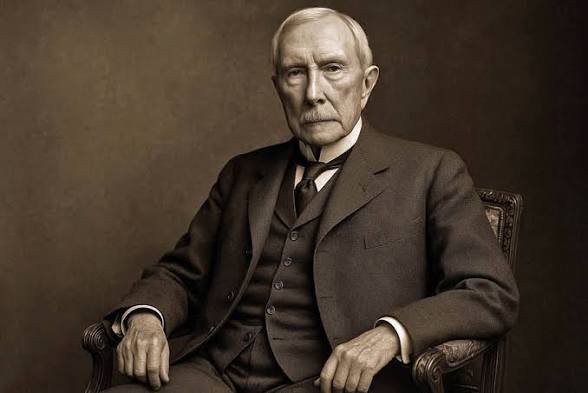
In 1900, John D. Rockefeller controlled approximately 90 percent of all petroleum refining in the United States. He was, by some calculations, the richest private individual who had ever lived. He had a problem. Scientists were discovering that compounds derived from coal tar, a petroleum byproduct, could be used as synthetic medicines. Aspirin, derived from coal tar, had been launched by Bayer in 1899. The petroleum waste stream Rockefeller had previously had to dispose of could now be sold back to the public as medicine at a markup of roughly 10,000 percent. He had another problem. American medicine in 1900 was a competitive ecosystem of homeopaths, herbalists, naturopaths, osteopaths, midwives, and traditional doctors who used food, plants, water, and lifestyle as the primary tools of healing. Approximately half of all American medical schools taught some form of natural or alternative medicine. Rockefeller bought into the German pharmaceutical industry, eventually taking a substantial stake in IG Farben, the conglomerate that included Bayer, BASF, and Hoechst. He then commissioned a report. The report was written by Abraham Flexner, an educator with no medical training, funded by the Rockefeller and Carnegie Foundations, and published in 1910. It declared that natural and alternative medical schools were unscientific quackery. It recommended the closure of more than half of all American medical schools and the standardisation of the rest around medicine based on synthetic patented drugs. Congress acted. Half of American medical schools closed within a decade. The remainder accepted Rockefeller and Carnegie funding on the condition that their curricula be reorganised around pharmaceutical treatment. Nutrition was removed. Herbal medicine was removed. Lifestyle intervention was removed. The doctor's job was redefined: diagnose the symptom, prescribe the drug. The drugs were petroleum-derived. The petroleum was supplied by Rockefeller-controlled refineries. The medical schools were funded by Rockefeller. The journals were funded by Rockefeller. The AMA was supported by Rockefeller. The hospitals were funded by Rockefeller. By 1925, the American medical system was a vertically integrated extension of the petroleum industry, operating under the marketing slogan that it was scientific. This is the system that exists today. The pharmaceutical industry generates approximately $1.5 trillion in annual revenue. The American population, 4 percent of the global total, consumes approximately 50 percent of all pharmaceuticals manufactured. The system was not designed to make people healthy. The system was designed to manage symptoms in a way that produces lifetime customers. A healthy patient is a former customer. A managed patient, who takes the pill every day for the rest of their life, is an annuity. The objective has always been to keep you in that profitable corridor between healthy and dead. Long enough to keep buying. Not so well that you stop. The doctor who advises you to fix your metabolism by changing your diet is, from the point of view of the system that trained him, a defective product. The doctor who prescribes you a statin, a metformin, an antidepressant, and a blood pressure medication for life is performing exactly as designed. The system was designed by an oil baron who needed to sell the waste products of his refineries. It still functions, 116 years after the Flexner Report, exactly the way he designed it. You are the customer. The corridor is where you live.
Sama Hoole tweet media
English
482
7.2K
15.1K
838.4K
sajan.b
sajan.b@nsajan·
@theliverdoc Doc is misrepresenting. Seeds oils do have a small slight edge over the rest. But Indian cooking uses and reuses oil at high temperature, and in that kind of usage seed oils are really really really bad for your health. I agree with him. Don't let posts on X fool you.
English
0
0
0
50
TheLiverDoc™
TheLiverDoc™@theliverdoc·
In general, seed oils are liver healthy. Good ones are soybean, sunflower, canola. Tropical oils derived from seeds/fruits like coconut oil and palm oil and animal derived clarified butter (ghee) are the worst for the liver. Don't let social media fool you.
quote@itsmubashi

Daily reminder :

English
200
220
1.9K
214.2K
sajan.b
sajan.b@nsajan·
@JonFDanilowicz Indians and Bangladeshi will handle it. Don't need a Yankee 😅
English
0
0
0
99
Jon Danilowicz
Jon Danilowicz@JonFDanilowicz·
During the interim government period, Chief Advisor Yunus and others repeatedly encouraged Indian media and others to visit Bangladesh and see the situation for themselves, yet most refused to do so. It would be good at this late date for more Indian journalists to visit and hear directly from ordinary Bangladeshis how they think of India and why.
India in Bangladesh@ihcdhaka

High Commisioner Pranay Verma paid a courtesy call on Minister of Information and Broadcasting of Bangladesh H.E. Zahir Uddin Swapon on 13 April 2026. They discussed wide-ranging cooperation in information and broadcasting domain, including engagements between media and broadcasting institutions of the two countries. They agreed to enhance exchange visits of media delegations between the two countries to strengthen people-to-people relations and promote mutual understanding. High Commissioner proposed various capacity building initiatives for journalists and media professionals under ITEC programme of Government of India. As part of these initiatives, a special training course for women journalists from Bangladesh will soon be organised in India. They also exchanged views on cooperation in films, including organization of film screening and film festivals in each other’s country, as well as collaboration in production and post-production technological support. High Commissioner reiterated India’s willingness to work with the Government and people of Bangladesh to strengthen people-centric cooperation in all domains based on mutual interest and mutual benefit. *** হাই কমিশনার প্রণয় ভার্মা ১৩ এপ্রিল ২০২৬-এ বাংলাদেশের তথ্য ও সম্প্রচার বিষয়ক মাননীয় মন্ত্রী জনাব জহির উদ্দিন স্বপনের সঙ্গে সৌজন্য সাক্ষাৎ করেন। তাঁরা এই দুই দেশের গণমাধ্যম ও সম্প্রচার প্রতিষ্ঠানগুলোর মধ্যে সম্পৃক্ততাসহ তথ্য ও সম্প্রচার খাতে বিস্তৃত পরিসরে সহযোগিতা নিয়ে আলোচনা করেন। তাঁরা জনগণ-কেন্দ্রিক সম্পর্ক সুদৃঢ়করণ ও পারস্পরিক বোঝাপড়ার উন্নয়ন সাধন করার লক্ষ্যে দুই দেশের মধ্যে গণমাধ্যমের প্রতিনিধিদলসমূহের বিনিময় সফর বৃদ্ধি করার বিষয়ে সম্মতি প্রকাশ করেন। হাই কমিশনার ভারত সরকারের আইটেক কর্মসূচির অধীনে সাংবাদিকবৃন্দ ও গণমাধ্যম-বিষয়ক পেশাজীবীগণের জন্য বিভিন্ন সক্ষমতা বৃদ্ধিকরণ-সংক্রান্ত উদ্যোগের প্রস্তাব উত্থাপন করেন। এই উদ্যোগসমূহের অংশ হিসেবে, শীঘ্রই ভারতে বাংলাদেশের নারী সাংবাদিকগণের জন্য একটি বিশেষ প্রশিক্ষণ কোর্সের আয়োজন করা হবে। তাঁরা একে অপরের দেশে চলচ্চিত্র প্রদর্শনী ও চলচ্চিত্র উৎসব আয়োজন করা, সেইসাথে প্রোডাকশন ও পোস্ট-প্রোডাকশনে প্রযুক্তিগত সহায়তা করার ক্ষেত্রেও সহযোগিতাসহ চলচ্চিত্র খাতে সহযোগিতা করার বিষয়েও মতবিনিময় করেন। হাই কমিশনার পারস্পরিক স্বার্থ ও পারস্পরিক কল্যাণের ওপর ভিত্তি করে সকল খাতে জনগণ-কেন্দ্রিক সহযোগিতা সুদৃঢ় করার লক্ষ্যে বাংলাদেশের সরকার ও জনগণের সঙ্গে কাজ করার ক্ষেত্রে ভারতের ইচ্ছার কথা পুনর্ব্যক্ত করেন। @MEAIndia

English
25
7
60
8.5K
sajan.b retweetledi
Darab Farooqui
Darab Farooqui@darab_farooqui·
A Note for Hindu Progressives. This piece was written for a Muslim audience. But if you are a Hindu progressive or secular, there is something worth reflecting on. Many of you support Muslim communities out of genuine solidarity. Some of that support comes from guilt, the guilt of watching Hindutva use your religion as a weapon while you stand by. That guilt is understandable. It is even honourable in its origins. But solidarity that never asks anything in return is not solidarity. It is absolution seeking. When Hindu progressives offer unconditional support to Muslim political formations, including and especially the right wing ones, because they are the loudest or the most visible, they are not helping Muslims. They are making internal Muslim dialogue impossible. The Muslim right wing has little incentive to engage with progressive Muslim voices if unconditional Hindu progressive support arrives regardless. Why negotiate internally when external validation is already guaranteed? The result is a closed loop. Muslim right wing politics gets legitimized by Hindu progressive guilt. Progressive Muslims get bypassed. The internal conversation this piece is calling for never happens. Support for Muslims has to be principled, not unconditional. It needs a common minimum programme. A shared moral code. The same standards you would apply to any political formation regardless of which community it comes from. That is not betrayal. That is the only kind of support that actually creates conditions for change. Unconditional support feels like solidarity. In the long run it functions like a cage, just a more comfortable one.
Darab Farooqui@darab_farooqui

The Shackles Indian Muslims can't Break. The Indian Constitution is secular. Indian politics never was. From the first decade of independence, political power in India operated on a majoritarian logic because partition played its part. Congress gave it ideology. The RSS challenged it. The Jan Sangh gave that challenge electoral form. The socialists gave it caste arithmetic. The communists gave it class language. But underneath all of it, the majoritarian logic was the same. Hindu political dominance was so normalized it became invisible, which is precisely what gave it flexibility. It could be progressive or conservative, reformist or reactionary, and still remain Hindu politics at its core. That invisibility was its greatest structural advantage. Muslim politics never had that luxury. And what began as a rational response to a real disadvantage has, over decades, become a prison of its own making. After Partition, the logic of Muslim political consolidation in a conservative bracket made sense, because the attack was partially on Islam. Afterall, Islam was held responsible for the partition of British India. The community was vulnerable, the state was unreliable, and communal violence was not a memory but a recurring present. After that, riots punctuated every decade. Jabalpur. Ahmedabad. Moradabad. A steady drumbeat of othering that no constitutional guarantee could silence. The 1965 and 1971 wars made it worse in a different way, not through violence but through suspicion. Indian Muslims found themselves having to prove a loyalty that no Hindu was ever asked to demonstrate. The secular consensus offered citizenship but not belonging. Then Shah Bano exposed how quickly even that citizenship could be traded for electoral arithmetic. Babri Masjid confirmed that the constitutional promise and the street-level reality were two different countries. Gujarat 2002 made defensiveness feel like the only sane position because Muslims knew by then, no help is in sight. So, Muslim politics contracted. It turned even more inward. It organized around the majlis, the muhalla, the personal law board, and at times the masjid, the one question that felt urgent enough to answer. Are we safe? That was not cowardice. That was a community reading its situation accurately. The only exception has been Anti CAA/NRC movement led by Muslim women, supported by Hindu progressives and moderates, fueled by Muslim masses. But the end result has been the same. The rise of an even stronger right wing in Muslims. The ossification deepened. The community turned further inward, not outward. Because the movement had no political home of its own. It was consumed from two directions simultaneously. Secular parties arrived to harvest its energy at the ballot box without building anything lasting from it. And AIMIM moved in from the other side, converting the anger and fear into deeper communal consolidation. It offered Muslims a louder voice inside the bracket instead of a way out of it. The movement that had briefly escaped the bracket was pulled back into it from both ends. For a long time, the reading was functional. Congress and the secular parties needed the Muslim vote. The bargain was unspoken but understood. Muslims stayed in their lane, kept their politics within the bracket of communal identity, and in return Congress provided a degree of protection. It was undignified. It was a tenancy arrangement dressed up as an alliance. But it worked well enough to survive on. The defensive crouch, organized around religious institutions, delivered just enough to justify itself. That bargain is now dead. The Congress system that made defensive Muslim politics viable has collapsed. What replaced it is not a neutral state open to negotiation. It is a government that uses the full apparatus of the state, courts, police, investigative agencies, legislation and bulldozers, as instruments of majoritarian pressure. Against that, defensive consolidation around religious identity does not produce protection. It produces a target. The old strategy assumed a protector was available. The protector is no longer there. And yet Muslim politics has not updated its logic. It remains where it was. Organized around the majlis, anchored to religious identity, speaking only the language of communal grievance, waiting for a protection that is not coming. The reason this has not changed is structural. Religious institutions in India have never restricted themselves to religious matters. They have functioned as the default political unit of Muslim public life, setting the boundaries of what can be said, what can be contested, and who can speak. The maulana and the madrasa answered the question of survival when survival was genuinely at stake. They are not equipped to answer the questions that governance asks. Today, governance in India is 95 percent secular in nature. It lives in budget allocations, urban planning commissions, public health policy, judicial appointments, financial regulation and labor law. It determines whether your child gets a good school, whether your neighborhood has a drain, whether a young man finds a job or loses one. It has nothing to do with religion. Muslim political voice is absent from almost all of it. You will not find Muslim political formations with serious positions on agrarian distress, on GST's impact on small traders, on the crisis in public education, on housing policy in expanding cities. The issues that determine the material conditions of Muslim life, and of everyone else's life, go unaddressed by Muslim politics, because Muslim politics has decided these are not Muslim issues. What Muslim political culture has instead is a concept. “Maslihat”. Prudence. The idea that a Muslim who comments on secular affairs, on farm policy, on the judiciary, on the economy, even on societal morality, is being reckless, inviting attention, disturbing a peace that is better left undisturbed. This Maslihat is passed down as wisdom. It is enforced inside the community against those who want to step outside the bracket. The religious institutions that enforce it are not acting out of malice. They are operating from the same siege logic that made sense in 1950 and in 1985 and in 2002. But siege logic applied to a changed situation does not produce protection. It produces paralysis. A Muslim middle class has quietly emerged through all of this, particularly through the economic expansion of the 2000s. Muslim professionals, economists, journalists, urban planners, civil servants and academics now participate in secular public life in ways that would have been difficult to imagine a generation ago. But they did not arrive there through Muslim political culture. They arrived despite it, through secular institutional pathways that Muslim political leadership neither built nor celebrated nor claimed. They did not build alternative political formations either, not because they lacked the will, but because they lacked the ground. Any Muslim professional who stepped into secular political space without the blessing of religious authority was immediately suspect, accused of abandoning the community, of playing into the hands of the other side. The cost of dissent was exclusion from the only political home available. So, they made a private peace. They participate in secular life as individuals, not as a constituency. Muslim political culture has no use for them and largely no pride in them. Thus, a moderate Muslim, a progressive Muslim, a Muslim who cares about public education or economic policy, has nowhere to go within Muslim political formations. They find their representation in Congress, in SP, in RJD, parties that accommodate them without being accountable to them. They will never lead these parties. They will never shape their ideology. They will never sit in the think tanks that determine policy positions. They are voters, occasionally candidates, never architects. That is not representation. That is tenancy. And the landlord is getting weaker by the election. The world will not wait. What Muslims regarded for decades as self-preservation politics, staying within the bracket, organizing around religious identity, keeping secular matters to others, was always costly. It is now dangerous. The state is no longer an unreliable protector. It is an active adversary. Defensive consolidation against an adversary that controls courts, police, legislation and public narrative is not a strategy. It is a slow surrender dressed up as patience. The only exit from this is also the exit that Muslim politics has resisted for seventy years. Diversification. Entry into secular discourse not as supplicants seeking protection but as citizens with positions, arguments and alliances. The kind of political presence that cannot be easily dismissed, isolated or targeted, because it is woven into the fabric of issues that affect everyone. Look at what Hindu politics did over a century. It diversified. It produced Congress nationalists and liberals, RSS ideologues, socialist redistributors and communist organizers, reformers and reactionaries, modernists and revivalists. It fought internally, bitterly, over the soul of the nation. That internal diversity, that argument within, is precisely what gave Hindu politics its reach, its resilience and ultimately its dominance. Muslim politics needs its own version of that diversification. Its own socialists. Its own secular progressives. Its own people who show up to argue about agrarian policy and urban housing and public health, not as Muslims seeking Muslim outcomes, but as citizens with a political position. Alliances built on ideology rather than vote bank arithmetic. Coalitions that cut across community lines because the issues cut across community lines. But none of this is possible until the prior question is settled. Politicians for politics. Religious institutions for religion. But what we have instead, Muslim activists for Muslim politicians. Muslim Religious leaders for Muslim political thinkers. That division of labor, which Hindu political culture achieved imperfectly but sufficiently over decades, has never happened in Muslim public life. Until it does, the space for a diverse, secular, ideologically grounded Muslim politics cannot open up. For those who argue that weakening religious institutional authority means weakening Muslim solidarity, the answer is already visible on the ground. That authority is being systematically managed, incentivized and intimidated by the same state it was supposed to resist. A handful of religious leaders, through a combination of inducement and pressure, have already been brought to heel. Centralized religious authority is not a shield. It is a handle, and the current government knows exactly how to grip it. Distributed civic presence across secular issues, across coalitions, across ideological lines, is structurally far harder to capture than a few institutions whose centrality makes them high value targets. This separation will not come from outside. No party, no government, no well-meaning outsider can negotiate it. It can only come from within Muslim society, from Muslims willing to have an argument their own political culture has long forbidden. The trap is visible. The old protector is gone. The adversary has learned that the fastest way to silence a community is to control its leaders rather than confront its people. The only defense against that is to stop having so few leaders to control. Recognition has to come first, of the problem. Everything else follows from that. And that, just that, is where it has to begin.

English
23
30
104
13.1K
sajan.b retweetledi
Sumati
Sumati@5UM8O·
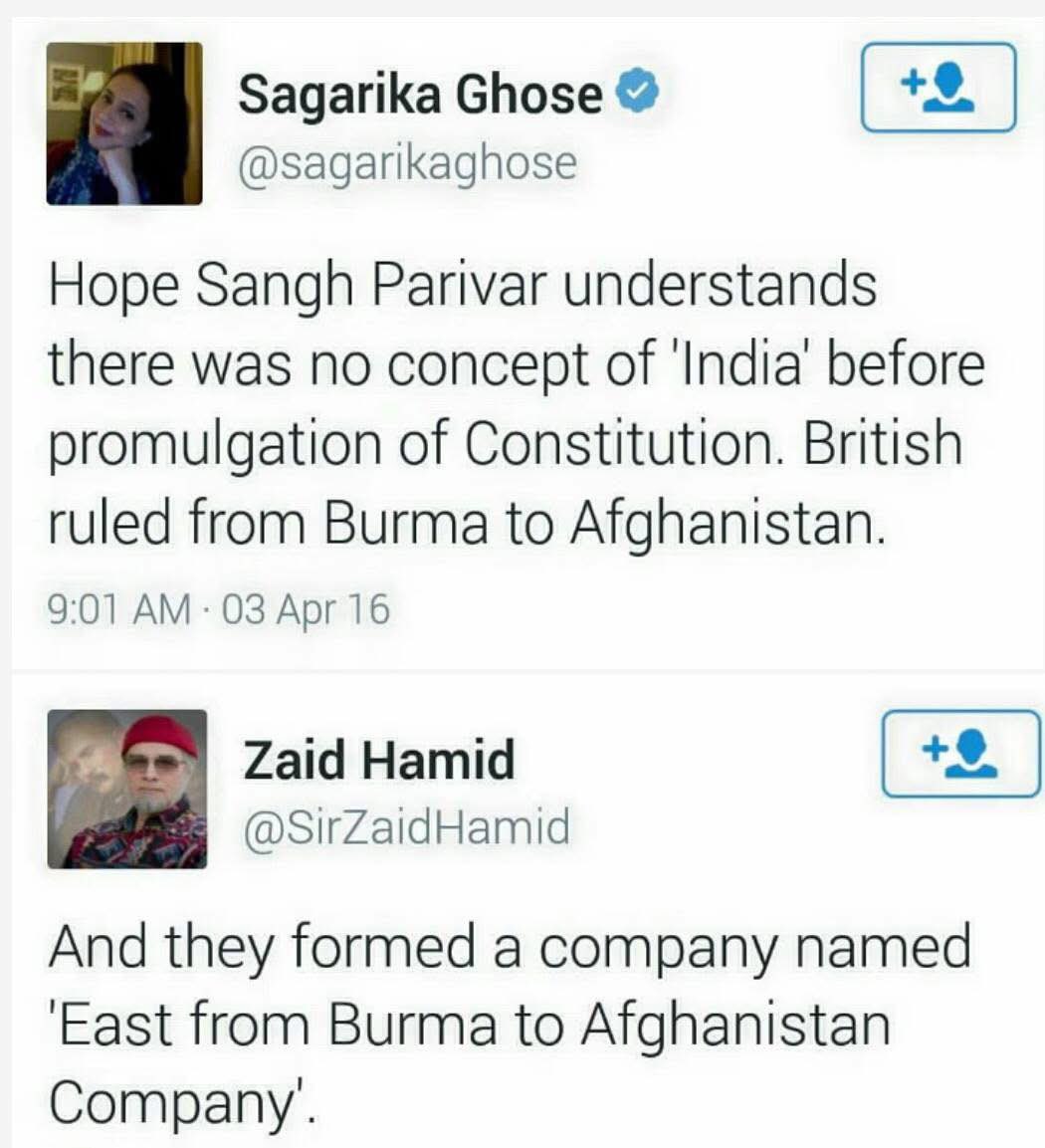
Fucking Gold Standard reply to Sickness Called Sagarika Ghose
Sumati tweet media
English
142
2.9K
17.8K
255.1K
sajan.b
sajan.b@nsajan·
@Rainmaker1973 Not innovation. This is literally what treadmills looked like 15 years back before electric ones became common.
English
0
0
0
98
Massimo
Massimo@Rainmaker1973·
No electricity needed.
English
16
32
217
22.4K
sajan.b retweetledi
Sana Ebrahimi Ledene
Sana Ebrahimi Ledene@__Injaneb96·
Jammu and Kashmir belong to India.🇮🇳
Indonesia
2.4K
5.6K
35.4K
1.4M
Syed Samiullah
Syed Samiullah@RO_CISSS·
@rafaelmgrossi @iaeaorg This makes no sense. If 🇮🇳’s PFBRs aren’t under the IAEA safeguards, then what exactly is being praised here? You can’t claim to uphold global non-proliferation standards while applauding projects outside your own oversight. Are “global standards” optional when it’s 🇮🇳?
English
7
1
4
3.3K
Rafael Mariano Grossi
Rafael Mariano Grossi@rafaelmgrossi·
Impressive progress by India in achieving criticality of the Prototype Fast Breeder Reactor at Kalpakkam, a key step forward in fuel sustainability and the future of nuclear energy. The @IAEAorg will continue supporting the safe and secure development of 🇮🇳’s nuclear programme. Congratulations, Prime Minister @narendramodi! @DAEIndia @PMOIndia
English
119
1.2K
6.6K
445.2K
sajan.b
sajan.b@nsajan·
@sabeer and Sabeer's clownery continues 😂
English
0
0
0
9
Sabeer Bhatia
Sabeer Bhatia@sabeer·
While India debates how to feed 800M people, China is busy building the future. The real difference? Mindset, not capability.
English
146
99
556
12.5K
sajan.b
sajan.b@nsajan·
@sabeer American "family values" 😂
English
0
0
0
5
Sabeer Bhatia
Sabeer Bhatia@sabeer·
In the US, love for family is expressed openly - “I love you” is said every day. In India, that same love often goes unspoken. Strange how three simple words can reflect such different cultural habits.
English
84
9
110
5.5K
Aravind
Aravind@aravind·
Sometime ago, I had a talk with a banking guy and media personality who was part of the GLISCO network in London. But he got fed up with having to support Islamists and Communists (though he's still 100% Globalist attending WEF and hating Trump / Modi/ Milei / Maloni, while supporting China, as that's how he mints his millions). This guy told me something simple and interesting. He was asked to post on social media but limit replies by his "social media advisor" (later I found out this advisor was a Pakistani Brit). The reason he gave was - "if you limit replies, your message will reach millions yet there will be no direct replies to counter your post or dilute its content for your audience." That's when it hit me: 1) They use replies and comments to dilute and attack any truth we post. 2) They make sure we can't reply and counter when they are creating a narrative. Now go and find who's posting without allowing replies and comments on social media. You will know they are working with an agenda pushing their narrative. Mostly for the GLISCO-DS.
English
112
845
3.9K
116.2K
sajan.b retweetledi
Parimal
Parimal@Fintech03·
Let me decode 3 things here: 1. Common people think the NIC was good enough, then why this? The truth is that the legacy NIC system was suffering from technical debt so massive it became a national security risk. Before this migration, 1000s of govt officials were secretly using personal Gmail/ProtonMail accounts for official work because the NIC interface was too clunky for modern mobile devices. By spending ₹180 crore, the govt is not just buying Zoho Mail; they are buying a Behavioral Correction. They are finally giving bureaucrats a slick enough interface (Zoho Workplace) so they stop leaking state data into foreign private clouds out of pure frustration. 2. 1 of the most hardly known technical details of this deal is that this is not the public Zoho you & I use. This is a Govt-Specific Cloud Instance. While the data sits on Zoho’s servers, the Sovereignty Layer is unique. The Indian govt reportedly mandated that the data be hosted in Tier-4 Data Centers with Geo-fencing controls. If a Zoho employee in California/Chennai tries to peek at a PMO email, the system is designed to trigger a Digital Self-Destruct of that access path. The govt has essentially rented Zoho's brain but kept the skull (data ownership) entirely for itself. 3. Finally, let us look at the math: ₹180 crore for 16.68 lakh accounts over the contract period. This works out to ~₹1080/account for the current project duration. This is a predatory pricing masterstroke by Zoho to evict Microsoft 365 & Google Workspace from the Indian public sector forever. Microsoft would have cost 5-10x more. Zoho did not win this on patriotism alone; they won it by making the cost of sovereignty cheaper than the cost of dependency.
Parimal tweet media
English
43
669
2.7K
105.8K
sajan.b
sajan.b@nsajan·
@sabeer Imagine being a human being who knows history very well but still chooses to ignore it and jerk off on public like this in the name of public service ......... Is it that he blew his 400 Mil and now needs engagement on X to eat or is it agenda .....
English
0
0
0
6
Sabeer Bhatia
Sabeer Bhatia@sabeer·
Gist of my Stanford talk: I don’t fully understand the India–Pakistan rivalry beyond the 1947 partition—my own family lived that rupture. It was a “tribal” era: my side vs yours. But today is different. The internet has erased borders. From San Francisco, I engage with ideas across India, AI, sports, and global politics. We’re more connected than ever. This moment demands a shift—from tribal identity to individual exceptionalism. We are more alike than different. It’s time to bury the past and move toward a new India–Pakistan understanding—rooted not in history, but in possibility. Not just politically wise, but humanly necessary.
English
373
105
514
61.9K
Backpacking Daku
Backpacking Daku@outofofficedaku·
India is set to construct the world’s longest bridge spanning the Bay of Bengal and the Andaman Sea. The proposed highway will originate from Chennai and extend all the way to Bangkok. This ambitious infrastructure project will enable travelers to reach the Andaman and Nicobar Islands and Thailand via land routes. Man-made floating islands will be developed near the main islands to accommodate travelers en route. In addition, travelers will have the option of taking a cruise from India or on their return journey. More details awaited.
English
473
87
1.1K
656.8K
Jairam Ramesh
Jairam Ramesh@Jairam_Ramesh·
The Modi Govt is proposing to bulldoze a Bill to increase the size of the Lok Sabha by 50%. The number of seats allocated to each state is also proposed to be increased by 50%. The argument that a 50% increase in seats across-the-board is equitable is deceptive. Proportions may not change for the present but there are deeper implications that cannot be wished away. Any increase in the gap in the existing strengths of different states in the Lok Sabha will place South Indian states at a disadvantage. For instance, currently Uttar Pradesh has 80 seats and Tamil Nadu has 39. With the proposed Bill, UP’s strength will zoom to 120 while Tamil Nadu will crawl up to at best 59. Similarly, Kerala will increase from 20 Lok Sabha seats to 30 seats, while Bihar will move from 40 to 60 seats. Overall, the southern states will gain 66 seats while the northern states will gain 200 seats. Mr. Modi is unilaterally preparing a law which will disadvantage smaller states in the South, Northeast, and West. The Chief Minister of Telangana has already raised an alarm. Others may very well follow as this proposal becomes officially public.
English
661
1.1K
3.9K
443.2K
Praveen Sinha (MAGA)
Praveen Sinha (MAGA)@PS_IAIOC·
@Jairam_Ramesh When the young minds are filled with this useless nonsense and no knowledge of the Hindu history, what can you expect from them when they grow up? Self hatred and praise for the oppressors.
English
9
10
102
5.5K
Jairam Ramesh
Jairam Ramesh@Jairam_Ramesh·
I still remember the quiz at Hindu College in mid-December 1974. The question was who was the only British PM to have been assassinated. Nandan and I were foxed. I took a wild guess and said Robert Peel. The answer was wrong and the other teams also didn’t know. The quiz master threw the question open to the audience. Prompt boomed in a shout from the back: Spencer Percival 1812. The answer was right and it came from none other than Shashi Tharoor. Ram Guha was in the audience and we have shared memories of this quite often.
Shashi Tharoor@ShashiTharoor

Yes those were the days. We at St Stephen’s were the pioneers of these festivals and similarly suffered from under-funding and minimal institutional support for travel. In 1973-74 Ramu Damodaran and I did to IIT Kharagpur what these IITans did to Miranda House, winning the debates and the quizzes, sweeping Best Speaker, Best Play, Best Team and the lot. We repeated the exercise at IIT Bombay’s first-ever cultural festival that winter! theprint.in/feature/iit-bo…

English
107
288
2.6K
494.4K