N.T.Arunkumar (NTAK)

9.1K posts

N.T.Arunkumar (NTAK) banner
N.T.Arunkumar (NTAK)

N.T.Arunkumar (NTAK)

@ntarunkumar

Boards, Business, Technology.

India Katılım Mayıs 2009
660 Takip Edilen1.8K Takipçiler
Sabitlenmiş Tweet
N.T.Arunkumar (NTAK)
N.T.Arunkumar (NTAK)@ntarunkumar·
With reverence and love, remembering my Guru, my Swami Sri Sathya Sai Baba on His Mahasamadhi anniversary today. My last physical interaction with him was in December 2010. His last words, “Very happy” accepting my humble salutation, continues to light my life. #OmSaiRam
N.T.Arunkumar (NTAK) tweet media
English
0
0
4
229
N.T.Arunkumar (NTAK) retweetledi
Reads with Ravi
Reads with Ravi@readswithravi·
“Greatness does not come out of intelligence, it comes from character. Character is not formed out of smart people: it is formed out of people who have suffered.” — Nvidia CEO, Jensen Huang
English
103
1.8K
8.8K
229K
N.T.Arunkumar (NTAK) retweetledi
Parimal
Parimal@Fintech03·
The Youth Who "Downloaded" Everything At 12 yrs old, Śvetaketu was sent away to a traditional gurukul to study the Vedas, logic, grammar & formal sciences. He spent 12 yrs memorizing the entire canon of ancient knowledge, essentially building a massive, human-database equivalent of an LLM in his head. When he returned home at 24, he did not walk in with humility. The text explicitly describes him as: स्तब्ध एयाय महामना अनूचानमानी Stabdha eyāya mahāmanā anūcānamānī He returned arrogant, highly opinionated, proud of his vast learning & convinced he knew everything there was to know. Śvetaketu had instant access to every text, rule, formula & debate structure. He was, for all practical purposes, a walking search engine. His father, Uddālaka, saw through his son’s surface-level confidence. He did not test him on rote recitation / facts. Instead, he asked a single, deceptive question that shattered Śvetaketu’s pride: "Śvetaketu, my dear boy, since you are so proud, so well-read & so confident in your knowledge... did you ask your teachers for that instruction by which the unheard becomes heard, the unthought becomes thought & the unknown becomes known?" Śvetaketu froze. He had memorized 1000s of rules, texts & definitions. But he had no idea what his father was talking about. How could a single principle explain the unseen core of everything? Confused & humbled, Śvetaketu replied: "How can there be such an instruction, father? My venerable teachers surely did not know this, for if they had known it, why would they not have taught it to me? Please, father, tell me about it." In that single moment, his entire "I know everything" syndrome collapsed. He realized he had gathered data (jñāna), but lacked insight (vijñāna). To teach him, Uddālaka did not hand him another book. He brought him a tiny fruit from a banyan tree (Nyagrodha) & asked him to perform a physical experiment: "Break open the fruit." Śvetaketu broke it: "It is broken, father." "What do you see inside?" Śvetaketu looked: "Extremely tiny seeds, father." "Break 1 of those tiny seeds." Śvetaketu crushed it: "It is broken, father." "What do you see inside the crushed seed?" Śvetaketu peered closely & said: "Nothing at all, father." Uddālaka then said words that carry a terrifying resonance in the age of AI: My son, from that subtle essence inside the seed which you claim is 'nothing', this entire massive, sprawling banyan tree arises and stands. You can count the leaves, measure the branches & memorize the bark. But if you do not know the invisible, unquantifiable essence that creates the tree, your knowledge is only of the surface. Uddālaka then delivered the immortal Mahāvākya: "Tat Tvam Asi" We live in a time where anyone with a prompt can generate a 1000 word essay, write code in languages they never learned / summarize 50 books in secs. It creates a psychological trap: confusing retrieval speed with personal depth. Śvetaketu represents the modern AI user: Armed with instant outputs, convinced that possessing access to answers is the same as understanding reality. The Seed represents the limits of computation: AI can analyze every branch, leaf & pattern of human thought (the external banyan tree), but it cannot supply the silent, conscious, lived reality from which true insight springs. Accessing a library of 100 million texts does not make us a sage, just as downloading an entire database did not save Śvetaketu from his own ignorance.
English
60
329
1.1K
26.1K
N.T.Arunkumar (NTAK)
N.T.Arunkumar (NTAK)@ntarunkumar·
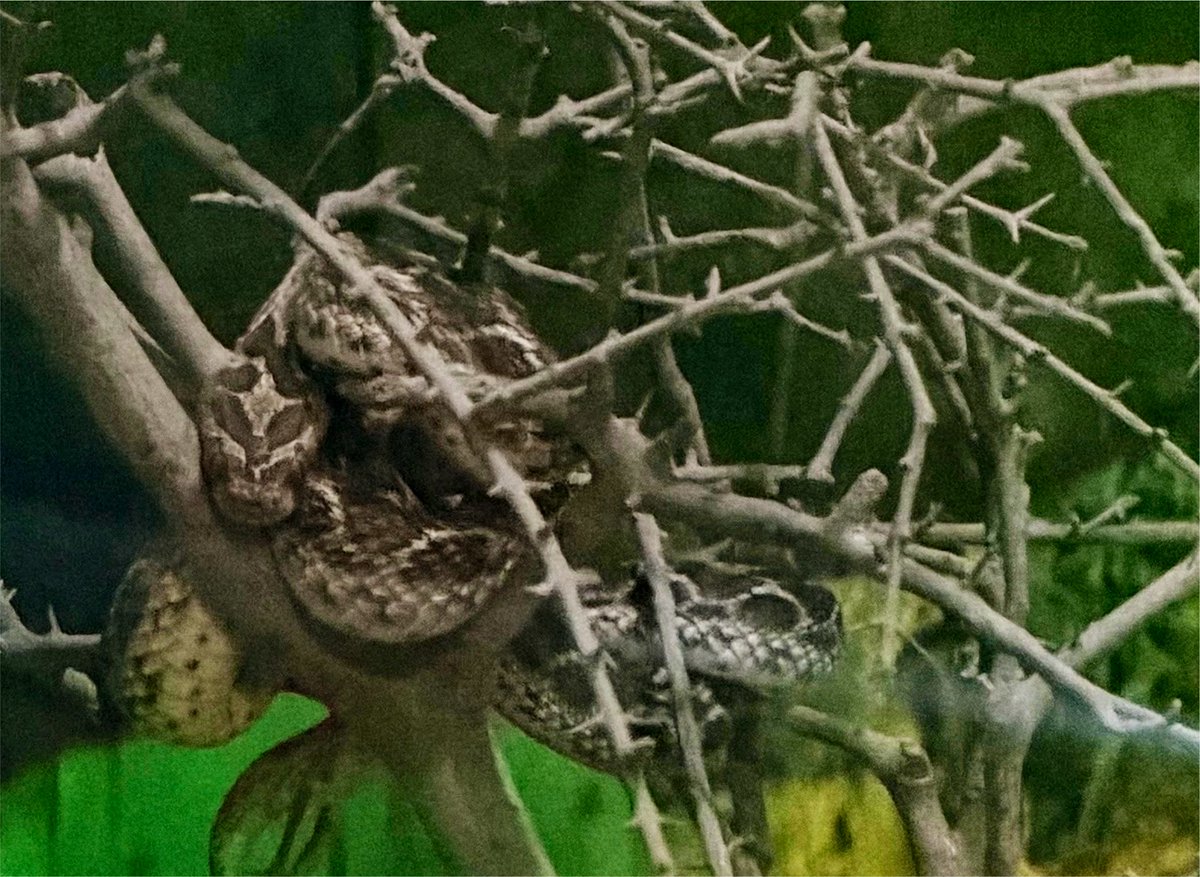
One of the “big 4” venomous, lethal snakes commonly found in India. Looks tiny and docile but is extremely dangerous. The saw-scaled viper (Echis carinatus) is called சுருட்டை விரியன் (Suruttai Viriyan) or சுருட்டைப் பாம்பு in Tamizh. A bit blurred with 20x zoom #shotoniphone
N.T.Arunkumar (NTAK) tweet media
English
1
0
0
93
N.T.Arunkumar (NTAK) retweetledi
Sandman0530
Sandman0530@CarlEagan1·
Sandman0530 tweet media
ZXX
98
2.2K
9.8K
196.6K
N.T.Arunkumar (NTAK)
N.T.Arunkumar (NTAK)@ntarunkumar·
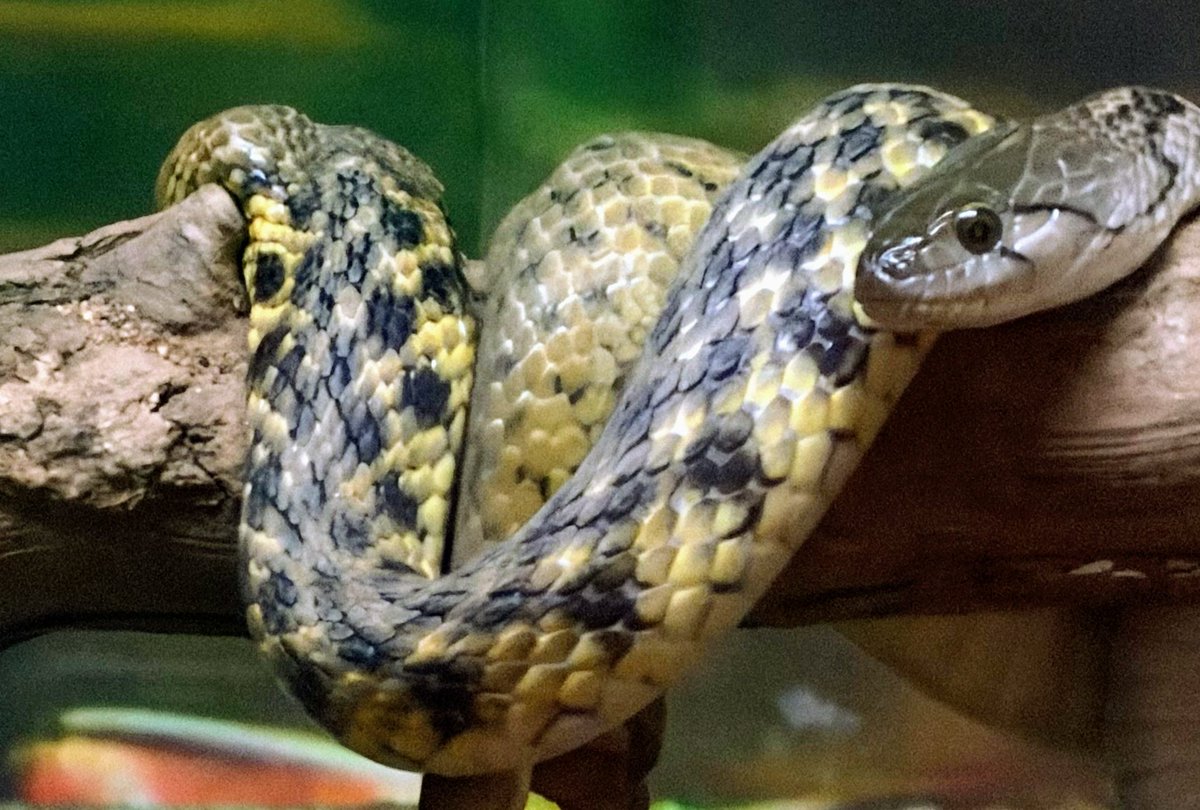
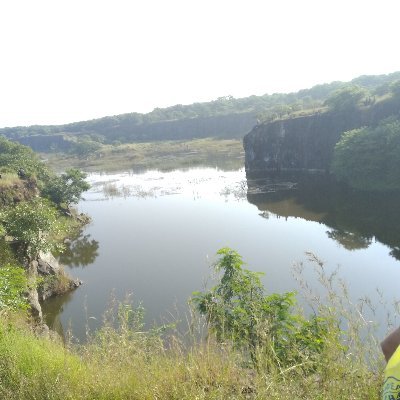
Wild but mild. Creatures living amidst us, even in semi-urban settings, but vanishing quickly and quietly. Some photographs from recent wanderings: Chequered keel back (non-venomous), chameleon, black turtle and water monitor lizard. #wild #sonyalpha #thephotohour
N.T.Arunkumar (NTAK) tweet mediaN.T.Arunkumar (NTAK) tweet mediaN.T.Arunkumar (NTAK) tweet mediaN.T.Arunkumar (NTAK) tweet media
English
0
0
1
77
N.T.Arunkumar (NTAK) retweetledi
Karun Pal
Karun Pal@karunpal·
Modern luxury is the ability to live quietly. No drama. No noise. No pretending to be someone you are not. Just living low-key. Reading. Thinking. Listening to music. Staring at walls. Going for walks. Watching old movies. Being bored. Working on your purpose. And feeling life deeply. That is peace.
English
130
1.7K
9K
195.9K
N.T.Arunkumar (NTAK) retweetledi
Jensen Huang
Jensen Huang@JensenHuang·
For my first post, I’m sharing a letter @NVIDIA signed on why open models matter. AI will transform every industry, power every company, and be built by every country. Open models strengthen safety and cybersecurity, accelerate innovation and diffusion, and enable sovereignty. The world needs both frontier closed models and frontier open models. images.nvidia.com/pdf/Open-Weigh…
Jensen Huang tweet mediaJensen Huang tweet mediaJensen Huang tweet media
English
16.2K
29.8K
172.8K
64.9M
N.T.Arunkumar (NTAK)
N.T.Arunkumar (NTAK)@ntarunkumar·
@prathyvsh My personal belief (& experience) is there is self-discovery to be made beyond ‘absurdity’. Some call it potential, some purpose, yet others (rarity) freedom. Routine, repetition, rituals, call it what you may, the absurdities, all can be liberating if one immerses oneself fully.
English
1
0
1
32
Prathyush
Prathyush@prathyvsh·
@ntarunkumar I have read The Plague and some of The Myth of Sisyphus. It is a persistent query even among those who have read Camus: reddit.com/r/askphilosoph… If you have a coherent answer, can you share it rather than redirecting?
Prathyush tweet media
English
1
0
0
27
N.T.Arunkumar (NTAK)
N.T.Arunkumar (NTAK)@ntarunkumar·
@prathyvsh I’d recommend reading Camus :) - and if you still don’t get an answer, well…keep pushing.
English
1
0
0
40
Prathyush
Prathyush@prathyvsh·
@ntarunkumar I am puzzled, why should we be bothered to keep pushing, if we accept that life is absurd? How does it matter to the inherent absurdity that if I work / not work?
English
1
0
0
113
N.T.Arunkumar (NTAK) retweetledi
Shiv Aroor
Shiv Aroor@ShivAroor·
India’s era of private commercial space flight has begun! Congratulations @SkyrootA & @ISRO! ♥️🇮🇳 #IndiaWithVikram1
English
58
1.5K
11.2K
147.5K
N.T.Arunkumar (NTAK)
N.T.Arunkumar (NTAK)@ntarunkumar·
My biggest problem as investor on platforms like @zerodha and @_groww is this: when things go wrong (& they often do)- 1. their support employees know less than the user when it comes to the cause of the issue & its solution, and 2. there is no visible escalation path.
English
0
0
2
166
N.T.Arunkumar (NTAK)
N.T.Arunkumar (NTAK)@ntarunkumar·
The Tao’s “wu wei”: translated as “nonaction,” but more accurately understood as action from deep perception of the situation rather than from the actor’s anxiety. Wu wei is not passivity. It is the discipline of not adding friction to a system already moving toward resolution.
English
0
0
1
97
N.T.Arunkumar (NTAK) retweetledi
liminal
liminal@Liminal1988·
Otrovert
liminal tweet media
Español
261
7.7K
24.4K
620.4K
N.T.Arunkumar (NTAK)
N.T.Arunkumar (NTAK)@ntarunkumar·
@GauravSharma True. Organization development must be a step ahead of business growth, at least on par. Most CEOs delegate internal development and pay the price. A performing business cannot sustain without a rapidly learning (& developing) organization.
English
0
0
1
20
Gaurav Sharma
Gaurav Sharma@GauravSharma·
Every organization fights two wars: one against external reality and one against internal entropy. The second usually determines whether it wins the first.
English
2
0
3
295
N.T.Arunkumar (NTAK) retweetledi
Aashish Chandorkar
Aashish Chandorkar@c_aashish·
More than 75 engineers packed their bags and relocated to Gujarat from the Philippines, South Korea, the United States and Malaysia to help build CG Semi’s ₹7,500-crore Outsourced Semiconductor Assembly and Test (OSAT) facility at Sanand. On the shop floor, these engineers now work alongside young women from Chhattisgarh, Jharkhand, Madhya Pradesh, Gujarat, Jammu & Kashmir and Kerala, many of whom had never stepped outside their villages before travelling to Malaysia for specialised semiconductor training. thehindubusinessline.com/info-tech/engi…
Aashish Chandorkar@c_aashish

How India's youth are making the semiconductor dream a reality youtube.com/watch?v=_TuNiU… PM @narendramodi ji's interaction with youngsters working in the new semiconductor plants

English
4
171
711
84.1K
N.T.Arunkumar (NTAK)
N.T.Arunkumar (NTAK)@ntarunkumar·
@ReetBhambhani Superbly articulated! PS: Indira’s comment must be seen in context of the times she was growing in (‘70’s & ‘80’s India versus same period in the US)- the economic growth trajectories of the two countries couldn’t have been more stark, not to mention the maturity of the biz env
English
1
0
3
70
Reet Bhambhani
Reet Bhambhani@ReetBhambhani·
Fair point. I could probably add another 20 names to that list. But that’s anecdotal evidence. The broader picture tells a different story. Women still lead fewer than 10% of listed companies as CEO or MD. That’s progress, but let’s acknowledge there’s a long road ahead. The goal isn’t to prove that women can become CEOs in India. They’ve already done that. The goal is to make it common enough that we no longer have to count them by name.
Kanwal Sibal@KanwalSibal

You couldn’t become CEO in India? Why give a wrong picture of India? Many women have become CEOs in India. Amongst them; •Falguni Nayar: Founder and CEO of Nykaa. •Kiran Mazumdar-Shaw: Executive Chairperson and founder Biocon. •Vibha Padalkar: CEO and MD of HDFC Life Insurance. •Priya Nair: Managing Director and CEO of Hindustan Unilever. •Prabha Narasimhan: CEO and MD of Colgate-Palmolive India. •Dipali Goenka: CEO and Managing Director of Welspun India. •Radhika Gupta: CEO and MD of Edelweiss Mutual Fund.

English
3
0
16
1.5K
N.T.Arunkumar (NTAK) retweetledi
anand mahindra
anand mahindra@anandmahindra·
Alex Karp’s CNBC interview is going to be widely discussed and debated. My initial take on it: Some will call Alex’s comments self-serving but there is an underlying argument he makes which I think is worth taking seriously: AI has three layers. Compute. Model. Application. He argues that critical infrastructure doesn’t run on a model alone, that it needs an application layer sitting on top. I think he’s right about the stack. I made a version of this argument in my recent letter to TechM’s shareholders this year: AI is like today’s smartphone: remarkable technology, but indispensable only because of the apps and experiences built on top of it. The ecosystem determines who creates lasting value, not the chip or the model underneath. To be clear, I still believe India should pursue sovereign frontier model development. But if Karp’s hypothesis is right, and the model layer is commoditising, then the verticalization of the compute, models and applications needs to happen at the same time. For AI services, from his arguments, it appears the more durable commercial and strategic edge is the application layer: model-agnostic, built on whichever open model fits best, carrying decades of enterprise workflow knowledge that no model provider owns. As Karp says, the application layer “takes a large language model & makes it safe and precise…Everyone gets to ask the basic questions: who owns the data, where is it cashed, are the prompts secure, is this being transferred to you?” And “critical infrastructure does not run these models without an application layer.” And this criticality is where the stakes are highest: defence, classified programs, regulated industries, where control over data, auditability and governance is non-negotiable, whichever model happens to sit underneath.
 The application also has to enable business enterprises to preserve their ‘alpha.’ That’s where I truly believe AI service companies have the edge. Not necessarily in owning the model, but in owning what sits above it. I’m keen to hear other reactions to his interview…
English
145
144
1.1K
232.6K