Nathan Taylor

14.3K posts

Nathan Taylor banner
Nathan Taylor

Nathan Taylor

@ntaylor963

My substack https://t.co/nvPv9RXB3l is about tech trends and the near future. Here on twitter I mostly tweet links about science, tech, econ. Mostly.

California Katılım Mayıs 2011
224 Takip Edilen1.6K Takipçiler
Nathan Taylor
Nathan Taylor@ntaylor963·
@elidourado I switched from Apple to Spotify because my teenage daughter kept getting playlists should couldn’t use. She dances and sharing songs easily is important. Short answer: network effects. Personally I found Spotify playlist centric approach better. But not by a lot
English
0
0
1
222
Eli Dourado
Eli Dourado@elidourado·
I’m a happy Spotify user but the math on the Apple service bundle is starting to make sense. Are there any happy Apple Music users out there who previously used Spotify?
English
7
0
11
7.2K
Nathan Taylor
Nathan Taylor@ntaylor963·
@ModeledBehavior Randomly just listened yesterday to this podcast episode which covers this exact transition. Great if you are music nerd. 🙋‍♂️ Likely too much for many. But give it a try if that’s your thing. overcast.fm/+7bvFXg0S4
English
0
0
2
58
Nathan Taylor
Nathan Taylor@ntaylor963·
@ModeledBehavior There’s a huge, one time shift in pop music due to amplifiers. Cf chuck berry 1955. That divide persists. 1955 pop closer to 2023 than anything before 1940s. Singers no longer sang in shouting style to be heard Guitar stopped being rhythm, became a solo/riff instrument.
English
1
0
3
146
Nathan Taylor
Nathan Taylor@ntaylor963·
My temporary banishment to working from the garage is officially over. 🎉🥳
Nathan Taylor tweet media
English
0
0
3
622
Nathan Taylor
Nathan Taylor@ntaylor963·
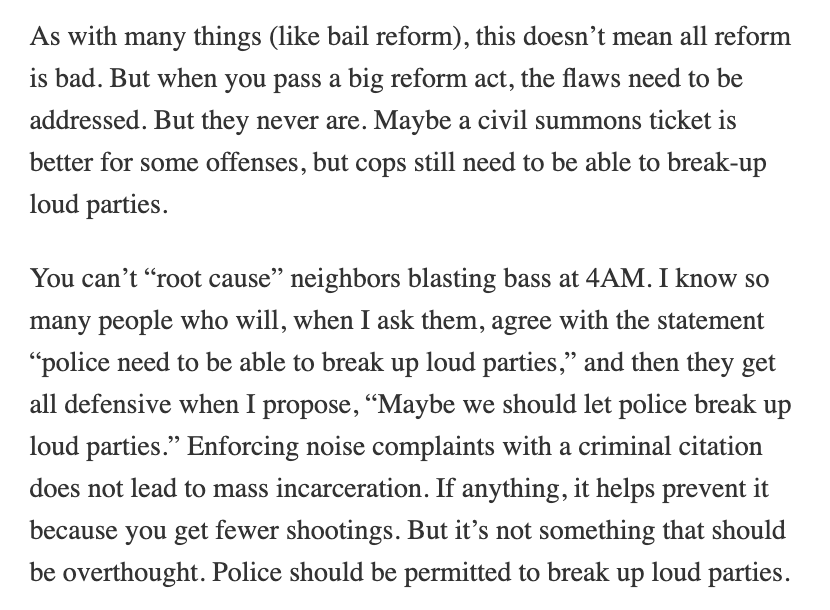
When neighbors call the police to shut down loud parties.... "But you see police _can’t_ shut it down. This is what politicians intended when — and this important — in 2017 NYC passed a law explicitly preventing police from shutting down parties." qualitypolicing.com/loud-parties-a…
Nathan Taylor tweet media
English
0
0
2
332
Nathan Taylor
Nathan Taylor@ntaylor963·
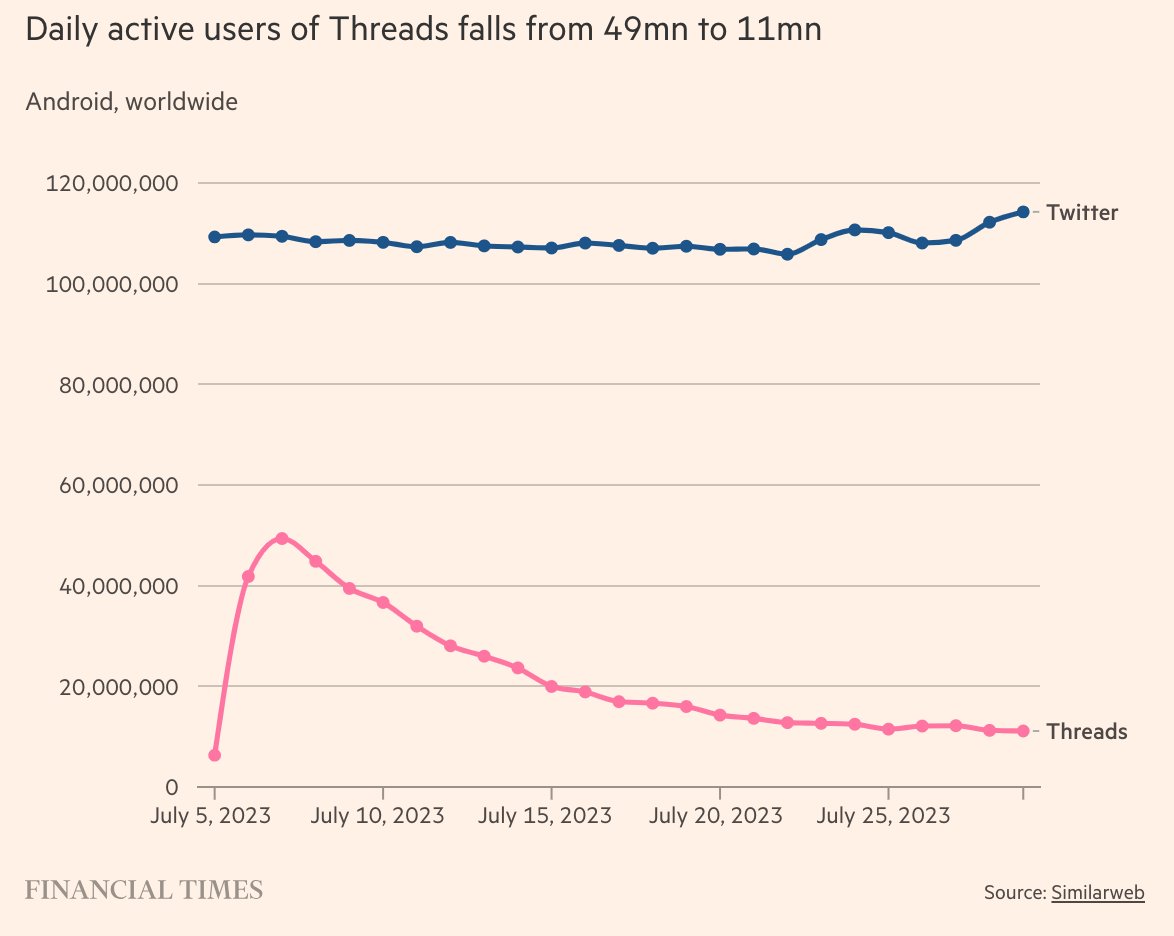
Threads/twitter adoption from FT. Ridiculously rapid to 50m daily users in a week. Now at 11m daily users, versus 110m twitter. Headline "Meta’s Twitter rival Threads unravels" is too strong. Many plausible futures: both die, one dies, both live. ft.com/content/330d87…
Nathan Taylor tweet media
English
1
2
6
1.2K
Nathan Taylor
Nathan Taylor@ntaylor963·
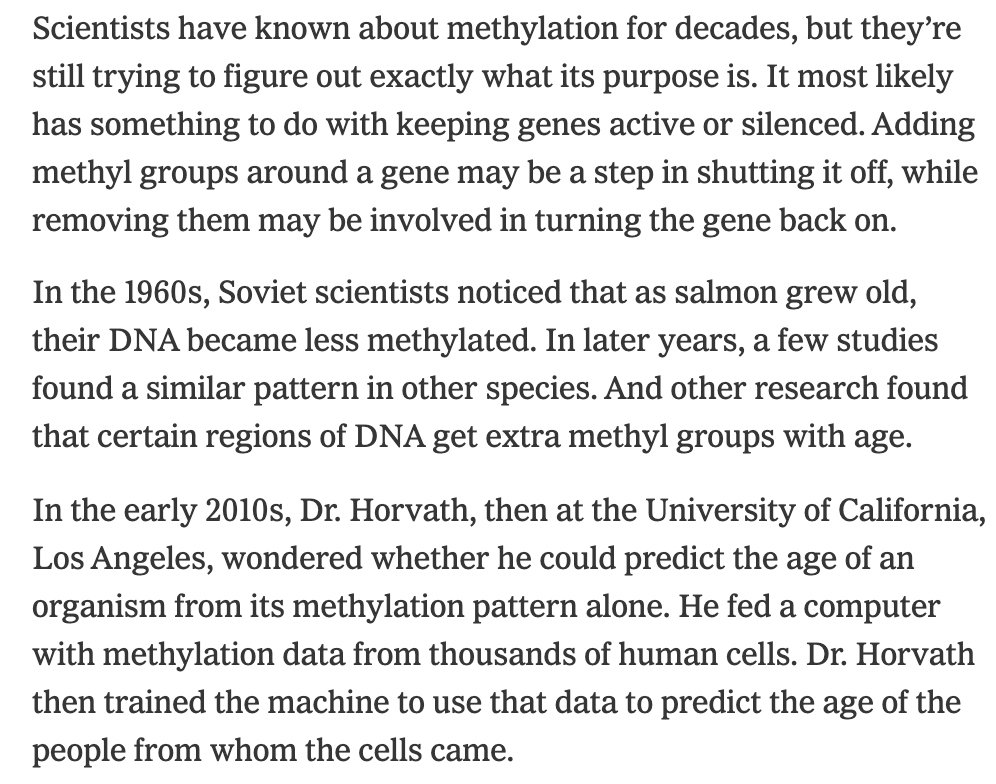
the pattern of DNA methylation can be used to estimate the age of mammals to within a year. Mostly decreases with age, but some areas increase. It's called the epigenetic clock. Beware Goodhart's law on this one 😀 nytimes.com/2023/08/10/sci…
Nathan Taylor tweet media
English
1
0
2
254
Nathan Taylor
Nathan Taylor@ntaylor963·
history of making paper airplanes. how this has fed back into airplane designs. Sort of hodge podge, but fun if you had a paper airplane making phase yourself 🙋‍♂️ bonus!: plan to "launch paper airplanes from the International Space Station (ISS)." popularmechanics.com/flight/drones/…
Nathan Taylor tweet media
English
0
0
2
195
Nathan Taylor
Nathan Taylor@ntaylor963·
@bonerici Most prediction market have a low number of traders and low volume. You can show market lags news in an erratic predictable way in this condition. Or to flip it. For a market price to be up to date it needs > certain $ trade volume, and > number of traders.
English
2
0
1
53
bonerici
bonerici@bonerici·
One thing that lk99 has taught me is that the betting markets have so many lay people betting that it swamps the expert signal. Also it's a trailing indicator. It's like Twitter on a 6 hour delay.
English
1
0
1
396
Nathan Taylor retweetledi
Philippe Lemoine
Philippe Lemoine@phl43·
I disagree with Bryan on a number of issues, such as immigration, but I think he is a good man and a model of intellectual virtue. The fact that so many people see this tweet as an indictment, rather than as a manifestation of that virtue, is very sad.
Bryan Caplan@bryan_caplan

I meant what I said five years ago. In his early 20s, @RichardHanania anonymously said some bad things about me. I won him over, met him in real life, and he is now my good friend. And I stand by my friends. richardhanania.com/p/why-i-used-t…

English
2
6
84
11.4K
Nathan Taylor
Nathan Taylor@ntaylor963·
@razibkhan The Wikipedia post has some really weird language about this only being a theory. Instead of a settled question. I guess that explains why it has that language. Couldn’t figure it out until now.
English
0
0
11
1K
Razib Khan 🧬 ✍️
Razib Khan 🧬 ✍️@razibkhan·
did not know there was a huge bantu-expansion-did-not-happen community. also, really weird that ppl on 'both sides' say i say the europeans were in south africa before bantus when it's clear on the map and text that that's not so
Razib Khan 🧬 ✍️@razibkhan

Bantu über alles: three millennia of unstoppable African farmers repeopling the vast continent razibkhan.com/p/bantu-uber-a… In the late 1700’s, after more than a century colonizing the Cape of Good Hope’s hinterlands, Dutch settlers finally clashed with clans of Xhosa herders east of the Great Fish River. Along the farthest southern coast of Africa, the Great Fish looms large, marking the disjunction between the Cape’s dry Mediterranean climate and the moist, subtropical zone that eventually bleeds seamlessly into the tropical regime regnant across so much of the rest of Sub-Saharan Africa. Here, the European colonists first encountered Bantu-speaking Africans, the Xhosa tribe whose most famous son was the late Nelson Mandela. Thus began a series of drawn-out wars that continued to flare up periodically into the 1800’s and eventually saw all of modern South Africa brought under European rule. In making this push east, the Dutch-speaking ancestors of the Boers, the migratory component of the Afrikaner population who were expanding outward from Cape Town into the bush, finally forded the chasm between two radically different ecologies. Their campaigns took them from Africa’s southwestern tip, with its sun-soaked vineyards to the lush pasturelands that gently give way to savanna further north and east. The Boers' journey eastward exposed them to a Bantu culture as alien to the Cape’s native Khoekhoe as that of the Europeans. The difference between the Xhosa and Khoekhoe was stark even physically; where the former resembled the dark-skinned population of most of Sub-Saharan Africa, the latter were of a light-brown complexion, with high cheekbones, delicate features and narrow eyes more reminiscent of East Asians than Africans. The Xhosa were the southernmost of the Bantu-speaking peoples, a language family that today covers over 30% of Africa’s vast landmass (and some 40% of its arable reaches) and accounts for the same proportion of the continent’s population. If the Khoekhoe were the echoes of the South African Neolithic, with roots back to the Ice Age and prior, the Xhosa were firmly of South-Africa’s Iron Age, arrivistes who brought new technologies and lifestyles to the region around 300 AD. The Xhosa peregrinations were not unique, but a single chapter in a much larger narrative that began far to the north. They were just one of the innumerable tribes, ethnicities and nations that emerged from a millennia-old ethnocultural cauldron that boiled over, sending forth the phenomenon of the Bantu expansion, an agriculture-powered demographic revolution that reshaped the human geography of the entire African continent in the time between Sumer’s fall and Rome’s. The Xhosa’s 3,000-year and 3,000-mile-long trek from Central Africa began in the savannas flanking Lake Chad and initially swept slowly southward along the shores of the Atlantic, then shooting out to the Great Rift Valley and the Indian Ocean coastlands in a rapid burst, before finally flowing on to the cool highlands of the South African veld. The Xhosa encountered by the Boers were the westernmost of the Nguni-speakers, with waves of Zulu, Swazi and Ndebele following in their wake to their east. Because these nomadic clans were the leading edge of the final push to new territories, sure as a riptide, the indigenous Khoekhoe left an imprint on them, both in their language and genes. Though their interactions with the native peoples, who clung tenaciously to their last western strongholds right up until the Europeans’ 17th-century arrival, were often hostile, Khoekhoe heritage remains visible in the features of many Xhosa, including Mandela, a scion of a noble lineage. Khoekhoe influence also shows through in spoken Xhosa; almost 10% of Xhosa vocabulary contains telltale Khoekhoe clicks. Nevertheless, despite this synthesis between newcomers and natives, when Bantu populations arrived at South Africa’s eastern edge 1,700 years ago, their conquests heralded the end of the old world of foragers and herders that at its height had dominated the continent from Table Mountain at the Cape of Good Hope to the foothills of the Ethiopian highlands. The Bantu brought iron weapons to battle, drove vast herds of cattle through which their elites measured their wealth, and had the know-how to cultivate sorghum and millet, carpeting southern and eastern Africa with peasant villages for the first time in the long history of human occupation there. It was only the startlingly novel biological environment of the Cape that finally brought the Xhosa march to a standstill. The region’s ecology was anomalous in Africa south of the equator. With cool rainy winters and hot dry summers, Bantu crops dependable elsewhere failed them. Below a line of latitude spanning the continent from Nigeria et al.’s Bight of Biafra to the Kenyan coastlands, by 1000 AD, only the Khoekhoe’s rangelands and the San’s deserts eluded Bantu domination of the entire continent’s span coast to coast. The San foragers continued to hunt and gather in the fastness of their deserts as they had for hundreds of thousands of years, while their cousins, the Khoekhoe pastoralists, successfully guarded their herds against the raiding Xhosa (and later fought off Dutch encroachments in the 17th century, before finally succumbing in the 1700’s). And yet, despite dispersing across thousands of miles and occupying disparate regions of Africa for thousands of years, the Bantu remained culturally and biologically apart from earlier peoples in the regions they came to settle and rule. Even after a millennium of interaction between the Xhosa and their click-speaking neighbors, the Bantu tribes of South Africa retain much more in common with their linguistic cousins from East and Central Africa than the Khoekhoe and San with whom they share their land and recent history. Genetically, South African Xhosa are about seven times more distant from San foragers than they are from Bantu Kenyans, who live some 1,500 miles distant. Consider the Xhosa word for human: umntu, a cousin to the Kenyan Swahili mtu (the Xhosa’s Khoekhoe neighbors fittingly described humans as khoe). The word “Bantu” itself comes from the common root for “human” across these numerous languages, with the plural being abantu in South African Zulu, bana in Congolese Lingala, abantu in Burundian Rundi and watu in Kenyan Kamba


English
23
17
160
41.1K
Nathan Taylor
Nathan Taylor@ntaylor963·
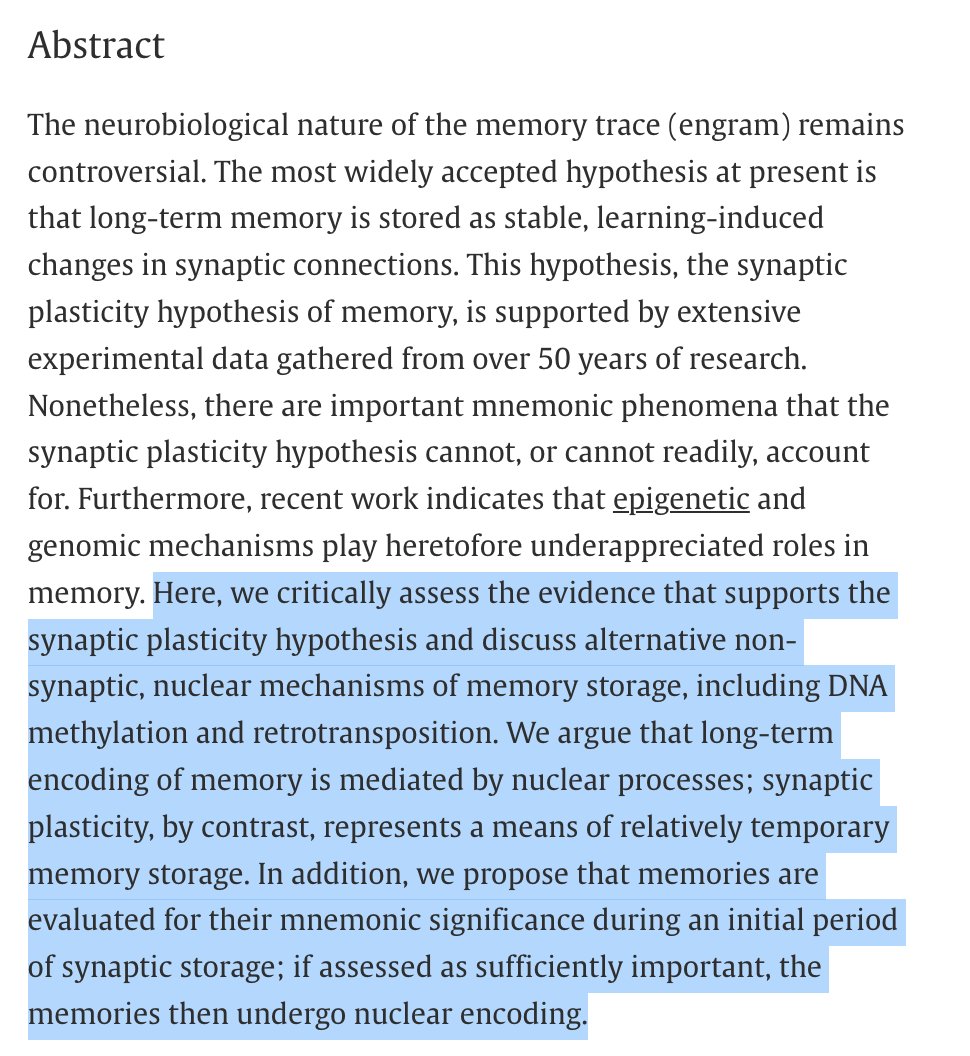
related paper. broad thesis is short term memory is synaptic. long term memory is molecularly encoded. biology is messy, so probably a bit of everything. But this idea is really interesting! It implies ML (synaptic approach) has no long term memory 🧐 sciencedirect.com/science/articl…
Nathan Taylor tweet media
English
0
1
2
253
Nathan Taylor
Nathan Taylor@ntaylor963·
Excellent podcast interview from @pgmid of David Glanzman, who makes the case for long term memory being encoded at the molecular level. Which is why transferring RNA from a trained donor to another animal can induce memories in the recipient. 🤯 braininspired.co/podcast/172/
Nathan Taylor tweet media
English
1
0
4
398
Byrne Hobart
Byrne Hobart@ByrneHobart·
One tricky topic when thinking about intelligence is when distributed agents display collective intelligence. An anthill “knows” where to find food even if individual ants don’t. But: is there any example of a distributed intelligence like this considering hypotheticals?
English
9
1
32
9.1K
Nathan Taylor
Nathan Taylor@ntaylor963·
@whyvert @RichardHanania I dont recall fukuyama saying convergence of culture across the board, just convergence of governance. Within broad liberal democracy there’s still plenty of room. Of course that culture is constrained to one which is compatible with end of history.
English
1
0
0
224
Whyvert
Whyvert@whyvert·
@RichardHanania This is a point against your embrace of Fukuyama. He says countries values will converge as they develop. Not happening. West's values are diverging from the Rest's.
English
7
0
25
7.9K
Richard Hanania
Richard Hanania@RichardHanania·
“On measure after measure—from thinking that children ought to be obedient, to tolerance of homosexuality…European countries have moved in the direction of greater individualism and secularism in the past 25 years.” economist.com/interactive/in…
English
29
15
176
60.4K