Ojas

1.1K posts

Ojas banner
Ojas

Ojas

@ojassave

Tech | AI | Health | Fitness | Personal Finance | Cricket

Bangalore Katılım Mayıs 2009
998 Takip Edilen117 Takipçiler
Ojas retweetledi
Steven Pinker
Steven Pinker@sapinker·
Like an appreciation of progress, reading and literacy are among the things that are good but cognitively unnatural. That is, they go against our evolved nature. We didn’t evolve with print; it was a recent invention. Reading, for many of us, has become so second nature that we just assume it’s the most natural way of getting information. But what we’ve seen, especially in the last 10 years, when video has become so cheap because of the cloud computing revolution and the broadband revolution, is that a lot of people, unlike us, much prefer to listen and watch than to read. You just see this: when I go to Google and ask a basic question about how to unstick my printer or solve a problem, I get like five videos. And I just want a paragraph that would solve it. I don’t want to see Seth saying, “Hi, welcome to my show. If you like it, subscribe and give it a like.” So just help me solve the problem. But clearly there’s something unusual about me, because people are going for the video. And the massive availability of video—of TikTok, of YouTube—means that people may not be getting the practice or putting in the effort into literacy, which we have reason to believe was one of the drivers of the Flynn effect and of cognitive sophistication in general. @HumanProgress
English
1
412
2.1K
511.9K
Ojas retweetledi
Johan Fourie
Johan Fourie@JohanFourieZA·
We analysed 3.4 million cricket deliveries across every men's international since 2001. The advantage of left-right batting partnerships? Precisely zero. The raw data seem to confirm the myth: mixed partnerships outscore right-right pairs. But the ordering is LL > LR > RR. More left-handers = higher score. It is left-hander quality, not hand diversity, doing the work. With the IPL starting this week, coaches are still engineering left-right balance in batting orders. The evidence says: pick the best batsman. Ignore the hand.
Johan Fourie tweet media
English
54
149
933
87.8K
Ojas retweetledi
Will McKelvey
Will McKelvey@Will_McKelvey·
The rise of recreational exercise over the last 50 years coincides pretty tightly with the US economy's shift from manual to intellectual labor. If AI automates a lot of intellectual labor, we'll see a similar rise in recreational education. Imagine taking an adults-only class on English lit: you would come away feeling intellectually stimulated, you'd sound more worldly at your next social engagement, and if the experience was in person, you might meet people with similar interests! This feels inevitable. People go to the gym to keep their bodies in shape for health + dating, so why wouldn't they take steps to keep their minds similarly sharp? Ultimately, this will look like a better-marketed version of community college adult-education classes. MasterClass was maybe just a few years too early...
English
22
8
113
9.3K
Ojas
Ojas@ojassave·
Hi @Kuvera_In . When do you expect this to be fixed. Thanks.
Ojas tweet media
English
1
0
1
162
Ojas
Ojas@ojassave·
@amitabhk87 The nolen gur based sweets in this place are out of this world
English
0
0
2
687
Amitabh Kant
Amitabh Kant@amitabhk87·
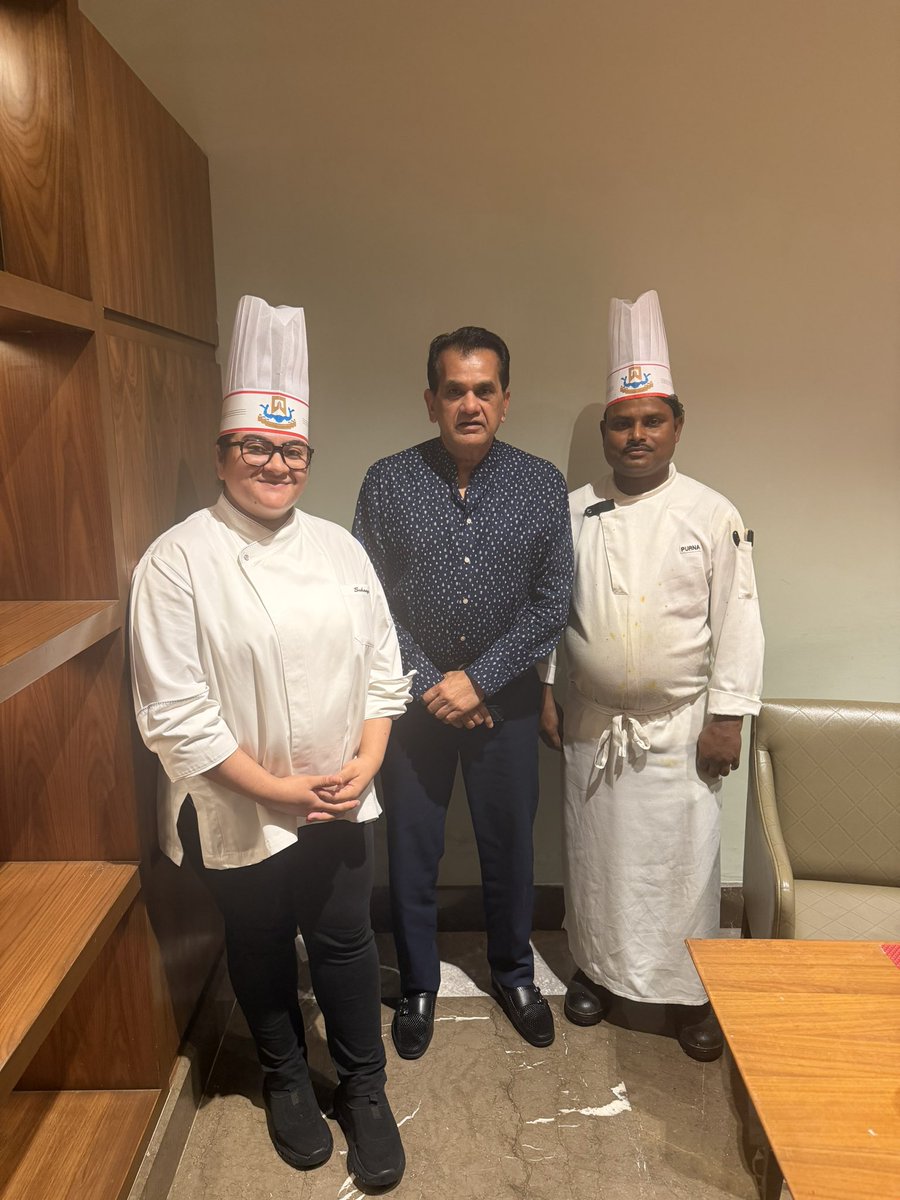
The most sophisticated and delicately balanced Bengali cuisine I have had was thanks to Chef - Sukanya and Chef Purna at ITC Royal Bengal in Kolkata. The meal comprised of Bhekti Macher and Paturi, as starters and Cholar Dal, Shukto, Macher Jhol and Kosha Mangsho with luchi and Basanti pulao. The desert comprised of Mishti Doi and Nolen Gur sandesh. One of the most awesome meals I have had in my life.
Amitabh Kant tweet mediaAmitabh Kant tweet mediaAmitabh Kant tweet media
English
43
85
1.2K
72.8K
Ojas retweetledi
Aakash Gupta
Aakash Gupta@aakashgupta·
The US government spent $25 million over a decade trying to prove your cell phone gives you cancer. The study accidentally produced one of the strongest pieces of evidence for radiation hormesis ever recorded. The NTP study was nominated by the FDA in 1999 specifically because they expected to find harm. They built 21 custom reverberation chambers in Switzerland. Exposed 1,679 mice and 859 rats to cell phone frequencies for 9 hours a day, every day, for 2 years. The whole operation was designed as the definitive “cell phones cause cancer” study. The cancer results were mixed at best. Male rats got more heart schwannomas. Mice showed nothing significant. But the survival data was so unexpected that the researchers didn’t even know how to explain it in their own report. Look at the survival curve. Every single radiation group outlived the control. The 2.5 W/kg group hit p=0.0020, the only statistically significant result in the entire longevity analysis. By day 700, the control group’s survival probability had dropped to ~0.65. The lowest dose group was still above 0.80. That’s the hormesis signature. The smallest dose produced the largest benefit. The same pattern shows up in exercise, fasting, and cold exposure. A mild biological stressor activates repair mechanisms that wouldn’t otherwise turn on. Over 3,000 published papers have documented this across microbes, plants, insects, and mammals. The French Academy of Sciences formally accepted it in 2005. The US still builds its entire radiation safety framework on the opposite assumption: that all radiation, at any dose, causes proportional harm. The FCC limit for cell phones is 1.6 W/kg. Your AirPods operate at a fraction of that. The dose that produced the strongest longevity signal in this study was 2.5 W/kg. Barely above the regulatory ceiling. The entire regulatory framework for wireless device safety assumes a dose-response curve that this $25 million study failed to find.
Aakash Gupta tweet media
Zane Koch@zanehkoch

for a while i've had a slight fear that the bluetooth from my airpods could be frying my brain this weekend i pulled the raw data from a $30m government study of 1,679 mice blasted with cell phone radiation and reanalyzed it what i found was...not what I expected? 🧵

English
52
210
1.8K
345.3K
Ojas retweetledi
Aakash Gupta
Aakash Gupta@aakashgupta·
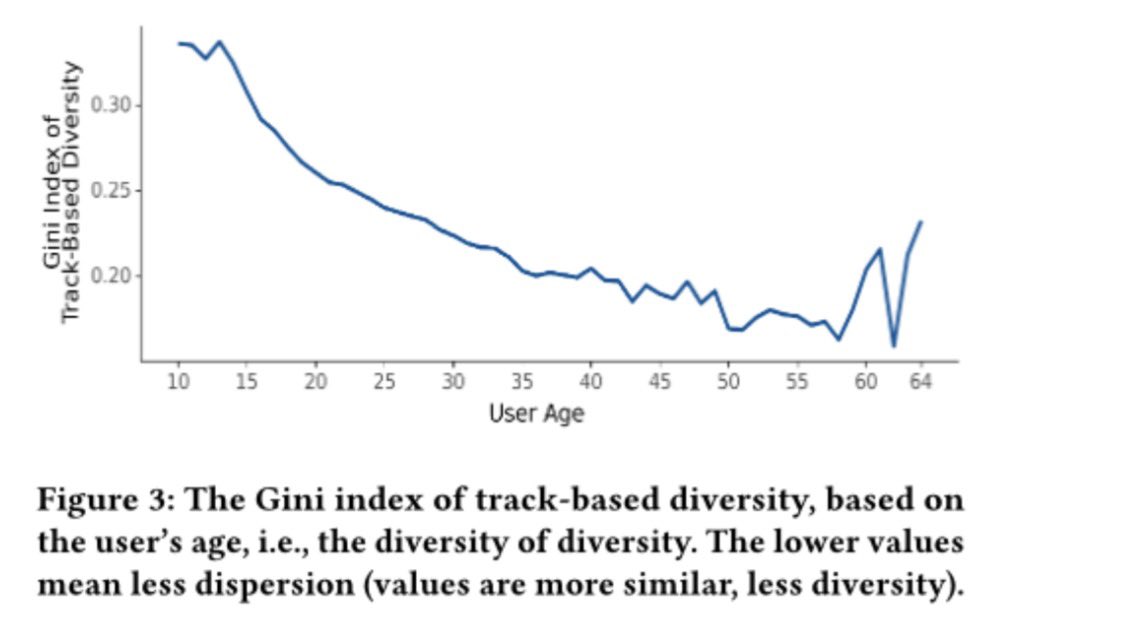
Your brain peaked musically somewhere around age 16. Everything since then has been a dopamine echo. Between the ages of 12 and 22, the mesolimbic dopamine pathway, the same circuit that processes cocaine and sex, fires at levels in response to sound that it will never reach again for the rest of your life. A 2011 McGill study used PET scans and fMRI simultaneously and found that music triggers dopamine release in the striatum at peak emotional arousal. The caudate nucleus lights up during anticipation of the good part. The nucleus accumbens lights up when it hits. Your brain is treating a guitar riff with the same reward architecture it uses for food-seeking and pair bonding. During adolescence, that response is dramatically amplified. Pubertal hormones are flooding the system. The prefrontal cortex is still wiring itself. Memories formed during this window get encoded with a density of emotional tagging that nothing in your 30s or 40s can replicate. Researchers at the University of Leeds identified this as the “reminiscence bump”: the period when your sense of self is forming, and the music playing during that formation becomes structurally integrated into your identity. A 2025 longitudinal study from the University of Gothenburg analyzed 40,000 users’ streaming data across 15 years. Younger listeners explored broadly across genres. Older listeners collapsed into increasingly narrow loops, almost entirely anchored to music from their teens and early twenties. Your brain stopped losing interest in new music years ago. It’s running a cost-benefit analysis. Familiar songs deliver guaranteed dopamine with zero processing cost. New songs require pattern recognition, expectation-building, and repeated exposure before the reward circuit kicks in. Past 25, most people stop paying that tax. The one variable that predicts whether someone keeps exploring: the personality trait “openness to experience.” Score high, you keep seeking. Score average, you default to the familiar forever. The fix, if you want one: deliberate exposure. Three listens minimum before your auditory cortex builds enough predictive models to generate a reward response. One passive listen on a playlist will never get there. Your brain needs repetition to find the pattern, and it needs the pattern to release dopamine.
Aakash Gupta tweet media
𐌁𐌉Ᏽ 𐌕𐌉𐌌𐌉@OrevaZSN

Unfortunately, as you get older, you gradually become less interested in new music and keep going back to the old favorite songs you once loved.

English
357
806
5.4K
780.5K
Ojas retweetledi
Anish Moonka
Anish Moonka@anishmoonka·
If you're an AI startup in India, renting processing power from the government to train your model costs about $0.7 per hour. The same hardware on Amazon Web Services costs $3.7. On Microsoft Azure, $6.6. The Indian government is subsidizing AI infrastructure at rates that would make most Western startups do a double-take. I read all 26 pages of the white paper this tweet links to. The numbers inside are wild. The IndiaAI Mission has a budget of about $1.2 billion over five years, approved in March 2024. Almost half of that, roughly $500 million, goes straight to building the processing power AI companies need to train their models. The original plan was to deploy 10,000 processors. By December 2025, they had 38,000 running. 3.8x what they promised. A government open call in January 2025 pulled 506 proposals. The four startups picked first were Sarvam AI, Soket AI, Gnani AI, and Gan AI. Eight more were added by September. India now has 12 separate teams building AI models, ranging from tiny ones for basic chatbots to massive ones rivaling those from the US and China. They cover language, voice, vision, medical diagnosis, material science, and even brain-computer interfaces. The one I keep coming back to is Sarvam AI. They raised $41 million from Lightspeed, Peak XV, and Khosla Ventures. In May 2025, they released a model built on top of a French AI system (Mistral Small) and customized for Indian languages. It got roasted online. Critics said it was a foreign model in Indian clothing. So they went back and built Sarvam-105B completely from scratch, using Indian hardware under the government mission. It outperformed China's DeepSeek-R1 on certain tests, even though it was a model six times larger. Both were released for anyone to download and use in March 2026. There's something else buried in the paper I haven't seen another country try at this scale. India is building a copyright system specifically for AI training data. Under a December 2025 government proposal, AI companies can train their models on any copyrighted content they can legally access, books, articles, music, anything. Creators cannot say no. But the moment an AI product makes money, royalties are collected by a centralized government body and distributed back to creators. Singapore allows AI companies to use content without payment. China requires strict consent before training. India is trying a middle path, and publishers are already calling it forced participation. Stanford's AI Vibrancy Index, which measures a country's overall AI strength across research, talent, infrastructure, and investment, ranked India third globally in 2025. Up from seventh in 2023. But the actual scores tell you how far the gap still is: US at 79, China at 37, India at 22. And India's $1.2 billion budget sits next to China's $47.5 billion semiconductor fund and Saudi Arabia's $100 billion Project Transcendence. India is currently spending 40x less than the frontrunners. This white paper is the most detailed public bet yet that smart infrastructure design can close that gap.
Office of Principal Scientific Adviser to the GoI@PrinSciAdvOff

𝐀𝐬 𝐩𝐚𝐫𝐭 𝐨𝐟 𝐭𝐡𝐞 𝐨𝐧-𝐠𝐨𝐢𝐧𝐠 𝐀𝐈 𝐏𝐨𝐥𝐢𝐜𝐲 𝐖𝐡𝐢𝐭𝐞 𝐏𝐚𝐩𝐞𝐫 𝐒𝐞𝐫𝐢𝐞𝐬, 𝐭𝐡𝐞 𝐎𝐟𝐟𝐢𝐜𝐞 𝐨𝐟 𝐭𝐡𝐞 𝐏𝐫𝐢𝐧𝐜𝐢𝐩𝐚𝐥 𝐒𝐜𝐢𝐞𝐧𝐭𝐢𝐟𝐢𝐜 𝐀𝐝𝐯𝐢𝐬𝐞𝐫 𝐭𝐨 𝐭𝐡𝐞 𝐆𝐨𝐯𝐞𝐫𝐧𝐦𝐞𝐧𝐭 𝐨𝐟 𝐈𝐧𝐝𝐢𝐚 𝐫𝐞𝐥𝐞𝐚𝐬𝐞𝐬 𝐚 𝐰𝐡𝐢𝐭𝐞 𝐩𝐚𝐩𝐞𝐫 𝐨𝐧 “𝐀𝐝𝐯𝐚𝐧𝐜𝐢𝐧𝐠 𝐈𝐧𝐝𝐢𝐠𝐞𝐧𝐨𝐮𝐬 𝐅𝐨𝐮𝐧𝐝𝐚𝐭𝐢𝐨𝐧 𝐌𝐨𝐝𝐞𝐥𝐬. The versatility of Foundation Models makes them a critical layer of today’s AI ecosystem and a key area for innovation in India. Therefore, developing indigenous foundation models is a strategic priority. India’s objective is to harness foundation models for inclusive growth and public good, while ensuring they are governed in a manner consistent with the country’s values, legal framework, and security interests. This white paper provides an understanding of India’s approach to advancing indigenous foundation models through public–private collaboration and to governing these systems that support trust, accountability, and responsible adoption. The White Paper also provides details on India’s approach - which is centred on building indigenous capability across the foundation-model stack. Rather than relying on a single model, India is developing an ecosystem that combines (i) shared compute access, (ii) India-centric data and model repositories, and (iii) multiple model-building efforts across text, speech, multimodal, and sectoral systems. Read the White Paper here: psa.gov.in/CMS/web/sites/…

English
61
616
3.2K
291.2K
Ojas retweetledi
Gurwinder
Gurwinder@G_S_Bhogal·
A nice reminder that everything you're worried about is ultimately insignificant.
English
1.2K
378
2.7K
4.2M
Ojas retweetledi
Michael Wagener
Michael Wagener@Mykuhl·
@SergassoC @cricketingview The science of improving reaction times is evolving quickly. Some of the techniques that are being used now to train them are proven to improve them considerably. There's more than a full standard deviation difference between the reaction time of athletes now vs 20 years ago.
English
2
1
8
394
Ojas retweetledi
Mgoes (bio/acc 🤖💉)
Mgoes (bio/acc 🤖💉)@m_goes_distance·
most people have no idea where we're going we're barely 3 months into 2026 and we've got: - first human trial reversing cellular age via epigenetic reprogramming (ER-100 launched Q1) - psychedelics crushing Phase III - Compass hit endpoint for psilocybin in treatment-resistant depression - South Korea reprogramming colon cancer cells back to normal (published Jan 22, announced Feb 5) - Spain's pancreatic cancer triple-drug combo crowdfunding €2.5M in 72hrs for human trials - China NDV-GT engineered virus hitting 90% disease control in Phase 1 advanced cancer patients - Turkey eliminating glioblastoma in mice - all survived 250+ days (breakthrough published early 2026) - FDA granting Breakthrough Device Designation for rapid drug-resistant pathogen tests (Feb 18) - biotech IPOs thawing after multi-year freeze - $1B raised in one week - FDA deciding on first-of-its-kind gene therapy for Hunter syndrome (decision expected Feb 2026) - CAR-T therapy now targeting aging gut cells to boost regeneration I think biotech will define this decade.
English
54
274
2.5K
164.5K
Ojas
Ojas@ojassave·
@daisychristo 1. Gordon greenidge 2. Conrad Hunte 3. Frank worrell (c) 4. Everton weekes 5. Clyde walcott 6. Garfield sobers 7. Shai hope (wk) 8. Kemar Roach 9. Malcolm Marshall 10. Wes Hall 11. Joel Garner
English
0
0
1
283
Daisy Christodoulou
Daisy Christodoulou@daisychristo·
The all-time pound-for-pound greatest cricket nation has to be Barbados. Current population 280k. All-time XI: Greenidge, Haynes, Weekes, Worrall, Walcott, Sobers, Marshall, Garner, Hall, Griffith, Clarke. Would they beat an India all-time XI?
Michael Vaughan@MichaelVaughan

This is a hammering .. NZ have got the right end of the conditions but this really is a powerful display .. I keep saying it but they are pound for pound the best team in the World .. What they achieve for how much they have and how many they have to pick from is incredible .. #ICCMensT20WorldCup

English
49
32
485
70.6K
Ojas retweetledi
The Khel India
The Khel India@TheKhelIndia·
Dear Indians community in Australia 🇦🇺, Let’s turn up in big numbers to support our Women in Blue at the AFC Women's Asian Cup 2026! Group matches in Perth & Sydney 🏟️ Let’s back India in their dream to qualify for the FIFA Women's World Cup! 🇮🇳❤️
English
42
1.3K
7.2K
87.1K
Ojas retweetledi
Mike Hart, M.D
Mike Hart, M.D@drmikehart·
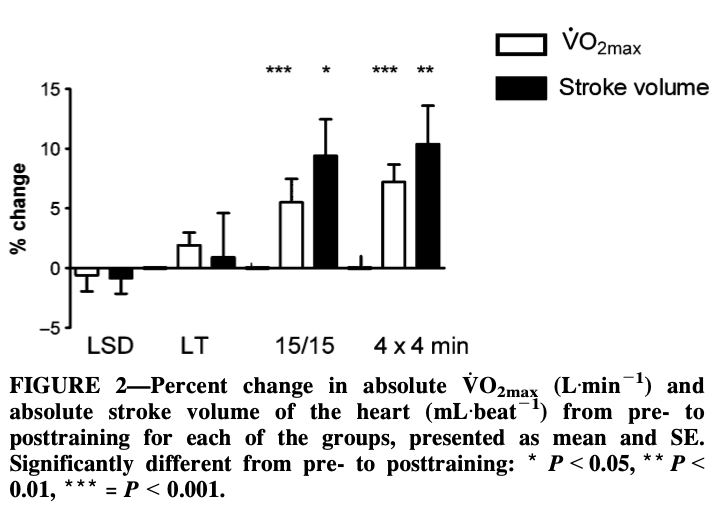
The biggest driver of VO₂max improvement is time spent ≥90% HRmax. Optimal time per VO₂max workout: 8–15 min Per week: 16–30 min Optimal VO₂max sessions/week: ~2 The Norwegian 4×4 protocol fits this perfectly: 4 min hard (90–95% HRmax) 3 min easy Repeat ×4
Mike Hart, M.D tweet media
English
28
100
749
46.6K
Ojas retweetledi
Rohan Paul
Rohan Paul@rohanpaul_ai·
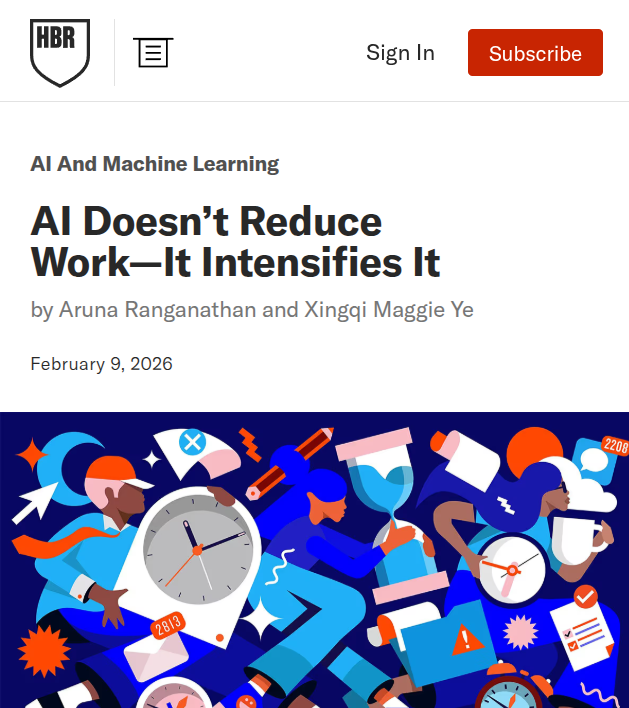
Powerful new Harvard Business Review study. "AI does not reduce work. It intensifies it. " A 8-month field study at a US tech company with about 200 employees found that AI use did not shrink work, it intensified it, and made employees busier. Task expansion happened because AI filled in gaps in knowledge, so people started doing work that used to belong to other roles or would have been outsourced or deferred. That shift created extra coordination and review work for specialists, including fixing AI-assisted drafts and coaching colleagues whose work was only partly correct or complete. Boundaries blurred because starting became as easy as writing a prompt, so work slipped into lunch, meetings, and the minutes right before stepping away. Multitasking rose because people ran multiple AI threads at once and kept checking outputs, which increased attention switching and mental load. Over time, this faster rhythm raised expectations for speed through what became visible and normal, even without explicit pressure from managers.
Rohan Paul tweet media
English
244
1K
4.4K
1.6M
Ojas
Ojas@ojassave·
@whyteknight07 The best innings in this match was actually a 106(244)
English
0
0
0
304
Ojas retweetledi
Josh Woodward
Josh Woodward@joshwoodward·
🇮🇳 Good morning India! A lot of you asked for full-length mock JEE Main tests in @GeminiApp at no cost - done! Good luck on your prep! Last week, SAT. This week, JEE. What other global exams would be most helpful?
English
924
1.2K
11K
784.3K
Ojas retweetledi
Indra
Indra@IndraVahan·
i’ve made a tragic discovery using clawdbot. there simply aren’t that many tasks in my personal life that are worth automating
English
266
483
12.4K
807.9K
Ojas
Ojas@ojassave·
@KrazyCynic1125 @prasannavishy Cricketers from Mumbai with absolute elite domestic performances that never made it to the national side: Batsman: Amol Muzumdar Spinner: padmakar shivalkar Pace bowlers: Abdul Ismail There are so many others just below elite
English
0
0
1
42
Mandar Gokhale
Mandar Gokhale@KrazyCynic1125·
@prasannavishy You mean the same 'Mumbai muscle' tht kept P Shivalkar, Raju Kulkarni (Kapil wanted Chetan Sharma), &, Amol Muzumdar (for match fixer Ajay Sharma of all people) out of the team? Mumbai has 42 ranji trophy titles. Next highest? Karnataka with 8. Wht makes u think it wasn't merit?
English
3
0
5
569
Prasanna Viswanathan
Prasanna Viswanathan@prasannavishy·
Indian cricket selection has mostly been meritocratic bar that very brief era when Mumbai muscle may dictated some dubious selections. The Kerala PR around Sanju Samson was pure parochial entitlement. A behaviour reminiscent of 'knowledgeable Chennai fans' who could even believe T.E. Srinivasan > Gavaskar, T.A. Sekhar > Kapil Dev, or Badrinath > Dravid International cricket doesn’t run on sentiment, hashtags or state quotas. Score runs or make way.
Prasanna Viswanathan tweet media
English
30
90
458
40K
Ojas retweetledi
James Zou
James Zou@james_y_zou·
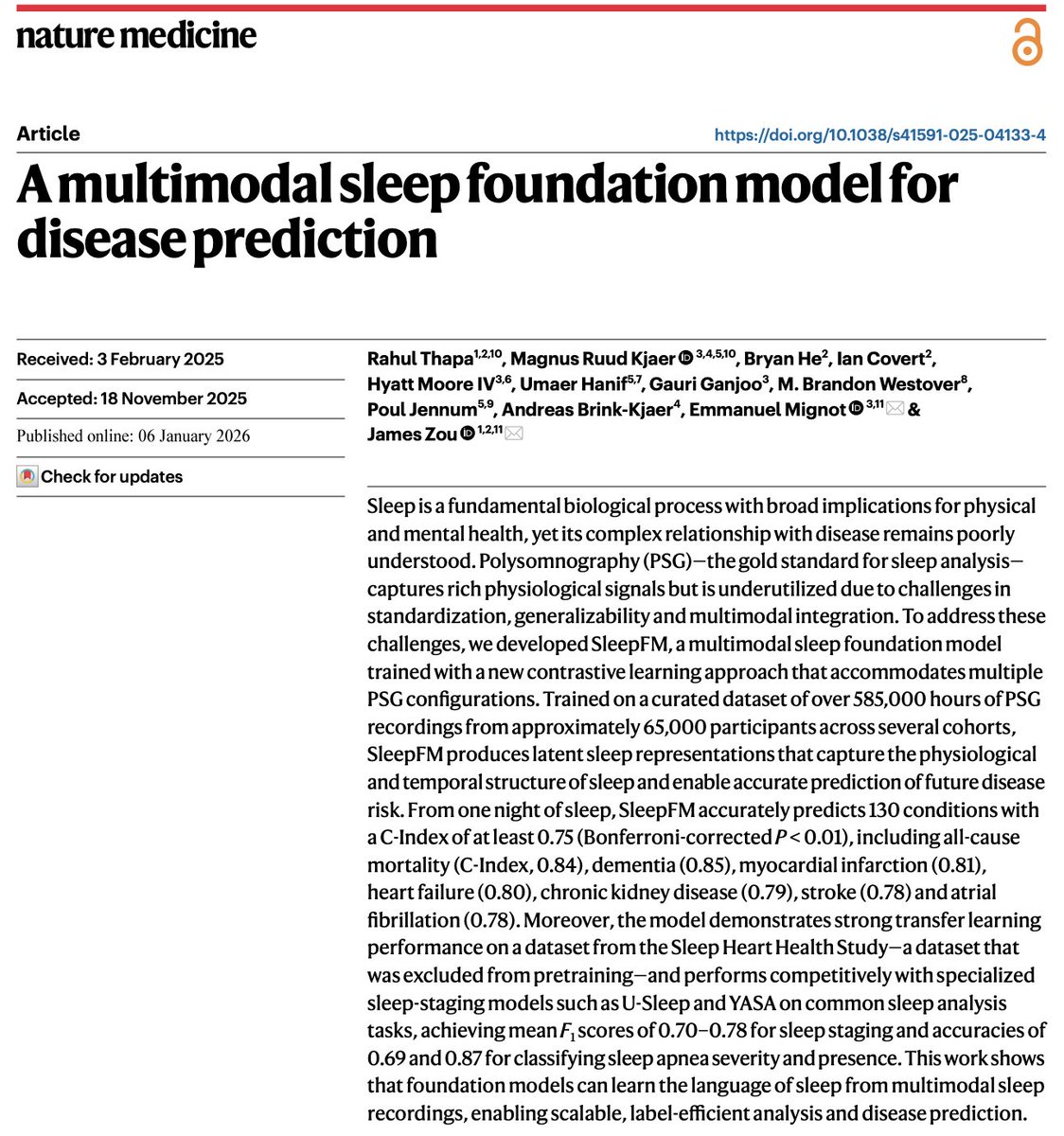
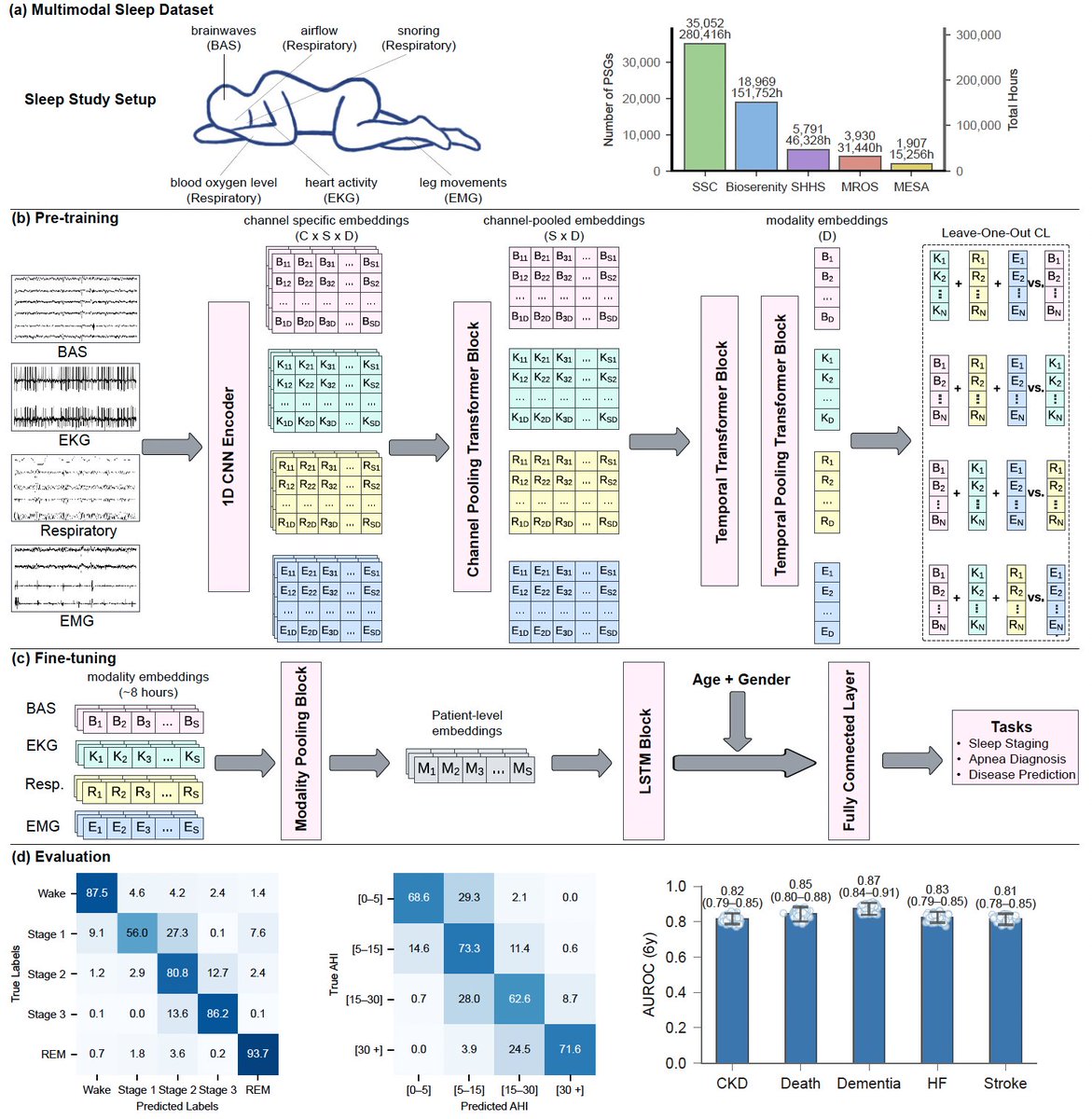
Today in @NatureMedicine we report that AI can predict 130 diseases from 1 night of sleep🛌 We trained a foundation model (#SleepFM) on 585K hours of sleep recordings from 65K people—brain, heart, muscle & breathing signals combined. AI learns the language of sleep🧵
James Zou tweet mediaJames Zou tweet media
English
275
2.1K
11K
911.4K