Olekzandr Petro retweetledi
🚨🔝 Kylian Mbappé: “Apart from Barcelona fans, everyone knows that Real Madrid is the GREATEST club in the world”.
“I think it’s clear to everyone. It’s the club that embodies greatness”, told Sorare.

English
Olekzandr Petro
3.4K posts

@ole_petro
Together we can make Ukraine great again. Slava Ukraini 💪🙏❤️🇺🇦




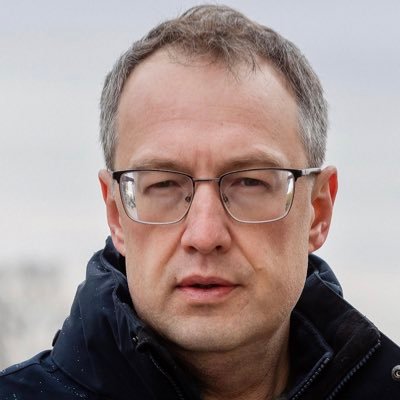

I don't often share my own emotions here. I mostly stick to facts and reason. But I'm actually a very emotional person. The situation in Kyiv with freezing people in cold homes that are left without electricity, heating and water during the cold winter after deliberate Russian attacks is simply terrible. The most vulnerable, the weakest, the old, the sick, the tiny kids and their parents - these suffer the most. They have nowhere to go or they simply can't move. A lot of people have nothing apart from those cold walls. Their suffering doesn't help Russia reach any military goals. Ukraine will not fall, the frontline will not collapse. Ukraine is still a large and strong country. What Russia does and what it is able to do is cause great suffering to average Ukrainians. Russia puts people on the brink of survival, makes people's lives unbearable. This is a tragedy of a huge scale and people who are surviving through this want to understand what this is all for. In almost four years of the full-scale war Ukraine demonstrates incredible resilience and bravery. An exhausted Ukraine is a direct threat to European security. A strong Ukraine means a protected Europe. Ukraine needs air defense and security guarantees.
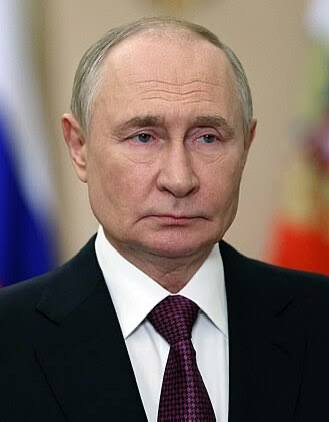
‼️ Russia is committing energy genocide against Ukrainians Russia's campaign of strikes against Ukraine's energy sector during the harshest frosts is not a series of "episodes" and not a "military necessity." It is a systematic operation aimed at destroying living conditions. Repeated attacks on power generation and networks trigger a predictable chain - blackouts → heating shutdown → water supply problems - precisely in winter, when harm to civilians is at its maximum. Reuters, citing UNICEF and the IFRC, directly warns about the risks of hypothermia for children due to the lack of electricity and heat. Russia strikes not only 'visible' power plants, but also high-voltage transmission nodes - substations and power lines that maintain regional power flows. This creates an effect of "cutting" the energy system: even when part of the generation is preserved, damaged nodes make it inaccessible where the shortage is most acute, multiplying humanitarian consequences. In its statement at the IAEA Board of Governors on Ukraine, European External Action Service condemned Russia's attacks on energy infrastructure and noted separately that damage to key substations has forced Ukrainian nuclear power plants to take emergency measures. This directly concerns nuclear safety. In its regular updates, the IAEA emphasizes that the degradation of the power grid during the war poses a serious threat to the safety of operating nuclear power plants and to the situation around the occupied Zaporizhzhia NPP, which has repeatedly lost its external power supply. When strikes disrupt the operation of substations and power lines, the likelihood of a regime in which stations depend on emergency power sources increases - one of the most dangerous scenarios in terms of preventing a man-made accident. ‼️ What Russia is doing is a war crime. International humanitarian law prohibits attacks on objects that are indispensable for the survival of the civilian population, as well as actions aimed at depriving civilians of basic living conditions (water, heat, critical services) - this is enshrined in customary law (ICRC Rule 54) and in Additional Protocol I (Article 54). The UN Human Rights Monitoring Mission in Ukraine warns that repeated strikes on energy infrastructure put civilians at serious risk and are critical to the survival of the civilian population. ‼️ Russia's attacks on Ukraine's energy infrastructure bear the characteristics of the crime of genocide, a war crime, and a crime against humanity, as they predictably lead to mass suffering and deaths of civilians and are a policy of "destruction of living conditions." Russia is committing genocide. Right now. In Europe.