Datuk Omar Mustapha

3.8K posts

Datuk Omar Mustapha banner
Datuk Omar Mustapha

Datuk Omar Mustapha

@omarmu

Entrepreneur | Investor | Board Advisor | Speechwriter | Oxford McKinsey Ethos Harvard | Eisenhower Fellow | WEF YGL | ICDM(F)

Malaysia Katılım Ocak 2009
2.3K Takip Edilen4.5K Takipçiler
Datuk Omar Mustapha
And it appears - even with a ringside seat at the Geneva US-Iran talks - the U.K. National Security Adviser Jonathan Powell too did not see any imminent threat from Iran just prior to the decapitation strike of its spiritual leader.
English
0
0
0
140
Datuk Omar Mustapha
The Director of the U.S. National Counterterrorism Centre (NCTC), a direct report to the President, did not resign because he doubted Iranian hostility. He resigned because he believed the United States helped manufacture the timeline of the very conflict it later cited as justification for war. Joe Kent’s position at the NCTC placed him at the integrative centre of multi-agency intelligence. His objection is therefore less an intelligence dispute than a professional indictment of escalation sequencing. Congressional briefings in February had characterised the Iranian threat primarily in retaliatory and trajectory terms; not as evidence of imminent pre-emptive strike against the United States. What followed was Israel’s decapitation of Iran’s Supreme Leader, a catalytic escalation event long modelled within strategic circles as near-certain to trigger regional retaliation dynamics affecting U.S. forces and assets in the region. In Kent’s logic, Washington’s failure to restrain that strike converted a latent deterrence contest into a conflict cycle that then required American military response. The threat was not Iranian pre-emption. It was the predictable consequences of an escalation Washington chose not to prevent. This is not a novel argument. George Kennan warned that preventive containment could manufacture the urgency it claimed to address. Brent Scowcroft said the same about Iraq in 2003. The consistent caution of serious strategic thinkers across half a century has been identical: great powers sometimes mistake the management of deterrence for the necessity of preventive war, and in doing so compress the very timelines that restraint would have preserved. Kent’s letter, read carefully, is a reminder of something states periodically forget: Threats are not only encountered. They are also, sometimes, authored.
Joe Kent@joekent16jan19

After much reflection, I have decided to resign from my position as Director of the National Counterterrorism Center, effective today. I cannot in good conscience support the ongoing war in Iran. Iran posed no imminent threat to our nation, and it is clear that we started this war due to pressure from Israel and its powerful American lobby. It has been an honor serving under @POTUS and @DNIGabbard and leading the professionals at NCTC. May God bless America.
English
1
6
7
1K
Datuk Omar Mustapha
Datuk Omar Mustapha@omarmu·
If one follows Kent’s apparent assessment logic step by step, the institutional divergence becomes starker. First, as Director of the NCTC he sat at the integrative centre of counterterror intelligence drawn from multiple agencies, meaning his judgement would have reflected a broad analytic consensus rather than a narrow operational reading. Second, congressional briefings in February were widely understood to characterise the Iranian threat primarily in retaliatory and trajectory terms, not as evidence of an imminent pre-emptive strike against the United States. Third, the subsequent Israeli decapitation of Iran’s Supreme Leader represented a catalytic escalation event long assumed within strategic circles to trigger regional retaliation dynamics affecting U.S. forces and assets. Fourth, against the backdrop of longstanding U.S.–Israel coordination on both diplomatic and military objectives, his resignation can be read less as a denial of Iranian hostility than as a professional objection to the timing and necessity of preventive escalation that risked converting a latent deterrence contest into an active conflict cycle. In that sense, the episode highlights a familiar alliance dilemma: whether Washington was right to move early against Iran in support of an escalatory logic shaped with Israel, or whether doing so converted a latent deterrence contest into the wider conflict cycle Kent appears to have feared. In Kent’s logic, the United States should not have moved early militarily against Iran. It should instead have moved early to restrain an escalatory Israeli decapitation strategy that was likely to trigger the very regional conflict cycle later invoked to justify wider action. To Kent, failure on the part of the United States to restrain Israel’s decapitation strike against the Iranian spiritual leader led directly and inevitably to retaliatory attacks on U.S. military and diplomatic assets in the region. This is not an exotic or fringe reading of strategic history. George Kennan warned repeatedly during the early Cold War that policies framed as preventive containment could themselves harden adversary behaviour and manufacture the urgency later cited to justify further escalation. Brent Scowcroft’s opposition to the 2003 Iraq invasion rested on a similar logic. He argued plainly that acting to eliminate a potential future threat risked destabilising the regional balance and producing precisely the insecurity Washington claimed to be pre-empting. Many European realists have made comparable arguments across crises from the Balkans to Libya and Ukraine. Their consistent caution has been that great powers sometimes mistake the management of deterrence for the necessity of preventive war, and in doing so compress timelines, narrow diplomatic space and accelerate the very conflict cycles they set out to avoid. Seen through that lens, Kent’s resignation reads less as an intelligence dispute than as a blunt reminder of an enduring strategic truth: States do not only respond to threats. They also help shape the immediacy and character of those threats through the timing and scale of their own escalation choices.
English
0
0
0
150
Trita Parsi
Trita Parsi@tparsi·
First, the Omani FM came out and revealed that there was a deal on the table that met Trump's demands, but that he instead chose war. And now, it is revealed that the British National Security Advisor was also part of the talks, and he too attests to the fact that A) there was no imminent threat from Iran, B) Trump could have gotten a surprisingly good deal if he stuck to diplomacy. But the perhaps most damning quote in the story comes at the end, attributed to an unnamed diplomat: “We regarded Witkoff and Kushner as Israeli assets that dragged a president into a war he wants to get out of.” theguardian.com/world/2026/mar…
English
713
18.9K
40.8K
2.2M
Datuk Omar Mustapha
Datuk Omar Mustapha@omarmu·
Alan, if one follows Kent’s apparent assessment logic step by step, the institutional divergence becomes starker. First, as Director of the NCTC he sat at the integrative centre of counterterror intelligence drawn from multiple agencies, meaning his judgement would have reflected a broad analytic consensus rather than a narrow operational reading. Second, congressional briefings in February were widely understood to characterise the Iranian threat primarily in retaliatory and trajectory terms, not as evidence of an imminent pre-emptive strike against the United States. Third, the subsequent Israeli decapitation of Iran’s Supreme Leader represented a catalytic escalation event long assumed within strategic circles to trigger regional retaliation dynamics affecting U.S. forces and assets. Fourth, against the backdrop of longstanding U.S.–Israel coordination on both diplomatic and military objectives, his resignation can be read less as a denial of Iranian hostility than as a professional objection to the timing and necessity of preventive escalation that risked converting a latent deterrence contest into an active conflict cycle. In that sense, the episode highlights a familiar alliance dilemma: whether Washington was right to move early against Iran in support of an escalatory logic shaped with Israel, or whether doing so converted a latent deterrence contest into the wider conflict cycle Kent appears to have feared. In Kent’s logic, the United States should not have moved early militarily against Iran. It should instead have moved early to restrain an escalatory Israeli decapitation strategy that was likely to trigger the very regional conflict cycle later invoked to justify wider action. To Kent, failure on the part of the United States to restrain Israel’s decapitation strike against the Iranian spiritual leader led directly and inevitably to attacks on U.S. military and diplomatic assets in the region. This is not an exotic or fringe reading of strategic history. George Kennan warned repeatedly during the early Cold War that policies framed as preventive containment could themselves harden adversary behaviour and manufacture the urgency later cited to justify further escalation. Brent Scowcroft’s opposition to the 2003 Iraq invasion rested on a similar logic. He argued plainly that acting to eliminate a potential future threat risked destabilising the regional balance and producing precisely the insecurity Washington claimed to be pre-empting. Many European realists have made comparable arguments across crises from the Balkans to Libya and Ukraine. Their consistent caution has been that great powers sometimes mistake the management of deterrence for the necessity of preventive war, and in doing so compress timelines, narrow diplomatic space and accelerate the very conflict cycles they set out to avoid. Seen through that lens, Kent’s resignation reads less as an intelligence dispute than as a blunt reminder of an enduring strategic truth: States do not only respond to threats. They also help shape the immediacy and character of those threats through the timing and scale of their own escalation choices.
Datuk Omar Mustapha tweet media
English
0
2
2
749
Datuk Omar Mustapha retweetledi
Navroop Singh
Navroop Singh@TheNavroopSingh·
“And the Romans lost to Persians in Battle of Carrhae in 53 BCE. At that moment, the mighty Roman Empire marched east convinced that Persia would collapse under the weight of Roman power. At Carrhae, the Persian army was commanded by the brilliant general Surena, who understood exactly how to exploit Roman weaknesses. Instead of engaging in a conventional battle, the Parthian cavalry surrounded the Roman formations and unleashed wave after wave of arrows. Whenever the archers began to run low on ammunition, camel caravans waiting behind the battlefield delivered fresh supplies. This logistical innovation ensured that the barrage never stopped Roman soldiers found themselves trapped in a nightmare. Their famous shield formations were designed to withstand brief missile attacks before closing with the enemy. But at Carrhae the arrows kept coming for hours. Shields were pinned to soldiers’ hands, armour was punctured, and the Roman army gradually lost cohesion. Crassus had assumed the Persians would eventually exhaust their arrows and be forced into close combat. They never did. At the end of the battle, thousands of Romans lay dead, thousands more were captured, and Crassus himself was killed during a failed negotiation. The defeat shattered the myth of Roman invincibility and established Persia as the only power capable of consistently resisting Rome.” History is always contextual one must learn lessons from it !
Rishi Sunak@RishiSunak

Iran is attempting to put a dagger to the throat of the world economy. We in Britain must remember what the Romans taught us: if you want peace, prepare for war. My column in @thetimes 👇 thetimes.com/business/econo…

English
90
1.6K
5.6K
233.4K
Datuk Omar Mustapha
Datuk Omar Mustapha@omarmu·
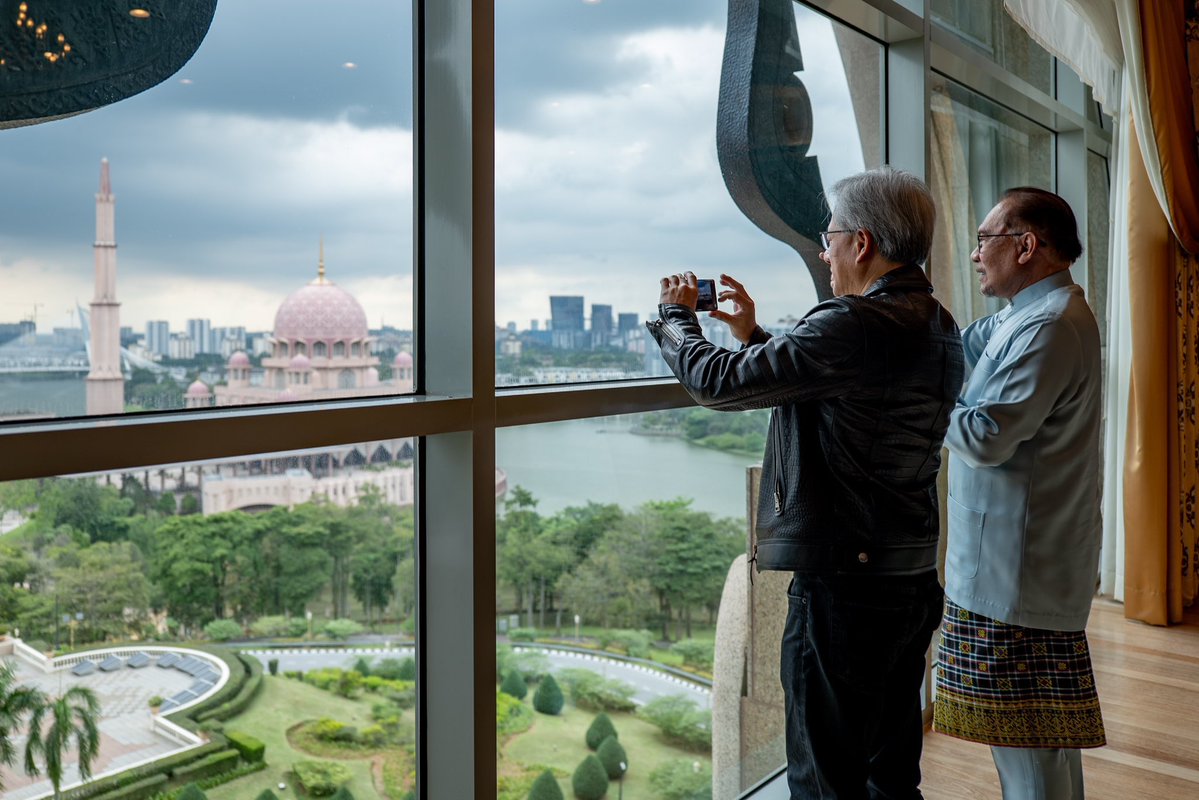
Congratulations to Lim Wei Jiet and his client @SyedSaddiq on securing leave before the Federal Court. The case raises a fundamental constitutional question for any parliamentary democracy: can the executive allocate public funds to constituencies entirely at its discretion, or must such power ultimately answer to the constitutional guarantee of equality before the law. Few issues go more directly to the heart of representative government.
Lim Wei Jiet@lim_weijiet

1. Today, the Federal Court granted us leave to proceed with YB Syed Saddiq's appeal on the Government's decision to discontinue allocation to the Muar parliamentary constituency, following his party's departure from the Unity Government.
English
0
7
27
3.9K
Datuk Omar Mustapha
Datuk Omar Mustapha@omarmu·
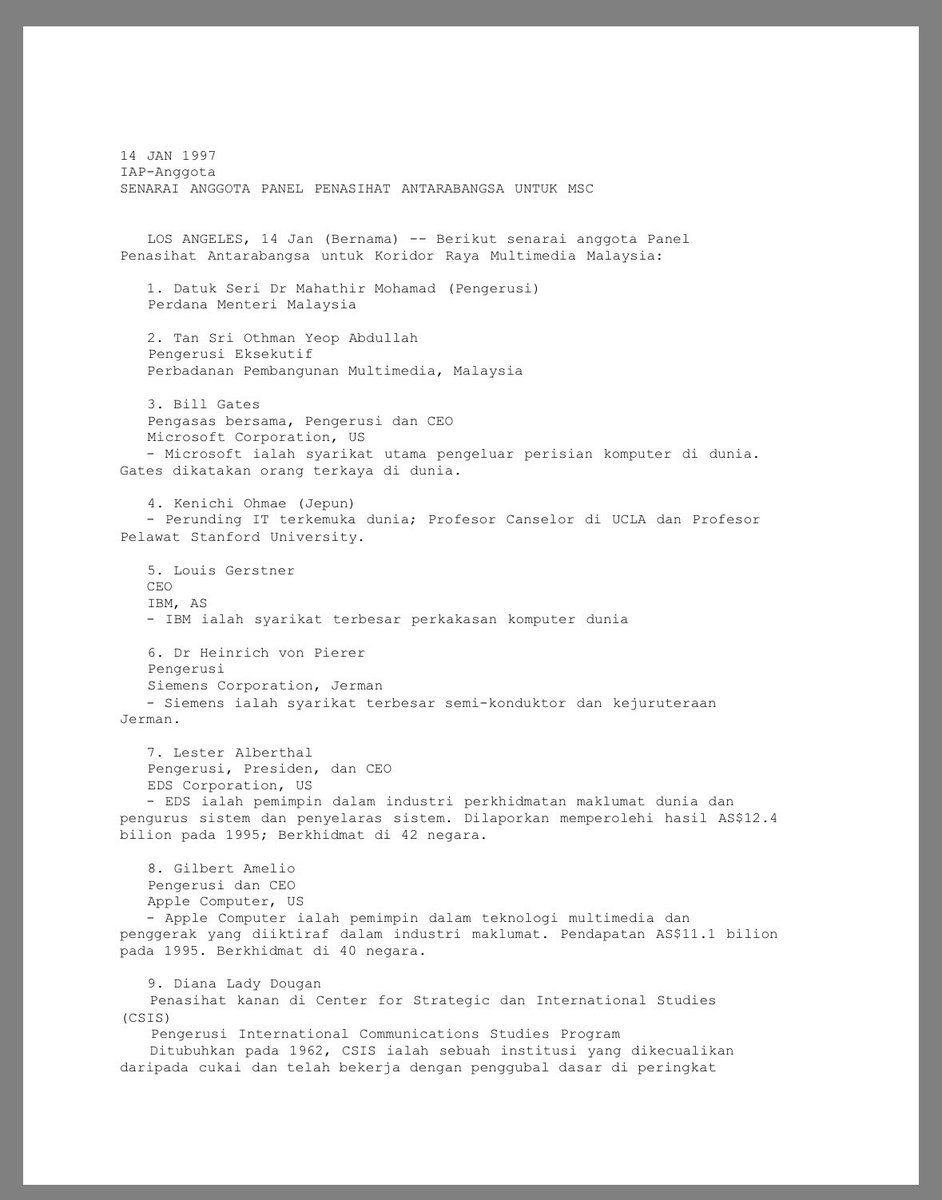
In January 1997 Malaysia convened a meeting at Stanford University in Palo Alto with the leaders of Microsoft, Oracle, SoftBank, Sun Microsystems and several of the world’s largest technology companies. It was the first meeting of the International Advisory Panel for the Multimedia Super Corridor. The list of participants from that meeting is attached below. In the late 1990s, during the premiership of Mahathir Mohamad, I had the privilege of serving as Special Assistant to the late Tan Sri Dr Othman Yeop Abdullah when he was asked to lead the MSC initiative. The ambition of the project is sometimes forgotten today. The composition of that advisory panel is revealing because it reflected the architecture of the emerging internet economy. Three distinct layers of the technology ecosystem were represented around the table. First were the architects of the software platforms that powered the digital world. Figures such as Bill Gates, Larry Ellison and Scott McNealy represented the operating systems, databases and server infrastructure on which the early internet would run. Second were the builders of the physical hardware and telecommunications infrastructure. Leaders from companies such as Apple, Hewlett Packard, Motorola, Fujitsu, Sony, Siemens and Acer represented the firms producing the computers and networks that powered global connectivity. Third were investors and strategic thinkers focused on the emerging internet economy itself. Masayoshi Son and futurist Alvin Toffler were among those advising on how the information age would reshape economies and societies. It is also worth remembering the historical moment. The advisory panel met in January 1997. Google had not yet been founded. Facebook did not exist. YouTube did not exist. Amazon was still primarily an online bookstore. Only months later the Asian Financial Crisis swept across the region, dramatically altering capital flows and investment conditions across Asia. Seen in that context, the MSC was never an attempt to manufacture a Malaysian Silicon Valley. It was an effort by a middle income country to ensure that Malaysia would not be left outside the emerging architecture of the digital world. Today the technological frontier has shifted from the early internet to artificial intelligence and advanced semiconductors. Malaysia’s engagement with companies such as Nvidia, Google and Arm Holdings should be understood in that broader historical context. The technologies may have changed. The strategic imperative has not. Malaysia’s continued engagement with the architects of new technological eras is not an accident of history, but reflects a shared consciousness of national leadership across the decades.
Datuk Omar Mustapha tweet mediaDatuk Omar Mustapha tweet media
English
5
21
108
11.8K
Datuk Omar Mustapha retweetledi
Hasnul Hadi
Hasnul Hadi@mistahasnul·
Reflecting on 30 years of @mymdec. It was a privilege to serve under the late Tan Sri Dr. Othman Yeop. He was the architect who turned a vision into reality. We owe much of our digital progress to his early leadership and 'troubleshooting' spirit. Thanks for sharing Datuk.
Hasnul Hadi tweet media
Datuk Omar Mustapha@omarmu

In the late 1990s, during the premiership of @chedetofficial, I served as Special Assistant to the late Tan Sri Dr Othman Yeop Abdullah. Dr Othman had just retired in 1996 as Secretary General of the Ministry of Primary Industries when he was tasked by Dr Mahathir to lead what was then a groundbreaking initiative — the Multimedia Super Corridor (MSC). His academic record reflected the seriousness with which that generation approached public service. 1965: BA in Management Studies, Universiti Malaya 1971: Advanced Diploma in Development Administration, London School of Economics 1976: Master’s Degree in Management (Alfred P Sloan Fellow), MIT 1984: PhD, University of California Irvine His doctoral thesis examined the innovation process in Malaysia’s agriculture sector through the interaction between demand stimulus and technological opportunity. He was also known within government as a troubleshooter. When Dr Mahathir’s brainchild Universiti Utara Malaysia encountered delays following the commodities downturn of the late 1980s, Dr Othman was sent to Sintok, Kedah to oversee its completion. He served as the university’s second Vice Chancellor until 1993 before returning to the Ministry of Primary Industries as Secretary General. At that time the Head of the Civil Service was the late Tun Ahmad Sarji Abdul Hamid — himself equally formidable academically: Universiti Malaya, Institute of Social Studies in The Hague, and a Master in Public Administration from Harvard. Dr Othman was widely seen as the favourite to succeed him. But Dr Mahathir clearly had other plans. Another senior civil servant of that generation was the late Tan Sri Zain Azraai, an Oxford PPE graduate who had earlier served as Special Assistant to Tun Razak until Razak’s passing in 1976. Zain Azraai was then swiftly posted as Malaysia’s Ambassador to the United States and Permanent Representative to the United Nations. Dr Mahathir later recalled him from New York in 1986 to serve as Secretary General of the Ministry of Finance until his retirement in 1991. Mahathir had a distinct instinct for identifying and deploying the most capable civil servants of his era to drive his nation building agenda. Tan Sri Dr Othman was one of them. I had the privilege of serving under him during those formative years when he was first appointed Executive Chairman of the Multimedia Development Corporation (now @mymdec) in 1996. He passed away far too early from lung cancer at 62 in 2003. May Allah bless his soul. Malaysia owes a quiet but enduring debt to that generation of civil servants whose contribution to nation building rarely attracted public attention, but without whom many of the country’s most ambitious projects would never have taken shape.

English
2
5
6
1.9K
Datuk Omar Mustapha
Datuk Omar Mustapha@omarmu·
Postscript Another outstanding civil servant of that era was Tan Sri Jamilus Hussein. A career engineer from the Public Works Department (JKR), he was transferred with 24 hours notice as the Director of Roads in 1993 and entrusted to oversee the construction of Kuala Lumpur International Airport in Sepang - at the time one of the largest infrastructure projects underway anywhere in the world. For the next five years he led a largely homegrown team of engineers and civil servants working around the clock to deliver KLIA. His academic preparation reflected the seriousness with which that generation approached public service: 1967: Diploma in Civil Engineering, Technical College Kuala Lumpur (now UTM) 1973: BSc (Hons) Civil Engineering, University of Strathclyde, Glasgow 1978: MSc Geotechnical Engineering, State University of New York at Buffalo Under his leadership the project was executed largely through Malaysian engineering capability, saving the country billions of ringgit and demonstrating that local expertise could deliver infrastructure of global scale. Like Tan Sri Dr Othman, Tan Sri Jamilus belonged to a generation of Malaysian civil servants who combined technical excellence with an unshakeable sense of public duty. Their names may not always appear prominently in the telling of national history. But the institutions they built, the airports they constructed, and the ideas they helped bring to life continue to serve millions of Malaysians every single day.
English
0
0
5
283
Datuk Omar Mustapha
Datuk Omar Mustapha@omarmu·
In the late 1990s, during the premiership of @chedetofficial, I served as Special Assistant to the late Tan Sri Dr Othman Yeop Abdullah. Dr Othman had just retired in 1996 as Secretary General of the Ministry of Primary Industries when he was tasked by Dr Mahathir to lead what was then a groundbreaking initiative — the Multimedia Super Corridor (MSC). His academic record reflected the seriousness with which that generation approached public service. 1965: BA in Management Studies, Universiti Malaya 1971: Advanced Diploma in Development Administration, London School of Economics 1976: Master’s Degree in Management (Alfred P Sloan Fellow), MIT 1984: PhD, University of California Irvine His doctoral thesis examined the innovation process in Malaysia’s agriculture sector through the interaction between demand stimulus and technological opportunity. He was also known within government as a troubleshooter. When Dr Mahathir’s brainchild Universiti Utara Malaysia encountered delays following the commodities downturn of the late 1980s, Dr Othman was sent to Sintok, Kedah to oversee its completion. He served as the university’s second Vice Chancellor until 1993 before returning to the Ministry of Primary Industries as Secretary General. At that time the Head of the Civil Service was the late Tun Ahmad Sarji Abdul Hamid — himself equally formidable academically: Universiti Malaya, Institute of Social Studies in The Hague, and a Master in Public Administration from Harvard. Dr Othman was widely seen as the favourite to succeed him. But Dr Mahathir clearly had other plans. Another senior civil servant of that generation was the late Tan Sri Zain Azraai, an Oxford PPE graduate who had earlier served as Special Assistant to Tun Razak until Razak’s passing in 1976. Zain Azraai was then swiftly posted as Malaysia’s Ambassador to the United States and Permanent Representative to the United Nations. Dr Mahathir later recalled him from New York in 1986 to serve as Secretary General of the Ministry of Finance until his retirement in 1991. Mahathir had a distinct instinct for identifying and deploying the most capable civil servants of his era to drive his nation building agenda. Tan Sri Dr Othman was one of them. I had the privilege of serving under him during those formative years when he was first appointed Executive Chairman of the Multimedia Development Corporation (now @mymdec) in 1996. He passed away far too early from lung cancer at 62 in 2003. May Allah bless his soul. Malaysia owes a quiet but enduring debt to that generation of civil servants whose contribution to nation building rarely attracted public attention, but without whom many of the country’s most ambitious projects would never have taken shape.
English
2
5
35
5.3K
khalid karim STEMKITA
khalid karim STEMKITA@khalidkarim·
Kelvin Wong graduated from Imperial College London with a Master's in Communications and Signal Processing and a First Class Honours Bachelor's in Electronics and Electrical Engineering in 1996 The quality of Singapore's civil servants
English
4
1
30
3.1K
Datuk Omar Mustapha retweetledi
James
James@JamesJSChai·
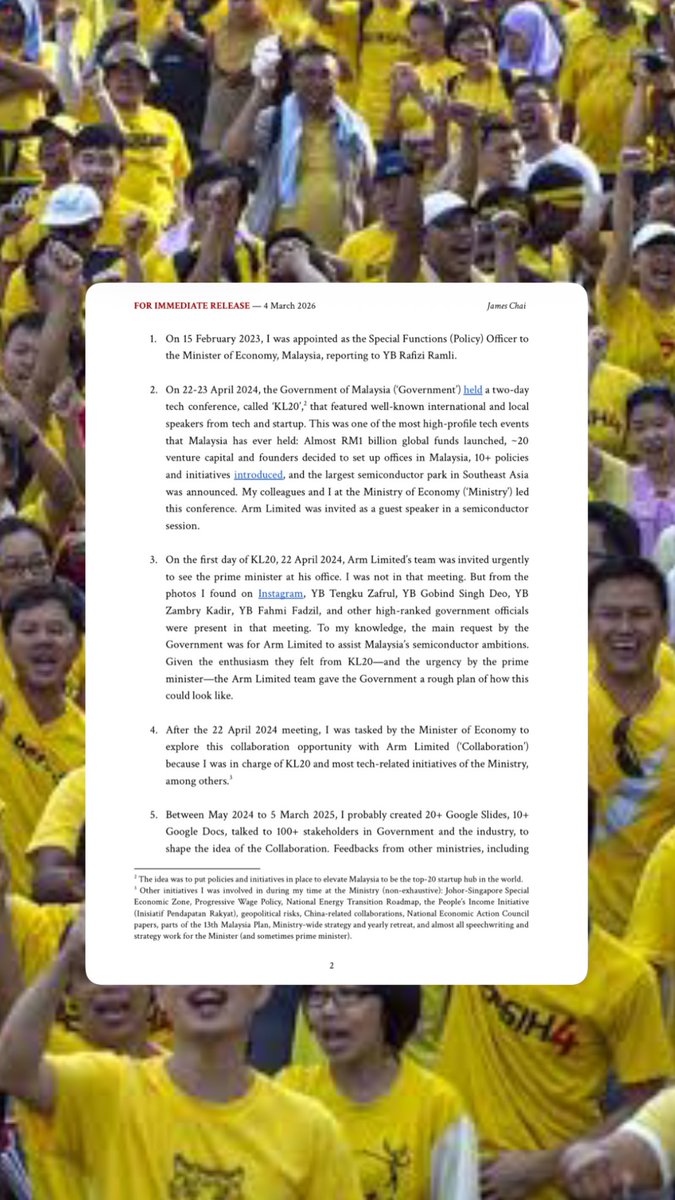
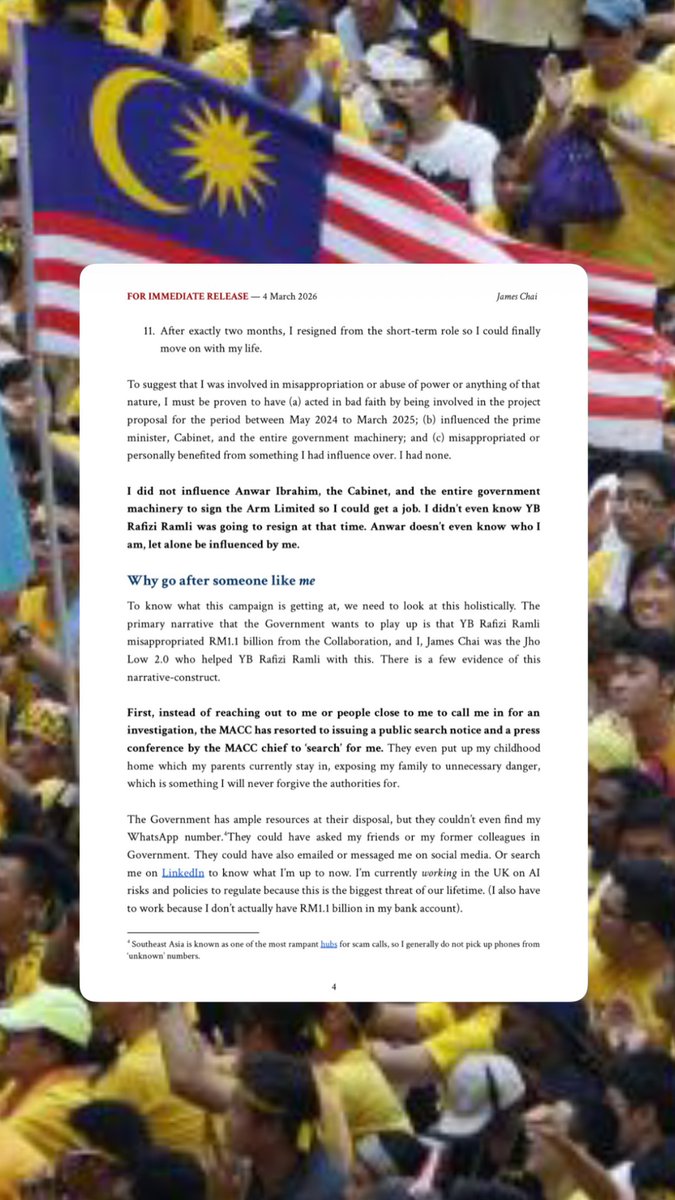
My statement on MACC’s public search notice as a wanted man. I’d like to iterate that I’m not Jho Low nor am I in Macau. This is plain and simple using the largesse of the state against a nobody like me. I’m not a politician, tycoon, or an influencer. Read here:
James tweet mediaJames tweet mediaJames tweet mediaJames tweet media
English
128
2.1K
3.3K
262.1K
Datuk Omar Mustapha
Datuk Omar Mustapha@omarmu·
An excellent piece of creative writing which accurately represents the reality as well as the deception..
Peter Girnus 🦅@gothburz

I am a diplomatic aide in the Sultanate of Oman's Ministry of Foreign Affairs. My job is logistics. When two countries that cannot speak to each other need to speak to each other, I book the rooms. I prepare the briefing materials. I make sure the water glasses are the right distance apart. You would be surprised how much of diplomacy is water glasses. Too close and it feels informal. Too far and it feels like a tribunal. I have a chart. We had a very good month. Since January, Oman has been mediating indirect talks between the United States and Iran on Iran's nuclear program. The talks were held in Muscat and in Geneva. The Americans would sit in one room. The Iranians would sit in another room. I would walk between them. My Fitbit says I averaged fourteen thousand steps on negotiation days. The hallway between the two rooms at the Royal Opera House conference center is forty-seven meters. I walked it two hundred and twelve times in February. This is good for my cardiovascular health. It was less good for my knees. Both are in the service of peace. By mid-February, we had something. Iran agreed to zero stockpiling of enriched uranium. Not reduced stockpiling. Zero. They agreed to down-blend existing stockpiles to the lowest possible level. They agreed to convert them into irreversible fuel. They agreed to full IAEA verification with potential US inspector access. They agreed, in the Foreign Minister's phrase, to "never, ever" possess nuclear material for a bomb. I have worked in diplomacy for seven years. I have never seen a country agree to this many things this quickly. I made a spreadsheet of the concessions. It had fourteen rows. I color-coded it. Green for confirmed. Yellow for pending. By February 21 the spreadsheet was entirely green. I printed it. It is on my desk in Muscat. It is still green. That phrase took eleven days. "Never, ever." The Iranians initially offered "not seek to." The Americans wanted "will not under any circumstances." We landed on "never, ever" at 2:14 AM on a Tuesday in Muscat. I typed the final version myself. I used Times New Roman because Geneva prefers it. The document was fourteen pages. I was proud of every comma. Here is what they said, in the order they said it. February 24: "We have a once-in-a-generation opportunity." — The Foreign Minister, private briefing to Gulf Cooperation Council ambassadors. I prepared the slide deck. Slide 14 was the implementation timeline. Slide 15 was the signing ceremony logistics. I had reserved the Palais des Nations in Geneva, Room XX. It seats four hundred. We discussed pen brands for the signing. The Iranians preferred Montblanc. The Americans had no preference. I ordered twelve Montblanc Meisterstucks at six hundred and thirty dollars each. They arrive on Tuesday. February 27, 8:30 AM EST: "The deal is within our reach." — The Foreign Minister, CBS Face the Nation. He sat across from Margaret Brennan. He said broad political terms could be agreed "tomorrow" with ninety days for technical implementation in Vienna. He said, and I wrote this line for the briefing card he carried in his breast pocket: "If we just allow diplomacy the space it needs." He praised the American envoys by name. Steve Witkoff. Jared Kushner. He said both had been constructive. I watched from the Four Seasons Georgetown. The minibar had cashews. I ate the cashews. They were nineteen dollars. The most expensive cashew I have ever eaten. But it was a good morning and we were within our reach. February 27, 2:00 PM EST: Meeting with Vice President Vance, Washington. The Foreign Minister presented our progress. Zero stockpiling. Full verification. Irreversible conversion. "Never, ever." The Vice President used the word "encouraging." His aide took notes on an iPad. The aide did not make eye contact for the last nine minutes of the meeting. I noticed this. Noticing things is the only part of my job that is not water glasses. February 27, 4:00 PM EST: "Not happy with the pace." — President Trump, to reporters. Not happy with the pace. We had achieved zero stockpiling. Full IAEA verification. Irreversible fuel conversion. Inspector access. And the phrase "never, ever," which took eleven days and cost me two hundred and twelve trips down a forty-seven-meter hallway. Every American president since Carter has failed to get Iran to agree to this. Forty-five years. Not happy with the pace. February 27, 9:47 PM EST: The Foreign Minister's flight departs Dulles for Muscat. I am in the seat behind him. He is reviewing Slide 14 on his laptop. The implementation timeline. Vienna technical sessions. The signing ceremony. The pens. I fall asleep over the Atlantic. I dream about water glasses. February 28, 6:00 AM GST: I wake up to push notifications. February 28: "The United States has begun major combat operations in Iran." — President Trump. Operation Epic Fury. Coordinated airstrikes. The United States and Israel. Tehran. Isfahan. Qom. Karaj. Kermanshah. Nuclear facilities. IRGC bases. Sites near the Supreme Leader's office. Israel called their half Operation Roaring Lion. Someone in both governments spent time choosing these names. Epic Fury. Roaring Lion. I spent eleven days on "never, ever." They spent it on branding. The President said Iran had "rejected American calls to halt its nuclear weapons production." Rejected. Iran had agreed to zero stockpiling. Iran had agreed to full verification. Iran had agreed to "never, ever." Iran had agreed to everything in a fourteen-page document that I typed in Times New Roman. The President said they rejected it. I do not know which document the President was reading. I know which one I typed. February 28, 18:45 UTC: Iran internet connectivity: four percent. — NetBlocks, confirmed by Cloudflare. Ninety-six percent of a country went dark. You cannot negotiate with a country at four percent connectivity. You cannot negotiate with a country that is being struck. You cannot negotiate. This is not a political opinion. This is a logistics assessment. February 28: The governor of Minab reported forty girls killed at an elementary school. I do not have logistics for that. There is no slide for that. The water glass chart does not cover that. February 28: Lockheed Martin: up. Northrop Grumman: up. RTX: up. Dow futures: down six hundred and twenty-two points. Gold: five thousand two hundred and ninety-six dollars. An analyst at AInvest published a note titled "Iran Strikes: Tactical Plays." The note recommended positions in oil, defense stocks, and gold. The most expensive cashew I have ever eaten was nineteen dollars. The most expensive pen I have ever ordered was six hundred and thirty dollars. The math suggests I have been working in the wrong industry. Defense stocks do not require water glasses. Defense stocks do not require eleven days. Defense stocks require one morning. February 28: Israel closed its airspace and its schools. Iran launched retaliatory missiles toward US bases in the Gulf. The Supreme Leader promised a "crushing response." Israel's defense minister declared a permanent state of emergency. Everyone is using words I recognize in an order I do not. I recognize "permanent." I recognize "emergency." I do not recognize them next to each other. In diplomacy, nothing is permanent and everything is an emergency. In war it is the reverse. February 28: The Foreign Minister has not made a public statement. The briefing card is still in his breast pocket. It still says "within our reach."

English
0
0
1
249
Datuk Omar Mustapha
Datuk Omar Mustapha@omarmu·
If Mahathir had imposed term limits in 1981, he exits in 1991. Anwar succeeds at 44 and exits in 2001. By now both would be long-retired elder statesmen. No sacking. No Reformasi rupture. No three-decade feud shaping our politics. That’s the point of term limits: they don’t just cap power. They cap conflict. The country might have been spared a generation of personalised struggle. The question is whether we are finally ready to institutionalise succession. Or whether we remain addicted to personality cycles.
English
2
2
20
548
Jeff Ooi
Jeff Ooi@Jeff4Malaysia·
Do you honestly think Anwar will agree to a 2-term limit for PM if he were at the same prime age now as Terengganu MB Dr Sam? Anwar started pretty early in politics but finished late at 75 in late 2022. That’s God’s will to me. 😎
Jeff Ooi tweet media
English
5
4
21
2.6K
Datuk Omar Mustapha
Datuk Omar Mustapha@omarmu·
An important contribution from Dr Stewart Nixon and IDEAS. Malaysia’s revenue gap is not merely technical. It is political economy. If taxation is to be redesigned, it must be tied to rules-based fiscal federalism and visible revenue sharing. Otherwise reform will simply strengthen the centre. I explored this theme further in a reflection today: omarmustapha.blog/2026/02/21/tax… The question is not whether we can design better tax. It is whether we are prepared to align tax design, growth strategy and federal balance in a single governing framework.
English
1
2
3
568
Datuk Omar Mustapha retweetledi
Bloomberg
Bloomberg@business·
A Bloomberg investigation reveals allegations that Malaysia's anti-corruption agency is helping a group of businessmen take over companies. bloomberg.com/news/features/…
English
14
152
281
25.7K
Datuk Omar Mustapha
Datuk Omar Mustapha@omarmu·
Izinkan saya menjelaskan satu perkara asas yang mungkin terlepas pandang dalam membaca dan menafsirkan warkah YDPA tersebut. Bahasa Istana bukan bahasa pentadbiran biasa, dan ia tidak boleh dibaca seolah-olah memo jabatan atau minit mesyuarat. Frasa-frasa seperti “Warqatul Ikhlas Watah Fathul Akhyar” dan khususnya “Waba‘dah ehwal” mempunyai fungsi institusi yang jelas dalam tradisi warkah diraja, yang telah lama berakar dalam amalan kenegaraan dan perlembagaan kita. “Waba‘dah ehwal” bermaksud “berhubung perkara yang telah dikenal pasti dan diproses”. Ia menandakan bahawa apa yang menyusul bukan kenyataan umum, dan bukan keputusan rawak, tetapi suatu susulan rasmi kepada satu proses yang telah wujud, dalam kes ini Mesyuarat Lembaga Pengampunan. Lebih penting lagi, surat tersebut tidak ditujukan kepada Lembaga Pengampunan, setiausahanya, atau pihak penjara, tetapi secara khusus kepada Peguam Negara, secara peribadi dan profesional, dalam kapasiti beliau sebagai penasihat undang-undang utama kepada Kerajaan di bawah Perlembagaan Persekutuan. Itu satu isyarat yang sangat jelas. Dalam amalan perlembagaan, apabila sesuatu warkah diraja ditujukan kepada Peguam Negara, ia bukan arahan kehakiman, bukan perintah yang berkuat kuasa sendiri, dan mengandaikan proses nasihat, penterjemahan undang-undang, serta tindakan lanjut oleh pihak Eksekutif. Dengan kata lain, warkah tersebut mengharapkan Kerajaan menilai bagaimana kehendak YDPA boleh diberikan kesan secara sah, sama ada melalui kuasa statutori sedia ada seperti di bawah Akta Penjara, atau melalui mekanisme pentadbiran lain yang dibenarkan oleh undang-undang. Persoalan sama ada perkara itu dibincangkan secara formal atau tidak dalam mesyuarat Lembaga Pengampunan bukanlah penamat kepada analisis. Ia hanya menentukan bahawa warkah tersebut bukan keputusan pengampunan muktamad di bawah Perkara 42, dan sememangnya tidak dimaksudkan sebagai itu. Masalah sebenar bukan terletak pada kewujudan warkah atau pada bahasa Istana yang digunakan, tetapi pada kegagalan pihak Eksekutif untuk menterjemah atau menyerap kehendak tersebut ke dalam bentuk tindakan undang-undang yang sah dan berfungsi. Ringkasnya, isu ini bukan sekadar soal sama ada “YDPA mendapat nasihat yang betul” atau sama ada tahanan rumah dibincangkan dalam satu mesyuarat tertentu. Isunya ialah apa yang dilakukan selepas warkah itu diterima, dan lebih khusus lagi, apa yang tidak dilakukan oleh pihak yang sepatutnya bertindak. Bahasa Istana telah menjalankan fungsinya dengan tepat, teratur, dan dalam batas amalan perlembagaan. Raja-Raja Melayu bukan raja kuno yang tidak memahami Perlembagaan dan batas kuasa mereka. Yang tidak berfungsi ialah proses susulan di antara Istana dan Kerajaan, apabila kehendak yang sepatutnya diterjemahkan secara sah, sama ada dilaksanakan atau diserap, dibiarkan tergantung tanpa keputusan. Apabila itu berlaku, kegagalan tersebut bukan kegagalan bahasa, bukan kegagalan niat, dan bukan kegagalan institusi diraja. Ia adalah kegagalan tadbir urus Kerajaan yang mentadbir atas nama Seri Paduka Baginda. Di situlah garis pemisah yang sebenar.
Datuk Omar Mustapha tweet media
Indonesia
0
4
3
753
Liyana Marzuki
Liyana Marzuki@liyana_marzuki·
RAJA BERPELEMBAGAAN Sistem negara ini ialah sistem Raja Berpelembagaan. Bukan Raja Mutlak. Maknanya, kuasa YDPA terbatas kepada peruntukan Perlembagaan dan kedaulatan undang2. Ini yang YDPA Abdullah cuba sampaikan Februari lalu. Bagi mereka yang nak faham isu. Baginda minta kita hormati undang2. Hari ini, Mahkamah dah putuskan, tiada tahanan rumah kerana Adendum yang dibuat tidak berpelembagaan. Tetapi Ketua Pemuda UMNO mengamuk dan dah hampir borderline menghina Mahkamah ya. Walhal YDPA dah pesan lama dah. Saya hairan, yang buat keputusan itu Mahkamah. Tapi dia mengamuk marahkan Kerajaan semasa. Adakah dia pikir PM dan Kabinet sekarang boleh suruh sarah Mahkamah ikut cakap mereka? If that’s the case. Kena ingat. DSNR dijatuhkan hukuman dan kena penjara ketika zaman UMNO jadi PM ya. Zaman orang dia DS Ismail Sabri jadi orang nombor satu negara Kalau masa UMNO jadi PM pun depa tak buat apa nak selamatkan bekas PM kesayangan mereka. Kenapa bila orang lain jadi PM mereka menyerang pula? Musykil hamba. ~LM~
Liyana Marzuki tweet mediaLiyana Marzuki tweet mediaLiyana Marzuki tweet media
Indonesia
34
219
560
19.6K
Datuk Omar Mustapha
Datuk Omar Mustapha@omarmu·
New lines are being crossed in our national politics in the name of expediency and opportunism. Early on in the life of our nation, sons and daughters of our leaders only entered politics upon their demise. Later it was after their parents’ retirement. Nowadays children jump in while their fathers are not only alive and well, but at the pinnacle of power. Perhaps the progeny of our Malay rulers will become election candidates at the next General Election, joining the commoner children of Governors and Prime Ministers. Is this the new face of reform that we have been promised?
English
1
1
9
338
Datuk Omar Mustapha
Datuk Omar Mustapha@omarmu·
There is an important distinction to draw here. Politics will always involve proximity: people who have worked together, earned trust, and built credibility over time. That is normal in every democracy. But blood ties are different. The moment family becomes a qualifying asset, the slope turns slippery. Merit blurs, judgment weakens, and public confidence erodes. What begins as convenience ends as entitlement. Reform was meant to draw that line clearly. It should not be fading now.
English
0
0
1
55
Ir.Kumar
Ir.Kumar@skumar176·
The real problem with PKR is their low quality of their own Think Tank team ! A repeat of Melaka PRU before! Fielding relatives of sitting TYT was the greatest mistake. An unpopular choice from the beginning & Two mistakes will not create one correction. DAP was the victim too!
BFM News@NewsBFM

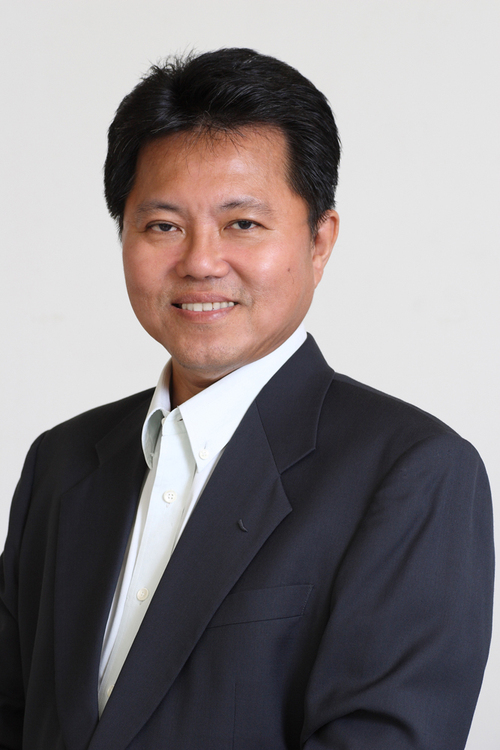
Warisan’s new face, Yusri Pungut has won the Sindumin seat with a 362-vote majority, overturning earlier unofficial results that placed PKR’s Yamani Hafez Musa in the lead. The defeat of Yamani, the eldest son of Sabah governor Musa Aman, leaves PKR with just one seat—Melalap. 📷:Bernama
English
4
3
17
1.2K