
Sabitlenmiş Tweet
Onchain Organization Alliance
37 posts


Onchain Organization Alliance
@onchain_org
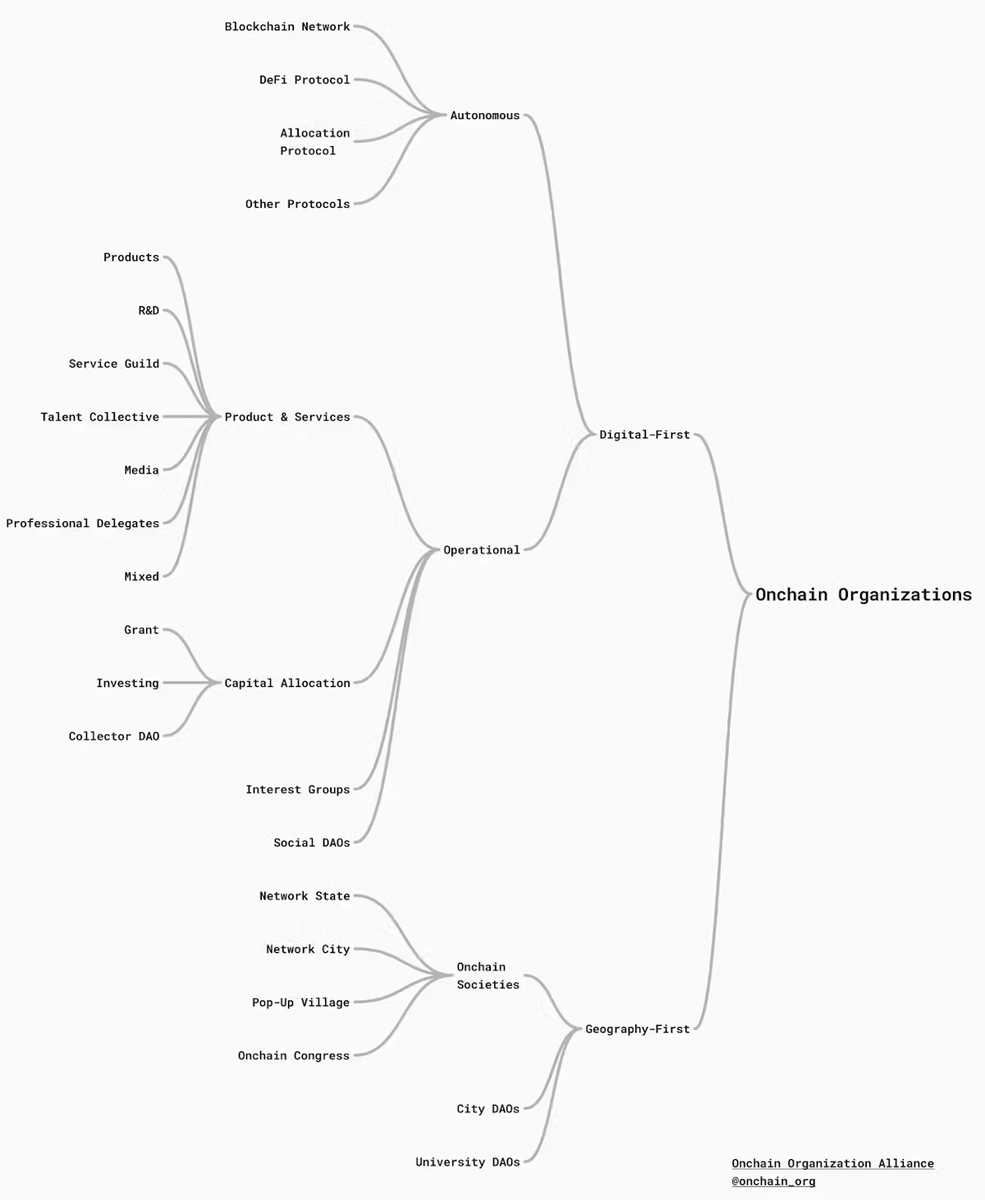
Accelerating the migration of organizations from traditional software to onchain software
Katılım Temmuz 2024
130 Takip Edilen196 Takipçiler

This governance group is heating up. Reach out if interested!
Graham Novak (📜,📜)@gnovak_
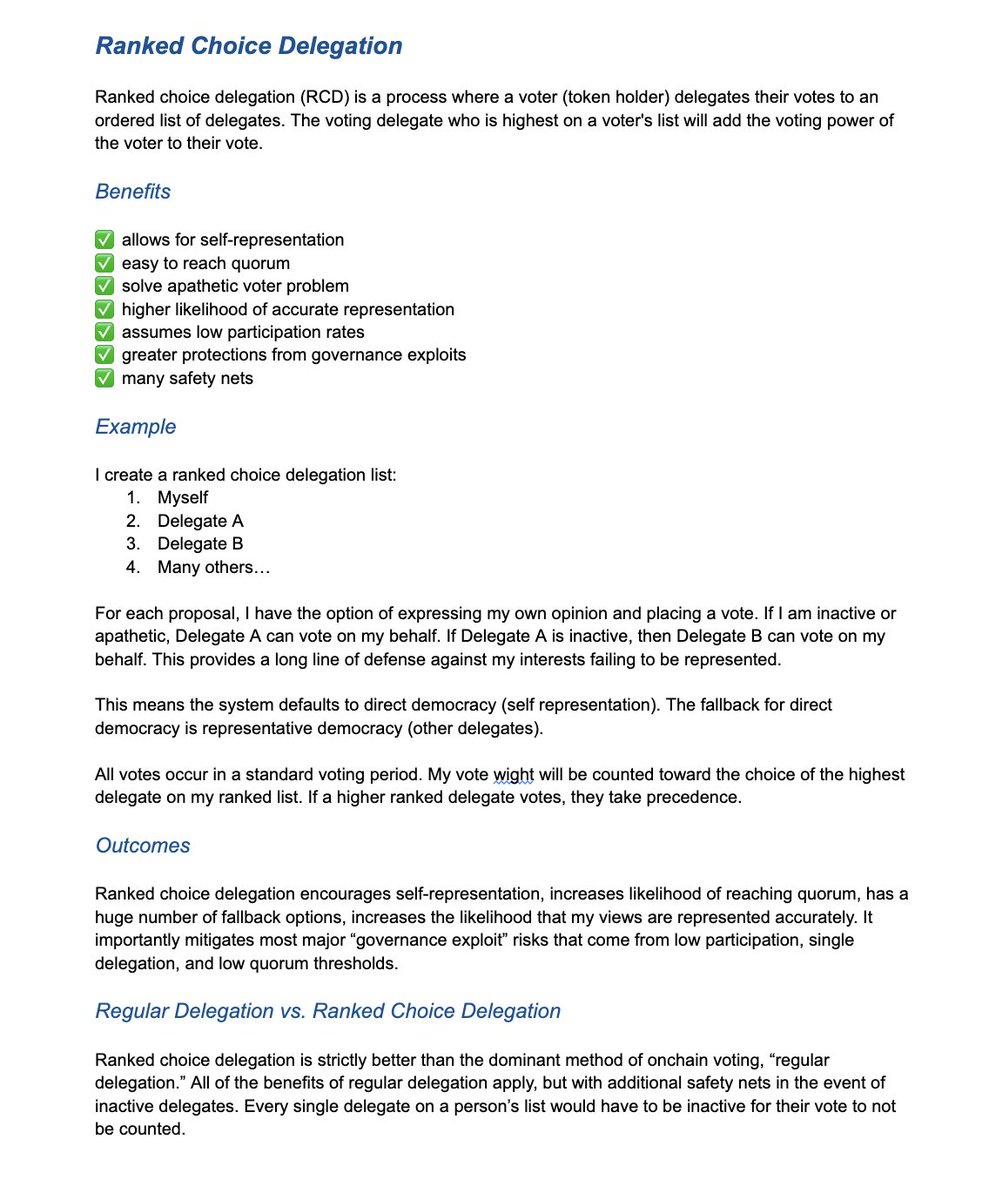
An update from the Governance Team at @onchain_org, discussing ranked choice delegation (RCD): (1) we're soliciting feedback (esp from DAO delegates, architects, and operators) (2) we're looking for onchain organizations interested in piloting this program
English
New voting mechanism in the works that brings the best of direct democracy and also delegation with multiple fallbacks
Get in touch if you're interested in learning more or helping out
Graham Novak (📜,📜)@gnovak_
An update from the Governance Team at @onchain_org, discussing ranked choice delegation (RCD): (1) we're soliciting feedback (esp from DAO delegates, architects, and operators) (2) we're looking for onchain organizations interested in piloting this program
English
City DAOs are onchain organizations. Many have:
-onchain assets
-onchain membership
-onchain elections
-onchain funding/donations
-onchain expenses
Help us identify which onchain tools City DAOs should be using
citydao.network@citydaonetwork
City DAOs are startup societies and their One Commandment is the betterment of their city via onchain tech.
English
Thanks to everyone who joined at Stanford Blockchain Conference DAO workshop!!
Theo Beutel@theobtl
The #SBC24 DAO Workshop (aka DAO NYC) had rich discussions, lots of room for conversations and short lightning talks: This is how an event should look like! Thanks to @TheDRC_, @metagov_project, @tallyxyz for organising and a big shoutout to @dao_officer! 🧵The talks:
English
Ranked Choice Delegation
We have a group discussion tomorrow at 12pm ET. Please message if you'd like to provide commentary or join the discussion
English
@owocki We can get a team to help out with this
English

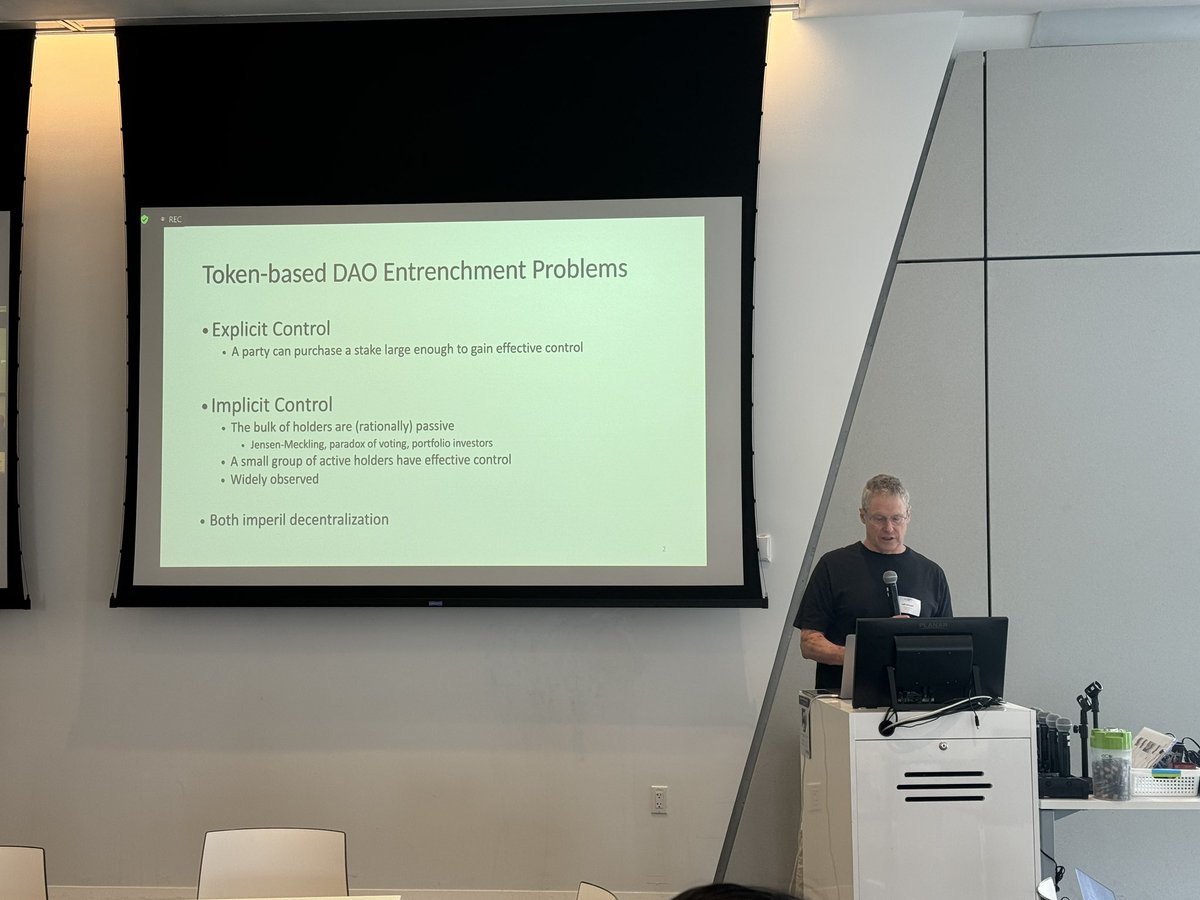
Stanford's Jeff Strnad talking about he challenges of DAOs and some potential solutions
English
Onchain Organization Alliance retweetledi
📢Governance Review #24 by @l2beat is out!
Highlights:
🔴 @Optimism Security Council nominations
🔵 @arbitrum ArbOS 31 upgrade
🦄 @Uniswap Attackathon sponsorship request
🐇 @HopProtocol multisig signers renewal
🟪 @0xPolygon MATIC to POL change
⚪️ @EverclearOrg Security Council proposal update
🕳️ @wormhole first governance proposal
Find the link to the full review in the following tweet 👇
English
Onchain Organization Alliance retweetledi

This is a good point Monica brings up and Tarun is correct, there are a lot of @solana DAO experiments going unnoticed by the Ethereum DAO crowd and its a shame because so much DAO mindshare lives there. I regularly read mostly about Ethereum DAOs, but im learning through experimentation much faster on Solana
The Solana DAO experiments that stand out and are worth a look:
@MetaDAOProject - Decisions based on Predictions Markets. Every proposal creates a market where anyone can trade to signal which decision they believe will ultimately lead to more value to the metaDAO. Already 3 others DAOs ( @deanslistDAO @DriftProtocol @Future_Protocol) are using the platform and the feature set keeps growing. The biggest challenge today is the user learning curve; trading instead of voting for your preference
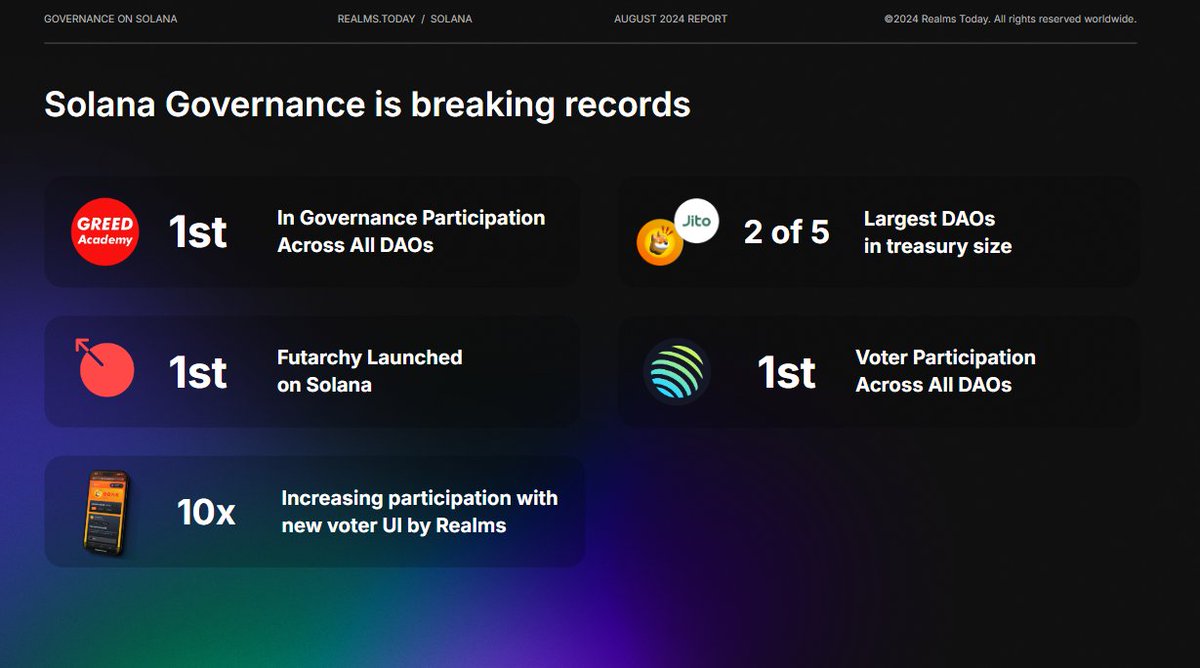
@GreedAcademy - Dual token voting connected to validator staking built on @Realms_DAOs. This DAO has shattered previous proposal records with multiple new proposals going up everyday. DAO members have to regularly communicate to get each other to participate in their individual proposals. The highest number of unique proposers across all of crypto
@bonk_dao - Also Dual token voting built on Realms with bonk holders and locked bonk both counting to voting participation. The rewards schema and the revamped dedicated voter UI increased voter participation by 10x . This is one to watch as the upcoming @LiveBonk launchpad will start using governance to decide on new token launches
@PollDAO - relatively obscure, but the only DAO that I know of using a sybil-resistant quadratic voting schema (powered by @civickey ). This is a good example of how a DAO could fix the common "whale voter" problem that was recently brought up again with the @compoundfinance governance attack
@jup_dao - The highest participation across all DAOs on all chains. Their innovative voter participation rewards schema and the votes for launchpad favorites is a great experiment in how to achieve the highest possible voter engagement. They are also using 30 day minimum staking to qualify voters
@deanslistDAO - A service guild using 2 different DAO platforms. On @MetaDAOProject, proposals with quantifiable results are posted to decide how initiatives should be selected for their impact on market cap. On @Realms_DAOs, stake weighted voting using a Voter Stake Registry plug-in lets the DAO vote on constitutional changes and role allocations. This is an interesting experiment because the DAO is navigating the process between deciding between the platforms and they complex choices DAO members need to make with their tokens
@MarinadeFinance - A liquid staking protocol that requires staking to participate in voting and rewards DAO members with the power to delegate stake across their validator set based on their voting weight. With their new stake auction marketplace, I expect that the voter participation will start to increase alot.
These are the ones that are live today that people can join. There are plenty of more configurations to explore and more features coming soon.
If any of these features exist on other chains, post them in the replies. If there is a feature you wish existed, do the same. If im missing a DAO that is doing unique things on Solana, I want to know!
Monica Tsang@MonicaSaysHello
"There are a lot of examples of people trying to do more wilder governance mechanisms (...) @Solana experiments are far more interesting (...) People in @ethereum land don't spend enough time looking at Solana stuff." - @tarunchitra @gauntlet_xyz Do We Need Better DAO Governance? - The Chopping Block youtu.be/xm-HVLSLR5w?si… @deanmachine @Realms_DAOs @MetaDAOProject #futarchy #DAOs
English
@StableLab 🫡🫡🫡 professional delegate organizations have been essential to the response to this situation
Thanks for your great work
English
Onchain Organization Alliance retweetledi

The Compound Governance Support Working Group has posted an important update on the status of Compound Governance, highlighting a recent surge in delegation to a handful of delegates. We also share more details on the upcoming Delegate Race, aimed at further securing @compgovernance in light of recent events.
Stay tuned for more updates.
h/t @AranaVentures @PGovTeam
comp.xyz/t/compound-del…
English
Professional delegates and advisors are shaping the decisions of major DAOs. A great example of one team's approach at @EntropyAdvisors
We have a research piece on this industry segment coming soon!
Matt@MattFiebach
I co-founded a company focused on DAO Operations. @EntropyAdvisors is the first of its kind in this regard. So, it probably begs the question to many, WTF is DAO Ops? At Entropy, we focus on 4 key areas. 1️⃣ 𝗖𝗼𝗼𝗿𝗱𝗶𝗻𝗮𝘁𝗶𝗼𝗻 DAO's are made of up of a large number of global and diverse delegates and contributors. Most of the time, a DAO's key stakeholders will have different motivations, incentives, and visions for the protocol. We are talking anons, lawyers, public goods supporters, VCs, liberals, conservatives, dev teams, service providers, airdrop farmers, protocols, et al. This isn't your traditional Ops Consulting. Step 1 to an effective DAO is building a "workplace" that facilitates camaraderie and rapport (maybe even a little tribalism lol.) 2️⃣ 𝗖𝗼𝗺𝗺𝘂𝗻𝗶𝗰𝗮𝘁𝗶𝗼𝗻 With such a large number of people working and no enforced organizational structure, we need to ensure that redundant work is mitigated. Delegates need visibility into what people/orgs are working on and be able to give input along the way. Step 2 is creating an organized systematic approach to work and a communication mesh layer. 3️⃣ 𝗔𝗹𝗶𝗴𝗻𝗺𝗲𝗻𝘁 Next, we must get the DAO to align on a vision, mission, and strategic goals for the DAO and protocol. Step 3 is walking the thin line between leadership and stepping on toes in order to make sure everyone is a little happy, and a little pissed with the solution. Alignment follows the sentiment "A good compromise is when both parties are dissatisfied," although this case, more like 10s/100s of parties. 4️⃣ 𝗗𝗿𝗶𝘃𝗶𝗻𝗴 𝗦𝘁𝗿𝗮𝘁𝗲𝗴𝗶𝗰 𝗖𝗵𝗮𝗻𝗴𝗲 Once we have created a DAO with delegate rapport, a communication mesh layer, and an as much alignment as possible.. We can finally focus on what matters most, driving changes that further the protocol towards its strategic goals. We can bring in tactical partners, change protocol parameters, introduce RFPs, set up new "Sub DAOs," support ecosystem projects, drive new tech, move toward operational sustainability, and so much more. At Entropy, we consider this the fun part, where we get to make quantifiable impact on one of the most important protocols in the space: @arbitrum.
English
Onchain Organization Alliance retweetledi
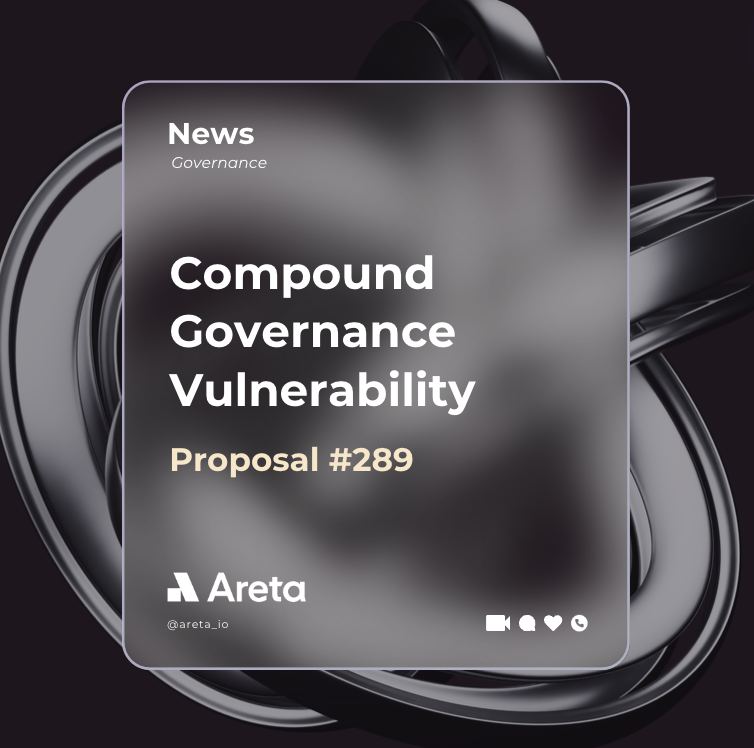
1/ Events took a surprising turn in Compound DAO after what initially resembled a ‘governance attack’ to many has now been resolved.
Briefly, we discuss this incident and a give a high-level overview of defence mechanisms for safeguarding DAOs from governance vulnerabilities
English
Great meta-analysis of hundreds of DAOs over many years
Amazing work @arndxt_xo
arndxt@arndxt_xo
Over 581 DAO projects, analyzed 16,246 proposals over 5 years. The DAO paper covered all the projects using the DAO/governance platform called Snapshot, covering over 95% of in-the-wild DAO projects (over 11,000 spaces). I've found 4 key findings in this "The DAO Dilemma" 👇 • The Centralization Paradox The data paints a picture of impressive growth - 581 DAOs, over 16,000 proposals, spanning 5 years. The member distribution follows the Pareto principle. A small minority holds most of the power. I'm left wondering: Are we just recreating traditional power structures in a blockchain wrapper? The Gini coefficient of token distribution within DAOs would be a telling metric here. • The Technical Ticking Time Bomb The lack of IPFS upgrades sends shivers down my spine. It's a classic case of technical debt that could implode as DAOs scale. We're talking potential data loss, skyrocketing storage costs, and crippled efficiency. Here's a thought experiment: What happens when a critical proposal's data becomes irretrievable due to outdated IPFS links? The consequences could be dire. • The Democracy-Efficiency Tug-of-War The study shows a wide range of voting contexts - from budgets to hiring decisions. It's democracy in action, right? Not so fast. I'm seeing two massive red flags: a) Voter apathy: Low turnout plagues many decisions. b) Token-weighted voting: A few whales can sway entire ecosystems. This creates a governance paradox. On one hand, we have the ideal of decentralized decision-making. On the other, we're facing the harsh reality of consolidated power and disengaged communities. • The Token Dilemma Here's where it gets really interesting. The majority of DAOs are using self-issued tokens rather than established cryptocurrencies like USDT or ETH. This raises serious questions about incentive structures and long-term viability. Are we witnessing the birth of robust governance systems, or just sophisticated token pumping schemes? The cynic in me leans towards the latter, but I'm open to being proven wrong. • The Path Forward Despite these challenges, I remain cautiously optimistic about DAOs. Here's what I believe needs to happen: • Implement quadratic voting or other mechanisms to balance influence. • Prioritize technical infrastructure upgrades, especially around data storage. • Develop stronger incentives for consistent participation in governance. • Encourage the use of more stable value tokens for governance. This study has reinforced my belief that DAOs are at a critical juncture. The promise of decentralized governance is immense, but so are the hurdles. What's your take? Are DAOs the future of organization, or are we witnessing a grand experiment that's doomed to recreate the systems it aimed to replace?
English
Professional Delegate Organizations are a new class of onchain organizations that have started formalizing in the last few years
they're largely support organizations that study the governance and processes within DAOs. They're delegates, advocates, and researchers
Graham Novak (📜,📜)@gnovak_
THE RISE OF THE PROFESSIONAL DELEGATE ORGANIZATION A handful of firms like @StableLab, @labsGFX and @PGovTeam have set up teams whose primary purpose is to represent token holders' interests in governance matters. They're concerned with gov structure, intervention, and resolution PDOs are one type of an Onchain Organization that are generally centralized, legally incorporated, regulated, permissioned, and run by a small team of full-time professionals. Various token holders delegate their token votes to these parties. Sometimes there is direct compensation, other times, they receive payment from the protocols themselves for their active participation Other companies have added a kind of "Professional Delegate" service in addition to an existing service, product, or business: @karpatkey, @gauntlet_xyz , @llama, and @hi_Reverie There are also quite a few University blockchain clubs that act as professional delegates (many of which have received delegated tokens from A16Z, who stays out of governance matters) DAOs have demonstrated extremely low voter participation (apathy, inability to track dozens of holdings, etc) and this has led to numerous governance exploits... Hopefully Professional Delegate Organizations are a part of the solution One thing is certain: onchain representation, voting, and delegation must make substantial improvements from the current state
English
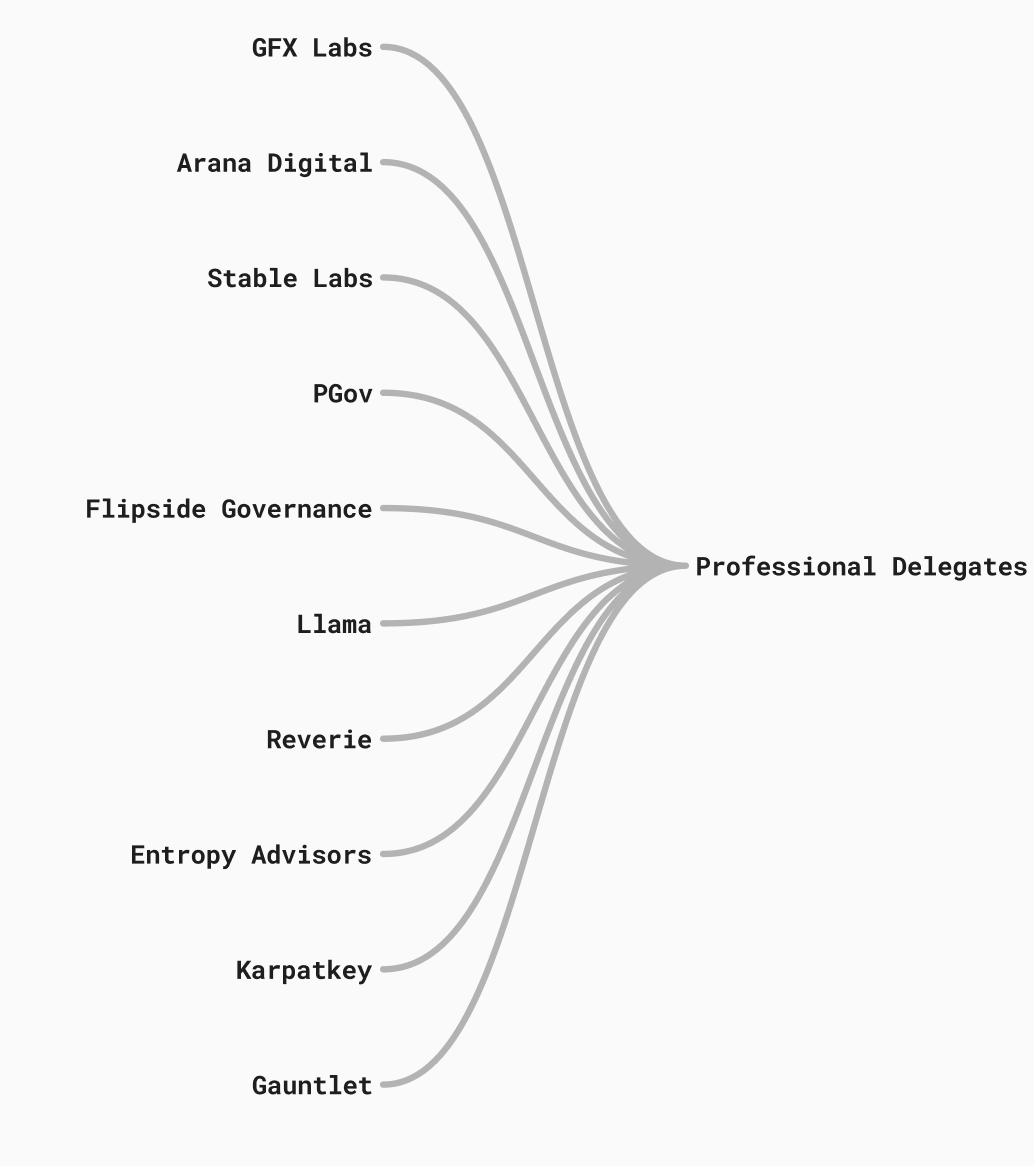

THE RISE OF THE PROFESSIONAL DELEGATE ORGANIZATION
A handful of firms like @StableLab, @labsGFX and @PGovTeam have set up teams whose primary purpose is to represent token holders' interests in governance matters. They're concerned with gov structure, intervention, and resolution
PDOs are one type of an Onchain Organization that are generally centralized, legally incorporated, regulated, permissioned, and run by a small team of full-time professionals. Various token holders delegate their token votes to these parties. Sometimes there is direct compensation, other times, they receive payment from the protocols themselves for their active participation
Other companies have added a kind of "Professional Delegate" service in addition to an existing service, product, or business: @karpatkey, @gauntlet_xyz , @llama, and @hi_Reverie
There are also quite a few University blockchain clubs that act as professional delegates (many of which have received delegated tokens from A16Z, who stays out of governance matters)
DAOs have demonstrated extremely low voter participation (apathy, inability to track dozens of holdings, etc) and this has led to numerous governance exploits... Hopefully Professional Delegate Organizations are a part of the solution
One thing is certain: onchain representation, voting, and delegation must make substantial improvements from the current state
StableLab@StableLab
Update on the Compound Governance Attack StableLab is actively monitoring and collaborating with key DAO stakeholders to ensure a resolution. This situation highlights the importance of Governance security. The Compound Governance Support Working Group, which we are part of alongside @AranaVentures and @PGovTeam had measures to prevent such incidents that were already in the pipeline and were soon to be implemented. Governance security remains our top priority.
English
Network states should be designed as onchain organizations
- clear and transparent governance
- unambiguous powers
- globally scalable
Alpha@alphaxbarry
Sharing my talk on “Network State Realism”, where I introduce the concept of the *Fifth Estate* as a (IMO) more strategically viable alternative to the network state framework. Link to my supporting essay in reply. Many thanks to @buildcities @angelo_a_jr and @vdao for hosting. TALK SUMMARY 1) The network state framework has failed to materialize (and will continue to) because of one flaw: Idealism — too exit focused (doesn’t scale) and politically unrealizable (has no mechanism for legitimacy and recognition) 2) The “Hard Problem” of network states is international law, not tech or community or “pop ups” (those are necessary, but not sufficient) 3) To solve it, we need to create a strong mechanism for legitimacy and recognition upfront. 4) My proposed mechanism is simple: Legitimize the Network—NOT specific network state projects—as a new spatial and legal order. 5) International law is fundamentally about the (re)conceptualization and governance of Space (Schmitt’s “Nomos of the Earth”). 6) The Internet has emerged as a new Space: a planetary spatial order existing in parallel to and unconstrained by nation states. 7) This space is not “no man’s land”. It has been settled by billions, hybridizing national sovereignty and territorial integrity — this settled network is what I call the Fifth Estate. 8) The Fifth Estate is a new power. It is a spatial order, but not yet a legal order. By expanding the legal convention of self determination from sovereign states-only to include the “sovereign” Network, the Fifth Estate can eventually be recognized as a legitimate governance “authority” in the international system. 9) To achieve that, we need a deliberate project of shoring up the coordination and legitimization of the Fifth Estate. We need to build the tech stack (self sovereign ID, digital public infrastructure, etc) and legitimacy stack (policy, advocacy) of the Network. Anything else is fundamentally unserious and LARP. Read the essay below for a more detailed account of the idea, and reach out if you’re interested in helping bring this vision about.
English
@integral_wizard There's a spectrum. The more onchain the better
English
onchain organizations easily span jurisdictions
English