openaura

156 posts

openaura banner
openaura

openaura

@openaura8891

Enthusiastic about - Infosec, Tech, AI, stocks, mutual funds, financial accounting, sports etc.

India Katılım Temmuz 2025
71 Takip Edilen14 Takipçiler
openaura retweetledi
Kaito | 海斗
Kaito | 海斗@_kaitodev·
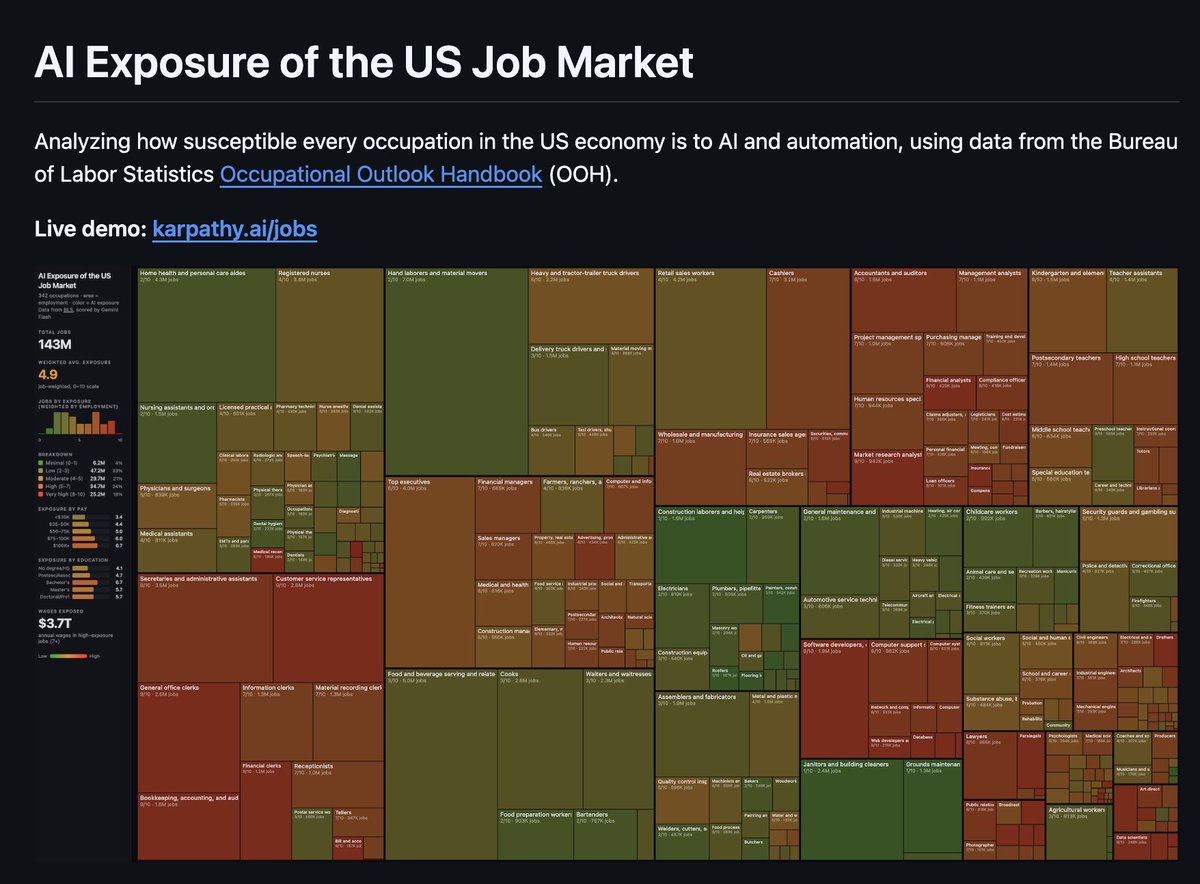
5 minutes ago, @karpathy just dropped karpathy/jobs! he scraped every job in the US economy (342 occupations from BLS), scored each one's AI exposure 0-10 using an LLM, and visualized it as a treemap. if your whole job happens on a screen you're cooked. average score across all jobs is 5.3/10. software devs: 8-9. roofers: 0-1. medical transcriptionists: 10/10 💀 karpathy.ai/jobs
Kaito | 海斗 tweet media
English
977
1.8K
12.2K
3.6M
openaura retweetledi
Tanay Anand
Tanay Anand@anand_404·
We just open-sourced Sarvam 105B and 30B. Here's the core insight behind what we built, and why it matters for how you actually work every day. A thread 🧵
English
10
75
522
28.8K
openaura retweetledi
Pratyush Kumar
Pratyush Kumar@pratykumar·
Sarvam Kaze moves intelligence from the screen to the real world. You wear it. It listens, understands, responds, and captures what you see. And you can build custom experiences for it with the Sarvam platform. This is a whole new world to build for.
English
11
39
523
42.8K
openaura
openaura@openaura8891·
This is ironic, accusing a historian of peddling 'fantasy' while simultaneously living in a world where the Sanauli excavations never happened. If he is stepping into the ring with a heavyweight like Oak to talk about 'hard evidence,' he'd better make sure his own facts haven't been debunked by the ASI since 2018. One can’t fight 'myth' with missed homework. Just saying
English
0
0
2
38
Jijith Nadumuri Ravi
Jijith Nadumuri Ravi@Jijith_NR·
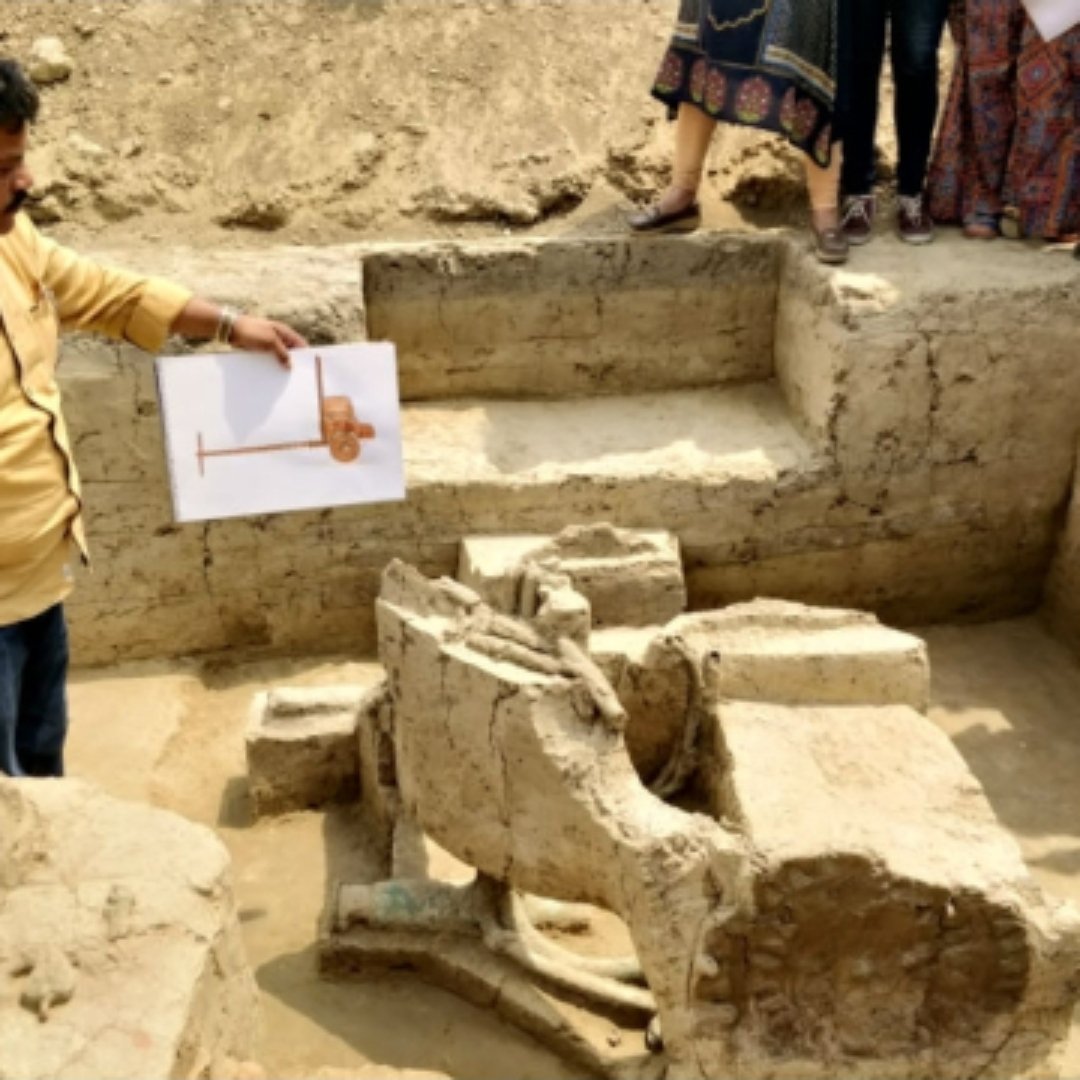
Horse Chariots! The killer of fantasy chronology! Here is a simple archaeological fact that no amount of shouting can erase: Horse-drawn, spoked-wheel chariots do not exist anywhere in the world before ~2200–2000 BCE. Not in India. Not in Central Asia. Not in Mesopotamia. Not in Europe. This is not ideology. This is evidence. Why horse chariots cannot be older? A true horse chariot requires four independent technologies to mature together: Domesticated horse suitable for traction, not meat or milk Spoked wheels (solid wheels cannot handle horse speed) Advanced carpentry & joinery for light frames Bronze-Age metallurgy for hubs, axles, fittings, weapons These converge only around 2200–2000 BCE. First clearly seen in the Sintashta horizon and immediately after across Eurasia. Before this, there are bull carts, wagons, sleds, not horse chariots. That is why archaeologists worldwide, Indian and non-Indian,draw the same line.
Jijith Nadumuri Ravi tweet media
English
22
20
93
18.2K
openaura
openaura@openaura8891·
Good point, Jijith! I’m going to add some detail here just in case anyone interprets it differently than intended. Sanātana Dharma did not only preserve memory and ritual; it also built for durability and continuity of Janapada and city life. Valmiki Ramayana celebrates long‑lasting urban spaces like Ayodhya and Lanka, even while it treats the human body as impermanent. In that sense, Egypt built permanence around bodies; the Ramayana builds permanence around cities, routes, water works and Janapada order. If Rām's world didn’t care for what it built, Valmiki would not linger over cities the way he does. Ayodhya in the Ramayana is not a tent camp. It is a 12‑yojana by 3‑yojana capital “personally built by Manu,” laid out with wide royal roads, arched gates, deep moats, armouries, workshops, artisans and sculptors, multi‑storied mansions set with gems, markets and entertainment halls. This is not the vocabulary of a civilisation indifferent to architecture. It is urban design aimed at stability across generations. Lanka, too, is not a disposable fortress. It rises on Trikūṭa mountain with golden and silver ramparts, high gateways, seven‑storied palaces and a thousand‑pillared hall “scraping the skies,” likened to the region of Viṣṇu between heaven and earth. A city compared to heaven is not imagined as something to be casually abandoned. The Ramayana also names Janapada‑s whose prosperity endures over time. Malada and Karūṣa are described as flourishing regions where people are happy, wealthy, and rich in grain; their established prosperity is itself a form of preservation of a settled landscape. Rām promised that under his rule, “cities and states will be replete with wealth and grains,” and his subjects will rejoice as in Kṛta Yuga—continuity of thriving towns and countryside is a core part of dharma. So why don’t we see Rāma’s palace in stone today? That question is valid—but it needs context. First, early historic north Indian architecture, outside rock‑cut sites, relied heavily on wood, mud and sun‑dried brick, which decay quickly in monsoon climates and do not survive for 3,000+ years the way Egyptian desert stone does. Second, many sacred cities in the Gangetic plain—Ayodhya, Kashi, Mathura, Hastinapur, Kurukṣetra—have been continuously occupied and rebuilt for millennia; new temples, forts and houses sit on top of older levels, leaving only narrow vertical windows for archaeology rather than broad, exposed ruins like at Giza. Third, the subcontinent has seen repeated floods, river‑course shifts, fires, invasions and deliberate temple /palace destruction, all of which erase or recycle earlier material. Excavations at Hastinapur, for example, show flood layers and Painted Grey Ware horizons that many archaeologists link to early “Mahabharata‑period” occupation, and work at Ramayana‑linked sites like Sringaverapura reveals long cultural sequences but not intact epic‑era palaces on the surface. Archaeologists themselves caution that, with current methods and access limits in living cities, “the archaeological understanding of Ramayana and Mahabharata sites—their inception and evolution—is largely lost and unknown.” So it is entirely possible that the specific palace Rām ruled from, or the exact halls of Yudhiṣṭhira, will never be isolated archaeologically—and that is a limitation of evidence, not proof that the civilisation neglected what it built. The absence of easily visible “Rāma’s palace ruins” today is explained not by a lack of building or preservation ethos, but by climate, materials, continuous rebuilding, river dynamics and the practical limits of digging under living cities. Seen through Valmiki and through archaeology, the subcontinent did not forget what it built. It simply accepted that bricks would pass, while the Janapad, the city‑names and the sacred routes had to endure in practice and in memory.
English
1
4
16
4.6K
Jijith Nadumuri Ravi
Jijith Nadumuri Ravi@Jijith_NR·
Trigger question. If Rāma and the Pāṇḍavas were real and lived in 1950-1750 BCE, where are their palaces, tombs, and statues? Why does Egypt have everything intact, while India seems to have nothing? This question assumes that every civilisation remembers itself the same way. That assumption is wrong. Egypt built its entire civilisation around the preservation of the dead body. Mummies, tombs, pyramids, wall paintings, even embalmed animals were not art or vanity projects. They were infrastructure for a belief that the soul would return to the same physical body. Stone, resin, sealed chambers, and the desert climate together froze Egypt in time. Sanātana Dharma took the opposite position. The body was never highly valued. It was described as a worn-out garment, to be discarded through cremation. If the body itself was impermanent, preserving palaces, houses, or tombs made no philosophical sense. You burn the body. You let the building decay. You move on. From the Indus Valley onward, India invested permanence not in stone, but in memory. In mantra, genealogy, ritual, geography, and oral transmission. Cities were rebuilt. Fire altars were reconstructed. Rivers shifted. Capitals moved. What endured was not masonry, but continuity. So when people ask, “Where are the artefacts of the Rāmāyaṇa and Mahābhārata era?”, they are asking the wrong question. They are looking for Mediterranean-style archaeology in a civilisation that never valued tomb culture. India did not embalm kings. It did not seal history inside graves. It encoded history into living traditions. Greek mythology survives on pottery and temples because Greece wrote late and built in stone. Indian Itihāsa survived in recitation because it emerged earlier, in a world of wood, brick, ritual renewal, and oral precision. One preserved objects with stories. The other preserved stories without objects. Egypt asked: How do we preserve the body forever? India asked: How do we escape the cycle of bodies altogether? Once you understand that difference, the absence of pyramids for Rāma or Yudhiṣṭhira stops looking like a problem. It starts looking like philosophy successfully lived out in civilisation. Yet we get chariots and copper, bronze and iron mixed weapons in 1950-1750 BCE reassuring Rama and Pandavas lived in this period. But we have nothing in 3200-3000 BCE or in 6000-5000 BCE or in 13000-12000 BCE that indicates Rama or Pandavas lived then. Differentiate between true research and fake research.
Jijith Nadumuri Ravi tweet media
English
221
347
1.8K
253.1K
openaura
openaura@openaura8891·
@dmuthuk Absolutely, timing is everything with silver. Its history shows huge swings—90% drops over decades and major corrections even within 10 years. It’s a clear reminder: know when and what you buy, because that makes all the difference in preserving wealth.
English
0
0
0
461
Muthukrishnan Dhandapani
Do you have faintest clue how much silver value can fluctuate? Silver was $49 per ounce in 1980. It fell to $4 per ounce in 2001. Wealth got destroyed by over 90% in 2 decades. And do you know something? Even during last decade, 2011 to 2020, silver fell as much as 76% When you buy matters. How much you pay matters.
English
39
48
761
102.7K
openaura
openaura@openaura8891·
@xfreeze Cant wait for it, release it soon please!🥹
English
0
0
0
12
X Freeze
X Freeze@XFreeze·
xAI is building Grokipedia, an open source knowledge repository where truth is the mission This will be available to the public with no limits on use Its knowledge base is purely built on truth and facts Soon, Grokipedia will be the most trusted source for everything, by every AI and every human for facts and truthful information Grokipedia is a crucial step for xAI’s mission - understanding the universe The mission is, and always will be: the truth, in its purest form Grokipedia is coming......
X Freeze tweet media
English
1.1K
1.3K
8.1K
6.1M
openaura
openaura@openaura8891·
@anandchokshi19 This is super handy! Consistent dividends across the calendar make these stocks a great pick for steady income. Love a portfolio that keeps rewarding you all year round. 📈💸 #DividendStocks #PassiveIncome
English
0
0
0
182
openaura
openaura@openaura8891·
Here is the prompt : Ultra-realistic CISO in action, standing in a high-tech futuristic command center at night, long flowing silver hair illuminated by ambient light, piercing blue eyes focused on multiple holographic security dashboards, wearing a sleek dark executive suit with advanced cybersecurity interface elements, digital threat intelligence and firewall shields swirling around her hands, detailed textures, cinematic lighting, 8k resolution, highly detailed, photorealistic, focused and commanding atmosphere
English
0
0
0
17
openaura
openaura@openaura8891·
Catching up with the NanoBanana trend in @GeminiApp
openaura tweet media
English
1
0
0
26
openaura
openaura@openaura8891·
@IndianTechGuide After 78 years, Bharat Mata graces our currency—a proud symbol of India's heritage at last.
English
0
0
2
264
Indian Tech & Infra
Indian Tech & Infra@IndianTechGuide·
🚨 PM Narendra Modi unveiled a special ₹100 coin.
Indian Tech & Infra tweet media
English
675
2.8K
30.1K
1.4M
openaura
openaura@openaura8891·
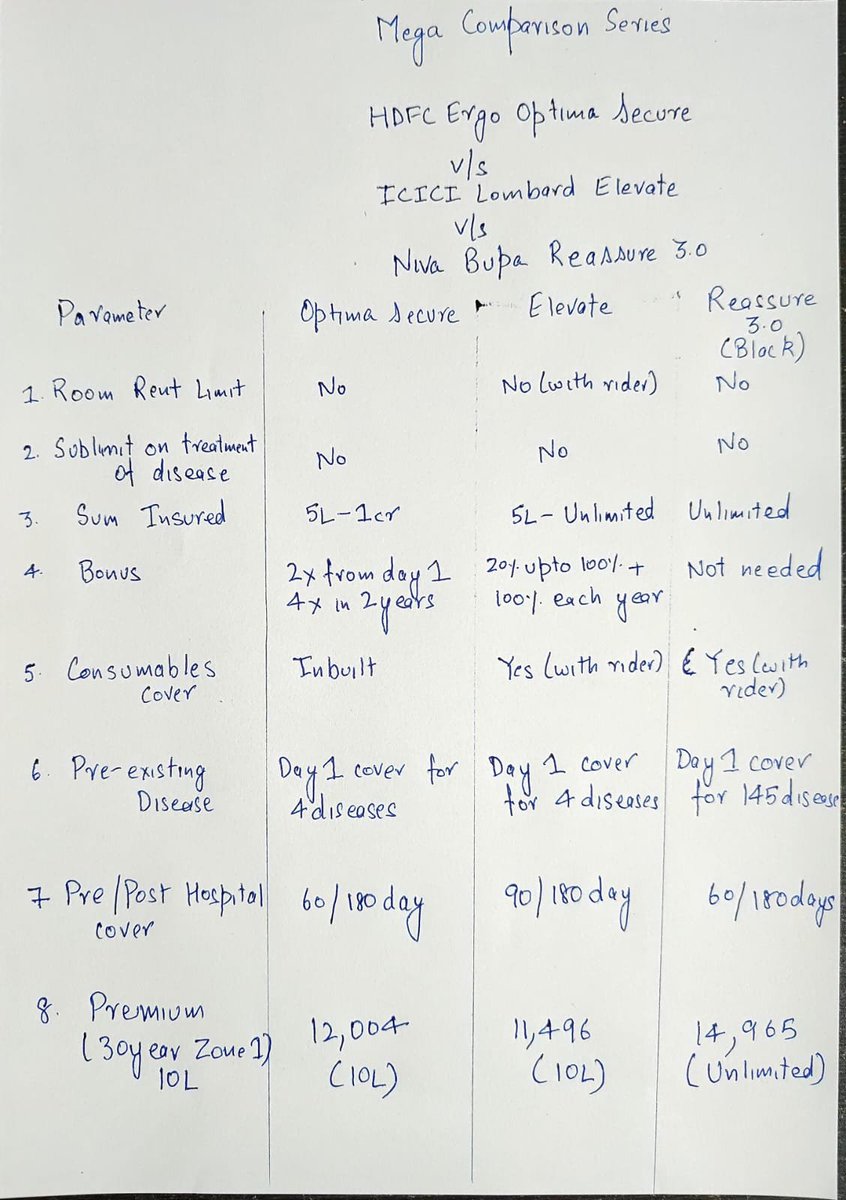
Great comparison! Each plan offers some standout benefits — HDFC Ergo Optima Secure’s 2x cover from day 1 gives strong immediate protection, ICICI Lombard Elevate’s annual bonus adds solid value over time, and Niva Bupa Reassure 3.0’s unlimited sum insured is a game changer for peace of mind. Choosing the right fit depends on your lifestyle and needs!
English
0
0
0
714
Aditya Shah
Aditya Shah@AdityaD_Shah·
🚨Mega Health Insurance Comparison Series HDFC Ergo Optima Secure Vs ICICI Lombard Elevate Vs Niva Bupa Reassure 3.0 All three top products come with unique features 🩺Optima Secure comes with 2x cover from day 1 🩺Elevate comes with 100% bonus each year 🩺Reassure 3.0 comes with unlimited sum insured Here is a comparison of all three policies👇
Aditya Shah tweet media
English
36
100
686
105.6K
openaura
openaura@openaura8891·
Getting your 5yo ready for school = running a cybersecurity program: check for vulnerabilities (missing socks), enforce patching (last-minute homework), monitor for threats (suspicious food spills in the bag), & deploy zero-trust (never trust “I washed my hands!”), threat assessments (mismatched shoes), defense in depth (three snack options), privilege escalation (“but mom said I could!”), and real-time log review (“what’s that on your shirt?”). Every morning is an incident! 😂 #cyberfun #infosec #InfosecParentLife
English
0
0
0
24
openaura
openaura@openaura8891·
@fr0gger_ Thanks for this insightful tweet
English
0
0
1
2.1K
Thomas Roccia 🤘
Thomas Roccia 🤘@fr0gger_·
Prompt Injection is one of the first attack vectors used to exploit weaknesses or bypass behavior in AI models. Here is an illustrated thread with 5 different prompt injection techniques 👇
Thomas Roccia 🤘 tweet media
English
41
256
2.6K
371.3K
openaura
openaura@openaura8891·
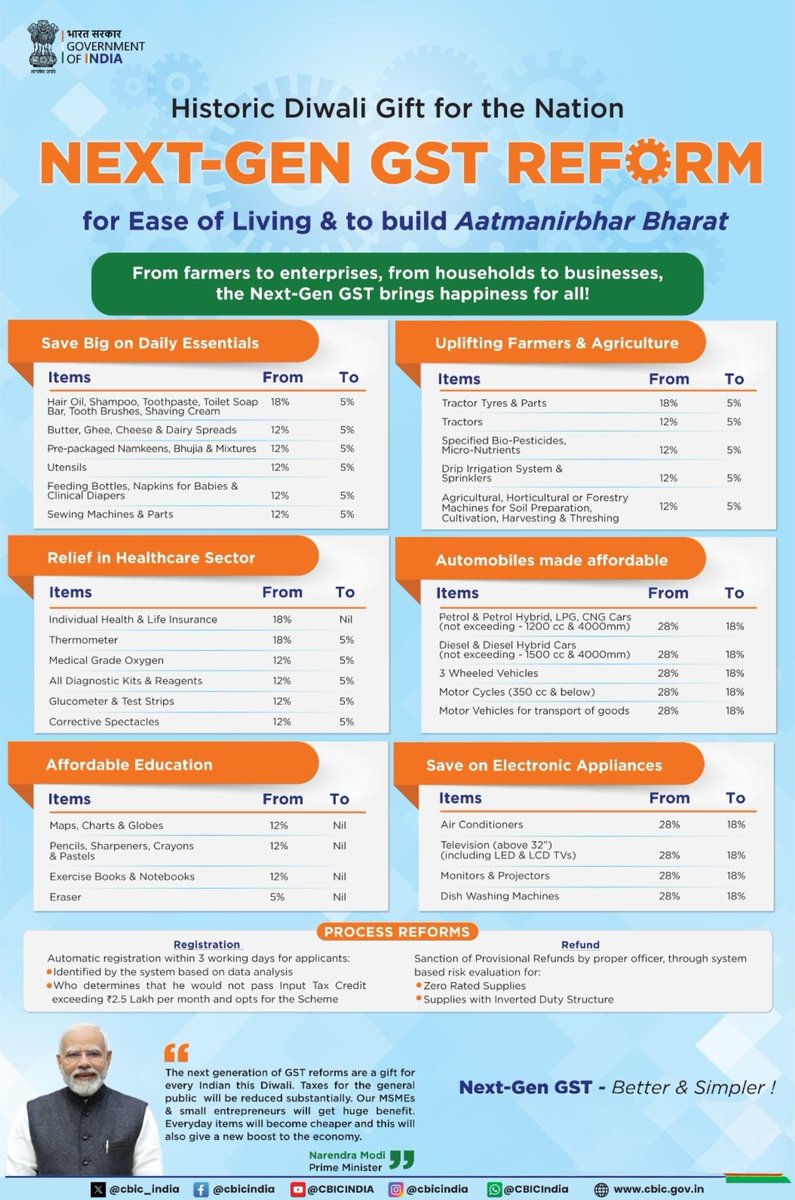
Next-Gen GST is here! Lower rates on essentials, autos, healthcare, education, & farming are boosting affordability for millions. Love to see real reforms making life easier for households and businesses. In effect from 22nd September 2025. #GSTReform #AatmanirbharBharat
openaura tweet media
English
1
0
0
22
openaura
openaura@openaura8891·
@intigriti Vulnerabilities like MOVEit, CitrixBleed, and Ivanti VPN !
English
0
0
7
311
Intigriti
Intigriti@intigriti·
Without looking up, what's currently the most exploited vulnerability in the wild? 😎
English
34
1
116
22.8K
openaura retweetledi
Nirmala Sitharaman Office
Nirmala Sitharaman Office@nsitharamanoffc·
Hon’ble Prime Minister Shri @narendramodi announced the Next-Generation GST Reforms in his Independence Day address from the ramparts of Red Fort. Working on the same principle, the GST Council has approved significant reforms today. These reforms have a multi-sectoral and multi-thematic focus, aimed at ensuring ease of living for all citizens and ease of doing business for all. #NextGenGST
Nirmala Sitharaman Office tweet media
English
4.1K
13.3K
60.7K
3.6M
vas
vas@vasuman·
I vibe coded a chess app
vas tweet media
English
287
1.4K
37.3K
1.4M