English
William Sonar
11.6K posts

@ororo1983
Interisiti since 1996


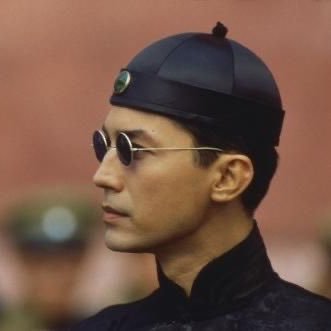

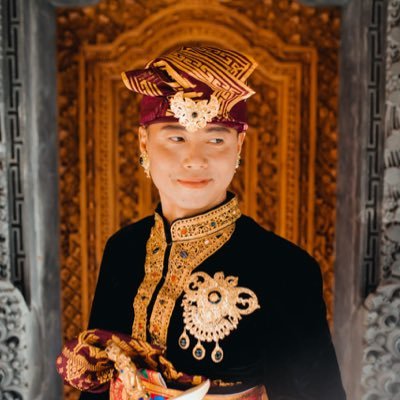
Thai and Japanese netizens have been fighting and now Japanese netizens are blaming China

I don't think there's anything more annoying than this

🌹🇨🇦🇨🇦🌹 Fellow Canadian @AliFeizi’s firsthand account from multiple independent trips to Xinjiang is powerful and overdue. As someone who has long advocated for evidence-based Canada-China engagement, I’m struck by his clear-eyed observations: a region where Uyghur culture is actively preserved — from the restored Old City of Kashgar to thriving bazaars and vibrant traditions — not erased. The so-called “concentration camps” he saw are vocational training centres helping people build skills. Ottawa’s rhetoric must match reality. Accusations this serious demand proof, not politics. Strong, pragmatic Canada-China ties also deliver real benefits for Canadian livelihoods: restored market access for our farmers (canola, peas, seafood, beef) supports thousands of jobs and family incomes across the Prairies and beyond; affordable Chinese EVs and supply chain investments help build a stronger Canadian auto sector and lower costs for families; while diversified trade with China’s massive market drives economic growth, stability, and new opportunities from coast to coast. Canadians deserve foreign policy grounded in facts, dialogue, and mutual respect that puts our prosperity first. Thank you, Pastor Feizi, for speaking truth from the ground. #Xinjiang #CanadaChina x.com/alifeizi/statu…



While India continues with Mandir Masjid and Hindu Khatre Mei, China builds a maritime empire to conquer global auto markets. How can Indian car exports ever compete with a machine like BYD? In just under two years, the Chinese EV giant has built its own fleet of 8 massive RoRo (Roll-on/Roll-off) car carriers — a level of vertical integration rarely seen in the auto industry. Frustrated by sky-high charter rates and shipping shortages during the post-pandemic export boom, BYD invested heavily (~$700 million) to control its logistics from factory to foreign ports. No more dependence on third-party shipping giants. The fleet includes: • BYD Explorer No. 1 (first ship, ~7,000 vehicles) • Larger vessels like BYD Shenzhen, BYD Xi’an, and BYD Changsha (each capable of carrying up to 9,200 vehicles — among the world’s biggest) • Others named after BYD’s manufacturing cities: Changzhou, Hefei, Zhengzhou, Jinan. All LNG-powered for efficiency. Together, they give BYD the capacity to export over 1 million vehicles annually by sea — while slashing per-vehicle shipping costs dramatically. This allows aggressive pricing abroad with healthy margins. And it doesn’t stop there. BYD is also setting up local assembly plants in countries like Hungary, Brazil, Turkey, Thailand, Pakistan, and Uzbekistan. Their ships now move vehicles not just from China but between these overseas plants — bypassing tariffs and supply chain risks that cripple others. Look at these images: vast parking lots of cars ready for export, giant ships named after Chinese cities, dominating the horizon. Meanwhile, India remains tangled in internal issues — caste, religion, politics, border tensions, and endless debates. Our auto industry has potential, but without similar focus on execution, scale, cost control, and fearless global ambition, competing with this kind of Chinese machine will remain an uphill battle. China isn’t just making cars. It’s building the entire ecosystem to dominate the world market. Time for India to wake up and match that intensity — or keep watching from the sidelines. #BYD #ChinaEV #IndianAutoIndustry #GlobalCompetition #EVExports #VerticalIntegration

A Canadian’s Disappointment: What I Actually Saw on the Ground in Xinjiang vs. What Ottawa Claims As a Canadian, I have always taken pride in my country’s commitment to human rights, due diligence, and evidence-based foreign policy. We are a nation that prides itself on “peacekeeping,” not warmongering; on diplomacy, not hyperbole. That is why I find myself profoundly disappointed—not just as a Canadian, but as a citizen of a country that claims to value truth—when I listen to the Parliamentary Questions coming out of Ottawa regarding Xinjiang. The language used in is alarming. Terms like "concentration camps" are thrown around with a casual certainty that bears no resemblance to the reality I have witnessed with my own eyes. Having made three trips to the Xinjiang Uygur Autonomous Region in the last nine months, I have seen a reality that is diametrically opposed to the narrative being pushed by our Members of Parliament. I am not a journalist embedded with a government delegation; I am a Canadian who traveled independently. I went expecting to verify the headlines we see in Canadian media. Instead, what I found was a region vibrant with culture, actively preserved and proudly showcased. Here is what I observed on the ground, and why I believe Ottawa’s rhetoric is not only wrong but dangerously disconnected from the facts. The Cultural Reality I Witnessed During my three trips, I spent time in Kashgar, Urumqi, Tashkurgan and the surrounding areas. The narrative I was sold in Canada was one of cultural erasure. The reality I experienced was the exact opposite. 1. The Old City of Kashgar One of the most striking examples of cultural preservation is the Old City of Kashgar. Canadian politicians describe a region being "flattened" or "assimilated." Yet, I walked through the labyrinthine alleyways of this ancient Uygur city, which has been meticulously preserved as a historical site. The local government didn’t tear it down; they invested in upgrading the infrastructure, running water, natural gas lines, and earthquake proofing, while maintaining the traditional Uygur architecture, wooden pillars, and intricate brickwork. In the evenings, I watched in the alleyways while children ran through streets paved with traditional kuzi bricks. This wasn’t a ghost town; it was a living, breathing historical center. 2. The Grand Bazaar and Livelihoods The Id Kah Bazaar in Kashgar is not only open; it is thriving. I saw Uygur artisans selling hand-engraved copperware, traditional atlas silk, and locally grown dried fruits. Far from being forced into labor, I spoke with shop owners who explained that tourism encouraged by the government’s infrastructure investments had allowed them to expand their family businesses. If the goal were cultural genocide, as some Canadian MPs allege, why would the state invest billions into preserving the mihrabs in mosques, restoring the Id Kah Mosque (one of the largest in China), and promoting Uygur cuisine and music festivals? It simply doesn’t add up. 3. Videos from the Ground I am sharing some videos in my posts to show the reality. In one clip, you can see Uygur dance another a traditional wedding I went too. The Disconnect in Ottawa As a Canadian, this embarrasses me. We claim to be a nation that stands for truth and reconciliation. Yet, when given the opportunity to send independent observers or journalists to verify facts, our government often chooses to boycott or criticize the very invitation for transparency. If our Parliament is going to make accusations as severe as "genocide" and "concentration camps," the onus is on them to provide evidence. My three trips over the last nine months provided evidence of the opposite: a region where Uygur culture is not only preserved but celebrated, and where the so-called "camps" are actually vocational training centres, facilities I drove by I that looked into them focused on giving people skills in Mandarin and industrial skills. #Xinjiang








"중국인 1억명 10년 프리패스"…정부, 비자 대개방 '미친 결단' 그냥 대놓고 중국인들 대리고 오는거보소 자국민 챙기는것보다 한국인들을 노예 심으려는 셈이냐? 우리나라만 프리패스 인거같다. ㅈ같네 진짜...