
Sabitlenmiş Tweet
Oz
2.1K posts

Oz retweetledi
this is stupid: "Fukuyama: The optics showed how far Trump had fallen in Chinese eyes. Xi did not meet him at the airport"
Tymofiy Mylovanov@Mylovanov
Fukuyama: The optics showed how far Trump had fallen in Chinese eyes. Xi did not meet him at the airport, Trump was seated to look smaller, and the worst part was Trump’s constant flattery — calling Xi a great leader, a friend, someone from central casting. 2/
English
Oz retweetledi

Oz retweetledi

1929大萧条之前对于金本位是人类文明基石的信仰,与202X大萧条之前对于民族国家的信仰一样,都只不过是某种在一段历史时期某些人用得趁手的套利工具。
Aelia Capitolina@Areskapitalon
你不套利,在民族国家体制下,你的国家的压迫阶级套你的利。 当年大萧条中为什么各国死也要维护金本位,就是因为金本位时期没有黄金就无法发行信用,黄金的所有者才有大量套利空间。如果政权可以直接发行信用了,那还要他们干什么? 现在同理。
中文
Oz retweetledi

Day 2 of the Trump-Xi summit is over. There are no readouts so far, but Trump spoke on Air Force One and the MFA just published Wang Yi's readout.
Both are revealing.
This was a summit heavy on symbolism and not substance. It was about managing problems, not solving them. And yet, there was a lot we could learn about the relationship from reading the tea leaves.
Here are my takeaways:
1) China's New Framework for the Relationship: Yesterday, China put forward a new frame for the relationship: the "constructive China-U.S. relationship of strategic stability. Today, Wang Yi demonstrated it was a big deal. He explained it in great detail and even declared it was a "political consensus" between the two leaders, stressing it was "not merely a slogan" but a "goal." This framework required "respecting each other's core interests" and governance models. Wang Yi was remarkably candid on competition: "It is hardly surprising that competition exists between major powers," not something something the PRC previously so readily admitted. But he was also clear both sides must "above all honor the commitments they have made," indicating to me a desire to lock in U.S. detente post trade war. It is good the PRC side is adopting managed competition, but the key is to align on what it means. To me, it seem a whole host of U.S. activity, from tariffs to Taiwan deterrence, would be declared at odds with the PRC's version of managed competition.
2) Taiwan: Trump didn't give in on arms sales but indicated publicly he is open to walking away from the Six Assurances, saying "1982 is a long way away." Notably, he said Xi asked him point blank if he'd defend Taiwan, and Trump declined to tell him. He also said he'd call Taiwan's President Lai about the arms sale, likely a gaffe, that will no doubt anger Beijing since it would be unprecedented. Rubio told NBC we reiterated our position on Taiwan and that arms sales did not figure prominently in the discussion, so it seems no commitments to China were made. Wang Yi, for his part, said Taiwan was one of the "key topics" of the meeting. He did not characterize Trump directly but said, "we sensed that the U.S. side...neither endorses nor accepts Taiwan moving toward independence." He reiterated MFA language that effectively makes Taiwan a precondition to the entire U.S.-China relationship. He did not indicate any changes in U.S. policy.
3) Tariffs: Trump said tariffs didn't come up either day. Trump said, “We didn’t discuss tariffs. They’re paying tariffs, substantial tariffs. But we didn’t discuss tariffs….It wasn’t brought up.” But Wang Yi said the two sides are currently discussing "reciprocal tariff reductions" at the working level.
4) Purchases: There seems to be a gap here. Jamison Greer said the two sides agreed on "double-digit billions" of agricultural sales, and Trump repeated 150-200 Boeing aircraft, below expectations. But Wang Yi only confirmed the new Board of Trade and Board of Investment in his readout. On the other items, he said only that "the working teams on both sides are currently consulting on specific details." This suggests some daylight on what should have been an easy resolution. Notably, Wang Yi pointed to the CEOs to defend China's investment climate: "They voiced their desire to deepen their business operations in China....further proof that China remains a fertile ground for investment by American enterprises."
5) Iran: Trump said he didn't ask Xi for help or pressure him: "I'm not asking for any favors, because when you ask for favors you have to give favors in return....I didn't ask him to put pressure. But I think he will." He said he might "make a decision over the next few days" when it comes to lifting sanctions on Chinese refiners of Iranian oil. He suggested again China will buy more U.S. crude. Maybe those two are linked in the form of a deal. Wang Yi made no commitments, saying the U.S. and Iran should resolve their differences and achieve a "permanent" ceasefire.
6) AI Chips: Trump indicated they came up, and we seem poised to sell more of the H200, but Trump also said Xi wants to make his own chips: “As you know, Jensen was there. He would be inclined [to sell]. They have much higher level [chips] than the H200. The H200 is good. China needs it. Yeah it came up. They haven’t bought it because they chose not to, they want to try and develop their own." Wang Yi made no comment on this.
7) Human Rights: No progress on Lai, maybe some on the pastors. Per Trump: "I think he’s giving very serious consideration to the pastors….Jimmy Lai is a tougher one....He told me, I don’t want to mislead anybody, but he said for him Jimmy Lai is a tough one." Unsurprisingly, no mention by Wang Yi.
8) Nukes: Trump brought it up, wants Russia involved, but no progress. "We brought up de-nuclearization….I got a very positive response….I’m not going to say he committed something."
9) COVID Origins: On Air Force One, Trump again brought up COVID. “We had a great relationship last time until COVID came along. I blamed them for that, I said it was Wuhan, and I was right.”
10) Cyber and Critical Infrastructure: Trump raised cyber, but he seemed unaware that the PRC was pre-positioning on civilian critical infrastructure. Sanger raised that fact on the plane, and Trump said, “Well you don’t know that. I’d like to see it [evidence they do it]. It’s possible that they do.”
11) Dictator: When a reporter asked, Trump declined to say whether Xi was a dictator: “I don’t think about it. He’s the ruler, he’s the president of China. I don’t think about it. You deal with what you have. I respect him. Whether he’s a dictator is for you to figure out.”
12) Decline: Trump seemed miffed by statements Xi made like "great changes unseen in a century" and "Thucydides Trap" that indicate Beijing believes the U.S. is in decline. Trump said that Xi clarified he was talking about the Biden era, not the Trump era, which seems unlikely (and at odds with China's own Party documents). Full text below:
“He [Xi] made a statement. It might not have been from him, maybe somebody, but he talked about the decline. But he said today, and he said it very publicly that the U.S. was declining for the last four years, and what President Trump has done in the last fifteen or sixteen months is a miracle. He said we have the hottest country anywhere in the world. But he said under Joe Biden we had a declining, a seriously declining, country. People were pouring in from all over the world. He said what President Trump has done has been a virtual miracle.”
English
Oz retweetledi

🇺🇸🇨🇳 Trump and Xi took a stroll through Zhongnanhai earlier, the most restricted political compound in China.
Trump turned to the translator and said: ask him if he brings other world leaders here.
Xi smiled, shook his head.
Safe to say Trump got the validation he was looking for 😁
Mario Nawfal@MarioNawfal
🇺🇸🇨🇳 Beijing is rolling out the red carpet again as Trump is due to leave China on Air Force One shortly. The first U.S. presidential visit to China in nearly a decade and it's been a resounding success.
English
Oz retweetledi
xi wants to frame the world as a “thucydides trap.”
i don’t think that’s right.
this is a g-zero world, not an inevitable us-china war.
@gzeromedia
English
Oz retweetledi

I'm traveling the world for a bit, starting with China but then hopping around the globe, anywhere. Open to any adventure. No plans, only a backpack. Hoping to meet & get to know humans from all walks of life. The pic is from a long hike on the Great Wall. For me, as a fan of history, this was an epic experience.
In China, first I'm visiting a few big cities & talking to engineers at the heart of China's AI revolution. After that, if feeling crazy enough, I'm hitchhiking (first time) across rural China for a few weeks. Hitchhiking because I think it's the best way to meet rural folks who I would otherwise never get the chance to meet. I hope to do the same in US and other places.
I have a request, if you have a travel recommendation, fill out the form(s) below if you feel like it. Or share with folks who might have advice about such travel.
Form 1 - travel recommendation:
If you can, recommend to me an interesting place I should visit anywhere in the world. For this, fill out form 1. Not touristy stuff, but something off the beaten path, that tourists may not know about, but is legendary. It could be as remote as meeting a herder in the mountains who is a local legend. Asia, Middle East, Europe, India, South/North America, Africa, Australia, anywhere. In China, I'm hoping to visit maybe Heibei, Shanxi, Shaanxi, Gansu, Sichuan, Yunnan, etc, so recommendations for spots to visit are helpful.
Form 2 - coffee:
If you want to grab a coffee with me anywhere in the world, fill out form 2 (please don't use form 1 for that).
Anyway, I hectically tossed stuff in backpack. Realizing I don't have a clear plan of any kind, which is probably the only way to do it. LFG.
Love you all ❤️

English
Oz retweetledi
Day 1 of the Trump-Xi summit is over. Here are my key takeaways from the readouts, interviews, and the banquet.
(1) New Chinese Formulation: Most interesting takeaway for me is that China is out with a new frame for the relationship: “I have agreed with President Trump on a new vision of building a constructive China-U.S. relationship of strategic stability. This will provide strategic guidance for China-U.S. relations over the next three years and beyond.” Beijing appears to me to wish to lock in a "truce" favorable to them, and they want to do so beyond Trump, with this post-trade war detente setting the baseline. Presumably, any U.S. actions to reckon with excess capacity or deter conflict could be framed by Beijing as a violation of this new frame. Beijing acknowledges the relationship as competitive - as they did with us in 2023 - but talks about keeping it within acceptable limits.
(2) Rare Earths, Export Controls: Surprisingly absent from both readouts despite their centrality to the current detente.
(3) Taiwan: China emphasizes mishandling it could cause "clashes and even conflicts," elevated public language, while the U.S. doesn't mention it.
(4): Artificial Intelligence: Nothing in readouts, but Bessent said to CNBC after (1) there will be talks and (2) that U.S. leadership in AI is the reason why China is willing to talk at all: "The two AI superpowers are gonna start talking. We’re gonna set up a protocol in terms of how do we go forward with best practices for AI to make sure non-state actors don’t get a hold of these models....The reason we are able to have wholesome discussions with the Chinese on AI is because we are in the lead. I do not think we would be having the same discussions if they were this far ahead of us."
(5) Iran and Characterizing Xi: Normally we don't say, "Xi Jinping said X" in a readout, because that's for them to say. But the White House readout does so over Iran: "President Xi also made clear China's opposition to the militarization of the Strait and any effort to charge a toll for its use, and he expressed interest in purchasing more American oil to reduce China's dependence on the Strait in the future. Both countries agreed Iran can never have a nuclear weapon."
(6) Chinese Investment in the US. This is mentioned in the White House readout. Bessent then said on television, "we’re going to talk about a board of investment that will be responsible for investment in nonsensitive areas."
(7) Fentanyl. The US readout emphasizes "the need to build on progress in ending the flow of fentanyl precursors into the United States. No mention in the Chinese readout.
(8) Mil-Mil Channels: Notably, the Chinese readout calls to "make better use of communication channels in the political and diplomatic and military-to-military fields." No mention in the U.S. readout, and historically something the US - not China - keeps in the foreground.
(9) Xi Visit: At the banquet, Trump invited Xi to visit in September. Seems like it may align with the UN General Assembly, which Xi hasn't addressed in some time.
English
Oz retweetledi

只不过是一套微缩版的“死手”机制而已。苏联“死手”(Dead Hand,又称Perimeter,周界系统,GRAU指数15E601)是冷战时期苏联开发的半自动核武器控制系统,旨在确保在领导层被“斩首打击”(decapitation strike)摧毁后,仍能发动大规模报复性核打击,维护“相互确保毁灭”(MAD)威慑。
Breaking Alert 全球快报@BreakingAlert_
朝鲜修改了宪法——新条款规定,如果金正恩遭外国袭击身亡或丧失行动能力,核武器将自动发射,无需任何额外授权。按照新法,只要核指挥链受到威胁,军队必须立即发动核反击。消息来源:《电讯报》。 这不是威慑,这是把核按钮绑在一个人身上——金正恩死了,世界跟着陪葬。这种"同归于尽"条款,连冷战时期苏联都没敢写进宪法。
中文
Oz retweetledi
Oz retweetledi

Operation Trust Me Bro failed. Now back to routine with Operation Fauxios.
English
Oz retweetledi
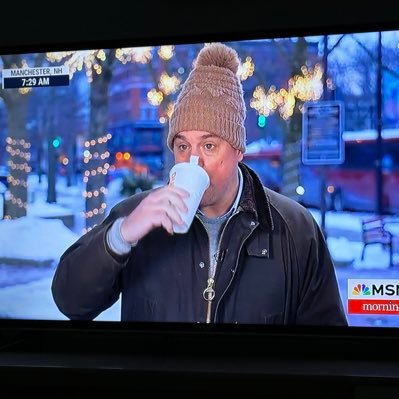
NEWS: "I've written 983 pages" - Robert Caro on his final LBJ book
Via @cspan
c-span.org/program/qa/aut…
English
Oz retweetledi
In 2003, Ted Turner told 60 Minutes what he wanted on his tombstone. The media tycoon died today. cbsn.ws/3Pm0oeW
English
Oz retweetledi

French Documentary Filmmaker Nicolas Philibert on the Need to Improvise: 'I Plan for Something That Is Accidental' variety.com/2025/film/glob…
English

前几天看到有人夸这个房子风水好…水主财不假,但是那得是有情之水,这种四周头顶一盆水就是大凶大灾之相了。北面有水库称为玄武水煞,这周围一圈水只留前面一口气称为淋头煞,简直窒息到极点。现代这种格局是安藤忠雄率先搞出来的异端。可谓是流毒甚广。
ParametricArchitecture@parametricarch
⛩️ Temple in the lake.
中文
不仅台湾人的意志没有那么重要,甚至中美的意志也都没有那么重要。没有任何一方的主观意愿是重要的。因为中美两国没有一方能承担这个秩序破碎的后果,它们是两个连体婴。
乌克兰要的融入欧洲是真实的,因为欧洲的独立和一体化是真实存在且不可逆的趋势。而台湾在这里与乌克兰最大的区别就在于,它想要的独立其实并非独立,而是融入一个只存在于纸面上的美国亚太秩序。这个秩序符合美国宣传上的价值观,在过去二三十年,各种人都在努力推动它成真,但它就是成真不了,因为它不存在。
它代替不了真实的底层秩序:真实的美国亚太秩序就是1970年代末开始形成的中美轴心。
它不依托于价值观而依托于不可分割的实际利益,因此它比所谓价值观同盟更为坚固。六四以后美国派遣特使秘密访华表示谅解,就是最好的例子。它的不可逆程度,和欧洲一体化是同级别的。只是它没有办法被放在台面上,因为在台面上看上去太丑陋了,太令人难以接受了。然而这就是现实。
过去几年中美两国付出了巨大的代价测试脱钩的可能性,所有的头条全都是大国博弈,中美脱钩,大国斗争。但我能看到的未来只有一个,就是为了不令整个旧秩序立刻停止运转,两国只能加强相互的战略依赖。伊朗和俄罗斯这些事情全都是在两国之间的裂痕中发生的,这个裂痕的想象空间非常大,但是一旦大到一定程度,系统的自保本能会将这个裂缝急剧收缩回去,在大部分人的预料之外。
台湾的人民意志有没有用?因为它的方向是错的,所以没有用。它把一个不存在的东西当作存在了。与此相对的是,乌克兰的人民意志就有用。它相信的是一个大部分人都认为其不存在,但却真实存在的趋势。
在中美轴心之下台湾并非没有生存空间。维持现状就是最好的答案。中国恐惧的不是维持现状,而是那个美国亚太秩序的替代现实成真,那个替代现实曾给中国以时间不站在它那边的巨大压力。
如果替代现实因伊朗战争这个巨大的压力测试而被证伪,中国,美国和台湾会同时再度面对现实,在这个现实中,台湾除了不能宣布独立以外,享有事实上的独立,并且这种独立是被这个秩序本身的存续所保证的。
如果说它的司法和公民自由将来会面对什么威胁的话,也并不来自香港式的“中国把它吞掉”,而是中美这个连体婴秩序整体的司法和公民自由水平恶化,尤其是美国方面的恶化。
Vulcan@leklekmum0919
@Areskapitalon 你的分析好像把臺灣上面2300萬人的意志當作不存在一樣。台灣國內政治你不懂,因為你的敘事存在於你自己對台灣的想像中。
中文
Oz retweetledi
如果中国拿到一个“反对台湾独立”的措辞,那么基本就等于直接杀死了台湾独派的全部政治前途。借刀杀人只需要一次,不需要对方担负任何履行未来承诺的责任。台湾的国内政治会渐渐地自己完成这一工作。
并且,伊朗核问题框架随时可以作为对等威慑:如果美国在台湾问题上违背框架,那么中国也会放手让伊朗违背框架。战略依赖不是建立在双方喜欢彼此的基础上,而是建立在双方离不开彼此的基础上的,而后者的根基显然比前者更为坚固。
lorries wang@LorriesWang
@Areskapitalon 川普不可信,没人会和他作交易
中文
Oz retweetledi
现在我对于伊朗问题,看到的唯一的可能解法就是,在川习会上,以中国作为核心担保方搭建一个伊朗核问题框架。然而这会造成中美在中东的实质战略绑定。这是从1970年代中美建交以来都没发生过的事情。从前中美在战略上明面是对抗状态,但如果伊朗问题真的要解决,就必须走向某种双边战略依赖。
而如果要交换这种战略依赖,在台湾问题上美国似乎也必须做出某种依赖式的承诺,具体来说就是美国方面可能会将措辞从“不支持台湾独立”改为“反对台湾独立”。当然其中也包含着“反对打破现状”的含义,与此交换,中国承诺在台湾不宣布独立的情况下,不会武力统一台湾。台湾海峡的status quo就从“可能朝着两个方向(独立/统一)的任何一个发展”,在新的中美战略依赖框架下,变成“双方彼此保证永远维持现状”。
我只能说一切现存的证据都指向这个方向。如果真是这样的话,这会是国际形势数十年来最大的转折点。因为如果真的这样,中美双方都会彼此受益,川普也可以将此包装成巨大胜利,而受损的纯粹是旧秩序本身而已。这种事情的阻力往往不会像人们想象的那么大。
Michael@MichaelHXHX
快讯:川普政府正在寻求伊朗同意重回奥巴马伊核协议,以结束伊朗战争。该协议此前被川普废除。 ——什么叫赢两次?这就是赢两次😭
中文
Oz retweetledi

@fankaishuoai Manus 有没有核心技术啊?我怎么感觉他主要是打了个时间差?再过一年,agentic AI 普及,就不值钱了啊。所以这帮官僚办的是个啥事,好不容易割老美一把韭菜,还让他们给搅了。
中文