
PalmerPics Ⓜ️🕸

509 posts

PalmerPics Ⓜ️🕸 banner
PalmerPics Ⓜ️🕸

PalmerPics Ⓜ️🕸

@palmerpics

Trying to discern the kernels of Truth from FUD and found e/acc

Katılım Haziran 2009
4.3K Takip Edilen286 Takipçiler
PalmerPics Ⓜ️🕸 retweetledi
2xnmore
2xnmore@2xnmore·
Barry Silbert just gave the clearest explanation of $TAO and Bittensor subnets anyone has ever delivered on a mainstream stage. He said it plain: $TAO powers a decentralized marketplace for intelligence. Anyone can launch a subnet, earn tokens, and monetize real ML work. Open and permissionless. The ultimate hedge against centralized AI. Then Tom Lee made it even simpler. Subnets are the S&P 500 of independent AI startups. Each one competing to deliver value. Each one with its own token. TAO coordinating the entire network underneath. Two sentences, that is the whole thesis. Most people have spent two years trying to explain Bittensor and nobody listened. Two legends made it obvious in under five minutes. This is still early.
English

19
75
325
22.6K
Code Geek
Code Geek@codek_tv·
Can you SOLVE this?🤔 | Comment your answers below!
Code Geek tweet media
English
1.1K
11
244
37.3K
Dr Sania
Dr Sania@iamsania_AI·
Only genius can solve
Dr Sania tweet media
English
3K
130
542
119.2K
ZohaibAi
ZohaibAi@ZohaibAi__sf·
Brian Test 99% will fail
ZohaibAi tweet media
English
21.3K
411
5.1K
4M
Steven McClurg
Steven McClurg@stevenmcclurg·
While most people have been debating that the 4-year cycle is dead, Bitcoin hit its peak 4-year price in October, similar to other cycles, and has went right into the bear portion of the 4-year cycle. See you all in 2027 for the next bull market!
English
15
1
33
19.3K
PalmerPics Ⓜ️🕸 retweetledi
Atlas Press
Atlas Press@realAtlasPress·
6000 Years of World History in 1 Picture
Atlas Press tweet media
English
222
1.1K
6.8K
521.1K
PalmerPics Ⓜ️🕸 retweetledi
DataVidhya
DataVidhya@thedatavidhya·
> Python Projects That Can Get You Hired Instantly as a Data Engineer in 2025 - If you want to stand out this year, you need to move beyond “I know Python.” - Recruiters want proof that you can use Python to build data systems that actually work, at scale, in production-like settings. > Here are 5 projects that hiring managers love to see: 1. Automated Data Ingestion Framework → Build a Python tool that fetches data from APIs, web scrapers, and databases on schedule (using Airflow or Prefect). Shows you can automate the dirty work — data collection — the right way. 2. Custom ETL Framework → Use pure Python (pandas, pyarrow, SQLAlchemy) to extract, transform, and load data between multiple sources. Add modular configs and logging. This proves you can build maintainable, reusable ETL pipelines, not just one-off scripts. 3. Data Validation & Quality Checker → Create a system using Great Expectations or Pandera that runs tests on incoming datasets, schema checks, duplicates, missing values, thresholds, etc. Demonstrates you understand that “data reliability” is just as critical as “data delivery.” 4. Data Orchestration & Monitoring System → Combine Airflow/Prefect + Python + Slack or email alerts to monitor data jobs. If a job fails or data volume drops, your system notifies automatically. That’s the level of operational awareness companies crave. 5. Data API or Microservice → Wrap your processed data into a FastAPI or Flask service that exposes it to dashboards or downstream apps. Proves you can bridge the gap between data engineering and data consumption; the final, often missing piece. 💡 Bonus: Document every project like a real production system. → GitHub repo + README + flow diagrams + sample outputs. In 2025, Python isn’t just a scripting language for data engineers, it’s the backbone of the data ecosystem. Show that you can architect, automate, and operationalize data workflows with it, and you’ll instantly stand out.
English
0
64
385
21.3K
PalmerPics Ⓜ️🕸 retweetledi
ℏεsam
ℏεsam@Hesamation·
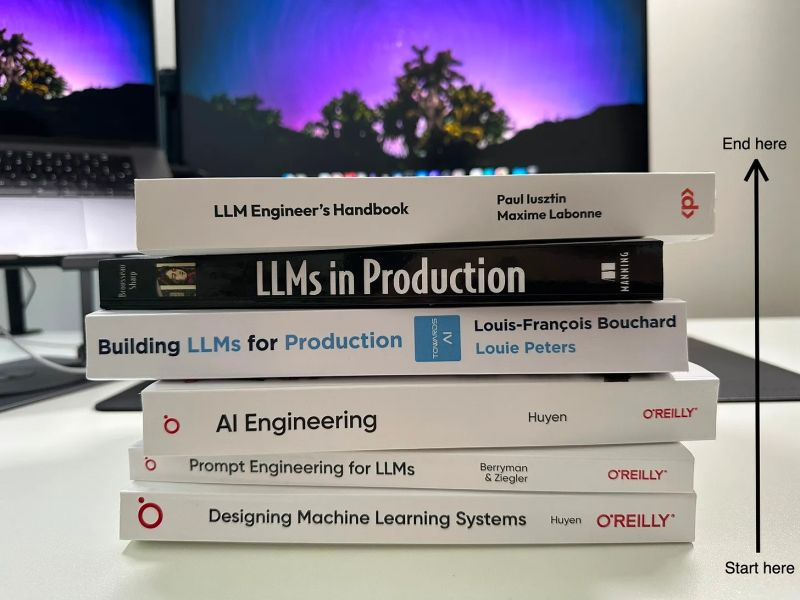
you'll be unstoppable.
ℏεsam tweet media
English
258
765
9.9K
1.6M
PalmerPics Ⓜ️🕸 retweetledi
Paras Chopra
Paras Chopra@paraschopra·
This is a fantastic, visually stunning, free introductory book on deep learning. Highly recommended for curious people who want the lay of the land.
Paras Chopra tweet media
English
41
829
9.2K
728.9K
PalmerPics Ⓜ️🕸 retweetledi
Andrew Ng
Andrew Ng@AndrewYNg·
There’s a new breed of GenAI Application Engineers who can build more-powerful applications faster than was possible before, thanks to generative AI. Individuals who can play this role are highly sought-after by businesses, but the job description is still coming into focus. Let me describe their key skills, as well as the sorts of interview questions I use to identify them. Skilled GenAI Application Engineers meet two primary criteria: (i) They are able to use the new AI building blocks to quickly build powerful applications. (ii) They are able to use AI assistance to carry out rapid engineering, building software systems in dramatically less time than was possible before. In addition, good product/design instincts are a significant bonus. AI building blocks. If you own a lot of copies of only a single type of Lego brick, you might be able to build some basic structures. But if you own many types of bricks, you can combine them rapidly to form complex, functional structures. Software frameworks, SDKs, and other such tools are like that. If all you know is how to call a large language model (LLM) API, that's a great start. But if you have a broad range of building block types — such as prompting techniques, agentic frameworks, evals, guardrails, RAG, voice stack, async programming, data extraction, embeddings/vectorDBs, model fine tuning, graphDB usage with LLMs, agentic browser/computer use, MCP, reasoning models, and so on — then you can create much richer combinations of building blocks. The number of powerful AI building blocks continues to grow rapidly. But as open-source contributors and businesses make more building blocks available, staying on top of what is available helps you keep on expanding what you can build. Even though new building blocks are created, many building blocks from 1 to 2 years ago (such as eval techniques or frameworks for using vectorDBs) are still very relevant today. AI-assisted coding. AI-assisted coding tools enable developers to be far more productive, and such tools are advancing rapidly. Github Copilot, first announced in 2021 (and made widely available in 2022), pioneered modern code autocompletion. But shortly after, a new breed of AI-enabled IDEs such as Cursor and Windsurf offered much better code-QA and code generation. As LLMs improved, these AI-assisted coding tools that were built on them improved as well. Now we have highly agentic coding assistants such as OpenAI’s Codex and Anthropic’s Claude Code (which I really enjoy using and find impressive in its ability to write code, test, and debug autonomously for many iterations). In the hands of skilled engineers — who don’t just “vibe code” but deeply understand AI and software architecture fundamentals and can steer a system toward a thoughtfully selected product goal — these tools make it possible to build software with unmatched speed and efficiency. I find that AI-assisted coding techniques become obsolete much faster than AI building blocks, and techniques from 1 or 2 years ago are far from today's best practices. Part of the reason for this might be that, while AI builders might use dozens (hundreds?) of different building blocks, they aren’t likely to use dozens of different coding assistance tools at once, and so the forces of Darwinian competition are stronger among tools. Given the massive investments in this space by Anthropic, Google, OpenAI, and other players, I expect the frenetic pace of development to continue, but keeping up with the latest developments in AI-assisted coding tools will pay off, since each generation is much better than the last. Bonus: Product skills. In some companies, engineers are expected to take pixel-perfect drawings of a product, specified in great detail, and write code to implement it. But if a product manager has to specify even the smallest detail, this slows down the team. The shortage of AI product managers exacerbates this problem. I see teams move much faster if GenAI Engineers also have some user empathy as well at basic skill at designing products, so that, given only high-level guidance on what to build (“a user interface that lets users see their profiles and change their passwords”), they can make a lot of decisions themselves and build at least a prototype to iterate from. When interviewing GenAI Application Engineers, I will usually ask about their mastery of AI building blocks and ability to use AI-assisted coding, and sometimes also their product/design instincts. One additional question I've found highly predictive of their skill is, “How do you keep up with the latest developments in AI?” Because AI is evolving so rapidly, someone with good strategies for keeping up — such as reading The Batch and taking short courses 😃, regular hands-on practice building projects, and having a community to talk to — really does stay ahead of the game. [Original post: deeplearning.ai/the-batch/issu… ]
English
131
741
4.3K
536.2K
PalmerPics Ⓜ️🕸 retweetledi
Eyo Eyo, PhD
Eyo Eyo, PhD@Eyowhite3·
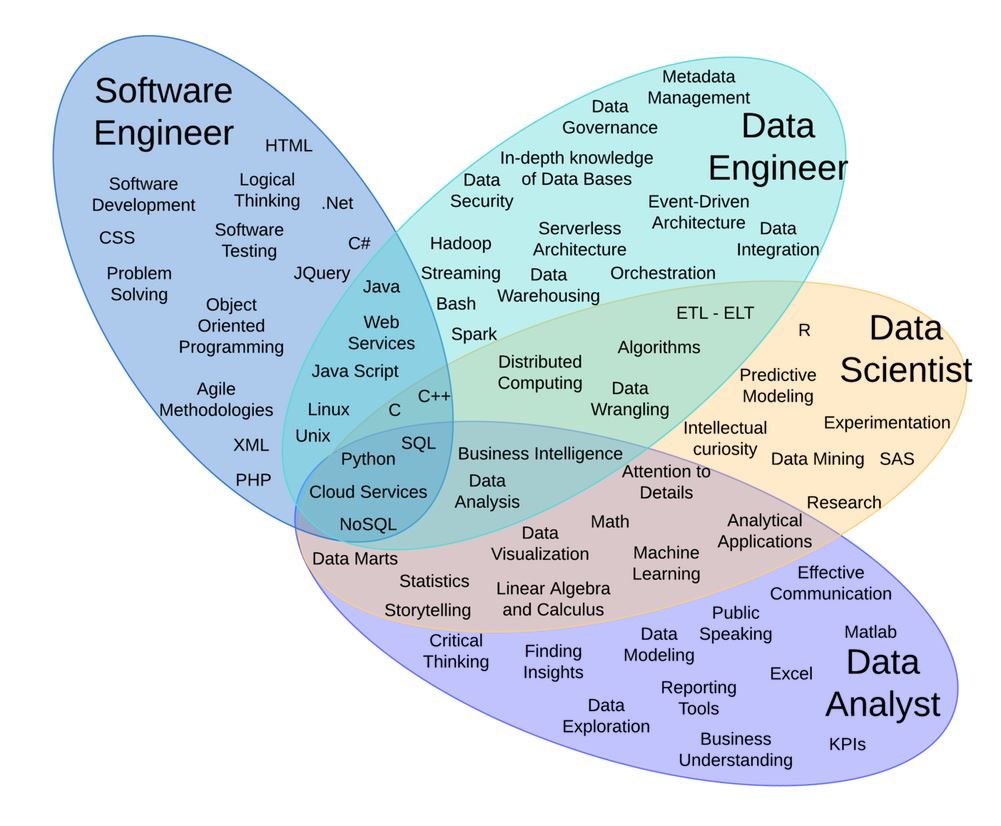
Tech fields will always overlap.
Eyo Eyo, PhD tweet media
English
6
105
748
53.6K
PalmerPics Ⓜ️🕸 retweetledi
Raul Junco
Raul Junco@RaulJuncoV·
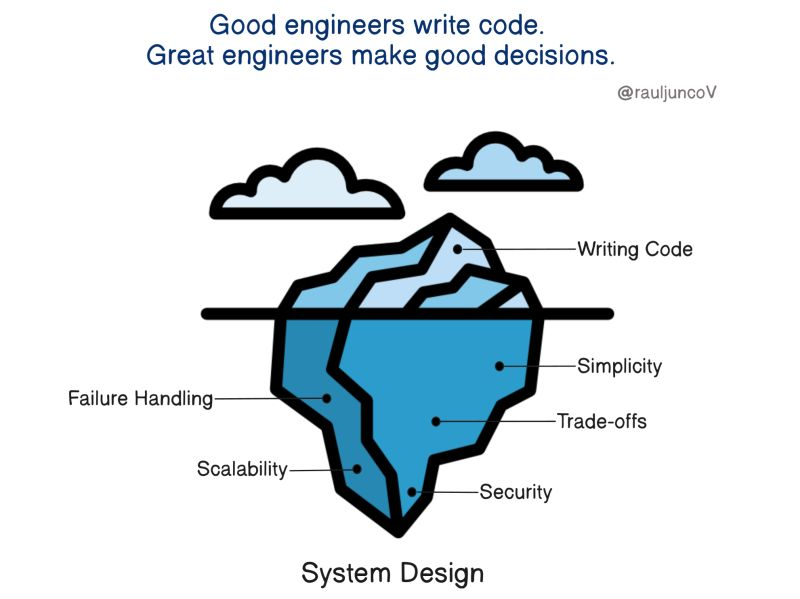
Most software failures aren’t from bad code. They’re from bad decisions. Common engineering mistakes: 1. Over-engineering – Complexity kills velocity. Build what you need, not what you imagine. 2. Ignoring the basics – Logs, monitoring, and error handling aren’t optional. 3. Skipping tests – If you don’t test it, your users will. 4. Tightly coupling everything – Future refactors shouldn’t feel like surgery. 5. Chasing trends – The right tool > the latest tool. Good engineers write code. Great engineers make good decisions.
Raul Junco tweet media
English
17
124
715
51.3K
PalmerPics Ⓜ️🕸 retweetledi
DeepLearning.AI
DeepLearning.AI@DeepLearningAI·
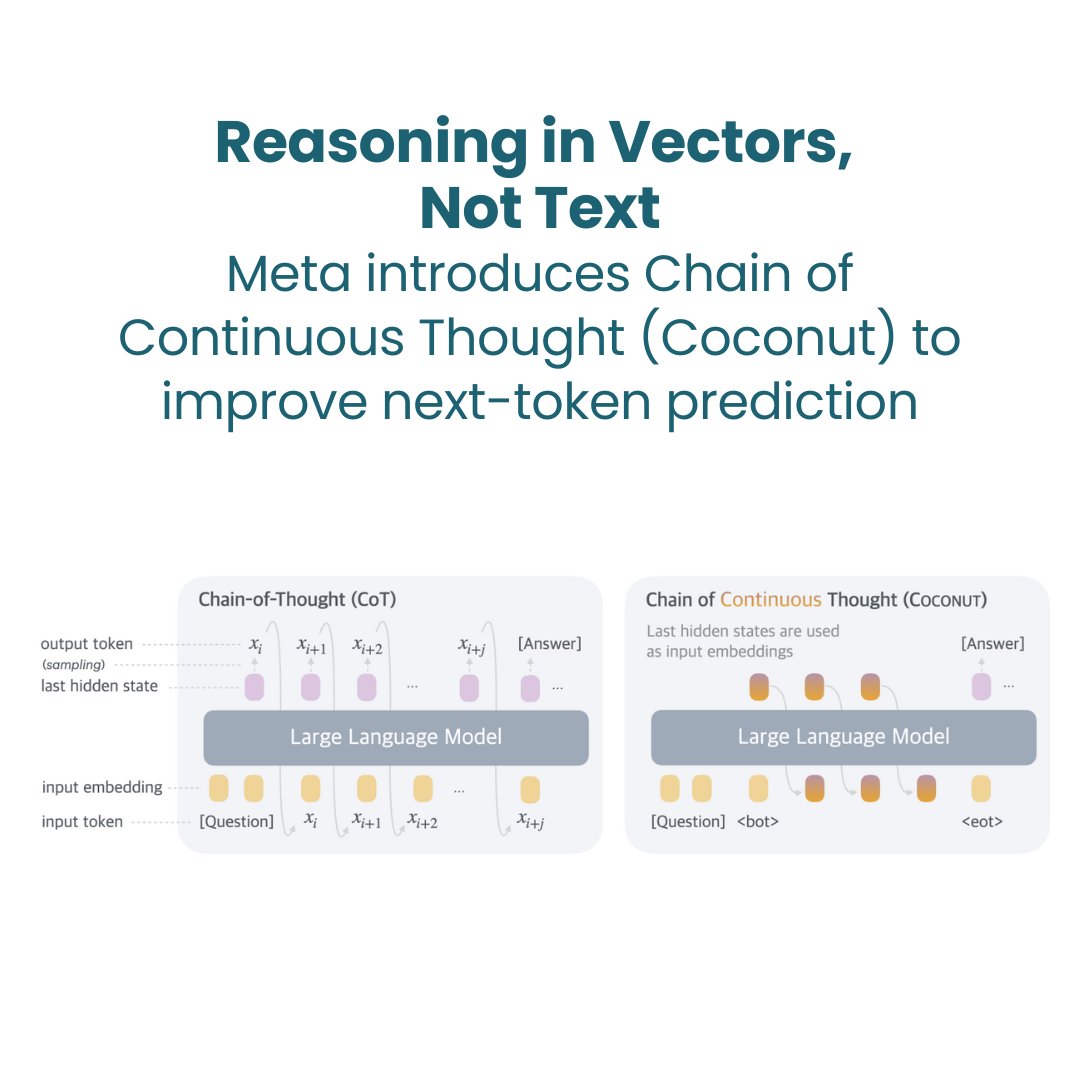
Researchers at Meta and UC San Diego introduced Coconut (Chain of Continuous Thought), a method that improves LLMs by replacing text-based chains of thought with vector representations. Unlike traditional AI reasoning, which builds responses step-by-step using word-based tokens, Coconut encodes richer reasoning paths with continuous vectors, making them more efficient and accurate. Read our summary of the paper in The Batch: hubs.la/Q039c47m0
DeepLearning.AI tweet media
English
15
133
598
39.6K
PalmerPics Ⓜ️🕸 retweetledi
Sumanth
Sumanth@Sumanth_077·
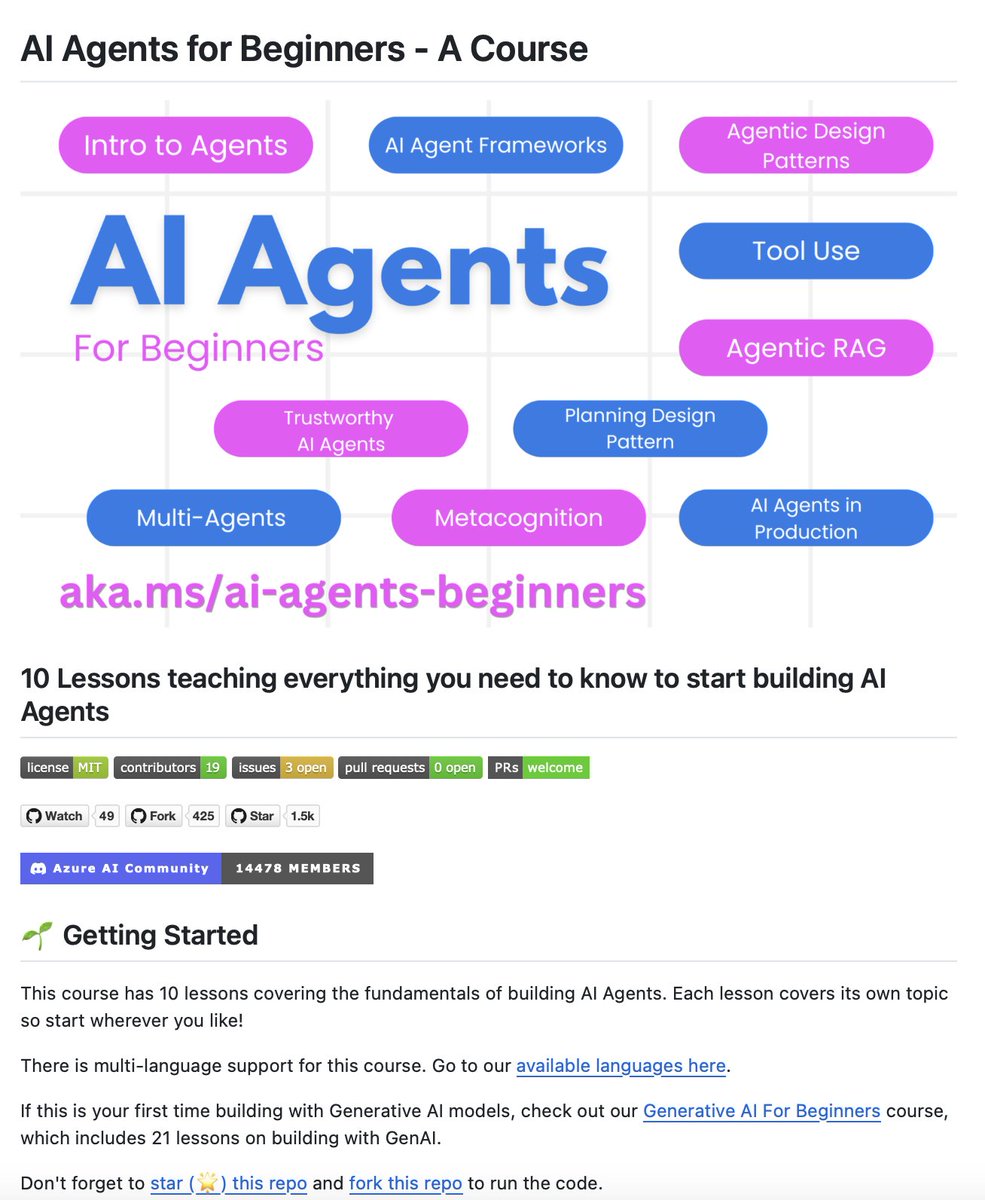
Microsoft launched the best course on AI Agents! AI Agents for Beginners The Free 10 lesson course is available on Github and will teach you the basics of building AI Agents
Sumanth tweet media
English
32
428
2.3K
230.9K