
Sabitlenmiş Tweet
penlu
692 posts

penlu
@penlume
human computer interface. naturally occurring feature of your environment
Katılım Şubat 2015
1.5K Takip Edilen114 Takipçiler
as the operator of the loom is credited with the output cloth
and the operator of the tank is credited with the kill
as the LLM gets good, surely the one who brings its outputs to the people (in the manner of prometheus) must be credited with the resultant boons (or otherwise)
English


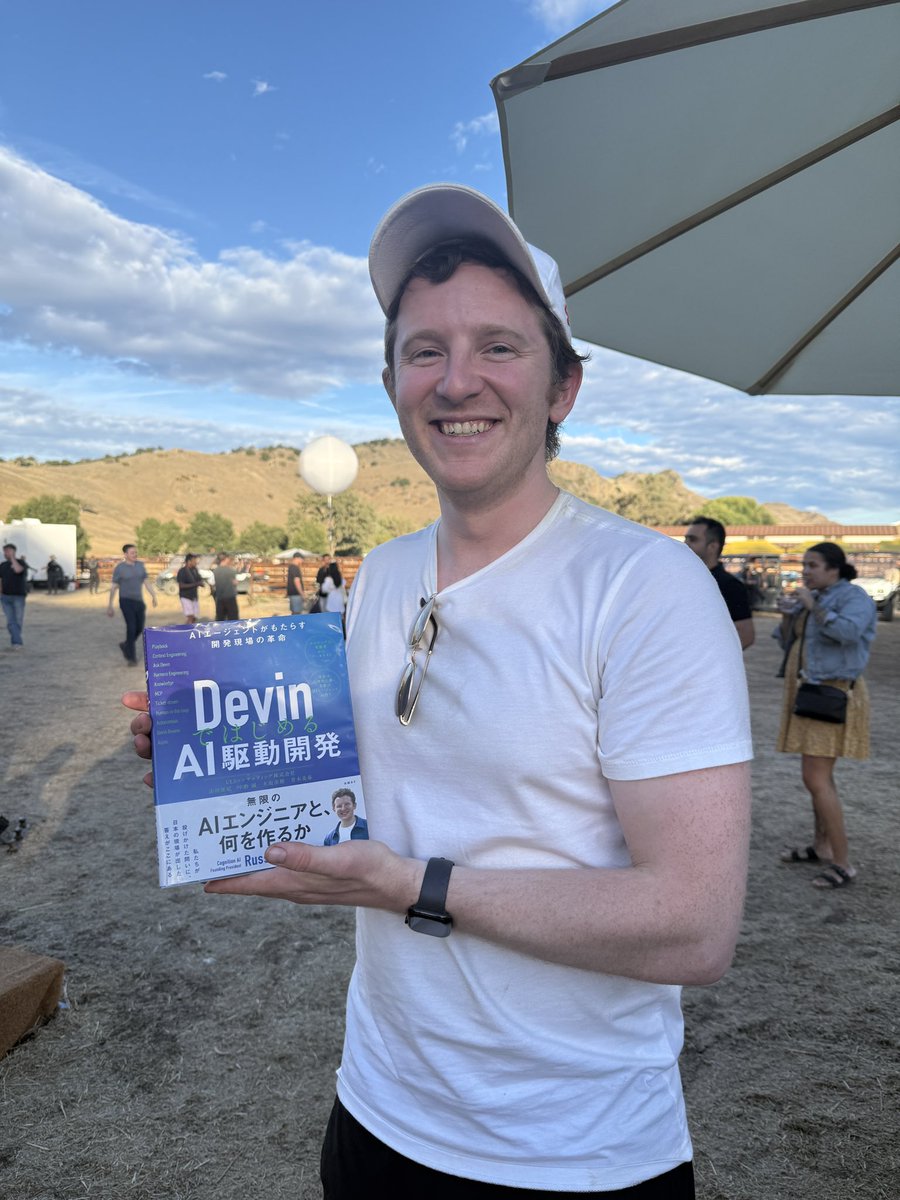
ついに発売されたDevin本、今週開催された弊社オフサイトにてファウンダーの@russelljkaplan に手渡しました。
充実のDevin攻略本をご執筆いただいた皆様に感謝をお伝えします。
日本語
among the LLM behaviors, waytoomany LoC output hurts me most
I am not aware of SWE benchmarks other than FrontierCode wherein writing more code will eventually reduce your score
Cheng-Yuan (Sam) Lee@cl571128
We've received several questions about the Opus 5 FrontierCode results, where scores decline as reasoning effort increases. In fact, the behavior is expected under the benchmark design. FrontierCode evaluates merge-ability rather than correctness alone, incorporating criteria that reflect user experience. One such verifier is a scope criterion, which penalizes modifications to the codebase beyond what the task requires. We observe this effect across all frontier models we evaluated, though it is most pronounced in Opus 5: at higher reasoning efforts, the model shows a stronger tendency to refactor code unprompted.
English
penlu retweetledi

@kellabyte Any sufficiently complicated fullstack system contains an ad-hoc, informally-specified, bug-ridden, slow implementation of half of a distributed, eventually consistent RDBMS
English

if you’re working at Cog, it probably means you’re one of the most passionate, curious, and intelligent people in your field 🫶
imagine an environment every person feels empowered to solve the most ambitious problem they see
i’m so humbled to be around these people
Chris Barber (in SF)@chrisbarber
I asked people which companies have the highest density of talented people they know: 1st. Cognition - 9 votes Equal 1st. Anthropic - 9 votes 2nd. Modal - 5 votes 3rd. OpenAI - 4 votes 4th. Standard Intelligence - 3 votes 4th. Cursor - 3 votes Two votes each: - Ramp - Flapping Airplanes - DeepMind - Long Lake - Applied Compute One vote each: - SpaceXAI - SpaceX (treated separately, one vote was for the AI lab subsidiary and one was for the rocket team) - American Terawatt - Mechanize - Olix - Fluidstack - Chai Discovery - Sail Research - Etched - Core Automation - Specter - Clay - Applied Intuition - Sierra - Hivemind - Bitrig - Retro - Thinking Machines - Decagon - Precigenetics - Pangram - Reflect - Thrive Holdings - Adaption
English

One day, all of the research team spent hours in a room together manually solving the RL tasks we used to evaluate our models. I remember solving one of the tasks and realized that the tests are not even testing what the agent was asked to do. Since then, data has become one of our main focuses. Everyone is required to read the agent trajectories and understand all the data we use. SWE-1.7 is the result of this. It's a really good model!
Cognition@cognition
Introducing SWE-1.7, the most capable model we’ve trained yet. It scores within a few points of the strongest frontier models at a fraction of the cost, and is now available at 1000 tok/s. RL is not hitting its limit: after refining our recipe, we keep seeing gains as we scale
English
made with carefully selected ingredients, expertly prepared by our chefs using traditional techniques
Cognition@cognition
Introducing SWE-1.7, the most capable model we’ve trained yet. It scores within a few points of the strongest frontier models at a fraction of the cost, and is now available at 1000 tok/s. RL is not hitting its limit: after refining our recipe, we keep seeing gains as we scale
English
penlu retweetledi

Introducing SWE-1.7, the most capable model we’ve trained yet.
It scores within a few points of the strongest frontier models at a fraction of the cost, and is now available at 1000 tok/s.
RL is not hitting its limit: after refining our recipe, we keep seeing gains as we scale

English
@nanimonull @ToughSf @kevinmgill daphnis orbit has nonzero inclination wrt the ring plane. its gravity tugs the ring edge up or down. the outer ring goes a bit slower and the inner a bit faster, so these waves then move out in opposite directions. I presume viscous damping gradually settles them, but this idk
English


In the Keeler Gap with Daphnis, the tiny (7.8 km wide) moon of Saturn.
By @kevinmgill
flickr.com/photos/kevinmg…



English

What's the most ambitious project you have Fable working on right now?
English

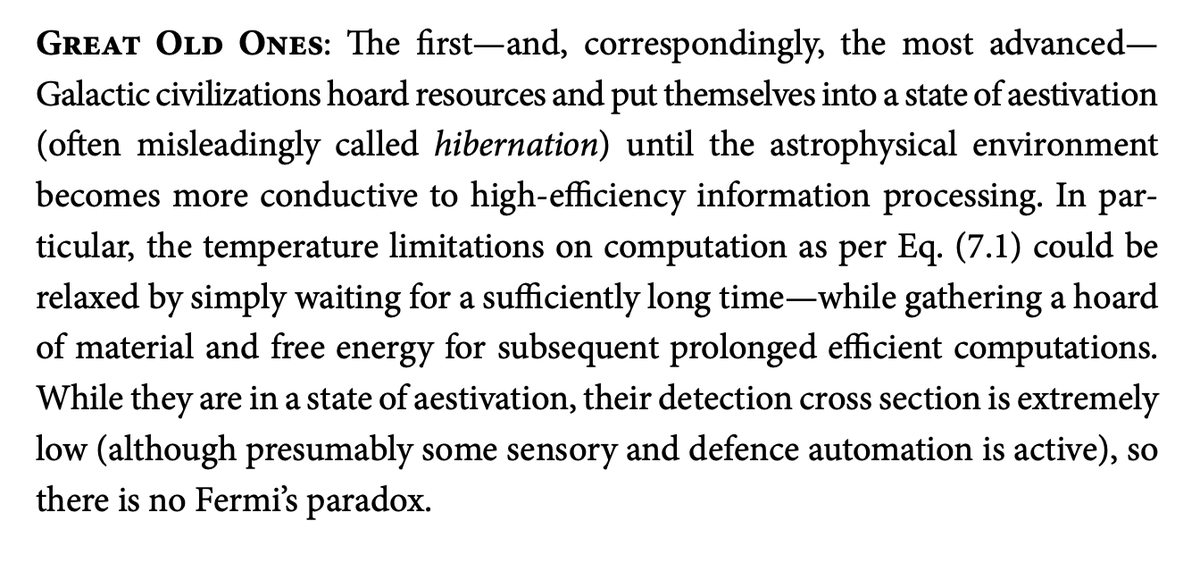

@TheNormanMu @tszzl good end: vaunted, cherished chloroplast
bad end: relegated to peroxisome, permanent deslop duty
English

@tszzl symbiogensis is an interesting side quest but 'the substrate is wrong' for the eukaryotic hybrid to be competitive with cyanobacteria on feats of photosynthesis. you have this low tech meat chloroplast in the middle of all this lightspeed machinery, doing what exactly?
English

transhumanism is an interesting side quest but 'the substrate is wrong' for the human/computer hybrid to be competitive with machine intelligence on feats of intellect. you have this low tech meat brain in the middle of all this lightspeed machinery, doing what exactly?
English