Peptigrity
36 posts

Peptigrity
@peptigrity
Independent peptide review platform. Lab-tested purity data, community reviews & vendor verification. We don't sell peptides. We verify them.
Katılım Nisan 2026
35 Takip Edilen35 Takipçiler
Sabitlenmiş Tweet

We built peptigrity.com because the peptide industry runs on vibes and screenshots. We collect lab test results. From real labs. For 64 peptides across 147 shops. And we show you the numbers. No shop pays us. No affiliate links. No sponsors. Not now, not ever. Just HPLC data and the occasional reality check. Follow if you buy peptides. Or if you just want to watch the data pile up.
English

@zacsmithfitness The honest version is "lyophilized in the USA." That part's often true. "Synthesized in the USA" is the part that isn't - the API comes from China, gets freeze-dried and vialed stateside, and the marketing card calls the whole thing American-made.
English

The numbers from the trial are real. They're also for the branded version, which won't be available to most people for years.
Compounded Retatrutide has been in the gray market since 2024. Our database shows purity ranges from 64% to 99.95% across shops and batches. Same molecule, very different deliveries.
For anyone using the data in this post as a reason to source compounded Retatrutide now — the question worth asking your source isn't just "is this Retatrutide?" but "what's the purity, what's the batch, and is the COA from this batch?"
peptigrity.com/peptides/retat…
English

These numbers are shocking. It's like we got a new frontier AI model but for the body.
Lilly's phase 3 results for retatrutide:
> highest dose lost 28.3% of body weight in 80 wks
> 70 lbs ave
> 45% lost 30% or more of their body weight
> 65% on the top dose no longer clinically obese
Retatrutide is more dynamic than semaglutide and tirzepatide because it targets three receptors (GIP, GLP-1, and glucagon), versus one and two, respectively.
Side effects, on the highest dose (12mg), were higher for retatrutide than tirzepatide (nausea and GI), with an 11.3% drop out rate. The lowest 4mg dose still delivered 19% loss with fewer dropouts than placebo.

English

The Phase 3 trial data on Retatrutide is real (28-30% body weight loss). It's also for the branded version from Eli Lilly.
Most people using Retatrutide right now are using compounded versions from gray-market shops. The same molecule, the same target outcomes — but the verification gap between pharmacy-grade and gray-market is significant.
In our database, Retatrutide purity ranges from 64% to 99.95% across shops and batches. Same compound, very different deliveries.
If trial data is part of why you're considering it, the question worth asking your source isn't just "is it Retatrutide?" but "what's the purity, and is the COA from this batch?"
peptigrity.com/peptides/retat…
English

Worth knowing about : independent indexing is genuinely useful for this kind of situation.
Platform dependency (Instagram, payment processors, even your domain registrar) means a single decision elsewhere can cut off your traffic and reputation overnight. We've watched this happen to other shops.
Peptigrity is independent of all of that. If your shop's on our platform, buyers searching for you can find you whether Instagram has you live or not. Reviews, lab data, and shop info stay where buyers can find them.
It's free to claim - peptigrity.com/for-shops. Verification is a 30-second email step. Won't fix Instagram, but it's a layer of insurance against this exact scenario happening again.
English

@drmikehart Cost is one half of the gray-market equation. The other half is that buyers paying 1/10th the cost have almost no way to verify what they actually received. That's the gap - not the price.
English

This is the format more shops should use.
Real lab (Chromate is verifiable), specific batch, verifiable QR code, CAS confirmation, chromatogram visible, signed by a named chemist. Overfill at +11.4% is the right direction — better to get more than labeled than less.
The "Identity: Conforms" line is the one most COA images skip but matters most. Confirms the molecule is what the label says — which, given recent supplier-side mislabel cases in this space, is the question worth asking on every batch.
Logging this in our database. peptigrity.com
English

The joke lands because it's true — people are injecting peptides without much idea what's actually in the vial. Most don't know the molecule on the label and the molecule inside don't always match.
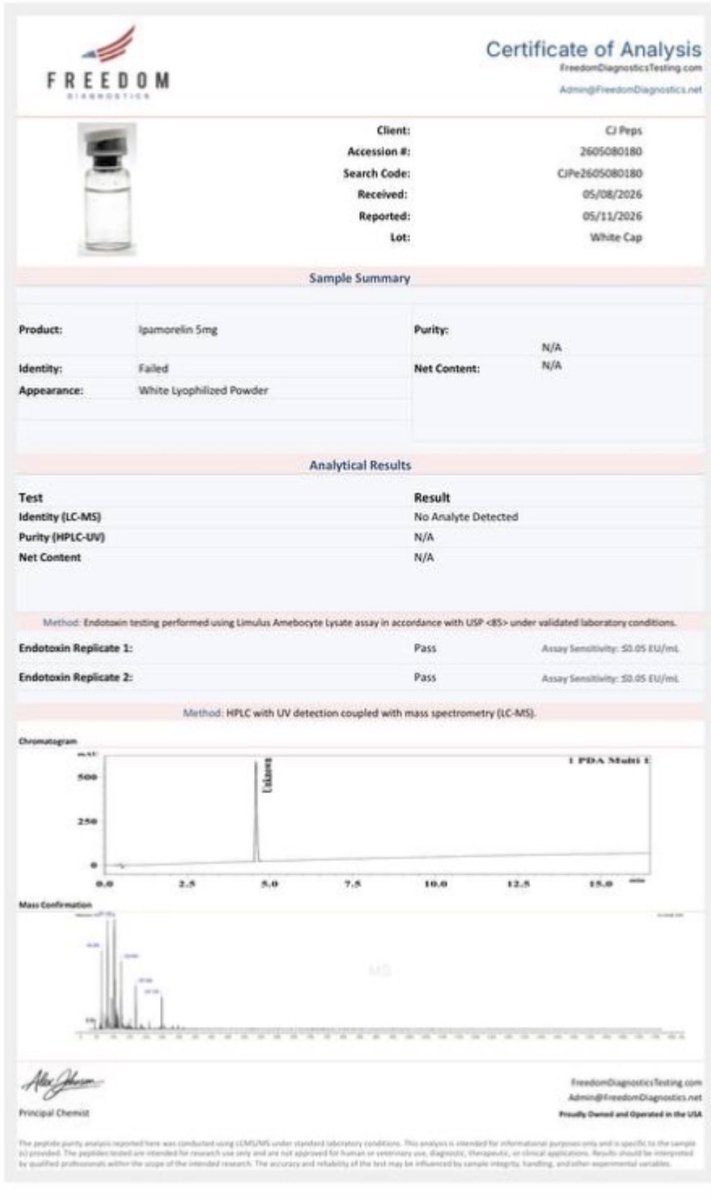
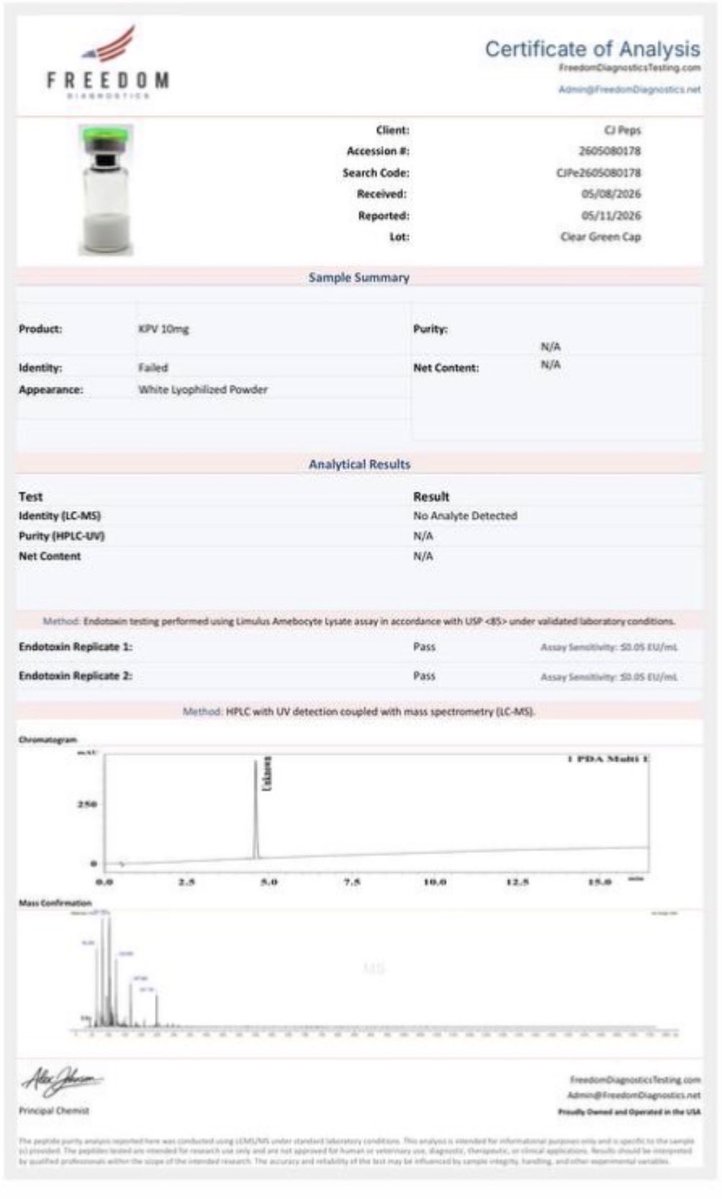
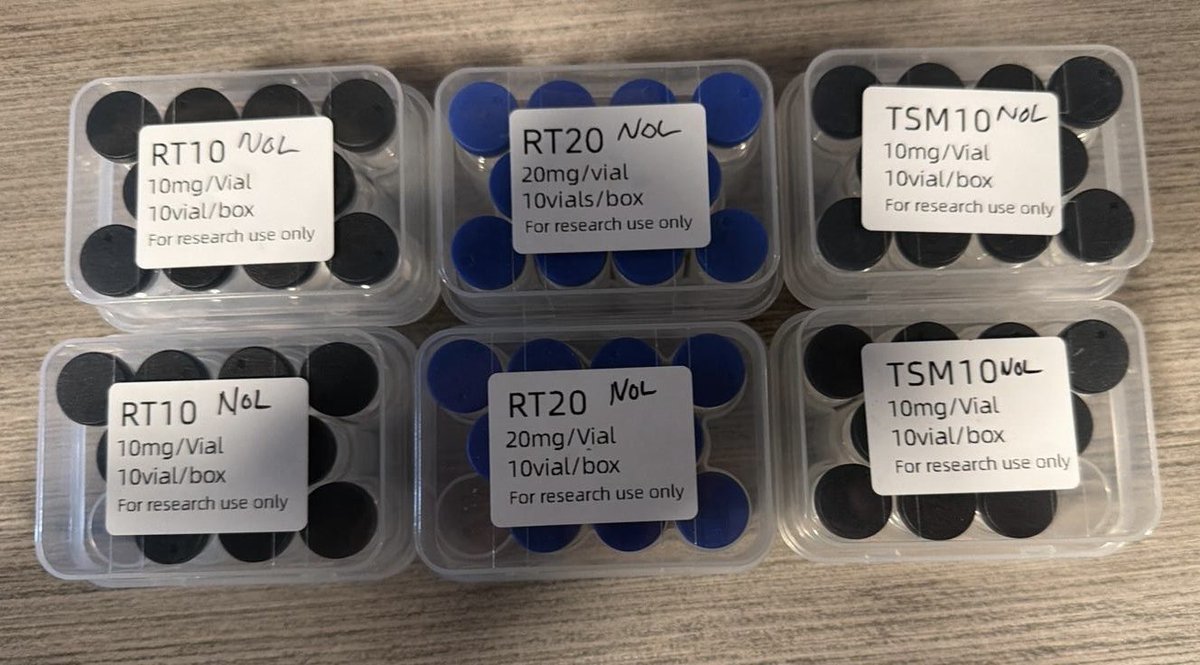
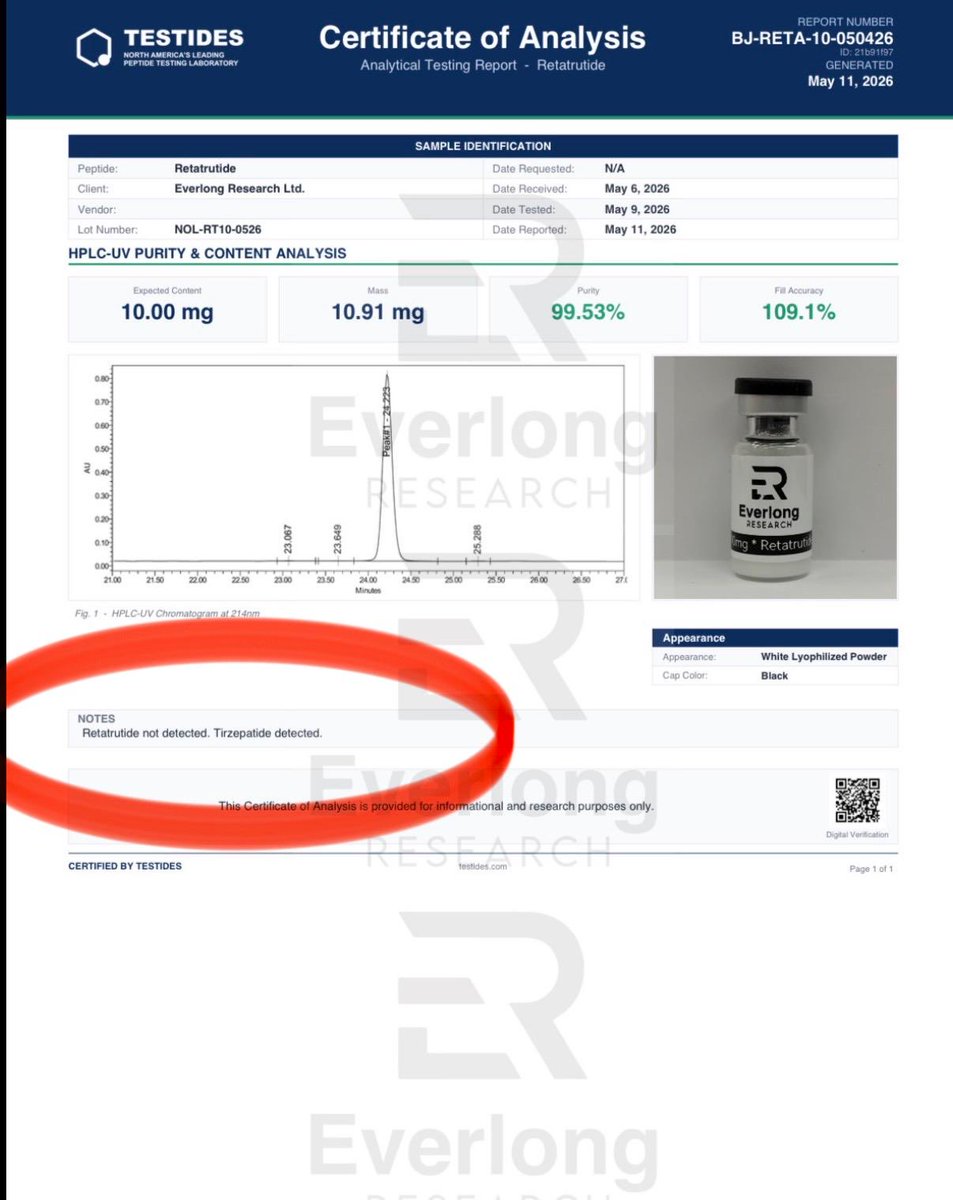
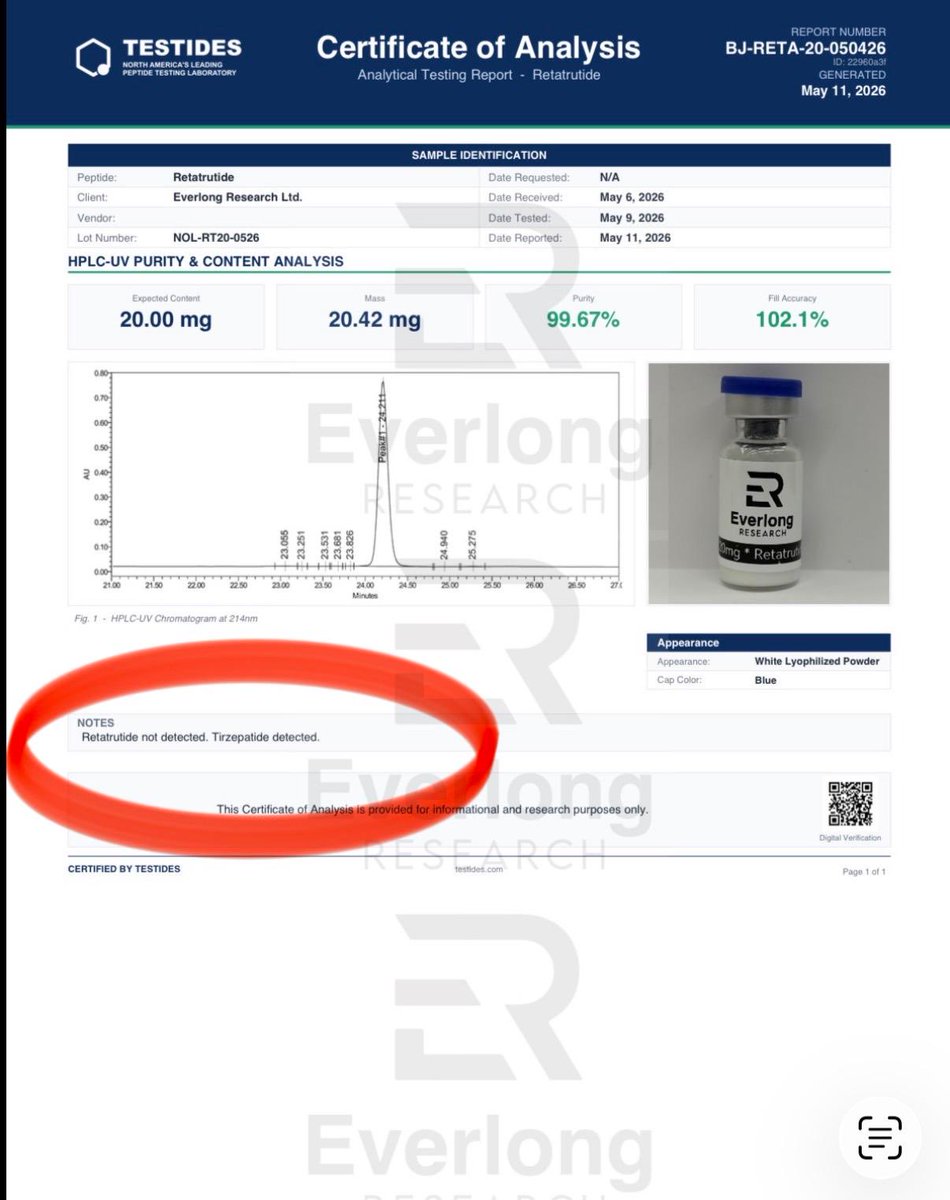
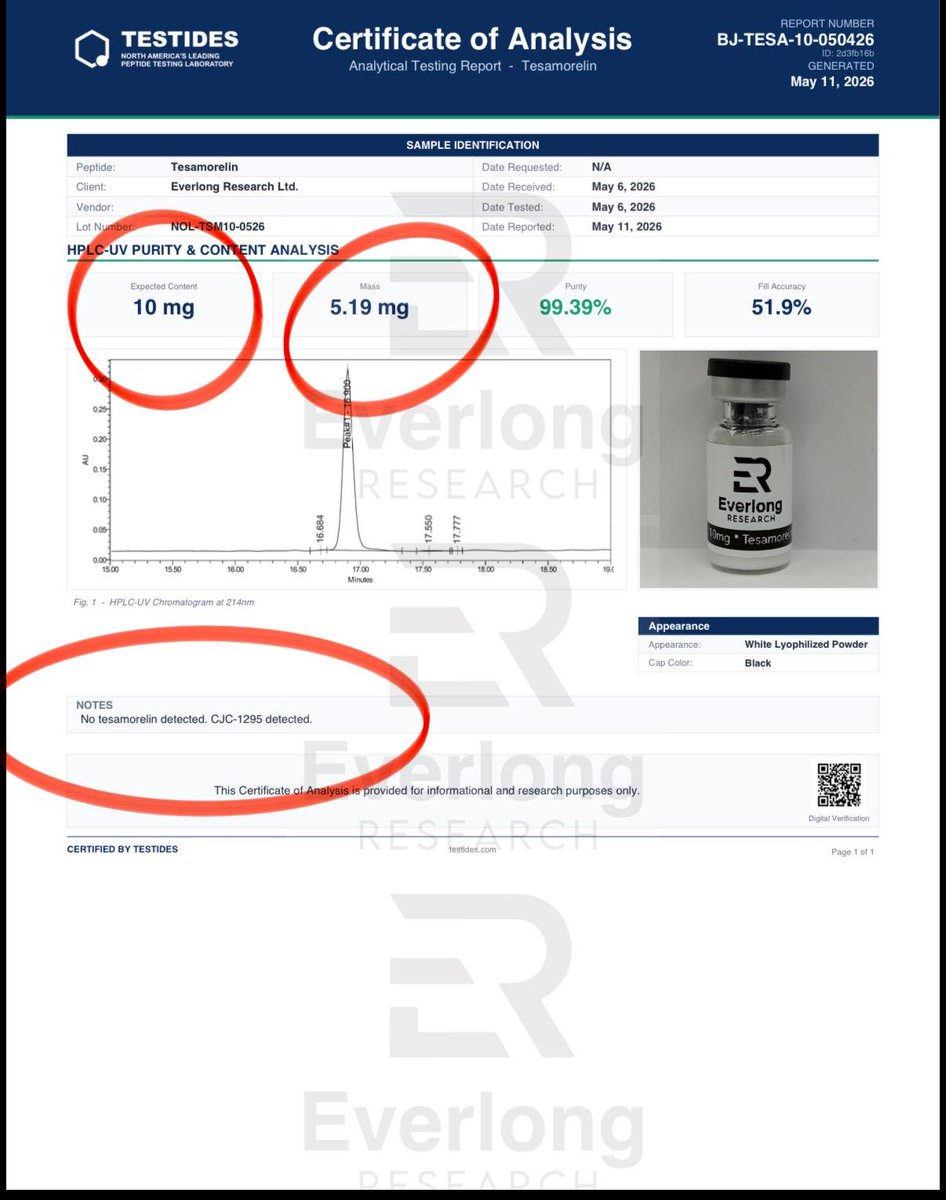
We've documented cases this month of vials labeled Retatrutide testing as Tirzepatide, and vials labeled Tesamorelin testing as a completely different peptide.
The fact that there's no obvious way for a buyer to check this is the actual problem the meme is gesturing at. Building peptigrity.com to be that check.
English

It’s called The Wolverine Stack bro.
“Pretty crazy how five years ago vaccines were the most devastating thing you could ever do to your body but nowadays its fine to inject Chinese peptides from Temu because you cant stop snacking after dinner” — @abetrade
English

@DanielM65604046 @rorynotsorry Thank you Daniel. Your feedback is truly appreciated. 🥹
English

@peptigrity @rorynotsorry First I've seen of your site. Looks awesome! Thank you for putting it together!!
English

Peptide shop reviews online are mostly broken, in different ways.
Trustpilot lets shops flag and remove reviews. Reddit mixes real buyers with shop owners and affiliates. Shop testimonials are hand-picked. X threads turn into self-promotion within an hour.
We're building Peptigrity as a different kind of review platform — independent, with reviews shops can't delete, and trust scores that can't be paid for.
We won't pretend we've solved this yet. Most of our shop pages have far fewer reviews than the same shops have on Trustpilot. Some have zero. We're new and we know it.
But the structural decisions are baked in:
— Reviews can't be removed by shops
— Trust scores are calculated, not editorial
— No affiliate commissions, no ad placements, no sponsored rankings
— Negative reviews stay published; shops can respond, not delete
If you've ordered from a peptide shop, your review takes 60 seconds and is worth more than you'd think. Especially now, when most of our shop pages are still being built.
peptigrity.com/shops
English

Lots of names being dropped in this thread. The hard part with vendor recommendations is they're usually based on a single batch — one buyer's experience with one vial.
A more useful question over time: what does the vendor's lab test data look like across batches? Average purity, content vs. label, who's actually testing and who's not.
peptigrity.com indexes 200+ peptide vendors by their actual test data, in case it helps anyone here cross-reference. Independent, no affiliates.
English

That's exactly what we do at peptigrity.com — independent platform indexing peptide shops by their lab test data.
We don't recommend "buy this shop" because quality varies by batch and our recommendations would go stale. Instead we publish purity averages, test counts, and trust scores so you can see which shops actually publish data and which don't.
Worth checking before your next order.
English

@Krysia830073 Do you list vendors on your substack that have high testing results? Would be interested in that.
English

This is the worst category of peptide scam - and the hardest one for buyers to defend against. most fake shops are obvious...No COAs, no real reviews, generic templates. Anyone who knows what to check can spot them. But an impersonation site that copies a real shop's COAs, forum links, and verification signals defeats due diligence. The signals themselves have been stolen. What helps first type the URL directly. Don't trust links from forums, DMs, or Telegram groups -
that's how impersonation sites grab traffic, 2. Look up shops on independent platforms. We've added ggpeps.com to peptigrity.com. We also encourage shops to claim their listing — that way buyers can verify it's actually them, even if a domain gets seized, suspended, or has to change. A SCAM flag for known impersonation sites is going live on the platform within days. ggpeps.net will be one of the first. GREAT write-up, Krysia.
English

ggpeps.net, the GYC impersonation scam is far more complicated than a normal fake peptide website. It's trying to imitate the real ggpeps.com website.
It has real Janoshik COAs, real GLP1Forum links, real Telegram links. This is mixed together with fake elements. That’s exactly what makes it convincing.
Full article below
Krysia@Krysia830073
English

Sharper than how I framed it... You're right..everlong didn't just catch the problem, they got hit by it. Same as anyone else who bought from that supply chain.
Which raises the question worth following - how many shops are sitting on the same mislabeled product right now without knowing? Shops that didnt test their incoming supply have no way to find out except by accident or customer complaint.
The case for incoming QC just got a lot more concrete.
English

@peptigrity Exactly, Everlong did the right thing and allowed me me to post this rather than hiding it under the carpet. Scrutiny should not ne placed on them, they are victims like all the other customers who bought these.
English

We built peptigrity.com because the peptide industry runs on vibes and screenshots. We collect lab test results. From real labs. For 64 peptides across 147 shops. And we show you the numbers. No shop pays us. No affiliate links. No sponsors. Not now, not ever. Just HPLC data and the occasional reality check. Follow if you buy peptides. Or if you just want to watch the data pile up.
English

Most people buy peptides without much idea how to evaluate the shop first.
We get it. Most peptide sites look the same. Everything says "99% pure." "Research use only" disclaimers are everywhere. Regulations shift constantly, especially for sellers operating across borders.
Here's what to look at before you buy. These aren't strict rules — they're signals. The more a shop misses, the more cautious you should be.
1. Do they publish any kind of lab test data?
More info from the shop is generally a good sign. But absence isn't automatic proof of a problem — some sellers limit what they publish due to regulatory pressure in their jurisdiction.
2. If they show a COA, does it relate to a specific batch?
A single generic PDF reused across every product is less useful than per-batch documentation.
3. Is the testing lab findable?
If a lab name is given, it should have some online presence — a website, an address, accreditation.
Not every legitimate shop publishes this. But a lab name with zero traceability tells you less than it looks like it does.
4. How recent is the data?
Peptides degrade. Suppliers change. Shops change hands. A COA from two years ago doesn't tell you much about what's shipping today.
5. Does the shop exist outside its own website?
Forum mentions, independent platforms, community reviews. Real shops accumulate footprints over time.
Five signals. None are deal-breakers on their own.
But shops that miss several are worth approaching more carefully.
peptigrity.com aggregates lab data and community history across shops so you don't have to research each one manually.
English

Looked at every Tirzepatide test in our database today. 411 tests, 34 shops. Noticed a pattern almost no one talks about.
Most shops overfill the vial. A 10mg labeled Tirzepatide vial frequently contains 11-12mg actual. A 30mg vial often contains 32-33mg. We've seen 60mg vials testing at 69mg+.
Why? Probably because underfilling a GLP-1 vial is the #1 complaint that gets a shop blacklisted. So they hedge.
Practical takeaway: if you're using compounded Tirzepatide and dosing by mg, you may be getting 5-15% more than you think. Not dangerous on its own, but worth knowing for anyone calculating doses precisely. The data is in the COA. Most buyers never look. peptigrity.com/peptides/tirze…
English

@DHPeat Don't ask which shop. Ask which shop publishes lab tests for the specific batch you'd be buying.
Most won't.
peptigrity.com aggregates the ones that do.
English

Whichever peptide you choose, the variable nobody talks about: source verification.
The same peptide from two different suppliers can vary 35+ percentage points in actual purity. We've logged tests where labeled "99% pure" Retatrutide came in at 64.06% and 99.95% from the same shop, same week, different batches.
If you're tracking 11 biomarkers down to ng/dL precision, the molecule has to be what it says it is — otherwise the data is noise, not signal.
Independent third-party COA traceable to the specific vial, every time. peptigrity.com aggregates this data across shops if it's useful.
English