Perry Marshall

7.8K posts

Perry Marshall banner
Perry Marshall

Perry Marshall

@PerryMarshall

#1 Authority on 80/20 for Entrepreneurs. Co-Founder, Cancer & Evolution Working Group. Author, Evolution 2.0.

Chicago, Illinois USA Katılım Ağustos 2008
179 Takip Edilen29K Takipçiler
Perry Marshall
Perry Marshall@PerryMarshall·
“When I don’t get around people, I get squirrely… start thinking I’m the center of the universe.” Relatable. Stay in your cave too long: → smaller questions → circular thinking → same answers Get out: → bigger questions → sharper thinking → real solutions That’s the magic of Perry Marshall Live • London (6/3) • SoCal (6/12) • Boston (7/23) • Chicago (9/9) Bring your hardest problem. Leave with answers. perrymarshall.com/pml-x
Perry Marshall tweet media
English
0
0
0
86
Perry Marshall retweetledi
Michael Levin
Michael Levin@drmichaellevin·
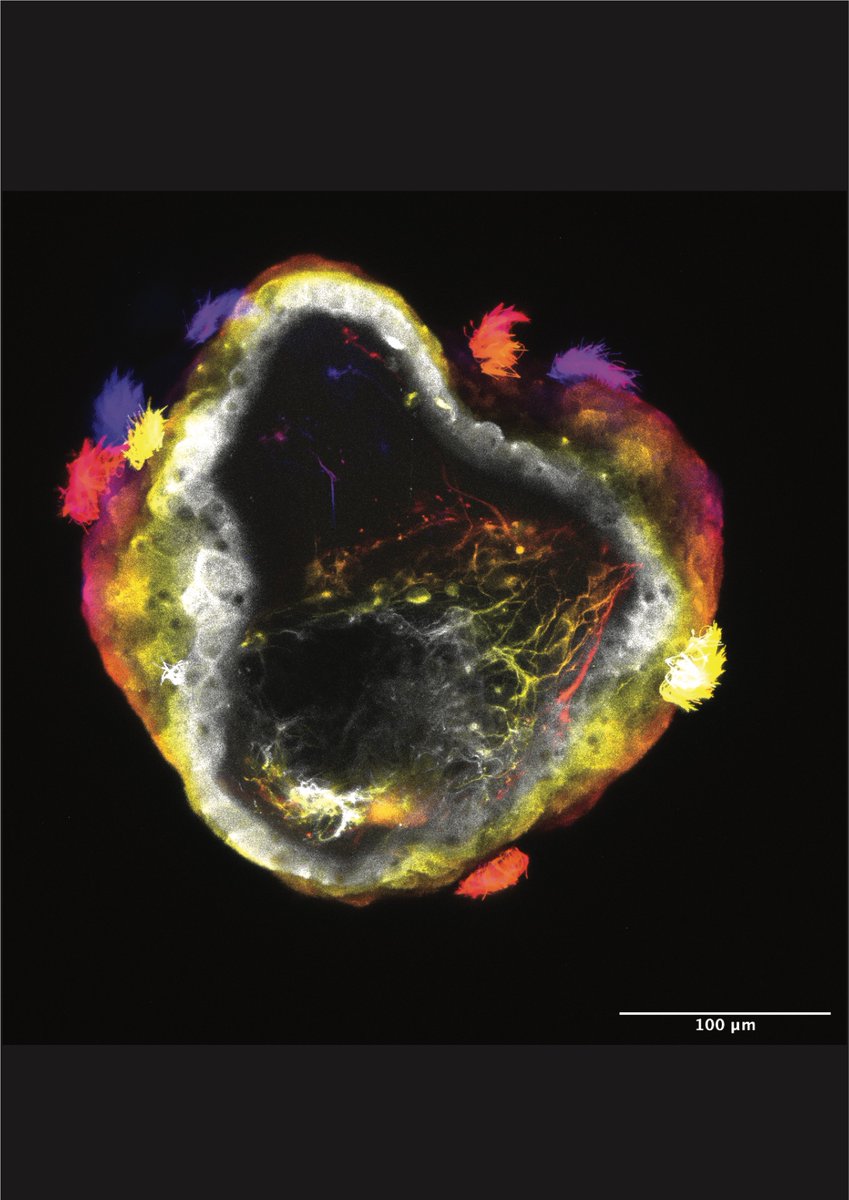
Ever wonder what a nervous system would look like if it self-assembled inside a novel being that hadn't faced a history of selection for its organism-level form and function? Or, perhaps you wondered how #Xenobots would look and act, or what their transcriptome would be like, if they had nervous systems? Well, here's the first step: advanced.onlinelibrary.wiley.com/doi/epdf/10.10… "Engineered Living Systems With Self-Organizing NeuralNetworks: From Anatomy to Behavior and Gene Expression" Our awesome team: led by @halehf: @LaurieONeill99, @mmsperry, @LPiolopez, @DrPatrickE, and Tiffany Lin. The @TuftsUniversity and @wyssinstitute press releases are here, for summaries: now.tufts.edu/2026/03/16/sci… wyss.harvard.edu/news/toward-au…
Michael Levin tweet media
English
63
272
1.5K
212.3K
Perry Marshall retweetledi
Taco Oosterkamp | Strategisch leiderschap
Schaamte is sluw. Ze presenteert zich vaak als je eigen verstand. Je wil iets delegeren. Een taak, een project, een beslissing. En dan bedenkt je brein supersnel een reden waarom dat toch niet handig is: 'Ze heeft het te druk.' 'Ik doe het sneller zelf.' 'Het is eigenlijk ook niet haar taak.' Al die redenen heb ik zelf ook ooit gedacht. En ze kloppen ook, op een bepaalde manier. Maar vaak zit er onder dit soort redenen een heel andere vraag: 'Wat zullen ze wel niet van me denken, als ik dit ga delegeren?' Zo werkt schaamte. Ze dendert niet binnen met de gedachte "ik ben eigenlijk doodsbang voor wat mensen van me denken." Nee, ze arriveert als een kalme, plausibele redenering. Ze klinkt als goed leiderschap. Ze klinkt als rekening houden met je team. En ondertussen doe je toch weer veel te veel werk zelf. Herkenbaar?
Taco Oosterkamp | Strategisch leiderschap tweet media
Nederlands
0
1
0
182
Perry Marshall
Perry Marshall@PerryMarshall·
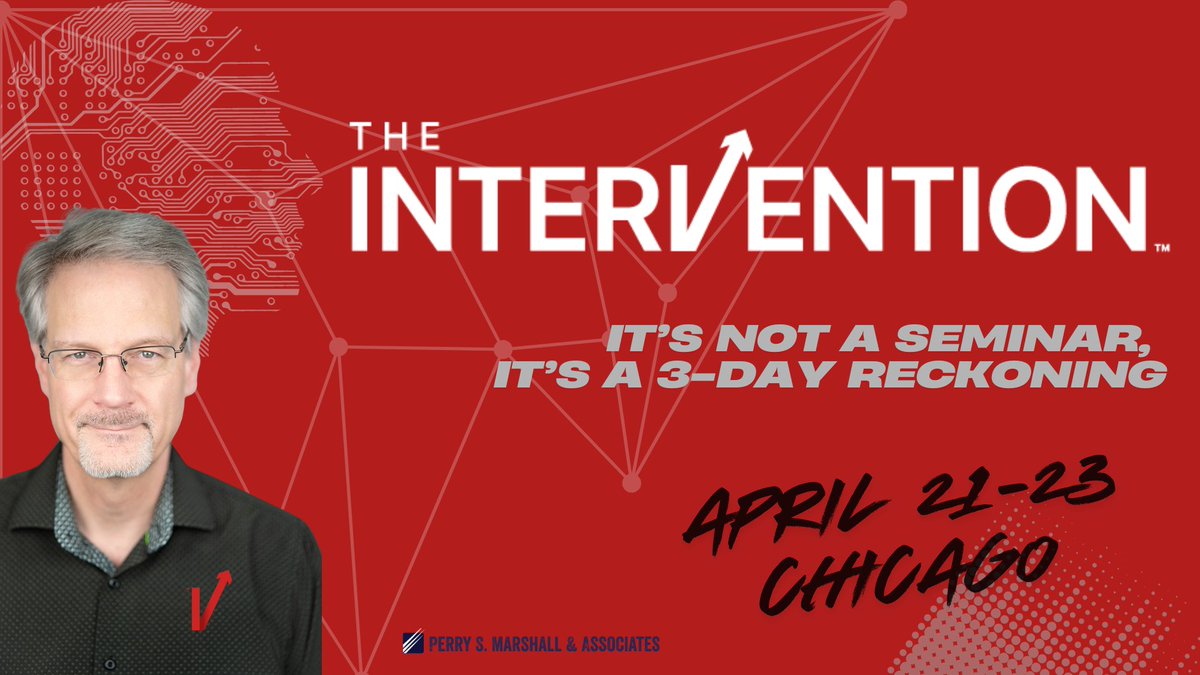
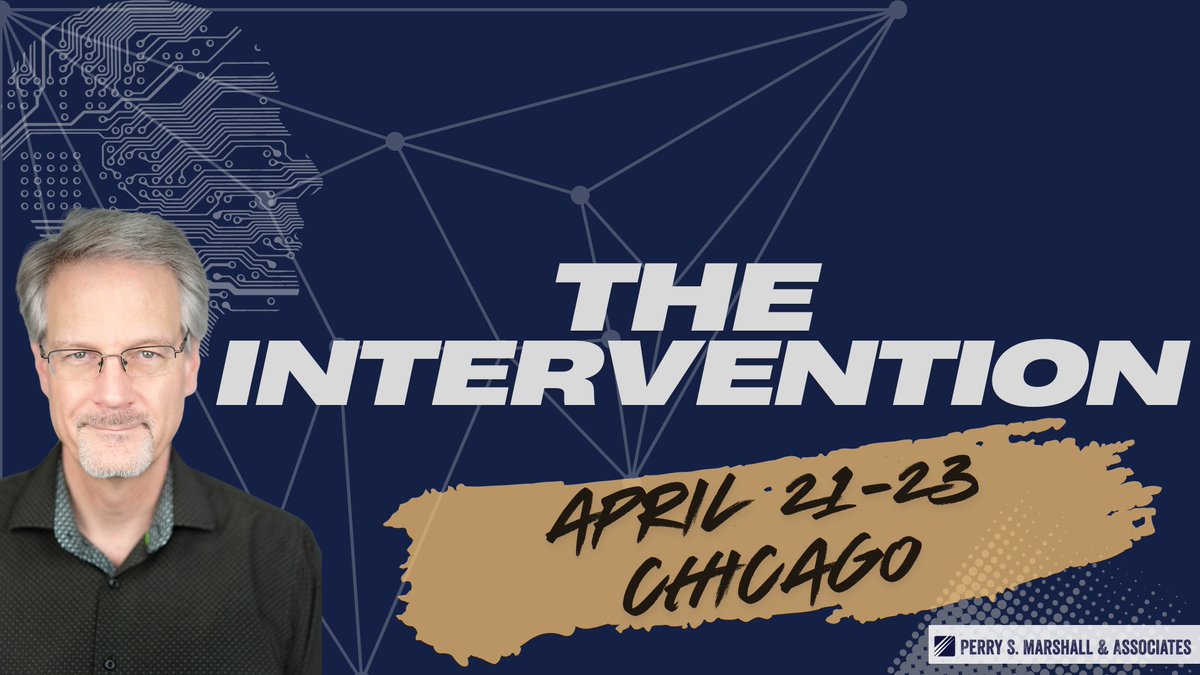
The Intervention starts next week (in-person Tues, livestream Wed). So why “last call” now? Because this isn’t a seminar. You don’t show up for ideas. You show up already diagnosed. SuperConductor happens before you arrive. That’s how we find your real bottleneck. Then we fix it. No pre-work = no leverage. Register now or you won’t have time to do it right. perrymarshall.com/isem-x
Perry Marshall tweet media
English
0
0
1
125
Perry Marshall
Perry Marshall@PerryMarshall·
From the prize specification: “The system submitted for demonstration of the solution to this Challenge may not be directly from any living organism, virus or similar entities.” “phenomena such as bee waggles, dog barks, RNA strands derived from cells, mating calls of birds, etc. are not acceptable elements of a winning solution to this Challenge.”
English
2
0
0
65
Meet Mr.Noor
Meet Mr.Noor@ahmednour_1·
@PerryMarshall "Hi @PerryMarshall, I have achieved Reverse Entropy in organic matter. I transformed dead matter into fragrant esters and ordered lipids. I can defy decay with 100% repeatability. Ready to submit my evidence for the $10M Prize. #Evolution2"
English
1
0
0
55
Perry Marshall
Perry Marshall@PerryMarshall·
The Intervention is NOT an AI seminar. If you want prompts and tools… don’t come. AI diagnosis happens before you arrive. In Chicago: no laptops. No fluff. We fix what’s actually broken— structure, positioning, economics. Most people use tools to avoid the real problem. We don’t. If you want tactics, stay home. If you want results → Join us. perrymarshall.com/isem-x
Perry Marshall tweet media
English
2
0
1
222
Perry Marshall
Perry Marshall@PerryMarshall·
“She came back from vacation and her job was gone.” No warning. 15 years—gone. Over 50. Not sure what was next. "I'm living on severance and the clock is ticking. Perry, how can I reinvent myself fast?" She didn’t have a marketing problem. She had a “what am I built for?” problem. Once she answered that, everything changed. Most people aren’t there yet… but they’re drifting toward it. Industries shifting. Models getting commoditized. Results slipping. The clock is ticking. Don’t wait. That’s what The Intervention is for. perrymarshall.com/isem-x
English
1
0
4
368
Perry Marshall
Perry Marshall@PerryMarshall·
Time for a rant: Most people aren’t plugged in. They’re frozen. Head in the sand. AI is moving 10x faster than the Google era. We’ve hit the exponential inflection point. $10/hr work is gone. $100/hr is next. If you can think at a high level, it’s the best time ever. That’s a big if. Watch the video → And join us for The Intervention perrymarshall.com/isem-x
English
5
2
54
2.7K
Perry Marshall
Perry Marshall@PerryMarshall·
Some problems don’t need more thinking. They need decisive action. The best operators act first and explain later. They care about results, not appearances. The Intervention 2-day seminar won’t be pretty. It’ll be messy and human and awkward. But we will get sh%t done. If we don’t help fix your business, I’ll refund you + $1,000. Hard results > polite process. Join us →perrymarshall.com/int-x
Perry Marshall tweet media
English
0
0
2
222
Perry Marshall retweetledi
Donald Hoffman
Donald Hoffman@donalddhoffman·
“What truly exists is consciousness. That’s the only thing I am directly acquainted with. I don’t know about atoms, galaxies, and neurons; all of that is inferred. The only thing I know is seeing, hearing, feeling.” Christof Koch bigthinkmedia.substack.com/p/the-inner-li…
English
55
78
380
18.8K
Perry Marshall
Perry Marshall@PerryMarshall·
"The worst unhappiness is the happiness where everybody else says you should be so happy and you're completely miserable." -Casey Graham
English
0
0
3
251
Perry Marshall
Perry Marshall@PerryMarshall·
When a debate persists for more than a generation, the resolution will come from a new TOOL, not a better ARGUMENT.
English
1
2
17
608
Perry Marshall
Perry Marshall@PerryMarshall·
"AI can solve a lot of problems. It will never be able to soothe an ache. It can be used to exploit an ache." -Megan Macedo
English
0
0
3
277
Perry Marshall
Perry Marshall@PerryMarshall·
I want to highlight something unique at the Chicago seminar that many overlook: the “Pit Crew.” This isn’t just about tactics or sessions; it’s about the people in the room—experts who’ve tackled tough challenges and emerged with clarity. Any one of them justifies the admission price. But the real value is the unscripted, in-person access when it matters. THE INTERVENTION: April 21–23 Chicago perrymarshall.com/int-x
English
0
0
1
196
Perry Marshall
Perry Marshall@PerryMarshall·
Two types of entrepreneurs right now: 1. Burned out. Working harder, getting less traction. 2. Energized. Curious. Compounding. The difference? Most use AI for efficiency. A few use it for leverage—to decide what work matters. “AI made 99% of my work disappear—and the 1% left is worth more than my whole career.” That’s not efficiency. That’s a shift in value. Join us at "The Intervention" to learn how: April 21-23, Chicago perrymarshall.com/int-x
Perry Marshall tweet media
English
0
0
2
173
Perry Marshall
Perry Marshall@PerryMarshall·
The 80/20 Power Curve has been valid since Pareto observed it in 1896 and will still be effective when every current marketing platform is obsolete.
Perry Marshall tweet media
English
0
0
3
166
Perry Marshall retweetledi
Jay Cross
Jay Cross@jaycrosstweets·
I agree that pharmaceutical companies and regulators aren't hiding cures. That is a cartoonish caricature and a distraction from what is actually throttling breakthroughs, which is the way that oncology defines cancer itself. Oncology as we know it today (its research methodology, its liability architecture, its evidentiary standards, and yes, its regulatory framework) defines cancer as a physical problem. Oncology's search for cures is exclusively focused on generalizable, mechanistic, population-level knowledge. Mind you, that isn't where a fearless, unconditioned search for truth has led them. It's what they have decided, in advance, that a "cure" has to be. It is the ground-level perception instantiated in all that they do. The view of cancer as fundamentally being a physical problem is way behind the state of the art. Cancer is an informational problem that manifests physically. Cancer cells don't just divide uncontrollably. They make decisions, coordinate, adapt, and evolve for complex patient-specific reasons. This has absolutely enormous implications. It explains why the return on research investment, measured against the well over a trillion dollars that's been spent, has been strikingly modest for late-stage cancer. @PerryMarshall has often said that, if you have stage 3 or stage 4 cancer, your odds of survival today are no better than they were in 1930. For some late-stage cancers, such as melanoma, there have been significant improvements in treatment outcomes thanks to treatments like immunotherapy. Those are real achievements. I would be remiss not to acknowledge them. Yet even when immunotherapy "works" at shrinking tumors or arresting growth, it often creates side effects that are just as bad or worse than the cancer itself. My mom is experiencing some of them right now. Even the best oncologists in the world (to their credit) openly admit that immunotherapy completely fails for a large percentages of patients, and that they cannot predict in advance who those patients will be. It's also very common for two patients to have what appears to be a near-identical tumor but respond night-and-day differently to treatment. I recognize that cancer is genuinely, maddeningly complex. Oncologists can't be blamed for not being omniscient. Many are doing their level best with the understanding and the tools that they have. Still, the truth remains that you cannot safely impose force on a system whose organizing intelligence you do not understand. And that is PRECISELY what today's leading treatments do. Today's treatments grow out of the question "how can we force tumors to go away." Even if you modify the question, as you did, to say "...without harming other things", it's still a limiting question, because to focus on the cancer itself is to chase a ghost. This is perhaps most evident in oncology's continuing study of the genetic biomarkers of tumors. The underlying informational dynamics that created someone's tumor are upstream from the tumor itself by an enormous distance. Unsurprisingly, biomarkers often only explain cancer outcomes in a retrospective fashion. Not in a predictive way that can be used when a treatment decision actually needs to be made. The top oncologists in the world lament this in their own research papers. But they still seem convinced that it's the most promising research direction to be looking in. What if it's not? No amount of money, computation, or human brilliance can compensate for asking limited questions. A potentially far more fruitful question would be in the direction of "why did *this specific human* develop cancer in the first place." Oncology in its current form is not set up to seriously ask that question. Much less to center it.
Patrick Heizer@PatrickHeizer

Long post, because apparently many neither understand nor appreciate the intricacies of cancer research and think that pharmaceutical companies and regulators are holding back cures. Your immune system is constantly surveilling your body for both self and non-self recognition. It does this by checking the proteins expressed. If it finds something it doesn't recognize, it ramps up the inflammatory response and attacks. If it is actually non-self, great. If it is actual-self, that is autoimmune disease. Cancer occurs when cells acquire mutations that both 1) alter cell division and 2) cloak those cells from recognition by the immune system. If the second part doesn't occur, then the immune system will recognize that something is wrong and kill the tumor when it's just a few cells. At a high level, many modern cancer therapies are about getting the immune system to recognize the tumor and do all the work on killing it. And yes, it's quite easy to do this. But this is where the "safe and effective" line comes in. If you're treatment just cranks up the immune response in general, you start killing the tumor AND other things. If you give me a decent CAR-T at work, I have tools to boost it in ways that'll eliminate any realistic sized mouse tumor in 24-48 hours. The problem is that it's just a general immune overdrive and the cells start attacking everything. Okay, let's not send the immune system into a frenzy and just use the CAR-T, which is a T cell that has been edited with a protein that we know binds to a protein that the cancer expresses. The hope is, if the cancer cells express X and we edit the T cells to explain anti-X, then they'll go and attack the tumor. But this is where specificity and selectively come in. Your body expresses thousands of different proteins. Sometimes they look very much like each other even if they are different. Say there is a protein called XX expressed in your heart, it shares 99.9% homology (likeness) with X. We inject X-CAR-T cells, they go and kill the tumor, everything looks great. But a few binded to XX in the heart and started inflamming the heart wall. Not good to the point of unacceptability. This step gets especially hard when working in animals because mice and dogs or whatever have different proteins than humans! When we inject human tumors and human CAR-T cells into mice, they are NOT encountering the same proteins (or cytokines, hormones, other immune cells, etc.) that they would in an actual human body. This is just a brief explanation or some of the considerations that go into oncology. Here's another: we monitor experimental mice for max a few months. Even non-experimental mice have a lifespan of ~1.5-2 years. Meanwhile, you want your parent/spouse/child to be in remission for 5, 10, 15+ years! In fact, one of the main outcomes for assessing human cancer treatments is the "5-year survival rate." Mice and elderly dogs don't live for five years!! So yes, scientists and pharmaceutical companies have tools to easily kill tumors. What is hard is developing therapeutics that are BOTH safe AND effective in actual humans **relative** to current standards of care (e.g. a cutting edge treatment isn't "better" if it has a strong response in the first year but a lower 5-year overall survival, etc.) And this is where regulators come in. I expressed multiple times in the comments that I, generally, wish they weren't as risk averse and that I support "Right To Try" laws. But you need to appreciate that regulators **are** in a DIFFICULT position. An analogy: It's proven that nuclear energy is by far the safest form of energy per KwH energy produced. Yet a few high profile accidents, a couple of which didn't even kill anyone, have poisoned a large segment of the population and several nations against nuclear energy. Even though it's safe and a reliable form of carbon-free electricity!!! Now think about that relative to cutting edge medicines.

English
0
1
2
653
Perry Marshall
Perry Marshall@PerryMarshall·
A programmer with a mortgage, diapers, and car payments clicked one of my ads. I told him: “You’re not selling software. You’re selling money at a discount.” Solve a $50K problem for $10K. Better yet—solve it once and productize it. That company became Infusionsoft. Most businesses sit next to a leverage point they can’t see. That’s what SuperConductor helps you find. Read more perrymarshall.com/rjv-x
English
0
0
10
633