Peter Xenopoulos

1.2K posts

Peter Xenopoulos

Peter Xenopoulos

@peterxeno

(e)sports analytics. research at @NVIDIA. opinions my own.

NYC Katılım Aralık 2014
1.2K Takip Edilen767 Takipçiler
Sabitlenmiş Tweet
Peter Xenopoulos
Peter Xenopoulos@peterxeno·
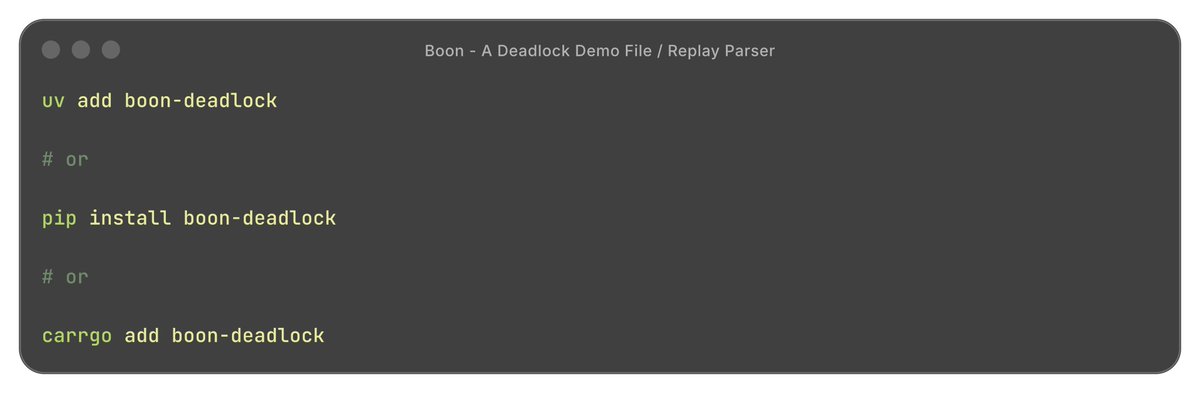
I love Deadlock. So, I built an open-source Deadlock demo parser called Boon 🎯 It reads .dem replay files and gives you structured data — tick-level player/trooper/objective state, kills, damage, and more. Rust core, Python bindings, CLI included. github.com/pnxenopoulos/b…
Peter Xenopoulos tweet media
English
1
2
20
4.4K
Peter Xenopoulos retweetledi
PAOK FC
PAOK FC@PAOK_FC·
1926 - 2026 Ένας αιώνας ΠΑΟΚ! #PAOK100 #OurWay
Ελληνικά
7
98
543
9.9K
Peter Xenopoulos
Peter Xenopoulos@peterxeno·
Everything is returned as Polars DataFrames, so filtering, grouping, and joins are fast out of the box ⚡
Peter Xenopoulos tweet media
English
1
0
0
147
Peter Xenopoulos
Peter Xenopoulos@peterxeno·
I love Deadlock. So, I built an open-source Deadlock demo parser called Boon 🎯 It reads .dem replay files and gives you structured data — tick-level player/trooper/objective state, kills, damage, and more. Rust core, Python bindings, CLI included. github.com/pnxenopoulos/b…
Peter Xenopoulos tweet media
English
1
2
20
4.4K
Peter Xenopoulos
Peter Xenopoulos@peterxeno·
@pfgb8 @smartbackwards This is an important point. You will converge to a solution faster with GBT than with GNNs. You need many more training samples for the latter (the representation and relationships are more complex). What do the features look like on GBT and the GNN?
English
0
0
0
22
Pequeno Pedrão
Pequeno Pedrão@pfgb8·
@smartbackwards @peterxeno 3) how many samples do you have for training? this does seem like a problem of a complex model with too few examples so it feels every change in the positions of the players affect way too much the win probability. Increasing training size may help
English
2
0
1
43
btrams
btrams@smartbackwards·
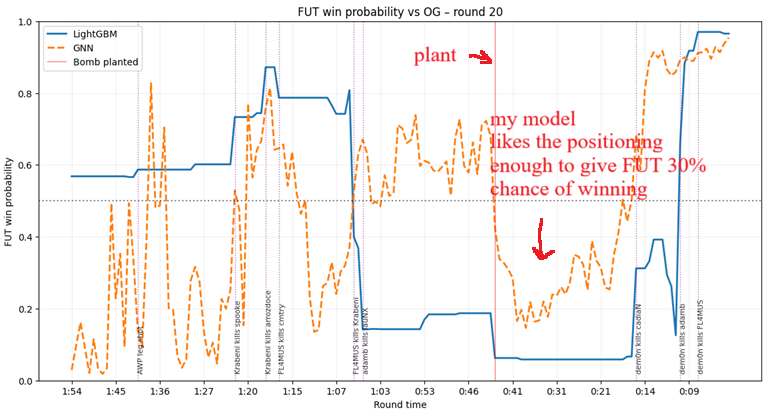
(ML nerds come here) wanted to showcase a thing i've been working on for my master's thesis - im trying to train a machine learning model to predict win probability. came up with an improvement to @peterxeno's graph network model by adding enemy visibility to the edges of the graph representing players on a server. the model "knows" about the position of the players too, hence why it likes FUT's chances enough to give them about 30% even despite a plant and man disadvantage it seems quite... unstable so if anyone would have feedback for me i'm down to hear it (tagging @LuzRaposa cause i think he could help)
btrams tweet media
BLAST Premier 💥@BLASTPremier

.@OGesportsCS overcooked that one 😬 #BLASTPremier

English
5
1
47
5.6K
Peter Xenopoulos
Peter Xenopoulos@peterxeno·
@smartbackwards @blainejungwirth One way to debug here is to make a very simple GNN (with same sorts of features as the GBT) and see if the features are being aggregated appropriately. As @blainejungwirth says, we should expect them to start similarly. This validates some of your GNN procedure
English
1
0
4
225
btrams
btrams@smartbackwards·
@blainejungwirth @peterxeno it does!😭 has "has_rifle"/"has_smg"/"has_heavy" flags as well as current equipment value
English
1
0
4
326
Peter Xenopoulos
Peter Xenopoulos@peterxeno·
@NER0cs @JesperLarsen222 Thanks 4 the shoutout, @NER0cs. I'll add that distilling player skill down to 1 number is hard. Any metric should be stable, separate player skill beyond noise, and add non-redundant info beyond other metrics. These qualities are one way to compare metrics.
English
0
0
7
285
Harry
Harry@NER0cs·
The first thing to stress is that I am not a developer - all the 3.0 work on HLTV gets done on-site in Denmark, most of it by a guy called Troels who has a PHD in Maths and is great. But while it's fair to say that I've led the creative vision side of 3.0, the vast majority of the '3.0 formula' is rating 2.0 which was created by tgwri1s; all I've done really is add Round Swing as a 6th sub-rating and eco-adjustment on top of the 2.1 formula. So the vast majority of the 'formula' was not written by me. I have spoken briefly to some pros/coaches about things but they have very busy schedules and don't really have time to be statistic consultants on the side (nor would most of them want to - if a data-driven coach or igl has worked something out, they want to keep it for their team, not for all of HLTV). Round Swing is a very similar metric to Leetify rating, both based on a paper about 'win probability added' by @peterxeno (researchgate.net/publication/35…) that used a different method of applying value to each action. It didn't come to me in a dream or anything, it's been around a while. The idea that any composite rating on this scale can be fully 'objective' is obviously folly. But it is a data-driven approach all the way through, looking at what predicts rw%, map win%, and long-term individual metrics too. Striker and tgwri1s were there through the alpha and beta versions and did give feedback, while this update was developed after feedback from public figures I trust after it was released. K/D can be considered objective but there's a reason nobody uses it: It's bad. It is also still available to anyone that prefers a raw stat like that, as are ADR or KPR or any other basic 'objective' metric people might think is better (but I obviously disagree). As @smartbackwards and @n0miun have proved, anyone can make their own rating whenever they like given how available demos are on HLTV with parsers like awpy A single rating that covers everything is impossible but it's the road HLTV went down when they released 1.0 and it is something we can keep improving forever, probably. For a casual fan, there is immense value in a quick look at a green or red number at the end of a event or match. Of course, internally we look at what goes into rating as much as the final number, as any engaged fan or expert would. But I don't think that because it's hard, we should just not bother. I get asked about open source all the time, and 1) there isn't a 'formula' to leak, it's far more complicated than that, now that eco-adjustment and swing use map-to-map averages and so on. 2) It is just not up to me. Way above my paygrade.
English
7
4
59
4K
Peter Xenopoulos
Peter Xenopoulos@peterxeno·
Honolulu can be a great place to start, since it is small and largely constrained to the coast. Just connecting the airport to Downtown / Waikiki / UH Manoa will be a solid start.
English
1
0
0
224
Peter Xenopoulos
Peter Xenopoulos@peterxeno·
Honolulu on Subway Builder is another great starting city. Although small (~1M pop), Honolulu's geography can help you create a well-utilized and simple light rail system. #subwaybuilder
Peter Xenopoulos tweet media
English
1
0
1
421
Peter Xenopoulos
Peter Xenopoulos@peterxeno·
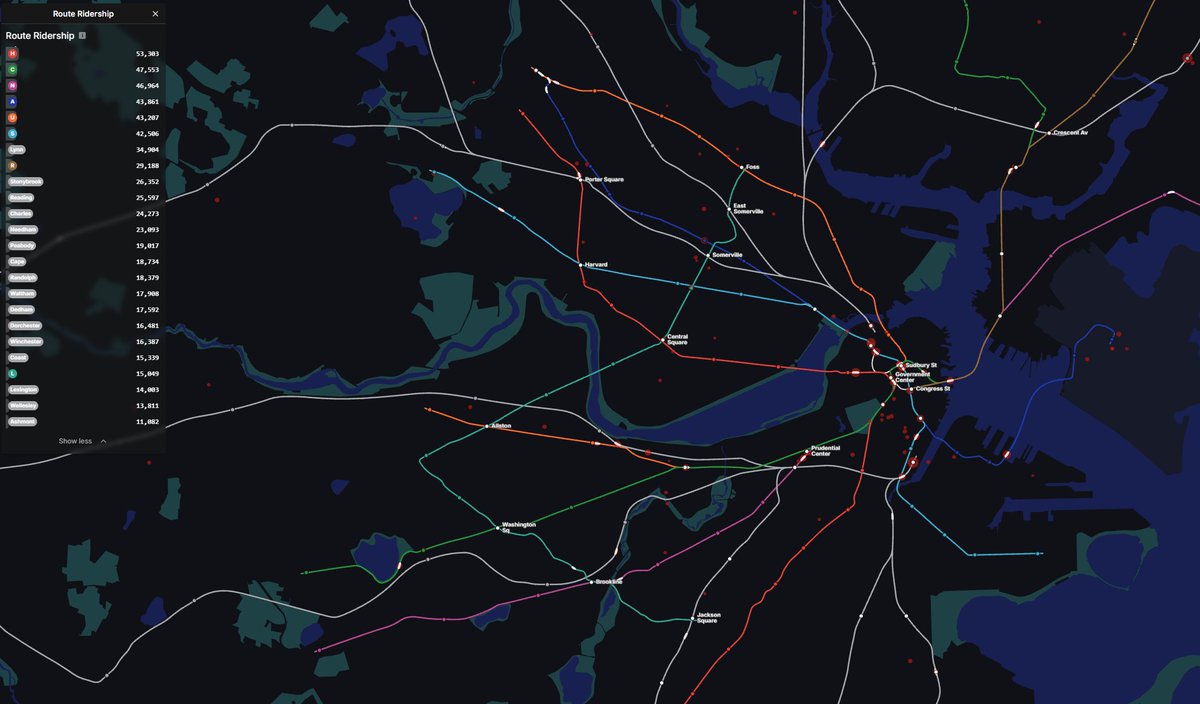
Boston on Subway Builder from @Colin_d_m. Gray lines are meant to be regional rail, colored are light metros. 25% transit demand so far + very sustainable system. Great city to start playing in! #subwaybuilder
Peter Xenopoulos tweet media
English
6
3
264
8.8K
Peter Xenopoulos
Peter Xenopoulos@peterxeno·
@emfcPibe @Colin_d_m (1) people are trying to get to work, which in Boston are the universities + downtown + airport (lower demand) (2) Boston streets emanate from downtown. Away from the center, roads are more curvy, so it's harder to build (higher cost) so, a crosstown route (L) has low ridership
Peter Xenopoulos tweet media
English
0
0
0
442
Peter Xenopoulos
Peter Xenopoulos@peterxeno·
@A320ne0 @Colin_d_m Yes, especially in Boston, which has lots of very visible train tracks as you move out to suburbs. I lack a crosstown route—I should try one.
English
0
0
1
264
Peter Xenopoulos
Peter Xenopoulos@peterxeno·
@kadutomita Unfortunately not possible, I’d have to tear down my existing North Station 😢 might do it though and consolidate some of the regional lines
English
0
0
0
87