pharmakopios

71 posts

pharmakopios banner
pharmakopios

pharmakopios

@pharmakopios

Katılım Ekim 2022
635 Takip Edilen93 Takipçiler
☕️
☕️@biofeed·
I would like to edit my genes once in my life, that’s a bucket list item
English
4
0
4
495
Malika 🧬
Malika 🧬@malikules·
this book will make you quit your job, pursue things that you love, and accept the sacrifices that come with it 10/10
Malika 🧬 tweet media
English
9
8
122
5.4K
pharmakopios
pharmakopios@pharmakopios·
@biofeed Delete this, no one should have their only experience of Pihkal being Gork summarise it
English
0
0
4
34
☕️
☕️@biofeed·
Look if you haven’t ready Pihkal idc what you think about the discourse
English
2
0
4
424
🕊️
🕊️@lichthauch·
The great work has never been done by a calm nervous system. the calm ones, the regulated breathers, the grounded ones, they produce nothing of value. because nothing of value was ever made by someone who was okay with being here. the stars were born from collapse. the best shit on this planet came out of people who were not functioning, whose nervous system was a mess, raw and misfiring. God does not give visions to the well rested.
English
81
326
2.4K
79.4K
M
M@RiskInhibitor·
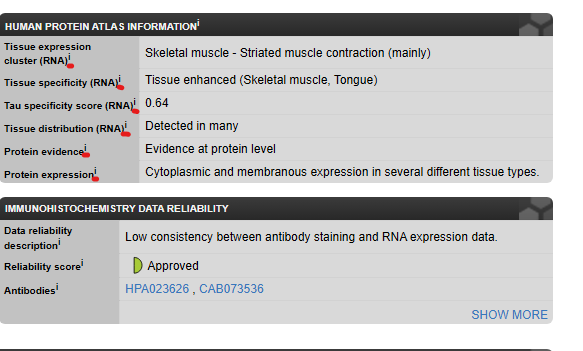
$SRPT been 2 weeks no ones figured it out. The citations do not support the slide's title or subtitles, and this slide is arguably the most important one in the whole deck. Reference 1 is cited to support the statement that only approximately 5% of TfR1 receptors are available on the cell surface at any given time because most receptors are intracellular trafficking transferrin or being recycled to the membrane. While this citation may support the receptor trafficking characteristics of TfR1, it does not study skeletal muscle. The paper focuses on blood-brain barrier endothelial cells and models transferrin receptor trafficking in the context of receptor-mediated transcytosis across the BBB. The frequently quoted "5% surface availability" is therefore specific to that biological system and is not presented as a universal property of TfR1 across all tissues. Reference 2 is used to support the statement that approximately 40% of αvβ6 receptors are available on the cell surface. The paper does investigate αvβ6 trafficking, internalization, recycling, and degradation. However, these experiments are performed in αvβ6-positive epithelial and carcinoma cell lines, where αvβ6 is naturally expressed or experimentally maintained. Importantly, the paper is not a tissue expression study. It does not measure αvβ6 expression in skeletal muscle, compare expression across organs, or demonstrate that skeletal muscle expresses abundant αvβ6. In fact, the introduction characterizes αvβ6 as an epithelial integrin that is largely absent from healthy adult tissues except certain epithelial compartments. Therefore, while the paper may support the narrow conclusion that approximately 40% of αvβ6 receptors reside on the surface of the experimental cells studied Reference 3 examines the A20FMDV2 peptide, a high-affinity ligand for αvβ6, and characterizes its pharmacology, binding affinity, internalization kinetics, and receptor recycling. Like Reference 2, the experiments are performed in αvβ6-positive epithelial cell models, not skeletal muscle. The study quantifies parameters such as: ligand affinity, receptor internalization, recycling kinetics, and the fraction of receptors remaining on the cell surface following ligand binding. These data are valuable for understanding how αvβ6 behaves once it is present on a cell, but they provide no information regarding where αvβ6 is expressed in vivo. Specifically, the paper does not: quantify αvβ6 expression in skeletal muscle, compare αvβ6 abundance with TfR1, evaluate skeletal muscle uptake, or conclude that αvβ6 is an optimal receptor for muscle-targeted therapeutics. Thus, Reference 3 supports only the pharmacologic behavior of αvβ6 in αvβ6-positive experimental cells. It does not support any claim regarding skeletal muscle expression or muscle-targeted drug delivery. The worst of it all is the ITGB6 Protein Atlas. The truth hides behind the little "i"s. 1. Tissue expression cluster (RNA): "Skeletal muscle – Striated muscle contraction (mainly)" This is an RNA clustering annotation, not a measurement of expression. It indicates that ITGB6 has a tissue-wide RNA expression pattern similar to other genes in the cluster; it does not demonstrate muscle-specific expression, protein abundance, or receptor density. 2. Tissue specificity (RNA): "Tissue enhanced (Skeletal muscle, Tongue)" This classification is based solely on consensus mRNA expression (HPA + GTEx). It reflects relative RNA abundance and provides no information about protein levels, membrane localization, or receptor availability. 3. Tau specificity score (RNA): 0.64 Tau is a specificity metric, not an expression metric. It measures how restricted RNA expression is across tissues and does not quantify transcript abundance, protein expression, or receptor density. 4. Tissue distribution (RNA): "Detected in many" This RNA-based annotation indicates that ITGB6 transcripts are present across many tissues, arguing against muscle-exclusive expression. 5. Protein evidence: "Evidence at protein level" This is an existence score, indicating that the protein has been experimentally observed. It does not quantify protein abundance, tissue-specific expression, or cell-surface receptor density. 6. Protein expression: "Cytoplasmic and membranous expression in several different tissue types." This is a qualitative knowledge-based summary, not a quantitative measurement. It does not establish high skeletal muscle expression, membrane receptor abundance, or preferential muscle localization, and the Atlas separately states that reliable estimation of tissue protein expression could not be performed. In other words: not a single linked source suggests αvβ6, the target of their DM1 & FSHD drugs, is expressed in skeletal muscle (the target tissue) at all. There is zero quantitative evidence whatsoever.
M tweet mediaM tweet media
M@RiskInhibitor

$SRPT First person who can tell me all the things wrong with this slide gets a cookie. Slide 10. investorrelations.sarepta.com/static-files/7…

English
7
0
19
3.8K
Anil Makam
Anil Makam@AnilMakam·
@DrSamuelBHume Statistical quirk than biologic: Death from one disease protects against dying from another disease :) This is what is behind the new AD & cancer "paradox" IMO some are trumpeting
English
4
0
23
2.5K
Samuel Hume
Samuel Hume@DrSamuelBHume·
Curious examples where one disease protects against another - Sickle-cell trait protects against severe malaria - Down syndrome reduces the risk of most solid tumors - Huntington's disease and dementia seem to lower cancer risk - HLA-B27 positivity (as in ankylosing spondylitis) protects against HIV progression - Vitiligo protects against melanoma - Cystic fibrosis carriers seem to have a reduced risk of infectious diarrhea - Gilbert syndrome seems to lower cardiovascular disease risk Are there any others?
English
42
42
373
97K
pharmakopios
pharmakopios@pharmakopios·
@DrSamuelBHume Mutations causing Gaucher disease (N370S) and tuberculosis, LRRK2 PD mutation (G2019S) and infections
English
0
0
2
318
pharmakopios
pharmakopios@pharmakopios·
@DrSamuelBHume Niemann Pick disease type C and Ebola / Marburg amongst other viral infections
English
0
0
1
545
Vinay Prasad MD MPH
Vinay Prasad MD MPH@VPrasadMDMPH·
Three real clinical questions submitted to AI
English
7
13
115
19K
jason bush
jason bush@jasonbush2006·
@davidmiedz If the study goes bad he will be sued, I was thinking about hedging, (in at $2.05). I am not anymore.
English
1
0
2
649
David
David@davidmiedz·
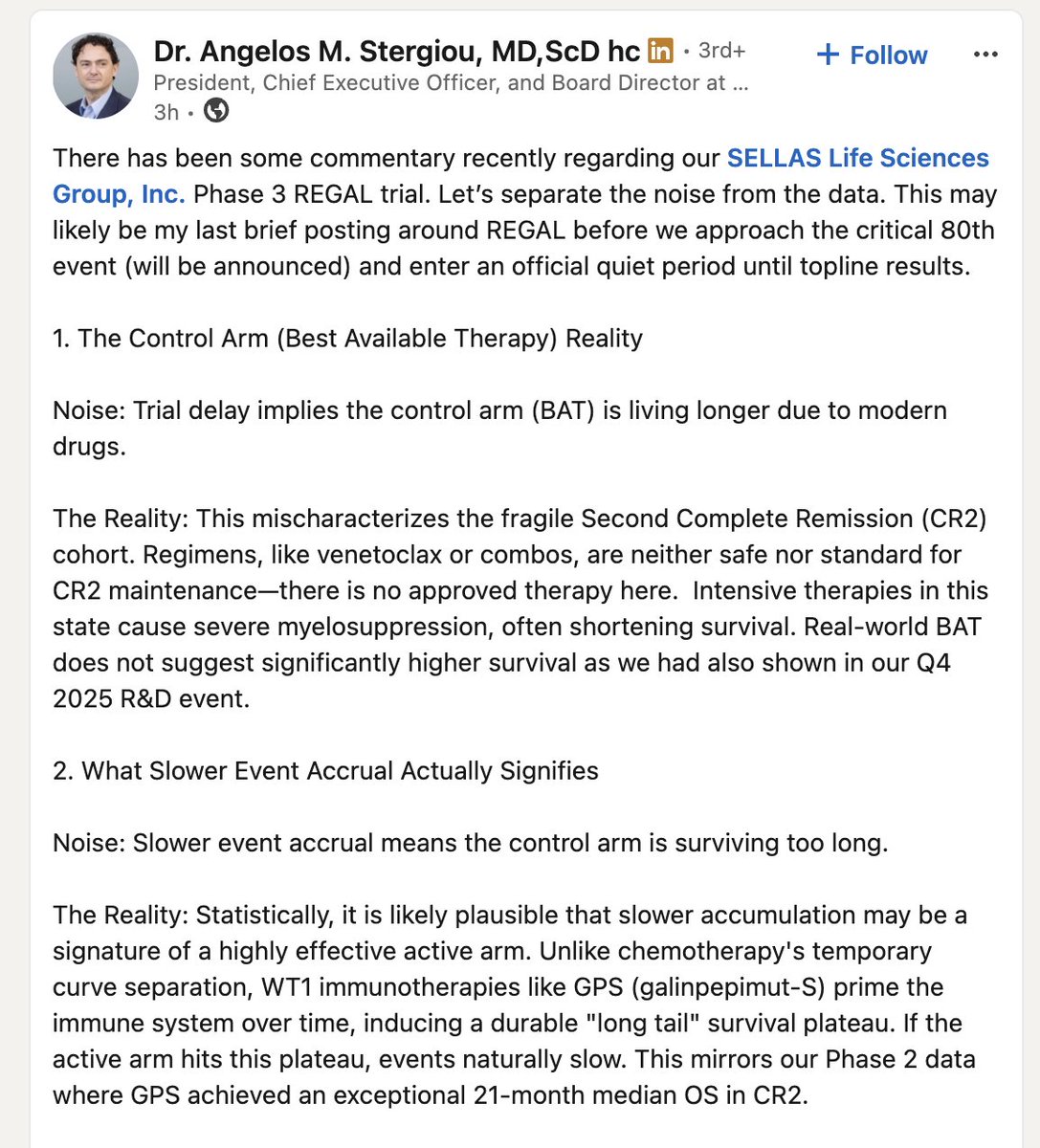
Am I being crazy or is this an absolutely insane thing for a CEO to post?
David tweet media
English
16
1
78
16.8K
Dirk Haussecker
Dirk Haussecker@RNAiAnalyst·
$capr doubling, tripling, quadrupling down here. $mltx
English
9
1
32
9.7K
pharmakopios
pharmakopios@pharmakopios·
Downgrading PT on $TRAW from $50 to $0.80 - “Neutral” (PS. I was definitely not wrong in anyway.)
English
1
0
6
609
bala
bala@balamethasone·
why is Repl near 12? If approved they’ll have to dilute like crazy to fund both commercialization and their confirmatory. They already burn ~70m per q. Then you have to factor fda risk
English
5
0
8
2K