Phong Do

28 posts

Phong Do

Phong Do

@phong_dnt

PhD Computer Science student @WarwickDCS | Natural Language Processing - RAG- Knowledge Graph

England Katılım Ağustos 2023
401 Takip Edilen30 Takipçiler
Phong Do retweetledi
Seb Johnson
Seb Johnson@SebJohnsonUK·
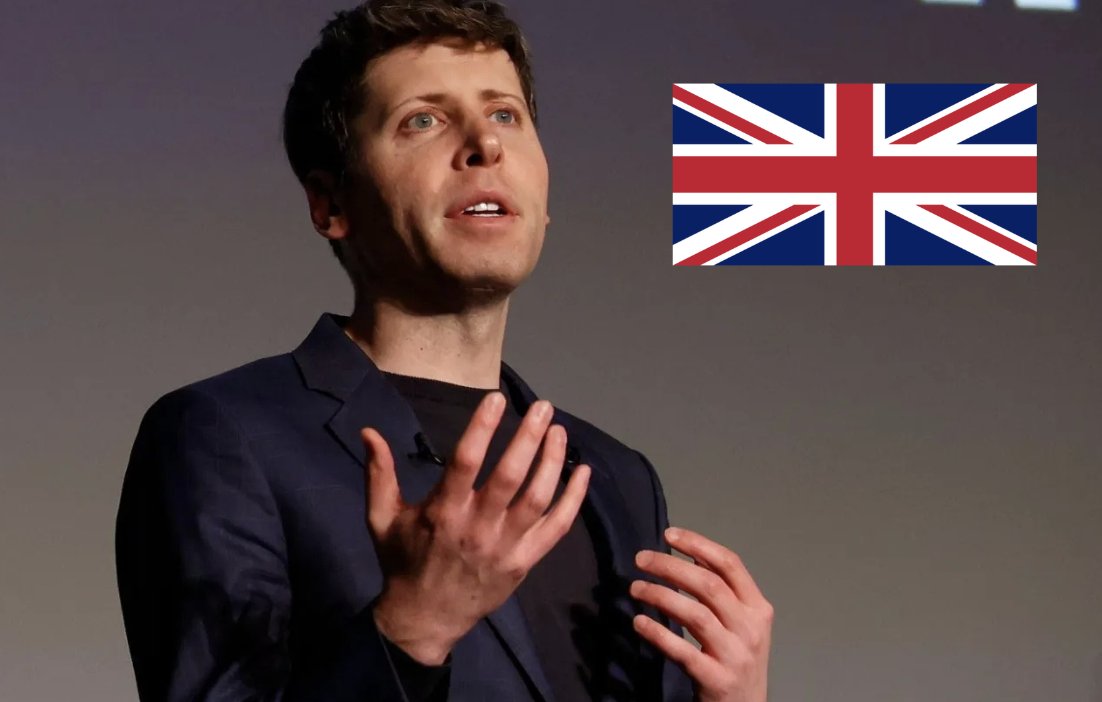
OpenAI has just chosen London as its largest research hub outside US! The UK has always been home to amazing technical AI talent (in a large part thanks to Demis Hassabis and DeepMind) and now OpenAI is doubling down here. It currently has 30 researchers, but according to The Times, will be "significantly increasing the size of the site". The company referred to London's “unique concentration of world-class talent across machine learning and the sciences as well as its strong culture of cross-disciplinary collaboration” as to why it's expanding here. And it is NOT WRONG This is amazing validation of the strength of the UK tech ecosystem. (article is linked below. It is a TRAVESTY they didn't ask OpenAI's @LauraModiano for a comment who has become one of the leading figures in European Tech - anything to add Laura?)
Seb Johnson tweet media
English
39
64
806
53.5K
Phong Do retweetledi
Thinh
Thinh@thinhphp_vt·
🔥Our paper "SealQA: Raising the Bar for Reasoning in Search-Augmented Language Models" has been accepted to #ICLR 2026!! 🎉🎉🎉 Huge thanks to my supervisor @tuvllms and the other co-authors for all your hard work! See you in Brazil ✈️
Thinh tweet media
English
3
5
33
1.9K
Phong Do
Phong Do@phong_dnt·
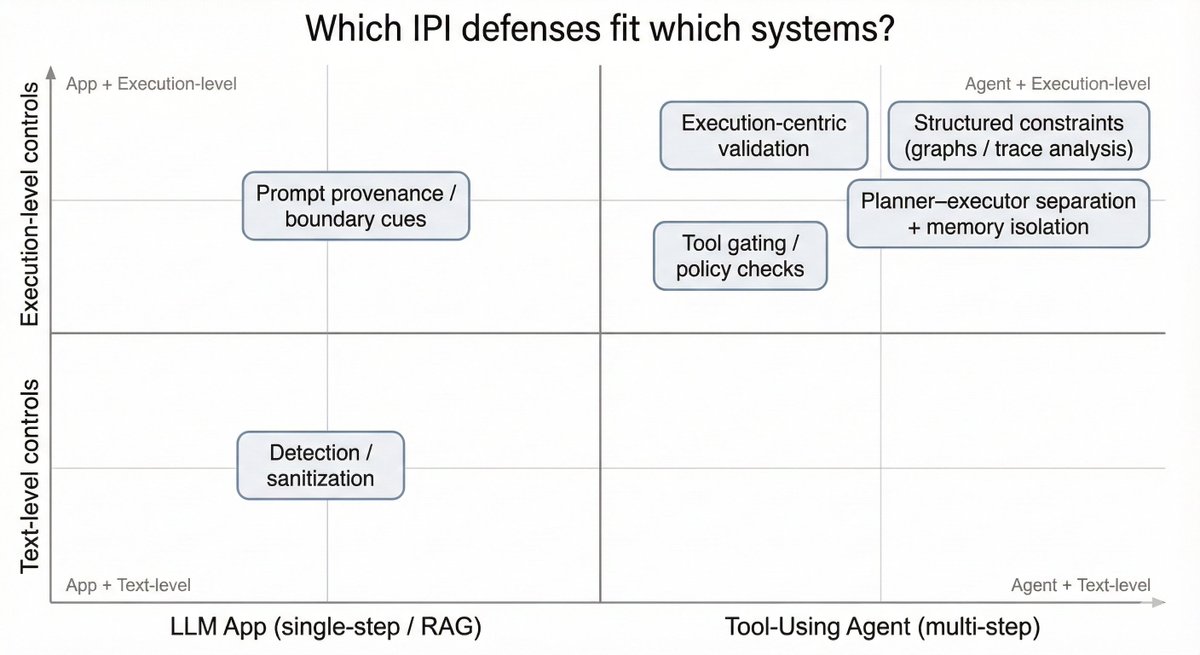
Defense landscape: Prompt provenance/boundary cues → detection/sanitization → tool gating → runtime/trajectory validation → structured constraints (graphs/traces) + memory isolation.
English
0
0
0
18
Phong Do
Phong Do@phong_dnt·
Minimal system view: trusted policy + user goal + untrusted external content → prompt assembly → LLM → (tool calls) → tool outputs → loop. IPI happens when the untrusted lane influences behavior like trusted instruction.
English
1
0
0
19
Phong Do
Phong Do@phong_dnt·
Indirect Prompt Injection (IPI): when untrusted content (retrieved docs/web/tool outputs/memory) enters an LLM app/agent context and behaves like “instructions.” Short survey + reading map: phongntdo.github.io/Indirect-Promp…
Phong Do tweet mediaPhong Do tweet media
English
1
0
1
43
Phong Do
Phong Do@phong_dnt·
✨ Exciting news! I’m starting my #PhD in Computer Science at the @uniofwarwick (UK) 🇬🇧, supervised by Dr. @pergolagb . My research will focus on RAG, Knowledge Graphs, Multimodal RAG & IR 🔍🤖. Thrilled to collaborate and contribute to the future of AI 🌍✨
Phong Do tweet media
English
0
2
4
251
Phong Do retweetledi
basvanopheusden
basvanopheusden@basvanopheusden·
A few weeks ago, I started a new job at @OpenAI. I wrote a document about my interview process and recommendations for anyone on the job market for AI research positions. I hope it's helpful! docs.google.com/document/d/1ZV…
English
63
343
4.1K
336.1K
Phong Do
Phong Do@phong_dnt·
This is where my curiosity meets my expertise, but it’s an evolving perspective — I’d value insights, critiques, and references from those working in this field. It’s just my perspective, so I welcome feedback & challenges from the community.
English
0
0
0
18
Phong Do
Phong Do@phong_dnt·
In my latest blog, I explore geography’s role in tackling today’s biggest challenges - from climate change and urban growth to disaster preparedness and location-based tech. I also touch on how AI + geospatial data (GeoAI) can detect illegal deforestation, map flood zones, ...
English
1
0
0
45
Phong Do
Phong Do@phong_dnt·
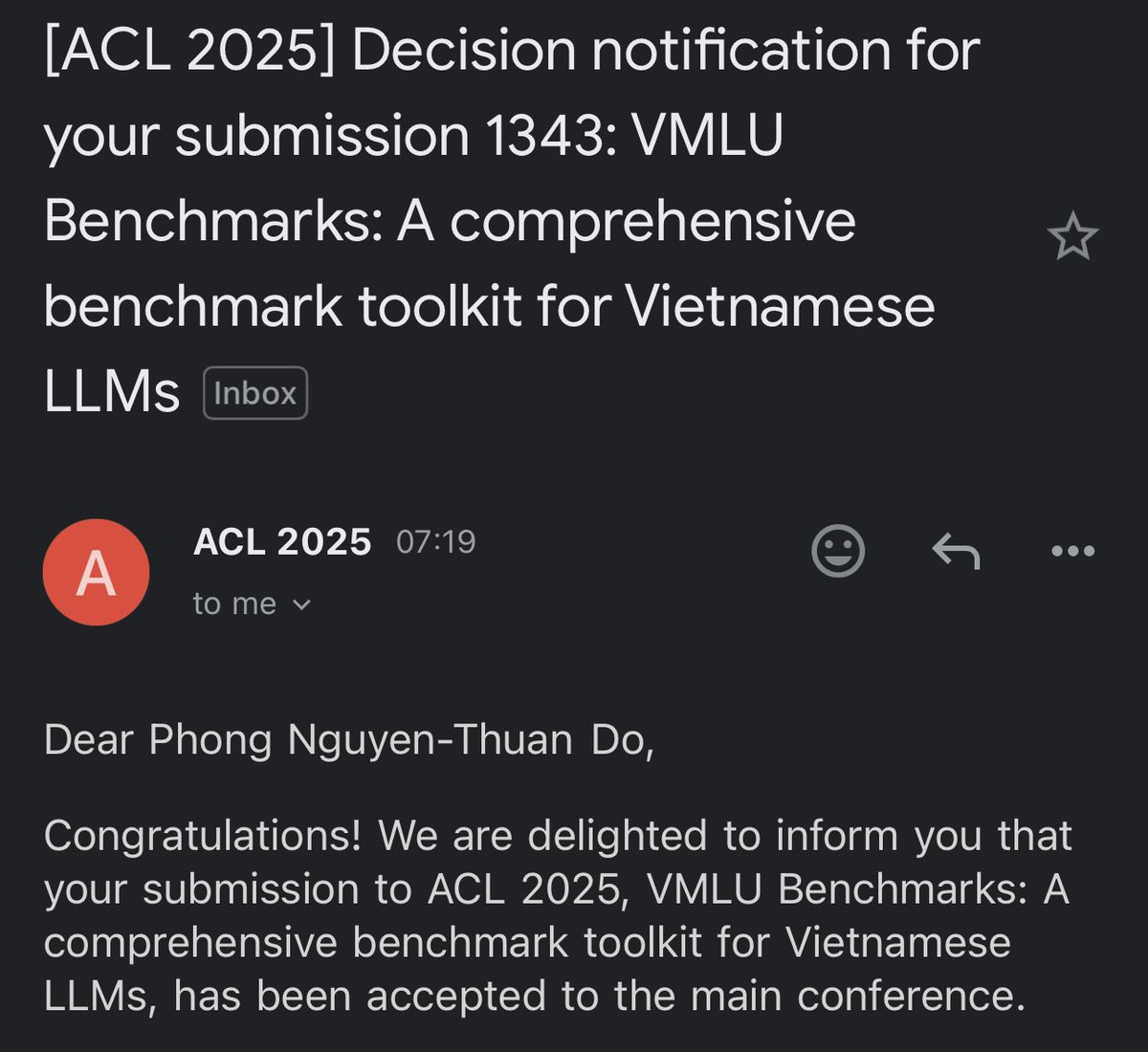
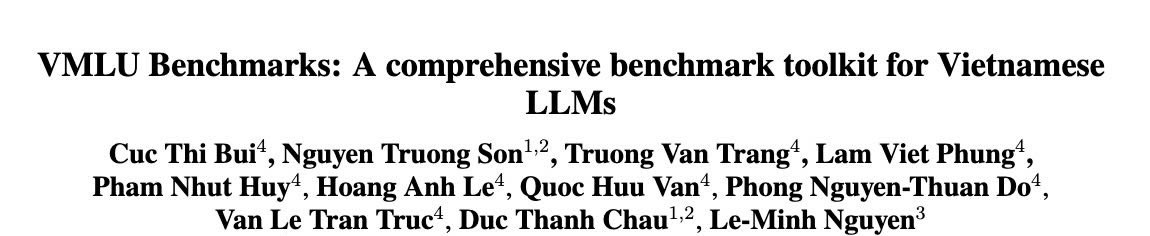
Our paper has been accepted to ACL 2025 Main Conference! 🎉 We’re excited to share our work: VMLU Benchmarks: A Comprehensive benchmark toolkit for Vietnamese LLMs Looking forward to connect with the NLP community at #ACL2025
Phong Do tweet mediaPhong Do tweet media
English
1
0
8
533
Phong Do retweetledi
Vivek Iyer
Vivek Iyer@remorax98·
Glad I can finally share this publicly: I'm happy to share I'm one of the recipients of the 2025 Apple Scholars in AI/ML PhD fellowship! Please find the full list here: machinelearning.apple.com/updates/apple-… Privileged to be part of such a talented cohort, and working with such an experienced team!  🎉😎
Vivek Iyer tweet media
English
7
3
138
8.6K
Phong Do retweetledi
SEACrowd
SEACrowd@seacrowd_ai·
SEA-VL: Building AI That Understands Southeast Asia 🇧🇳🇰🇭🇹🇱🇮🇩🇱🇦🇲🇾🇲🇲🇵🇭🇸🇬🇹🇭🇻🇳 We just released SEA-VL, the largest vision-language dataset tailored for SEA’s diverse culture. 📜 arXiv: arxiv.org/abs/2503.07920 🤗 Data: huggingface.co/collections/SE… Check the thread 🧵
SEACrowd tweet mediaSEACrowd tweet media
English
1
24
41
6.8K
Phong Do retweetledi
SkalskiP
SkalskiP@skalskip92·
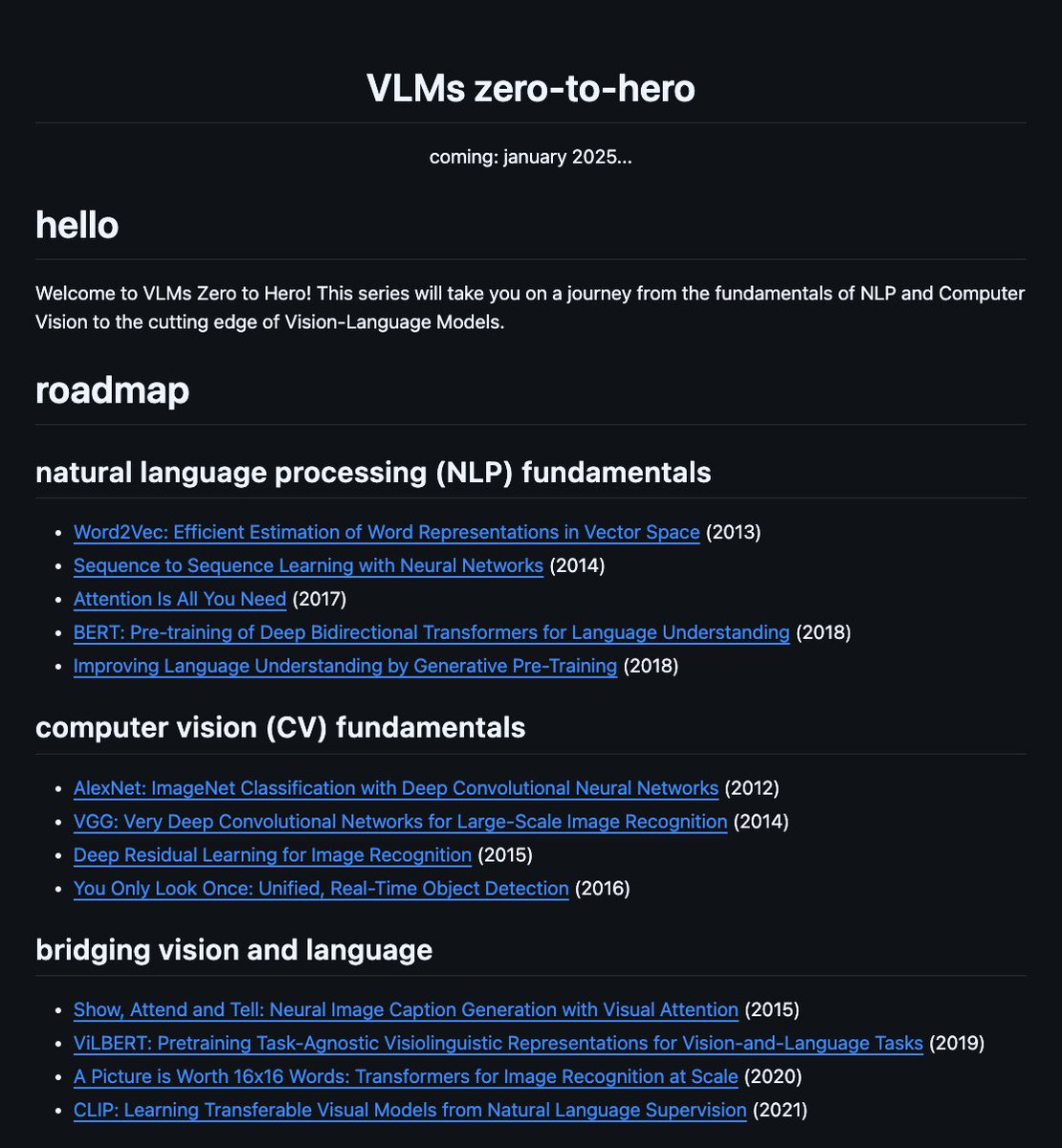
in January 2025, I'm launching a new series on my YouTube channel - VLMs zero-to-hero honestly, I know shit about VLMs, and I want this series to change that I've selected (for now) 19 papers that I plan to tell you about link: github.com/SkalskiP/vlms-…
SkalskiP tweet media
English
19
130
971
83.7K
Phong Do retweetledi
Manling Li
Manling Li@ManlingLi_·
[Long Tweet Ahead] Faculty Interview Tips & Common Questions: 🧘‍♀️0. Firstly, do not be nervous - Almost everything can be prepared in advance:) - Be grateful for everyone's time. - Think of it as an opportunity to share your research with others -- exciting, right? - Technical issues WILL happen -- no worries. - Try meditation! (seriously, it helps me tremendously with the interview marathon) 🚀 1. The MOST crucial part: Research Vision This is what keeps me up at night (literally!), trying to distill my entire research agenda into one powerful sentence. It is like crafting your research tagline/punchline/slogan. What is your unique contribution? What stands you out? Here is the thing: it is fundamentally why the university wants to hire you. They want to see you as a rising star for the next few years, someone who can make the university name become associated with some impactful research. Think about it: when people want to learn about a specific topic, they immediately think "Oh, I should check out X's work because they are THE person for this". The university is not just hiring a researcher; they are investing in a vision for the future of the field. The key is to come up with a punchline that captures your research identity and repeat it all the time during the talks and onsites. Ask yourself: - What will your name be associated with in the next decades? - Where is your field heading? (Is RoboGPT the future? Is Transformer really the final architecture?) - What are the REAL unsolved challenges? (Not just throwing more data at problems) Get ready to discuss: - Are large models really the future? Can we achieve true intelligence just by scaling up? - What about data bottlenecks? Is synthetic data reliable? What are effective ways to collect data? - Are models really do reasoning? Do we need symbols/structures? - Is Transformer is the final answer? What is the bottleneck of Transformer? - What are the new tasks we really need to focus on? - How do you think of the current research trend of creating evaluation benchmarks? - What is still fundamentally missing in current research? 🤓 2. The BIG question: "Why Academia?" This is actually what you should confirm multiple times with yourself. It is really about your passion and motivation: - What your happiest moments (I talked about those late-night breakthrough moments haha) - Where do you see yourself in 50 years? (Dream big! Talk about the research institute you want to build, the problems you want to solve, the leader you want to become in your field) - What is your ideal group size and resources you will need? (Be concrete!) - Are you also looking at industry jobs? Here is the real talk: we are in the age of large AI models requiring infinite GPUs. So you need to have solid answers about: - Why choose academia NOW? - How you will position yourself in this large model era - The practical stuff, like how you will handle GPU needs (I will concretely mention XX research directions that don't need massive compute, XX research require GPUs but I have XX potential funding sources, and collaboration opportunities with XX) 💼 3. Logistics about Application Materials 3.1 Application Materials: - Use figures. It is always what people firstly check when reading long documents. - DO NOT miss deadlines! You can usually update materials after submission. 3.2 Personal Websites: - CV and websites are very important (I personally feel it is even more important than research statements, or at least equal) - Two Must-Haves for your website: (1) CV (fresh and updated!), research statement, teaching statement, diversity research statement (since people may not be able to find your package quickly during onsites; the research statements can always be updated if you have better ideas of your storyline) (2) your email address: make it OBVIOUS. ⏰ 4. Logistics about Timeline 4.1 My actual timeline: - First phone interview: Dec 14 - First onsite: Jan 11 - Last onsite: Apr 7 4.2 If you are asked to choose an interview slot: - Most importantly, figuring out whether it is "rolling-based" or not. - Rolling admissions? Interview earlier! - Non-rolling? Later interviews = more practice = better performance 4.3 Timing matters: - Schedule your dream schools for mid-Feb to early-Mar (Most universities I interviewed with after mid-March did not extend an offer, but almost all my January and February interviews led to offers, while the universities are similar ranks) - Health tip: Protect yourself from COVID during Jan-Feb interview season (I have to reschedule several interviews, learned this one from experience!😷) 🎙️ 5. Logistics about Phone Interviews Let us talk about something that makes everyone nervous: the interview process. I have learned that preparation is KEY. Let us go through step by step. 5.1 The "Why THIS School" Question (some universities even ask this as the first question, so I started to do more preparations on this part): - First think about what makes the university special (Is it known for something unique? What research centers do they have?) - Name drop (respectfully!) potential collaborators in the department - Track their recent wins (I always check department news before interviews) - Think about location benefits (research collaborations, funding opportunities, industry connections) Pro tip: Keep a cheat sheet with specific details for each school. Trust me, it helps when you're on your 5th interview and the details start blurring! 5.2 Research Vision 2.0 (School Edition) This is where you customize your research vision for THEIR context: - Show how you fill a unique gap in their department - Paint an exciting picture of future collaborations (for example, when listing your future direction, you can say: I am excited about this future direction xx and xx university is perfect for me since I can collaborate with faculties xx, and research centers xx. ) 5.3 Teaching Plans: - Specific course numbers (both undergrad and grad levels) that you could teach - Your dream course ideas (I actually created a full syllabus for a Multimodal Machine Learning course and put it on my website. Having concrete materials ready shows you are serious about teaching) 🎤 6. Logistics about Onsite (The Big Show) Alright, let us talk about the main event, the onsite interview! This is where the real magic happens, and a lot of things can be prepared as always. 6.1 The Job Talk: Your Moment to Shine ✨ Let's be real: this is THE most important part of whether you can get the offer (others are all minor). Still, your research vision is the most important: - Boil down your idea to ONE powerful sentence (and repeat it strategically!) - The first 10-15 minutes are GOLD. Some dept chairs only stay for this part. Be sure to show your research impact. - The goal is to EXCITE people about your research. I always start with a walkthrough example (this works way better than diving straight into theory) - Guide viewer attention for EVERY. SINGLE. SENTENCE. (Use animations, strategic dimming, highlight what matters) - Time management is crucial: Aim for 40 mins + Q&A (And be prepared that talks often start late! Factor in technical issues and waiting for people and other things) - I add a progressive bar to help people track my talk. 6.2 Handling Q&A Like a Pro 🎯 - Drop mini Q&A slides after your first and second sections (if you want to increase interactions with audience, this works!) - Golden rule: Be concise + logical - Common questions to prep for: "How do you handle bias/safety issues in model learning? What about adversarial attacks?" "How do you create data in model learning?" "Would you say your work leans more towards ML theory or applications?" "I do not think it is the right way to get it work, what about xx" (I feel a lot of audience will be outside your area and when they try to connect to their direction, there will be far-out questions you never think about, or you will face challenges saying they do not believe black boxes or do not believe symbols, or do not believe some other things. It is totally okay! Do not panic! You should always be confident about your direction. No need to get irritated or defensive. No need to back down or bluntly disagree / turning it into a debate. Just treat it as a research discussion. Something like: I think it is an interesting angle. At the current research stage, I believe that my way is the most reliable and practical way of handling xx, however, later I would be happy to explore more on xx and it would be great if we could even collaborate together on this. ) 6.3 Surviving the Marathon: One-on-Ones 👥 I am super introverted, and not good at small talks, so it is more a guideline for introverted people haha. I feel these are not really about casual chats. Each one is a mini-presentation opportunity. - I heard that people are saying one-on-ones just try to see whether you are nice. I do not agree. People won't hire you because that you are nice, but more because of unique, exciting insights that you can bring, which can make you get high voting scores. - Do your homework on EACH professor: • Check their recent papers (Google Scholar, sort by time) • Know what made them famous (sort by citations) • Look up their grants and awards • Find personal connections (alma mater? city connections?) 6.4 Lunches & Dinners 🍽️ Again since I often worry about being too introverted, I like to prepare talking points in advance. I usually focus on my strengths, such as research, mentoring philosophy, and funding applications. If you happen to know something interesting about the city or the food, that is a great conversation starter and a bonus! (Job search season is here again! I have been receiving DMs about faculty interview advice, so I thought I'd share a few key insights that personally helped me navigate the process. If you have already seen the slides I shared earlier, this is essentially the same content. Just a heads-up to save your time!)
English
14
91
597
54.8K
Phong Do retweetledi
Tu Vu
Tu Vu@tuvllms·
📢✨ I am recruiting 1-2 PhD students at Virginia Tech this cycle. If you are interested in efficient model development (including model merging, parameter-efficient fine-tuning & transfer learning), instruction tuning, advanced reasoning, LLMs-as-judges, etc., please apply!!
English
6
72
280
61.9K
Phong Do retweetledi
Jennifer Hu
Jennifer Hu@_jennhu·
I'm recruiting PhD students + postdocs for my lab, coming to @JohnsHopkins in Fall 2025! Our brand new lab is at the intersection of cognitive science and AI, using computational + behavioral methods to understand how language works in minds and machines. Details below! (1/4)
Jennifer Hu tweet media
English
7
207
804
85.4K
Phong Do retweetledi
Xin Eric Wang (hiring postdoc)
🚀 Since its invention, the mouse has been our way to control computers. But what if it didn’t have to be? 🤔 Thrilled to introduce Agent S, a new state-of-the-art GUI agent framework that interacts with computers just like a human and takes on the toughest automation challenges. 🔍 How? With Experience-Augmented Hierarchical Planning that combines Online Web Knowledge with past experiences from Narrative and Episodic Memory to break down tasks into manageable subtasks to complete. Think RAG for GUI Agents—but for both manager and worker at different levels! 🧠💡 ✨ Plus, our new Agent-Computer Interface (ACI) boosts grounding and efficiency with image-augmented accessibility tree and constrained action space with language-based primitives for smooth MLLM reasoning. Key Highlights: 🌟 83.6% relative boost over previous SOTA, without any specific agent design to individual apps; 💻 Works on all major OS (Ubuntu, Windows, MacOS); 🔬 In-depth ablation studies & OpenACI to bring GUI Agents to your own laptop! 👐 Everything open sourced! Fun Fact: This is my first research work from @SimularAI as Head of Research. it’s been a blast pushing the frontier of both research and real-world deployment! And that’s not all! Besides Agent S’s generalizability, we have a real-time product agent that customizes to individual users with verified actions. (So thrilled to have already secured customers—individuals, commercial entities, and startups!) 🎉 Kudos to our fantastic Simular Research team @saa1605, @jiuzhou_han, Shuyu, @jc_y42, @angli_ai, @xwang_lk for the joint work, and other colleagues for useful discussions! Let's go! Website: simular.ai/agent-s Code: github.com/simular-ai/Age…
English
8
65
206
58.1K