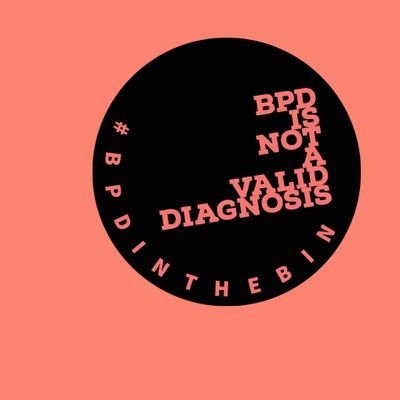
@AllenFrancesMD The DSM-5 shows variable diagnostic reliability, with field trials indicating lower kappa values (0.2–0.4) than previous editions for some disorders.
pitifulcmnd
3.5K posts


@AllenFrancesMD The DSM-5 shows variable diagnostic reliability, with field trials indicating lower kappa values (0.2–0.4) than previous editions for some disorders.


According to Health Canada: • Over 96% of MAID recipients had a reasonably foreseeable natural death • Most had cancer, advanced organ failure, or severe degenerative diseases • The average age is over 75 This is not a system targeting the vulnerable it’s one used primarily by elderly Canadians facing unbearable suffering. As for safeguards: • MAID requires independent assessments by two clinicians • Patients must give informed consent • There are mandatory waiting periods (unless death is imminent) • Cases are federally tracked Anecdotal cases don’t override data. Framing MAID as reckless or out of control ignores why it exists: ➡️ To give people dignity and autonomy at the end of life ➡️ To relieve suffering when medicine can no longer help An “honest conversation” means including the full facts not just fear-based narratives.

I have just been told that I don't have the right to speak about bipolar because I am not a mental health professional. Is lived experience enough to comment on a particular condition or should I leave it to mental health professionals? I have a firm view on this but interested.

I definitely believe the lipid-based view is overhyped. This study is telling (in females): pubmed.ncbi.nlm.nih.gov/33471027/. I've attached the main figure here. The evidence is surprising--both at how irrelevant the lipid markers appear to be and how strong the metabolic markers are. ApoB and other lipid markers may matter, but diabetes and metabolic status appears to matter much more. ApoB appeared to carry a two-fold risk, while diabetes carried a 10X risk.


@BradSpellberg @BoussageonR @BJegorovic @DrToddLee @f2harrell Also, if we go by p<0.05 "rule" - then by this metric there isn't evidence of harm (which I don't agree with in case that's not clear). But I am engaged in a discussion about frequentist vs. bayesian stats and their interpretation which is why I was tagged in here.


The biggest lie modern dating culture has sold us is the idea that almost every relationship problem can be fixed with "better communication." The brutal, highly unpopular reality is that most failing couples do not have a communication problem. You are communicating perfectly. You are stating your needs clearly, and they are hearing you loud and clear. The issue is that you are fundamentally incompatible, and you are using "we need to communicate better" as an absolute coping mechanism to avoid looking at the truth. We drag out dead-end relationships for years by convincing ourselves that if we just find the perfect combination of words, our partner will finally change their core values to match ours. But no amount of healthy communication can bridge the gap between two people who just want completely different lives. Understanding each other isn't the same as agreeing with each other

Mayor Mamdani says his wife, Rama Duwaji, was not aware of anti-Israel posts (like calling some Israeli citizens “parasites”) from an author she illustrated an essay for. Mamdani calls that rhetoric “reprehensible” and says his wife booked the gig thru a 3rd party

Awais and I agree on a lot, but I think he's missing something important. Concern w/"overdiagnosis" isn't about stoicism or giving up on addressing the full spectrum of human distress and disability. It's about not locating all authority on human suffering in MEDICINE.