Patrick Taylor

143 posts

Patrick Taylor

Patrick Taylor

@pjdtaylor

Atlanta, GA Katılım Mart 2009
108 Takip Edilen108 Takipçiler
Patrick Taylor retweetledi

David Cummings
David Cummings@davidcummings·
Last week, I met with an entrepreneur to hear his pitch for the first time. This wasn’t a fundraising pitch. Rather, it was a casual catch-up to share what he’s working on and how he’s thinking about it. After diving into the idea and the market, I went through my five favorite questions to ask an entrepreneur. Question #1: Why now? Timing is one of the most important but unsung elements of the entrepreneurial journey. If you’re too early, it’s a fail. If you’re right on time, it’s often still a fail. The ideal is to be a little early so that by the time the market is ready, you already have a strong product, platform, and team in place to capture it. Question #2: Why do this? Entrepreneurs have a variety of motivations. Some have an idea they can’t get out of their heads and feel compelled to pursue it. Some want to change their lifestyle for themselves and their families and see entrepreneurship as the path to get there. Others want to control their own destiny with more freedom and flexibility over their time and efforts. Every entrepreneur has a reason, and it’s important to understand it. Question #3: How is this 10x better? When people ask why most entrepreneurs fail, my answer is that their product or idea was only marginally better than what’s already on the market. To get people to change their behavior, it has to be 10x better. Most products aren’t valuable enough to justify the upheaval and change management required to switch. Question #4: Why you? Lots of people have talent. Why are you uniquely suited to solve this problem? What experiences, motivations, and drive put you in the best position to build a large, enduring company? There’s no single right answer, but it’s important to see a clear connection between the founder and the problem, one that can sustain them through the inevitable challenges ahead. Question #5: What’s the top priority? More entrepreneurs fail due to indigestion than starvation. The best founders are laser-focused on the single most important thing needed to move the startup forward. If an entrepreneur lists ten priorities, there are no priorities. Ideally, there is one clear, meaningful focus, and they are working diligently to solve it. Speaking with entrepreneurs and hearing their stories is an incredible gift. Entrepreneurship remains one of the most impactful ways to move society forward through innovation and invention. After hearing a pitch, I enjoy asking these questions to better understand the “why” behind the massive undertaking of building a startup. The next time you meet an entrepreneur, consider asking a few of these questions and listen closely for the story behind the story.
English

2
2
12
1.1K
Patrick Taylor retweetledi
Aaron Levie
Aaron Levie@levie·
The ultimate rate limiter on productivity gains from agents will be on critical stuff like security, compliance, governance, the ability to review the work of the agent, ensure that it’s compatible with regulations, and so on. We’ve been living in a little bit of la-la land around how much software enterprises are going to ultimately want to vibe code themselves. The last 48 hours represents a good example of why you won’t take on every risk of every piece of technology in your enterprise. There’s no free lunch with AI productivity. Companies will have the build up the systems, processes, and controls for ensuring that agents can’t run around and do anything they want on any data at any time.
sarah guo@saranormous

x.com/i/article/2039…

English
71
53
377
110.2K
Patrick Taylor
Patrick Taylor@pjdtaylor·
@LGAairport @TSA checked into a flight on c concourse at lga today at 5:30 - virtually NO wait time at TSA precheck. Thanks to the TSA workers who are showing up!
English
0
0
0
437
Patrick Taylor retweetledi
David Cummings
David Cummings@davidcummings·
AI—and how to get real value from it—is one of the hottest topics in startup land right now. Entrepreneurs have been sharing how they’re incorporating it into their businesses in ways that go far beyond the basics. By now, we’ve all used LLMs for research, summaries, and content production. Those use cases are powerful—but they’re just the beginning. Coding companions and “vibe coding” have received most of the attention, deservedly so. Still, even for non-developers, there are more advanced AI tools that should already be part of the workflow. Here are a few I’ve been experimenting with: 1. Open-source AI as an employee For the past few weeks, I’ve been using OpenClaw, an open-source agent running on my Mac Mini, prompting it to create software, conduct longer-running research, and act as an assistant. The big idea is simple: treat the AI like an employee. Give it access to your corporate tools and a full web browser, and there’s no reason it can’t handle a significant percentage of the tasks knowledge workers typically do. 2. Spreadsheet and financial model work AI tools are now incredibly strong at building financial models, writing scripts for data transformation, and running complex analyses. Instead of delegating the first draft of an analysis to someone on your team, try doing it yourself—with AI as your partner. Force yourself to use AI to accomplish the goal and see how far you can get. You may be surprised by how much leverage you already have. Start with Gemini for Google Sheets or a similar tool. 3. A coworker agent as your default mode Run through a coworker-agent tutorial like Claude Code for Everyone and then use it as your default operating method for the day. Let it draft emails, summarize documents, analyze data, and plan tasks. It won’t be perfect, and it won’t finish everything. But by making it your starting point—and cleaning up around the edges—you’ll quickly appreciate what’s already possible. The productivity gains are real today, and the software will only continue to improve. There’s also a growing debate about AI eliminating “laptop jobs.” I’m in the camp that believes higher productivity ultimately increases demand for capable team members. Historically, the diffusion of new technology takes longer than people expect. The world will absolutely change—but it’s unlikely to result in mass unemployment in the next 12 to 24 months. Over the next decade, we’re far more likely to see a productivity boom that enables people to do more meaningful work at greater scale and make a larger contribution. Entrepreneurs should deeply integrate advanced AI tools into the workflow of every team member. If someone isn’t willing to adopt them, that’s a real issue. The companies that fully embrace these tools will move faster, learn faster, and compound progress more quickly. It may feel uncomfortable at first. But over time, founders and teams who put AI at the center of their workflow will increase their velocity and accelerate progress toward their vision. Don’t wait. Make AI foundational—personally and across your startup.
English
1
2
7
1.2K
Patrick Taylor
Patrick Taylor@pjdtaylor·
@davidcummings I agree. Entrepreneurs will be able to serve micro markets profitably throwing off cash. It will take much less capital and the returns could more come from cash for than from selling the company.
English
0
0
0
23
David Cummings
David Cummings@davidcummings·
Software-as-a-service valuations have been in the doldrums for several years. After the peak hype of 2020–2021 and the COVID-fueled pull-forward of demand followed by the end of the zero-interest-rate era, SaaS valuations have been under consistent pressure. If you read commentary online and talk with entrepreneurs and investors, three main explanations usually come up. First, AI investments have sucked much of the oxygen out of the room. On both the entrepreneur side and the corporate buyer side, there is simply less capital available to invest in traditional business productivity software. Second, valuations for tech companies are still primarily driven by growth rates. With growth rates down dramatically—whether due to increased AI spending, fewer employees (since most SaaS products are priced per seat), or other factors—high valuation multiples are difficult to justify. Without high growth, you are not going to get high multiples. Third, and possibly the most disruptive argument, is the rise of “vibe coding” and tools like Cursor for developers, and Replit and Lovable for building custom applications through simple prompting. The idea is that companies will increasingly build their own internal software rather than pay $100 per user per month for generic tools, when they can build exactly what they want and customize it as their needs change. This feels far-fetched once you consider how complicated edge cases and real-world nuance become beyond surface-level CRUD apps. Yet here we are, and these are the arguments being made. What’s missing from the conversation is another explanation—one that is likely the biggest long-term challenge and is closely related to the third point. While some companies will indeed build their own internal tools, I believe the much larger threat to incumbent SaaS companies is the rise of new SaaS startups created by non-technical subject-matter experts. As the cost of building software approaches zero and the cost of hosting software on cloud infrastructure enables near-infinite scalability in line with customer growth, the barrier to creating new SaaS companies has never been lower. Instead of paying $20,000 per year to an incumbent vendor, why not pay $2,000 per year to a new SaaS company that delivers 90 percent of the functionality at 10 percent of the cost? These new companies do not have large customer bases that slow down product development. They do not have immense pressure from existing investors and financial partners. In many cases, everything will be AI-native. The era of a few hundred thousand dollars of recurring revenue per employee may be coming to an end. No technical debt. No outside pressures. Just high-quality, vibe-coded software built by small teams that orchestrate it, and customers who love getting more value for their money. Entrepreneurs looking for new ideas should lean directly into this. They should find the most unloved SaaS software they can and vibe-code their way into a new entrant in that market, grinding away to create a product customers love that delivers maximum value for minimal cost. It will not be glamorous, but I am confident thousands of entrepreneurs will do exactly this and build strong small businesses. Incumbent SaaS companies are already under tremendous valuation pressure, and things are only going to get more challenging as a Cambrian explosion of vibe-coded SaaS applications comes online.
English
3
0
13
1.8K
Patrick Taylor
Patrick Taylor@pjdtaylor·
@Uber disappointed to find out Uber XL for 6 people includes no capacity for luggage.
English
0
0
1
6
Patrick Taylor retweetledi
Mr PitBull
Mr PitBull@MrPitbull07·
"My name's Raymond. I'm 73. I work the parking lot at St. Joseph's Hospital. Minimum wage, orange vest, a whistle I barely use. Most people don't even look at me. I'm just the old man waving cars into spaces. But I see everything. Like the black sedan that circled the lot every morning at 6 a.m. for three weeks. Young man driving, grandmother in the passenger seat. Chemotherapy, I figured. He'd drop her at the entrance, then spend 20 minutes hunting for parking, missing her appointments. One morning, I stopped him. "What time tomorrow?" "6:15," he said, confused. "Space A-7 will be empty. I'll save it." He blinked. "You... you can do that?" "I can now," I said. Next morning, I stood in A-7, holding my ground as cars circled angrily. When his sedan pulled up, I moved. He rolled down his window, speechless. "Why?" "Because she needs you in there with her," I said. "Not out here stressing." He cried. Right there in the parking lot. Word spread quietly. A father with a sick baby asked if I could help. A woman visiting her dying husband. I started arriving at 5 a.m., notebook in hand, tracking who needed what. Saved spots became sacred. People stopped honking. They waited. Because they knew someone else was fighting something bigger than traffic. But here's what changed everything, A businessman in a Mercedes screamed at me one morning. "I'm not sick! I need that spot for a meeting!" "Then walk," I said calmly. "That space is for someone whose hands are shaking too hard to grip a steering wheel." He sped off, furious. But a woman behind him got out of her car and hugged me. "My son has leukemia," she sobbed. "Thank you for seeing us." The hospital tried to stop me. "Liability issues," they said. But then families started writing letters. Dozens. "Raymond made the worst days bearable." "He gave us one less thing to break over." Last month, they made it official. "Reserved Parking for Families in Crisis." Ten spots, marked with blue signs. And they asked me to manage it. But the best part? A man I'd helped two years ago, his mother survived, came back. He's a carpenter. Built a small wooden box, mounted it by the reserved spaces. Inside? Prayer cards, tissues, breath mints, and a note, "Take what you need. You're not alone. -Raymond & Friends" People leave things now. Granola bars. Phone chargers. Yesterday, someone left a hand-knitted blanket. I'm 73. I direct traffic in a hospital parking lot. But I've learned this: Healing doesn't just happen in operating rooms. Sometimes it starts in a parking space. When someone says, "I see your crisis. Let me carry this one small piece." So pay attention. At the grocery checkout, the coffee line, wherever you are. Someone's drowning in the little things while fighting the big ones. Hold a door. Save a spot. Carry the weight no one else sees. It's not glamorous. But it's everything." Let this story reach more hearts.... Credit: Mary Nelson
Mr PitBull tweet media
English
3.8K
29.6K
137.8K
6.6M
Patrick Taylor retweetledi
Georgia Tech Alumni
Georgia Tech Alumni@gtalumni·
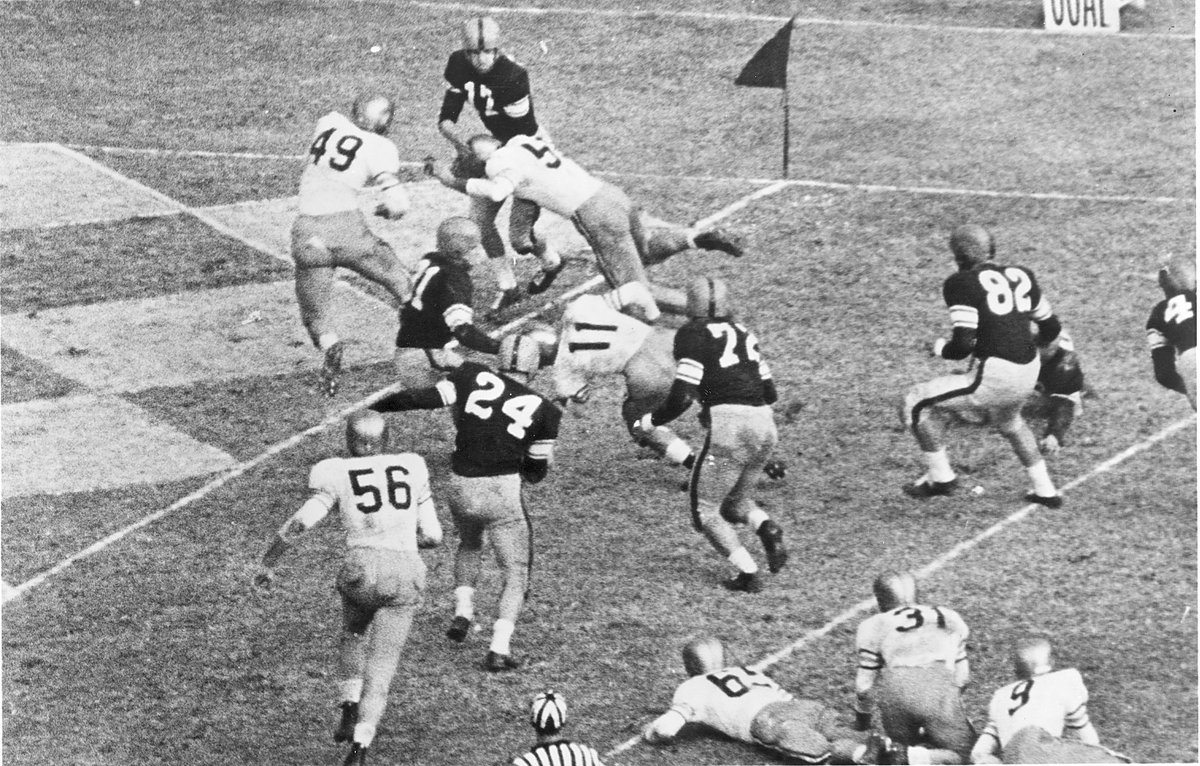
In 1955, GT became the first school to win all four major bowl games (Rose, Cotton, Orange, and Sugar). Georgia Tech is no stranger to setting records.
Georgia Tech Alumni tweet media
English
3
39
387
15.6K
Patrick Taylor retweetledi
Dudes Posting Their W’s
Dudes Posting Their W’s@DudespostingWs·
A father reviews a 4-month old baby and has an interesting perspective
English
509
8.2K
66.3K
6.1M
Patrick Taylor retweetledi
I am Ken
I am Ken@Ikennect·
Grandma said, you only have 2 things to worry about😆
English
379
7K
28.3K
740.4K
Patrick Taylor retweetledi
Kevin Dalton
Kevin Dalton@TheKevinDalton·
In honor of the legendary George Wendt, here is every time Norm Peterson walks into Cheers
English
980
14K
64.4K
4.3M
Patrick Taylor retweetledi
Lord Bebo
Lord Bebo@MyLordBebo·
Proof wife is just nuts!
English
1.2K
7.7K
83.3K
5.8M
Patrick Taylor retweetledi
Templar⚔️
Templar⚔️@aTeXan575·
Nothing like Peanuts and ZZ Top 😂
English
521
5.1K
18.8K
991.4K
Patrick Taylor retweetledi
Georgia Tech Alumni
Georgia Tech Alumni@gtalumni·
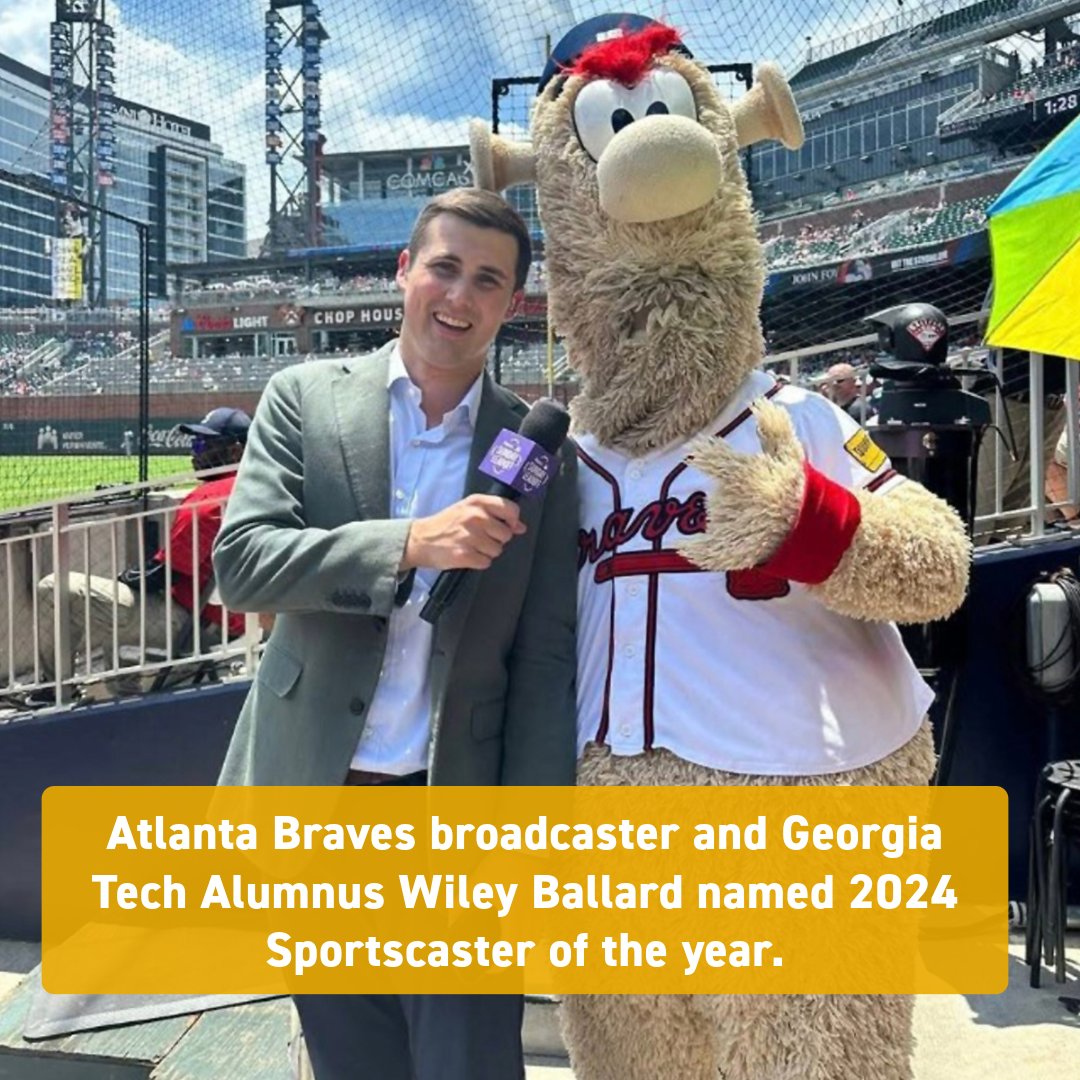
Wiley Ballard, BA 17, was named the 2024 Georgia Sportscaster of the Year by the National Sports Media Association. He got his start as a student broadcaster with the Yellow Jackets' baseball team, and spent six years as Georgia Tech’s football radio sideline reporter.
Georgia Tech Alumni tweet media
English
3
25
258
9.6K
Patrick Taylor
Patrick Taylor@pjdtaylor·
Final instruction on my frozen pizza - while you wait, orgami the box into a pterodactyl
English
0
0
0
17
Patrick Taylor retweetledi
Elon Musk
Elon Musk@elonmusk·
The list of “enemies” on the right or left has changed, as the left is now pro war and has captured the judiciary, but the general principle is timeless
English
5.1K
17.9K
83.4K
14.3M