

Peter J Travers
3.5K posts

Peter J Travers
@pjtray
Flaneur de Finance
Princeton, New Jersey Katılım Eylül 2011
827 Takip Edilen404 Takipçiler

@BaseballJeff1 Giants need to think outside the box: Eat large parts of 2 of the 3 Denver’s-Adames-Chapman contracts and find a way to retain their best hitter and infielder, Arraez.
English

The Giants got swept by the Diamondbacks, which included a walk-off loss and scoring only 8 runs in 3 games in one of the most favorable ballparks for hitters.
English
Peter J Travers retweetledi

I’m so tired of this talking point. Tom Steyer is running for governor of California, which spent $20,000 *per student* in 2023. That’s double what the state spent just 10 years ago. And yet test scores are *declining.* The idea that we don’t “invest in schools” is a myth.
Tom Steyer@TomSteyer
This is bullshit. I promise you. Tax billionaires. Invest in schools.
English


Fran Lebowitz on the billionaires: “Every time someone suggests [a wealth tax] they say I’m moving. Go! They add nothing to New York. In the 19th century, those robber barons, they employed people. All this money magic employs no one. Goodbye, go. We don’t need you”
English
Peter J Travers retweetledi

Just personally with @8VC, here is a sample of what we are doing using these:
* research against various diseases including solid tumor cancer that’s already leading to new cures in promising trials;
* healthcare AI that’s already cutting billions in costs and accelerating, we can and will take out trillions in costs but it’ll be a worthy battle against the cartels;
* accelerating aerospace design and iteration for the top engineers by 100X and making flight over 12X more affordable while also safer and quieter, already launching prototypes and a lot more coming soon;
* bringing back manufacturing to the US with AI enabled companies that are hiring thousands of people to build ships, and many other areas;
* making shipping costs far lower with major advances in logistics, and helping each top broker at various companies be far more effective and earn more, just making this area cost less for all;
* helping us partner to buy new small businesses and pay more for them to previous owners in ways we wouldn’t have bandwidth to do before, thanks to AI agent research and diligence augmenting our team in this area, with a goal of creating tens of thousands of new small business owners. And helping them each thrive and do more, AI is key for small business operators.
That’s off the top of my head.
I hate big tech idiot politics and chicanery too. You’re right their foundations are terrible. I’ve also called them out hard. It pisses me off, too.
What do you want me to do? These above are all great things and I’m doing my best. Should I stop all of this / should we honestly turn off the data centers powering my work, or make them not available to scale it?
English

@GiantHotTakes They should send Bryce Eldridge back to Triple A and put literally put everyone else on the trade block. And build their farm system. It's the only way out of this mess since the owner is such a cheapskate and won't get any good free agents.
English

Everyone involved in this whole operation should be ashamed of themselves. Buster Posey, Tony Vitello, Zach Minasian, Ownership, the players. Everyone. One of the most embarrassing years in this organizations storied history.
English
@fansincemac @ByMMonreal But keep Webb. He’s a professional and a true giant.
English

@ByMMonreal Need to at least move Chapman. If someone wants Webb for instance, they are taking Chapman and big chunk of his cash. Chappy will waive ntc for not being benched. Plus young players cheap enough to cover some losses.
English

I try to stay professional/positive, but we're almost 50 games in and the #SFGiants are 9 games below .500.
Sell Arraez at his peak, see what you can get for Ray/Bader/Mahle and let the kids play. My opinion could be swayed after a strong week, but looking like a lost season.
English
@ByMMonreal The season is definitely lost, but keep the pieces that could be part of a championship team and get rid of the others. This means keeping Arraez and Schmidt and Webb and Roupp and (and Eldridge and McDonald). Maybe Devers. Try to sell everybody else.
English
Peter J Travers retweetledi
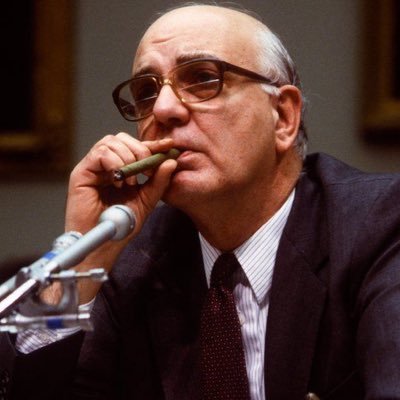
Jeff Bezos on NYC spending:
"If we ran Amazon the way New York City runs their school system, packages would take 6 weeks to arrive, we would charge you a $100 delivery fee and when the package did finally arrive, it would have the wrong item in it."
English
@elonmusk Basic truth. A profitable enterprise (which only can be established by providing valuable goods and services to people for which they willingly pay their money) is a vastly more socially valuable organization than a political or not for profit organization.
English
Peter J Travers retweetledi

🚨 JUST IN: Seattle's new Socialist Mayor Katie Wilson orders police to NOT ARREST offenders for open drug use citywide.
She's 43 years old and has relied on her parents for financial support.
Our major cities are literally destroying themselves. Wow.
English
@JustinWStapley And, hopefully, return to public office in a less diseased time for the Republican party.
English

The consolation is that folks like Sen. Cassidy and Rep. Crenshaw now get to say "screw it" and go out with a principled bang for the rest of the year.
English
Peter J Travers retweetledi

The only difference between Luigi Mangione’s followers and Charlie Manson‘s followers are that Manson’s followers weren’t issued a press pass by the city of New York
Molly Crane-Newman@molcranenewman
“I’m saying fuck Brian Thompson. I don’t give a flying fuck he died,” says Ashley Rojas, wearing her press badge provided by @NYCMayorsOffice. Lena Weissbrot adds that Thompson’s teenage sons “are better off without him” and should “enjoy the blood money.”
English
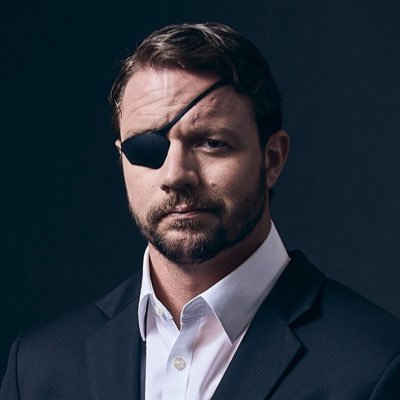
The strategic objective was always clear: Iran cannot be the next North Korea. Period.
That means no nuclear program, no ballistic missile program, and no more proxy wars.
President Trump’s critics keep acting like Iran has time on its side. They don’t. Their economy is in shambles because our blockade is working and we have persistent eyes and targeting options on everything they do.
That is called escalation dominance.
For 47 years, Iran’s regime relied on the assumption that America will hesitate, overthink, and eventually concede to a bad deal. That assumption changed.
Yes, the Strait of Hormuz matters. But the main strategic objective is much bigger. Defend the homeland and protect our allies.
So, no, Iran is not “winning.” America holds all the cards.
English
No. Chapman has been awful and is wildly overpaid. However, I think common sense and human decency recognizes that he is deeply disappointed and miserable in his own play.
Nate@Sharpie995
@GiantHotTakes He’s doesn’t care. He’s got generational wealth now.
English
Peter J Travers retweetledi

Ken Griffin, founder of Citadel, has a $10 plaque behind his desk that reads: "If we're all going to eat, someone has to sell."
Of all the things this man could surround himself with, he chose a cheap plaque with a blunt truth about business.
"You're always selling. You're selling to candidates. You're selling to vendors, you're selling to counterparties, you're selling to customers."
And if you're always selling, you know what you're going to hear a lot of?
"No."
Griffin doesn't sugarcoat it. He tells two stories that illustrate just how brutal rejection can be.
1994 was a rough year, with Citadel losing ~4% of its capital. Griffin flew to Switzerland for a crucial lunch meeting, sat down, and his guest arrived only to say:
"Oh, I thought you were John Griffin from Fen Church. I got to go."
His lunch date got up and left the table.
Later that afternoon, a Swiss banker spent 45 minutes with him in a beautiful office, smoking a cigar, before closing with:
"Such a pity that such a bright young man picked the wrong career."
Two rejections in one day for the founder of one of the most successful hedge funds in history — and his takeaway was simply this:
"You just have to tolerate. You're going to hear no a lot, but you need to become accustomed to having to market your ideas and market what you represent and what you stand for."
Absorbing rejection and continuing anyway is the actual skill, whether you're hiring, raising capital, or winning customers.
Most people avoid selling because they're afraid of no. The ones who build great things have learned to expect it.
English
Peter J Travers retweetledi

Justice Clarence Thomas: “The Declaration is, in fact, along with the Gospels, one of the greatest antislavery documents in the history of Western civilization . . .
The ideas of the Declaration were so powerful that our nation could not coexist with the contradiction created by the great evil of slavery.
Those principles were so powerful that hundreds of thousands of Americans fought and died in the Civil War to make men free.
Those ideas have been so powerful that they convinced our nation to finally end segregation.”
This is from the monumental speech Justice Thomas delivered last month celebrating the 250th anniversary of the Declaration of Independence at @UTAustin. Read and watch this speech.
civitasoutlook.com/research/justi…
English
Peter J Travers retweetledi

The Soldier Who Found a Baby on the Battlefield and Carried Her for 40 Miles
The American Soldier Who Found an Abandoned Baby on the Italian Battlefield and Carried Her 40 Miles to Safety — Then Spent 60 Years Wondering If She Survived, Italy, 1944.
January 1944. Anzio, Italy.
The Anzio beachhead was a particular kind of hell — a narrow strip of Italian coastline held by Allied forces under constant German bombardment, no room to advance, no room to retreat, just the grinding daily mathematics of holding ground under fire.
Corporal James Whitaker, 24, Georgia, was moving through a bombed farmhouse on a patrol assignment when he heard it.
Not crying — past crying.
The sound an infant makes when it has cried beyond what crying can accomplish and has gone to a place beyond it, a thin persistent sound like a mechanical thing running down.
He found her in the farmhouse cellar. An infant girl. Eight months old at the most. Alone in a wooden crate lined with a woman's wool coat. Alive, barely, from cold and dehydration.
No one else in the farmhouse. No one else anywhere visible.
He picked her up.
The Problem
James Whitaker was on a combat patrol in an active battle zone carrying an infant who would die if he put her down and who he had no ability to help if he kept her.
He had no formula, no milk, no baby supplies of any kind.
He had his canteen, a chocolate bar, and forty miles between his position and the field hospital at the rear.
He started walking.
The Forty Miles
He carried her inside his field jacket, against his chest, where the body heat kept her warm.
He gave her water from his canteen, dripped slowly from his finger to her lips the way he had seen his mother water young animals — a memory that surfaced from childhood without warning and turned out to be exactly applicable.
He broke small pieces of chocolate and let her suck the sweetness from his finger.
He moved at night when he could, staying off roads, moving through terrain that was simultaneously trying to kill him from German positions and from Italian winter.
He talked to her. Quietly, constantly, in the specific soft register humans use with infants regardless of whether the infant understands. He told her about Georgia. About his mother's cooking. About the farm where he grew up. He told her it was going to be fine, which he was not certain was true but which he had decided to commit to regardless.
She was alive when he reached the field hospital at dawn on the second day.
A nurse took her from his arms.
He sat down on the ground outside the hospital tent and did not get up for an hour.
The Handoff
The field hospital logged the infant as a found civilian, turned her over to an Italian Red Cross representative, and that was the last official record that connected her to James Whitaker.
He asked about her before he went back to his unit. They told him she was stable, that she would be placed with a relief organization, that she would be taken care of.
He went back to his unit.
He went back to the war.
The Sixty Years
James Whitaker came home to Georgia in 1945. He married. He had three children. He farmed and then he worked in hardware and then he retired.
He thought about the baby for sixty years.
Not obsessively — he was a practical man, not given to obsession. But consistently. On certain mornings. On certain nights. A presence in the back of his mind, an open question he had never been able to close.
She would be in her sixties now, he would calculate. He did not know her name. He did not know if she had survived the war, the occupation, the chaos of postwar Italy. He did not know if she had a family, children, a life.
He knew only that he had carried her forty miles and handed her to a nurse and never found out what happened next.
In 2004, his granddaughter Sarah — seventeen years old, working on a school project about WWII — asked him if he had any war stories.
He told her one.
Sarah put it on the internet.
The Finding
Three months later, a woman in Bologna, Italy, contacted Sarah's email address.
Her name was Maria Conti. She was sixty years old. She had been told, by the Italian family who had raised her, that she had been found as an infant during the Anzio campaign by an American soldier who carried her to safety.
She had been looking for that soldier for forty years.
James Whitaker was eighty-four years old when Sarah showed him the email.
He read it twice.
He looked up at his granddaughter.
"She's alive," he said.
"She wants to talk to you," Sarah said.
They spoke by telephone first — Sarah translating between English and Italian. Then by letter. Then, in 2005, Maria Conti flew to Georgia.
She was sixty-one years old. She was a schoolteacher. She had three children and five grandchildren.
She walked into James Whitaker's living room and he stood up — slowly, at eighty-five, he stood up — and they looked at each other.
Maria crossed the room. She took both his hands. She said something in Italian.
Sarah translated: "She says she has wanted to say thank you her whole life. She says she is sorry it took sixty years."
James Whitaker held her hands.
He said: "Tell her sixty years is nothing. Tell her I just needed to know she made it."

English
@voicesofliberty/note/c-248266766?r=hyl7&utm_medium=ios&utm_source=notes-share-action" target="_blank" rel="nofollow noopener">substack.com/@voicesofliber…
ZXX