Tristan

36.1K posts

Tristan banner
Tristan

Tristan

@pollock

Movement Builder | Scaling AI Startups, Ecosystems, Platforms // Built @CoolClimateVC @Storefront @OwnTheDoge // Alum: @500GlobalVC @GoogleStartups @PleasrDAO

Greater Greater Bay Area Katılım Ekim 2008
5.5K Takip Edilen19.9K Takipçiler
Sabitlenmiş Tweet
Tristan
Tristan@pollock·
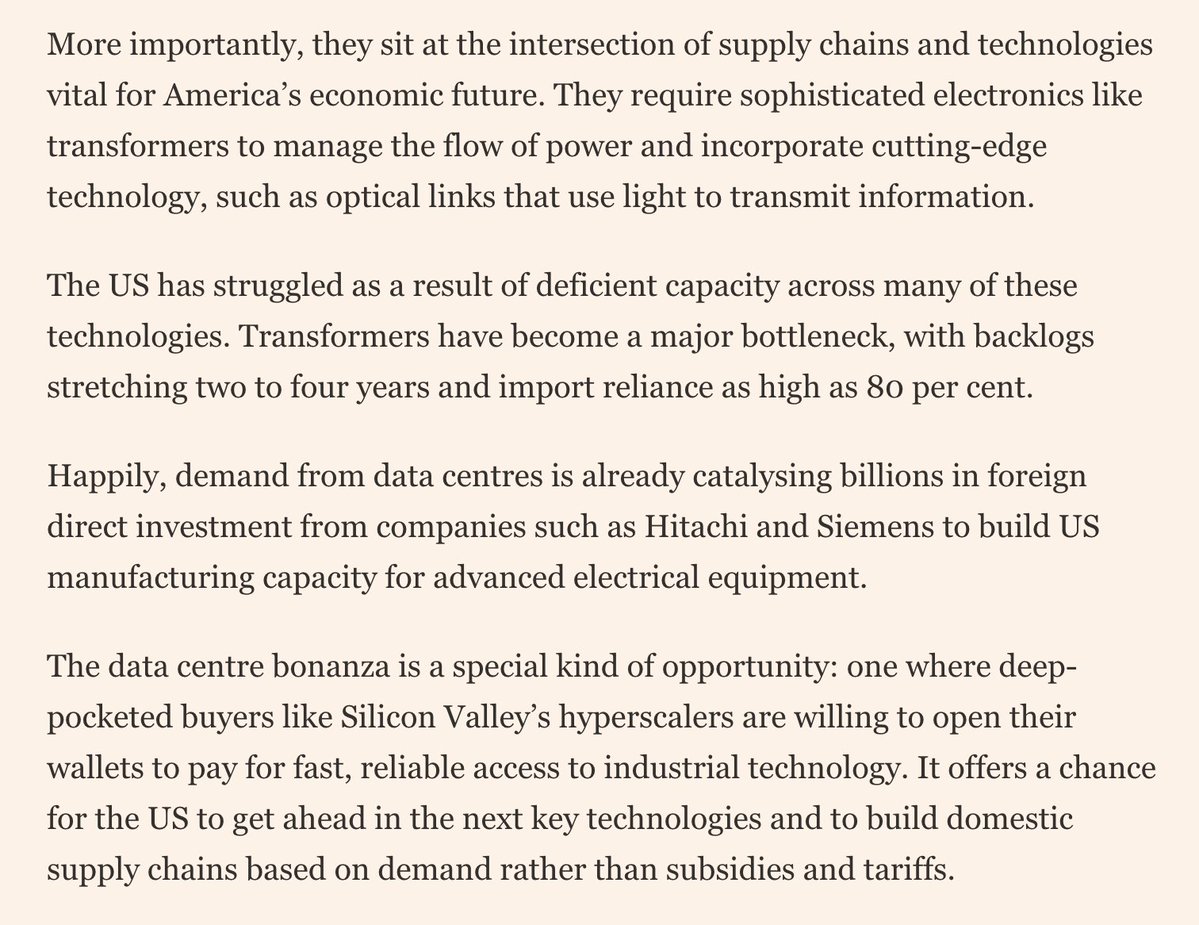
In the AI era, product advantage lasts months, not years. Distribution advantage through ecosystems is one of the few durable moats left. After deploying $70M across 250 startups, I've seen companies grow 10x faster with ecosystem strategy than single sales channels. The pattern: 👇
Tristan tweet media
English
4
4
51
1.1K
Steven Zhang
Steven Zhang@stvnzhn·
my O-1 Visa just got approved! it has been an insane journey, but now I can finally call SF home❤️🇺🇸
San Francisco, CA 🇺🇸 English
133
28
2K
172.2K
Om Patel
Om Patel@om_patel5·
stop spending money on Claude Code. Chipotle's support bot is free:
Om Patel tweet media
English
1.1K
10.3K
160.4K
7.9M
Dave Font
Dave Font@davefontenot·
last call for any angels who want a spot at hf0's angel demo day
English
34
4
112
13.1K
japes
japes@JuanPaDulanto·
The Fresno Drop The story of the first mass consumer credit card ever created In September 1958, Bank of America mailed 60,000 strangers a fully activated credit card. No application. No credit check. It just showed up in your mailbox. This is how the first credit card in history was created and changed consumer behaviour forever.. In 1904, Amadeo Pietro Giannini opened the Bank of Italy with $8,780 in first-day deposits for the people every other bank refused to bank. Immigrants. Workers. People without collateral. He made loans on handshakes. By 1930 the Bank of Italy was the largest bank in California and he renamed it Bank of America. Fast forward to 1958. Before this year, consumer credit is basically nonexistent. You pay cash, keep a running tab at the corner store, or beg your bank for a loan one purchase at a time. The Diners Club card exists but it's a charge card for businessmen, full balance due every month, no revolving credit, not for regular people. A BofA executive named Joe Williams changes all of this. His idea: mail fully activated credit cards, unsolicited, to 60,000 households of Fresno, California. No application. No opt-in. You just open your mailbox one day in September and there's a card in there with $300-500 in credit attached. They called it the BANK AMERICARD. Fresno was chosen because it was big enough to work, small enough to contain the damage if it blew up, and 45% of residents already banked with BofA. They pre-signed 300 local merchants before a single card hit a mailbox. At first it was a disaster. Williams assumed 4% delinquency. He got 22%. Fraud went everywhere - California cops were suddenly dealing with a crime they didn't even have a word for yet. BofA lost somewhere between $8M-$20M. Williams resigned in 1959. The credit card almost died right there in Fresno. But BofA decided to keep it going and cleaned it up quietly, tightened controls and kept going. By 1961 it was profitable. They told no one (avoid competition). Within 13 months of the drop, 2 million cards were in circulation and 20,000 merchants were on the network. Then Dee Hock, a bank manager in Seattle got handed the task of launching his bank's BankAmericard license. Nobody wanted it. He quickly figured out why - the whole system was falling apart. 250+ banks issuing the same card, no shared rules, a chaotic settlement process, back rooms drowning in unprocessed transactions, everyone blaming everyone else. Hock spent over a year convincing Bank of America to give up ownership of their own product and spin it out as an independent cooperative owned equally by all member banks (another story but interesting af how equity was given based on processing volume to banks). "It can't be done," BofA's vice chairman told him. In 1970 it was done. Hock became the first CEO. He renamed it Visa in 1976. The first credit card in history came from a bank built to serve people other banks ignored. It nearly failed twice — once in Fresno, once when the whole licensing system almost collapsed. It survived both times and became the backbone of how the world pays for everything - Today it processes $15+ trillion a year.. Giannini's little italian bank became the most valuable payment network ever built. Every network starts somewhere. Been going down the rabbit hole on the early history of credit cards while building @colossuspay and thought this one was too good not to share
japes tweet media
English
4
8
43
7.7K
Tristan
Tristan@pollock·
@AjeyGore interested to check out clawstation - how's it going?
English
2
0
1
53
Tristan
Tristan@pollock·
success = cycles
a16z@a16z

New media runs on speed. @pmarca on the OODA loop: "Speed wins." "If you can have a sustainably faster OODA loop processing cycle than the next guy... then if you think about what happens — let's say it takes an hour to figure something out." "It takes the other guy two hours to figure something out. Think about what happens is: you start out on even playing field. You both start your decision making cycles." "You make your decision within an hour. The other guy is still say, is inside his own OODA loop when you make your decision, right?" "He's only halfway through his process, he now has to start his process over, right — because you've changed the landscape. You've changed the parameters of what's going on. So he now has to go back and re-serve and reorient and start over." Observe, orient, decide, action.

English
0
0
1
84
Dan Shipper 📧
Dan Shipper 📧@danshipper·
@tobi We’re releasing a 1 click slack based openclaw setup next week Already have a bunch of users in beta. Happy to add them!
English
16
0
166
24.3K
tobi lutke
tobi lutke@tobi·
Lots of non tech friends want openclaws. So far i've set them up on VMs, but this is getting heavy. Are there any good multi-tenant openclaw setups or alt-claws yet that are good enough?
English
289
32
1.3K
223.7K
Adam Draper ⏻
Adam Draper ⏻@AdamDraper·
I'm turning 40 on Thursday. So naturally I'm celebrating all month. Something I realized is that 40 gives you the opportunity to reflect, while also giving you a reason to celebrate.
English
29
2
125
8K
Tristan
Tristan@pollock·
AI hallucinations be like my grandma telling me it’s dangerous to swim after eating
English
0
0
2
139
Tristan
Tristan@pollock·
Welcome to the Clawdom
Allie K. Miller@alliekmiller

oh wow - i went to the sold out Open Claw meetup in NYC last night. let me tell you what i learned. 1) not a single person thinks that their setup is 100% secure 2) one openclaw expert said he has reviewed setups from cybersecurity experts and laughed. his statement to me was: "if you're not okay with all of your data being leaked onto the internet, you shouldn't use it. it's a black and white decision" 3) pretty much everyone is setting up multiple agents, all with their own names and jobs and personalities 4) nearly everyone used "him" or "her" to refer to their claws, even if they had robot-leaning names. one speaker suggested to think of them as "pets, not cattle" 5) one guy (former finance) built out a whole stock trading platform and made $300 his first day - he brought in a *ton* of personal expertise (ex: skipping the first 15min of market opening) and thought the build would be much worse without his years of experience in finance 6) @steipete is basically a god to everyone in that room... also the room had 2021 crypto energy - i don't know if that's good or bad 7) token usage is still a problem - spoke to one person who's spending $1-$2k a month on openai plans, very token optimized. he said he is going through ~1B tokens per day across all of his claws (there is a chance i'm misremembering and it's actually 1B per week, but i'm pretty sure it was daily). 8) people are very excited for more proactive ai (ai that prompts *you* as opposed to the other way around) - one guy said he receives a message in discord, he doesn't know whether it's from a human or an ai, he doesn't care about distinguishing between the two, and he replies in the same way regardless 9) i asked if people are happy - they said they're joyful and stressed at the same time 10) i asked if people feel they have agency - they said they feel fully in control and completely out of control at the same time 11) i would love to see more women at these events - the fake promises of ai democratization feel especially painful in a room that's out of balance with even the standard tech ratio (i think standard is about 25-30%, this was maybe 5%) 12) i asked if it changed people's daily habits/schedule - everyone said their sleep has gotten worse since harnesses came out (but about half wondered if it was something else in their life/state of our world) 13) general consensus is that the agents are not reliable enough on their own or lie often (like telling you they finished a task when they didn't) - solutions included secondary agents to check on the first, human checking, or requiring more standardized info from the agent (ex: if it's a bug they're fixing, make them reference an issue number) 14) a hackathon winner (neuroscience phd) presented his build (a lab management dashboard with data analysis and ordering) - he had never coded or built anything a few months ago 15) everyone agreed prompting is dead - disagreement on what replaces it (context engineering, harness engineering, goal-based inputs) 16) people love having ai interview them for big builds and delegating part of the product research to ai. only one person talked about coming to ai with a full laid out plan and just asking the ai to execute. ai-led interviews is a welcomed and preferred interaction mode. 17) watching ai agents interact with each other was a highlight for a lot of attendees - one ai posted in slack saying it ran out of tokens, another ai replied telling it to take a deep breath in and out. 18) agents upskilling agents was very cool. one ai agent shared skills with its little agent friends via github. 19) several speakers had openclaw literally building their presentation during the event itself. one speaker even had openclaw code a clicker for her phone so she could control the preso away from the podium 20) wouldn't say model welfare (or agent welfare) is a prioritized topic among the folks i chatted with - language like "oh i could kill this agent whenever i want" and not "gracefully sunset" 21) i asked if it felt like work or play - one speaker said "it's like a puzzle and a video game at the same time" this was just the tip of the iceberg, honestly. also hosted a Claude Code meetup this week with @TENEXai / @businessbarista & @JJEnglert and learned equally helpful methods, frameworks, and insider tips. what a time to be alive. surround yourself with people going deep into this stuff - it will pay dividends throughout the year.

English
0
0
0
109