Paul Petrick

711 posts

Paul Petrick banner
Paul Petrick

Paul Petrick

@ppetrick

Builder | Attorney | https://t.co/JwoGlvUWP6 | Former Product Apple, Co-founder MatchaTV (acq by Apple)

San Francisco Katılım Mayıs 2009
205 Takip Edilen730 Takipçiler
jasonpurdy
jasonpurdy@jasonpurdy·
Do you remember when @SlackHQ first launched and it was insane that you had your company's slack and you couldn't talk to another company's slack? that's how it feels sometimes when I have multiple claude codes running and none of them can talk to each other. @bcherny @_catwu
English
2
0
1
46
Paul Petrick
Paul Petrick@ppetrick·
@GergelyOrosz “copyright does not protect derived works” incorrect. 17 U.S.C. § 106 explicitly gives a copyright owner the exclusive right to create derivative works. A port is generally considered a derivative work.
English
0
0
3
353
Gergely Orosz
Gergely Orosz@GergelyOrosz·
The repo: github.com/instructkr/cla… The brilliance: copyright does not protect derived works. Rewriting TypeScript code in Python means copyright no longer applies. The scary thing: it can be done in trivial amount of time, with AI agents. This one was done with Codex. This can be done not just for this specific codebase, but any codebase. So what happens with copyright? Will it evolve with AI, or be stuck pre-AI?
English
49
107
1.6K
180.6K
Gergely Orosz
Gergely Orosz@GergelyOrosz·
This is either brilliant or scary: Anthropic accidentally leaked the TS source code of Claude Code (which is closed source). Repos sharing the source are taken down with DMCA. BUT this repo rewrote the code using Python, and so it violates no copyright & cannot be taken down!
Gergely Orosz tweet media
English
437
1.2K
12.8K
2.1M
jasonpurdy
jasonpurdy@jasonpurdy·
@ppetrick didn't try, I gave up on developing on mobile, mostly because I'm developing an iOS and none can build a new app. I have some some marketing website updates, but that's easy.
English
1
0
0
12
Paul Petrick
Paul Petrick@ppetrick·
Can someone please create a mood board for agents and name it Pincherest.
English
0
0
0
8
Paul Petrick
Paul Petrick@ppetrick·
@jasonpurdy Now my wife and kids can hear the phrase “hold on, I’m telling Claude to do something,” when we’re out and about now, not just when we’re at home.
English
0
0
0
9
LiorLefineder
LiorLefineder@lefineder·
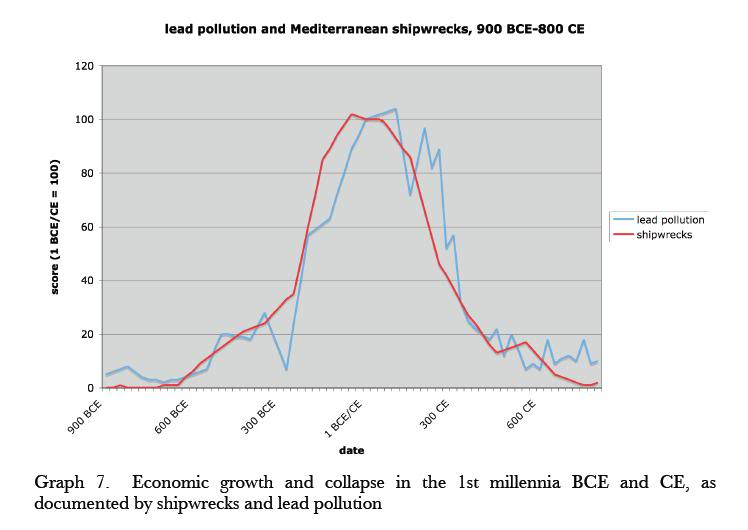
Incredible evidence that lead pollution is caused by shipwrecks.
LiorLefineder tweet media
English
9
8
191
26.9K
Paul Petrick
Paul Petrick@ppetrick·
@jxnlco Solid advice. I'd push back on semantic search as "basically" a cost + latency optimization though. In my experience with legal docs, synonym/vocab mismatch is common, eg. "court record" vs "transcript." Grep fails miserably. User context matters.
English
0
0
0
39
jason liu
jason liu@jxnlco·
Yesterday I did an expert call about building AI agents for messy government PDFs and RFP-style workflows. A few ideas that might be useful if you’re in the same bucket: 1. Your “agent problem” is probably a search/recall problem If the model “misses” facts, 9/10 times it’s not the reasoning model — it’s recall: No full-text search for exact strings (e.g. “13.1.2” legal clauses). No decent metadata filters (city, date, doc type, attachment relationships). Search fan-out is too timid (15 queries instead of 60). The generation model almost never has a chance to be smart if the search tool is starving it. 2. Stop vibing, get a number Right now most teams are flying blind: “Search feels okay.” “Sometimes it misses stuff.” “It seems worse on X.” That’s useless. You can get a rough recall number in 1–2 days: Randomly sample pages from your corpus. For each page, use GPT-5 (or similar) to generate 3–5 realistic user questions that should retrieve that page. Run those questions through your search tool. Check: “Is the original page in the top N results?” Now you have a number like “recall@20 = 0.72”. Not perfect. Good enough to track: Add full-text search → did recall move? Fix layout parsing → did recall move? Add better metadata filters → did recall move? Then group by question type and document type. Something will be embarrassingly bad. That’s where you focus. 3. Use existing harnesses as your baseline, not your end state Everyone wants to build their own “deep research” agent orchestration from scratch. Most of you shouldn’t. Use: OpenAI Responses + Deep Research as a baseline harness. Or Claude Code with a simple CLI search tool. Wire your search as: search --query "..." --filters ... Give that to a serious agent (Deep Research / Claude Code) and just watch what it does: How many times does it call search? Does it fan out per question/section? If their harness + your search tool crushes your in-house agent, the problem is not “LLMs are bad” — it’s your orchestration. 4. Remember what semantic search actually is At scale: ls, read_file, grep would work in the limit. Semantic search is basically a cost + latency optimization on top of that. If you think of it that way, it becomes obvious when you’re abusing embeddings for something that should really be solved with: Better string filters Proper normalized metadata Table-aware tools Time-window filters Ticker/state/entity resolution 5. Hiring “LLM engineers” The only real filter that matters: have they actually built and shipped things? Failure modes: “AI FOMO” hire who wants to get paid to learn on your dime. Research-brained person who realizes 3 months in they actually just want to join a lab. You want the middle: someone who already built agents, evals, or workflows on their own time and can walk you through the tradeoffs. If you’re building retrieval/agent systems for messy real-world docs (gov, medical, finance, etc.), start with: Make search recall measurable. Use Deep Research / Claude Code as baselines. Iterate on tools and data, not vibes. Everything else gets a lot easier once you have those numbers.
English
12
19
355
26.7K
Paul Petrick
Paul Petrick@ppetrick·
@jasonpurdy @claudeai How long to get it set up. Based on reviews, I’m dreading, but don’t want to miss out on the credits.
English
1
0
0
14
jasonpurdy
jasonpurdy@jasonpurdy·
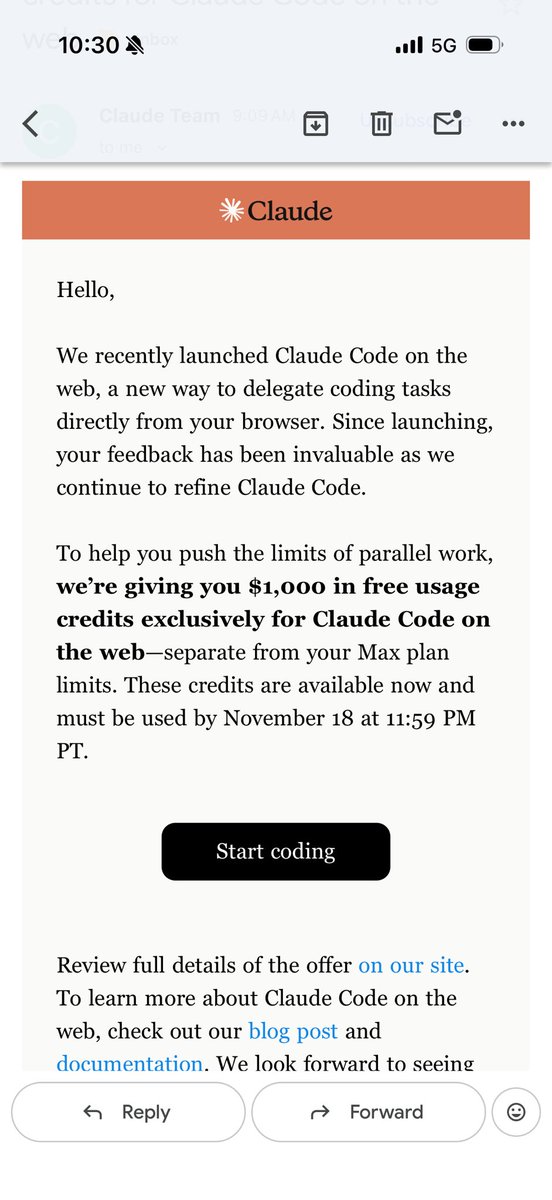
Well this is exciting. Thank you @claudeai for the $1000 in credits for Claude code on mobile / web. Perfect timing as I’ve finally found a way to integrate it with my workflows. First, access key and env variables setting, and second a little code comes out but it’s more about brainstorming and discussing the project and updating .md files. I think of it like a Claude project chat but the context is dynamically evolving and perfectly up today. Quite fun actually.
jasonpurdy tweet media
English
1
0
1
68
Olivia Moore
Olivia Moore@omooretweets·
The secret to vibe coding is saying "Can you just do it?" over and over until the product fixes itself
English
71
11
158
14.5K
Paul Petrick
Paul Petrick@ppetrick·
@jasonpurdy I asked llms first, but turns out: garbage in, synthesized garbage out.
English
0
0
1
7
jasonpurdy
jasonpurdy@jasonpurdy·
@ppetrick why are you reading it directly and not just asking cursor to explain it to you? ;)
English
1
0
0
13
Paul Petrick
Paul Petrick@ppetrick·
Tagline for most online support documentation: "We put the hel(l) in help."
English
1
0
1
30
Paul Petrick
Paul Petrick@ppetrick·
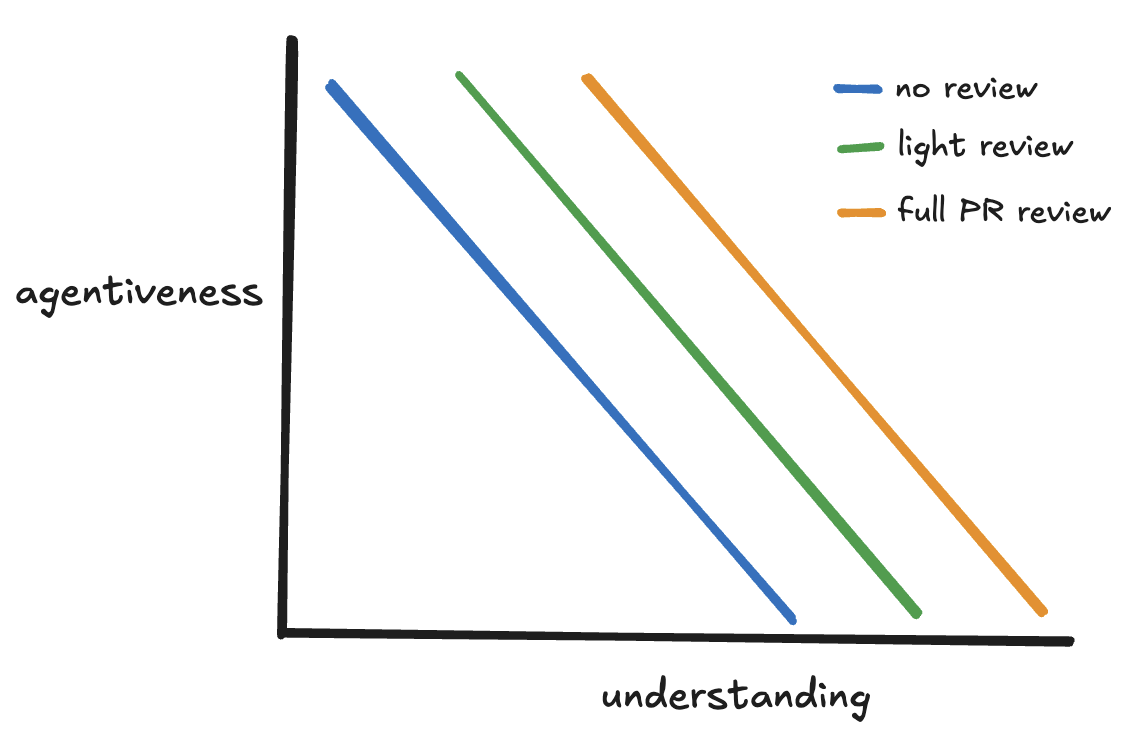
Like @stevekrouse take on vibe vs. understanding, but think we should tease apart vibe.
Paul Petrick tweet media
Steve Krouse@stevekrouse

Vibe code is legacy code @karpathy coined vibe coding as a kind of AI-assisted coding where you "forget that the code even exists" We already have a phrase for code that nobody understands: legacy code Legacy code is universally despised, and for good reason. But why? You have the code, right? Can't you figure it out from there? Wrong. Code that nobody understands is tech debt. It takes a lot of time to understand code enough to debug it, let alone introduce new features without also introducing bugs Programming is fundamentally theory building, not producing lines of code. This is why we make fun of business people who try to measure developer productivity in lines of code When you vibe code, you are incurring tech debt as fast as the LLM can spit it out. Which is why vibe coding is perfect for prototypes and throwaway projects: It's only legacy code if you have to maintain it! I vibe code happily all the time. Most often for small apps that I don't need to maintain. I'm a big fan, have at it! Vibe coding is on a spectrum of how much you understand the code. The more you understand, the less you are vibing Simply by being an engineer and asking for a web app with a persistent database, you are already vibing less than than a non-programmer who asks for an "app" without understanding the distinction between a web app and a native app, or how persistent data storage works The worst possible situation is to have a non-programmer vibe code a large project that they intend to maintain. This would be the equivalent of giving a credit card to a child without first explaining the concept of debt You'll end up spending a lot of money and getting a large, buggy, legacy code base. If you don't understand the code, your only recourse is to ask AI to fix it for you, which is like paying off credit card debt with another credit card At Val Town, we built Townie, an AI assistant that agnatically reads & writes code, runs it, views the logs, and keeps iterating until it's done. It's is an awesome tool for vibe coding. I heartily recommend it to folks who understand these tradeoffs. I use it to vibe code sometimes. Other times I keep in on a tight leash as it makes surgical edits to a project I care about If you know any non-programmers spending thousands of dollars vibe coding their billion dollar app idea today, warn them that vibe coding is not going to get them where they want to go. They're going to have to learn to use their human eyes to read the code 😱, and that sometimes it's easier to start over with building a well-written code base from scratch than to fix a legacy one that nobody understands

English
0
0
1
54
Paul Petrick
Paul Petrick@ppetrick·
@stevekrouse @karpathy There's also some semantic drift here. People claim to vibe code when in fact they're regularly reviewing changes. When you factor that in: understanding = a – b·vibe + c·CR
English
0
0
1
25
Steve Krouse
Steve Krouse@stevekrouse·
Vibe code is legacy code @karpathy coined vibe coding as a kind of AI-assisted coding where you "forget that the code even exists" We already have a phrase for code that nobody understands: legacy code Legacy code is universally despised, and for good reason. But why? You have the code, right? Can't you figure it out from there? Wrong. Code that nobody understands is tech debt. It takes a lot of time to understand code enough to debug it, let alone introduce new features without also introducing bugs Programming is fundamentally theory building, not producing lines of code. This is why we make fun of business people who try to measure developer productivity in lines of code When you vibe code, you are incurring tech debt as fast as the LLM can spit it out. Which is why vibe coding is perfect for prototypes and throwaway projects: It's only legacy code if you have to maintain it! I vibe code happily all the time. Most often for small apps that I don't need to maintain. I'm a big fan, have at it! Vibe coding is on a spectrum of how much you understand the code. The more you understand, the less you are vibing Simply by being an engineer and asking for a web app with a persistent database, you are already vibing less than than a non-programmer who asks for an "app" without understanding the distinction between a web app and a native app, or how persistent data storage works The worst possible situation is to have a non-programmer vibe code a large project that they intend to maintain. This would be the equivalent of giving a credit card to a child without first explaining the concept of debt You'll end up spending a lot of money and getting a large, buggy, legacy code base. If you don't understand the code, your only recourse is to ask AI to fix it for you, which is like paying off credit card debt with another credit card At Val Town, we built Townie, an AI assistant that agnatically reads & writes code, runs it, views the logs, and keeps iterating until it's done. It's is an awesome tool for vibe coding. I heartily recommend it to folks who understand these tradeoffs. I use it to vibe code sometimes. Other times I keep in on a tight leash as it makes surgical edits to a project I care about If you know any non-programmers spending thousands of dollars vibe coding their billion dollar app idea today, warn them that vibe coding is not going to get them where they want to go. They're going to have to learn to use their human eyes to read the code 😱, and that sometimes it's easier to start over with building a well-written code base from scratch than to fix a legacy one that nobody understands

Steve Krouse tweet media
English
100
153
998
249.9K
Paul Graham
Paul Graham@paulg·
"You were so right about Trump." — a founder who voted for him in the last election
English
287
282
8.4K
774.8K
Paul Petrick
Paul Petrick@ppetrick·
@clairevo Would you mind sharing what goes well/not so well as you do this. Was considering something similar for SoCal.
English
0
0
1
19
claire vo 🖤
claire vo 🖤@clairevo·
Want to start a monthly no-judgement vibe coding hang for SF parents & their kids. Boxes of coffee, someplace w a playground and a gate (indoor or outdoor), and I’ll answer all your “I don’t have time to watch YouTube!” questions about AI.
English
42
6
152
8.4K
Paul Petrick
Paul Petrick@ppetrick·
@clairevo Relatedly, I'd argue that schooling should be far more EQ skill-focused than content focused. How we communicate, self-regulate, and read and address others' wants/needs all affect how well well we work within organizations, business or otherwise, as well as our own fulfillment.
English
0
0
1
19
claire vo 🖤
claire vo 🖤@clairevo·
Observation: just like they don’t teach enough financial literacy in school, I think there is a major gap in organizational literacy. No group project will prepare you for navigating companies, teams, communities, or bureaucracies effectively. What are forms of hierarchy? Effective methods for challenging power? Hard and soft skills that allow you to navigate through large groups of people? How do you define and build culture? Destroy it? Cultivate influence? Negotiate? Inspire? You can pooh pooh the liberal arts as much as you want, but studying history, literature, religion, sociology, and psychology give you a language for a skill that—presuming you’re operating in a human society—is a necessary requirement for success. For the shape rotators out there, a framework for organizational behavior gives your technology something to cling to: social order, the chain of information flow, the movement of groups. As AI makes software interfaces more organic, agents and the like are going to need to navigate organizations similar to how humans do. Anyone designing these agents better be pretty good at decomposing the framework of organizational effectiveness and translating that to code. And no: as much space as it takes in our day to day, social media and online discourse is just a single type of organizational literacy you need to develop. Writing for the broad public, recruiting (or antagonizing) strangers, and finding a like minded cohort of peers in the global town square gives you important, but narrowly applicable, social skills. So study people, understand organizations, and build skills to navigate them. Apply change purposefully. Experiment wisely. Make a plan. Then hack the system🤘 (all with good intention, ofc!) 💞
English
9
5
117
6.9K
Marc Klingen
Marc Klingen@marcklingen·
favorite cursor prompt: pls fix
English
10
1
50
3.3K
Justine Moore
Justine Moore@venturetwins·
Planning a weekly change of my profile pic in protest until X automates review. Debating between: - Real photo of my face so founders can recognize me at coffee meetings - The AI avatar TikTok generated of me, which is inexplicably holding a crocodile
Justine Moore tweet mediaJustine Moore tweet media
English
13
0
47
3.8K