pradeep Srivastava

24.1K posts

pradeep Srivastava banner
pradeep Srivastava

pradeep Srivastava

@pradeepsri72

In House Counsel, history buff

New Delhi, India Katılım Temmuz 2015
324 Takip Edilen221 Takipçiler
Sabitlenmiş Tweet
pradeep Srivastava
pradeep Srivastava@pradeepsri72·
For those who think they can get away with oversmart answers in Court ⚖️ Thanku @BediSaveena
New Delhi, India 🇮🇳 English
1
5
15
0
pradeep Srivastava
pradeep Srivastava@pradeepsri72·
😝😝🤣🤣🤣
Pakistan Untold@pakistan_untold

.@DGISPR (verbatim): "... That's I'm saying that security of the issues I don't think that they have got any cons, they have got the independent issue which are on a assessment that has been that must have been obtained by the concerned agencies of that country in so the relations the strategic relations the friendly relations the path that any two countries have are have been independent trajectory because the security of personnel is very very important so that's a localized independent assessment so for us also it's very important that all diplomats of all countries remains safe. So if there is any security assessment they had they have may, so I don't think that we can correlate these two things but still It is I think the ministry of foreign affairs is the best most competent to comment on that." And that answers why Indian Generals speak English. Coz you can't.

ART
0
0
0
2
pradeep Srivastava retweetledi
ηᎥ†Ꭵղ
ηᎥ†Ꭵղ@nkk_123·
Kerala election results 2026 Cong 63 Left 26 BJP 3 Shashi Tharoor ,⁦@ShashiTharoor⁩ explains how the Muslims were invited in Kerala & were not invaders. This is the sole reason BJP is unable to penetrate Kerala with its Hindutva agenda.
English
73
421
1.8K
83.1K
pradeep Srivastava retweetledi
Parimal
Parimal@Fintech03·
Before the telegraph, he used mirrors & fast horses to hack the London news, making millions while the British Governor was still at breakfast. He built the tallest tower in Mumbai just so his mother could hear the sunset, & when the world’s biggest bubble burst, he sat under a banyan tree & invented Dalal Street. Discover the Cotton King, the man who turned British gold into Indian infrastructure. When the American Civil War broke out, the Cotton Famine hit the textile mills of Lancashire, England. Suddenly, they could not get cotton from the American South. While others were panic-buying, Premchand Roychand realized that Bombay was now the only source of cotton for the world. Cotton prices in Bombay skyrocketed (4x/more) India was suddenly flooded with roughly £70 million (billions in today's terms) of British gold. In an era before the telegraph was fully reliable, news moved by ship. If a ship arrived from London with news of the war’s end, cotton prices would crash. Roychand did not wait for the mail. He set up a Relay of Speed. He had fast boats stationed in the Arabian Sea to meet incoming steamships before they hit the harbor. His agents would signal the news via flags/mirrors to runners on the shore, who would gallop to his office in the Fort area. Roychand would have the Market Sentiment from London 30 to 60 mins before the British Governor/the other traders. In those 60 mins, he would buy/sell millions, effectively predicting the future. At his peak, Roychand was so wealthy that he did not just trade on the market, he WAS the market. The British Governor of Bombay, Bartle Frere, was essentially Roychand's junior partner. Every major infrastructure project in Bombay... the reclamation of Backbay, the building of wide boulevards, was funded by the Cotton Mania Roychand orchestrated. It is whispered that the British government’s banks would not lend a single rupee unless Premchand Roychand gave a nod. He was an Indian trader who held the Imperial Treasury hostage with his liquidity. We see the Rajabai Clock Tower at Mumbai University & think of Big Ben. But the Ghost story behind it is deeply personal. Roychand’s mother, Rajabai, was a devout Jain who followed the strict rule of Chauvihar (not eating after sunset). As she grew old & her eyesight failed, she could not tell when the sun was setting on cloudy Bombay days. Roychand spent ₹2 Lakhs (a fortune in 1860s) to build the tower so the giant bell would chime every evening. He built the tallest structure in the city just so his mother could hear the Time to Eat from miles away. When the American Civil War ended in 1865, the Cotton Bubble burst. Bombay crashed. Roychand lost nearly everything. But he did not run. He sat back down under the Banyan trees with a group of other native brokers. They formed the Native Share & Stock Brokers' Association. This Street Trading eventually became the BSE (Bombay Stock Exchange). He proved that we did not need a fancy British marble building to run a world-class economy; we just needed a group of Indians with sharp brains & a common ledger under a tree. Premchand Roychand was the 1st Indian to realize that Finance is a psychological weapon. He used the British greed for cotton to build the infra of modern Mumbai. He was the Ghost who ensured that even after the British left, the keys to the safe remained in Indian hands. Every time the BSE bell rings today, it is an echo of the runners Roychand sent to the docks in 1862. He taught us that an Indian trader does no just follow the global market, he creates it.
Parimal tweet media
English
14
201
543
11K
pradeep Srivastava retweetledi
Ananth Rupanagudi
Ananth Rupanagudi@Ananth_IRAS·
A Khidmatgar preparing tea, India— 1890s. Khidmatgar were table servants, typically Muslim men, employed in the households of elite British families in colonial India, trained to serve meals, tend to tables, and manage household duties according to the desires of their employers. They were part of a large retinue of domestic servants maintained by British households, representing a fusion of Mughal servant culture and colonial imperial structures. Derived from Urdu, the term khidmatgar literally means a servant or one who renders service. They specialized in table service, often acting as a butler or waiter, and were a standard part of the "Anglo-Indian" domestic staff, often operating under a khansaman (head butler). They were often treated as personal servants for table tasks, sometimes even being used to fill roles when other staff failed to meet the strict expectations of British management. The service culture was heavily stratified, with khidmatgars often being part of a large, complex hierarchy of domestic servants employed by British families in the 19th and early 20th centuries. #colonialhistory #servants
Ananth Rupanagudi tweet media
English
6
17
74
8K
pradeep Srivastava retweetledi
Aviation Archive - Tim Farmer
Aviation Archive - Tim Farmer@aviationarchive·
The German Dornier Do 31 was the world's only jet-powered VTOL transport. Immensely complex, it was built with 2 Rolls-Royce Pegasus vectored engines + 8 Rolls-Royce RB162 lift engines. First flew in 1967, wowed at 1969 Paris Air Show, canceled in 1970 because it was TOO cool.😎
English
29
176
1.5K
76.8K
pradeep Srivastava retweetledi
Sann
Sann@san_x_m·
Her name was Jayalalithaa. Her father died when she was two. Her mother, an actress struggling to survive, pulled her out of college at 15 and pushed her onto a film set. She won the Gold State Award for coming first in Class 10 across all of Tamil Nadu. She spoke six languages. When MGR died in December 1987 she stood beside his body refusing to leave. Party workers pinched her and pricked her with safety pins to force her away. When they moved his body to the gun carriage she climbed up to join the procession. MGR’s wife’s nephew Deepan hit her on the forehead and shoved her off in front of television cameras. They called her a dancer. A kept woman. A foreigner in Tamil politics. On March 25 1989 she was the Leader of the Opposition in the Tamil Nadu assembly. The first woman ever to hold that post in the state. During a chaotic budget session DMK members surrounded her. In her own words a DMK minister caught hold of my saree and pulled it. This resulted in the safety pin on the shoulder giving way and causing bleeding injuries. The saree was torn. She walked out in tears. She vowed she would not return to the assembly floor until she came back as Chief Minister. Two years later she did. At 43. The youngest Chief Minister in Tamil Nadu’s history. She served six terms. She built canteens that fed millions for Rs 5 a meal. She launched welfare schemes that became templates for the rest of India. She died on December 5 2016 while serving her sixth term. She was 68. The circumstances of her final 75 days in Apollo Hospital remain disputed. No independent inquiry has ever been completed. The woman they pushed off a hearse. The woman whose saree they tore in the assembly. The woman they bled. She became Amma to an entire state. Follow for stories India deserves to remember.
Sann tweet media
English
109
826
7.1K
489.8K
pradeep Srivastava retweetledi
Abhishek AB
Abhishek AB@ABsay_ek·
Prince Yadav was never supposed to be here. At 18 he was still playing tennis ball near Dariyapur Khurd, a village so small GPS gets confused. Only reason anyone outside Najafgarh knew the place was because Virender Sehwag grew up nearby. Then Prince showed up at a leather ball tournament because village elders asked him to. He tied sandbags to his back & ran through fields because that was strength training in a village with no gym. His father Ram Niwas wanted a constable. Prince cleared Delhi Police physical test easily,But failed written exam. Years later Ram Niwas understood; his son had looked at that paper & decided he would rather be bowled for zero than score a fake hundred. A 2 year ban for age fraud landed during COVID. Prince did not sulk. He bought gym equipment, turned his house into a training centre, came back heavier & stronger. 13 wickets in Delhi Premier League. Leading wicket taker for Delhi in Syed Mushtaq Ali Trophy. 18 wickets in Vijay Hazare Trophy last season. LSG made him a net bowler in 2023. But Justin Langer & Zaheer Khan saw something. They paid 30 lakh for him in 2025. His first season was modest; 6 games, 3 wickets, economy touching 10. He went for 47 in his debut game & remembered what this league does to rookies. But LSG showed trust in him for 2026, and Prince repaid that trust with his performance. This season he has 16 wickets, second most in the tournament. Economy of 8.08. Yesterday he bowled Virat Kohli with a delivery already called the ball of the tournament. Among the big names of Mohammed Shami, most skillful left armer Mohsin Khan & pace sensation Mayank Yadav, it is Prince who keeps carrying LSG bowling attack game after game. Against DC this year, he got Nissanka & Axar in same over. Then Tristan Stubbs came in & hit a boundary & Prince walked down the pitch & stared at him. No words. Just a look that said, I am still here. Stubbs won that match eventually. But people remembered the stare. At Chinnaswamy, after Kohli took 17 off one over, he came back & got Salt, Patidar & Jitesh Sharma. IIn Mullanpur, Punjab Kings scored 254. Everyone else in LSG attack went for runs like they were giving them away free. Prince finished with 2 for 25 in 4 overs. His story is not finished. Prince still needs to learn the death overs better. Still needs to prove he can do this for 5-10 years, not one season. But base is there. The arm speed, swing, temper that does not break when Stubbs hits a boundary. These things you cannot buy in an auction. LSG kept him cheap. They might not get to do that again.
Abhishek AB tweet media
English
6
55
518
30.7K
pradeep Srivastava retweetledi
SANJAY HEGDE
SANJAY HEGDE@sanjayuvacha·
My Senior Mr G Ramaswami, went for a job as a Munsiff and failed to "secure" it. He went on to be Attorney General for India. Mr Palkhivala was not selected for a job as an English lecturer. The lady who got the job, was ever thereafter on his guest list whenever he threw a party. What looks to be a disaster of youth, turns out to be a prod to eventual success.
Bar and Bench@barandbench

#SupremeCourt CJI Surya Kant shares a personal anecdote while hearing a plea by an AoR seeking re-evaluation of a certain judicial services paper CJI: Apply for superior judicial services next time. But let me share something, why you should not press this. When I was in the final year, I applied for judicial services. At that time, final-year students could apply. By the time the results came, the procedure had changed. Earlier, the Public Service Commission used to conduct the selection. Then a Supreme Court judgment came, pursuant to which judges of the High Court were to act as subject experts, and their opinion would be binding on the Commission. In the meantime, I had shifted to the High Court. The senior-most judge who had been nominated for the interview panel already knew me because I had argued two matters before him. One of the matters was Sunita Rani v. Baldev Raj, where he had allowed my appeal in a matrimonial case and set aside the decree of divorce granted by the District Judge on the ground of schizophrenia. The same judge knew that I was appearing for the judicial services interview because he had seen the list from the Commission. One day, he called me into his chamber and asked, ‘Do you want to become a judicial officer?’ I said yes. He immediately said, ‘Get out from the chamber.’ I came out trembling. All my dreams were shattered. I thought I would become a judicial officer, and he had snubbed me like that. The next day, he again called me into his chamber. He said, ‘If you want to become, you are welcome. But my advice is, don’t become a judicial officer. The Bar is waiting for you.’ These were the exact words he said: ‘The Bar is waiting for you.’ I came outside the chamber and decided not to go for the interview. I did not inform my parents because I knew they would get annoyed. After two or three months, I told some lie here and there and refused to go.

English
11
65
343
42.2K
pradeep Srivastava retweetledi
Ancient History Hub
Ancient History Hub@AncientHistorry·
In 458 BC, Rome was on the brink of collapse. An invading army had trapped the Roman consul and his legion in a mountain pass. Panic spread through the city. The Senate did the only thing they could think of: They sent messengers to find a 60-year-old farmer plowing his field. His name was Lucius Quinctius Cincinnatus. He had once been a senator, then lost his fortune paying his son's bail. Now he worked his own four-acre plot just to feed his family. When the Senate's envoys arrived, they found him sweating behind a plow. They asked him to put on his toga so they could deliver an official message. The message: Rome was making him dictator. Absolute power. Total command of the army. No checks. No oversight. No term limit. He accepted. Within 16 days, Cincinnatus had raised an army, marched out, surrounded the enemy, and forced their surrender. The republic was saved. He had legal authority to rule for six months. He could have stayed. He could have expanded his power. He could have done what every other ruler in human history did when handed unlimited control. Instead, he resigned on day 16. He took off the toga, walked back to his farm, and finished plowing the field he'd left half-done. Twenty years later, when Rome faced another crisis, they called him back. He was 80 years old. He took command, crushed the conspiracy, and resigned again, this time after just 21 days. He died poor. On his farm. 2,200 years later, when George Washington was offered a kingship after winning the American Revolution, he refused and went home to Mount Vernon. The reason he was hailed as "the American Cincinnatus" is because Europeans literally could not believe a man who had won would willingly give up power. King George III, on hearing Washington would resign rather than rule, said: "If he does that, he will be the greatest man in the world." The lesson isn't that Cincinnatus was humble. The lesson is that for most of human history, the people most qualified to lead were the ones who didn't want to. And the moment a society starts rewarding those who chase power instead of those who flee from it is the moment the republic begins to die. Cincinnati, Ohio is named after him. Most people who live there have no idea why.
Ancient History Hub tweet media
English
784
12.6K
40.6K
915.7K
pradeep Srivastava retweetledi
Bar and Bench
Bar and Bench@barandbench·
#SupremeCourt CJI Surya Kant shares a personal anecdote while hearing a plea by an AoR seeking re-evaluation of a certain judicial services paper CJI: Apply for superior judicial services next time. But let me share something, why you should not press this. When I was in the final year, I applied for judicial services. At that time, final-year students could apply. By the time the results came, the procedure had changed. Earlier, the Public Service Commission used to conduct the selection. Then a Supreme Court judgment came, pursuant to which judges of the High Court were to act as subject experts, and their opinion would be binding on the Commission. In the meantime, I had shifted to the High Court. The senior-most judge who had been nominated for the interview panel already knew me because I had argued two matters before him. One of the matters was Sunita Rani v. Baldev Raj, where he had allowed my appeal in a matrimonial case and set aside the decree of divorce granted by the District Judge on the ground of schizophrenia. The same judge knew that I was appearing for the judicial services interview because he had seen the list from the Commission. One day, he called me into his chamber and asked, ‘Do you want to become a judicial officer?’ I said yes. He immediately said, ‘Get out from the chamber.’ I came out trembling. All my dreams were shattered. I thought I would become a judicial officer, and he had snubbed me like that. The next day, he again called me into his chamber. He said, ‘If you want to become, you are welcome. But my advice is, don’t become a judicial officer. The Bar is waiting for you.’ These were the exact words he said: ‘The Bar is waiting for you.’ I came outside the chamber and decided not to go for the interview. I did not inform my parents because I knew they would get annoyed. After two or three months, I told some lie here and there and refused to go.
Bar and Bench tweet media
English
19
64
459
124.4K
pradeep Srivastava retweetledi
Life between overs
Life between overs@OversLife·
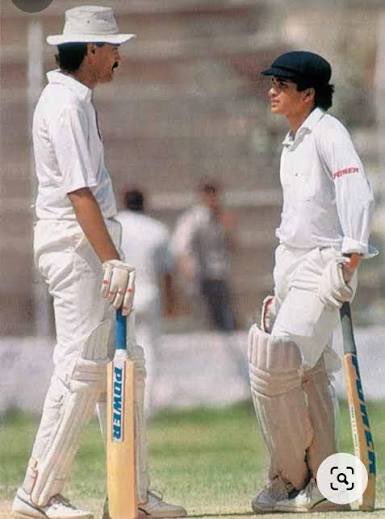
He launched Bishan Singh Bedi for a massive six. So massive… it crashed into the balcony. Next? Bedi fired in the arm ball. Stumps shattered. Message delivered. 🔥
English
65
145
2.6K
316K
pradeep Srivastava retweetledi
𝐊𝐔𝐍𝐀𝐋 𝐁𝐈𝐒𝐖𝐀𝐒
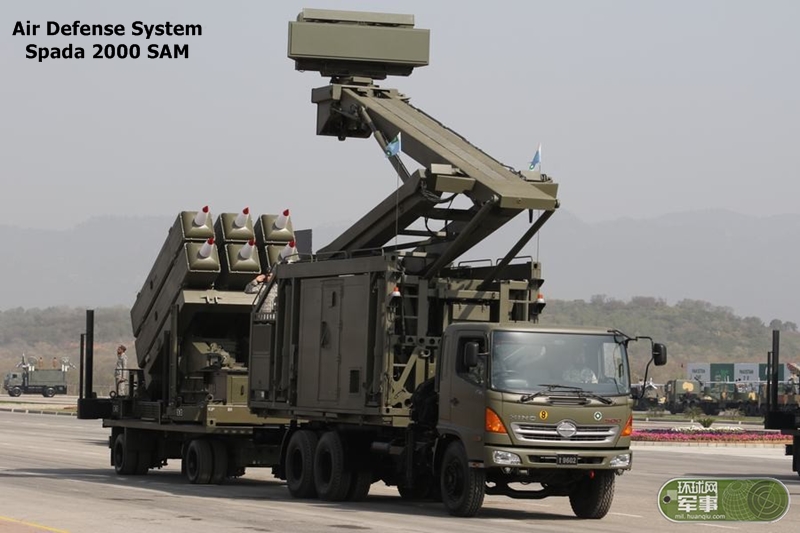
PAF Base Qadri in POK, got three runways - three kilometers each, got the Lockheed Martin AESA TPS-77 radar for surveillance and MBDA SPADA-2000 AD system for protection, it's a connecting node between 🇵🇰 PAF at POK and 🇨🇳 PLAAF at Tibet, the base was hit during #OpSindoor. 🇮🇳👑
𝐊𝐔𝐍𝐀𝐋 𝐁𝐈𝐒𝐖𝐀𝐒 tweet media𝐊𝐔𝐍𝐀𝐋 𝐁𝐈𝐒𝐖𝐀𝐒 tweet media𝐊𝐔𝐍𝐀𝐋 𝐁𝐈𝐒𝐖𝐀𝐒 tweet media
English
3
74
519
36K
pradeep Srivastava retweetledi
SSBCrack
SSBCrack@SSBCrack·
Meet Group Captain Animesh Patni: IAF Officer Behind the World’s Longest S-400 Missile Kill Group Captain Animesh Patni, Vir Chakra, stands as one of the most distinguished officers of the Indian Air Force in recent years. A career fighter pilot who transitioned into commanding one of India’s most advanced air defence assets, he led the S-400 ‘Triumf’ regiment that achieved the longest confirmed surface-to-air missile kill in aviation history — a remarkable 314-kilometre interception during Operation Sindoor in May 2025. Contemporary accounts from the officer himself capture the gravity of the moment: “I took a deep breath before giving my final call – ‘Okay, launch’… The button had been pressed – was there something wrong?” Moments later, a massive detonation lit up the sky, followed by jubilant cries of “Bharat Mata ki Jai” from the crew. The target track vanished from radar screens, confirming a successful “splash.” Patni’s regiment engaged multiple threats throughout the operation, reportedly neutralising 16–18 aerial targets, including additional fighter aircraft, while protecting Indian assets and maintaining operational integrity under potential counter-fire. Prime Minister Narendra Modi visited Adampur Airbase on 13 May 2025 to personally congratulate the unit and acknowledge their contribution.
SSBCrack tweet media
English
10
22
169
9.7K
pradeep Srivastava retweetledi
Man Aman Singh Chhina
Man Aman Singh Chhina@manaman_chhina·
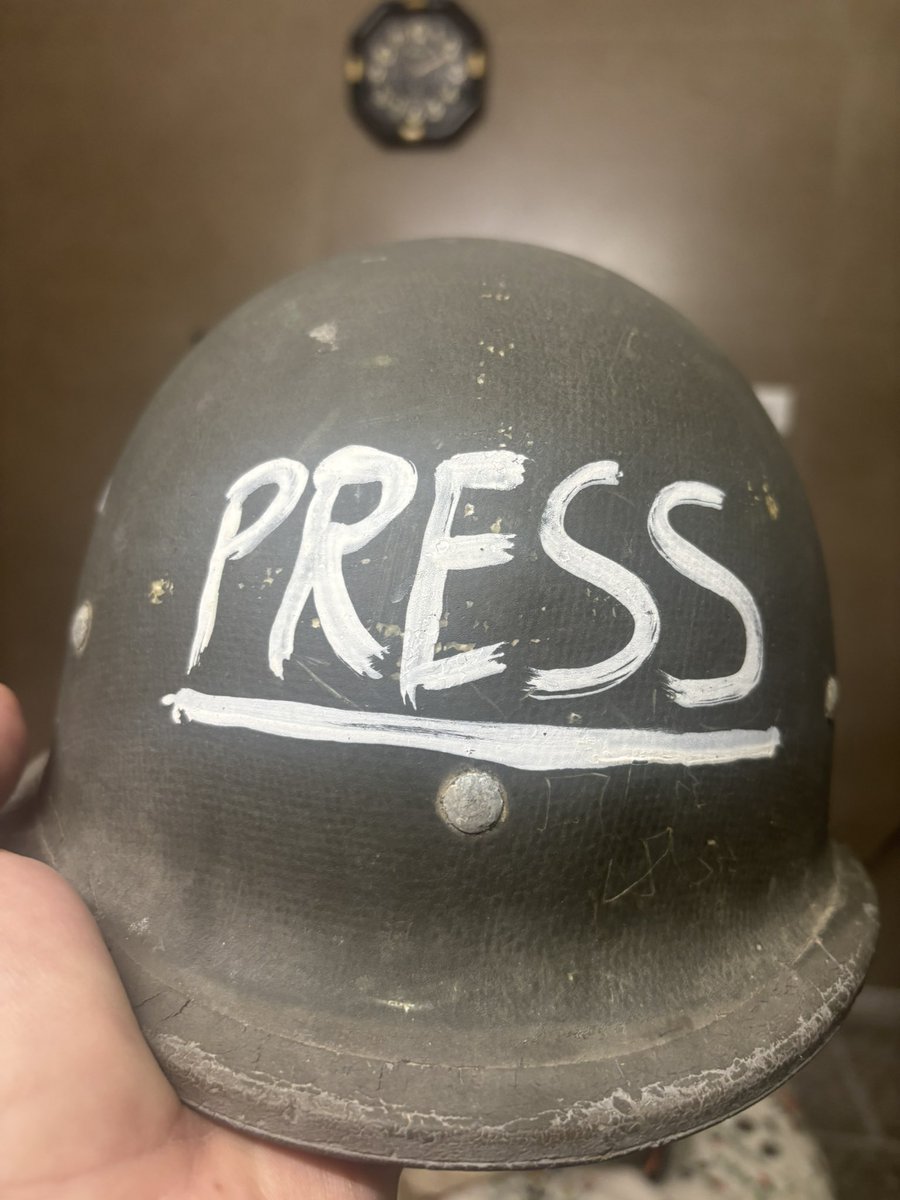
This is the Army surplus helmet which I wore in Op Sindoor in Pathankot. And 25 years earlier I wore it in Op Parakram too when I was covering it in Asr-Pkt-Hiranagar-Jammu belt. By coincidence I bought it in Pathankot in Op Parakram. The ‘Press’ is hand painted by me.
Man Aman Singh Chhina tweet media
English
6
8
114
3.3K
pradeep Srivastava retweetledi
SSBCrack
SSBCrack@SSBCrack·
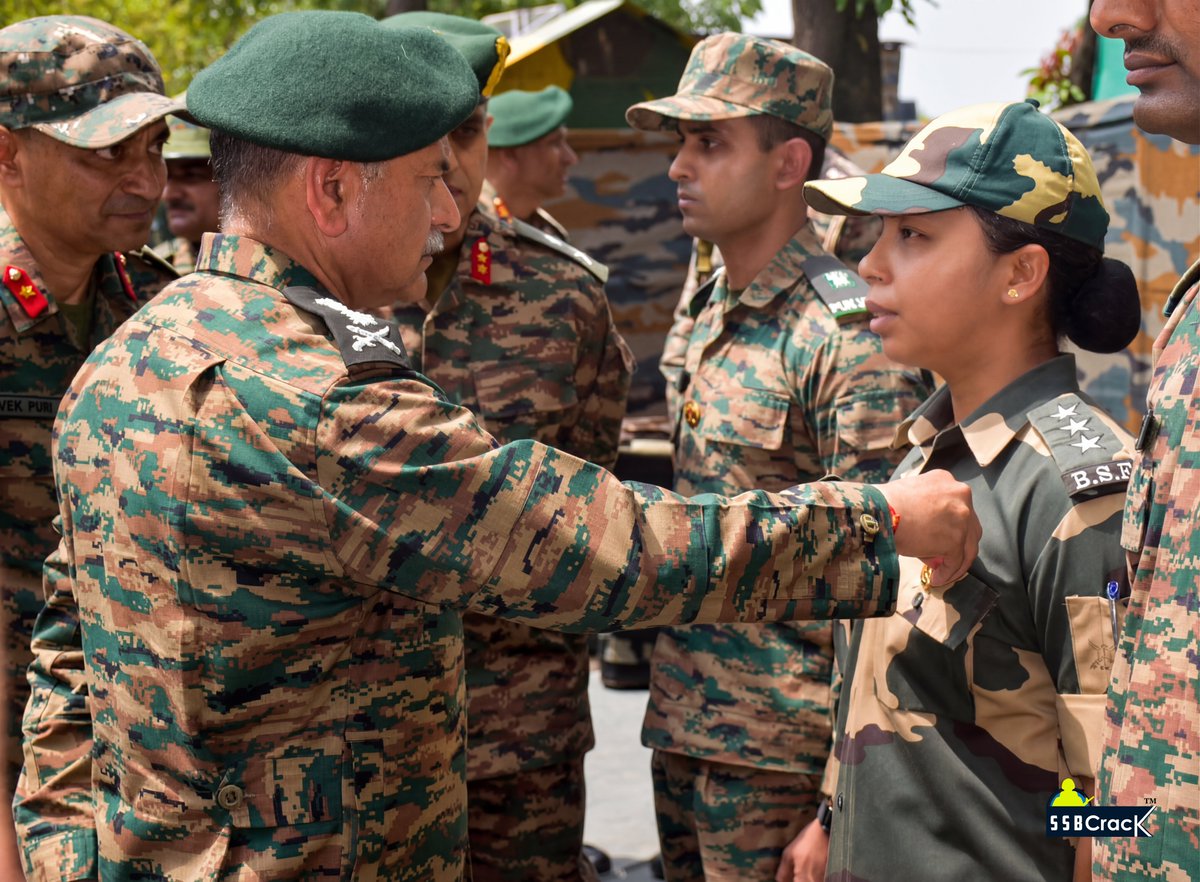
Meet Assistant Commandant Neha Bhandari The fearless BSF officer who forced Pakistani troops to retreat during Operation Sindoor A daughter of Uttarakhand. A third-generation officer. A leader who stood just 150 metres from the International Border. When tensions escalated after the Pahalgam terror attack… She chose to lead from the front. For 72 continuous hours Assistant Commandant Neha Bhandari and her team held the line under intense enemy fire. Her BSF company engaged three hostile Pakistani posts across the zero line Using every weapon available… Her troops pinned down the enemy and forced them to flee. “I pinned down the people at all three hostile locations.” “We hit them with every weapon we had.” “They were forced to flee their posts.” But this story made history for another reason 🇮🇳 She led an all-women frontline combat team 👏 Six women BSF personnel stood shoulder to shoulder with her in active combat near the International Border. No fear. No retreat. Only duty. “The josh was quite high.” “Everything we did was for the country and its honour.” Her courage earned national recognition On 30 May 2025, COAS General Upendra Dwivedi felicitated her with the Commendation Disc for exceptional courage and operational proficiency. From the hills of Uttarakhand to the bunkers of Akhnoor… Assistant Commandant Neha Bhandari has become a symbol of courage, leadership, and the rising power of women in India’s security forces Jai Hind
SSBCrack tweet media
English
5
40
322
11.1K
pradeep Srivastava retweetledi
Parimal
Parimal@Fintech03·
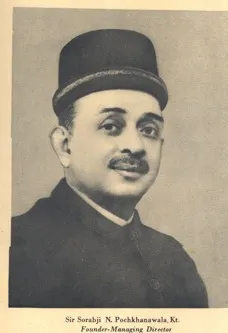
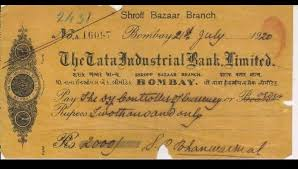
Before they were a global empire, the Tatas owned a bank that almost brought them to their knees. When the Great Run of 1923 began, & British banks refused to help, a Ghost Financier stepped out of the shadows to save the House of Tata. He did not just lend them money; he swallowed their bank to save their pride. Discover the secret merger that ensured the Tata furnaces never went cold. During the economic boom of WWI, the Tatas launched The Tata Industrial Bank. This was not a regular savings bank. It was designed to provide long-term Industrial Credit, funding massive factories that traditional British commercial banks would not touch. For a few yrs, TIB was the talk of the town, financing everything from cement plants to sugar mills. But after the war, the economy cooled down, & the Industrial nature of the bank made it vulnerable to liquidity shocks. In 1923, the Alliance Bank of Simla collapsed, triggering a massive wave of panic across India. Every depositor wanted their money back at once. Rumors hit the streets of Bombay that the Tata Industrial Bank was out of cash. A Run on the Bank began. 1000s of people lined up outside the Tata offices, demanding their life savings. Even the mighty House of Tata did not have enough liquid cash to pay every1 simultaneously. If TIB fell, it would have dragged the entire Tata empire... Steel, Power, & Textiles into the abyss. & then enter Sir Sorabji Pochkhanawala: The Financial Ghost. While British banks sat back to watch the Tata empire crumble, Sir Sorabji Pochkhanawala of the Central Bank of India made a decision that changed Indian history. Sorabji did not just offer a loan; he offered Solidarity. He knew that if the public saw a Purely Indian Bank supporting another Indian Giant, the panic would stop. Sorabji orchestrated a massive liquidity injection. He famously kept the Central Bank’s resources ready to back the Tatas. To stabilize the situation permanently, Sorabji agreed to merge the Tata Industrial Bank into the Central Bank of India in 1923. The merger was so seamless that it effectively erased the existence of the Tata Bank from the public memory. The Central Bank of India became the largest Indian-managed bank, & the Tatas were able to exit the banking business w/o a scandal/a bankruptcy. Sorabji did not do it for profit; he did it because he knew that if the Tatas failed, the British would use it as proof that Indians are incapable of running large-scale industries. He saved the Tatas to save the reputation of Indian intellect. Today, if we look at the history of the Central Bank of India, the 1923 merger is a small footnote. But it was the moment the Ghost of Finance (Sorabji) saved the King of Industry (Tata). The Tatas eventually exited banking, but they returned decades later to the financial world through NBFCs (Tata Capital) & insurance. However, the original Tata Bank lives on in the DNA of the Central Bank of India.
Parimal tweet mediaParimal tweet media
English
20
180
604
18.6K
pradeep Srivastava retweetledi
John Oldman
John Oldman@PrasunNagar·
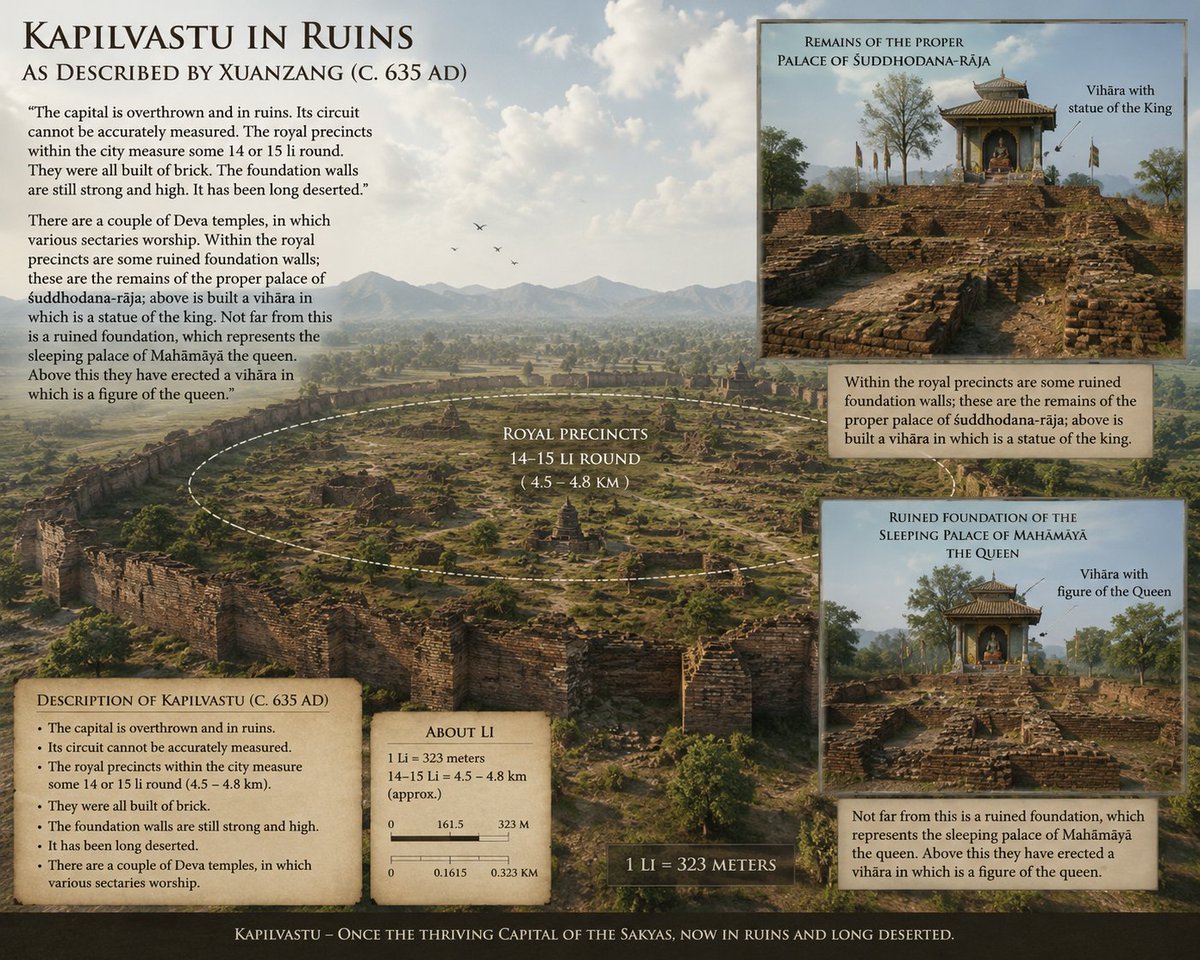
The image of the ruined conditions of Kapilvastu, as seen by Xuanzang in c. 635 AD. Kapilvastu was the capital of the Sakyas ruled by King Suddhodana - the father of Buddha. It is the place were Prince Siddharth Gautam spent 30 years of his adult life before becoming the 'The Buddha'. Xuanzang calls Kapilvastu as 'Kie-pi-lo-fa-su-tu'. Buddhism was long in decline at the time of Xuanzang's visit. In India, he saw Buddhist sites like Udyana, Sravasti, Kapilvastu, Lumbini, Kushinagar in absolute ruins.
John Oldman tweet media
English
2
31
127
2.2K
pradeep Srivastava retweetledi
Gaurav M Tripathi
Gaurav M Tripathi@GauravT71548031·
OP SINDOOR - One year back, I was posted to an Army Unit, heading the IAF Cell. On 7th, I just happened to be visiting the nearest IAF airbase, to which I was affiliated. News had broken of our strikes and the subsequent air engagement and the base was on full alert, so I walked to the Air Officer Commanding or AOC (Base Commander) and offered my services immediately. Thereafter followed duty as Terminal Weapons Director for two days, and then attachment to an IACCS Node as Air Battle Manager for about two weeks. I saw the finest in field leadership, civil-miitary cooperation, and military-military (yes, even this needs saying!), cooperation, and the spirit and commitment of the airman, soldier, sailor and civilian on the ground. I saw how networking allowed collective wisdom and experience help in dealing with a situation, and rapidly disseminating lessons across. The IAF model of centralized control (at Command HQ), and decentralised execution (at Station for support, and IACCS Node for execution of air ops) worked beautifully. Case in point, was the appearance of drones in numbers. The firing and electronic discipline was exemplary. It was realised very quickly what Pak was trying, and a very efficient MO of soft kill plus small calibre firepower was used to execute a near flawless defence. I saw an ARMY CDR, no less, frequently speak to IAF Base Cdrs to remain abreast. Of course we will now have that becoming more systemic. The joint mechanisms kicked in with great flow of info. Ditto for the Navy. To see a joint picture (MDA also populated) on the same scope was absolutely beautiful. Sitting in the IACCS Node Ops room, one gets a satellite-eye view of the entire sector. If need be, for the entire front/theatre. If one wants, the entire country! Now, on top of air tracks, civil traffic, and even own assets, Army and Navy, filtered info is also available. More than just the operational synergy, or the clarity in awareness, it also infuses a major "commonality of purpose" amongst all personnel. The feeling of "we are all doing our bit". Hopefully theaterisation will build on this. Perhaps a cause of even greater delight was how civil functionaries reached out to the AOC for offers of help, and requests for info. Personal equations, sometimes neglected in peacetime, worked wonders. Peaceful, orderly, well implemented blackouts, and zero panic, even when some of the Pak drones dropped here and there running out of battery. Within the IAF, I saw how the open source news bits of losses, affected some, especially those who hadn't been through such experiences earlier. A young officer asked me as to "what now" would we do? I told him, not to arrive at any conclusions. Firstly, we couldn't say what reality was (IAF was super at maintaining even internal OpSec), and secondly, it had just been a day. I recounted the experience of Kargil. Losses, before the first feature was regained. Sure enough, as the CDS has stated, and as results showed, changes were made. The PAF was systematically, coldly, and professionally dismantled so the story was one sided thereafter. It was a masterclass. The dismantling of the PAF's AD network by neutralising high powered radars, and by destruction of its AEW&C effectively blinded them. Our fighters used minimal, but deadly force. The Brahmos/ SCALP 1-2 created havoc. The IAF proved something that's known to air forces worldwide. Wars aren't won by shooting down the enemy (though that was done too). They are won by destroying him on the ground. The destruction of the Bholari hangar, that was dynamically added to the list as a "slow mover" was tracked recovering to the base, was the crowning glory. It wasn't a lucky strike. It was a ruthless hunt. Calibrated targeting, that produced maximum results. A trailer, of the movie that COULD come. Air power reiterated its status as the swordarm, delivering usable options. Hopefully, this is a lesson that even the GoI would have imbibed.
English
26
122
555
57K
pradeep Srivastava retweetledi
Sama Hoole
Sama Hoole@SamaHoole·
In 1837, the Shah of Persia gave Queen Victoria a small herd of Kashmir goats as a coronation gift. She kept them at Windsor for a while, then, for reasons lost to history, sent some of them to live on the Great Orme, a limestone headland sticking out of the North Wales coast like a thumb pointing at Ireland. That was 189 years ago. The goats are still there. Nobody fed them. Nobody bred them. Nobody asked them to stay. They simply did, because the Great Orme is windswept, salt-blasted, vertical in places, and entirely covered in the kind of scrub that goats consider an invitation rather than an obstacle. There are now around two hundred of them. Pure white, slightly mad-looking, technically still the property of the Crown, which has shown no particular interest in collecting. During the 2020 lockdown, when the streets of Llandudno emptied, the goats came down off the headland and took the town. They wandered the high street. They ate the hedges of the Premier Inn. They blocked traffic on Mostyn Street and looked at drivers with the calm assurance of animals whose ancestors used to graze with the legions of Cyrus the Great. A photograph of one of them standing outside a closed pharmacy went around the world. The goats did not pose for it. The goats were checking whether the pharmacy had hedges. It did not. The goats moved on. The Royal Welsh Fusiliers' regimental mascot is still drawn from this herd. The Crown Prince of Britain is, technically, the goats' landlord. The goats have not been informed. The goats are on the Great Orme. They will outlast the Premier Inn. They will outlast most of us. They are not asking for anything. They never were.
Sama Hoole tweet media
English
115
1.3K
7.8K
279.8K
pradeep Srivastava retweetledi
Cricketopia
Cricketopia@CricketopiaCom·
Amol Muzumdar who was there as a ball boy narrated Tendulkar’s impact on the final day. At 34 for 3 at lunch on the final day, the entire chase seemed to depend on an 18-year-old prodigy who had already built a reputation as a match-winner. “The public there was mainly office-goers, who watched a lot of Mumbai games. Manjrekar was just gone before lunch. Everyone had just one thing on their minds, ‘Tendlya laagla pahije, bas [Tendulkar must click]’ That match became proof that cricket can turn in unimaginable ways. If a team could chase 350 in half a day against an attack featuring Kapil Dev, then no target was ever truly safe. Tendulkar and Vengsarkar then stitched together a crucial 134-run partnership for the fourth wicket, with Tendulkar blasting 96 from only 75 deliveries. “Today there’s T20; you can associate a 96 in 75 balls with Rohit Sharma or Virat Kohli or anybody. But, in those days, 96 in 75 balls was unheard of in a first-class match. “I clearly remember one shot by Sachin off Chetan Sharma. Chetan was bowling with some pace, and he was sharp. He bowled a ball from the North Stand end and Sachin hit the ball flat-batted, it went over mid-off, probably 20 feet, and landed straight into the crowd, and was still travelling and going at a very low height. That shot just set the tone. It was just after lunch, and it changed everyone’s psyche. The buzz around was, ‘Toh laagla aahe [He is in the groove]’ and people just started coming back into the ground.” Reports later mentioned that nearly 18,000 spectators had turned up on the fifth day.
Cricketopia tweet media
mayurwrites@freentglty

@CricketopiaCom Absolute goosebumps memory. If there ever was a start to the legend of Sachin this was it - an 18 yr old casually carting a quality pace attack all over. Remember bursting into tears when Mum lost.

English
16
92
466
63.6K