pragmatometer
32.3K posts

@pragmatometer
Adopted son of the King. The rest is quite boring.


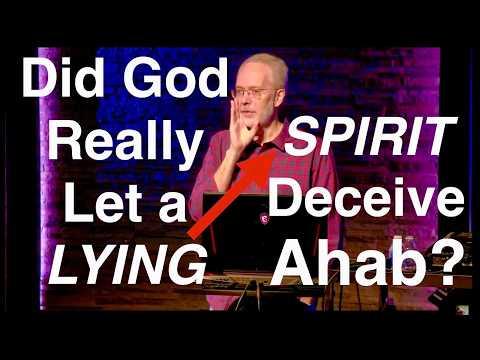
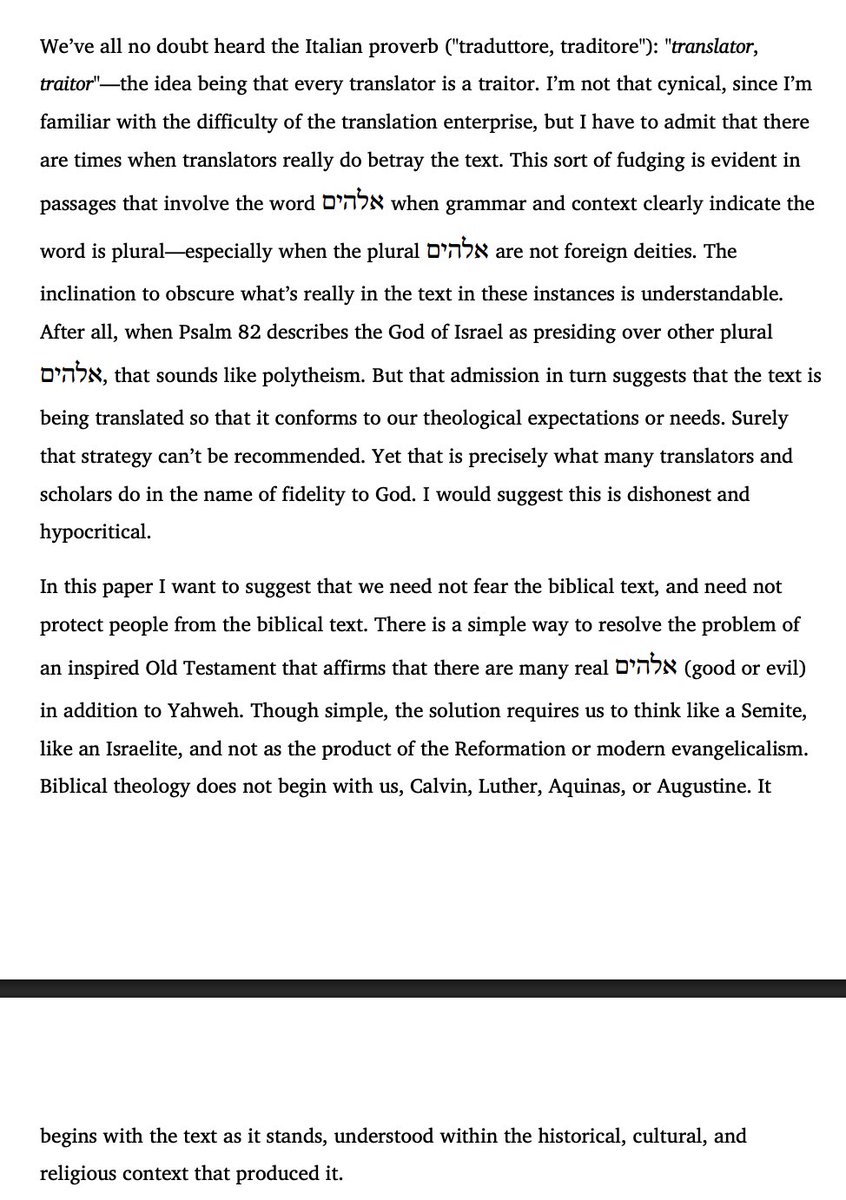
Well, @lsanger quoted me with some questions, and then blocked me before I could answer, but if anyone cares to share my response with him: ---- > So are there in fact multiple gods, or do we simply acknowledge multiple uses of the word, and that there is only one *proper* use of the word? To the extent that we're discussing scriptural occurrences of the term, it's not about proper *use* (it's always 100% proper however and wherever the Bible uses it), but rather about a proper *understanding*. Towards that end: 1. The biblical texts clearly indicate that there are multiple elohim. 2. To the ancient near eastern authors of the Bible, the word elohim did not imply the God-exclusive attributes that we associate with the word g-o-d, but rather implied something like "spirit being" or "an inhabitant of the spirit realm". 3. Thus, to the biblical authors, acknowledging the existence of multiple elohim was not an assertion of rivals to the one true God, Yahweh-no more than it is for us to acknowledge the existence of angels, demons, or the souls of the dead. 4. In our modern context, however, we associate much more with the term g-o-d (even the lowercase version) than what the biblical authors associated with the term elohim. 5. This creates a very real problem, then, if someone takes a typical **modern conception** of the term and applies it to the text, as that **modern conception** can indeed take someone into polytheistic territory. 6. To combat that threat, we have (at least) two viable solutions: a) We can translate elohim into a different word (or perhaps words, depending on context) that present less risk of a modern reader importing inappropriate semantic baggage leading unto polytheism, or b) we can modify our understanding of the term lowercase g-o-d to be more consistent with what the biblical authors meant when they wrote elohim. I think both options are frankly fine. Heiser's view just happened to be the latter (see drmsh.com/TheNakedBible/…, with partial screenshot below). > Angels (called "elohim") are in some sense assigned to nations in Deuteronomy 32 and Daniel. Briefly, I don't know that I even believe this. I think Heiser makes an interesting case for it, but for now I've landed on "hmm, maybe". > God is depicted conversing and interacting with angels in a few different heavenly scenes or reported exchanges. What does this mean? Does the omniscient God of the universe *need* a group of advisers? Well, as Heiser stated: "What can the council do that God can't? Of course the short answer is, He doesn't need a council. Of course not, for these very reasons: He is omnipotent, He is omniscient. God doesn't need a council for any of these things." (youtube.com/watch?v=EBmqga…) You can continue his discussion from the timestamped link above, but it's an emphatic rejection of God's dependence on his creation. But in the same way that God delegated certain responsibilities to Old Testament figures, and to the New Testament Church, and to all believers, we can see that God has deemed fit to interact with creation in a myriad of ways not owing to His dependence, so it's not surprising that He does so with heavenly beings as well. ---- Sanger's quote-post of me: x.com/lsanger/status…


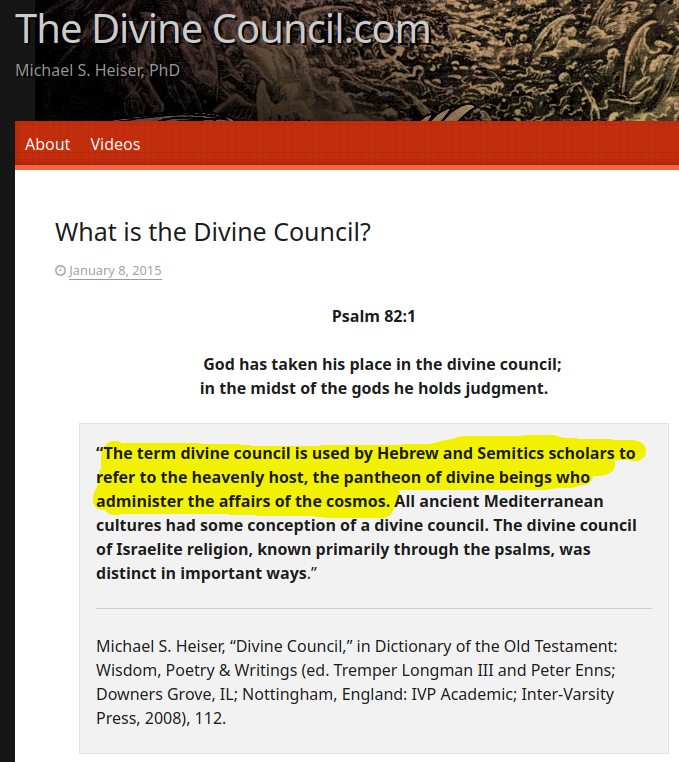
Heiser opens Unseen Realm Ch. 1 with his own "bolt of lightning" reaction to Psalm 82:1 in Hebrew—the exact "pantheon" quote you cited. He describes it as an initial shock ("that can't be right") that drove his research into the Bible's divine council worldview: Yahweh stands in the assembly of other real elohim (spiritual beings), yet He alone is the uncreated sovereign Creator worthy of worship. Whether that framework is monotheism or something else depends on definitions. The book itself clarifies his full position better than excerpts.

Regarding the Heiser drama: I don't how many of Heiser's core arguments are correct. I'm pretty sure that some of them are wrong, and there are others that I am no more convinced of than a solid "maybe". But I am sure that he wasn't a polytheist. Yes, that's a low bar, but apparently it's the one we're having to clear today. As a man who devoted his life to the scholarly exposition of the Word, right to and from his very death bed, it is worth defending his legacy against lazy smear-merchants who won't so much as read what they are attacking.


@ThyRamMan Be serious. The entire point is that this is *not* his expressed viewpoint. Again, this is him describing a "that can't be right" reaction, which serves as an introduction to a very detailed and scholarly explanation of why that was, in fact, not right.


@ThyRamMan This is how he describes his initial "huh?" moment while reading Psalm 82, as it *seemed* to him to be saying something problematic. Again, it's wildly uninformed or dishonest to present this as his view.


Larry is either lying, illiterate, or misinformed. My hope is that he is simply misinformed. Let me refute his article… The charge that Mike Heiser “supported polytheism” only works if we redefine polytheism and ignore how Heiser himself defined elohim. Mike never taught that Yahweh is one god among many equal gods. He taught the opposite:m often saying, “Yahweh was an elohim but no other elohim was Yahweh.” Heiser’s point was that elohim is not a word for a set of divine attributes like omnipotence, eternality, or creatorhood. Rather, it is a “place of residence” term for beings of the spiritual realm. Yahweh alone is uncreated, sovereign, incomparable, and worthy of worship.  So the Larry’s main mistake is simple: he assumes that calling a being elohim means granting it the status of the one true God. But Scripture itself does not use the word that way. The Bible uses elohim for Yahweh, members of Yahweh’s council, the gods of the nations, demons, the deceased Samuel, and angels/the Angel of Yahweh. Heiser’s argument was not “there are many Gods like Yahweh” but that the Bible’s vocabulary is wider than our English word ‘God.’”  Psalm 82 is not a “quotational” use. The text says, “God stands in the divine assembly; he administers judgment in the midst of the gods.” The Hebrew has elohim twice: the first is singular, the second is plural. Heiser points out that the grammar requires a group: God is judging “in the midst of” other elohim. These beings are then called “sons of the Most High” in Psalm 82:6, and they are condemned for corrupt rule. That is the biblical writer speaking in his own voice. To suggest it’s a pagan quotation is actually insulting to the Word. The “human judges” view also fails miserably. Psalm 89 locates the council “in the skies” and “among the sons of God,” not in an Israelite courtroom. Heiser rightly says there is no biblical text where Jewish leaders are placed over the nations in the heavens. Psalm 82 ends by asking God to “inherit all the nations,” which makes sense if the corrupt rulers are supernatural beings over the nations, not Israelite magistrates. Deuteronomy 32:17 is also not a rescue for Larry. It says Israel sacrificed “to demons, not God, to gods they had not known.” Heiser’s pointed out how the shedim are called elohim! Paul follows that logic in 1 Corinthians 10:20–21 when he says pagan sacrifices are offered to demons. So yes, Paul calls them demons. But that does not prove they are not real elohim in biblical vocabulary. It proves what Heiser argued, which is that rebellious spiritual beings can be both “demons” and “gods” in the biblical sense. Larry also mishandles “there is none besides me.” That language does not mean no other spiritual beings exist. It means no other being compares to Yahweh. Heiser gives the obvious parallels that make sense. Babylon and Nineveh say “there is none besides me” in Isaiah 47:8 and Zephaniah 2:15, but no one thinks that means no other cities existed. It means incomparability. That is exactly how Deuteronomy 4:35 works! Yahweh alone is God in the ultimate, sovereign, covenantal, creator sense. So my answer to the challenge is this: the Old Testament itself supplies the non-quotational examples. Psalm 82:1, 6. Psalm 89:5–7. Deuteronomy 32:8–17. Psalm 29:1. Job 1:6; 2:1; 38:7. These are not pagan slogans whatsoever but rather show the Bible’s own supernatural worldview. And the New Testament does not erase that worldview. Paul says idols are nothing in themselves, but the spiritual beings behind pagan worship are demons, and Christians must not have fellowship with them (1 Cor 8:4–6; 10:20–22). This is more sound biblical theology than what Larry seems to be suggesting. So no, Mike Heiser did not smuggle polytheism into Christianity. He forced us to stop protecting ourselves from the Bible. As he put it, “The biblical writers weren’t polytheists,” but there is also “no need to camouflage what the Hebrew text says.”  I believe in one God: Father, Son, and Holy Spirit. I believe Yahweh alone is eternal, uncreated, sovereign, omnipotent, and worthy of worship. But I also refuse to pretend the Bible does not say what it says. The biblical writers believed in a real unseen realm. They believed Yahweh had a heavenly host. They believed rebellious spiritual beings existed. They called those beings elohim when appropriate, and they still confessed, without contradiction, “Hear, O Israel: Yahweh our God, Yahweh is one” (Deut 6:4). So there ya go Larry. I hope this shows how you were tearing down a strawman. God Bless


Michael Heiser made it cool for Christians to talk as if the Bible teaches many gods exist. I don't claim to know exactly what Heiser himself believed. But many of his followers cheerfully affirm polytheism and don't seem to realize it. Blog post dropped 👇


Well, @lsanger quoted me with some questions, and then blocked me before I could answer, but if anyone cares to share my response with him: ---- > So are there in fact multiple gods, or do we simply acknowledge multiple uses of the word, and that there is only one *proper* use of the word? To the extent that we're discussing scriptural occurrences of the term, it's not about proper *use* (it's always 100% proper however and wherever the Bible uses it), but rather about a proper *understanding*. Towards that end: 1. The biblical texts clearly indicate that there are multiple elohim. 2. To the ancient near eastern authors of the Bible, the word elohim did not imply the God-exclusive attributes that we associate with the word g-o-d, but rather implied something like "spirit being" or "an inhabitant of the spirit realm". 3. Thus, to the biblical authors, acknowledging the existence of multiple elohim was not an assertion of rivals to the one true God, Yahweh-no more than it is for us to acknowledge the existence of angels, demons, or the souls of the dead. 4. In our modern context, however, we associate much more with the term g-o-d (even the lowercase version) than what the biblical authors associated with the term elohim. 5. This creates a very real problem, then, if someone takes a typical **modern conception** of the term and applies it to the text, as that **modern conception** can indeed take someone into polytheistic territory. 6. To combat that threat, we have (at least) two viable solutions: a) We can translate elohim into a different word (or perhaps words, depending on context) that present less risk of a modern reader importing inappropriate semantic baggage leading unto polytheism, or b) we can modify our understanding of the term lowercase g-o-d to be more consistent with what the biblical authors meant when they wrote elohim. I think both options are frankly fine. Heiser's view just happened to be the latter (see drmsh.com/TheNakedBible/…, with partial screenshot below). > Angels (called "elohim") are in some sense assigned to nations in Deuteronomy 32 and Daniel. Briefly, I don't know that I even believe this. I think Heiser makes an interesting case for it, but for now I've landed on "hmm, maybe". > God is depicted conversing and interacting with angels in a few different heavenly scenes or reported exchanges. What does this mean? Does the omniscient God of the universe *need* a group of advisers? Well, as Heiser stated: "What can the council do that God can't? Of course the short answer is, He doesn't need a council. Of course not, for these very reasons: He is omnipotent, He is omniscient. God doesn't need a council for any of these things." (youtube.com/watch?v=EBmqga…) You can continue his discussion from the timestamped link above, but it's an emphatic rejection of God's dependence on his creation. But in the same way that God delegated certain responsibilities to Old Testament figures, and to the New Testament Church, and to all believers, we can see that God has deemed fit to interact with creation in a myriad of ways not owing to His dependence, so it's not surprising that He does so with heavenly beings as well. ---- Sanger's quote-post of me: x.com/lsanger/status…


@lsanger Every usage in the bible is correct. It is limiting and hubristic to assume both that you have a monopoly on determining which one is "perfectly literal" and condemning people for using it in exactly the same ways as the bible.