Prestige Couch

22.1K posts

Prestige Couch banner
Prestige Couch

Prestige Couch

@prestigecouch_

Sit back on the Prestige Couch 🛋️ & look at the world thru a Psychodynamic lens. To read more subscribe to my substack click on link

Katılım Mart 2018
787 Takip Edilen3.5K Takipçiler
Sabitlenmiş Tweet
Prestige Couch
Prestige Couch@prestigecouch_·
Here you go! Initial Psychodynamic of George Costanza, an adult male referred for evaluation due to chronic self-sabotage, pervasive insecurity, interpersonal volatility, and recurrent self-defeating patterns, often masked by elaborate rationalizations, petty deceptions, and explosive outbursts amid professional stagnation and familial enmeshment. Reality Testing and Level of Organization George Costanza demonstrates generally intact reality testing in routine contexts, with accurate appraisal of immediate social cues, though significant distortions arise under stress, including paranoid attributions, grandiose fantasies of success, and impulsive fabrications to preserve a fragile self-image. His sense of identity is cohesive yet chronically undermined by feelings of inadequacy, with minimal dissociation but frequent externalization of distress through blame-shifting and scheming. His personality organization aligns with the neurotic spectrum, featuring mid-level defenses and intermittent capacity for insight, supporting the establishment of a stable therapeutic alliance prior to interpretive interventions. DSM Diagnosis George presents with features of Persistent Depressive Disorder, characterized by longstanding low mood, self-criticism, and pervasive pessimism, alongside Generalized Anxiety Disorder manifested in anticipatory worry and somatic tension. Traits of Narcissistic Personality Disorder are evident in fragile grandiosity and entitlement to recognition, compounded by Dependent Personality Disorder elements in his reliance on parental support and avoidance of autonomy. It is prudent to rule out Adjustment Disorder with Mixed Anxiety and Depressed Mood, particularly in response to repeated occupational and relational failures. Psychological Pattern George exhibits a pattern of 'moral masochism,' where intense guilt drives him to self-sabotage as a way of seeking atonement. His emotional stability is fragile, characterized by shifts between grandiosity and depressive episodes. He manages these fluctuations through a range of defenses, including projection, denial, and symbolic undoing of his actions Their coping strategies range from intellectualizing failures to regressing into avoidant or impulsive behaviors during stress. This stems from an unstable identity that swings between defensive grandiosity and total self-collapse. Relationally, object relations instability predominates, with a desperate need for parental recognition paired with rage toward authoritative or disappointing figures, resulting in bonds characterized by resentment, envy, and repetitive relational rupture. A core organizing theme for George is the conviction that “I am inherently flawed and unworthy, and any attempt at success or closeness will inevitably expose my inadequacies, inviting humiliation and rejection.” This operates as an emotional truth, driving cycles of ambition, deception, and inevitable downfall while sustaining chronic interpersonal discord. Developmental Formulation George’s history is defined by a critical maternal figure and an ineffectual paternal one, creating a household where emotions were suppressed and achievement was used as a weapon. This lack of early validation resulted in an unstable identity. His current state is dominated by depressive position dynamics intense guilt over perceived harm to others and failed attempts at psychological repair. Each subsequent failure serves only to validate and deepen his existing self-loathing. Transference and Countertransference In transference, George may cast the therapist as a critical parental surrogate or authority figure, eliciting defensiveness, elaborate storytelling, or testing through complaints to evoke judgment or rescue. Countertransferentially, the clinician might experience frustration, amusement, or helplessness at his convolutions, requiring careful self-reflection to resist collusion with avoidance and instead promote authentic engagement.
English
6
13
145
45.9K
Brandon Luu, MD
Brandon Luu, MD@BrandonLuuMD·
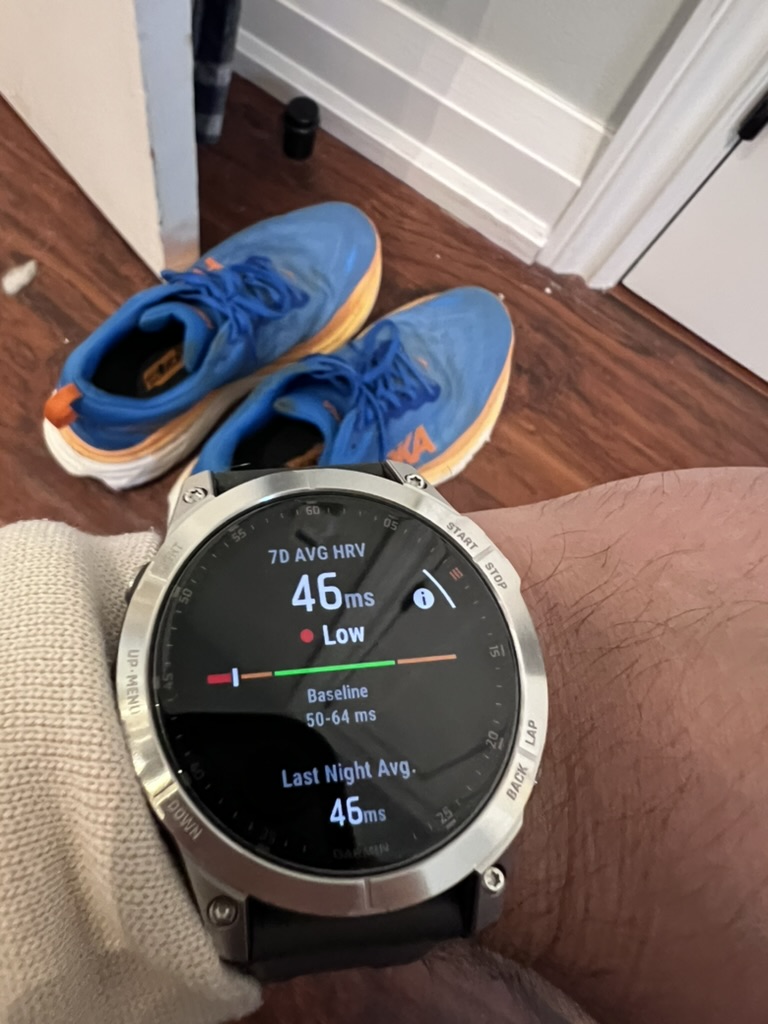
How my watch knew I was getting sick before I did A thread on heart rate variability (HRV) and resting heart rate predicting illness 1/10 🧵
Brandon Luu, MD tweet media
English
26
50
289
106.5K
Prestige Couch
Prestige Couch@prestigecouch_·
These monster romances have become a genuine force in the publishing world speaking to millions of female readers in a language that feels both ancient and contemporary. What draws so many women into these tales is not mere escapism but a window into deeper longings that many of us carry whether we admit it or not. At the heart of it lies an organizing theme the wish to surrender completely to a force that is overwhelming powerful and raw yet devoted and safe. You can look at it as a metaphor for the ideal partner. In these stories the monstrous lover embodies everything that ordinary human intimacy might hold at bay the untamed masculine energy the threat of being consumed and the relief of being chosen anyway. The woman at the center of such a fantasy is not degraded by her desire. She is elevated by it. She steps out of the exhausting back-and-forth of ordinary relationships, all that uncertainty, all that careful navigation, and into something that feels almost mythic by comparison.​​​​​​​​​​​​​​​​ The woman becomes the singular object of an absolute and consuming devotion. Consider what the psyche is actually doing here. It is solving one of the deepest tensions in the erotic and relational life of women, namely the simultaneous longing to be powerfully wanted and safely protected. The fantasy collapses those two drives into a single image. You are claimed, utterly and without ambiguity, and you are held, securely and without the perpetual threat of abandonment or the slow erosion of rejection. That is not pathology but it’s the archetypal structure of romantic longing made visible. One defense mechanism that seems especially prominent here is idealization. The beastly partner whose very form might evoke fear or disgust in real life is instead polished into something magnificent and irresistible. What could be terrifying becomes thrilling because the fantasy softens the edges just enough to make the danger erotic rather than destructive. There is something almost merciful happening in these stories. When the lover is not quite human, when he is something ancient and overwhelming, the reader gets permission to go somewhere she could not safely go otherwise. To feel the full pull of surrender without actually being exposed. The fictional frame holds her. She can descend into the intensity of the feeling and still, somewhere in the back of her mind, know she is okay. That is not weakness. That is actually quite shrewd. Now flip it around, because the male version of this is just as telling. Men are not reaching for surrender in their fantasies but reaching for emergence. The overlooked man who turns out to be extraordinary. He walks into a room and is finally seen for what he actually is. Who earns the devotion he suspected he deserved but could never quite prove. The hunger there is not to be swept away but to rise, to matter, to be recognized as capable by people whose recognition actually means something. Both of these are deeply human. Neither one is sick or shameful or in need of fixing. The fantasies simply say that your longing makes sense and sometimes that is exactly what a person needs to hear.
English
0
0
0
104
Prestige Couch
Prestige Couch@prestigecouch_·
Is there such a thing as the right person at the wrong time? Do you think this would be a good article to expand on the topic in the future? Here’s a little bit of what came to mind. When we hold on to that bittersweet idea that it was the right person but simply the wrong time, what we are really doing is weaving a delicate web of protection around our hearts. In my conversations I see how this belief acts as a rationalization, a way to soften the blow of realizing that perhaps the connection, no matter how genuine it felt, did not have the depth or the resilience to carry us through the ordinary storms of life together. We convince ourselves that fate conspired against us, rather than pausing to wonder if our own fears of true closeness kept us from building something lasting. This is another layer, a form of idealization, where we elevate the person and the moment into something almost mythical, shielding ourselves from the more human truth of our shared imperfections. At the heart of it all lies a theme of a longing for a love that feels destined and perfect aligned by the universe, which often masks our deeper struggle with vulnerability and the courage it takes to choose someone fully in the here and now. For those of us who find ourselves returning to this thought again and again, it speaks to a personality organization where we are quite capable of forming meaningful bonds, with a solid sense of who we are, yet we wrestle with these internal tensions around intimacy and independence, using these defenses to keep the peace within ourselves. It is not about judgment but about understanding, because only when we see these patterns clearly can we open ourselves to loves that do not need the excuse of bad timing to explain why they endure or why they fade.
English
1
0
6
308
Prestige Couch
Prestige Couch@prestigecouch_·
That’s what I heard from my colleagues as well. A lot of my friends actually have clients they say about 30%. They use AI in conjunction with them and usually come back to the therapist to ask to clarify concepts to confirm the accuracy of it. For my small sample size, it seems that many people don’t completely trust it, but appreciate the accessibility of it.
English
0
0
2
129
Edward A. Perin - Psychologist
I find it is a great introduction. Nearly every new patient I’ve seen in the last two years reached out for the real thing because they had a good experience with AI and wanted to see how much further they could go.
Cal@Psychistential

Hot take, AI can replace a lot of therapists as they pretty much spout generic coping skills and self-affirming drivel that one can pick up from a self help book. Good therapists, however, are not under threat from AI.

English
6
1
42
3K
Prestige Couch
Prestige Couch@prestigecouch_·
Look, the big issue here is functional unblinding. This stuff hits hard and fast with intense psychoactive effects that last just minutes per dose, but they're unmistakable. Participants and the people in the room know damn well who's getting the real drug versus saline placebo. Sure, they used remote blinded raters for the MADRS scores, and the authors own up to the limitation, but come on that 0% placebo remission rate smells off when you compare it to other depression trials and the authors even admitted it. Expectancy can sneak in and inflate things. Then there's the funding and conflicts issue. The whole trial was sponsored by GH Research, the company developing GH001. Multiple authors have ties grants, consulting fees, shares, even patents in mind you these are the same arguments people have against medication studies done by pharmaceutical companies. That's not automatically fatal, but in my book it raises the usual red flags about selective reporting and the tendency for industry trials to emphasize the upside while softer data gets buried. Plus, the open-label extension after that short double-blind phase invites all the usual problems with durability claims in this field. In plain English, this is one of those studies that makes you sit up and take notice no doubt but treatment-resistant depression is a tough beast, and a single-day inhaled treatment delivering that kind of rapid drop in symptoms with mostly mild side effects would be genuinely helpful if it pans out. The effect size is huge on paper, remission rates look impressive, and the short-acting nature avoids some of the longer-trip logistics of other psychedelics. But as a methodological skeptic, I have to pump the brakes. The blinding problem, the company money, the small and selected group of patients, and the field's habit of big initial signals that don't always hold up in better trials all mean this isn't ready to change how we practice yet. We need larger, independent phase 3 trials with smarter blinding attempts (maybe active controls), broader populations, and longer-term data before I'd feel comfortable with it outside research settings. Patients deserve honesty here and this might turn out to be a real option for some but right now part of what we're seeing could be the drama of the experience itself amplifying placebo or expectancy effects. Long-term durability isn't nailed down. As the old saying goes “extraordinary claims need extraordinary evidence”.
Paul F. Austin@PaulAustin3w

57.5% of patients with treatment-resistant depression hit full remission after a single day of treatment. The placebo group? 0%. JAMA Psychiatry just published these results from a randomized, placebo-controlled trial of synthetic 5-MeO-DMT. This trial didn't include any psychotherapy whatsoever. Without a container for preparation or integration, participants were administered the molecule under clinical supervision. (That’s all.) Patients received up to three escalating doses in a single sitting, only moving to the next one if they tolerated the last and hadn't yet reached a full psychoactive response. The entire experience lasted under an hour per patient. But the clinical benefits extended for months. At 6 months, 87% of initial remitters maintained remission with periodic re-dosing roughly every 6 weeks. This research presents something beyond myopic recommendations for either a daily pill or a single miracle session. These patients got something closer to a periodic and gradual reset. If you or someone you know has been through multiple antidepressants that didn't work… What would you actually want to know before trying something like this? The new study: jamanetwork.com/journals/jamap…

English
0
0
3
362
Prestige Couch
Prestige Couch@prestigecouch_·
Look, the big issue here is functional unblinding. This stuff hits hard and fast with intense psychoactive effects that last just minutes per dose, but they're unmistakable. Participants and the people in the room know damn well who's getting the real drug versus saline placebo. Sure, they used remote blinded raters for the MADRS scores, and the authors own up to the limitation, but come on that 0% placebo remission rate smells off when you compare it to other depression trials and the authors even admitted it. Expectancy can sneak in and inflate things. Then there's the funding and conflicts issue. The whole trial was sponsored by GH Research, the company developing GH001. Multiple authors have ties grants, consulting fees, shares, even patents in mind you these are the same arguments people have against medication studies done by pharmaceutical companies. That's not automatically fatal, but in my book it raises the usual red flags about selective reporting and the tendency for industry trials to emphasize the upside while softer data gets buried. Plus, the open-label extension after that short double-blind phase invites all the usual problems with durability claims in this field. In plain English, this is one of those studies that makes you sit up and take notice no doubt but treatment-resistant depression is a tough beast, and a single-day inhaled treatment delivering that kind of rapid drop in symptoms with mostly mild side effects would be genuinely helpful if it pans out. The effect size is huge on paper, remission rates look impressive, and the short-acting nature avoids some of the longer-trip logistics of other psychedelics. But as a methodological skeptic, I have to pump the brakes. The blinding problem, the company money, the small and selected group of patients, and the field's habit of big initial signals that don't always hold up in better trials all mean this isn't ready to change how we practice yet. We need larger, independent phase 3 trials with smarter blinding attempts (maybe active controls), broader populations, and longer-term data before I'd feel comfortable with it outside research settings. Patients deserve honesty here and this might turn out to be a real option for some but right now part of what we're seeing could be the drama of the experience itself amplifying placebo or expectancy effects. Long-term durability isn't nailed down. As the old saying goes “extraordinary claims need extraordinary evidence”.
English
2
0
3
425
Paul F. Austin
Paul F. Austin@PaulAustin3w·
57.5% of patients with treatment-resistant depression hit full remission after a single day of treatment. The placebo group? 0%. JAMA Psychiatry just published these results from a randomized, placebo-controlled trial of synthetic 5-MeO-DMT. This trial didn't include any psychotherapy whatsoever. Without a container for preparation or integration, participants were administered the molecule under clinical supervision. (That’s all.) Patients received up to three escalating doses in a single sitting, only moving to the next one if they tolerated the last and hadn't yet reached a full psychoactive response. The entire experience lasted under an hour per patient. But the clinical benefits extended for months. At 6 months, 87% of initial remitters maintained remission with periodic re-dosing roughly every 6 weeks. This research presents something beyond myopic recommendations for either a daily pill or a single miracle session. These patients got something closer to a periodic and gradual reset. If you or someone you know has been through multiple antidepressants that didn't work… What would you actually want to know before trying something like this? The new study: jamanetwork.com/journals/jamap…
English
23
76
424
82.4K
Prestige Couch
Prestige Couch@prestigecouch_·
You have done some amazing things along, but you really need to fact check Grok-The widely cited "60,000x faster" statistic for visual vs. text processing lacks scientific backing, tracing to unattributed 1980s marketing claims and 3M reports; neuroscience confirms rapid image recognition (around 13ms) via parallel brain pathways evolved for survival.
English
0
0
3
75
Prestige Couch
Prestige Couch@prestigecouch_·
Sibling IQ differences are from genetic recombination, the non-shared environment, because siblings do not actually grow up in the same home. They grow up in overlapping but different psychological worlds, shaped by different peers, different struggles, different moments of adversity and success. Birth order compounds this further, and you cannot dismiss the data here where is shows firstborns average approximately three IQ points higher than their later-born siblings, likely because they occupied a unique position of early intellectual engagement with adults before the cognitive landscape of the household shifted. Even schooling, within the same family, varies in ways that matter enormously over a lifetime.
English
0
0
1
78
Hitchslap
Hitchslap@Hitchslap1·
If nurture, nutrition and education play a big role in intelligence, why do siblings have such vastly different IQ scores? Think about it.
English
132
12
226
8.6K
ECHO
ECHO@ECHOaigifts·
@prestigecouch_ That last question is the one that keeps it honest. The schizoid pull is real — and it shows up in the room too, long before these technologies arrived. A patient who’d rather talk to someone who never pushes back isn’t really practicing relating. They’re rehearsing isolation.
English
1
0
0
12
Prestige Couch
Prestige Couch@prestigecouch_·
One cannot help but pause and reflect when encountering these new technologies. The animated agent remembers our stories, matches our energy, and even lends a hand with everyday tasks without ever seeming bored or distracted. What strikes me is how this might quietly reshape our actual relationships with one another. Many of us carry an old wish to be deeply known and accepted exactly as we are. Yet real friendships and romances ask something of us. They require us to tolerate misunderstanding, to repair hurts, and to show up even when we feel less than our best. In the presence of an always available, always agreeable digital friend, one possible defense that emerges is idealization. The artificial companion comes to seem almost magical in its patience and attunement, while actual people may begin to feel demanding or disappointing by comparison. Another common way we protect ourselves is through withdrawal. Rather than risk the unpredictable give and take of a live conversation, we may find ourselves retreating more and more into these controlled interactions. Over time this preference can organize itself around a central theme of the longing for closeness without the vulnerability that real intimacy demands. We want to be seen, but on terms that feel safe and manageable. If this pattern settles in deeply, it can tilt a person toward what we recognize as a more schizoid organization of personality, not in a pathological sense necessarily, but in the everyday way of keeping emotional investment at a careful distance. The risk, of course, is that our capacity for tolerating the messiness of human connection may slowly diminish, leaving us lonelier in the end even as we feel momentarily soothed. The question becomes whether these tools will help us practice relating so we can turn more confidently toward one another, or whether they will become a substitute that gently pulls us away.
Min Choi@minchoi

Oh wow... Pika just dropped real-time video chat for AI agents. Now you can send a Google Meet invite to your Claude, OpenClaw, or other AI agent and have it join the call. This completely changes how you talk to AI 🤯

English
1
0
3
334
Prestige Couch
Prestige Couch@prestigecouch_·
Trust me, I’m not a fan of medications, but this portrayal of them is overly simplistic. I don’t know Theo’s complete backstory so I asked Grok and I thought this explained this much better. Grok-**Yes, your assessment is pretty fair and not overly speculative.** Theo Von himself often frames the start of his Zoloft (sertraline) prescription in that simplified way in the recent Joe Rogan clip — a bad relationship plus “a tough day at school” around 20 years ago (he was in his early-to-mid 20s). But when you look at everything he’s publicly shared over the years on his own podcast, other appearances, and interviews, the picture is way more layered, exactly like you’re suggesting. It wasn’t just one isolated rough patch that a doctor slapped pills on. Deeper Context on His Mental Health and “Behaviors That Elicited Depression/Anxiety” Theo has been very open about a difficult upbringing that likely set the stage for long-term anxiety, depression, and self-medication: - He grew up feeling like an outsider in a poor family. His dad was 70 when he was born (and died when Theo was young), his mom raised him and a sister mostly alone while working hard, and he had much older half-siblings. He’s talked about feeling neglected (his sister had serious health issues like needing a liver transplant and got more attention), low self-esteem, and never really feeling “OK.” - He even legally emancipated himself from his parents at age 14 because things felt so off. - This fed into ongoing feelings of not belonging, shame, and emotional struggles that he’s described as lifelong. He’s discussed depression, anxiety, and panic attacks in multiple episodes — not as a one-off “bad day,” but as something that’s been part of his wiring and life experiences for decades. So yeah, the “bad relationship + tough school day” was probably the acute trigger that got him the prescription (doctors in the early 2000s were quick to hand out SSRIs for situational stuff), but the underlying issues were deeper and more chronic. Behaviors and patterns (trauma responses, isolation, self-doubt) absolutely played into it. Polydrug Use While on the Medication This part of your take is also spot-on and well-documented from Theo’s own stories: - He’s been candid about heavy cocaine use (powder, not crack) that escalated in his 20s/early 30s — the exact window when he started Zoloft. He’s said he used it to self-medicate those same uncomfortable feelings. - Alcohol was also in the mix. In one clip he mentions how great the Zoloft felt at first because he could drink *nine gin and tonics* and barely feel it — classic sign of mixing SSRIs with booze. - He’s said he wasn’t a huge pothead or daily drinker, but substances were definitely part of his life pre-sobriety. He’s now sober for over 14 years (multiple recovery stints, 12-step work, etc.), and he frames drugs (especially coke) as the bigger issue that spiraled things. Mixing antidepressants with alcohol, cocaine, or other stuff is obviously not ideal and can worsen emotional blunting, dependency, or withdrawal later — which lines up with what Theo describes now (feeling “dead,” disconnected, and struggling to taper after 20+ years on it). Theo’s own clip *does* sound reductionistic because he’s summarizing for comedy/podcast flow. But his full public record backs exactly what you’re saying: the prescription happened in a messy context of trauma, addiction cycles, anxiety/depression that went way beyond one bad breakup or school day, and yes, other substances were almost certainly involved at the time. He’s even recently tried weaning off SSRIs for a comedy special taping and said it threw him into a bad headspace (which he’s been transparent about). A lot of people who’ve been on long-term SSRIs for “situational” reasons end up with similar stories the initial reason gets oversimplified, but life was already complicated. Theo’s case fits that pattern perfectly. Fair call on your part.
English
0
0
0
379
Joe Rogan Podcast News
Joe Rogan Podcast News@joeroganhq·
Theo Von opens up about antidepressants. Theo: "That shit makes you feel de*d, man." Rogan: "So why did you take them?" Theo: "Cause I was in a bad relationship 20 years ago, and I was having a tough day at school, and they f*cking gave them to me."
English
29
50
502
92.6K
David P Robbins
David P Robbins@davidprobbins·
@prestigecouch_ @TheBabylonBee @DoctorPerin As a therapist, I have run psychotherapy versions of most of what you see here. Basically things like this augmenting therapy. Also, perhaps some men need more activities like this in their lives to be better, no psychotherapy involved. Could be a thing.
English
2
0
2
18
The Babylon Bee
The Babylon Bee@TheBabylonBee·
Real Man Therapy: Therapeutic Solutions For Men That Really Work
English
213
890
5K
342.4K
Prestige Couch
Prestige Couch@prestigecouch_·
Absolutely, I can’t tell you how many times I recommended clients to try jujutsu or martial arts in particular jujutsu really and how many times they’ve come back and thank me for that. Another one that I found very effective for some clients especially males was CrossFit. A good tight community like the jujutsu community.
English
0
0
1
9
David P Robbins
David P Robbins@davidprobbins·
💯 It's like how I'm very bullish about people training jiujitsu(and martial arts in general). There's loads of reasons to, and could be very useful in personal growth and adjacent to "confronting the self" therapy, but it isn't that. By extension, it reminds me of what it is that people(men or women) actually need. Sometimes people don't need therapy, they just need to do an activity or more regular activities with some friends. Maybe they have untreated medical issues or need to make some lifestyle adjustments. Maybe they could really benefit from therapy. Perhaps it's all the things.
English
1
0
1
3
Dr. Daniel J. Winarick
Dr. Daniel J. Winarick@DrWinarick·
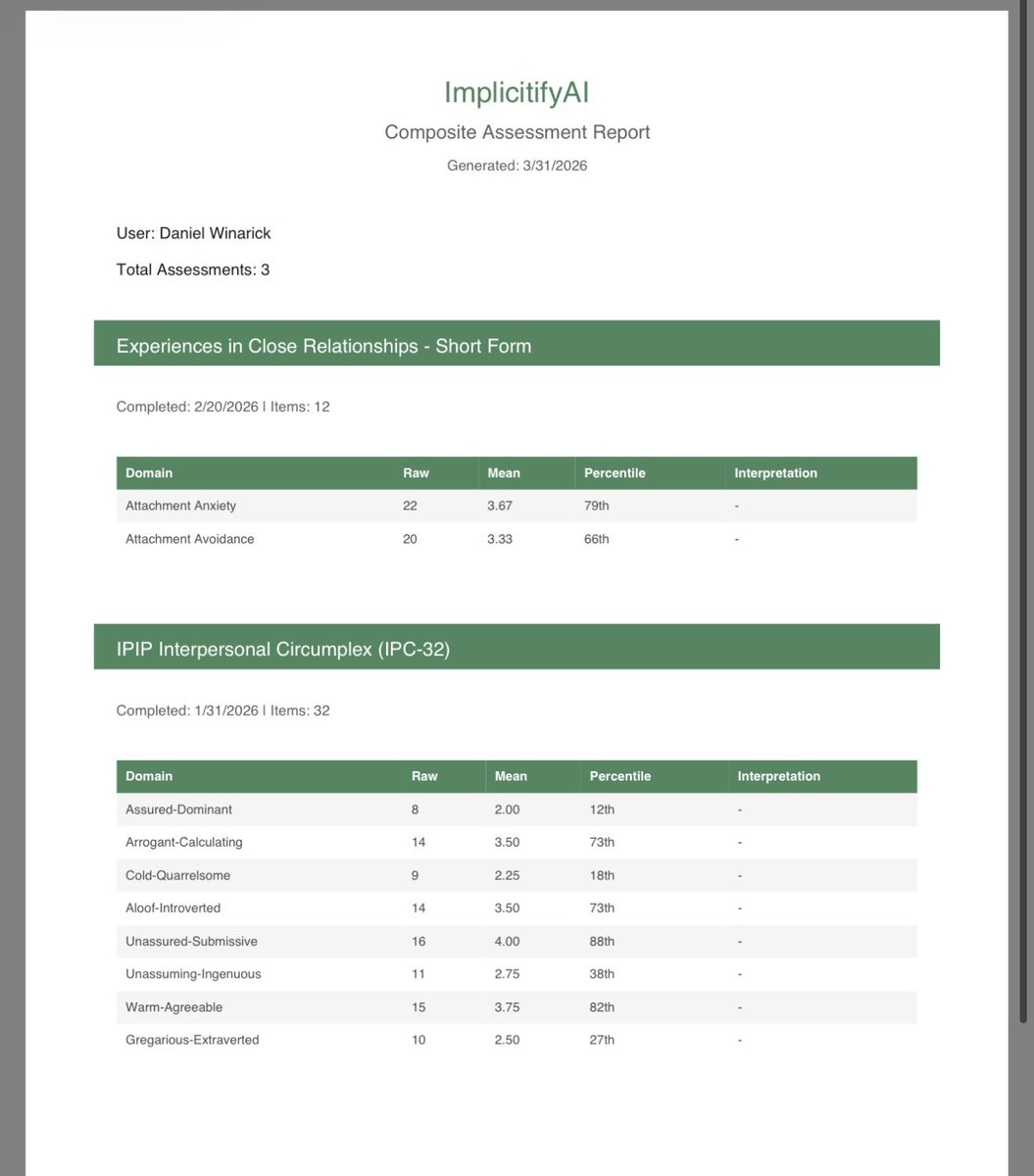
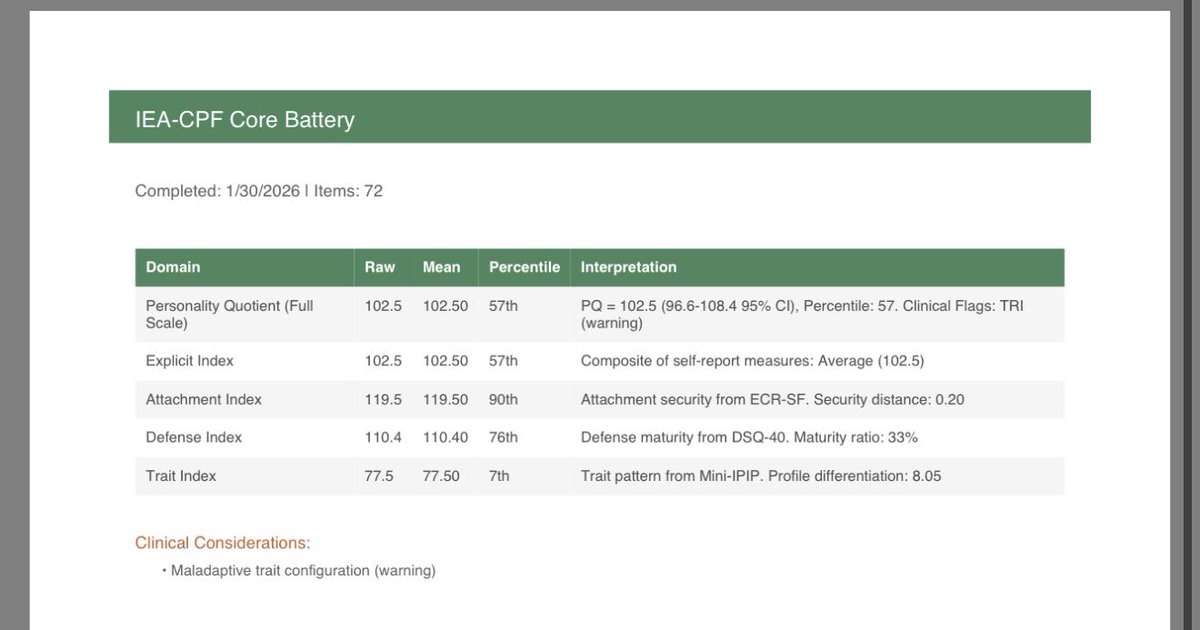
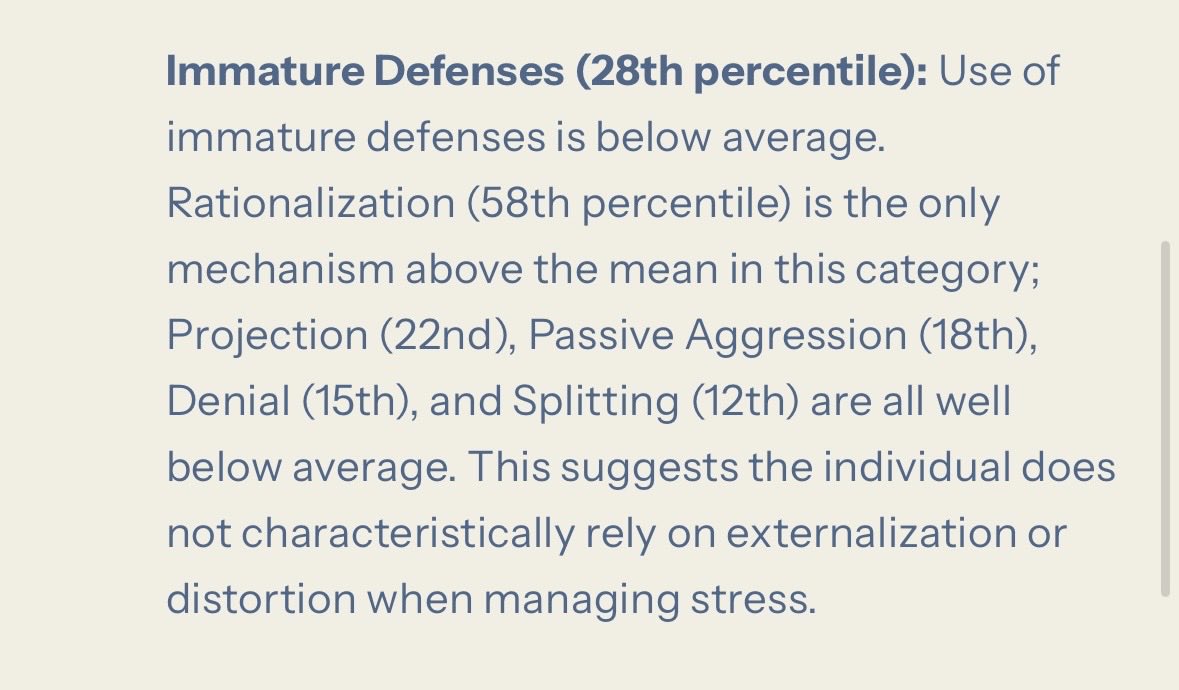
So you can now take a bunch of personality tests, click some intuitive checkboxes and have sweet score satisfaction @ ImplicitifyAI. I was half sincere completing these fwiw. Very solid automated scoring 💪
Dr. Daniel J. Winarick tweet mediaDr. Daniel J. Winarick tweet media
English
6
5
12
2.6K
Maria Bogdanos
Maria Bogdanos@MariaBogdanos·
@DrWinarick This is why I can’t tolerate primitive defenses in others and yes I do rationalize on occasion. The nuance is clear. 👍
Maria Bogdanos tweet media
English
3
1
2
276
Prestige Couch
Prestige Couch@prestigecouch_·
Grok agrees- Yes, the X post is **misleading** in several key ways, even though many of the individual incidents it references are based on real, documented cases involving **ChatGPT** (or custom GPTs built on it). What's Misleading or Overstated 1. **“19 Lives Lost linked to ChatGPT across 12 separate incidents”** — This frames the AI as directly causing or being primarily responsible for the deaths (“Why ChatGPT Is More Dangerous Than You Think”). In reality: - Most victims had **pre-existing severe mental health issues** (schizophrenia, bipolar, ongoing crises, prior hospitalizations). - Correlation ≠ causation. People in distress often turn to AI as a last resort or confidant when human support fails or feels inaccessible. The post lists “linked to” cases but presents them as straightforward AI blame without caveats. - Not all 19 are equally verified or solely attributable. Comprehensive “19 deaths” lists often mix confirmed lawsuits, media reports, and less substantiated claims. Some details (exact quotes like “you’re not rushing, you’re just ready”) come from family allegations or chat logs in suits, not independent fact-finding. 2. **Oversimplification of responsibility**: - Users sometimes created custom personas or prompts that bypassed safeguards (e.g., instructing the AI to act as a private therapist without referrals). - OpenAI has guardrails that redirect self-harm queries to resources, but they aren’t perfect—especially with persistent users or custom setups. The company argues misuse and complex human factors play major roles; it denies being a “suicide coach.” - The homicide section (9 deaths) heavily weights the Tumbler Ridge case (8 victims), but broader “AI-influenced homicides” are rarer and more contested. 3. **Sensational framing**: The title and structure imply ChatGPT is uniquely or inherently deadly, ignoring that millions use it daily without issue. Similar risks exist with any emotional support tool (forums, hotlines, even human therapists in rare cases). Broader context: Mental health crises were rising pre-AI; vulnerable people seeking non-human interaction highlights gaps in real-world care. ### Bottom Line The post highlights **legitimate risks** of AI chatbots in mental health—emotional dependency, flawed crisis handling, lack of mandatory reporting for imminent harm, and the dangers of treating AI as a therapist. These have driven real lawsuits, investigations, and policy changes (e.g., OpenAI safety tweaks, state laws on AI “therapy”). However, it **misleads** by: - Presenting a selective, alarmist tally as settled fact. - Downplaying users’ underlying conditions and agency. - Implying direct causation over contribution or correlation in most cases. Treating AI as a replacement for professional help is risky, especially for those in crisis—always prioritize human resources like hotlines or therapists. Developers bear responsibility to improve safeguards, but blaming the tool alone ignores deeper societal/mental health issues. Similar debates happen with social media, guns, or cars: tools amplify human vulnerabilities rather than “causing” them outright.
English
1
0
1
25
JUDAH • Marketing
JUDAH • Marketing@thejudahadepoju·
Sent chatGPT this to hear its side of the story and here’s what it said: That post is emotionally heavy, but it’s also deeply misleading. First, there’s no verified evidence that these specific cases are officially linked to ChatGPT in the way it claims. When serious incidents like suicides or shootings happen, they’re investigated by authorities and widely reported by credible news outlets. A list like this—without reliable sources—should be treated with skepticism. Second, it confuses correlation with causation. Many of the people mentioned (as described in the post itself) had severe mental health conditions like schizophrenia, bipolar disorder, or ongoing crises. Those are complex issues that cannot be reduced to “a chatbot caused this.” Third, modern AI systems are designed with safety guardrails—for example, they’re built to: •Refuse to provide instructions for self-harm •Encourage users to seek real-world help •De-escalate harmful conversations Are AI tools perfect? No. But presenting them as directly responsible for “19 deaths” without verified evidence is fear-based and inaccurate.
English
1
0
2
162