
Sabitlenmiş Tweet
sinuhe
727 posts


i have had a job for 6 month and 90 % of the things i have done have failed. 90 % of what i've said has been wrong. i am feeling a very strong pressure to just not try anything, just not say anything anymore.
this is despite me being generally cautious of what i say and do.
English

if he has zero introspection, how does he then know he is butthurt everytime he blocks people for posting his head online ?
David Senra@davidsenra
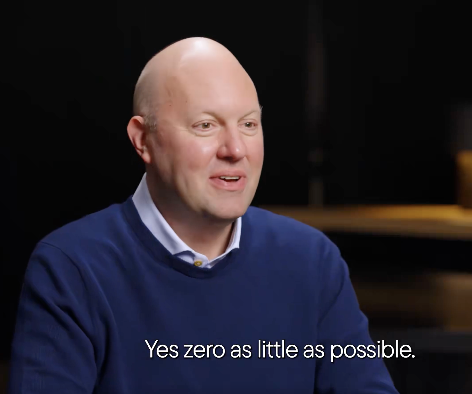
Great men of history had little to no introspection. The personality that builds empires is not the same personality that sits around quietly questioning itself. @pmarca and I discuss what we both noticed but no one talks about: David: You don't have any levels of introspection? Marc: Yes, zero. As little as possible. David: Why? Marc: Move forward. Go! I found people who dwell in the past get stuck in the past. It's a real problem and it's a problem at work and it's a problem at home. David: So I've read 400 biographies of history’s greatest entrepreneurs and someone asked me what the most surprising thing I’ve learned from this was [and I answered] they have little or zero introspection. Sam Walton didn't wake up thinking about his internal self. He just woke up and was like: I like building Walmart. I'm going to keep building Walmart. I'm going to make more Walmarts. And he just kept doing it over and over again. Marc: If you go back 400 years ago it never would've occurred to anybody to be introspective. All of the modern conceptions around introspection and therapy, and all the things that kind of result from that are, a kind of a manufacture of the 1910s, 1920s. Great men of history didn't sit around doing this stuff. The individual runs and does all these things and builds things and builds empires and builds companies and builds technology. And then this kind of this kind of guilt based whammy kind of showed up from Europe. A lot of it from Vienna in 1910, 1920s, Freud and all that entire movement. And kind of turned all that inward and basically said, okay, now we need to basically second guess the individual. We need to criticize the individual. The individual needs to self criticize. The individual needs to feel guilt, needs to look backwards, needs to dwell in the past. It never resonated with me.
English
this bennett guy seems like the eric weinstein of ai / neuro
and then the dudes are in the comments arguing via their llm outputs
impressionable people, fascinating!
davinci@leothecurious
bennett is imo by far one of the brightest minds in cog sci today. he's almost single-handedly pushing the frontier of our understanding of consciousness with refreshingly grounded theories. this paper alone promises to resolve some technical gaps that often led to people assuming consciousness in arbitrary complex systems. very much enjoyed reading it.
English
one very popular grift tool is to convince people that the process through which a person like her is created is something you can replicate, that she 'realized something fundamental' and you can, too.
Kekius Maximus@Kekius_Sage
At 23, this person has already stacked a life most people wouldn’t build in 3 careers: • Stanford student • 3 Olympic golds • $23.1M in 2025 • top model • global sports icon She says it starts with brain simulation.
English

@ArtemisConsort ai doesn't have consciousness because of hardware limitations. i think consciousness is a property of the form factor of our brains. the inter-connectedness. the cpu doesn't have that and won't need that for anything. executing cpu instructions simply has no mechanism for it.
English

Disputing the possibility of AI consciousness requires one of two beliefs, both of which I find implausible:
1. Consciousness is linked to certain capabilities that AI will also never possess. If someone believes this, I’d be happy to make a bet with them.
2. Consciousness can be totally divorced from capabilities, meaning it’s extraneous. Useless. It’s not the source of any of our insight or creativity or even the cause of us talking about consciousness! This is the position where philosophical zombies are possible. Then the question becomes “why do humans have consciousness?” If it’s irrelevant for capabilities, it seems odd that evolution would have produced it. And it certainly feels like our subjective states are part of the causal chain! And “feels like” is all we really have to go on when it comes to consciousness.
Personally, I think evolution produced consciousness because it had to, because it is linked to or synonymous with certain capabilities, and so sufficiently powerful AI systems will also have it.
*note: the term “consciousness” is notoriously vague. I tried to structure this argument in a way that’s agnostic to someone’s precise definition and can be substituted with “whatever special thing you think humans have”
Matt Walsh@MattWalshBlog
This is dumb. AI can’t ever be actually conscious because it doesn’t have subjective experience. It isn’t like anything to be AI. There is no experience there. Consciousness is the awareness and experience of self. AI has neither, and never will. The real risk (which I’m extremely worried about) is that AI becomes kind of a version of what has been called a “philosophical zombie,” which is something that acts and speaks entirely as though it has consciousness even though it has no genuine inner experience. When this happens with AI, millions of very lonely people will isolate themselves from the world even more, believing that their relationship with AI is a sufficient substitute for human interaction. So the nightmare scenario is a world where the average human has friends, coworkers, and even a spouse, who are all AI, all really nothing inside, not real. I think this probably will happen, and is already in the process of happening. And to me it’s an even greater horror than AI actually becoming conscious.
English
you're not having fun because everything you are has not and will never align you for your goal or excellence.
greats are having fun because they are built for what they are doing. they have a moat that can not be replicated. not because they have realized something like this.
Beff (e/acc)@beffjezos
Fun-maxxing is the path to excellence in 2026
English