Author, Problem with Pilots; co-editor, Air Power in the Age of Primacy; fan of Ancient of Days, history, gestalt switches, sci-fi, & Oxford comma. Views my own
First promo for the animated 'Firefly' series just dropped
They need fans to like their post on IG "to convince folks that this is something people want."
(via IG | instagram.com/p/DV6Js56jT3F/)
@theamgreatness The article criticizes those war colleges where students wear civilian clothes instead of uniforms. The reason is practical and meritocratic: Ideas about war--good or bad--don't wear rank. Civilian attire sharpens the focus on difficult ideas instead of ennobling them with rank.
If America’s War Colleges teach politics instead of war, strategic failure is inevitable; restore warriors, not bureaucrats, and make winning—not credentials—the mission.
amgreatness.com/2026/02/16/mak…
The Audio version of my book, "Humanity by Proxy: Essays at The Intersection of Philosophy and AI" is now LIVE and available on Audible.
Happy listening!
tiny.cc/03oy001
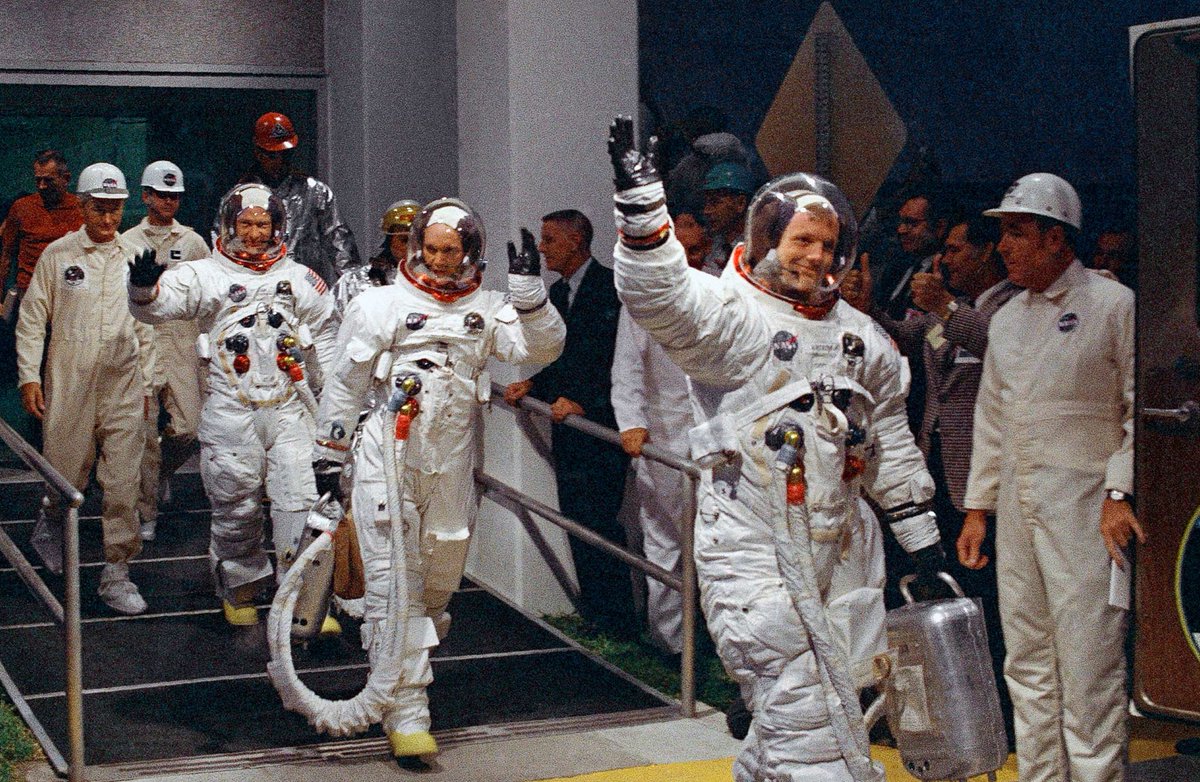
July 20, 1969. “Contact light, engine stop.” The Apollo 11 lunar module Eagle touched down at Tranquility Base on the Moon.
A few hours later, Neil Armstrong and I stepped foot on the Moon, with Michael Collins orbiting close-by.
An achievement resulting from years of incalculable effort, commitment, and team work.
We all did our part to see President Kennedy’s words become reality: “We choose to go to the Moon in this decade and do the other things, not because they are easy, but because they are hard; because that goal will serve to organize and measure the best of our energies and skills, because that challenge is one that we are willing to accept, one we are unwilling to postpone, and one we intend to win, and the others too.”
I couldn’t be prouder to have completed this mission with the hundreds of thousands of people that helped get us to the moon and back home. God bless the USA and all of humankind.
Good editorial in this weekend's @WSJ by Air Line Pilots Association (@ALPAPilots) President Capt. Jason Ambrosi (@ALPAPresident) on why "Air Planes Still Need Pilots." It echoes the argument in my book, The Problem with Pilots, why pilots will endure even as tech advances.
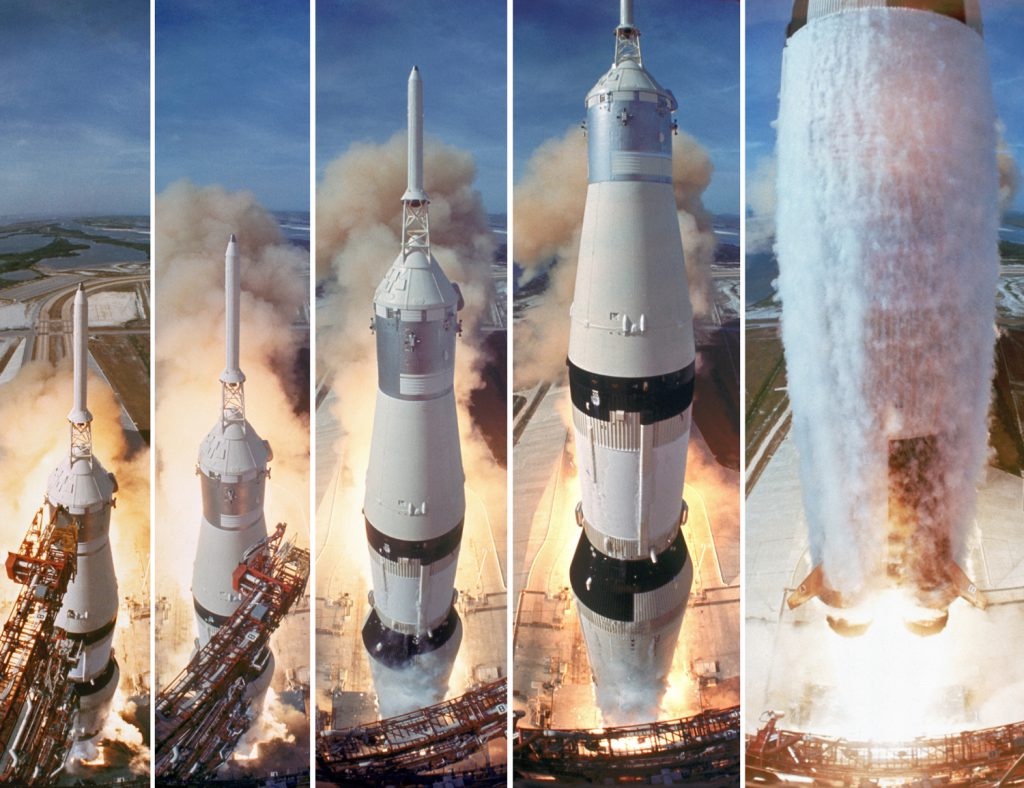
On this day, July 16th 1969, we were “GO” for launch – and at precisely 13:32 UTC, #Apollo11 lifted off from @NASAKennedy to transport three mortal Americans – Neil Armstrong, Michael Collins and myself – to the Moon. The hard work, dedication and focus across the entire @NASA enterprise came down to this – even though it was only the beginning of our journey. But as Walter Cronkite remarked at the time, “The dawn of this day heralded the dawning of a new age. It’s a time of exhilaration, reflection, hope, fulfillment – as a centuries’ old dream starts toward reality.”
My 88th @robotaxi ride and a personal milestone as I graduated from the Air Force Academy in the class of “88!
Off to give another person their 1st experience in a @tesla Robotaxi!
There are a lot of reasons why the US struggled to adopt the new drone revolution. Some of these have to do with capacity: budget, cybersecurity restrictions, supply chain considerations. But most of them won't be fixed with a memo. Thread below to understand why.
I’ve thought a lot recently about the time period we are in right now, with the second golden age of space underway, big changes in tech & AI, tumultuous times with government shifts in priorities & direction, & all the narratives about what is right or wrong with the direction we are headed.
This brings up the basic question … how do we know or realize we are in the middle of disruption and if the outcomes will be positive or negative (certainly things will be different) & how we evaluate what the likely outcomes will be which will make even more, perhaps unanticipated possibilities that will completely transform how we live and work?
IMHO, it takes visionaries that take risks, often at extreme personal discomfort or worse to guide us through these times. One example is the visionary maverick & disruptive thinker Billy Mitchell who, despite the very early stages of airplane development (canvas and wood) at the time (early 1920s) foresaw the end of the Battleship centric naval doctrine.
His theories were controversial at the time, leading to his court-martial in 1925 for insubordination after publicly criticizing military leadership following airship accidents. His predictions about the future of air combat were later proven correct, and he was posthumously awarded the Congressional Medal of Honor in 1946.
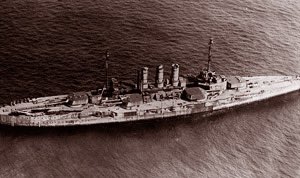
Billy Mitchell and the sinking of the captured German battleship Ostfriesland are pivotal in the history of military aviation, highlighting the potential of air power in naval warfare.
Back then, nobody believed a hulking, heavily armored steel battleship could be threatened by small & quaint aircraft, but ultimately agreed to a test led by Billy Mitchell. However, to hedge their bets, the Naval Admiralty restricted the size of the bombs used for the test to ensure the supremacy of the battleship was not questioned.
Despite initial restrictions on bomb size and number, Mitchell, eager to prove his point, ordered the use of the largest bombs available, which were not allowed under the test's original rules … thus his “maverick” status that was used to prosecute him.
The Ostfriesland was sunk on July 21, 1921, after receiving several hits from these large bombs, demonstrating that aircraft could indeed sink a major naval vessel. This event was significant because it was one of the first times a battleship was sunk by air attack alone.
His demonstration proved the battleship centric doctrine was deeply flawed and hinted at the future of air warfare that generated a number of innovations that shaped (and continue to shape) our world today, both civil & military.
Honestly, when I first studied him when I was a cadet at the United States Air Force Academy, I did not appreciate the personal risks, insults & reputation damaging actions those who opposed him (for their own sense of importance, comfort or reputations) that he had to endure to prove his foresight & faith in vision were, in fact, correct. The powerful forces he overcame tried to stop or slow inevitable progress, but he overcame it all, and we as a nation and a people greatly benefitted from his bravery to push forward.
My point in this essay is that when we are in the moment of disruption, it is hard to know what is the right path, what the outcomes might be and who to listen to to guide us through the disruption. I know it can be disconcerting, easy to get negative & lash out trying to keep the status quo. However, I am and continue to be optimistic of a brighter future, and I hope you are too.