Jacqueline Barnes

2.5K posts

Jacqueline Barnes banner
Jacqueline Barnes

Jacqueline Barnes

@profjacquelineb

Emerita Professor of Psychology specialising in early intervention, parenting, and supporting disadvantaged families. Trustee, Home- Start Worldwide.

Katılım Kasım 2018
229 Takip Edilen262 Takipçiler
Jacqueline Barnes
Jacqueline Barnes@profjacquelineb·
COT20s – home learning environment and screen time at age 2: research brief ISBN 978-1-83870-739-2, RR1592. children who spent the most time on screens (average five hours a day) scored lower in vocabulary tests and more emotional and behavioural difficulties likely @BirkbeckUoL
English

0
0
1
15
Gabriella Conti
Gabriella Conti@Gabri_EllaConti·
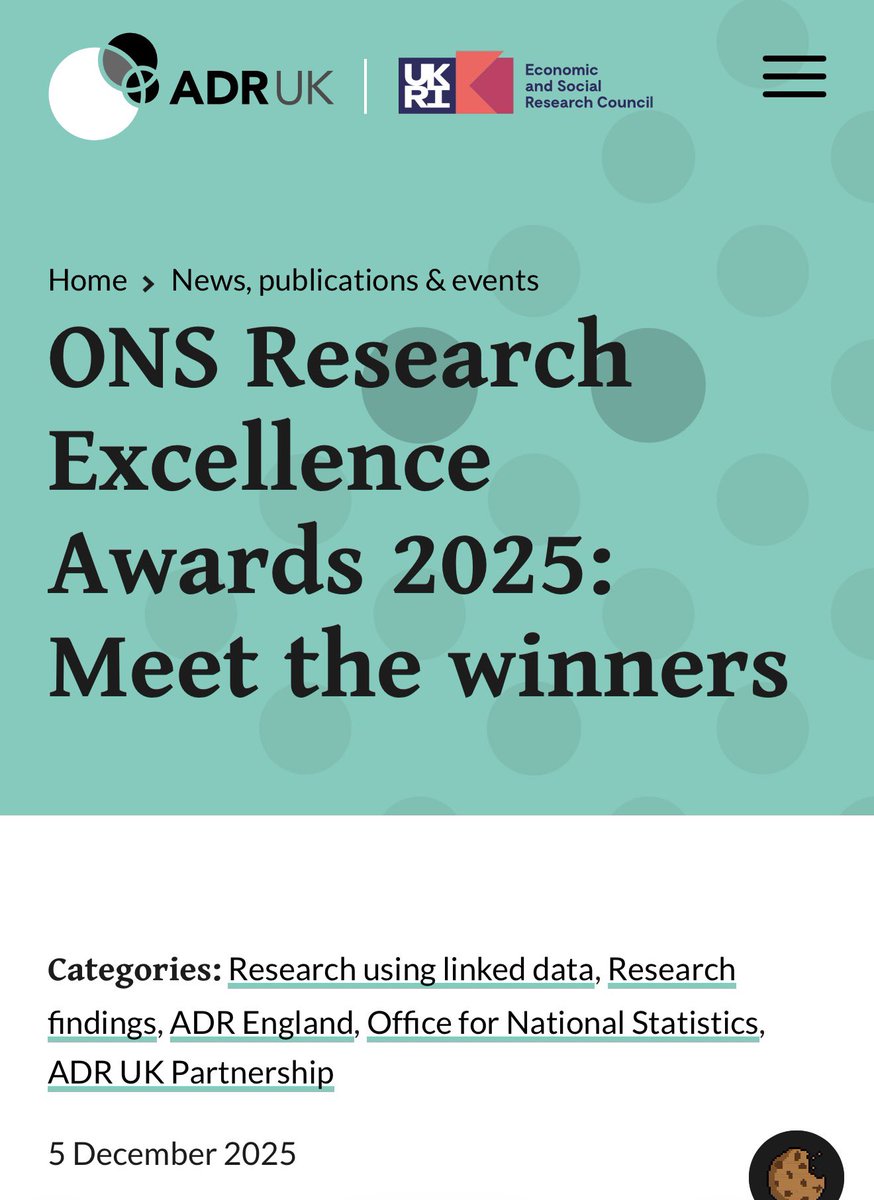
🎉 Our Sure Start work takes home award 2️⃣! Very happy that our IFS research on the short- and medium-term effects of #Sure #Start on children’s outcomes has won the #Impact of Analysis #Award at the @ONS @adr_uk #Research #Excellence #Awards 2025! 🎉 adruk.org/news-publicati…
Gabriella Conti tweet mediaGabriella Conti tweet mediaGabriella Conti tweet media
Institute for Fiscal Studies@TheIFS

We're very pleased to share that our report on the effects of Sure Start on children’s outcomes has won the 'Impact of Analysis' Award in this year's @ONS Research Excellence Awards. 🏆 Find out more: ifs.org.uk/news/ifs-sure-…

English
2
1
7
1.4K
Jacqueline Barnes
Jacqueline Barnes@profjacquelineb·
Best Start Family Hubs draw on "what works from Sure Start ": designed with local communities, power of parental engagement, importance of leadership and skills to work effectively with families. The National Evaluation reported on all these in detail ness.bbk.ac.uk
English
0
0
1
25
Jacqueline Barnes
Jacqueline Barnes@profjacquelineb·
Details of all government reports for the National Evaluation of Sure Start, conducted at @BirkbeckUoL are now back online 😀 lnkd.in/eZ78bJMN Details also about other publications. Papers authored by myself or prof Edward Melhuish are on BIROn eprints.bbk.ac.uk
English
0
1
2
70
Jacqueline Barnes retweetledi
Gabriella Conti
Gabriella Conti@Gabri_EllaConti·
Proud of our #SureStart work @TheIFS that we started in 2015 tx to @NuffieldFound (shorturl.at/QPoHY)—and that today it is at the basis of the new @GOVUK @bphillipsonMP Family Hubs announcement! ✨ Final report here: ifs.org.uk/publications/s… And don’t miss the podcast!👇🏻
Institute for Fiscal Studies@TheIFS

NEW PODCAST: The policy that changed childhood in the UK @PJTheEconomist is joined by @ckfarquharson and @edballs to explore the legacy of Sure Start: what impact it had, how current services compare, and what we can learn from it. 🎧 Listen here: ifs.org.uk/articles/polic…

English
0
5
12
2.1K
Jacqueline Barnes retweetledi
Gabriella Conti
Gabriella Conti@Gabri_EllaConti·
Delighted to see today’s announcement. Having co-led the @TheIFS evaluation of #SureStart, now leading the economic evaluation of #StartforLife, and contributing to the evaluation of #FamilyHubs, I’m proud to help build on this legacy. Every child deserves the best start. 👶🏻
Bridget Phillipson@bphillipsonMP

This was one of the first Sure Start centres — one I was very proud to be involved in before entering politics. Now, we’re making sure all families will have access to this kind of support – rolling out Best Start Family Hubs through our Plan for Change.

English
0
3
5
616
Jacqueline Barnes retweetledi
Sebastian Kraemer
Sebastian Kraemer@sebkraemer·
Extinction Rebellion Global@ExtinctionR

"Imagine how much damage a net as big as ten jumbo jets causes as it drags across the seabed. It catches everything in its path, destroys marine life, releasing the ‘blue’ carbon stored there. Bottom trawling emits more greenhouse gases than aviation." youtu.be/zddTB9PzmsA?fe… #OceanRebellion unfurled a 150m, record breaking, screen printed banner to mark the start of #UNOC2025 Amazingly, 150m represents not the length of a bottom trawling net, but the width of it's jaws at its mouth (they can even be wider!) So wide that ten jumbo jets could fly inside. These huge bottom trawling nets are weighted and dragged across the seabed destroying corals, seaweed and catching any marine life in their path. This means countless sea turtles, dolphins and angler fish are suffocated and then just thrown overboard. This is 93% of *all* discards in the EU, once bottom trawling is history, discards will almost end. “The Ocean can recover quickly, but only if we halt this destructive practice now, within a few years these precious ecosystems will regenerate and fish populations will stabilise. We just need to give life a chance, if we don’t, there will be no more fish in the sea.” #WorldOceansDay #WorldOceansDay2025 #AnotherOceanIsPossible

ZXX
0
2
2
120
Jacqueline Barnes retweetledi
Gordon Brown
Gordon Brown@GordonBrown·
I welcome the school meals decision for England and thank Marcus Rashford and his food campaign.
English
391
696
6.5K
266.1K
Jacqueline Barnes retweetledi
Sebastian Kraemer
Sebastian Kraemer@sebkraemer·
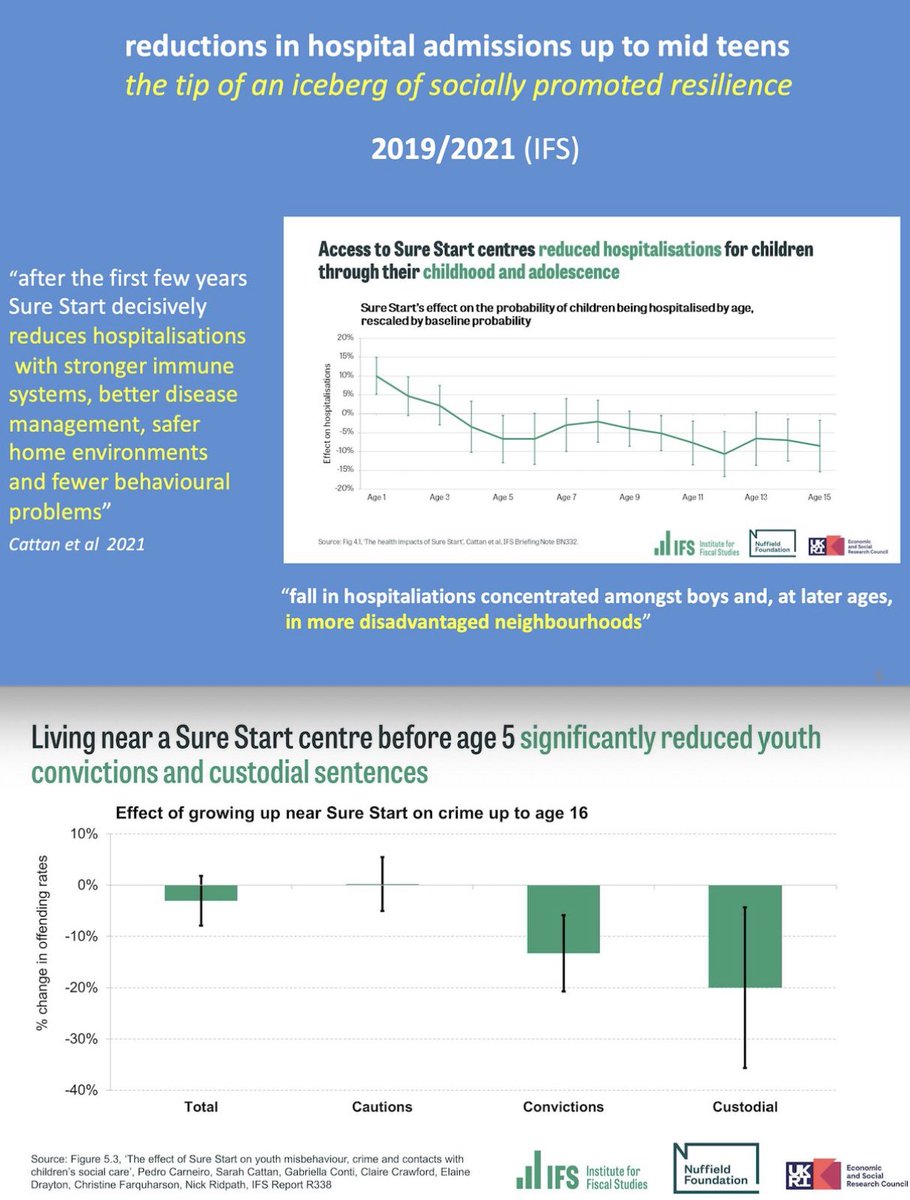
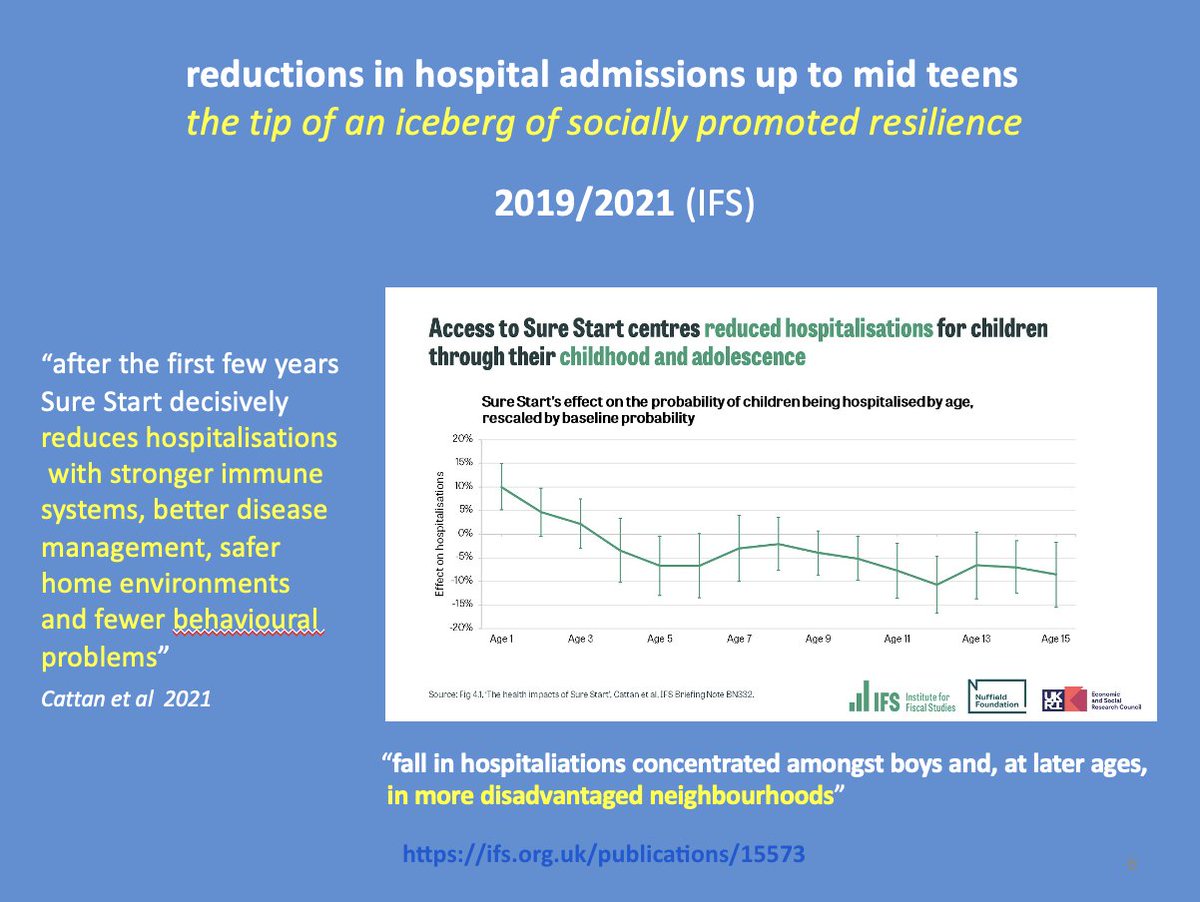
the Child Poverty Taskforce - some in the Cabinet Office - is considering #SureStart as an option. 25 years ago, SureStart gave the poorest under 5s a priceless boost into their teens • better health (especially boys) • higher GCSE grades •  fewer convictions
Sebastian Kraemer@sebkraemer

besides improving GCSE scores of the poorest children #SureStart improved their health and reduced levels of crime @Sarah_Cattan @Gabri_EllaConti @TheIFS

English
0
2
3
109
Jacqueline Barnes retweetledi
Professor Azeem Majeed
Professor Azeem Majeed@Azeem_Majeed·
I was explaining to a student how we did literature searches in the 1980s and 1990s when I was a student and then a junior doctor and junior researcher. We had to look up articles in a printed copy of Index Medicus, and then pushed a trolley around the library to collect the journals so we could photocopy the articles. When we got the location of the journal, we would sometimes find that somebody had cut out the article were looking for! Sometimes, articles were stored on microfiche and we had to peer down a special projector to view the article. We also had to pay for the photocopies, which made us very selective about the articles we used in our literature reviews. And when we got to the photocopier, we had to hope that it had not broken down or that the queue to use it was too long. Arriving well before library closing time was also important to give us time to photocopy the articles we wanted. Online articles did not exist back then and sometimes we had to wait for weeks for articles to arrive using the Inter-Library Loan Service if they were not in the library’s own collection. But going to the university library was not only about locating and photocopying articles. It also fostered social interactions. The library was a place to meet and discuss ideas with other students and researchers. The shared experience of struggling with the photocopier, waiting for interlibrary loans and discussing our projects created a sense of community and often provided useful feedback on our work. Eventually, printed copies of Index Medicus were replaced by a CD-ROM version (which you had to book a slot in advance to use) and then eventually by online bibliographic databases like PubMed. And now, we have immediate access to a vast number of online journal articles so that we can view and download articles without any difficulty. The speed of searching online bibliographic databases has revolutionised research, allowing students and academics to explore far more articles in a fraction of the time it took previously. I then went onto explain that the terms 'cut' and 'paste' in modern computer programs are there because that is once what we actually had to do. We cut out graphs and diagrams with scissors and then pasted them into documents using glue because the first word processors were text-based and could not include any images or graphs. When we presented our work, we used hand-written acetate sheets on an overhead projector. Making mistakes was expensive as these acetates were not cheap – particularly for students. Moving to acetate sheets that could be printed on was a big step forwards (or so it seemed at the time). Presenting at professional conferences meant using (expensive) slides that had to be prepared well in advance. Errors that you couldn't correct were common and you often noticed these for the first time when you were presenting to you audience. Very embarrassing if the error was noticeable. Eventually acetates and slides were replaced by PowerPoint projectors that projected directly from computer files. So, presentations could be prepared quickly (and often at the last minute!). When I was a student in the 1980s, all our course work was hand-written. Most of us did not have typewriters and very few of us could type. When word processing software became common later in the decade, it meant no more hand-written course work or the use of Tippex to correct typing errors from pressing the wrong keys on a type-writer keyboard or retyping whole pages to correct errors. Course work and articles could be easily edited and only printed when we were happy with the final result. My first printer was a 9-pin dot matrix. It was noisy, slow and the quality of the print was poor. But it produced much more legible output than hand-written documents. Moving to 24 pin dot matrix printers was a big advance in the quality of printed documents. Eventually, affordable ink jet and laser printers became common. The shift from handwriting to word processing had a profound effect on the academic writing process. It facilitated revising and editing, leading to more polished and complex writing. It also changed the way people thought about writing, making it a more iterative process. Moving from cassettes to floppy disks and then hard disks for storage of data files were also big advances. My first hard disk was 20MB in capacity. Such was the small size of computer programs and their data files in the 1980s, I couldn’t come close to filling it. Now a word document with some embedded images can often be larger than 20MB. Advances in technology have also changed the culture of research and academia. The speed of communication, the ability to collaborate globally, and the sheer volume of information available have all transformed the academic landscape. We can now communicate with researchers globally by email or video very easily, allowing for more international collaborations than we might have had in the past. My student clearly thought I had grown up in a technological stone age. In many ways, her reaction was like mine when older people used to tell me what life was like in the 1930s and 1940s during the Great Depression and World War Two. But although the 1980s and early 1990s were a more technologically-backwards era than now, there were benefits in being a student then. We had our course fees paid and received a grant to cover our living costs, so we did not graduate with the vast debts that current students have. We ended by discussing what changes that developments in IT might bring the student’s career. For example, artificial intelligence (A)I will become an integral part of our daily lives, powering everything from personal assistants that manage our schedules and finances, summarise research papers and carry out systematic reviews; to AI-driven scientific discoveries that accelerate research in fields such as medicine, computer science, chemistry, and climate change. This AI will be highly personalised, adapting to our individual needs and preferences to provide customised experiences in various aspects of our lives, such as education and healthcare. Other advances could include computers that are vastly more powerful than the ones we use now. Virtual and augmented reality will become may also become more integrated into our lives, offering immersive experiences for education and research. Though the technology of the 1980s and early 1990s may seem antiquated in comparison to that available to today's students, researchers and academics, the drive for knowledge, the collaborative spirit, and the satisfaction of discovery remain constant. While the tools at our disposal have changed dramatically, the fundamental human endeavour of pushing the boundaries of understanding continues to drive us forward, ensuring that the story of technological progress is ultimately also a story of human progress.
English
69
82
507
52.7K