
Rod Rivera

130 posts

Rod Rivera banner
Rod Rivera

Rod Rivera

@profrodai

🤖 Teaching how to build & deploy sovereign AI agents

Katılım Haziran 2025
214 Takip Edilen20 Takipçiler
Rod Rivera
Rod Rivera@profrodai·
@christianmiele How are robotics and AI gonna stop it? They only accelerate the trend We don’t need that many workers if 1 can do the job of 10 with AI Anthropic is a direct MSFT competitor. Headcount is 3k vs 300k In 🇩🇪 job destruction will be worse. Many roles only exist due paper processes
English

0
0
2
295
Christian Miele
Christian Miele@christianmiele·
By 2035, Germany loses 7M workers. No policy can fix this. Only robots + AI can.
English
50
29
366
37.7K
Rod Rivera
Rod Rivera@profrodai·
Last week, @Rasa_HQ and @nebiusacademy co-hosted a webinar, and nearly 100 engineers attended to discuss AI agents and Claude Code. Thanks to Denis Volkhonskiy and Stan Fedotov for the deep dive into Claude Code. I walked away with sharper mental models myself. Here is what stuck with me: 1. An agent is not just an LLM Brains (LLM) plus Knowledge (RAG) plus Tools (Bash, file I/O) plus Workflow control. All four layers have to work together before you have something production-ready. 2. Plan Mode changes everything Stop asking agents to "fix the bug." Enter a collaborative planning state first. The agent proposes a path, you approve it, and then it executes. No surprises. At Rasa, we call this equivalent Conversation-Driven Development. Listen before you build. The same principle applies to agents. 3. Security is not an afterthought When you give an agent a Bash tool, you're handing it the keys to your house. Two non-negotiables: never expose .env files, and vet every MCP skill like you'd vet a random script from the internet. 4. Context is your budget. Spend it deliberately. Use “compact” or “clear” between sub-tasks. Tag specific files with “@” instead of pointing at the whole repo. "Look at everything" equals hallucinations plus a bill you didn't expect. What's next We are headed into a future of digital coworkers, conversational and headless. The engineers who figure out how to combine both are going to have an unfair advantage. We're building a hyper-local community of AI engineers in London. If you're in London, sign up here: hellorasa.info/4aAUQ6O I also wrote a longer post with my learnings from the webinar here: hellorasa.info/46Zh29M Plus, don't forget to apply to the AI Performance Engineering program from Nebius, the deadline is approaching!
English
1
0
2
76
Rod Rivera
Rod Rivera@profrodai·
@Siftedeu Doesn't Lecun, in the picture, live in the US? And isn't the company where he is involved also a US company? Who in Europe is doing world models who is actually relevant?
English
0
0
0
30
Sifted
Sifted@Siftedeu·
Europe has lagged big US language model developers, but some believe it has a chance to get ahead with world models sifted.eu/articles/world…
English
3
12
17
1.5K
Rod Rivera
Rod Rivera@profrodai·
Massive disinformation here. OpenClaw was not acquired. OpenClaw is becoming a foundation. Its license remains MIT; anyone can use it as they see fit, also commercially. The founder got a job at OpenAI, which was extremely well paid, but nowhere close to the numbers mentioned here.
English
1
0
8
1.8K
will brown
will brown@willccbb·
honestly crazy that openclaw sold for $1B. like he's really the first solo $5B founder. time will tell if it's worth the $15B that openai spent on the acquisition, but it's pretty wild that you can just vibecode an open-source project and make $40B in a couple months now
English
219
112
5.8K
394.9K
Rod Rivera
Rod Rivera@profrodai·
If you want to understand how "always-on" AI agents, such as OpenClaw, or conversational agents, such as @Rasa_HQ , work and build your own, join us in March! It will be in person in Central London in the evenings. Plus, best of all, it's free! Let's learn together how to harness these technologies to automate tasks and deliver better customer experiences! You can apply to the @nebiusacademy at the link below. (and of course, if you're obsessed with #OpenClaw like I am, subscribe to @localainet to stay up to date on what's happening in the OpenClaw ecosystem)
Nebius Academy@Nebius_Academy

Meet @profrodai 🎓 DevRel at Rasa and Professor of the Practice at ITAM, Rod will be teaching at our free AI Performance Engineering course in London this spring. You’ll learn how to build AI agents for business tasks on top of third-party APIs. Apply: bit.ly/40aMVbE

English
1
2
6
117
Rod Rivera
Rod Rivera@profrodai·
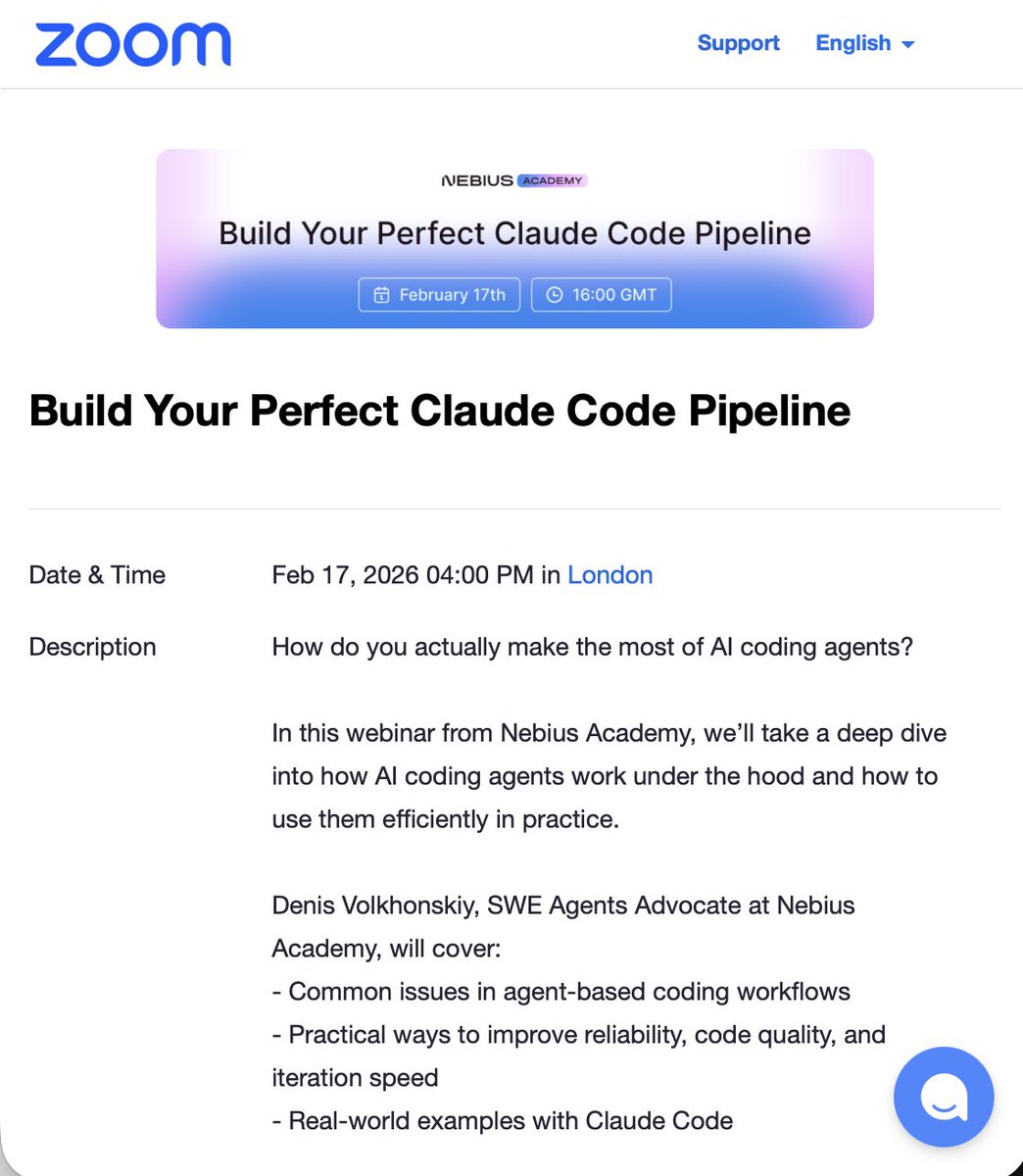
Most of us use Claude Code just for the basics, but when it gets complex, we're back to copy-pasting into ChatGPT. That's why I'm joining Denis Volkhonskiy and Stan Fedotov, PhD, from @nebiusacademy to enter the Claude Code "engine room" tomorrow. What we are breaking down: * Reliability: How to stop "hallucination loops" in agent-based iteration. * Speed: Building high-speed pipelines that don't sacrifice code quality. * Production: Moving past experiments into actual ML and DevOps workflows. We'll also be giving a first look at the AI Performance Engineering course coming to London this March. It’s a 14-week deep dive (completely free) for those ready to move from "using AI" to "engineering AI systems." In the course, I'll show you how to build voice AI agents with @Rasa_HQ and tools like OpenClaw. If you’re an ML engineer, DevOps specialist, or a dev looking to upgrade your stack, you must come and join us! 📅 Tomorrow, Feb 17 🕓 04:00 PM GMT 🔗 Register here: hellorasa.info/4aqzMzN Can't make it? I also curate a calendar of the best AI events happening in London (online + in-person). It would be great to see you at one of those instead: hellorasa.info/4aAUQ6O #ClaudeCode #AIagents #Rasa #NebiusAcademy #SoftwareEngineering #MLOps
Rod Rivera tweet media
English
0
2
3
328
Rod Rivera
Rod Rivera@profrodai·
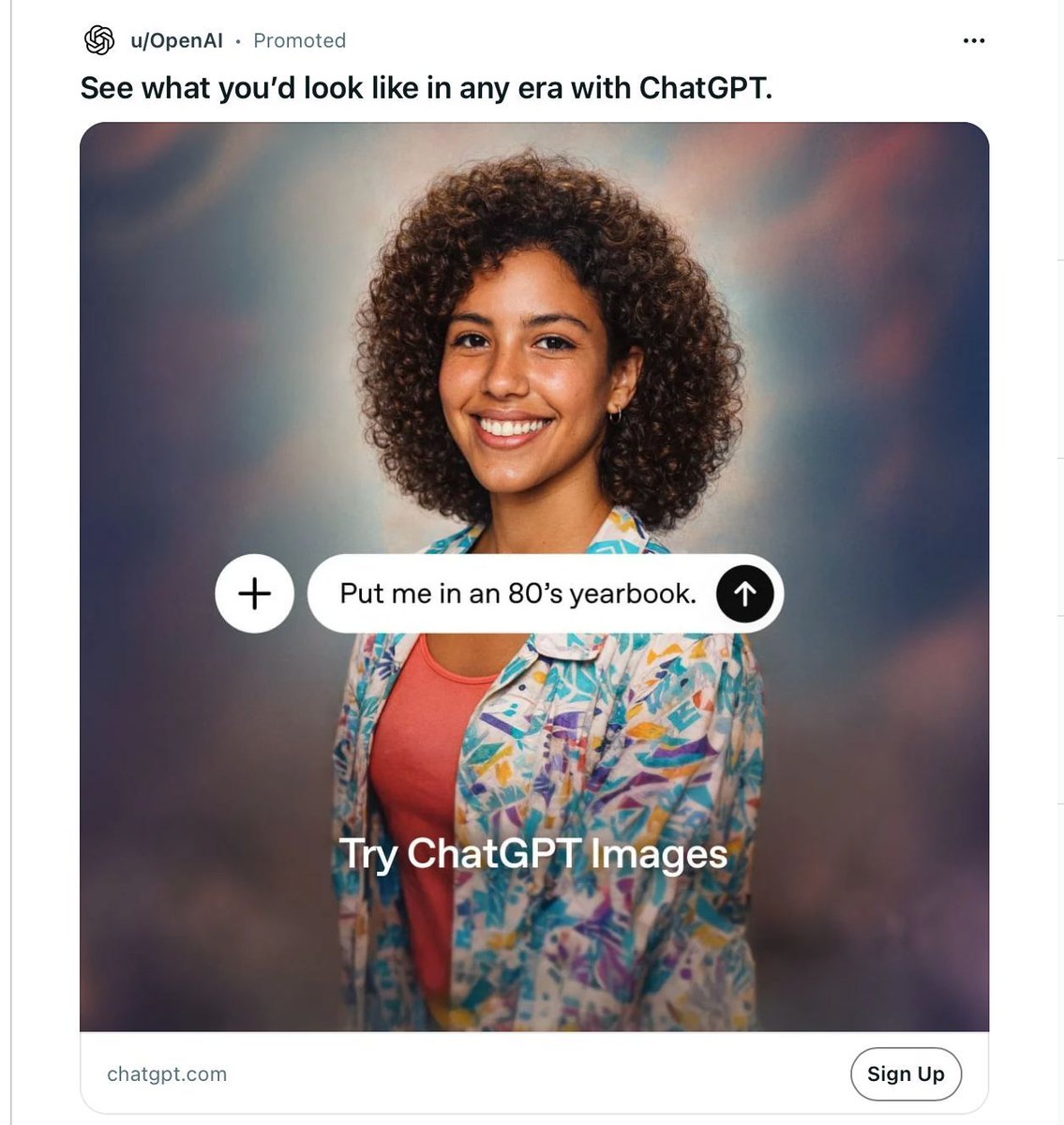
We built the next electricity. Our killer app? "Put me in an 80's yearbook."
Rod Rivera tweet media
English
0
0
0
3
Rod Rivera
Rod Rivera@profrodai·
We have now vibecoding, Lovable, and v0, and so many tools to create websites fast. Yet, most new websites keep looking like they used one of the free templates available on Webflow
English
0
0
0
35
Rod Rivera
Rod Rivera@profrodai·
@OmriBuilds OpenClaw + n8n is a mid-term solution, as n8n still has the stability, connectors, workflows, etc, but long-term, I don't see why we should keep both
English
0
0
0
24
Rod Rivera
Rod Rivera@profrodai·
In today's edition of OpenClaw Daily, we dig into: * Security Beyond the Prompt: We explore why "writing better instructions" isn't a security plan. For production agents, we need kernel-level enforcement and zero-trust architectures. * The 24-Hour Exploit Cycle: Analyzing how quickly vulnerabilities are being scanned in the wild post-launch. * Persistence & Backends: How to give agents the databases and APIs they need to function 24/7. and feature community contributions by * Sagi Rodin for the deep dive into AgenShield and shifting security from "vibes" to deterministic policies. * Angel Dimitrov for his fascinating experiment in multimodal feedback loops, giving his agent a face and a mirror to refine its own expressions. * Chris Rosendale & Eric Pauley for providing critical data on how scanning activity ramps up globally within hours of an exploit's discovery. * Knut Martin Tornes for showcasing how to integrate Codehooks.io to provide agents with a robust, serverless backend. * Rob Pisacane for his strategic look at "Agentic SEO" and how businesses must adapt for machine-readable web traffic. * Steffen Maas at Ocean One Ventures for the "Mr. Crabs" case study, where they maintain data sovereignty while building an autonomous executive assistant. Read below! Have an interesting project or opinion? We would love to feature your work or insights in an upcoming edition. Want to join the conversation? We have a WhatsApp community where we discuss all things OpenClaw. Contact me for access. substack.localaicommunity.com/p/openclaw-dai…
English
0
0
0
41
Rod Rivera
Rod Rivera@profrodai·
OpenClaw is great! But local != secure if the LLM has full home directory access. Check out AgenShield for: ✅ Static policies (not vibes) ✅ Kernel-level enforcement (macOS Seatbelt) ✅ JIT secrets 🔗 Shield: bit.ly/4qpSjT6 💻 GitHub: bit.ly/3MsvjVv
English
0
1
1
51
Rod Rivera
Rod Rivera@profrodai·
In issue 07 of OpenClaw Daily, we feature insights from: - 🦄 Peter Steinberger - Bence Csernak - Alex Cheema - Jason M. Lemkin - Mesut Gulecen - Rachel Nguyen Also in this issue: We take a look at OpenShears substack.localaicommunity.com/p/openclaw-dai…
English
0
0
0
28
Rod Rivera
Rod Rivera@profrodai·
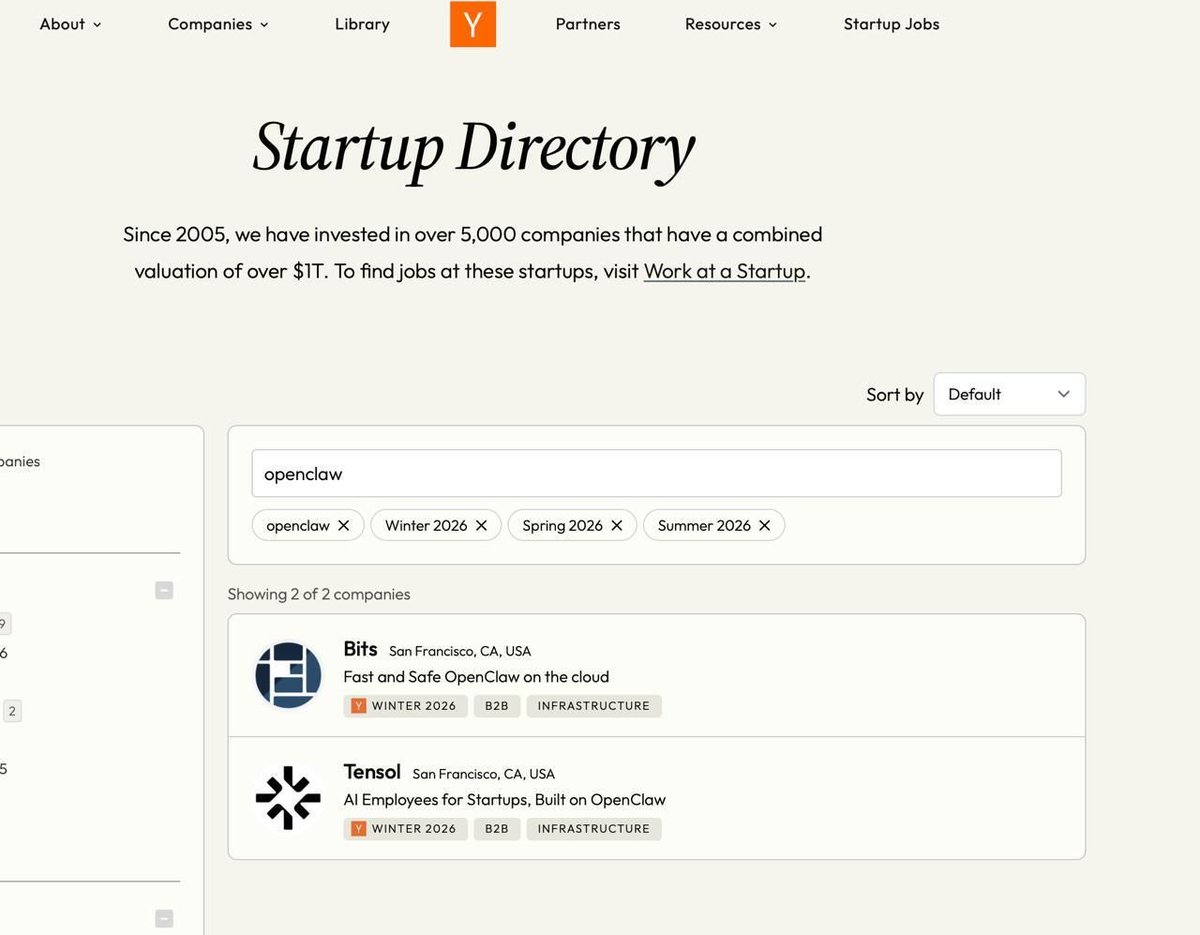
Hilarious that there are already at least 2 YC startups from the current batch offering "OpenClaw in a box with extras"
Rod Rivera tweet media
English
1
0
1
111
Rod Rivera
Rod Rivera@profrodai·
The "caricature trend" on ChatGPT shows that LLMs are not really "intelligent" and are rather high-density mirrors of data noise. If you are letting an LLM guide your life decisions, you aren't being led by a mentor. You're being steered by a statistical average. When I asked for a caricature of my life and job, the disconnect was staggering. Despite years of feeding the model data about my curly hair, activities, and my work as an educator, the output looked nothing like me. This failure is a window into a fundamental architectural flaw in how we handle data. Density over Recency: The Weight of the Average LLMs lack a native chronological sense of "self." Even with persistent memory features, the architecture prioritizes signal density over recency. The reality: I've spent the past few weeks obsessed with jump-roping and deep-diving into OpenClaw. The failure: Because my multi-year history is peppered with generic programming talk, the model defaults to the weighted average. It ignores my current evolution in favor of the stereotype. It favors the "Programmer" archetype because it has a higher probability distribution than an "OpenClaw enthusiast who jumps rope." The RAG Illusion: Why Time-Agnostic Vectors Fail We often mistake vector embeddings for human-like memory. They aren't. LLMs are fundamentally stateless, and current Retrieval-Augmented Generation (RAG) architectures treat data like a bucket of confetti rather than a timeline. The "bolt-on" memory: Injecting context via vector databases is like giving a person with amnesia a stack of sticky notes seconds before they speak. The temporal bottleneck: Standard vector similarity (cosine similarity) is time-blind. It calculates the distance between "me" and "ducks" based on semantic proximity, completely ignoring the timestamp. The duck problem: The model knows the AI Product Engineer logo isn't a random duck, yet it generates bathtub rubber ducks. Why? Because in a high-dimensional vector space, "duck" is a massive gravity well that pulls in generic representations. Without a recency prior or temporal decay function, the model can't distinguish between a casual mention of a toy and a primary brand identity. Hallucinations as a Logical Necessity An LLM's only "biological" imperative is to predict the most plausible next token. It doesn't have a fact-check layer. It has a probability layer. If the model lacks the specific data to bridge the gap between my actual face and its training set, it won't admit ignorance. It will simply invent a who statistically fits the prompt's vibe. This is how we get "stochastic parrots" masquerading as personal assistants. The Danger of "AI-Induced Psychosis" The real threat isn't that OpenClaw will develop a religion or plot a coup against humans. It is that humans are developing AI-induced psychosis. We see patterns where none exist. When people treat these high-end autocomplete outputs as divine or deeply personal insights, they fall into a trap of algorithmic confirmation bias. I see the generic ducks and see a flawed architecture. Others see "signs" and radically change their lives (often with disastrous consequences) based on the suggestions of a machine that doesn't even know what year it is. We must be aware that these models are built for generalization, not individuation. If you're interested in how LLMs actually work (versus how they're marketed), agent architectures, and what breaks when you try to use statistical models as personal advisors, follow me for more posts like this. I write about agent engineering, AI operations, and the difference between intelligence and autocomplete.
Rod Rivera tweet media
English
0
0
1
61
Rod Rivera
Rod Rivera@profrodai·
@awilkinson What's stopping you from building an OpenClaw army of remote employees yourself?
English
0
0
0
138
Andrew Wilkinson
Andrew Wilkinson@awilkinson·
I want to hire someone to build me an team of remote Openclaw employees. Who can help? 🤑 Paid gig. TLDR: I want - support, engineering team, designer, marketer, etc.
English
247
20
805
125.8K
Rod Rivera
Rod Rivera@profrodai·
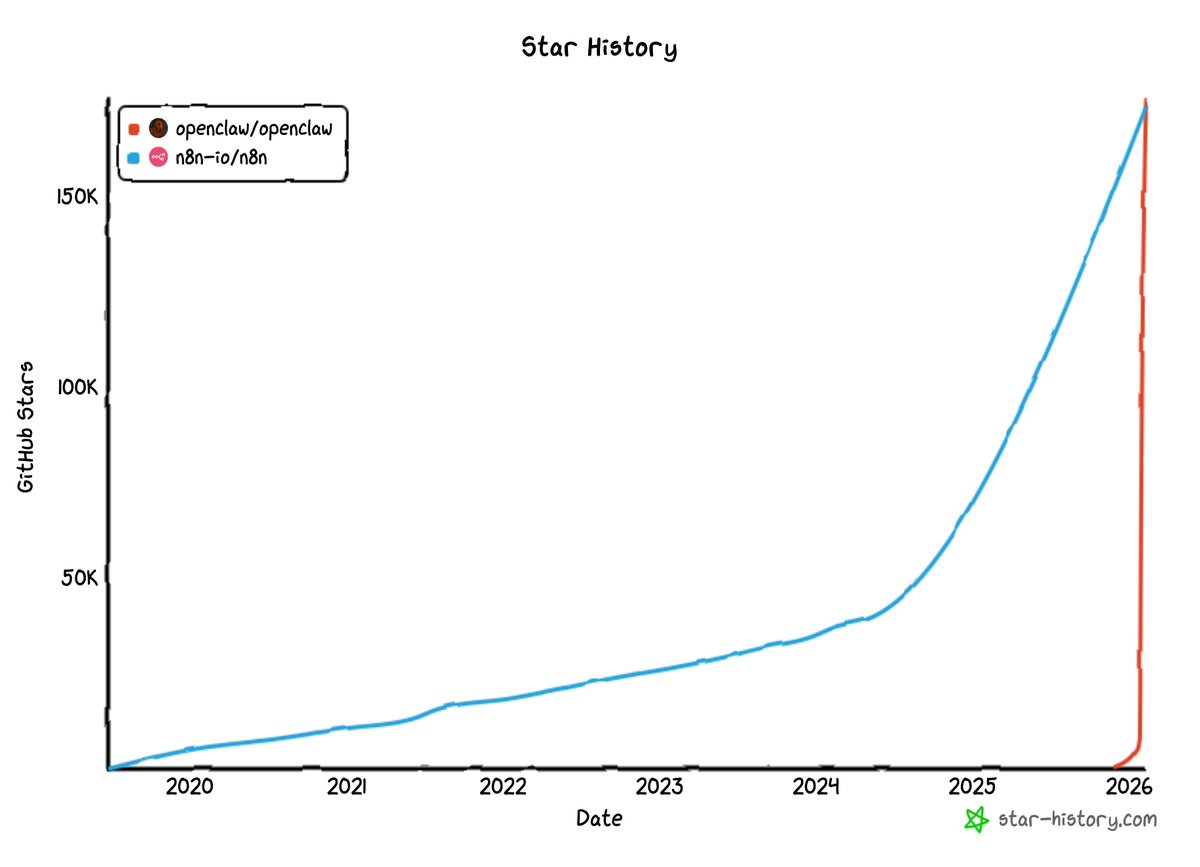
Just a week ago, I was wondering how long it would take for OpenClaw to have more stars on GitHub than n8n. It took n8n 81 months to get to 174k stars. OpenClaw achieved it in 3 months. At the beginning of the year, before becoming aware of OpenClaw, I mentioned that 2026 is the year of the digital coworker, where we finally move from software and AI that help us with our workflow to software that autonomously completes outcomes, software that truly works like a digital peer to whom we can delegate tasks. Right now, this vision isn't yet fully materialized. OpenClaw and similar tools are far from perfect and very experimental. But you can imagine a very close future where we aren't paying a yearly subscription for a CRM at $6,000 USD, but instead we start paying $15,000 or $20,000 for a digital SDR. It might sound like a lot to pay for software, but when you consider that a human SDR has a yearly base salary of around $40,000, you realize a company saves more than half the costs while getting more or less the same results. And without someone who goes on holidays, takes days off, or might leave you at some point. This might sound grim, but the other side of the coin is that anyone adopting OpenClaw and similar digital coworkers starts to have a virtual team at their disposal that truly makes them 10x more productive. We just have to look at how products like Lovable already empower marketing teams to do in days what was truly impossible and unthinkable before without involving agencies, high budgets, and months of planning and development. This is the first time since ChatGPT went live in late 2022 where it feels that, again, AI is accelerating and radical changes are starting to happen. How are you using OpenClaw?
Rod Rivera tweet media
English
2
1
2
337