Puigserver Lab

373 posts

Puigserver Lab banner
Puigserver Lab

Puigserver Lab

@puigserver_lab

Led by Pere Puigserver of @DanaFarber & @HarvardCellBio, our lab studies cellular metabolic and energetic processes

Boston, MA Katılım Ağustos 2019
460 Takip Edilen1.2K Takipçiler
Puigserver Lab retweetledi

SciTech Era
SciTech Era@SciTechera·
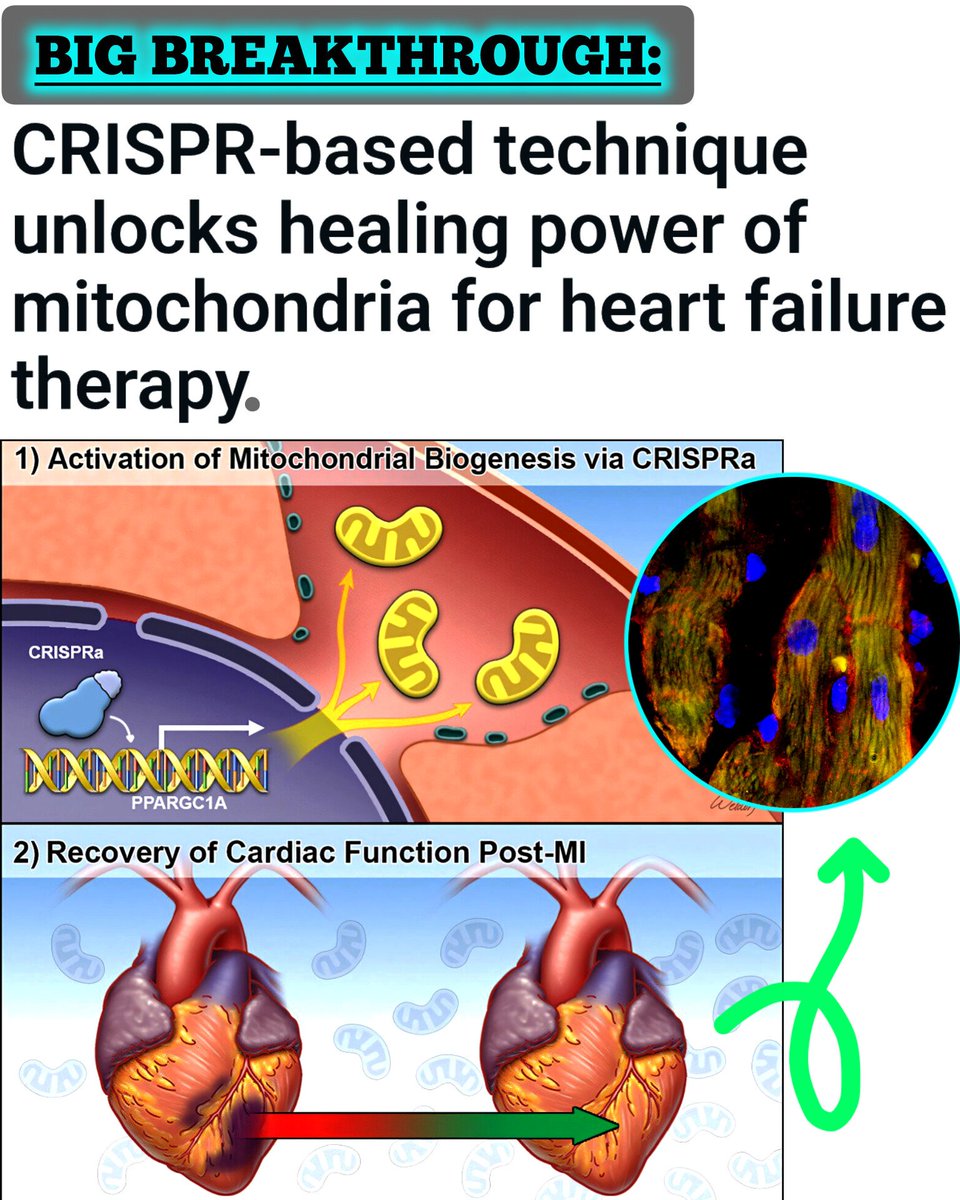
This is insane. BIG BREAKTHROUGH: Scientists just developed a CRISPR gene switch that helps heart cells rebuild their own power plants. Researchers have created a CRISPR based system that activates the gene PPARGC1A, which produces the metabolic regulator PGC-1α, the master controller of mitochondrial biogenesis. Instead of editing DNA, the system uses CRISPR activation (CRISPRa) to turn the gene on, triggering cells to naturally produce more mitochondria, the structures that generate ATP and power cellular metabolism. When tested in human cardiomyocytes and donor heart tissue, the technique significantly increased mitochondrial respiration and oxygen consumption, clear indicators of stronger cellular energy production. This matters because heart failure is fundamentally an energy crisis. After a myocardial infarction, mitochondria become dysfunctional and heart cells cannot generate enough ATP. About 1/3 of heart attack patients eventually develop heart failure, and around 6.8 million people in the U.S. live with the disease. Previous attempts to boost mitochondria forced cells into metabolic overdrive 👀! This CRISPR approach works differently. It fine-tunes the cell’s internal regulatory network, allowing mitochondria to increase in a controlled way without damaging metabolism. This new study shows that gene activation CRISPR systems can reprogram cellular metabolism, not just edit DNA. If future trials succeed, this approach could help treat: > Heart failure after heart attacks > Mitochondrial disorders > Metabolic diseases > Possibly neurodegenerative conditions
SciTech Era tweet media
English
8
65
157
4.7K
Puigserver Lab retweetledi
Dylan Ryan
Dylan Ryan@RyanLab_TCD·
Activation of IRF3 in cardiomyocytes impairs mitochondrial oxidative function through PGC-1α inhibition and drives heart failure nature.com/articles/s4146…
English
1
9
38
2.8K
Puigserver Lab retweetledi
Nick Krontiris
Nick Krontiris@nick_krontiris·
Potential health benefits of cold-water immersion: the central role of PGC-1α (open access) doi.org/10.1113/JP2895…
English
0
1
1
657
Puigserver Lab retweetledi
AACR
AACR@AACR·
Victoria Sánchez Perez and Adam S. Crystal chaired a plenary session on "Synthetic Lethality" this morning at #Targets25, featuring Edmond M. Chan, Peter S. Hammerman, Francisca Vazquez, and William Sellers. @DrFranVazquez
AACR tweet media
English
1
1
6
2.2K
Puigserver Lab retweetledi
Molecular Cell
Molecular Cell@MolecularCell·
If you can only attend a handful of meetings next year, @CellSymposia #CSMito2026 should be a priority. It offers a comprehensive, top-to-bottom perspective on mitochondria, and brings together a diverse group of scientists from across the field. Visit: hubs.li/Q03NMhpN0
Molecular Cell tweet media
English
0
5
11
2.7K
Puigserver Lab retweetledi
Cell Reports
Cell Reports@CellReports·
If you can only attend a handful of meetings next year, @CellSymposia #CSMito2026 should be a priority. It offers a comprehensive, top-to-bottom perspective on mitochondria, and brings together a diverse group of scientists from across the field. Visit: hubs.li/Q03NM3-S0
Cell Reports tweet media
English
0
1
13
2.4K
Puigserver Lab retweetledi
Nature Cardiovascular Research
❤️Our October issue is out❤️Read about the RNA editing enzyme ADAR1 regulating atherosclerosis progression, PGC-1α and cardiac adaptation to exercise training, the role of LYVE1-macrophages in heart regeneration and peripheral artery disease, and more. nature.com/natcardiovascr…
Nature Cardiovascular Research tweet media
English
1
11
23
2.1K
Puigserver Lab retweetledi
Nick Norwitz MD PhD
Nick Norwitz MD PhD@nicknorwitz·
7/9) Nuance note: The researchers also found that PGC1α, the master regulator of mitochondrial biogenesis, was a key player. Artificially boosting PGC1α in the fathers’ muscles was enough to replicate the benefits in the offspring, though the exact link between muscle PGC1α and sperm microRNAs is still being worked out. This adds another layer to this fascinating mechanism.
English
1
1
11
612
Puigserver Lab retweetledi
Cell Metabolism
Cell Metabolism@Cell_Metabolism·
New! Online now: Paternal exercise confers endurance capacity to offspring through sperm microRNAs dlvr.it/TNWKHB
Cell Metabolism tweet media
English
1
30
83
5.3K
Puigserver Lab retweetledi
Marcus Goncalves
Marcus Goncalves@MarcusDGon·
Skeletal muscle endothelial dysfunction through the activin A–PGC1α axis drives progression of cancer cachexia nature.com/articles/s4301…
English
0
2
10
857
Puigserver Lab retweetledi
Daniel J Drucker
Daniel J Drucker@DanielJDrucker·
PGC-1α–mediated phospholipid synthesis plays a pivotal role in BAT thermogenesis in a sex-dependent manner in mice revealing a new therapeutic target for metabolic diseases in postmenopausal women. #Sec11" target="_blank" rel="nofollow noopener">nature.com/articles/s4146…
English
0
3
20
2K
Puigserver Lab
Puigserver Lab@puigserver_lab·
New preview just published in Molecular Cell! We highlight exciting work by Chen et al. identifying an arginine sensing axis mediated by BAG2 and SAMD4B that promotes survival under arginine deficiency. authors.elsevier.com/c/1lN5t3vVUPVa…
Puigserver Lab tweet media
English
1
4
17
1.3K