R. Kahn

6.7K posts

R. Kahn banner
R. Kahn

R. Kahn

@pukhtunkaka

In search of truth in the age of illusion, dis-information and lies. Let us share this world together with justice for all. Re-tweets are not endorsements...

Canada Katılım Ocak 2012
96 Takip Edilen118 Takipçiler
R. Kahn retweetledi
JM News Network
JM News Network@JMNewsNetwork_·
Ethiopian orthodox Christians praying
CY
74
221
957
146.3K
R. Kahn retweetledi
Spencer Althouse
Spencer Althouse@SpencerAlthouse·
Aziz Ansari just appeared as Kash Patel on SNL, and they went innnnn on him "I'm a trailblazer. I'm the first Indian person to suck at their job. Everyone says Indian people are smart, hardworking, incredibly intelligent. I prove without a shadow of a doubt that we can be just as incapable and incompetent as the whites."
English
1.3K
15.5K
140.3K
5.7M
R. Kahn retweetledi
Ahmed Nashwan
Ahmed Nashwan@Ahmed_Nashwan_·
An Israeli soldier released a video of my city, Beit Hanoun, completely destroyed. Not a single house in the city was left standing, not a single tree survived. Have you ever seen an army film the genocide it is committing in 360° before?
English
2.9K
25.8K
61.9K
1.5M
R. Kahn retweetledi
Ihtesham Ali
Ihtesham Ali@ihtesham2005·
An MIT professor taught the same math course for 62 years, and the day he retired, students from every country on earth showed up online to watch him give his final lecture. I opened the playlist at 2am and ended up watching three of them back to back. His name is Gilbert Strang. The course is MIT 18.06 Linear Algebra. Every machine learning engineer, every data scientist, every quant, every self-taught programmer who actually understands how AI works learned the math from this one man. Most of them never set foot on MIT's campus. They just opened a free playlist on YouTube and let him teach. Here's the story almost nobody tells you. Strang joined the MIT math faculty in 1962. He retired in 2023. That is 61 years of standing at the same chalkboard teaching the same subject to 18-year-olds. The interesting part is what he did when MIT launched OpenCourseWare in 2002. Most professors were skeptical. They worried that putting their lectures online would make their classrooms irrelevant. Strang did not hesitate. He said his life's mission was to open mathematics to students everywhere. He filmed every lecture and gave it away. The decision quietly changed how the world learns math. For decades linear algebra was taught the wrong way. Professors started with abstract vector spaces and proofs about field axioms. Students drowned in the abstraction. Most never recovered. They walked out believing they were bad at math when they had simply been taught in an order that nobody's brain is built to absorb. Strang inverted the entire curriculum. He started with matrix multiplication. Something you can write down on paper. Something you can compute by hand. Something you can see. Then he showed his students that everything else in linear algebra eigenvectors, singular value decomposition, orthogonality, the four fundamental subspaces was just a different lens for understanding what the matrix was actually doing under the hood. His rule was strict. If a student could not explain a concept using a concrete 3 by 3 example, that student did not actually understand the concept yet. The abstraction was supposed to come last, not first. The intuition was the foundation. The proofs were just confirmation that the intuition was correct. The second thing Strang changed was the classroom itself. He said please and thank you to his students. Every single lecture. He paused mid-derivation to ask "am I OK?" to check if anyone was lost. He never used the word "obviously" or "trivially" because he knew exactly what those words do to a student who is one step behind. He treated 19-year-olds learning math for the first time the way he treated his own colleagues. With patience. With respect. With the assumption that they belonged in the room. For 62 years. The result is something that has never happened in the history of education. A single math professor became the default teacher of his subject for the entire planet. Universities in India, China, Brazil, Nigeria, every country with a computer science department, started telling their own students to just watch Strang's lectures. The University of Illinois revised its linear algebra course to do almost no in-person lecturing. The reason was honest. The professor said they could not compete with the videos. His final lecture was in May 2023. The auditorium was packed with students who had never met him before. He walked to the chalkboard, taught for an hour, and at the end the entire room stood and applauded. He looked confused for a moment, like he genuinely did not understand why they were cheering. Then he smiled and waved them off and walked out. His written comment under the YouTube video of that final lecture was four sentences long. He said teaching had been a wonderful life. He said he was grateful to everyone who saw the importance of linear algebra. He said the movement of teaching it well would continue because it was right. That was it. No book promotion. No farewell speech. No legacy management. The man whose teaching is the foundation of modern AI just thanked the audience and went home. 20 million views. Zero ego. The entire engine of the AI revolution sits on top of math that millions of people learned for free from one quiet professor in Cambridge. The course is still on MIT OpenCourseWare. Every lecture, every problem set, every exam, every solution. Free. The most important math course of the 21st century is sitting one click away from you. Most people will never open it.
Ihtesham Ali tweet media
English
547
8.3K
32.2K
2.4M
R. Kahn retweetledi
Islamic Scientific Heritage
Islamic Scientific Heritage@IslamicSH_·
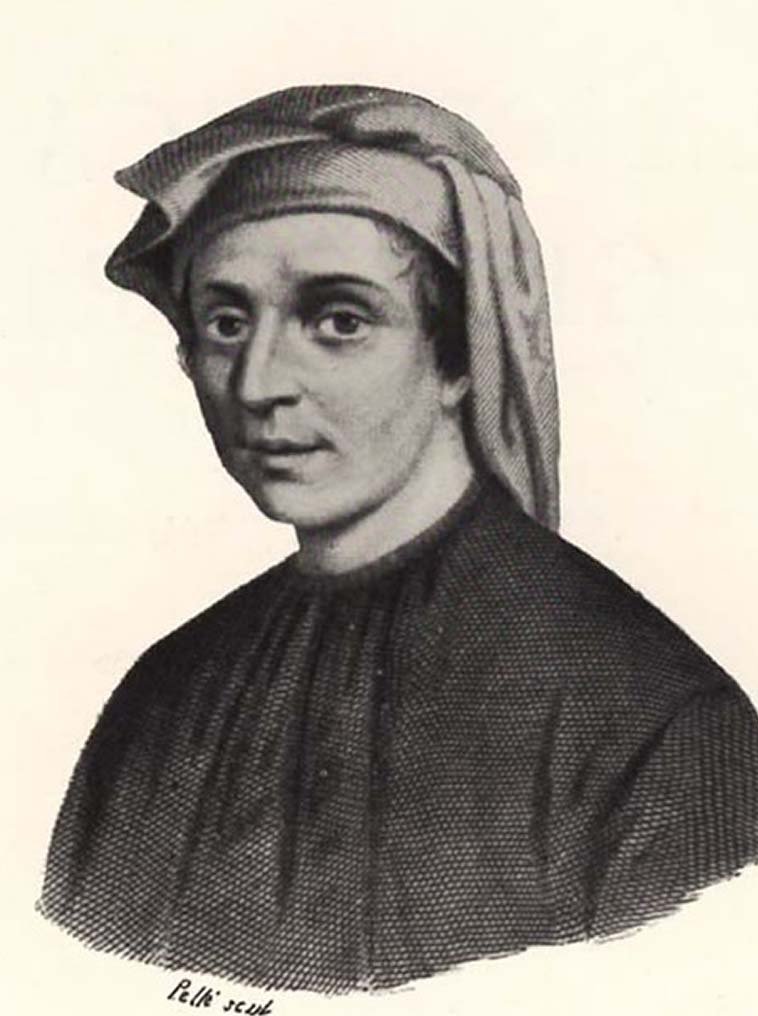
✨Before Leonardo Fibonacci, a Muslim genius had already mastered algebra beyond its time. Abū Kāmil (Auoquamel) (d. 930) was a Muslim mathematician during the Islamic Golden Age. He was the first mathematician to regularly use and accept irrational numbers as solutions and coefficients in equations. Fibonacci later adopted his mathematical techniques. Abu Kāmil made significant contributions to algebra and geometry. He was the first Islamic mathematician to easily work with algebraic equations with powers higher than (x^2) up to (x^8) and solved sets of non-linear simultaneous equations with three unknown variables. He also listed all the possible solutions to some of his problems. He wrote all problems in a rhetorical style, and some of his books had no mathematical notation except for integers. For instance, he used the Arabic expression ("square-square-thing") for (x^5). The Muslim scholar Ibn Khaldūn classified Abū Kāmil as the second greatest algebraist chronologically after al-Khwarizmi. His techniques were later adopted by Fibonacci, giving Abū Kāmil a key role in bringing algebra to Europe.
Islamic Scientific Heritage tweet mediaIslamic Scientific Heritage tweet media
English
14
492
1.5K
33.6K
R. Kahn retweetledi
clay vessel
clay vessel@ShabanaMir1·
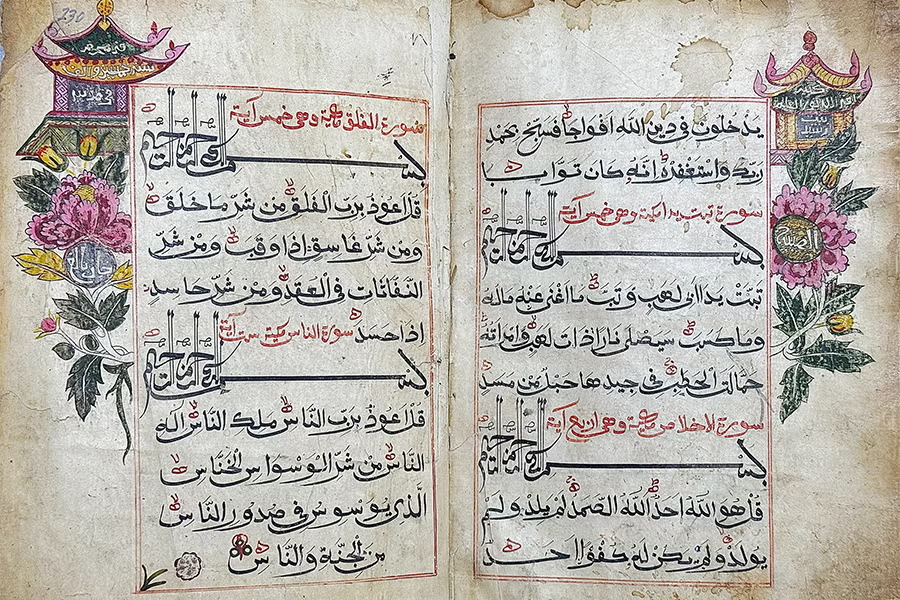
Chinese Qur’an written by a woman calligrapher, Amatullah Nur-ul-Ilm, daughter of Rashid. 1050 AH / 1640 CE. The city of Khanbaliq, predecessor to modern Beijing.
clay vessel tweet media
English
43
2.2K
11.2K
237.2K
R. Kahn retweetledi
Jade Helm Reports 🗡️
Jade Helm Reports 🗡️@JadeHelmReports·
Why did these 100 Jews change their names?
English
231
1.8K
7.8K
344.3K
R. Kahn retweetledi
Ihtesham Ali
Ihtesham Ali@ihtesham2005·
A Persian scholar finished a single math book in 9th century Baghdad that quietly became the foundation for every line of code running on Earth today. I started reading about him at midnight and could not believe how many things in my daily life trace back to one man. His name was Muhammad ibn Musa al-Khwarizmi. The book is called The Compendious Book on Calculation by Completion and Balancing. Every time you say the word algebra, you are saying his book title. Every time someone says the word algorithm, they are saying his name. Both English words come from him. Both are Latin transliterations of Arabic and of his own identity. The man did not just contribute to mathematics. He named it. Here is the part almost nobody tells you. Al-Khwarizmi was born around 780 CE in Khwarazm, in what is now Uzbekistan. He moved to Baghdad and worked at a research institution called the House of Wisdom, which during the Islamic Golden Age was the single most important center of learning on the planet. The caliph al-Mamun hired the best mathematicians, astronomers, and philosophers from across three continents and put them in one building with one job. Translate, study, and produce new knowledge. Al-Khwarizmi finished his book on algebra around 820 CE. The Arabic title contained the word al-jabr, which referred to one of the two operations he used to solve equations. When the book was translated into Latin in the 12th century, the Latin world did not have a word for what he had built. So they kept his Arabic word. Al-jabr became algebra. The discipline was named after a single Arabic word in the title of a single book by a single man. The deeper insight is what he actually changed about how humans think. Before al-Khwarizmi, mathematical problems were solved geometrically. You drew shapes. You measured them. You compared areas. The Greeks had built an entire mathematical tradition on visual proofs and physical constructions. It was beautiful and limited. You could not solve a problem you could not draw. Al-Khwarizmi did something nobody had done before him at this scale. He said you could solve any problem using abstract symbols and rules. You did not need a shape. You needed a procedure. You moved terms across the equation. You cancelled like terms on both sides. You isolated the unknown. He invented the idea that mathematics is a manipulation of symbols according to rules, not a study of physical figures. That single shift made everything that came afterward possible. Calculus. Differential equations. Linear algebra. Quantum mechanics. None of it works if math is locked inside geometry. He pulled it out. The second thing he did is the one that changed how the world counted forever. He took the Hindu numeral system from Indian mathematics, refined it, and wrote a book introducing it to the Arab world. That system included the concept of zero as a placeholder, and a positional notation where the value of a digit depends on its location. Roman numerals could not do complex calculation. Hindu-Arabic numerals could. When his book on numerals was translated into Latin as Algoritmi de numero Indorum, the word Algoritmi was just the Latin spelling of his own name. Europeans started calling the new method "doing algorism," then "running an algorithm." The word for the most important concept in computer science is literally his name in Latin. The third thing he did is the part that should haunt anyone who works in tech. His method of solving problems was systematic. Step one, do this. Step two, check that. Step three, if condition A, then do X, otherwise do Y. He wrote down procedures that could be followed by anyone, anywhere, who knew how to read. The procedure did not depend on intuition or genius. It worked because the steps worked. That is exactly what an algorithm is. A finite, deterministic procedure for solving a problem. He did not just give us the word. He gave us the entire concept of programming a thousand years before there was anything to program. When Alan Turing built the first abstract model of computation in 1936, when John von Neumann designed the first stored-program computer in 1945, when every engineer at Google, OpenAI, Anthropic, and DeepMind writes code in 2026, they are working in a paradigm that started with one man in Baghdad twelve centuries ago. The strangest part is what happens when you walk into any tech office in San Francisco or Bangalore or Lahore today. Engineers say the words algebra and algorithm hundreds of times a day. They do not know whose name they are saying. Almost nobody can spell al-Khwarizmi correctly on the first try. His original Arabic manuscript is preserved at Oxford. His book on Hindu numerals survives only in Latin translation. The Latin version was the textbook that taught medieval Europe how to count. The man who built the foundation of the AI revolution did not live to see a calculator. He died around 850 CE, a thousand years before the first electric current was sent through a wire. The civilization he built mathematics for collapsed. The library he wrote in burned. His own grave is unmarked. But every algorithm running on every machine on Earth right now still answers to his name.
Ihtesham Ali tweet media
English
328
4.5K
10.8K
401.5K
R. Kahn retweetledi
Typical Aboki
Typical Aboki@Proud_Aboki·
If the Trump assassinatiœn suspect was Muslim, social media, churches & anti-Muslim voices across Nigeria would explode: generalizing all Muslims as terrœrists, demonizing Islam, profiling innocents & calling for bans. But Mr. Cole Allen isn’t Muslim, so silence. They scroll past. Yet one criminal doesn’t define 2 billion Muslims. A criminal is a criminal, regardless of faith. Be fair. Judge individuals, not entire religions. No double standards. Truth over bias. Unity over hate.
Typical Aboki tweet media
English
99
223
625
14.5K
R. Kahn retweetledi
aapayés
aapayés@aapayes·
Estas son dos historias similares: 🇵🇸La 1ra una niña Palestina que carga a su hermana pequeña herida en el GENOCIDIO en Gaza. 2025 🇯🇵La 2da es sobre un niño que sobrevivió a la BOMBA ATÓMICA en Japón. 1945 #CIJ_ICJ 🇵🇸⚖️🌎
Español
288
10.8K
32K
629.1K
R. Kahn retweetledi
Emelia
Emelia@wasalive22·
The biggest war criminals and terrorists wear suits and Ties.
Emelia tweet media
English
163
2.4K
4.2K
33.4K
R. Kahn retweetledi
MiddleEast Live
MiddleEast Live@MeLive007·
Do you stand with Greta Thunberg? Raise your hand 👋
MiddleEast Live tweet media
English
139
590
2.8K
22.4K
R. Kahn retweetledi
R. Kahn retweetledi
S
S@Shirink_13·
Don't normalize this, please. Palestinians deserve to live.
S tweet media
English
1.1K
38.6K
112.9K
987.7K
R. Kahn retweetledi
Sarah Wilkinson
Sarah Wilkinson@swilkinsonbc·
The mother of Palestinian child Naya Al-Tanani, killed by the israelis last night in a strike on northern Gaza, is left holding her tiny body
English
806
16.2K
34.3K
450.6K
R. Kahn retweetledi
Dr. Yousef 🇵🇸
Dr. Yousef 🇵🇸@yousef_ki1·
If you see this photo, put a dot to break the algorithm.
Dr. Yousef 🇵🇸 tweet media
English
3K
5.4K
16.7K
143.7K
R. Kahn retweetledi
Indian Muslim Archives
Indian Muslim Archives@Rustum_0·
Hindus are often heard claiming that they never invaded or enslaved. Well, this is a mischievous lie, and here is why. The Indian subcontinent historically contained 30% to 34% of the global population. In short, even if Napoleon Bonaparte had conquered all of Europe, it would have affected only about 10% of the global population. Therefore, this land-based assessment of such activities is flawed. ——— Let us begin with slavery. The existence of slavery in ancient Hindu societies is well documented across a wide range of sources - inscriptions, shrutis, emritis, puranas, jatakas, itihasas, charitras, and natakas where references to slaves and systems of servitude appear frequently. However, let us turn to a more recent example, consider the Maratha Confederacy, the last great Hindu monarchy. Sir John Malcolm (1769-1833) writes: “Females in Malwa (Central India)... are sold from forty and fifty to one hundred and one hundred and fifty rupees; the price is accordant with their appearance. They have been at times an article of considerable commerce, many being annually sent to the south-ward, particularly to the Poona (i.e., Maratha crownland) territories, where they sold high. This trade... was principally carried on by the Mahratta Brahmins, some of whom amassed great sums by the shameless traffic.” “A great number of the slaves of Malwa are from Rajpootana, where the excesses of the Mahrattas drove the inhabitants to exile, and to such distress as to be compelled to part with their children.” Keep in mind that we arent taken the varna vyavastha (lit. caste system) into account. ——— Now, let us discuss the Hindoo invasions. Let us make this very clear: by Hindoo, we mean the followers of Vedic Dharma, not the geographical Hindoo identity, which includes people of all ranks and religions. There was simply no concept of nation-states back then; the monarch's boundaries were their rashtra/vatan (nation), and Hindoos aggressively invaded each other's vatans. Take, for example, when the Marathas of Satara vatan hurled devastating invasions (c. 1742–51) on Bengal Subah. It affected a population that was 65% of contemporary Europe. Vaneshwar Vidyalankar (1700–1788) wrote: “Shahu Raja's troops are devoid of pity, slayers of pregnant women and infants and of Brahmins and the poor, fierce of spirit, expert in robbing everyone of property, and committing every kind of sinful act.” All these crimes are whitewashed and justified just because the Indian subcontinent was united under the British Raj? Do human numbers do not matter? This flawed land-based assessment deliberately ignores that it affected a third of the world's population. Here is how a Hindu text, the Basava Purana (13th century), narrates the extermination of Jains from parts of the South Indian region. “With cries and roars, the heroic assembly of mäheśvaras rose up. They quickly destroyed all the Jain vasadis and broke the heads of all the Jina idols. When they were finished, there was not a trace of a Jain vasadi or a Jina idol in all of Kalyāņa. In a fury, the devotees harassed and killed every known Jain and smashed them all into the ground.” Does modern Indian nation state negate the Jain pain? When India got independence in 1947, there were around 1.5 million km² of princely states, which had the legal choice of whether to join India or remain independent. One Indian Muslim princely state, the Nawabate of Hyderabad (~244,000 km², equivalent to the modern United Kingdom), wished to remain independent. Yet, the Indian Republic, effectively Hindu-dominated, invaded and annexed it. Emperor Rajendra I Chola (circa 1025) invaded the regions of modern nation-states like Sri Lanka and Indonesia via naval routes and also garrisoned & occupied parts of them. There are many more examples from ancient and medieval history, but these are just four fringe examples, which are not even major ones, to make the argument that show the flawed nature of such statements.
Shashank Mattoo@MattooShashank

"Hindus have never invaded any country. Hindus have never enslaved any people. Hindus have nothing to apologise for," says RSS General Secretary Dattatreya Hosabale in America


English
39
230
891
69.3K
R. Kahn retweetledi
Save Gaza
Save Gaza@Alee93ale·
This is Israel, world Israel did this Repost please
English
1.1K
21.3K
36K
568.8K