Ra2Daniel

299 posts

Ra2Daniel banner
Ra2Daniel

Ra2Daniel

@ra2daniel

Katılım Mart 2018
272 Takip Edilen18 Takipçiler
Ra2Daniel
Ra2Daniel@ra2daniel·
@jrmooreiii @Emilio2763 How would that information help you? You think you could’ve fixed it? They sometimes give out ETAs but only when they know for sure.
English
0
0
1
869
Trey
Trey@jrmooreiii·
@Emilio2763 Bad take, you should be able to go to one of their stores and receive information about service outages. These cell providers don’t let you speak with anyone on the phone anyways, horrible customer service.
English
13
0
3
28.2K
𝕰𝖒𝕲
𝕰𝖒𝕲@Emilio2763·
Imagine going to Your Local Verizon Store Thinking the Salesperson can Help with the Nationwide Outage So You can Make a Call on YOUR Phone… 🤦
English
241
364
9.5K
1.3M
Lucy Burdge
Lucy Burdge@LucilleBurdge·
@benny_bets33 You don’t have a job it sounds like. Good luck also calling 911
English
51
10
1.6K
67.1K
Ra2Daniel
Ra2Daniel@ra2daniel·
@NolaDude504 @driver84and26 @VerizonNews Yeah and you get compensation for the price you paid for the fucking service. $30/month of service means you are entitled to $1/day of credit for lack of said service. No more, no less!
English
0
0
0
9
Ra2Daniel
Ra2Daniel@ra2daniel·
@CmanSmitty @VerizonNews If you lose 200,000 because you had no service for 8 hours and couldn’t figure out a solution you don’t deserve the $20
English
0
0
0
3
CMAN
CMAN@CmanSmitty·
@VerizonNews 20 bucks that’s it 🤬 You cost me 200,000
English
1
0
2
628
Ra2Daniel
Ra2Daniel@ra2daniel·
@driver84and26 @VerizonNews Then grow up. You get more money back than you paid for the service for the time it was down. You needed internet on your phone yesterday? You should’ve gotten a prepaid card, the credit would’ve covered to cost.
English
1
0
0
24
Ra2Daniel
Ra2Daniel@ra2daniel·
@NolaDude504 @driver84and26 @VerizonNews I worked as a verizon tech support tier 2. I know how much verizon sucks more than you do. But the only thing worse than Verizon is the verizon customers. You had no service for 8 hours, if you have a business to run get a prepaid card for the day and stop crying and begging.
English
2
0
1
48
Ra2Daniel
Ra2Daniel@ra2daniel·
@driver84and26 @VerizonNews $20 is more than you deserve. You pay $1/day for a service you get $1 back if the service doesn’t work for a day. If you use the service as a multiplier for your revenue that’s on you! Entitled beggars…
English
3
0
0
224
Ronnie Campbell
Ronnie Campbell@driver84and26·
@VerizonNews I lost over $400 in revenue by not being able to work.... Offering up $20 is why I will be changing cell service providers. You guys are clueless
English
3
0
20
3.5K
Verizon News
Verizon News@VerizonNews·
Verizon's team is on the ground actively working to fix today’s service issue that is impacting some customers. We know this is a huge inconvenience, and our top priority is to get you back online and connected as fast as possible. We appreciate your patience while we work to resolve this issue.
English
8.9K
753
5.1K
3.2M
Ra2Daniel
Ra2Daniel@ra2daniel·
@carti4prez @VerizonNews You can call 911 with no service dumbass. Also read the news: verizon, att, tmobile, us cellular and xfinity are down. Go ahead and switch carriers.
English
0
0
1
177
Ra2Daniel
Ra2Daniel@ra2daniel·
@ZakhadUtah @TheFl0orIsLaVa Yeah also why is Indiana considered part of the mid west when it’s in the NORD EAST part of the US, NOWHERE near the middle or western part of the country. Dumbass, eastern european is a socio-ethnic-cultural term not the geolocation.
English
0
0
0
21
ant
ant@ThisIsNuse·
You don't need some specialized shit like SuperGuppy to see how the trend is down You just need two eyes
English
9
0
23
2.4K
Ra2Daniel
Ra2Daniel@ra2daniel·
@dieworkwear In romanian we have a saying "omul face haina, haina nu-l face pe om" that translates to "the man makes the clothes, the clothes do not make the man".
English
0
0
1
315
derek guy
derek guy@dieworkwear·
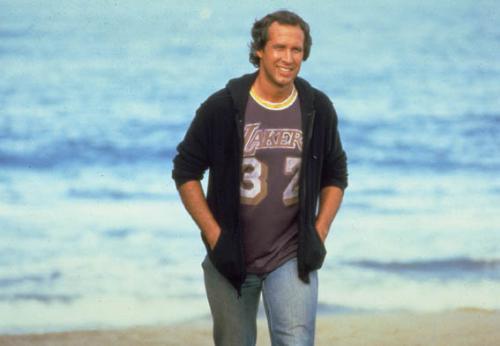
ON RESPECTABILITY IN DRESS Every once in a while, people here will get mad at me. And it often involves the same issue: respectability in dress. Or its related cousin: dress codes. Judging someone's deeper, more important qualities based on attire often feels so natural; people get upset when I refuse to engage in the same judgment. To them, it feels as though I'm denying something so obvious, I'm dishonest. I've written about dress respectability no fewer than half a dozen times in my 15 years of writing about menswear, but never so thoroughly and comprehensively on Twitter. This post will be long, but I hope it is engaging. And I hope you stay with me because I find this sentiment to be so noxious — so antithetical to any notion of "good," whether religious or secular — that I hope I can convince a few people to resist such temptations. What is respectability in dress? It's the idea that you can show respect through clothes, such as wearing a suit to a wedding. Or the idea that people in certain clothes are more deserving of respect, such as a man in a suit versus another man in a hoodie. I will address each in turn. I believe dress is a form of social language. And thus, you can signal certain things through clothes. For instance, if I were to attend a wedding, I would wear a suit as an outward expression of a sentiment in my heart (e.g., "I'm happy for my hosts and wish to honor them on this day"). The suit is simply a representation of my sentiment, which already exists, even if I was in jeans. However, if I arrived at a wedding and saw someone not wearing a suit, I would not judge the person's more important qualities based on their attire. Perhaps they didn't have time to buy a suit. Perhaps clothes shopping gives them great anxiety. Perhaps they can't afford a suit that fits. If I wanted to know whether that person is of good character, I would judge this off their more direct actions, such as how they treat the people around them. Are they genial to guests? Are they considerate of service staff? Do they make the hosts laugh and glow? There are two distinct acts here. The first is how *you* decide to dress. Since you hold a particular sentiment in your heart, you may wish to dress a certain way to express that sentiment. The second is how you judge *others* based on dress. If a coat-and-tie is supposedly connected to "gentlemanly" behavior, however tortured that term may be, then judging someone's deeper, more important qualities is ungentlemanly by definition. In 1852, Cardinal John Henry Newman penned an essay, initially delivered as a university lecture, titled "Definition of a Gentleman." A gentleman, he says, is someone gentle and kind, considerate of others, humble in social relations, and respectful of boundaries. He compares a gentleman to "an easy chair or a good fire, which do their part in dispelling cold and fatigue." He writes: "The true gentleman in like manner carefully avoids whatever may cause a jar or a jolt in the minds of those with whom he is cast — all clashing of opinion, or collision of feeling, all restraint, or suspicion, or gloom, or resentment; his great concern being to make every one at his ease and at home. He has his eyes on all his company; he is tender towards the bashful, gentle towards the distant, and merciful towards the absurd; he can recollect to whom he is speaking; he guards against unseasonable allusions, or topics which may irritate; he is seldom prominent in conversation, and never wearisome. He makes light of favors while he does them, and seems to be receiving when he is conferring." There is notably nothing in his essay about clothes. It's impossible to judge a person's deeper, more important qualities based on clothes because people are often just following social conventions. To go back to the wedding example, many people wear a suit not because they hold a particular sentiment in their heart, but simply because a suit is protocol. A friend who works as a wedding photographer revels in telling me stories about suited guests getting into fistfights—certainly not a way to honor your hosts. The irony of dress codes is that the stronger the enforcement, the less you can tell about someone's character based on dress. Let's now turn to the idea that people in certain clothes are more deserving of respect. The sharpest, most pointed counterargument for this is Pierre Bourdieu, who in his 1979 book Distinction, pointed out that our notions of "Good Taste" are often nothing more than the habits and preferences of the ruling class. Edward Carpenter, a gay British reformer in the late 19th century, understood this a century earlier. He hated suits. In an essay about the "simple life," he compared suits to coffins, as they have "stiff layers upon layers of buckram," which he believed prevented people from getting enough sunlight and air. But more importantly, he hated suits because he recognized that Victorian dress codes weren't about dress codes at all — they were about status signaling and social hierarchy. In May 1889, Carpenter wrote a letter to The Sheffield Independent about how 100,000 of the city's residents were struggling to find sunlight and air, enduring miserable lives, and dying of illnesses because of the thick, black cloud of smog arising out of factories like smoke from Judgement Day. Meanwhile, as Melton-clad plutocrats nattered on about proper dress codes, they concealed their cruelty and vulgarity under refined manners. They weren't concerned with virtue, but rather with showing their supposed higher moral status. And then those socially under them aped those manners to seem higher class. (A dynamic that German sociologist Georg Simmel recognized in his 1902 essay "On Fashion.) Our judgements of dress are often more about the person underneath the clothes, rather than the clothes themselves. We see this with the pre-war British Guardsmen, who dropped their Edwardian-inspired fashions as soon as they were adopted by the "ruffians" known as Teddy Boys (and some Teddy Gals). Or how the slacker hoodie became a symbol of meritocracy in the New Economy when (white) coders wore it in the early 2000s, but it symbolizes criminality when worn by black teens. Clothes indeed signal certain things. If you're wearing a Lakers jersey, I will assume you're a fan of the Lakers; if not, at least sports. But deeper, more important qualities — such as intelligence, honesty, kindness, and so on — should be read more directly from the person's more meaningful actions. If you want to know if someone's intelligent, pay attention to what's in their head, not what's on top of it. I'm fundamentally opposed to any notion of respectability in dress, as I find it antithetical to a fundamental moral principle: you should treat everyone with respect unless they behave in a manner that suggests otherwise. And so, if John Fetterman lumbers through the halls of Congress in hoodies and shorts, you should object to him based on his politics, not his dress. If a student shows up at Oxford Union in sweats, you should consider his ideas, not his pants. I am perfectly fine with saying certain outfits are ugly. I'm deeply uncomfortable when people make moral judgments based on clothes. A person is not more or less deserving of respect based on dress; they can only do so based on more meaningful behavior. My guess is that you know this in your heart. As you travel through the world, look around you. Are your poorly dressed cousins and uncles bad people? Do shabbily dressed teachers or nurses on the train not actually serve society in positive ways? Do suited politicians not occasionally commit crimes? The idea that appearance doesn't always match character can be found more melodically in Fela Kuti's 1973 album "Gentleman." If you are already interacting with someone on a meaningful basis, you've hopefully already gotten enough information about them to form a judgement and thus can ignore dress. If you haven't interacted with them in meaningful ways, you can simply withhold judgement. I will end with an excerpt from Stuart Hall, a Jamaican-born British cultural theorist. In an essay about pluralism, he made a distinction between "common culture" and "common society," encouraging us to embrace differences. "It should not be necessary to look, walk, feel, think, speak exactly like a paid-up member of the buttoned-up, stiff-upper-lipped, fully corseted and free-born Englishman, culturally to be accorded either the informal courtesy and respect of civil social intercourse or the rights of entitlement and citizenship. Since cultural diversity is, increasingly, the fate of the modern world, and ethnic absolutism a regressive feature of late-modernity, the greatest danger now arises from forms of national and cultural identity — new or old — which attempt to secure their identity by adopting closed versions of culture or community and by the refusal to engage with the difficult problems that arise from trying to live with difference. The capacity to live with difference is, in my view, the coming question of the twenty-first century." There are many forms of dress in society, each connected to a person's background, identity, and lifestyle. While these things can tell us something about the person, they don't tell us their more important qualities. Wearing "refined" clothes doesn't make you "refined" or "respectable" any more than rugged clothes can fashion you into a rugged man. Clothes can be a lot of things, but once people attach notions of virtue and respect to them, we enter very dangerous territory.
derek guy tweet mediaderek guy tweet mediaderek guy tweet mediaderek guy tweet media
English
71
185
2.1K
409.9K
Ra2Daniel
Ra2Daniel@ra2daniel·
@ThisIsNuse I agree with that, hope the trade works out for you!
English
0
0
1
39
ant
ant@ThisIsNuse·
Can't become a whale if you don't learn how to breathe under water
Ra2Daniel@ra2daniel

@ThisIsNuse Shouldn't your shorts be underwater by now?

English
4
0
13
2.7K
ant
ant@ThisIsNuse·
Bulls are playing a game of awful waffle right now My shorts are thankful for this
English
12
0
8
2.7K
Dan Collins
Dan Collins@DanCollins2011·
Mississippi has a higher GDP per capita than Chongjing. How?
Dan Collins tweet mediaDan Collins tweet media
English
1.5K
272
3.9K
14.5M
Ra2Daniel
Ra2Daniel@ra2daniel·
@IamNomad Should’ve went with “there is no reason to be upset”.
English
0
0
0
7