Radhakrishnan (Rad) Venkataramani retweetledi

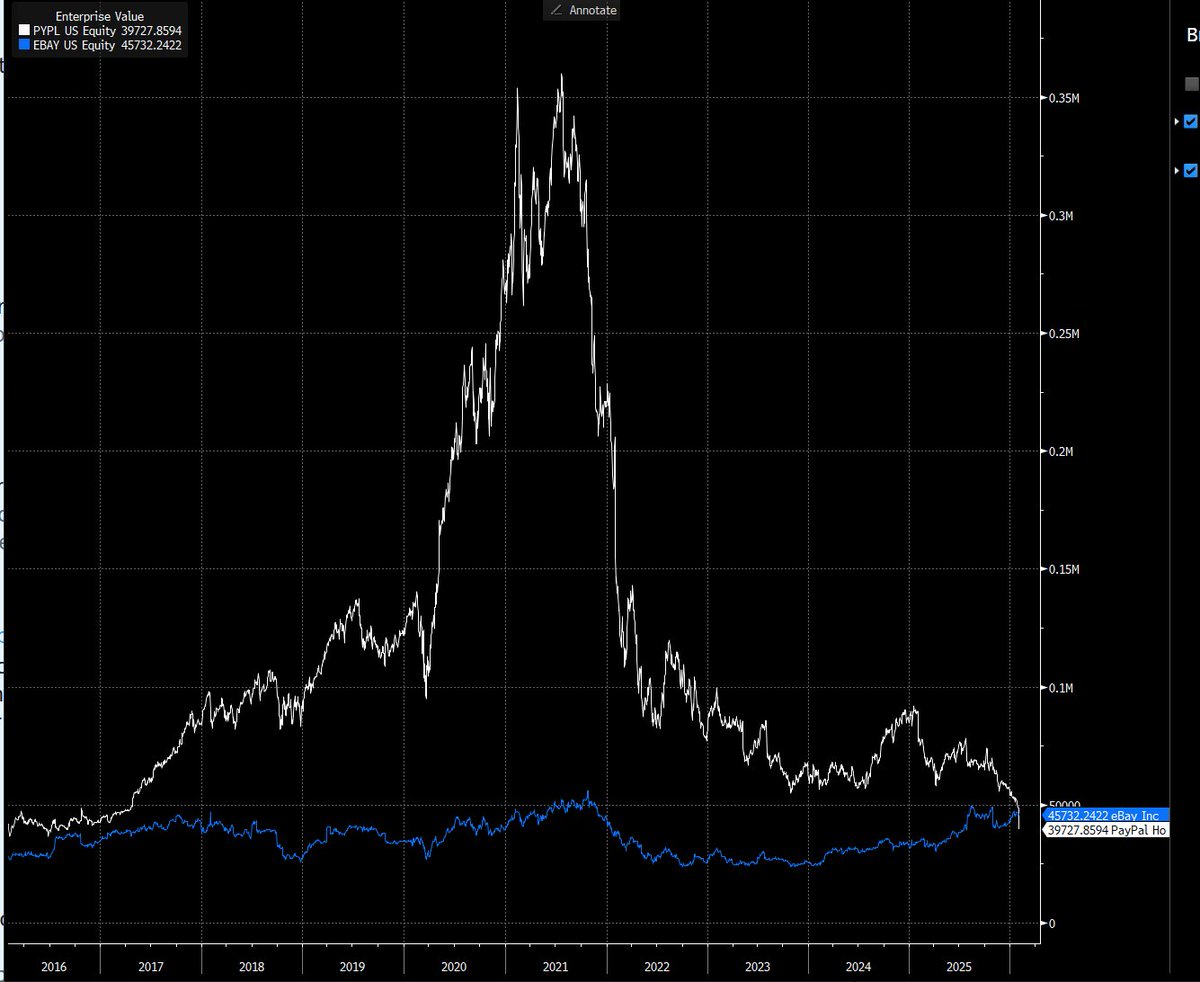
@business Thiel is usually contrarian, weird he’s going with the herd this time
English
Radhakrishnan (Rad) Venkataramani
287 posts

@radkris
Member of Technical Staff @xAI. Reasoning / Coding Agents. Prev: @PyTorch @MetaAI @Google @Snowflake.


So, I’m going to say something that @nvidia won’t like. You stole our term. You are not doing “extreme” co-design by any real standard. You are doing regular co-design. It’s the standard process of optimizing your product for the market in front of you. We will use a different term since you have polluted OUR term. We started using this 6 months ago, and even said it in a presentation to Nvidia. You never heard this term before we said it to you and now you have usurped it. I guess this is the standard story in Silicon Valley. C’est la vie…



Subway is launching a Subscription service for $45 a month that includes unlimited Footlongs.
There is a new fastest product in technology history to reach $1B in ARR.




Today we introduce humans&, a human-centric frontier AI lab. We believe AI can be reimagined, centering around people and their relationships with each other. At its best, AI should serve as a deeper connective tissue that strengthens organizations and communities


Disclaimer: I had given early access to internal beta version of Grok 4.20 It found a new Bellman function for one of the problems I’d been working on with my student N. Alpay. The problem reduces to identifying the pointwise maximal function U(p,q) under two constraints and understanding the behavior of U(p,0). In our paper arxiv.org/pdf/2502.16045 we proved U(p,0)\geq I(p), where I(p) is the Gaussian isoperimetric profile, I(p) ~ p\sqrt{log(1/p)} as p ~ 0. After ~5 minutes, Grok 4.20 produced an explicit formula U(p,q) = E \sqrt{q^2+\tau}, where \tau is the exit time of Brownian motion from (0,1) starting at p. This yields U(p,0)=E\sqrt{\tau} ~ p log(1/p) at p ~ 0, a square root improvement in the logarithmic factor. Any significance of this result? It will not tell you how to change the world tomorrow. Rather, it gives a small step toward understanding what is going on with averages of stochastic analogs of derivatives (quadratic variation) of Boolean functions: how small can they be? More precisely, this gives a sharp lower bound on the L1 norm of the dyadic square function applied to indicator functions 1_A of sets A \subset [0,1]. In my previous tweet about Takagi function, we saw that the sharp lower bound on ||S_1(1_A)||_1 miraculously coincides with Takagi function of |A| which (surprisingly to me) is related to the Riemann hypothesis. Here, we obtain a sharp lower bound on ||S_2(1_A)||_1 given by E \sqrt{\tau}, where Brownian motion starts at |A|. This function belongs to the family of isoperimetric-type profiles, but unlike the fractal Takagi function, it is smooth and does not coincide with the Gaussian isoperimetric profile. Finally, in harmonic analysis it is known that the square function is not bounded in L^1. The question here was more about curiosity: how exactly does it blow up when tested on Boolean functions 1_A. Previously, the best known lower bound was |A|(1-|A|) (Burkholder—Davis—Gandy). In our paper, we obtained |A| (1-|A|)\sqrt{log(1/(|A|(1-|A|)))}. This new Grok’s Bellman function gives |A| (1-|A|) \log(1/(|A|(1-|A|))) and this bound is actually sharp.