Rafael Lougon

5.6K posts

Rafael Lougon banner
Rafael Lougon

Rafael Lougon

@rafalougon

🇻🇦 Católico. Advogado. Criador do Projeto @entregasgov em 2022.

Katılım Nisan 2018
335 Takip Edilen108.4K Takipçiler
Rafael Lougon
Rafael Lougon@rafalougon·
Seguindo meu viés de sistematização, procurei elencar de forma didática e objetiva uma bibliografia básica para que qualquer fiel católico possa compreender melhor a atual crise na Igreja. Essa lista está longe de ser definitiva. LISTA DE LEITURA ORDENADA SOBRE A CRISE NA IGREJA INTRODUÇÃO 1. Carta Aberta aos Católicos Perplexos, Mons. Marcel Lefebvre. 2. Catecismo Católico da Crise na Igreja, Pe. Matthias Gaudron. 3. Iota Unum – Um Estudo das Mudanças na Igreja Católica no Século XX, Romano Amerio. 4. Do Liberalismo à Apostasia: A Tragédia Conciliar, Mons. Marcel Lefebvre. 5. A Igreja Católica e a Outra, Gustavo Corção. O CONCÍLIO VATICANO II 6. O Concilio de João XXIII, Michael Davies. 7. O Reno se Lança no Tibre: O Concílio Desconhecido, Ralph Wiltgen. A REFORMA LITÚRGICA 8. Uma Breve História da Missa Romana, Michael Davies. 9. A Reforma Litúrgica de Cranmer, Michael Davies. 10. A Missa Nova de Paulo VI, Michael Davies. 11. Breve Exame Crítico do Novus Ordo Missæ, Cardeal Ottaviani. 12. O Problema da Reforma Litúrgica, FSSPX. Nota: Os títulos de Michael Davies elencados nos itens 6, 9 e 10 formam, na verdade, uma trilogia, publicada originalmente sob o nome de Liturgical Revolution (Revolução Litúrgica), na seguinte ordem: A Reforma Litúrgica de Cranmer (1976), O Concílio de João XXIII (1977) e A Missa Nova de Paulo VI (1980). Optei por distribuí-los conforme o tema de cada seção, mas o leitor deve ter em mente que as três obras compõem um argumento único e progressivo: a reforma litúrgica anglicana do século XVI, conduzida por Thomas Cranmer, serve de paralelo histórico para a compreensão da reforma promovida após o Concílio Vaticano II.
Português
0
3
13
1.5K
Rafael Lougon
Rafael Lougon@rafalougon·
O Rorate publicou uma análise jurídico-canônica sobre o Decreto de Excomunhões, emitido pelo Dicastério para Doutrina da Fé. O texto nem adentra no mérito do Estado de Necessidade, mas tão somente expõe os grosseiros erros canônicos e processais do Decreto. Análise feita por um Canonista que NÃO faz parte da FSSPX. Leitura necessária. rorate-caeli.blogspot.com/2026/07/canoni…
Português
2
6
31
2.9K
Rafael Lougon
Rafael Lougon@rafalougon·
@kennedyhall Estou maravilhado com teu artigo. Ele resume, de forma brilhante, grande parte do imbróglio. Uma síntese definitiva. Texto exímio. Parabéns.
Português
0
0
0
16
Rafael Lougon
Rafael Lougon@rafalougon·
Wow, you pushed this argument too far: "There is now a massive wave of disapproval from Catholics who would otherwise be sympathetic to the SSPX, because this “pseudo-mandate”" Who will really stop supporting the Sacrations of the SSPX because of this point? Those who do not support it have done so since the announcement of the consecrations. Furthermore, the text of the parchment is nothing more than the justification of the State of Necessdiade, which is precisely what supported such consecration to be carried out without the Apostolic Mandate. It was a small manifesto. Comparing this to abuse or liturgical invention (such as what occurs in the New Mass) is stretching it too far. The exceptionality of Consecration without a mandate already imposes countless adversities.
English
0
0
2
368
Dr Taylor Marshall™️
Dr Taylor Marshall™️@TaylorRMarshall·
🚨 The SSPX leaders should have told the truth when the liturgy asked for the papal mandate by saying: “No, we don't have an apostolic mandate. We are doing this against the expressed will of Pope Leo because we are right and he is wrong.” Instead, they read from a rolled parchment with a red ribbon, as if it were a papal ecclesial decree from Rome. There is now a massive wave of disapproval from Catholics who would otherwise be sympathetic to the SSPX, because this “pseudo-mandate” comes off as a dishonest stunt performed during the liturgy. This liturgical innovation is clearly “not traditional.”
Michael Haynes 🇻🇦@MLJHaynes

SSPX Consecrations: Asked if the four bishops have the apostolic mandate, the notary replies -- “It is the Catholic & Roman church, always faithful to the traditions received from the apostles, who in entirely exceptional circumstances demands that we provide for the upholding of these traditions, that is the deposit of faith & that we take the means necessary to transmit them faithfully to all men for the salvation of their souls. Since the Second Vatican Council up to the present day the authorities in the church have been animated by a spirit that is contrary to the faith & have been acting against holy tradition. They will no longer endure sound doctrine” Schreiber then makes the episcopal oath.

English
336
290
2.9K
322.5K
Rafael Lougon retweetledi
FSSPX Actualités
FSSPX Actualités@FSSPXFR·
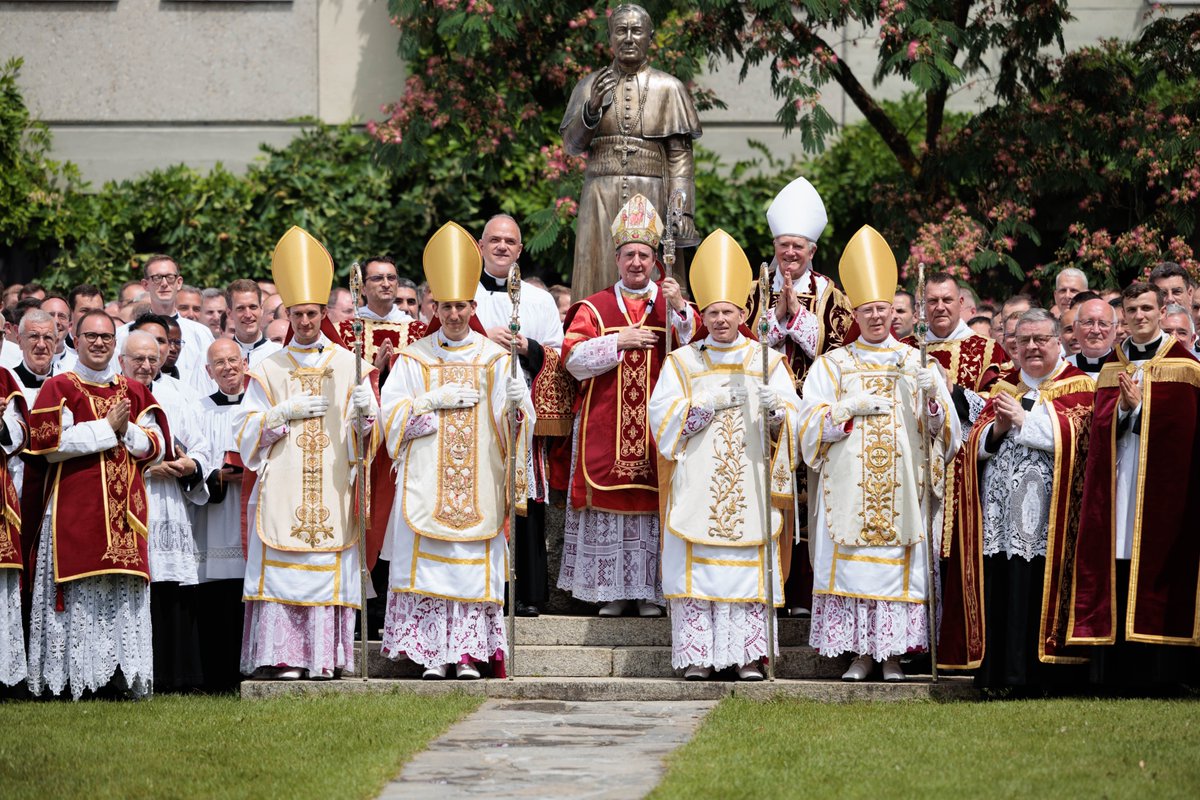
Communiqué de la Maison générale à l'issue des consécrations épiscopales En ce 1er juillet 2026, fête du Très Précieux Sang de Notre Seigneur Jésus-Christ, au Séminaire Saint-Pie X d’Écône, en Suisse, en présence de M. l’abbé Davide Pagliarani, Supérieur général de la FSSPX, et d’un très grand concours de prêtres, religieux, religieuses et fidèles, S. Exc. Mgr Alfonso de Galarreta, assisté de S. Exc. Mgr Bernard Fellay, a conféré la consécration épiscopale à Mgr Pascal Schreiber, Mgr Michael Goldade, Mgr Michel Poinsinet de Sivry et Mgr Marc Hanappier, pour être évêques auxiliaires de la FSSPX, sans juridiction. La Fraternité regrette sincèrement qu’en raison des circonstances exceptionnelles, ces consécrations aient dû être conférées sans l’autorisation du Saint-Père. Elle regrette tout particulièrement que le Supérieur général de la Fraternité ne se soit pas vu accorder la possibilité de rencontrer personnellement Sa Sainteté le pape Léon XIV, afin de lui exposer filialement les motifs graves qui rendaient cette cérémonie nécessaire. La joie profonde qu’inspirent ces consécrations épiscopales ne saurait cependant être assombrie. En garantissant les moyens nécessaires à la préservation de l’héritage sacré de la Tradition, le don de ces quatre nouveaux évêques constitue véritablement une très grande grâce pour la Fraternité elle-même et pour toute l’Église. La FSSPX s’en réjouit profondément et fait monter vers Dieu une fervente action de grâces, remerciant tout particulièrement la très sainte Vierge Marie d’avoir permis cette transmission de la plénitude du sacerdoce, pour la plus grande gloire de Dieu, l’honneur de la Sainte Église et le salut des âmes. Écône, le 1er juillet 2026
FSSPX Actualités tweet media
Français
210
425
1.6K
161.5K
Rafael Lougon
Rafael Lougon@rafalougon·
Está sendo interessante observar as manifestações de alguns fiéis ligados à Administração Apostólica Pessoal São João Maria Vianney, de Campos. São os mesmos que, em outro momento da história, precisaram recorrer aos bispos da FSSPX para sagrar o próprio bispo. Sim, também sem mandato apostólico. Hoje, porém, estufam o peito para condenar, com uma convicção quase militante, as sagrações de Écône. Dom Rifan, administrador apostólico e o ÚNICO bispo de origem do rito tradicional que Roma resolveu sagrar desde 1988, está muito próximo da aposentadoria. Agora resta aguardar. Vamos ver como Roma tratará a sucessão de Dom Rifan. E, principalmente, será interessante observar como esses mesmos fiéis reagirão caso descubram, na prática, que o tratamento dispensado à Administração Apostólica não era exatamente a regra, mas a exceção da exceção.
Português
9
4
48
3.9K
Rafael Lougon
Rafael Lougon@rafalougon·
Roma teve 38 (TRINTA E OITO!) anos para demonstrar amor e cuidado pelos católicos tradicionais. Além de Dom Rifan, em Campos (um caso local bastante específico), nem um único sacerdote dos diversos institutos ligados à Ecclesia Dei, criados ou recebidos em "plena comunhão" após as Consagrações de 1988, foi nomeado bispo. NENHUM. Assim, embora as sagrações episcopais sem Mandato Apostólico, realizadas hoje pela FSSPX possa causar perplexidade a muitos católicos médios, tal medida também é perfeitamente compreensível. Roma, de forma contínua, asfixia os fiéis ligados à Tradição. Em tempo: a postura que Roma adotou ao longo desses anos em relação aos institutos Ecclesia Dei, diz muito sobre a forma como esses mesmos institutos têm reagido às sagrações episcopais da FSSPX.
Português
25
16
118
6.6K
Rafael Lougon
Rafael Lougon@rafalougon·
Écône: 1988 / 2026 - FSSPX
Rafael Lougon tweet mediaRafael Lougon tweet media
0
21
147
6.6K
Rafael Lougon
Rafael Lougon@rafalougon·
A FSSPX passa a contar com 6 bispos. Deo Gratias!
Rafael Lougon tweet media
Português
26
8
146
5.2K
Sacerdos in æternum ✪
Sacerdos in æternum ✪@SacerdosMariae·
Hay gente tan mareada que necesita vomitar continuamente contra el Concilio Vaticano II. Es su deporte favorito, aún estando en juego su alma. Cuando uno confunde la Tradición con su enfado, termina corrigiendo un Concilio ecuménico aprobado por el Papa como si la Iglesia fuera su cuenta de X. 1️⃣ Vaticano II no fue una tertulia sospechosa: fue un Concilio ecuménico, aprobado por el Papa y recibido por el Magisterio posterior. 2️⃣ Sacrosanctum Concilium no convierte la liturgia en culto a la comunidad. La liturgia es obra de Cristo sacerdote y de su Cuerpo, que es la Iglesia. La participación activa no es activismo: es entrar en el misterio celebrado. 3️⃣ Lumen Gentium no sustituye el Cuerpo Místico por un “pueblo” protestantizado. La Iglesia es Cuerpo de Cristo, Pueblo de Dios, Esposa de Cristo y Templo del Espíritu. 4️⃣ El “subsistit in” no niega que la Iglesia de Cristo sea la Iglesia católica. El Catecismo lo recoge: la única Iglesia de Cristo subsiste en la Iglesia católica, gobernada por el sucesor de Pedro. 5️⃣ Dei Verbum no enseña que la Revelación cambie. Dios se ha revelado plenamente en Cristo. Lo que progresa es la comprensión de lo recibido. Crece la comprensión. No cambia la fe. 6️⃣ Gaudium et Spes no propone un mundo sin Cristo. Habla al hombre contemporáneo desde Cristo. Defender la dignidad humana no expulsa a Cristo Rey: la dignidad humana nace de Dios. 7️⃣ Christus Dominus no destruye el primado del Papa. La colegialidad episcopal se entiende siempre con Pedro y bajo Pedro. Vaticano I no queda derogado. 8️⃣ Presbyterorum Ordinis no reduce el sacerdocio a una profesión social. El presbítero es configurado con Cristo Sacerdote, Cabeza y Pastor. Servir no rebaja el sacerdocio: expresa el estilo de Cristo. 9️⃣ Optatam Totius no elimina a Santo Tomás. Pide seria formación filosófica y teológica, capaz de dialogar con los problemas del tiempo presente. La escolástica se defiende usándola bien. 🔟 Perfectae Caritatis no destruye la vida religiosa. Pide renovación desde el Evangelio, el carisma fundacional y la vida de la Iglesia. Los abusos posteriores no son el texto conciliar. 1️⃣1️⃣ Apostolicam Actuositatem no politiza al laico. Los laicos participan en la misión de la Iglesia desde el bautismo y santifican el mundo desde dentro: familia, trabajo, cultura y sociedad. 1️⃣2️⃣ Ad Gentes no sustituye la misión por el diálogo. Es un texto misionero: habla de anunciar a Cristo, implantar la Iglesia, llamar a la conversión y bautizar. 1️⃣3️⃣ Unitatis Redintegratio no pone la verdad al nivel del error. El ecumenismo católico busca la plena unidad querida por Cristo. No niega diferencias doctrinales ni renuncia a la verdad. 1️⃣4️⃣ Nostra Aetate no dice que todas las religiones salven igual. Dice que la Iglesia no rechaza lo verdadero y santo en ellas, pero anuncia a Cristo, “camino, verdad y vida”. 1️⃣5️⃣ Dignitatis Humanae no enseña que el error tenga derechos. Habla de inmunidad de coacción: nadie debe ser obligado contra su conciencia ni impedido de obrar según ella dentro del justo orden público. 1️⃣6️⃣ Repetir “preconciliar” como garantía automática de verdad no es un argumento. La Tradición no consiste en enfrentar unos Papas contra otros. 1️⃣7️⃣ Benedicto XVI dio el criterio católico: hermenéutica de la reforma en continuidad. Ni ruptura progresista ni ruptura tradicionalista. 1️⃣8️⃣ Se pueden criticar abusos litúrgicos, malas catequesis y derivas posconciliares. Lo que no se puede hacer seriamente es cargar todo eso al Concilio y pedir quemar sus documentos como si eso fuera fidelidad católica. 1️⃣9️⃣ La Iglesia no empezó en 1962. Tampoco terminó en 1965. Y no queda en manos de ningún perfil de X decidir qué Concilios valen, qué Papas cuentan y qué documentos habría que quemar. Eso no es Tradición: es mareo. #VaticanoII #Tradición #IglesiaCatólica #Magisterio
Sacerdos in æternum ✪ tweet media
Español
15
84
308
9.6K
Rafael Lougon
Rafael Lougon@rafalougon·
A ideia central é realmente isolar e estigmatizar a FSSPX, na tentativa de afastar fiéis atuais e futuros e, quem sabe, acolher os Sacerdotes e Religiosos da Fraternidade numa tentativa de replicar o mecanismo coercitivo do Motu Proprio "Ecclesia Dei", que concedeu liberdade litúrgica em troca de submissão doutrinal e moral ao Vaticano II e à sua iteração sinodal.
Português
1
0
0
61
Rafael Lougon
Rafael Lougon@rafalougon·
Me parece que o Santo Padre está numa briga interna entre suas convicções pessoais e a de seus conselheiros, em especial do Parolin. Isso fica nítido no contraste da própria carta que, elogia os frutos e, na sequência diz as cosias não podem seguir assim. Esse isolamento do Santo Padre para com a FSSPX deve ter sido precisamente orquestrado por Fernandez e Parolin. O pedido pelas sagrações veio no começo de uma Pontificado novo, Leão parecer estar deixando a Cúria lhe orientar, por falta de propriedade no imbróglio. E sim, o arremate final da carta é nítido para conclamar os "conservadores-continuístas" na cruzada contra a Tradição, em especial contra a FSSPX. O Secretário de Estado da Santa Sé é exímio nesse quesito.
Português
1
2
3
409
Rafael Lougon
Rafael Lougon@rafalougon·
Faltam menos de 24 horas para as Sagrações da FSSPX em Ecône. O Santo Padre admitiu que o elefante na sala existe e emitiu uma carta fazendo um apelo sem oferecer qualquer alternativa real. Na última semana as mídias católicas e mundanas tem acelerado os ataques e difamações. Muitos torcem para que as penalidades após as Sagrações não afetem somente os Bispos sagrantes e sagrados, mas que vão muito além. O ódio que temos acompanhado vai se intensificar. Estejamos prontos e serenos. Os ataques virão de todos os lados, repletos de preconceitos, estigmas e desconhecimento. Não desanimemos. Eis o martírio branco. Abracemo-lo sem triunfo, com humildade e esperança cristã.
Português
2
1
8
1.6K
Rafael Lougon
Rafael Lougon@rafalougon·
@MLJHaynes Apenas pede para que não sagrem, sem oferecer uma mínima alternativa que seja? Apenas impõe que a FSSPX se recolha a um fim melancólico, aguardando até que seu último bispo remanescente venha a tombar. Nada paternal. Vejo muitas digitais do Parolin nesse recado.
Português
0
0
5
661
Michael Haynes 🇻🇦
Michael Haynes 🇻🇦@MLJHaynes·
BREAKING: Pope Leo XIV writes to the SSPX warning against the planned consecrations Says it would be a “sin of the utmost gravity” Adds: “The Church is open to a path of dialogue and understanding that the Holy Spirit can make possible and fruitful” Full letter below —— With a paternal heart, and aware of the responsibility entrusted to me by the Lord as the Successor of the Apostle Peter, I address you and, through you, the bishops, priests, seminarians and faithful connected to the Priestly Fraternity of Saint Pius X. The Church recognizes the devotion to liturgical life, commitment to priestly formation, apostolic zeal and desire for fidelity to Tradition that characterize many people and communities connected to your Fraternity. This has motivated the attentive and generous attitude that my Predecessors have consistently shown to you. In this spirit, and filled with Christian affection, I plead with you and ask you with all my heart: please turn back! I urge you to consider carefully the spiritual good of the faithful, because the schismatic act you are about to undertake would deprive them of the licit and, in some cases, even valid reception of the Sacraments, which they love and seek for their sanctification. The Church is open to a path of dialogue and understanding that the Holy Spirit can make possible and fruitful. I pray for you, because to tear the seamless garment of Christ is a sin of extreme gravity. May the Lord enlighten your consciences and awaken your hearts. With a sorrowful yet hopeful heart, I feel it is my duty, through the authority received from Christ, to ask you to desist from your intended act. I entrust these intentions to the Immaculate Heart of Mary, Mother of Good Counsel.   From the Vatican, 29 June 2026 Solemnity of the Holy Apostles Peter and Paul   LEO PP. XIV
Michael Haynes 🇻🇦 tweet media
English
121
82
496
103.4K
Rafael Lougon
Rafael Lougon@rafalougon·
@BigModernism Where is your article? The link appears to be offline. Could you please send me a direct link to the article?
English
0
0
0
225
Cullum Smith
Cullum Smith@CullumSmith·
A state of necessity only supplies the jurisdiction for the minimum actions necessary to provide for the salvation of souls. What the SSPX is doing (again) with these consecrations is pretty much unprecedented in the history of the Church. There's just no way around that. But then, we do live in unprecedented times. Objectively speaking, four bishops is not enough to satisfy their pastoral demand. The SSPX is huge compared to 1988. These men are going to spend the rest of their lives on airplanes. But I think it was the right choice. In keeping with Lefebvre's original precedent and consecrating fewer bishops than they truly need, they minimize the scandal of their disobedience and make it obvious to the faithful that they are only doing what is necessary to ensure self-preservation -- and the sacramental continuity for the hundreds of thousands of souls that have come to rely on them. Each act of supplied jurisdiction performed by the SSPX will one day have to be confirmed by a "normal pope." When Pope Pius XIII takes the throne, he will recognize Archbishop Lefebvre's movement as taking extraordinary measures to pass on traditional sacraments, catechism, schools, religious life, and preaching to millions of Catholic faithful during a time of unprecedented crisis. Or at least, that's the future they've staked their souls on. There is no handbook for surviving our current situation. Ultimately "what stops them from doing XYZ" is simply a matter of prudence and the knowledge that they must one day answer to Almighty God.
English
3
5
36
1.2K
Dr Taylor Marshall™️
Dr Taylor Marshall™️@TaylorRMarshall·
After Bishop Richard Williamson was expelled from the SSPX in 2012, he consecrated more bishops: Jean-Michel Faure, Tomás de Aquino Ferreira da Costa, and Gerardo Zendejas. For these acts, Bp Williamson was again automatically excommunicated from the Catholic Church. Does the current SSPX consider these “Williamson bishops” as true orthodox Catholic bishops and are they “in communion” with them as “true Catholic bishops”? Why or why not? What stops a future SSPX bishop from breaking off like Bp Williamson and creating new cohorts of “emergency auxiliary” bishops?
Dr Taylor Marshall™️ tweet media
English
156
49
595
94.2K
Rafael Lougon retweetledi
FSSPX Actualités
FSSPX Actualités@FSSPXFR·
Pourquoi la FSSPX est-elle tant critiquée, alors que beaucoup voient les mêmes réalités ? La crise que traverse l'Église est aujourd'hui manifeste. Chute de la pratique religieuse, effondrement des vocations, perte du sens de la foi, confusion doctrinale et liturgique : le constat est largement partagé. Beaucoup de catholiques attachés à la Tradition reconnaissent que cette crise trouve son origine dans les réformes issues du concile Vatican II, en particulier dans la nouvelle orientation donnée à la liturgie. Pourtant, c'est souvent la FSSPX qui concentre les critiques. Trois attitudes face à la crise On peut distinguer, de manière schématique, trois groupes. D'abord, les autorités officielles de l'Église qui, malgré leurs divergences, demeurent unies dans la volonté de poursuivre la mise en œuvre des orientations du concile Vatican II : les conservateurs en ralentissant le mouvement, les progressistes en l'accélérant. La différence n'est pas la direction, mais la vitesse. Ensuite, les communautés traditionnelles reconnues canoniquement, qui conservent la liturgie traditionnelle et l'enseignement catholique tout en demeurant dans les structures juridiques officielles. Enfin, la FSSPX, qui considère que les erreurs diffusées depuis le concile et la réforme liturgique sont à la racine de la crise actuelle et qu'elles doivent être dénoncées publiquement. La différence essentielle entre ces deux dernières ne réside pas dans l'attachement à la messe traditionnelle, mais dans le jugement porté sur les causes de la crise. Les communautés ex-Ecclesia Dei continuent, en raison de leur statut canonique, d'accepter institutionnellement le concile Vatican II et la réforme liturgique. Elles peuvent en critiquer certains excès ou certaines interprétations, mais elles n'en contestent ni les principes ni la légitimité. La FSSPX considère au contraire que plusieurs enseignements conciliaires — notamment sur la liberté religieuse, l'œcuménisme et la collégialité — ainsi que la réforme liturgique elle-même constituent des causes profondes de la crise et doivent donc être soumis à une critique doctrinale. Dire la vérité... ou se taire Beaucoup de prêtres, de religieux et même d'évêques reconnaissent pourtant en privé les graves difficultés provoquées par les réformes conciliaires. Mais ils hésitent à l'affirmer publiquement, par crainte des réactions, des sanctions ou de compromettre leur apostolat. La FSSPX, fidèle à la ligne tracée par Mgr Lefebvre, estime au contraire qu'il serait coupable de se taire lorsque la foi est en jeu. Elle continue donc de dénoncer ce qu'elle considère comme les causes de la crise, même si cela lui attire l'incompréhension ou l'hostilité. Le silence devient une démission Dans les grandes crises de l'histoire de l'Église, les saints n'ont pas choisi le silence. Ils ont parlé lorsque la vérité l'exigeait. Lorsqu'une erreur met en péril la foi et le salut des âmes, le silence n'est plus de la prudence : il devient une démission. La véritable charité ne consiste pas à éviter les conflits, mais à défendre la vérité, quelles qu'en soient les conséquences. C'est pourquoi la FSSPX continue d'affirmer ce qu'elle tient de son fondateur : la crise actuelle ne pourra être surmontée qu'en revenant intégralement à la foi catholique de toujours, à la messe traditionnelle et au magistère constant de l'Église, sans compromis avec les nouveautés qui ont favorisé cette crise.
FSSPX Actualités tweet media
Français
33
110
364
9.6K