ramaruro

8.9K posts

ramaruro banner
ramaruro

ramaruro

@ramaruro

You should know better

Brokechain Katılım Haziran 2014
4.6K Takip Edilen357 Takipçiler
Sabitlenmiş Tweet
ramaruro
ramaruro@ramaruro·
Onboarded noob friend to crypto this week Tl;dr => Retail will flock to Solana because it is easy, cheap and straightforward => Coinbase Wallet (buggy) and marketing (confusing) needs to be improved big time Asked to open a @coinbase acct on desktop & download app 1/4
English
1
1
9
780
ramaruro
ramaruro@ramaruro·
@Math_files Same with this prisma, finite Volume infinite surface when a goes to ♾️ V= 1 * a * 1/a =1 S= (2 * 1 * a)+ (2 * a * 1/a) + (2 * 1 * 1/a) Lim a-> ♾️ V = 1 S = (2 * 1 * a)+ (2 ) ~ ♾️
ramaruro tweet media
English
0
0
1
1.3K
Math Files
Math Files@Math_files·
There is a shape in mathematics that can hold a finite amount of paint, yet would require an infinite amount of paint to coat its surface. It is called Gabriel’s Horn. Imagine rotating the curve y=1/x around the x-axis. The result is a long, tapering surface that stretches infinitely, like a tunnel that never ends. Here’s where the paradox appears. The volume of this shape converges—if you add up all its infinitesimal slices, the total stops growing. In other words, you can completely fill it with a finite amount of paint. But the surface area diverges. No matter how far you go along the horn, there is always more surface to cover. The outer “skin” keeps extending, demanding more paint without end. So while you could pour paint inside and fill it entirely, you would never finish painting the outside. This is not a trick, but a consequence of how infinity behaves. The radius shrinks quickly enough for the volume to remain finite, yet not fast enough to keep the surface area from growing without bound. It reveals a deeper truth: infinity does not simply mean “very large”—it means unending. And sometimes, the infinite can exist within the finite in ways that defy our intuition, even while remaining perfectly consistent in mathematics.
English
44
113
812
163.7K
ramaruro
ramaruro@ramaruro·
@MattWalshBlog @R89Capital It has 15 characters, letters, numbers, special symbols. Just needs to change some to lower case to make it a great PW
English
0
0
1
9
Matt Walsh
Matt Walsh@MattWalshBlog·
For those who don't speak Woke Retard, I looked it up and apparently MMIWG2SLGBTQQIA+ means "Missing and Murdered Indigenous Women, Girls, and Two-Spirit, Lesbian, Gay, Bisexual, Transgender, Queer, Questioning, Intersex, and Asexual." So apparently they'd added murdered people into the LGBT community. Murdered is now a queer identity. This is the kind of innovation we get from Canada.
Juno News@junonewscom

NDP MP Leah Gazan condemns Budget 2026 for cutting $7B from Indigenous Services Canada and Crown Indigenous relations. "They provided $0 to deal with the ongoing genocide of MMIWG2SLGBTQQIA+," she said. "Rates of violence are increasing, and the PM is turning a blind eye."

English
3.4K
7.9K
63K
2.9M
ramaruro
ramaruro@ramaruro·
@nahuelzn A los giles ni cabida Lanzón. Seguí con lo tuyo, linda veta encontraste!!
Español
0
0
6
400
Nahuel Lanzón
Nahuel Lanzón@nahuelzn·
Mirá, te paso un sectorcito chiquito de mi biblioteca solo dedicado a estudios en filosofía y religión en la antigüedad tardía con material que acá ni se consigue. Y son solo libros que me traje, muchos de esos que acá ni se consiguen. Faltan fuentes, los que tengo guardados en lo de mis viejos, papers, ebooks, etc.. Y repito, eso solo para estudios de antigüedad tardía. Se coló también la edición del papiro mas antiguo encontrado en Europa en griego antiguo, que he tenido el gusto de leer y traducir, y que me lo mandaron los que hicieron la edición crítica moderna del mismo 😌
Nahuel Lanzón tweet media
Yo@pulsotac

@nahuelzn Lanzón, dedícate a la pelotita del Kirguistán y no te hagas el teólogo, que ser autista no es lo mismo que haber estudiado.

Español
18
8
465
27.2K
鈴木貫太郎
鈴木貫太郎@Kantaro196611·
@kiironotori0117 ガウスがnまでの素数の個数がln(n)/nに近似できると予想して、それは正しいらしいそうです。
日本語
1
0
27
22.1K
Tendencias en Argentina
Tendencias en Argentina@porqueTTarg·
"Cajones" Por esta competencia donde gana el que logra subir más alto con cajones de cerveza.
Español
13
46
1.3K
216.1K
🇦🇷 lucas llach 🇺🇦
¿Cuál es el campeón del Mundial que *menos* te molestaría si no gana Argentina? Creo que Holanda (y no me animo a decir Inglaterra porque hay muchos que no entienden este deporte). Mi lógica: no queremos nuevos ingresos a la élite, y Holanda ya es élite; los uruguayos se volverían insoportables; y no hay que abundar sobre Brasil, Francia, Alemania y España.
Español
676
8
884
166.7K
ramaruro retweetledi
Justin Drake
Justin Drake@drakefjustin·
Today is a monumentous day for quantum computing and cryptography. Two breakthrough papers just landed (links in next tweet). Both papers improve Shor's algorithm, infamous for cracking RSA and elliptic curve cryptography. The two results compound, optimising separate layers of the quantum stack. The results are shocking. I expect a narrative shift and a further R&D boost toward post-quantum cryptography. The first paper is by Google Quantum AI. They tackle the (logical) Shor algorithm, tailoring it to crack Bitcoin and Ethereum signatures. The algorithm runs on ~1K logical qubits for the 256-bit elliptic curve secp256k1. Due to the low circuit depth, a fast superconducting computer would recover private keys in minutes. I'm grateful to have joined as a late paper co-author, in large part for the chance to interact with experts and the alpha gleaned from internal discussions. The second paper is by a stealthy startup called Oratomic, with ex-Google and prominent Caltech faculty. Their starting point is Google's improvements to the logical quantum circuit. They then apply improvements at the physical layer, with tricks specific to neutral atom quantum computers. The result estimates that 26,000 atomic qubits are sufficient to break 256-bit elliptic curve signatures. This would be roughly a 40x improvement in physical qubit count over previous state-of-the-art. On the flip side, a single Shor run would take ~10 days due to the relatively slow speed of neutral atoms. Below are my key takeaways. As a disclaimer, I am not a quantum expert. Time is needed for the results to be properly vetted. Based on my interactions with the team, I have faith the Google Quantum AI results are conservative. The Oratomic paper is much harder for me to assess, especially because of the use of more exotic qLDPC codes. I will take it with a grain of salt until the dust settles. → q-day: My confidence in q-day by 2032 has shot up significantly. IMO there's at least a 10% chance that by 2032 a quantum computer recovers a secp256k1 ECDSA private key from an exposed public key. While a cryptographically-relevant quantum computer (CRQC) before 2030 still feels unlikely, now is undoubtedly the time to start preparing. → censorship: The Google paper uses a zero-knowledge (ZK) proof to demonstrate the algorithm's existence without leaking actual optimisations. From now on, assume state-of-the-art algorithms will be censored. There may be self-censorship for moral or commercial reasons, or because of government pressure. A blackout in academic publications would be a tell-tale sign. → cracking time: A superconducting quantum computer, the type Google is building, could crack keys in minutes. This is because the optimised quantum circuit is just 100M Toffoli gates, which is surprisingly shallow. (Toffoli gates are hard because they require production of so-called "magic states".) Toffoli gates would consume ~10 microseconds on a superconducting platform, totalling ~1,000 sec of Shor runtime. → latency optimisations: Two latency optimisations bring key cracking time to single-digit minutes. The first parallelises computation across quantum devices. The second involves feeding the pubkey to the quantum computer mid-flight, after a generic setup phase. → fast- and slow-clock: At first approximation there are two families of quantum computers. The fast-clock flavour, which includes superconducting and photonic architectures, runs at roughly 100 kHz. The slow-clock flavour, which includes trapped ion and neutral atom architectures, runs roughly 1,000x slower (~100 Hz, or ~1 week to crack a single key). → qubit count: The size-optimised variant of the algorithm runs on 1,200 logical qubits. On a superconducting computer with surface code error correction that's roughly 500K physical qubits, a 400:1 physical-to-logical ratio. The surface code is conservative, assuming only four-way nearest-neighbour grid connectivity. It was demonstrated last year by Google on a real quantum computer. → future gains: Low-hanging fruit is still being picked, with at least one of the Google optimisations resulting from a surprisingly simple observation. Interestingly, AI was not (yet!) tasked to find optimisations. This was also the first time authors such as Craig Gidney attacked elliptic curves (as opposed to RSA). Shor logical qubit count could plausibly go under 1K soonish. → error correction: The physical-to-logical ratio for superconducting computers could go under 100:1. For superconducting computers that would be mean ~100K physical qubits for a CRQC, two orders of magnitude away from state of the art. Neutral atoms quantum computers are amenable to error correcting codes other than the surface code. While much slower to run, they can bring down the physical to logical qubit ratio closer to 10:1. → Bitcoin PoW: Commercially-viable Bitcoin PoW via Grover's algorithm is not happening any time soon. We're talking decades, possibly centuries away. This observation should help focus the discussion on ECDSA and Schnorr. (Side note: as unofficial Bitcoin security researcher, I still believe Bitcoin PoW is cooked due to the dwindling security budget.) → team quality: The folks at Google Quantum AI are the real deal. Craig Gidney (@CraigGidney) is arguably the world's top quantum circuit optimisooor. Just last year he squeezed 10x out of Shor for RSA, bringing the physical qubit count down from 10M to 1M. Special thanks to the Google team for patiently answering all my newb questions with detailed, fact-based answers. I was expecting some hype, but found none.
English
332
1.2K
5.8K
1.5M
ramaruro
ramaruro@ramaruro·
@nahuelzn De acuerdo, necesitamos que más nos odien más, es la única ventaja que podemos tener
Español
0
0
0
262
ramaruro
ramaruro@ramaruro·
@mert What language is this?
English
0
0
0
20
mert
mert@mert·
this is a real video from a political party in canada
English
88
24
396
57.8K
ramaruro
ramaruro@ramaruro·
@ArgenRanks 10. Boca vs Palmeiras (Libertadores 2007 - final ida) ==> Boca jugó la final 2007 con Gremio, no con Plameiras
Español
0
0
0
73
Rankings de Argentina
Rankings de Argentina@ArgenRanks·
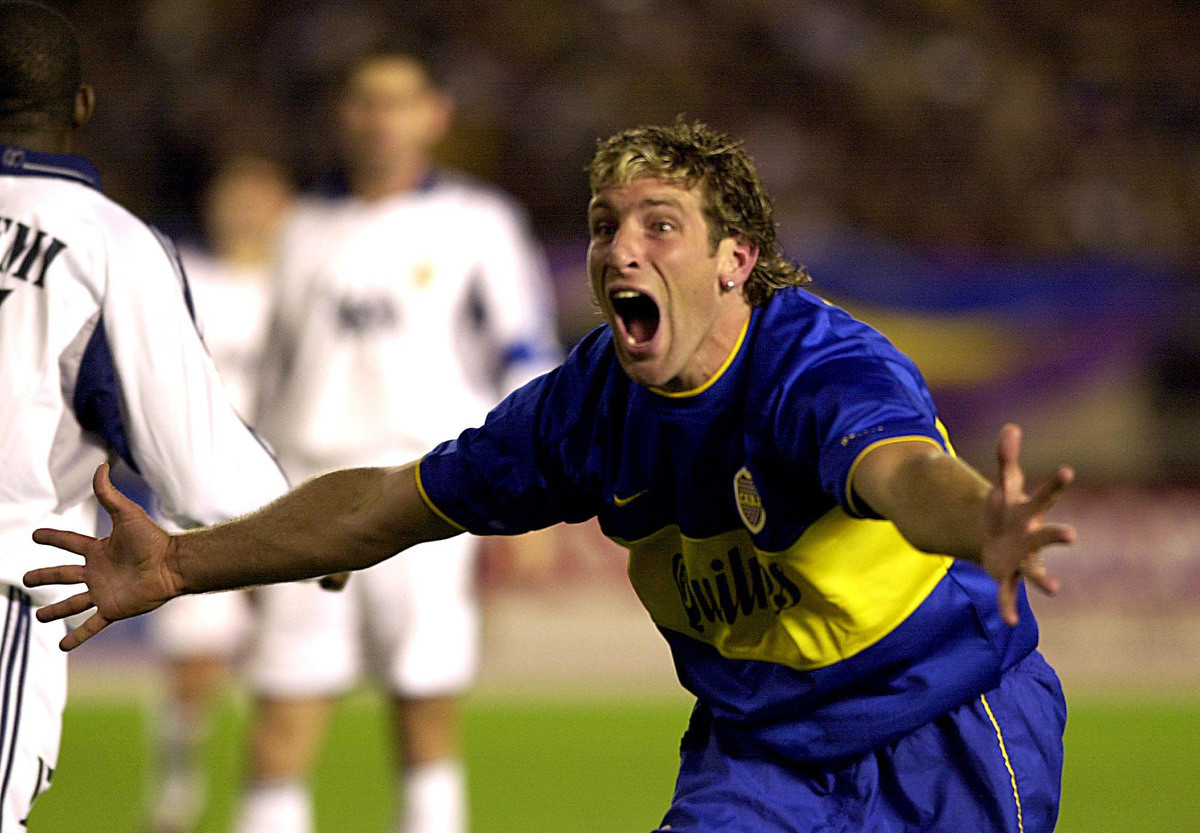
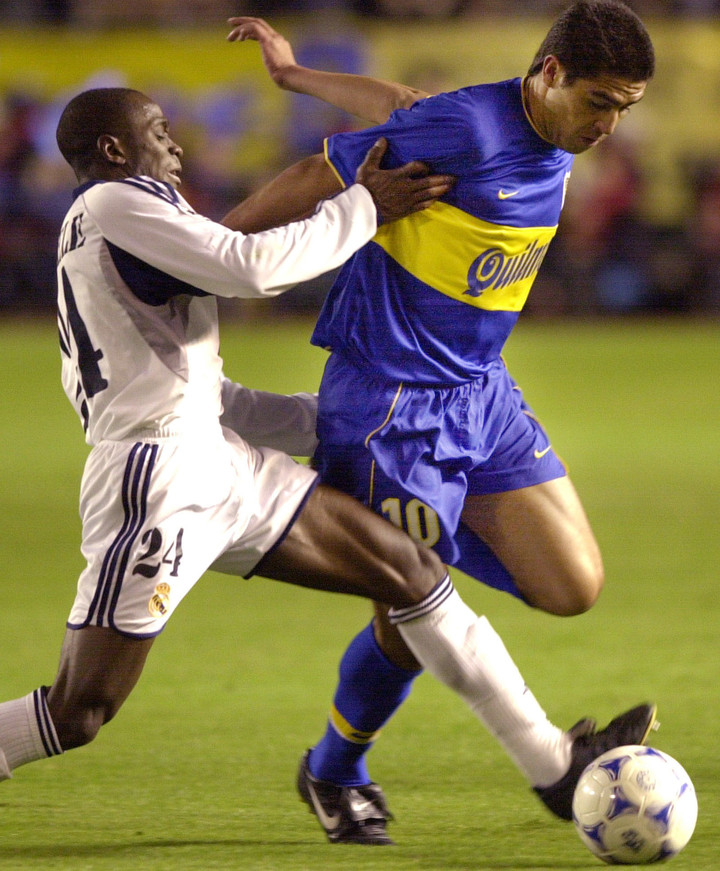
🔵🟡 Estos son los 10 mejores partidos de la historia de Boca Juniors. 1. Boca vs Real Madrid (Intercontinental 2000) 2. Boca vs Milan (Intercontinental 2003) 3. Boca vs Palmeiras (Libertadores 2000 - final vuelta) 4. Boca vs Cruzeiro (Libertadores 1977 - desempate) 5. Boca vs River (Primera División 1959) 6. Boca vs Borussia Mönchengladbach (Intercontinental 1977/78 - vuelta) 7. Boca vs River (Libertadores 2004 - semifinal ida) 8. Boca vs Santos (Libertadores 2003 - final vuelta) 9. Boca vs River (Metropolitano 1976 - finalísima) 10. Boca vs Palmeiras (Libertadores 2007 - final ida)
Rankings de Argentina tweet mediaRankings de Argentina tweet media
Español
68
46
673
59.8K
ramaruro retweetledi
Milk Road
Milk Road@MilkRoad·
Pine Analytic's just made the bear case for Bittensor. (You might want to save this one). Here's a condensed summary of their thesis: → $TAO trades at $275 with a $2.6B market cap. → Grayscale filed an S-1 for a NYSE-listed ETF. → Jensen Huang gave it a public endorsement. → It has Bitcoin-style tokenomics with a 21M hard cap. None of that is being disputed by @PineAnalytics. The question is whether the network can generate enough real revenue to justify the valuation. Starting with how the money flows... Bittensor has four player classes: 1. Subnet owners build AI marketplaces (18% of TAO emissions). 2. Miners do the AI grunt work (41%). 3. Validators grade the miners (41%). 4. Stakers dump TAO into liquidity pools. TAO is the entry ticket for everything. Mining, staking, subnet tokens, services. All roads lead to TAO. The supply side? Completely transparent. Emissions, halving schedules, staking ratios - all onchain. The demand side? Crickets. No dashboard tracking real revenue by subnet. AI work happens offchain (inference requests, compute jobs, training calls) none of it touches the blockchain. This isn't a bug they're fixing - it's baked in. So what does demand actually look like? Chutes is the biggest subnet. 14.4% of all emissions. It sells serverless AI inference at prices "85% below AWS." The usage numbers look great: - 400,000+ users - 5M+ daily requests - 9.1 trillion tokens processed But those cheap prices aren't from efficiency. They're from subsidy. Chutes receives roughly 518 TAO/day - about $142,000 ($52M annualized). Estimated actual revenue? $1.3M to $2.4M/year. For every $1 customers pay, the network kicks in $22 to $40 in emissions. Kill the subsidy and do the math. 101B tokens/day, $142K in daily costs. That's ~$1.41 per million tokens. Market rate? Together ai charges $0.88. DeepSeek runs $0.40–$0.80. Smaller models go as low as $0.18. Without the subsidy, Chutes isn't 85% cheaper - it's 1.6x to 3.5x MORE expensive than centralized options. The cost advantage doesn't shrink, but actually flips completely. "But this is the Uber playbook! Subsidize early, raise prices later!" Except Uber built switching costs during the subsidy period. Driver networks. Proprietary platforms. Enterprise integrations. Bittensor subnets build none of that. The models are open source. The APIs are standard. Users can bounce to any provider serving the same weights with zero friction. When the subsidy shrinks, nothing keeps anyone around. One more thing on Chutes: the team behind it (Rayon Labs) also runs two other subnets. Together they command nearly 24% of total emissions. One team. Almost a quarter of the network's incentive pie. What about the rest? Targon is the highest-revenue subnet. Run by Manifold Labs ($10.5M Series A). Enterprise GPU compute. ~$10.4M annualized revenue against a $48M valuation - a 4.6x revenue multiple. The most grounded number in the ecosystem. But it's a projection, not audited. Templar built Covenant-72B, a 72B parameter model trained on 1.1 trillion tokens. $98M market cap. Zero external revenue. Paid products "in motion" but nothing shipped. The remaining 120+ subnets? Either no revenue, pre-product, or just farming emissions. The big picture, as @PineAnalytics sees it: Total identifiable revenue across the ENTIRE network: roughly $3M–$15M annually. A single subnet's emission subsidy ($52M for Chutes) exceeds the upper bound of what the whole network earns from actual customers. Against a $2.6B market cap, that's a 175x–200x revenue multiple. Against FDV of $5.8B, roughly 400x. For context: CoreWeave and Lambda were valued at 15x–25x revenue. High-growth SaaS rarely sustains above 50x. Bittensor's implied multiple is 4x–10x higher than the most aggressive comp in crypto OR traditional infra. The market is pricing TAO on supply scarcity, institutional catalysts, and AI vibes - not economic productivity. Now the squeeze. Subnets are getting crushed from both directions. From above: Self-hosting. Every model on Bittensor is open source. Weights are on Hugging Face. One H100 serves a 70B model for $40–$50/day. Tools like vLLM and Ollama make local deployment trivial. Any org with volume is already cheaper running it themselves. From below: Hyperscalers. Microsoft, Google, Amazon, and Meta spent over $200B on AI capex in 2025. First-priority hardware. Purpose-built data centers. Enterprise relationships already in place. Bittensor's entire annual incentive budget ($360M) is less than Microsoft's weekly AI infra spend. Then there's the moat problem. If a subnet builds something valuable, the underlying model and methodology are public by design. Covenant-72B is Apache licensed. Any competitor can copy the approach without touching the TAO economy. The community says the incentive mechanism IS the moat. But that only works if emissions stay large enough to attract compute. And they shrink with every halving. So what is TAO actually pricing? At $2.6B, it's not priced on demand fundamentals. $3M-15M in annual revenue doesn't support that under any framework. The market is pricing: Bitcoin-like scarcity. The Grayscale ETF catalyst. AI sector rotation. Long-term optionality on decentralized AI. Legitimate speculative factors. Also entirely supply-side and sentiment-driven. A TAO position based on scarcity and narrative? Might do great regardless of demand economics. A TAO position based on Bittensor becoming a real AI services network? That requires evidence that doesn't exist yet - and faces structural headwinds that might prevent it from showing up. Know which thesis you're holding. (P.S. Read the full article below 👇)
Pine Analytics@PineAnalytics

x.com/i/article/2036…

English
29
17
150
44.2K
ramaruro
ramaruro@ramaruro·
@sciencegirl This is common in the beaches in Argentina 🇦🇷 When a kid gets lost, adults will start clapping around him to get the attention of the parents. The band stepping in is a great addition!
English
0
0
1
68
Science girl
Science girl@sciencegirl·
A little boy got separated from his dad in a crowd in Argentina. Strangers teamed up to help, chanting the father’s name. Even the band joined in, playing a song: "Eduardo, come and find Juan Cruz."
English
195
1.3K
12.3K
371.3K
ramaruro
ramaruro@ramaruro·
@Stockavenger2 Motiva Port Arthur es la de mayor capacidad de 🇺🇸 , casi el doble (650.000 barriles por día) Have varias más por encima de esta en capacidad
Español
0
0
2
3.2K
Pullback
Pullback@Stockavenger2·
Es la refinería con mayor capacidad de procesamiento de USA 🇺🇸, unos 340.000 barriles de petróleo por día. Muy grave esto.
Español
47
54
933
135.4K
termo
termo@usdtermo·
HACE 6 AÑOS ESTE HÉROE NACIONAL DOMABA AL ESTABLISHMENT DE LOS MEDIOS
Español
111
1K
11.8K
367.1K
Ulises
Ulises@UlisesDavid__·
El destino de un hombre cuya infidelidad fue descubierta
Ulises tweet mediaUlises tweet media
Español
34
4
270
16.3K
ramaruro
ramaruro@ramaruro·
@Expefutbol Son todos franceses. Es cómo la Selección B de Francia, así cómo Curação y Surinam son las Selecciones B/C de Holanda
Español
7
0
7
5K
ramaruro
ramaruro@ramaruro·
@nahuelzn Te preparaste toda la vid apara este momento. Se viene el Lanzonazo!!
Español
0
0
0
65
Nahuel Lanzón
Nahuel Lanzón@nahuelzn·
Argentina jugará con Mauritania y Zambia la fecha FIFA, ambos partidos en La Bombonera. La auto-llamaré "Fecha FIFA Nahuel Lanzon", ya que nadie lo va a hacer (?)
Español
27
43
971
17.9K
ramaruro retweetledi
kanav
kanav@kanavtwt·
Someone built a Google translate for Linkedin 😭
kanav tweet media
English
645
10.3K
90.6K
2.8M
ramaruro
ramaruro@ramaruro·
@sudanalytics_ Marruecos y Vinicius, los dos enemigos públicos número uno
Español
0
0
1
414
Sudanalytics
Sudanalytics@sudanalytics_·
Las cosas que pasaron en esa final… jugadores y alcanzapelotas de Marruecos querían SACARLE LA TOALLA a Mendy para que no pudiera secarse. Diouf, arquero suplente de Senegal, HIZO DE TODO PARA CUIDAR A SU COMPAÑERO. Hoy le sacaron el título. 😳🇲🇦🇸🇳
Sudanalytics@sudanalytics_

😳🇲🇦 MARRUECOS ES CAMPEÓN DE LA COPA ÁFRICA, DOS MESES DESPUÉS DE JUGARLA. ⛔️ Acaban de SACARLE EL TÍTULO A SENEGAL por ABANDONAR LA CANCHA al protestar en arbitraje y PIERDE ¡0-3! Sí, es real. ⚠️

Español
21
60
1.8K
179.1K
Damián Catanzaro ☕️
Damián Catanzaro ☕️@DamianCatanzaro·
Esto es un montón, lo lei ya 20 veces y no puedo creerlo. Una persona hizo un swap de 50 MILLONES DE DOLARES en USDT para comprar el token AAVE, cuando se quieren hacer grandes operaciones y no hay liquidez suficiente se muestra un cartel diciendo que aceptás eso, la persona recibió por los $50M -> 32 mil dolares. Realmente no lo puedo creer todavía.
Stani@StaniKulechov

Earlier today, a user attempted to buy AAVE using $50M USDT through the Aave interface. Given the unusually large size of the single order, the Aave interface, like most trading interfaces, warned the user about extraordinary slippage and required confirmation via a checkbox. The user confirmed the warning on their mobile device and proceeded with the swap, accepting the high slippage, which ultimately resulted in receiving only 324 AAVE in return. The transaction could not be moved forward without the user explicitly accepting the risk through the confirmation checkbox. The CoW Swap routers functioned as intended, and the integration followed standard industry practices. However, while the user was able to proceed with the swap, the final outcome was clearly far from optimal. Events like this do occur in DeFi, but the scale of this transaction was significantly larger than what is typically seen in the space. We sympathize with the user and will try to make a contact with the user and we will return $600K in fees collected from the transaction. The key takeaway is that while DeFi should remain open and permissionless, allowing users to perform transactions freely, there are additional guardrails the industry can build to better protect users. Our team will be investigating ways to improve these safeguards going forward.


Español
85
31
1.1K
410.7K