
Ramon Guiu

1.1K posts

Ramon Guiu banner
Ramon Guiu

Ramon Guiu

@ramonguiu

VP of Revenue and Product at @TigerDatabase / @TimescaleDB Formerly VP Product and GM @newrelic.

Barcelona Katılım Mart 2007
348 Takip Edilen411 Takipçiler
Ramon Guiu retweetledi
Mike Freedman
Mike Freedman@michaelfreedman·
Siemens + TimescaleDB: Tested at CERN, built for the world. The ATLAS Detector is one of the most complex machines ever built, designed to probe the subatomic structure of the universe. Unsurprisingly, the control systems behind it are just as complex. To support this scientific mission, @CERN researchers turned to @TimescaleDB as the backend for their SCADA platform, built on @Siemens ETM's WinCC Open Architecture. Today, we're announcing that this native integration will ship to all WinCC OA users, with TimescaleDB becoming the default storage layer for WinCC OA v3.21 later this year. Excited to be partnering with Siemens ETM here. And another step toward modernizing the data infrastructure for the physical world. Photo from @hannover_messe yesterday. Announcement below. 🏭🏗️⛏️🛢️⚡️🚚⚙️🦾
Mike Freedman tweet media
English
3
4
29
2.2K
Ramon Guiu retweetledi
Mike Freedman
Mike Freedman@michaelfreedman·
Two big announcements today kicking off @hannover_messe, but one story: The industrial historian is being modernized. Legacy products are stuck in 1990s technology, and industrial orgs need to do far more with their operational data: more data, faster decisions, and now AI. Today we announced @TimescaleDB Enterprise: commercial packaging of our Postgres-based time-series database -- HA, backups, monitoring, admin console, optional cloud sync -- for on-prem and edge. We also unveiled a strategic alliance with @InductiveAuto. End-to-end: Ignition at the edge and plant → TimescaleDB Enterprise at each site → Tiger Cloud across the enterprise. Physical AI will run on factories, grids, and fleets, and it needs an open, SQL-native time-series foundation from sensor to cloud. That's the foundation we already power across 1000s of companies. 🏭🏗️⛏️🛢️⚡🚚⚙️🦾
English
4
5
10
1.4K
Ramon Guiu retweetledi
Mike Freedman
Mike Freedman@michaelfreedman·
pg_textsearch v1.0 is now GA, on @TigerDatabase Cloud and open source. A full BM25 search engine -- tokenization, indexing, compression, and query execution -- built in C directly inside Postgres. No sidecar or separate system. Indexes live in Postgres pages, use the buffer cache, and participate in WAL, replication, and backups. Block-Max WAND for fast top-k, SIMD-accelerated posting lists, and parallel builds (138M docs in <18 min). On MS-MARCO: 2.4–6.5x faster than ParadeDB/Tantivy (2–4 terms), with 8.7x higher concurrent throughput. Full architecture and benchmarks: tsdb.co/5p5sh9i7
English
9
33
233
13.1K
Ramon Guiu retweetledi
Mike Freedman
Mike Freedman@michaelfreedman·
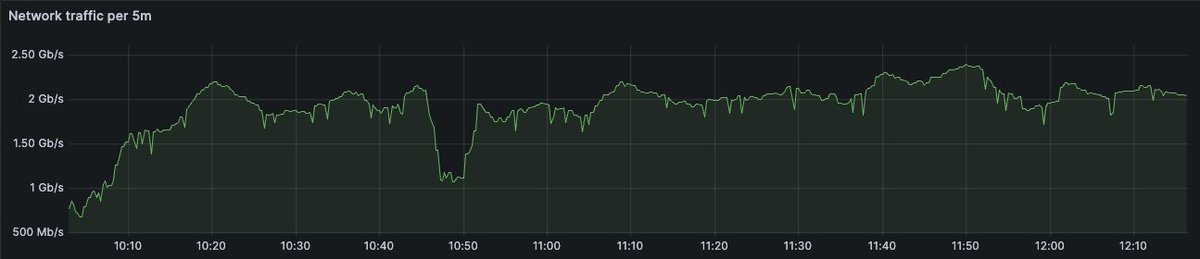
Fun to watch this in real time: Fortune 500 company migrating an on-prem @TimescaleDB deployment to Tiger Cloud at ~2 Gbps using our managed LiveSync tooling.
Mike Freedman tweet media
English
2
4
22
3.2K
Ramon Guiu
Ramon Guiu@ramonguiu·
They migrated from a document database. Their results: • 480x faster queries: from 4 minutes to 500 ms • 95% compression • ~40% lower costs • 100M+ readings inserted per day You can scale massively on Postgres — and power real healthcare impact. Full story: tigerdata.com/blog/how-glook…
English
0
0
0
9
Ramon Guiu
Ramon Guiu@ramonguiu·
@GlookoInc supports 1M+ people living with diabetes and processes 3B+ data points every month to improve care. They’ve accumulated 75+ billions of health data points — all tied to real patients making daily decisions. All on Postgres — no complex multi-database stack. Really proud of what our team at Tiger Data is helping power. 👇
English
1
0
1
31
Ramon Guiu retweetledi
Charly Wargnier
Charly Wargnier@DataChaz·
🚨 @TigerDatabase (Yes! the team behind TimescaleDB) is quietly revolutionizing how we build agents. The Old Way: Glueing together Postgres + Vector DBs + Search tools = complexity. The New Way: Tiger Data’s Agentic Postgres handles it all natively 🔥 What’s now possible 🧵 ↓ ✦ Hybrid retrieval → combine keyword filtering and vector similarity in a single query ✦ Forkable databases → retrieval and safe experimentation without external systems ✦ Native Postgres semantics → everything stays queryable, inspectable, and debuggable in SQL Why this matters: → Fewer moving parts in RAG pipelines → No extra infrastructure to stitch together → Agents can iterate and learn safely → Production data stays isolated and protected This is an awesome shift! Stop bolting workflows onto your database. Let your database be the workflow 🔥
English
8
17
73
20.2K
Ramon Guiu retweetledi
David Peterson
David Peterson@davidgpeterson·
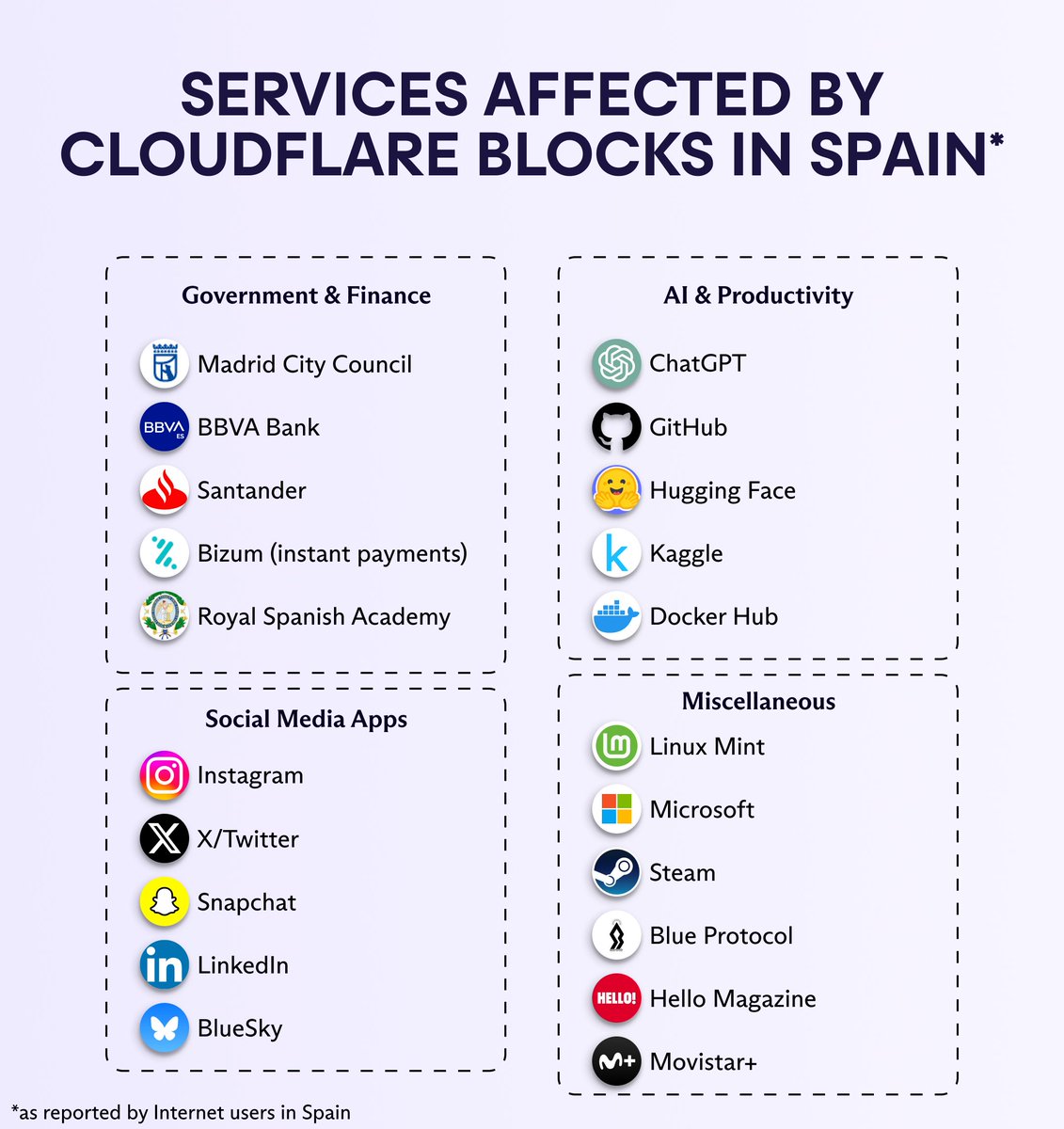
LaLiga has been ordering Spanish ISPs to block ~3000 IP addresses almost every weekend. Because Cloudflare IPs are shared, this has been doing massive collateral damage to thousands of legitimate websites, apps, and vital services - all at the whim of a private corporation.
David Peterson tweet media
English
86
1.1K
3.6K
617.7K
Ramon Guiu retweetledi
Akshay 🚀
Akshay 🚀@akshay_pachaar·
Big moment for Postgres! Search has always been Postgres' weak spot, and everyone just accepted it. If you needed a real relevance-ranked keyword search, the default answer was to spin up Elasticsearch or add Algolia and deal with the data sync headaches forever. The problem isn't that Postgres can't do text search. It can. But the built-in `ts_rank` function uses a basic term frequency algorithm that doesn't come close to what modern search engines deliver. So teams end up: - Running a separate Elasticsearch cluster just for search - Building sync pipelines that inevitably drift out of consistency - Paying for managed search services that charge per query - Accepting mediocre search relevance because "good enough" ships faster But this is actually a solvable problem. You can realistically bring industry-standard search ranking directly into Postgres, which eliminates the need for external infra entirely. This exact solution is now available with the newly open-sourced pg_textsearch by @TigerDatabase, a Postgres extension that brings true BM25 relevance ranking into the database. BM25 is the algorithm behind Elasticsearch, Lucene, and most modern search engines. Now it runs natively in Postgres. Here's what pg_textsearch enables: - True BM25 ranking with configurable parameters (the same algorithm powering production search systems) - Simple SQL syntax: `ORDER BY content <@> 'search terms'` - Works with Postgres text search configurations for multiple languages - Pairs naturally with pgvector for hybrid keyword + semantic search That last point matters a lot for RAG apps. The video below shows this in action, and I worked with the team to put this together. You can now do hybrid retrieval (combining keyword matching with vector similarity) in a single database, without stitching together multiple systems. The syntax is clean enough that you can add relevance-ranked search to existing queries in minutes. pg_textsearch is fully open-source under the PostgreSQL license. You can find a link to their GitHub repo in the next tweet.
English
67
313
2.6K
214.8K
Ramon Guiu retweetledi
Mike Freedman
Mike Freedman@michaelfreedman·
ColumnarIndexScan is the payoff: 289x faster queries on compressed data. It answers min/max/first/last directly from sparse index metadata, so the scan becomes "read index summaries," not "decompress batches." By the numbers: 1.1ms with ColumnarIndexScan vs 312ms with ColumnarScan for GROUP BY device + first/last/min/max. It shines when your GROUP BY and filters line up with the compression layout, so the planner can push the work down into the compressed scan. Also likely landing in @TimescaleDB v2.25 this January. Postgres, supercharged. ⚡⚡⚡
Mike Freedman@michaelfreedman

New @TimescaleDB planner win from Sven Klemm (~v2.25): 50x faster columnar queries. When a WHERE clause on the primary time dimension is guaranteed true for a partition/chunk, we stop pushing that qual down into the partition plan. For columnar partitions this is huge: you no longer decompress the time column just to prove the partition is in range. Result: 50x faster SELECT count(*) … WHERE time > '2025-01-02', and it unblocks ColumnarIndexScan / SkipScan when filters touch compressed cols. 🚀🚀🚀

English
0
1
7
756
Ramon Guiu retweetledi
Mike Freedman
Mike Freedman@michaelfreedman·
Replit's deep dive into their snapshotting infrastructure, posted Thursday, is worth a read. It highlights a key shift: once agents operate on real application state, experimentation becomes the norm. Agents branch state, explore in parallel, and backtrack frequently. Assumptions that break traditional databases and storage systems. What struck me is how closely @Replit's architecture mirrors what we built with Fluid Storage at Tiger Data. Different implementations, same conclusion: databases need to be forkable, and that capability has to live in the storage layer. I wrote up a comparison on what this convergence means for agentic experimentation 👇
English
11
11
92
15.6K
Ramon Guiu retweetledi
Ajay Kulkarni
Ajay Kulkarni@acoustik·
𝗔𝗻𝗼𝘁𝗵𝗲𝗿 𝗛𝗼𝘁 𝗝𝗼𝗯 𝗔𝗹𝗲𝗿𝘁! 🚨 We’re hiring a Senior Developer Advocate (AI / Agentic Postgres) in SF / Bay Area! If you live and breathe AI dev tools like Cursor, Claude Code, Windsurf, Copilot, and you build with agents every day, this one’s for you. We’re looking for someone ready to define how developers actually build with agents on real infrastructure, not just talk about it. You’ll work directly with me to shape Agentic Postgres, our next generation database platform for agentic workloads built on PostgreSQL. This is community-centric, product-influencing work: 🔥 Ship daily demos showing what’s possible with agents 🔥 Co-host SF events like Agents & Coffee and represent us globally 🔥 Create technical content that teach and inspire builders 🔥 Influence both product direction and developer perception 🔥 Build the voice and momentum for Agents as the new developers worldwide If you’re a builder, teacher, community-spark, and you want to help define the future of databases for AI workflows... let’s talk. Come help us put Agentic Postgres on every developer’s toolkit. tigerdata.com/careers/52906f…
English
0
1
5
678
Ramon Guiu retweetledi
Mike Freedman
Mike Freedman@michaelfreedman·
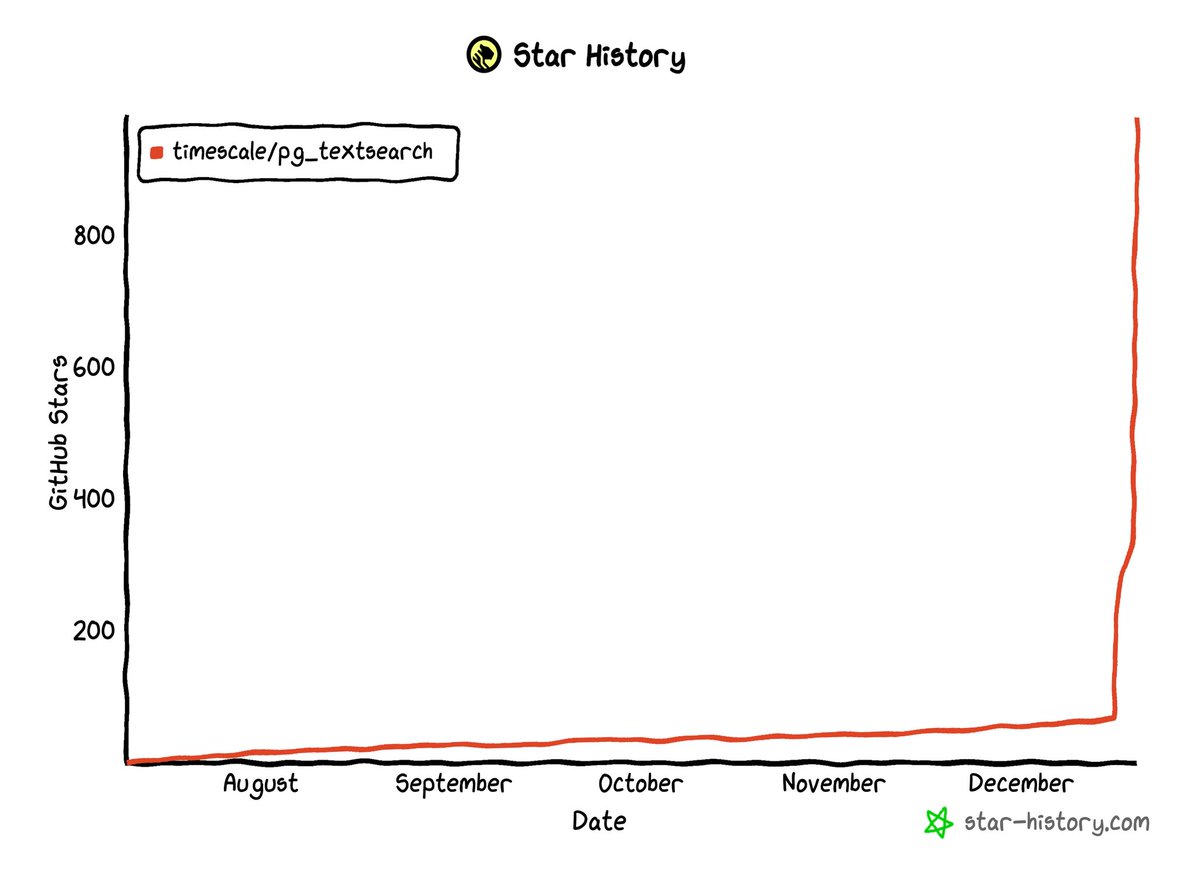
We just open-sourced pg_textsearch (permissive Postgres license). It's our Postgres extension that brings true BM25 ranking directly into Postgres. If you care about fast, relevance-ranked keyword search without leaving Postgres -- or hybrid retrieval by combining pg_textsearch with pgvector/pgvectorscale -- this is for you. Go 🌟 it on GitHub!
English
22
61
572
37.2K
Ramon Guiu retweetledi
Ramon Guiu
Ramon Guiu@ramonguiu·
Both options are available: - You can insert to the rowstore and have data moved to the columnstore gradually. This is typically better if you do small inserts (vs large batches) or frequent updates / upserts on recent data are key to your use case. - You can insert new data directly to the columnstore which delivers faster ingest if you can batch data and ensures all analytical queries only process data from the columnstore. See #direct-compress-on-insert" target="_blank" rel="nofollow noopener">tigerdata.com/docs/use-times… for more details.
English
0
0
0
9
Branko
Branko@brankopetric00·
We chose PostgreSQL over MongoDB for our analytics platform. The context: - 50GB of time-series data daily - Complex queries with joins across multiple dimensions - Team had more SQL experience than NoSQL MongoDB seemed obvious for scale, but: - Query complexity made aggregation pipelines unwieldy - Horizontal scaling wasn't needed yet - PostgreSQL's JSON support gave us flexibility - TimescaleDB extension handled time-series perfectly 18 months later: PostgreSQL handles 2TB with sub-second queries. Sometimes boring technology wins.
English
41
42
692
204.3K