AA

24 posts

AA

AA

@randomg72274855

Overseas Pakistani

Kuala Lumpur, Malaysia Katılım Kasım 2019
166 Takip Edilen10 Takipçiler
AA retweetledi
Pankaj Tibrewal
Pankaj Tibrewal@pankajtibre·
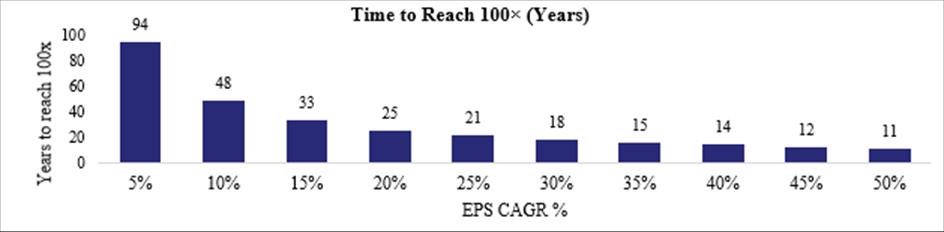
How 100-Baggers Are Really Created and how to Spot them. 2025 reminded us that markets are noisy, emotional and unpredictable. But history shows that the biggest fortunes were not made by predicting events — they were made by owning great businesses and letting time do the heavy lifting. They came from owning ordinary-looking businesses that quietly compounded year after year. Take a simple example. A company that grows its profits at 20% a year does not look exciting in any single year. But if that growth continues for 25 years, the business becomes 100 times bigger. And over time, the stock price tends to follow. That is what we call a 100-bagger Over the last 25 years, multiple Indian companies have delivered 100× returns. These include names like Titan, Bajaj Finance, Pidilite, SRF, Shree Cement and TVS Motor etc. They did not become 100-baggers because of one big event. They became 100-baggers because they kept growing steadily for decades. No hype. No frenzy. No big story. The fascinating part is this: most of these companies never looked extraordinary in the beginning.
Pankaj Tibrewal tweet media
English
31
221
909
196.9K
AA retweetledi
Book Therapy
Book Therapy@Book_therapy223·
Book Therapy tweet media
ZXX
505
37K
306.6K
15.9M
AA retweetledi
X-2
X-2@X2_GSGES·
Jeevey Pakistan anthem by Azerbaijan singer at LACIN. Another crescent is going to be added soon in Turkic Union. God Willing
English
15
243
1.6K
83.8K
AA retweetledi
Andrew D. Huberman, Ph.D.
Andrew D. Huberman, Ph.D.@hubermanlab·
Chess prodigy Josh Waitzkin developed a process to achieve peak performance in any craft or career. He’s applied it to the world of investing, professional sports, science and more. The MIQ Process. It is not a quick fix, but rather a rewiring of your default settings.
English
248
2.5K
24.5K
2.6M
AA retweetledi
The Driven Man
The Driven Man@Thedrivenman·
Men, This is the BEST way to beat depression 💯
English
257
6.1K
39.3K
808.1K
AA retweetledi
Sahil Bloom
Sahil Bloom@SahilBloom·
In 2023, I ran 2:57:31 in my first marathon 6 months after I started running. In 2024, I'm training to run a sub-2:50 marathon while building strength and muscle mass. Here's the exact training plan I'm using: Note: Long post, so bookmark it for future reference. I’ll split this post into four main areas: 1. Running 2. Lifting 3. Nutrition 4. Recovery Let’s walk through each area… 1. Running My basic weekly structure involves 6 runs: - 3 easy runs - 1 track speed workout - 1 tempo run - 1 long run Easy runs range from 3-10 miles and are all done to maintain Zone 2 HR (under 150 for me, ideally in 125-145 range). These build the base engine and avoid injury from overuse because they are low intensity and easier on the body. Keeping the easy runs easy is key. Track speed workouts generally involve a 1-2 mile warmup jog followed by 4-8 miles of track work (starting on the low end of that and building up over time). This is usually a combination of 800s (two laps around a standard track) or 400s (one lap), though occasionally includes 1200s or 1600s as well. Rest periods between the work sets are typically 1-3 minutes. A standard track workout I do is 8 x 800m with a 400m slow jog to recover between rounds. Another standard track workout is 10 x 400m with a 1 minute slow jog between each round. Tempo runs are harder middle distance (6 to 12 mile) road runs done at or near anaerobic threshold HR (peak HR before it burns too much to battle through). Usually a 1-2 mile warm up and then the rest of the miles at hard effort (at or better than goal marathon pace). These build the top end effort and are generally representative of the HR exertion level on race day. Long runs range from 10-22 miles and generally incorporate easy miles (low HR, low intensity) and tempo miles (high HR, high intensity). As I build closer to the marathon, these long runs will be 18-22 miles with at least half of the miles done at or faster than my goal marathon race pace. For now, they are ~10-14 miles as I focus on base building. So a standard week early in my training cycle right now looks like this: - Monday: 4 mile easy run - Tuesday: 6 mile track speed workout - Wednesday: 4 mile easy run - Thursday: 4 mile easy run - Friday: 6 mile tempo run - Saturday: Off - Sunday: 14 mile long run By the peak of my training, the weeks will build to something like this: - Monday: 8 mile easy run - Tuesday: 10 mile track speed workout - Wednesday: 8 mile easy run - Thursday: 8 mile easy run - Friday: 12 mile tempo run - Saturday: Off - Sunday: 22 mile long run My rough idea is to increase overall mileage load by about 5-10% each week, assuming I feel good and healthy (more on that in the recovery section). If I were training for a shorter race (like a half marathon or 10k), I'd probably replace the long run with a shorter tempo interval run (example: 3 rounds of 1 mile easy, 2 miles hard). 2. Lifting My biggest challenge last marathon prep was losing weight and muscle mass from all the mileage. I’m 6’2” 185 pounds and this time around, I want to make sure I stay at that weight (and look great). In other words, I want to be a great runner, but never look like a great runner. My current weekly lifting plan is aligned with this desire: - Push/Pull/Legs split - 4-6 lifting sessions per week I like the Push/Pull/Legs split because it allows me to hit up to 6 lifts in a week if I feel fresh and well recovered, or scale that back to just the 3 lifts at higher intensity if I'm drained from the increasing running mileage. The sessions all follow the same general format: - Compound movement - 4 sets x 3-8 reps - Secondary superset - 3 x 8-12 - Accessory work superset 1 - 3 x 10 - Accessory work superset 2 - 3 x 12-15 - Core work Push compound movements are either bench press or military press. Pull compound movements are a deadlift variation or row variation. Legs compound movements are a squat variation. Push secondary movements include dumbbell bench press, dumbbell shoulder press, and dips. Pull secondary movements include pull-ups, seated cable rows, and dumbbell rows. Legs secondary movements include lunges, Romanian deadlifts, glute bridges, and split squats. Push accessory movements include flys, tricep extensions, and shoulder raises. Pull accessory movements include face pulls, straight arm pulldowns, and bicep curls. Legs accessory movements include hamstring curls, leg extensions, leg presses, step ups, and calf raises. Core work includes hanging leg raises, reverse crunches, stability ball rollouts, side planks, ab wheel rollouts, and more. Programming Note: "Superset" just means two movements done back-to-back before resting. Here’s an example push day: - A. Barbell Bench Press 4 sets x 5 reps - B1. Dumbell Incline Bench Press 3 x 8 - B2. Dips 3 x 10 - C1. Cable Flys 3 x 12 - C2. Rope Tricep Extensions 3 x 12 - D1. Lateral Raises 3 x 12 - D2. DB Skull Crushers 3 x 12 - Core Work 3 x 15 Here’s an example pull day: - A. Barbell Deadlift 4 sets x 5 reps - B1. Dumbell Row 3 x 8 - B2. Pull-ups 3 x 10 - C1. Cable Face Pull 3 x 12 - C2. Rope Hammer Curl 3 x 12 - D1. Rear Delt Raises 3 x 12 - D2. Seated Bicep Curls 3 x 12 - Core Work 3 x 15 Here’s an example leg day: - A. Front Squat 4 sets x 5 reps - B1. Reverse Lunge 3 x 8 - B2. Goblet Squat 3 x 10 - C1. Leg Press 3 x 12 - C2. Calf Raises 3 x 12 - D1. Leg Extensions 3 x 12 - D2. Hamstring Curls 3 x 12 - Core Work 3 x 15 These lifts usually take about ~45 minutes if I'm focused and stay on task. A typical week of lifting and running looks like this: - Monday: Easy Run + Legs - Tuesday: Track Workout + Push - Wednesday: Easy Run + Pull - Thursday: Easy Run + Off - Friday: Tempo Run + Legs - Saturday: Off + Push - Sunday: Long Run + Off Note: I always do my run before lifting on days where I have to do both. My logic is that my primary goal is a running time goal, so doing that first, while fresh and focused, is essential. This is sometimes a grind, but I always get the work in, even if I have to reduce the intensity level. Depending on schedule, I vary the times when I do these workouts based on their length and my other work and family commitments. I generally try to do them in the mid-late morning. You can scale up or down this plan to meet your time availability, but full marathon training while maintaining strength and muscle mass is probably not for those who are ultra-strapped for time. 3. Nutrition My daily macronutrient targets that I use as a guide: - Protein: 215g (~1.2g per lb of bodyweight) - Carbs: 200g - Fats: 125g - Total Calories: 2,785 I do a bit of "carb cycling" by notching up the carbs on hard training days through adding more around the workout window. Since I'm focused on muscle mass as the running miles (and caloric burn) increase during training, I'll be scaling up these macros in the coming months. By the peak of my training, my guess is it will look more like this: - Protein: 215g - Carbs: 350g - Fats: 125g - Total Calories: 3,385 As long as I hit my protein goal, I'm not concerned with perfection here, just general direction. I try to hit within ~10% of the daily macro targets established. The important thing is to figure out your current baseline and build from there. Track your macros for a few days and see where they end up. If your weight has been constant, you’re eating to a good baseline at your current training level. If you are losing or gaining weight, you’re eating to a deficit or surplus at your current training level. If you’re going to be training hard, getting 1-1.2g of protein per pound of bodyweight is a good baseline. You can fill in carbs and fats behind that based on personal preferences and goals related to bodyweight. Typical protein sources include eggs, egg whites, beef, chicken, turkey, fish, shrimp, greek yogurt, cottage cheese, whole milk, and whey. Typical carb sources include quick oats, jasmine rice, sourdough bread, sweet potatoes, red potatoes, raw honey, fruit. Typical fat sources include olive oil, avocado, grass fed butter, nuts. As for supplements, I generally keep it pretty simple: - Fish oil - Vitamin D - Creatine (5g daily) - AG1 + LMNT - Whey protein - Magnesium for sleep 4. Recovery Given the training volume, I need a very deliberate focus on recovery to prevent injury and keep my body feeling strong. The pillars of my recovery routine: - Daily recovery work - Daily mobility work - Morning cold plunge (3-6 minutes) - Evening sauna (20 minutes) Daily recovery work includes foam rolling on the legs and back, lacrosse ball rolling on the feet, and massage gun on any tight areas. This is about ~5-10 minutes. Daily mobility work is a ~5-10 minute mobility circuit I do before my training that serves a hybrid purpose as a warm-up. It usually includes about ~5-7 movements that I would go through 2-3 times. Movements include squat-to-stands, dead-bugs, spidermans, bowler squats, couch stretch, yoga pushups, 90/90 hip stretch, reverse lunge with reach, and more. If you search “Best Mobility Exercises for Runners” you’ll find a bunch of good options and routines with explanations. Doing this work daily is essential for avoiding injury. Morning cold plunge is 3-6 minutes in 39 degrees right when I woke up. Evening sauna is 20 minutes in 180-200 degrees right before bed. Obviously, most people won’t have access to this stuff, but you can do the morning cold in the shower if you don’t have a cold plunge and a hot shower before bed if you don’t have a sauna. Closing Thoughts This is the training plan I'm following to hit my sub-2:50 marathon goal while building muscle and size. The plan isn’t for everyone (probably not even for most people), and you should definitely consult with experts (doctors, trainers, nutritionists) before making any dramatic changes to your routine. That said, the basic building blocks of the above can definitely be adapted to your life and routines regardless of your goals. As I see it, the basic building blocks are as follows: 1. Running: Half of your runs should be low intensity/easy. The other half should be a combination of speed, tempo, and longer duration. 2. Lifting: Split across push, pull, and leg days. Start every workout with a simple compound movement for strength. Follow it with a secondary movement and a superset of accessory movements. Finish with core. 3. Nutrition: If training hard, aim for 1-1.2g of protein per pound of bodyweight. Fill in carbs and fats based on what suits your goals and body. 4. Recovery: Aim for 10-15 minutes of daily recovery work (foam rolling, lacrosse ball foot rolling, mobility work). If you build your own plan based on those principles, you’ll make progress and feel great. Ok, that took a long time to pull together. Basically an entire training e-book for free. I hope it helps. If you're into this stuff, share it with others and follow me @SahilBloom for more in future.
Sahil Bloom tweet media
English
282
296
4.3K
1.5M
AA retweetledi
Father who Writes
Father who Writes@Fathers_Writes·
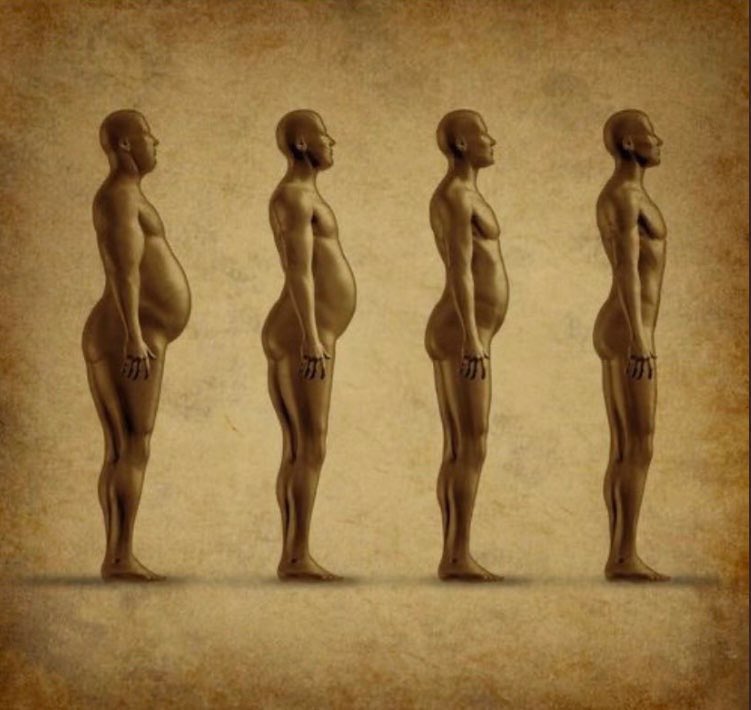
10 Best ways to lose belly fat in 60 days (Backed by science)
Father who Writes tweet media
English
953
12.6K
53.6K
12.5M
AA retweetledi
James Peters
James Peters@JamesCPeters·
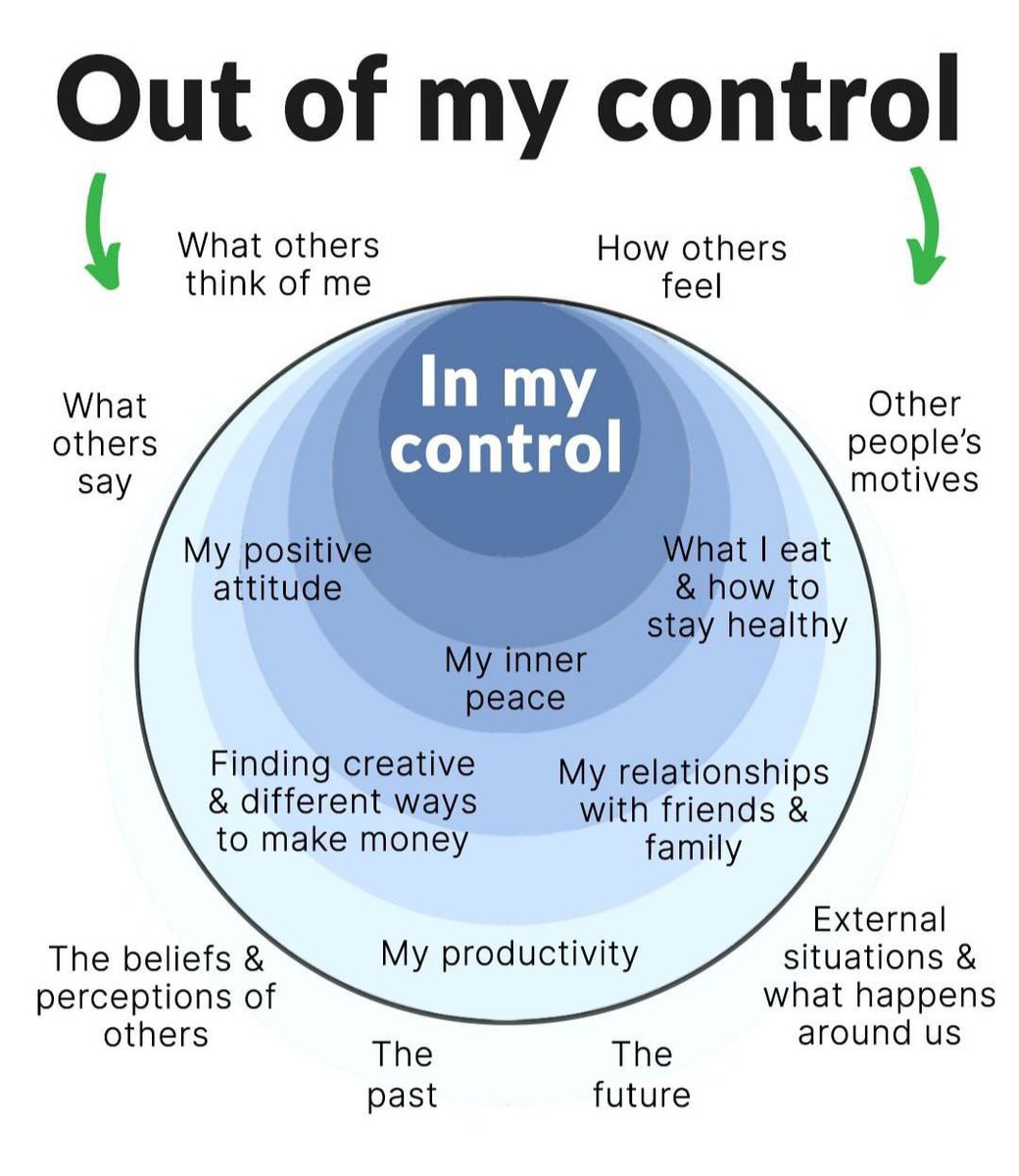
Always remember this.
James Peters tweet media
English
38
5K
12.8K
810.6K
AA retweetledi
Faisal Khan
Faisal Khan@babushka99·
Life is inherently beautiful when you cut off toxic people from your life. It starts by saying, No. You can learn to do it.
English
4
4
40
0
AA retweetledi
Showwcase
Showwcase@ShowwcaseHQ·
This is so true 😂😂😂
Showwcase tweet media
English
18
240
1.6K
0
AA retweetledi
Michael Greenberg
Michael Greenberg@gentoftech·
In 2015, I was making $60k a year and working 50+ hours a week. In 2017, I grew to $600k+ a year and my hours fell to under 20 a week. Here’s exactly what I did to bootstrap 4 businesses (and how you can do it too)
English
3
6
32
0
AA retweetledi
Ali
Ali@AliTheCFO·
Today, my mentality has changed I'd rather lose a project because my pricing is too high rather than work on a project where I'm not charging enough
English
1
9
113
0
AA retweetledi
Robert Kiyosaki
Robert Kiyosaki@theRealKiyosaki·
In RICH DAD POOR DAD I stated Rich Dad’s 3 LESSONs. 1: Your house is not an ASSET 2: SAVERS are losers. 3: The rich do not work for $. The rich are entrepreneurs who do not need a job, create jobs, create own assets, and do well in market crashes. 2022 is your time to get richer
English
515
2.7K
15.7K
0
AA retweetledi
Brutal Mindset
Brutal Mindset@BrutalMindset·
Angry :-> Hit The Gym Uninspired :-> Take a shower Anxious :-> Take deep breaths Sad. :-> Reflect on past victories Irritated. :-> Reflect on past victories Tired :-> Go to bed Doubtful :-> Remember why you started
English
172
10K
33.8K
0
AA retweetledi
Vaskange
Vaskange@Vaskange·
The original video of my artwork here. Stay tuned, to discover more infinite stories!
English
6.5K
216.3K
1.1M
0
AA retweetledi
Keith
Keith@keithbc86·
Lift weights to get strong and fit Do cardio for heart and brain health Sleep for recovery and growth Eat to get lean and healthy
English
12
199
827
0
AA retweetledi
Scott
Scott@Havenlust·
Cliff in the Moonlight, 1880. Rufin Gavrilovich Sudkovsky
Scott tweet media
2
91
286
0
AA retweetledi
Abdur Rafay Zafar
Abdur Rafay Zafar@arafayzafar·
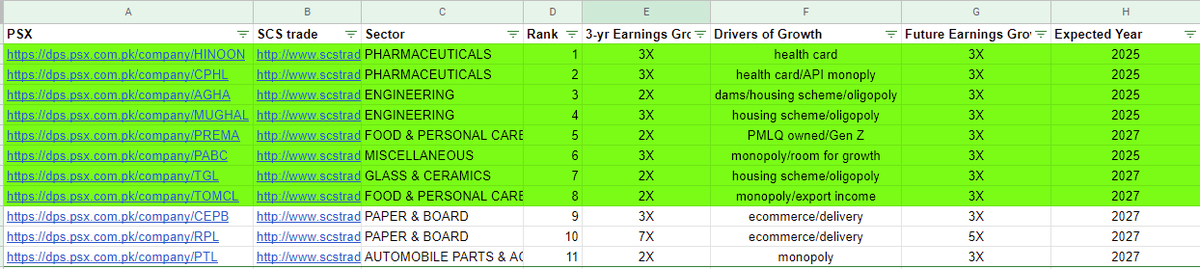
After a lot of research, I have shortlisted some potential multibagger stocks from PSX. It impossible to predict which ones will succeed/fail but investing in a portfolio of high conviction ideas ensures the overall portfolio generates 2x to 3x returns over 3-5 years.
Abdur Rafay Zafar tweet media
English
24
20
102
0