RandyB,ATC

4K posts

RandyB,ATC

RandyB,ATC

@randybatc

An Athletic Trainer. Passionate about integrated performance collaboration and interdisciplinary approaches to performance problem solving.

Illinois Katılım Ocak 2010
275 Takip Edilen820 Takipçiler
RandyB,ATC retweetledi

Steve Magness
Steve Magness@stevemagness·
The ruining of recreational sports is a significant issue in our current child mental health problem. Kids need developmental spaces where parental driven competition isn’t front and center. We traded true development for profits…
English
24
27
189
12.1K
RandyB,ATC retweetledi
Brad Stulberg
Brad Stulberg@BStulberg·
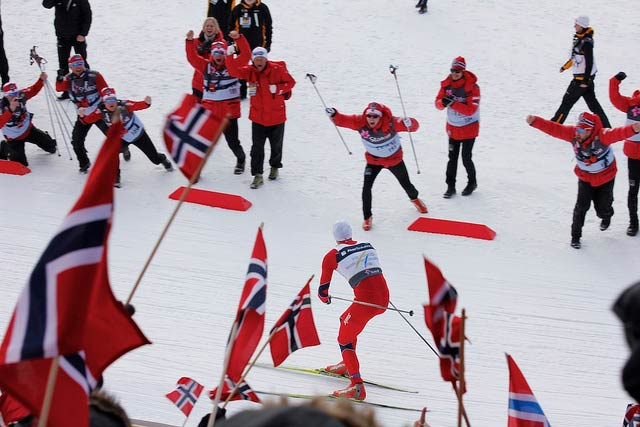
Norway consistently wins the most medals at the Winter Olympic Games, with a population of just 5.6 million people. A big part of their success is how they treat youth sports—and it’s the opposite of what we do in the US. Here’s what we can learn from Norway: 1. Scorekeeping: In the US: Youth sports tend to be hyper competitive even at early ages. Leagues almost always keep score. In Norway: Scorekeeping isn’t even allowed until age 13. Removing winners and losers keeps the focus on the process not outcomes. It keeps kids engaged longer because it minimizes pressure (and tears) and maximizes fun, learning, and growth. The goal isn’t to win a third grade championship. It’s to love sport and keep playing. 2. Trophies: In the US: If you give everyone a trophy, you’re creating snowflakes who will never gain a competitive edge. In Norway: Whenever trophies are awarded, they are handed out to everyone. If getting a trophy makes young kids feel good, we should give them trophies. Maybe they’ll come back and play again next year!! As for the creation of snowflakes with no competitive edge—Norway’s athletes are tough as nails and all they do is win. 3. Prioritizing Fun: In the US: Far too often, the goal is to win. In Norway: The national philosophy is “joy of sport.” Youth sports in the US are driven by adults, ego, and money. Youth sports in Norway are driven by fun. Only half of kids in the US participate in sports. The number one reason they drop out: because they aren’t having fun anymore. In Norway, 93% of kids participate in youth sports. Fun is the foremost goal. 4. Playing Multiple Sports: In the US: There’s pressure to specialize early and play your best sport year round. In Norway: Try as many sports as you can before specializing as late as college. Norway encourages kids to try all types of sport. This reduces injury and burnout and increases all-around athleticism. It also helps promotes match quality, or finding the sport you are best suited for as your body develops, which is impossible if you commit to a single sport too early. 5. Affordability In the US: There is increasingly a pay-to-play model with high fees for leagues, equipment, and travel. This excludes many kids from playing. In Norway: It’s a national priority to keep youth sports affordable and therefore accessible for all. Kids aren’t priced out, which creates opportunities for everyone to participate (and develop into athletes), regardless of their parents’ income level. We could learn a lot from Norway: In the US, 70% of kids drop out of youth sports by age 13. This not only diminishes an elite-athlete pipeline, but it also destroys an opportunity for healthy habits and all the character lessons kids can learn from sport. In Norway, lifelong participation in sport is the norm. The goal isn’t to have the best 9U team. It’s to develop the best athletes. Those are two very different things. And Norway has the gold medals to prove it.
Brad Stulberg tweet media
English
628
1K
5.3K
2.1M
RandyB,ATC retweetledi
Steve Magness
Steve Magness@stevemagness·
Well...it seems like Peter Attia sucks... Integrity matters. Principles matter. Doing the right thing matters. Choosing to surround yourself with good folks matters. The ones who stay true to their values build something that lasts. It's founded on something deeper and more fulfilling. It's a longer game. But it's the only game worth playing. As we watch one of the biggest names in the health and performance space be littered all over the Epstein files with vile things (Peter Attia), It's disappointing to see. Someone who proclaimed to value science and evidence, fell for power, fame, and god knows what else. And now you're going to see others use it as a platform to disparage any legitimate science or science communication because one of the biggest science communicators couldn't stay away from Epstein...after much was already known. Like him or hate him, Attia was a big name in the space. And there's a huge jump from getting some things wrong or selling supplements that may not work to...whatever appears in those files. All you've got in this life is your character. I was fortunate early in my career to meet "heroes" and be completely disgusted by what I found behind the curtain. Mostly, it was insecurity. Obsession to prove themselves, to achieve, to gain some sort of power or status led them to "win at all costs." It was disillusioning. But also clarifying. I learned early that reputation and character are often very different things. Ironically, one of the people Attia buddied up to was one of the clearest demonstrations I saw of the cost of the win at all cost mentality and what that need for fame, status, achievement can do...Lance Armstrong. I was also fortunate to have my ethics tested. Did I handle it perfectly? Nope. There were wrong decisions. Moments I wish I could take back. But one thing I'm proud of: no matter the mistake, I did my best to correct the wrong and do the right thing. Even if that means costing your relationships, opportunities, and years fighting battles most people never see. When you stand up for yourself, it can be lonely. It can test your beliefs and your view of the world. It can push you towards disillusionment. But in the end, it's clarifying and freeing. You get to truly lift the veil. To show yourself what actually matters. And to see that the folks posturing, cheating, cutting corners, and manipulating others are chasing hungry ghosts. They'll never be fulfilled. And that's the point...so much of what you see in the online space is deep insecurity. It's people caught in the trappings of chasing fame, fortune, power, status, likes, follows, or whatever else. It's people who for god knows what reason are willing to look past a horrific past and be 'friends' with one of the most vile people on earth. When fame, growth, status are your values...guess what you'll do anything to get there. Even if it means selling your soul. It's sad to see. It's hard to watch. I don't know Peter Attia. I liked much of his writing, disagreed with some. But man, we need to do a better job of supporting good people. Because at the end of the day... it might seem like values, principles, being a decent human is out the window in our chaotic world. That the shortcuts win. That the only way to any kind of success is to compromise your values. I don't buy it. It's the same BS rationalization when cheaters try to convince you in sport that everyone is cheating. It's to make them feel better. My experience is the oppossite: The stronger our worlds pull in the direction towards chaos, fame, status, power, the more sticking by your principles matters. The louder the noise, the more it's a superpower to have an anchor to keep you grounded. Courage comes from clarity. It's when you take control of your story, you let go of the fear, when you know who you are, what matters, and where you belong. That's when you're free. Because you're standing on a foundation that no one else can touch: integrity, principles, and values. We need more folks who stick to them. And we need to support those who do.
English
42
40
801
95.4K
RandyB,ATC retweetledi
Vala Afshar
Vala Afshar@ValaAfshar·
The coolest people I know: 1 have great manners 2 remember people's names 3 show up on time 4 lifelong students 5 listen with interest 6 do not respond to negativity 7 random acts of kindness 8 mentor 9 give without expecting a get 10 holding doors open 11 graceful truth tellers
English
50
632
6K
142.9K
RandyB,ATC retweetledi
Patrick Lencioni
Patrick Lencioni@patricklencioni·
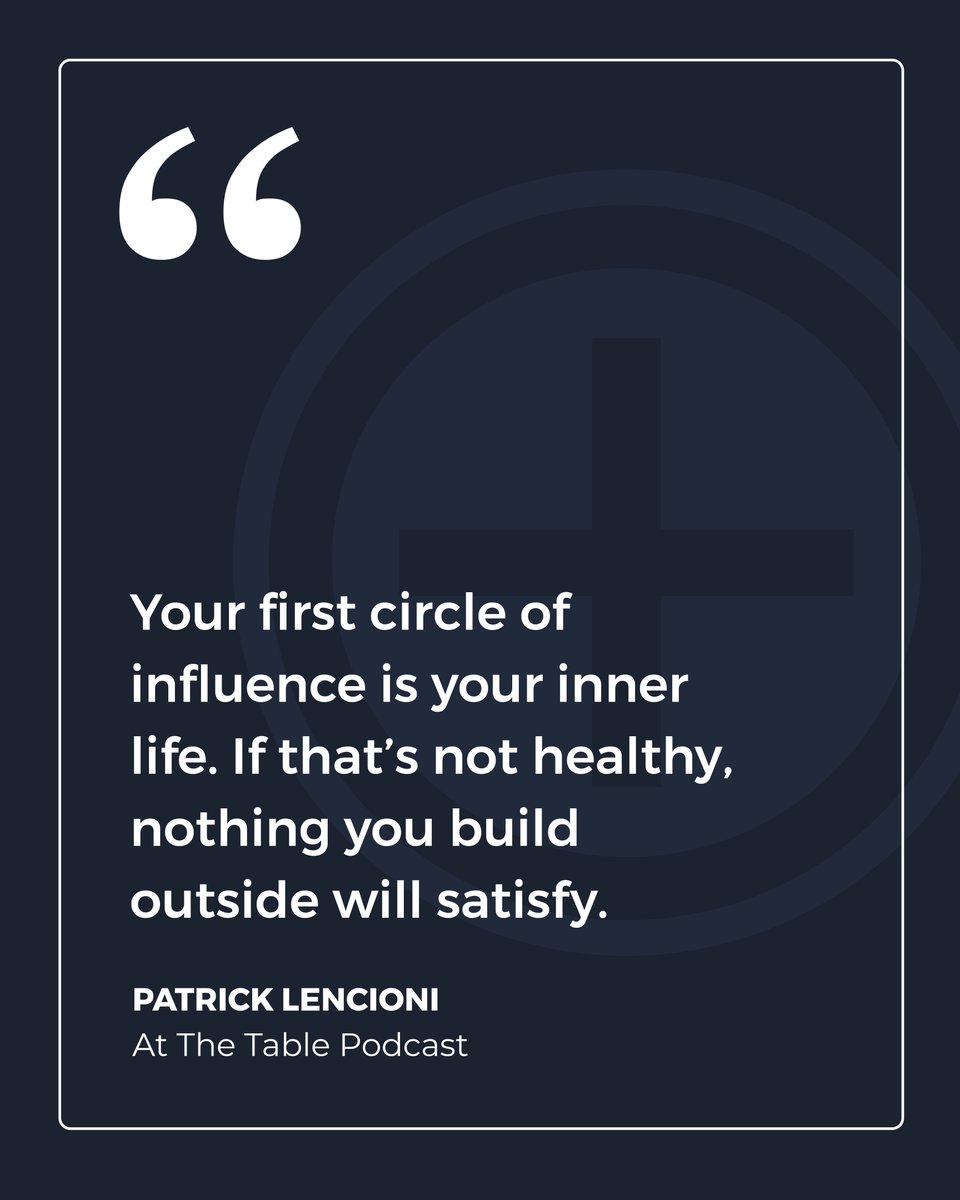
We spend a lot of time trying to improve what’s out there, our results, our strategy, our performance, while avoiding what’s in here. But the truth is, no amount of success on the outside can compensate for a lack of health on the inside. When leaders neglect their inner life, it eventually shows up everywhere else—on their teams, in their families, and across their organizations. This isn't about lowering the bar for achievement. It's raising the bar for wholeness.
Patrick Lencioni tweet media
English
2
6
29
1.6K
RandyB,ATC retweetledi
Coach Wayland | Performance Expert | Craftsman
Great coaches aren’t artists or scientists they’re principle-led craftsmen. The canvas is the athlete. The paint is the program. The frame is the deadline. But the rules of color, tension, and composition? Those are non-negotiable. Keep sharpening. 🪓
English
0
2
6
1.6K
RandyB,ATC retweetledi
Andy Galpin, PhD
Andy Galpin, PhD@DrAndyGalpin·
*If we didn't teach kids how to read & write, we wouldn't expect them to be successful intellectually. *If we don't teach kids how to move their bodies, we shouldn't expect them to be successful physically. No wonder many adults hate exercise, get hurt often, and don't know where to start. Imagine your adherence rate when trying to learn to read for the first time ever as a 45-year-old with 2 kids and a job... "Physical Education" in school should be viewed similarly (not identical, but similar) to mental education. PE is not simply to give kids (and teachers) a much-needed break from academics (though that is a very valid reason as well), or to give them time to get their crazies out. We have a different term for this; it's called "recess." PE is also not just sports tryout time. PE should be viewed as a critical opportunity to teach insanely valuable human movement skills, which will impact physical health for the rest of a kid's life. The current US average for Elementary schools is PE... 2 days per week. My kids currently get it once (1) per week. The major push many years ago to remove/reduce PE in schools was an epic failure.
English
13
42
237
31.9K
RandyB,ATC retweetledi
James Clear
James Clear@JamesClear·
When you're on the field, play as if nothing else matters. When you're off the field, remember that the game doesn't matter at all.
English
110
467
3.2K
103.8K
RandyB,ATC retweetledi
Jeremy Frisch
Jeremy Frisch@JeremyFrisch·
“The Youth Sports Industry Doesn’t Care About Your Kid” They’ll sell you “elite camps,” “combine prep,” and “exposure events” — for 10-year-olds. Because fear sells: fear of falling behind, fear of missing out. Real development is built through time, variety, and play.
English
6
32
201
21.4K
RandyB,ATC
RandyB,ATC@randybatc·
All of this is to say, its not always if A then B. It can be if A, then there can be all these other downstream effects, that then can intersect to increase likelyhood of B. (4/4)
RandyB,ATC tweet media
English
0
0
1
52
RandyB,ATC
RandyB,ATC@randybatc·
Athletic identity, lack of community/team increases mental health challenges. Playing football enhances risk taking behavior (drinking, drug use, investment, gambling) which affects sleep, mental health, etc....
English
1
0
0
59
RandyB,ATC
RandyB,ATC@randybatc·
We need more studies such as this one. As we all know correlation does not equal causation but at times, there are too many interwoven aspects of the end result and risk factors. Could it be possible its not just football/subconcussive blows that affect CTE/Mental health (1/3)
English
1
0
1
58