

Patali Raphael
2K posts

Patali Raphael
@raphael_phiri
Zambian Villager
lusaka zambia Katılım Ağustos 2013
47 Takip Edilen165 Takipçiler


Patali Raphael retweetledi

Patali Raphael retweetledi

If the government has to resort to tear gas just to silence an opposition meeting, it means they are terrified of the people's voice. 🤦♂️🚶♂️ #ZambiaElections #NRPUP

English
What elective position are contesting, I want to vote for you??
That Gee™@Thagman_
I hate this thing where we kip circling back to recycled politicians. Out of 20+ million people, are you saying there’s no fresh talent? Let me stand myself kanshi 🤷🏽♀️😂
English
Patali Raphael retweetledi

The argument about proximity is substantive because it relates to both intersectionality and positionality. One may argue that making reference to Mwiya's family ties to those in the UPND leadership whose performance in public office or whose policies we are evaluating is an odhominem attack. However, not all adhominem 'attacks' are fallacious. Let me illustrate this point with an example that relates to possible conflict of interest or vested interests – and one that I think applies to Mwiya. As humans, we are subject to cognitive biases, regardless of intention or awareness.
For instance, Dan Pule, a Bemba speaking politician who was arrested for criticising Hichilema's prioritisation of Tongas in public appointments, might ask the Tonga speaking judge who is hearing the case in which Pule is alleged to have insulted the Tonga speaking to recuse herself from the matter on the basis that the judge is someone from a group that he allegedly insulted. This could be considered an adhominem attack, since the judge’s competence has nothing to do with her ethnic background.
Yet the judge's positionality creates a conflict of interest. If the judge rules against Pule, such an outcome may be seen as inevitable since she belongs to a group that was allegedly insulted and could therefore be seen as having used her position to sanction the culprit. If she acquits Pule, such an outcome may be seen as an attempt by the judge to prove, despite the availability of evidence showing that a Bemba had insulted Tonga speakers, that she is totally independent and does not let her ethnic background affect her judgement. The best thing in this case would be for such a judge to recuse herself from hearing the matter altogether that it can be decided by another judge with no proximity to the parties, since her positionality is likely to be questioned, whatever the outcome.
Here is another example. After hearing of Guy Scott’s death, a white friend of mine, who is European, wrote this about him: “Scott loved Zambia and its people”. I explained my discomfort at the use of the phrase “its people”. Such phrasing implies a separation between the two, that Scott was not among Zambia’s people, that he was external to Zambians, like one of those white saviours who came to Africa to love and even save the natives! This surely cannot be the case since Scott was born in Zambia, was Zambian by citizenship since independence, and had played prominent roles in the country's public life. I would even go as far as saying the white citizen was more patriotic than some of the black citizens in power today.
After I made this point, my friend realised the implication of what they had said, regretted the use of the phrase “its people” before remarking that “I guess my biases showed" in that unguarded comment. I know that my friend is not a racist, but racist biases show up even for people who are avowedly non-racist. They sometimes flare up unintentionally or even with the greatest of intentions. When such incidents happen and we are made aware, the correct thing to do is to acknowledge and reflect on what possibly made us say what we did: lack of sensitivity to our positionality.
This is the background to my argument that Mwiya lacks the critical distance to offer an unbiased assessment of Situmbeko Musokotwane’s public role as a Minister of Finance. This is because Musokotwane is his biological father. When I say that Musokotwane is a failure and Mwiya defends him, is he doing so because the criticism involves his father? Would he have made a similar defence if the subject of criticism was, say, Alexander Chikwanda? Does he have a track record of defending the record of other ministers when subjected to similar scrutiny by citizens?
In other words, my assertion that Mwiya does not have the critical distance for impartial evaluation of the facts as they relate to Musokotwane is relevant to the debate and does not constitute an attack on his person. Moreover, after I made the claim, I proceeded to raise substantive issues that demonstrate how Musokotwane's policies have undermined the collection of fair revenue from Zambia's jewel industry at a time of high copper prices. I did not end at the fact that he is a son of the Minister of Finance, who he is hoisting, using accolades from others far away in Europe and North America, as the best. I showed his ties to the errant official and explained that his failure to consider Musokotwane as a failure may have much to do with vested interests: that he has a relationship with the public official who is responsible for enacting policies that effectively kill by robbing the Republic of sufficient revenue from the mines.
Even as scholars, we are usually required to declare interest. For example, before the publication of, say, a journal paper, we are required to state whether the paper was funded by anyone who stands to benefit from its findings in any way. When we say there is no interest to be declared, we are acknowledging that biases are real and need to be made clear to the audience. My message was a call to transparency. The fact that Mwiya uses only his first name on this platform rather than Mwiya Musokotwane is in itself an intentional attempt to mislead unsuspecting people about his ties to some of those in power. This point is not immaterial when one considers the comments of those who, in response to what I posted, have said they had no knowledge that he is a child of one of the politicians who are responsible for messing up the country's economy.
I insist that Mwiya needs to be aware of the possible bias that may be inherent in some of his perspectives on issues relating to the UPND. If he is aware, he will realise that the majority of Zambians have suffered at the hands of the policies enacted by the so-called ‘best Minister of Finance.’ To tell such victims that Musokotwane is the best or that he and his party will be voted back to power because their record is actually good is, if I may be kind, an insult. I invite Mwiya to reflect on his positionality because some of the views that he expresses in defence of this lying, corrupt, undemocratic and tribal regime are extremely patronising.
It is not a weakness to acknowledge, as he should have done even before I pointed it out, that his father was a minister in the corrupt, lying, undemocratic and tribal regime I mentioned, and that it is possible that his perspectives on Musokotwane’s record as Minister of Finance and on the UPND’s performance in office could be clouded by this private relationship to the public official and his proximity to the president (more on this later). After acknowledging this point, he could have then proceeded to say ‘despite this disclosed background, here is my argument on why I agree with the views I am promoting that Musokotwane is the best minister of finance and why I think the UPND will retain power. This is called transparency, something that I know is in short supply in the UPND and among its supporters.
Mwiya did not acknowledge the possible corruption inherent in his views as a result of his positionality. What he did instead is to try to diminish my qualification to comment on economic matters. He says when I speak on subjects relating to history, he will listen to me. On economic issues, I should stay away. Musokotwane's son does not even realise the hypocrisy of his position. Mwiya was commenting on a subject that has to do with political history or, more specifically, electoral success, which is not an economic matter and is outside his own expertise.
It would be stupid of me to try to 'win' an argument on a matter of public debate by excluding potential discussants on the basis that they are not trained political scientists or political historians and should therefore have no say on any discussion relating to these subjects. Of course, Mwiya, and anybody else who thinks like him, has the freedom to try to close public discussion on any matter of public interest this way. I have a different take on these things, which is to welcome the opinion of everyone and demonstrate the weakness inherent in that opinion as opposed to dismissing it on account that its originator has no training in political science or political history.
Recently, Lee Habasonda, a lecturer in political science at the University of Zambia, told Reuters (see attached video clip) that electoral success is a matter of thresholds – of grievances, feelings, frustrations, etc. Lee’s view is that once a certain threshold or tipping point has been reached, "no matter your manifesto, ideology, lies" or whatever those in power do or say, the voters will "decide to change government" because they would have reached a point of no return. Emotionally, many Zambian voters, including some that I know who voted for Hichilema in 2021, have passed that threshold where no matter what Hichilema or UPND does, these voters will reject him. This is because the threshold, or the point of no return, has been reached. Those in power, Habasonda argued, "may say we have already won this election when they campaign but the political coalitions and realignment" suggest otherwise.
This is an opinion of a political scientist. But neither Lee nor I would not seek to prevent Mwiya, who has no academic training in political science or political history, from expressing a different perspective on the subject on the basis that we can only listen to Musokotwane’s son if he talks about economics. That is a very narrow minded way of thinking. Like anybody else, I respect expertise, but I also recognise the point that knowledge is a product of many things. Formal training and certification is simply one of them. Noam Chomsky is a trained linguist but has written authoritative works on subjects that are outside his academic training, including some that fall within the domain of history. It would be stupid of me to insist that Noam should be confined to discussing language issues, as opposed to commenting on matters that are beyond his training.
Asking a person to reflect on their positionality in relation to a given subject is not meant to curb their right to free expression. It is an invitation for them to think about whether their perspective, knowledge, and worldview on a given subject is shaped, to a greater extent, by their relationship to that subject. To clearly see an object, one must not be too far from or too near to it. They should be at a set distance, the right distance. This is called critical distance. Distance is important in the clarity of vison.
I repeat: Mwiya lacks the critical distance to offer an unbiased assessment of the UPND’s performance in power because of his proximity to its leaders. I have no problem with Mwiya sharing his support for Musokotwane – be it in his capacity as a father’s child who, like anybody else in his position, considers their father some sort of a hero even when they are a failure or in his unofficial capacity as a spokesperson of top UPND leaders such as Hichilema. What I take issue with is his failure to acknowledge, in the spirit of transparency, his positionality relative to the subjects being discussed or his continued willingness to mislead himself that he can present an unbiased opinion on matters relating to the performance of his father, in his public role, and of this regime .
Some time back, @Anarchy_Me_ posted that “When I was in Ndola 2 years ago, I told a friend that if UPND gets a second term then we will be back to the days of wamuyayaya because I don't see dude relinquishing power. I see him as the sort of man who thinks only he is capable of running this country and his hunger for power will make him change the constitution to suit his desire. He laughed at me and said i was wrong. We are headed that direction. Nipano tuli.” Source: x.com/Anarchy_Me_/st…
The point that Hichilema, if he succeeded in stealing the August election, is likely to subsequently change the Constitution and either remove term limits or abolish presidential elections so that MPs rather than the people will be responsible for choosing the president is one that I have also expressed and developed in greater detail. See this post below for instance:
x.com/ssishuwa/statu…
In response, rather than waiting for Hichilema to come out and publicly commit that he will respect term limits and not change the constitution, Mwiya targeted those who were raising such concerns for criticism, denouncing them as either “overzealous cades” or adversaries of Hichilema seeking to paint the president black. To avoid misrepresentation, here is what Mwiya wrote:
“I can tell you for a fact, that he has no interest in extending power beyond the constitutional 2 terms. Those who say otherwise are either overzealous cadres who don’t know him and think that sort of sycophancy earns them mileage (it does not); or alternatively adversaries seeking to paint a picture in the worst possible terms in order to justify arguing against a strawman that doesn’t exist.” Source: x.com/mwiyas/status/…
There was no attempt to explain if this bold assertion that Hichilema “has no interest in extending power beyond the constitutional 2 terms” was based on what Hichilema privately told Mwiya – which indicates a private relationship that he enjoys with the man, since the president has never made such an assurance publicly – or it is simply his opinion. If it was simply his opinion, then why does Mwiya confer that opinion with the lofty status of ‘a fact’ while other people’s opinions are thrown around and dismissed as those of either “overzealous cadres who don’t know him [i.e. Hichilema]” or “adversaries seeking to paint a picture in the worst possible terms”?
Do you see why I am saying Mwiya lacks critical distance to comment on certain policy failures of this lying, corrupt, undemocratic, and tribal regime?
mwiya@mwiyas
I can tell you for a fact, that he has no interest in extending power beyond the constitutional 2 terms. Those who say otherwise are either overzealous cadres who don’t know him and think that sort of sycophancy earns them mileage (it does not); or alternatively adversaries seeking to paint a picture in the worst possible terms in order to justify arguing against a strawman that doesn’t exist.
English

@Mike42726245 I just saw the way they came out from the vehicles, and faced the police head on, I knew that they are not cowards. Elon those youths the way they fearlessly protected them the police, it was epic 😎
English


Were all constructions and supplier contracts signed under PF not cancele by UPND immediately they came to power?


MJ@Shi_Malaika
The Last Time I Visited My Father We Had A Chat About How This Honorable Dumped Some Earth Moving Machines In His Constituency And Guess What??That Was The End Of That Story……The Roads Up To Now In Mporokoso Central Have Never Been Done.
English
Ukamba kaleza olo ni same story of creating your own story, believe it then spread it???

Mr. Funganakwaki@SeverinoTheWolf
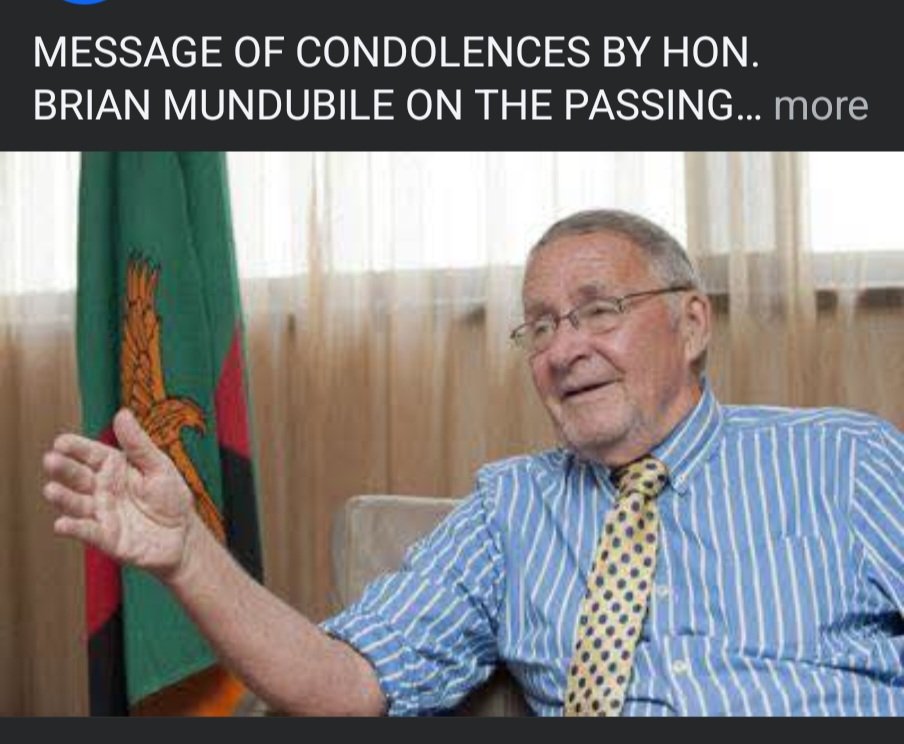
I’ll hand it to those Ballys they are really loyal to their boss, not even a ka condolences post for Guy Scott? Crazy
English
Patali Raphael retweetledi
The decision by Hichilema to offer government jobs to 15 volunteer nurses who attended his campaign rally is most irresponsible. This is because employment into the civil service should follow normal, merit-based recruitment processes and procedures, not whether or not one is present at a politician’s campaign rally. What Hichilema has done is, in fact, a form of corruption because he has abused his official position to imagine himself as a Father Christmas who can dish out government jobs to his supporters willy-nilly.
The implication of Hichilema’s actions is that serving as a volunteer nurse does not guarantee one an automatic progression into the civil service unless they also attend Hichilema’s rallies. This is patronage politics at its best. What is the fate of the many volunteer nurses who do either not attend Hichilema’s rallies or do not support the ruling party’s presidential candidate? Having failed to get people to his rallies without the support of musicians, Hichilema is now enticing thousands of unemployed Zambians to attend his rallies for on-the-spot job handouts!
Zambia deserves better leadership.
English
Patali Raphael retweetledi

There's absolutely nothing that'll persuade me to let my kids go into the corporate world. If you can hear me, stay in civil service!
Other than giving u premature white hair, corporate life robs you of ur social life, drains your family time, & makes people incredibly greedy.

English
Patali Raphael retweetledi

“So, the educated-franchise argument reduces to this: people who vote like me are competent, people who do not are not. It is calling people stupid or uneducated for not supporting your candidate, dressed as civic concern.” — Dean N. Onyambu
English
Patali Raphael retweetledi

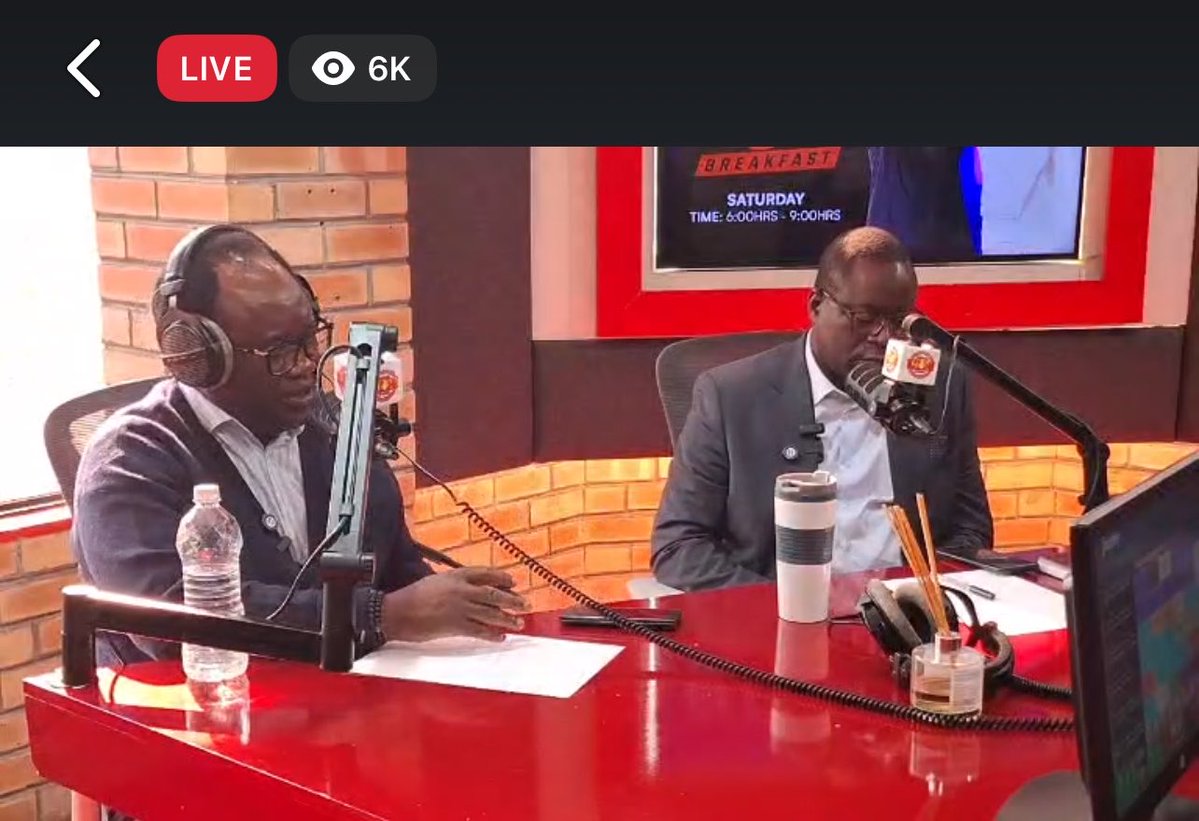
It’s refreshing to listen to Brian Mundubile and Makebi Zulu.
Their vision and manifesto come across as genuinely pro-Zambian, and that’s what makes it so encouraging.
English

Seems watermelons are everywhere
🅱️rian🇿🇲🇦🇷🏆⚽️📈@briansimasiku
Our watermelons 🍉 are doing a fantastic job in the Lampies💡🇿🇲🫱. Take a listen 👂 👇
English
If it involves a politician or someone who says nasty things against the president, they travel from Lusaka to Jifumpa in Kasempa, or Lwitika or any parts of Zambia..
Arteta's boo 🇿🇲 🦋@KellyLako
But they found fuel to go to the scene after the shooting? Wow, just wow.
English
Patali Raphael retweetledi

To the resilient and determined people of Chongwe,
Thank you for your unwavering support. My running mate Makebi Zulu and I are grateful to everyone who waited to listen to our message of hope.
Ulubuto Nalwisa – Light has come.
Brian Mundubile
NRPUP Presidential Candidate


English
Patali Raphael retweetledi

Police training or whatever it's called should definitely be more than six months in Zambia. Law enforcement is a very essential part of a state's makeup and I believe it's clear to see how lack of competence among the police force is/has been costing the public 🤦🏾♂️
English